In honor of Earth Day, we revisit this conversation with Jack Johnson.
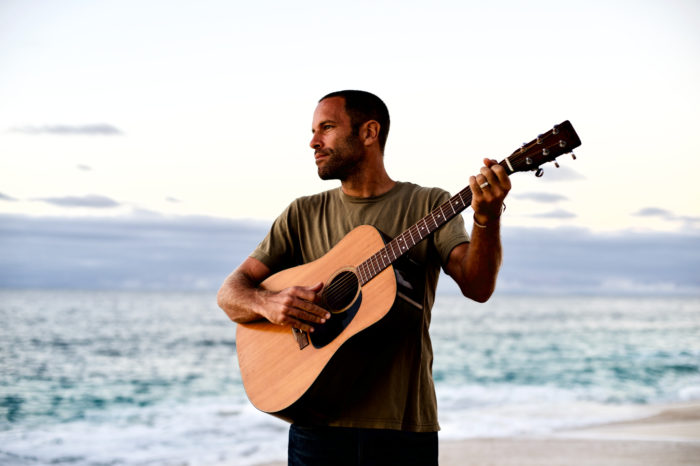
“I think life speeds up a little bit,” Jack Johnson muses, as he considers the four-year lag between the release of his last studio record, From Here to Now to You and his latest album, All the Light Above It Too. The gap is the longest of his career, dating back to his 2001 debut, Brushfire Fairytales. “I have three kids, which speeds life up for you. And then, if you think about when you’re one year old, one year is basically 100 percent of your life. Then, when you’re two years old, one year is 50 percent of your life, and so on. And it’s this exponential graph where, once you’re 42 like I am, one year is just a fraction of your life, so the years pass quicker. But it’s good to focus on that and not let it get away from you.” Johnson recorded All the Light Above It Too at his own Mango Tree Studio in Hawaii. He produced it with Robbie Lackritz (Feist, Bahamas), and while his steady bandmates—drummer Adam Topol, bassist Merlo Podlewski and keyboard player Zach Gill—appear on a few of the tracks, Johnson handled most of the instrumental duties himself. “The main idea is that as soon as you learn how to play a song, there’s that moment when you know all the chords and lyrics and you don’t have to read them, and it feels really magical. Then, it only takes a few more times of having to play that song all the way through, and you feel like you’re reciting, rather than doing a magic trick,” he explains. “So I just wanted to have a friend in the room that could push ‘record’ with a good microphone while the song still felt like magic.”
As you began working on materialover the past few years, was there any particular moment where you decided thatenough was enough and it was time to go back into the studio and record?
I’m always writing, always puttinglittle ideas down. It’s really easy for me to get one line for a song, or get ahook that feels like a great song. And then I put it away and forget about it.Sometimes it just takes some help from my wife, who’s always been myeditor—ever since we first met when we were 18 and I was trying to write myfirst songs. She always participated without even realizing it. Sometimes I’dbe playing music, even when she was in the corner of the other room gradingpapers when she was a teacher, and if something caught her attention, then I’dknow it was worth keeping. If I couldn’t catch her attention, then I’d justmove on.
Every once in a while, she would seewhat a scatterbrain I was, and would say, “OK, I see that this song and thissong are two different songs but about the same thing. You could really combinethose two and you’d be done with that one because this one would be the chorus,and that’s your verse.” And she would help me connect all these dots. We’d getout some paper, make a list of all the ideas I had and gather the differentrecordings. I don’t even know what that job is called, but she was like a curator.[Laughs.] Every couple of years, she’ll realize I’ve had enough experiences,and we’ll piece it all together and put it out as a record.
When it comes to writing songs, doyou compel yourself to sit down and work, or do you wait for a bolt ofinspiration?
A little bit of each. The way mybrain works is mostly in rhymes—it’s how I remember things. If someone gives metheir phone number or if I’m trying to remember someone’sname, I’ll usually putit to something that rhymes in my head. And after everyone’s asleep, I’ll getmy guitar out, and if there’s one line that’s been in my head all day, I’llput it to a melody and see whether it sparks something. And then there isthe question in my mind of, “Why is that relevant to what’s going on in theworld? How is that a metaphor for something else I’ve been reading about orseen?” I’ll start working on it a bit and, a lot of times, one verse or onechorus will come really quickly. If I don’t have the time, then I’ll put itaside, knowing that it can become a song.
Actually finishing what I started iswhen the work comes in. Anyone can have a good idea, a thesis for a paper. Iwas always the guy doing the all-nighters the day before my paper was due. It’sthe same now. Once I know I have the real ideas, and I have 10 or so of them, Ican get in the studio, but I almost need that deadline to actually write thethird verse. A lot of times, I just need that kick in the butt to actuallyfinish the thing. The songs need to be sparked from an inspired place—somethingneeds to happen where they pop into my mind.
When I recently spoke with ZachGill, he mentioned that you connected when he first met you back at Universityof California, Santa Barbara, because you were the only other person he knewwho was serious about writing original songs. Do you have a similarrecollection?
I had the exact same feeling. IslaVista was a beautiful place to be at 18-22 years old. There were so manygarages in that town that were set up with drums, bass and keyboard, and I knewa bunch of different spots where you could just ride by to see if a great jamwas happening. It was so fun.
We met during freshman year, but itwasn’t until junior or senior year that we started hanging out, just the two ofus, doing the four-track stuff all night. It’d be more about showing each otherlyrics and creating these smaller spaces where our lyrics had room to breathe.For me, it was a guitar and a voice, and for him, it was either a Wurly or apiano and a voice, and then just some light embellishment—different sounds tosupport it.
Besides my [now] wife, he was thefirst person I felt like I could hang out with and share my lyrics. Zach seemedto be trying to do the same thing I was, and I respected his mind and the wayit worked. And I still do. That was a strong bonding experience.
Jumping back prior to that moment,do you remember the first song that you ever wrote?
There are two or three that I canremember from high school, when we had a punk band called Limber Chicken. Wewould do mostly Minor Threat covers, but we had some Descendents, Bad Religion,Fugazi, Ramones and Dead Kennedys mixed in there. We wrote one called “Apathy,”and it was the bass player who did most of the singing. I remember all of usbeing in the garage that day, chiming in and trying to find words that rhymed.He was a little ahead of us in terms of wanting to do originals. And so we wentalong with him. But once we finished it and played it, I remember thinking,“This is just as good as those songs we’re covering.”
I love seeing something come fromnothing, starting with just the title and an idea, and then having a completething. I love that feeling of producing something, whether it’s a film or asong or an album. And then I remember trying to write a couple songs of my own;they were more like exercises in rhyming. I remember thinking that theparticular song didn’t mean much to me—I was sort of held back by the idea ofhaving to find things that rhymed. So that was the beginning of it, in highschool. But it wasn’t until the first year of college that I really startedwriting songs. I look back now and I laugh at a few of them, but at the sametime, I believed in them then. I was still in college when I started to work onhalf of that first batch of songs, including “Flake” and “Posters,” which wereon my first album. For some of them, I changed the lyrical content, but themelodies were mostly from my senior year. That’s where the songwriting processstarted for me.
Before I heard BrushfireFairytales in 2001, I knew your background as a surfer, and I assumed itwould sound like Minor Threat. Then when it didn’t, I decided that maybe themusic reflected your perspective in keeping your cool inside the eye of astorm. Do you think that’s accurate in some way?
Absolutely, 100 percent. I wake upevery morning curious about what the swell direction is. The ocean is where Iwant to be every day; surfing is what I love to do. And with that, there are somany decisions you have to make that are happening really quick, and it slowstime down a little bit when you have to ride a wave.
That’s something my bass playerpointed out to me. Sometimes when you’re out there and the sound sucks at aclub, or you get a horrible review, those things could really slow you down ifyou take them on too much. It’s just learning how to change directions andsteer out of it and improvise a little bit. We always think of improvising interms of music, but it’s also with your path in life, being able to readjust,move around things, keep flowing and let it all brush off of you. You alwaysget to kick out when you’re surfing, and you always get another chance to goout and catch another wave. And so I can see the analogy to that for sure, withmy choices in music and how we’ve gotten there.
The All the Light song “Fragments” originally appeared in the documentary The Smog of the Sea, in which you joined scientist Marcus Eriksen to examine plastic pollution in the middle of the Atlantic Ocean. How did you come to be involved with the film?
Right now, I’m on the north-facingside of the island I live on. It’s a place where a lot of tourists visit andyou see a lot of pictures of the clean, white sandy beaches. After storms,we’ll get some debris, and plastic will wash in but, dayto- day, you reallydon’t see it along the high-tide line. But if you just go 15-20 minutes fromwhere I live to the east side of the island, there are a few beaches where itreally happens. It’s something about the exact direction that they’re facing,like a filtering system in the middle of the Pacific Ocean, and it is just outof control. You can’t believe how high the high-tide line fills up withplastic. All these little pieces of things we see from our own lives, likeforks, toothbrushes, lighters and bottle caps—some broken down with bites takenout of them, others in perfect form.
Some might have come from thisisland, but the majority, you can tell, have been in the ocean for a long time.And the scarier thing is, when you move the plastic off the top of the sand,and you take a scoop, it’s really colorful because these little pieces ofplastic have broken down to a level where they’re just becoming part of themakeup of the sand.
The more I traveled, and the more Istarted looking at windward-facing beaches around the world, I could see thatsame problem in a lot of places. So it was interesting to travel out with theseexperts from the 5 Gyres [a nonprofit focusing on reducing plastics pollution],who do a lot of the data collection out in the middle of the ocean, where thesegyres gather and the debris collects. It was interesting and exciting to learnabout something—to get to play the role of the citizen scientist and go outthere in the middle of the ocean, and yet, we were learning a lot of depressingfacts that this group has been finding for a long time. They always say hatredcomes from fear of what you don’t know, so at least you start to understand.
The film is equally striking andalarming in many ways. What would you encourage people to do to attempt tomitigate this?
The first step is cutting single-useplastic out of our lives. There’s a great movie called Bag It that talksabout how plastic is a very amazing material. It’s so strong and light, andbasically lasts forever. And so there are certain things that should be made outof plastic. But for all of these things that we’re using for a moment and thentossing away, there is no “away.” Plastic lasts.
We need to try and eliminate as manyof those things as we can—simple things like straws and bags and water bottles.It’s hard to find anything that’s not wrapped in plastic. It’s about trying toget your produce from local farmers markets that don’t require much packaging,and then legislation is important to look at. In Hawaii, we’ve banned plasticbags and it’s been interesting to watch the shift. People might not realize it,but plastic is relatively new and something we’ve become attached to in a shortperiod of time. We can unattach ourselves to it as well.
In terms of this album, you wrote anintroductory letter in which you mention the president and the North AtlanticGyre. What would you like the listener to take away from the record?
I’ve always found that it’s abalance between sharing things that are personal and trying to translate theminto a form where they feel broad enough that someone could apply them to theirown life. I’m not trying to make it into a reality TV show, with all of myfeelings totally exposed and I’m completely vulnerable, but there has to bevulnerability involved.Then, ultimately, once I decide to share them, I’mdeciding that they’re not just mine anymore. I’m putting them out to the wholeworld.
So I always find it interesting justto see who connects with which songs, and how people interpret the songs.Sometimes I like the way people interpret them more than what I intended themto be. [Laughs.] So I don’t know if I ever have any one thing that I’m hopingfor. I always hope that every record I put out will be somebody’s favoriterecord.
I always try to write from a placethat’s true to where I’m at in my life, and if that appeals to somebody, thenthat’s great. The one thing I try not to do is stay forever young, in the senseof trying to write songs for younger people. I just hope that the humanconnection can apply to somebody who is younger because they feel the same way.I just want to write from where I’m at in my life. I’m a 42-year-old guy thathas three kids, and these are the experiences that I have. So, I’m not surewhat I hope people get out of it. I just like to share the songs, and I hopethey make people feel good.
These are tumultuous times, in a lotof respects, for many different people. Did that push you to either say, “Iwant to address this,” or “I want to be able to take people away from that?”
It’s funny, I didn’t mean for it tobe this way, but when I listen to the sequence, to me, Side A is sort ofpolitical and social commentary—what’s happening in the world right now. Andthen Side B is like driving away from that. Literally, the first song on Side Bis a song about driving up the coast going camping. And it’s meant to be aneffort of trying to find freedom between these lines—the lines of society. Sothe second half becomes a little more personal. There’s a love song on there,there’s a song about camping, there’s a song about the trip I did on thesailboat and all those kinds of things.
I hope that if someone wants to escape, they’ll just put on Side B. [Laughs.] But it also felt really good to sing out on that song, “My Mind Is for Sale.” I’ve had so many strong responses to the song, both positive and negative, even from old friends. So I’m glad I wrote that song. It feels like it was important to at least touch on that stuff. But it’s also important to remind ourselves that it’s a beautiful world, and that even when it feels like it’s falling apart sometimes, there’s still a lot to appreciate.