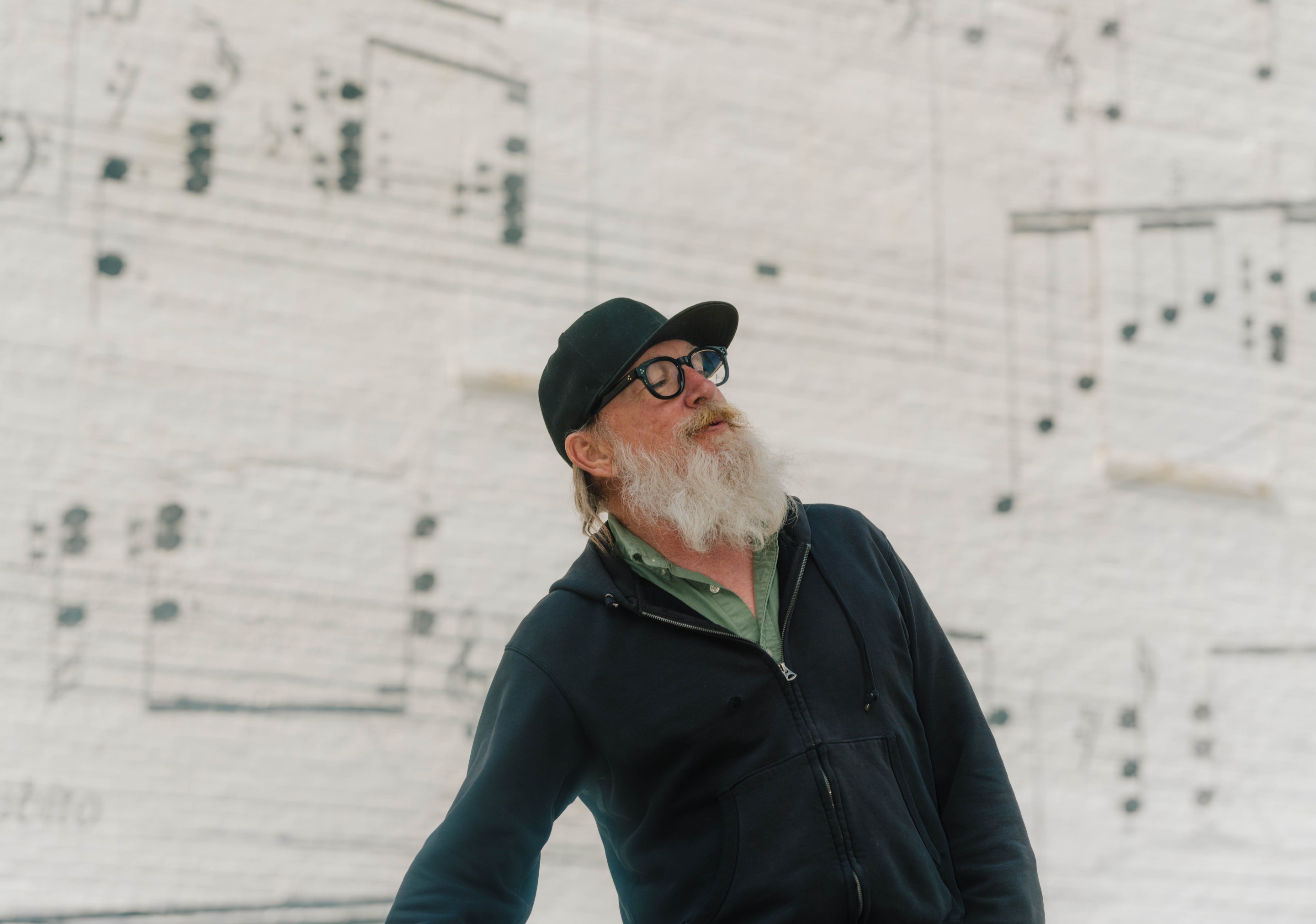
Kurt Wagner’s ever-evolving gaggle of musicians that plays under Lambchop have created 17 albums over the last 40 years, but it hasn’t gotten easier. “It takes a lot of work,” Wagner said to Relix over a 45-minute conversation.
Wagner and Lambchop are often described as shapeshifters, meaning they’re constantly pushing their sound forward, whether it’s with gospel choirs, Auto-Tune, or in the case of Lambchop’s latest release, Punching the Clown, banjos. Wagner and company retreated to Justin Vernon of Bon Iver’s April Base studio outside of Eau Claire, Wisconsin to record the 12-song LP over a stint of several days. Vernon lends his banjo talents throughout; it’s safe to say this is not like any Lambchop album ever released.


What hasn’t changed over the years is Wagner’s sardonic word play. He loves to flex his wit with lyrics that invoke the complexities, strangeness, and beauty of life all at once. So there is certainly a throughline with Lambchop, it’s just word-based.
But the musician life he’s carved out seems exhausting to him these days, and as he bluntly said, he’d love to just kind of disappear. To that end, this week, he announced a short follow-up to Punching the Clown called Demoed, a seven-song EP where he sent demos of Clown songs to other songwriters and had them perform their take (out November 20). It’s a disappearing act with art, with musicians like MJ Lenderman, Flock of Dimes, and Low’s Alan Sparhawk interpreting the new Lambchop, while retaining a rustic sound in the process.
When you were first getting started as a musician, what would you say was the role of influence in your early songwriting?
I was listening to a lot of music, and I'm sure that had something to do with what I was coming up with . . . but it's odd, what it was that made me want to do songs to begin with. I had not really thought about it as a form of expression. There was this point where I was living in Chicago, just prior to me moving back to Nashville, in the mid '80s, and my life was coming unraveled. I was making a lot of art, doing these crazy installations and large-scale drawings. But something had moved me to get into trying to write songs. I think right around that time, I had gone to a place called the Joe Schmiede Yuck Shack to watch Alex Chilton play a little trio show. I was also listening to a lot of Billy Bragg as well. All this stuff just started pouring out of me and I didn't care. I would just turn on a tape recorder and just sit down. And the shit just came fully formed out of my mouth . . . it wasn't all that great or anything but there was something about that experience that really made me feel like I was making things, not in the same way when I was painting. And I liked it. I realized that was something I could do for myself. It made me feel good when everything else was total shit.
It was reinforced once I moved to Nashville. I was hanging out and going to songwriter nights. I didn't have the gumption to get up there, but I was drawn to these guys that were totally not good or not accepted. That's where I first saw Vic Chesnutt, and that totally made me think, "Aha! I'm not fucking crazy. There's this other guy doing it.”
Did you become fast friends with Vic?
He would just call in the middle of the night and we would just talk and talk. Eventually, I got myself down to Athens because I wanted to see what was going on there. I went down there with the premise of writing songs. I rented a shitty hotel room, about five blocks from where he lived, and brought a little tape recorder and my rig, and just sat there and drank bourbon for five days. And some of those songs ended up on my first record.
Has writing music become easier for you over the years?
No! It's hard as shit. I thought I worked hard at it, but really I didn't work hard enough. I didn't know that until I started working with really brilliant people — Ryan Olson and Andrew Broder and all those guys up in Minneapolis. In a short time, I realized that I needed to get better at it. With this record, there was going to be nowhere to hide, because the concept was baked in before anything else. I had at least a year, a year-and-a-half to just go into my office and write a lot of crap. I thought I was going nuts, going, “why can't I get better?” And suddenly I was like, "Shit, I don't want this to stop.”
Can you see connective tissue or threads from 10, 20, 30 years ago that still rear their heads today?
I think that's how I operate. One thing is connected to the other. There’s signals of where I’m going next. Sometimes they're blatant, sometimes these little clues. It’s a linear thing where one record chooses an idea for the next one or it's something that's just been sitting around and I never quite got to.
What's the role of folk music been in your listening diet over the years?
It's been steady. It was what I listened to at my folks' house when I was a little kid. They were very much into classical music and then they had this standard collection of folk music . . . you know Tom Lehrer, the first Bob Dylan record, Joan Baez, all the folkies. I would pop those on and that Bob Dylan guy fascinated the shit out of me.
Are you recording your live shows these days?
If I get involved in that stuff it fucks my head up a little bit knowing that it's being recorded. I would assume all of them could be recorded, just don't tell me. It changes how free I am. I think the best shows we've ever done have just gone out into the air. All you have left is whatever memory you have.
With Punching the Clown, where do you think your voice is these days?
The idea was basically “this is song forward.” I surrounded the songs with what I thought was the appropriate amount of musical elements, so that the song still remained forward. And I worked hard on that. Toward the end of the record, I sort of just disappear. I'm not singing on the last song. What I'm getting at is I'm trying to disappear . . . the “me” part of it and just be the songwriter.
[With Demoed], the idea was that we approached different singers and voices that I really love, and we sent them the demos for Punching the Clown, and I just took my voice out of it, and said, "Just sing along with these demos.” And they did. That's a model for a way to go about this next record . . . essentially just asking a band to make their own record, like covering songs, but they can also completely destroy them. I just want to be the painter and hang up the picture on the wall.
I just want to age with dignity. I want to make art. I want to paint. I want to make these records that I want to make. That's where I'm trying to head. So it's not like quitting. I'm trying to kind of disappear, or at least that element of it. I don't think it's going to be a very popular thing with people who are trying to promote and sell my shit. Just give me some grace because I'm so fucking old.
I don't know if the marketing department is gonna build something around “he's disappearing.”
This was the record I wanted to disappear on. The way things are going in music trouble me. A lot of it has to do with money and the relationship between money and music. It spoils everything. Find another way to make a living; make your art, but just do something else for money. But don't let that control you in any manner, even your headspace about how good you feel about yourself, because you're not able to sell anything, which nobody does.
My decision when I was out of art school was to not partake in the gallery scene. I just painted pictures and hung them on my wall. And that was it. I just wanted to fill my house with art that I made and not really worry about selling it. I was working construction. I was fine.