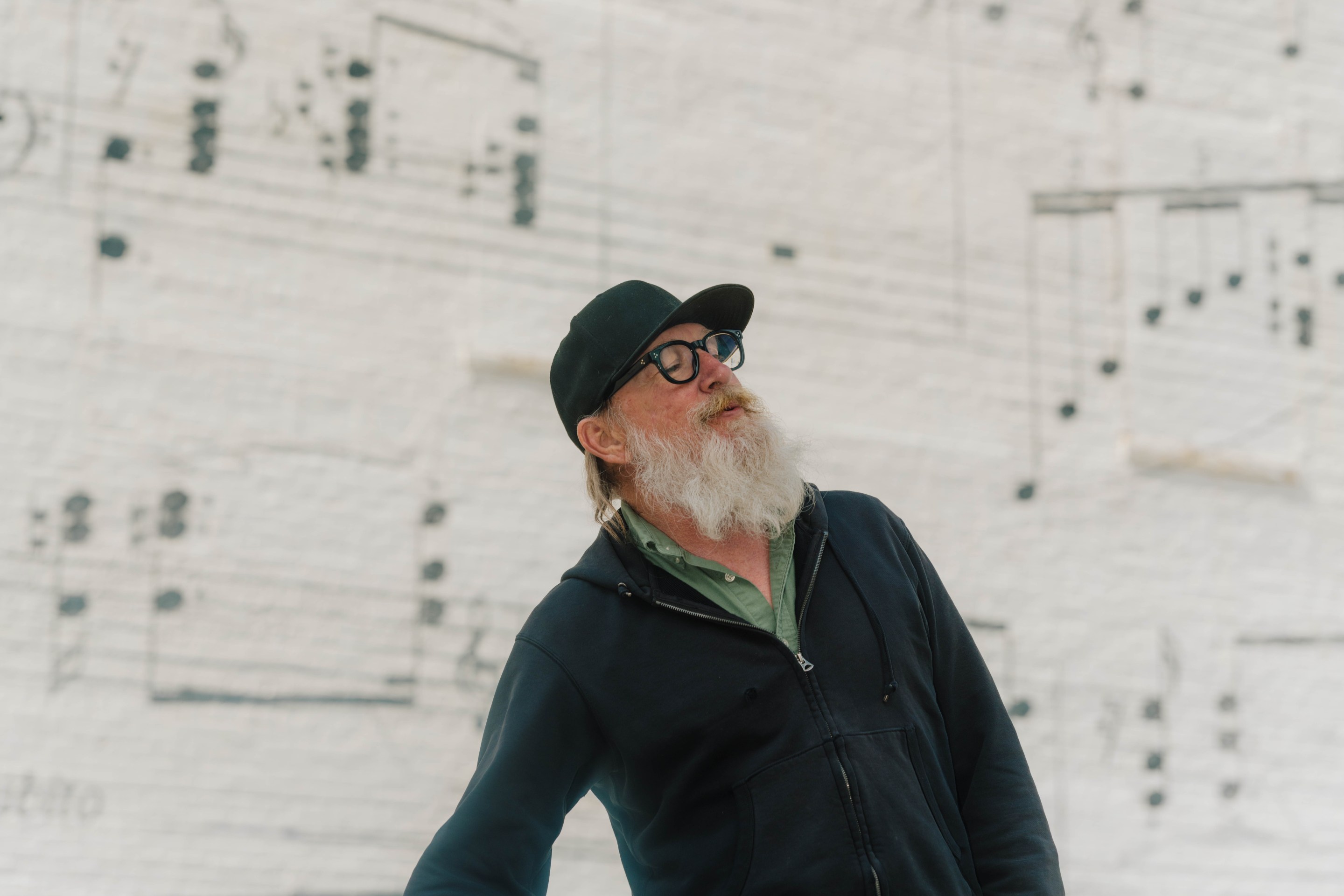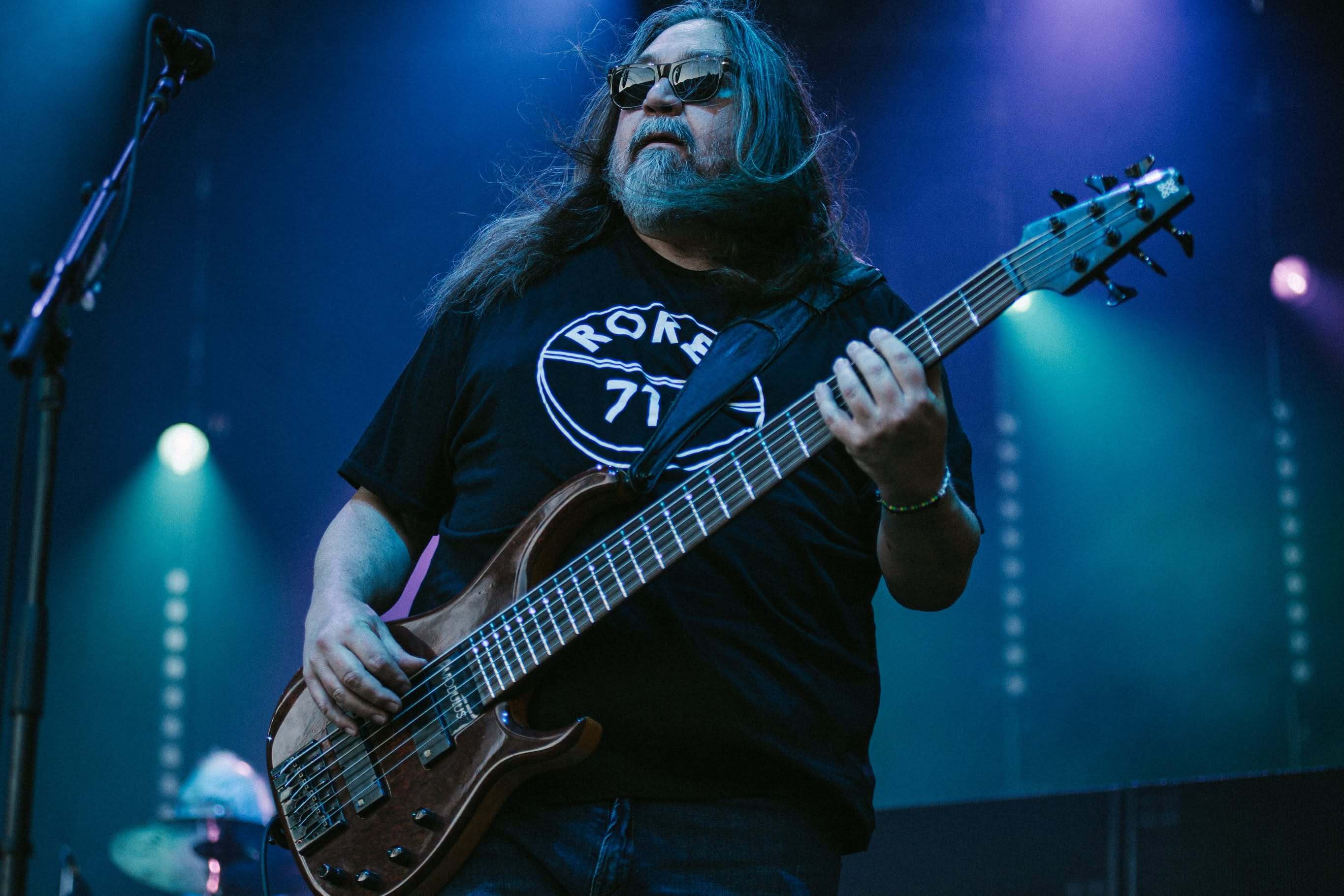
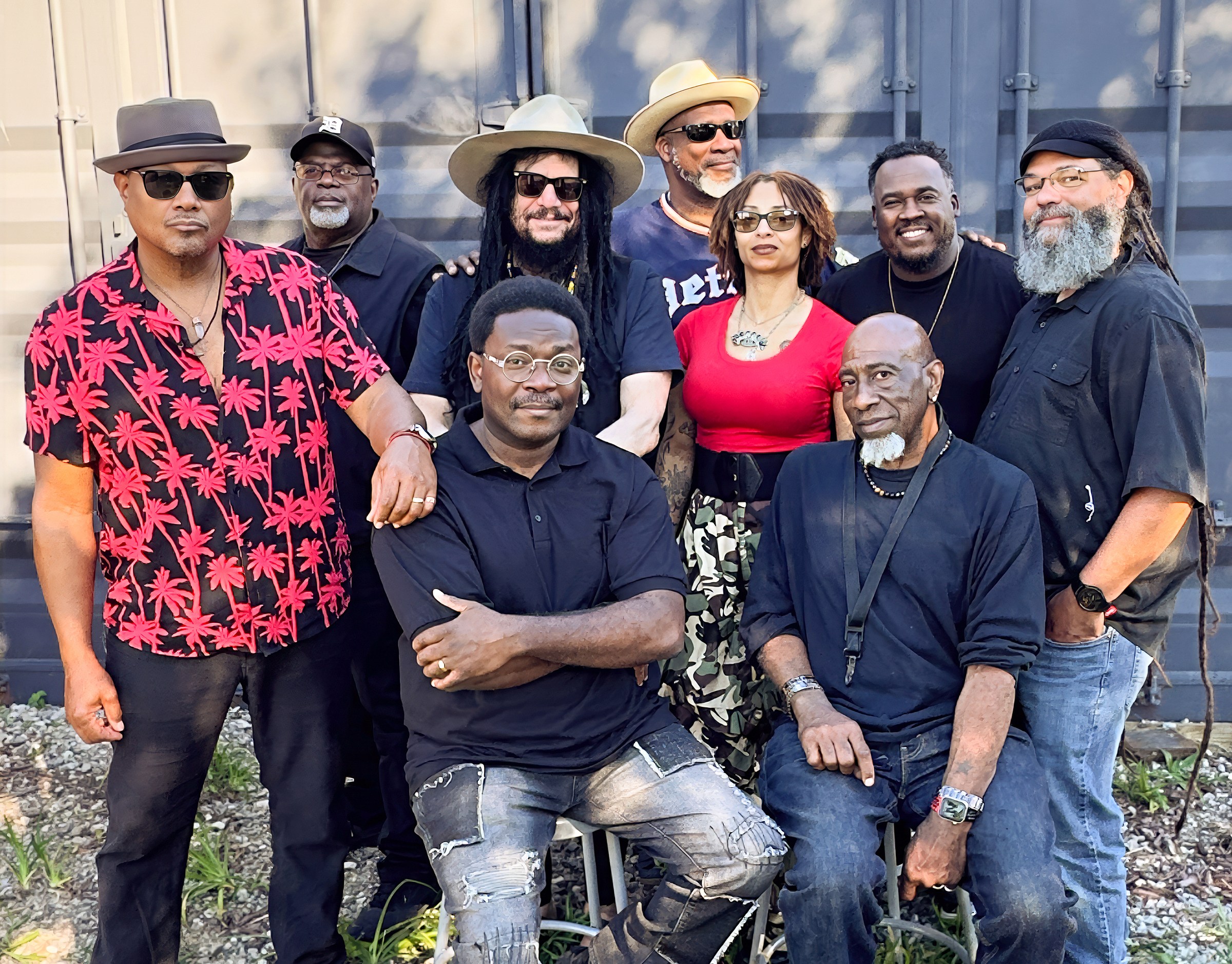
“The great thing about this music is that the songs lend themselves to adventure and exploration. That's why Bobby was able to go out there and do it for 60 years. It's why all the members of the Grateful Dead were able to go out there and do it for 60 years. So many bands also love playing this music because it's beautifully written,” Don Was attests, while discussing the origins of Live Dispatch Vol. 1: Blues For Allah ’26, his new live album with the Pan-Detroit Ensemble.
“It's like Mozart,” he adds. “Even though even note is written, there's a huge gulf between the way Arthur Rubinstein or Vladimir Horowitz is going to play the songs. There's room built in for interpretation and exploration.”


Was and his group initially performed the Grateful Dead’s complex and capacious studio album at the behest of Laina Cohn for the Golden Road Festival in October 2025 to commemorate Blues for Allah’s 50th anniversary. The bass player was familiar with some of the tunes, which he’d played with Bobby Weir and Jay Lane after their Wolf Bros trio debuted in 2018, but he did not have a handle on the totality of the material.
“When she asked us to play the whole record it seemed like a pretty cool idea,” Was recalls. “I’d done a lot of the songs with Bobby. We did ‘Music Never Stopped’ every four nights or so. We did the whole of “Help,” “Slipknot” and “Franklin” fairly regularly. We did “Crazy Fingers” occasionally. But there were a couple of things that I don't think anyone ever really covered. It seemed like an interesting challenge to find our own way of playing the album without betraying the songs.”
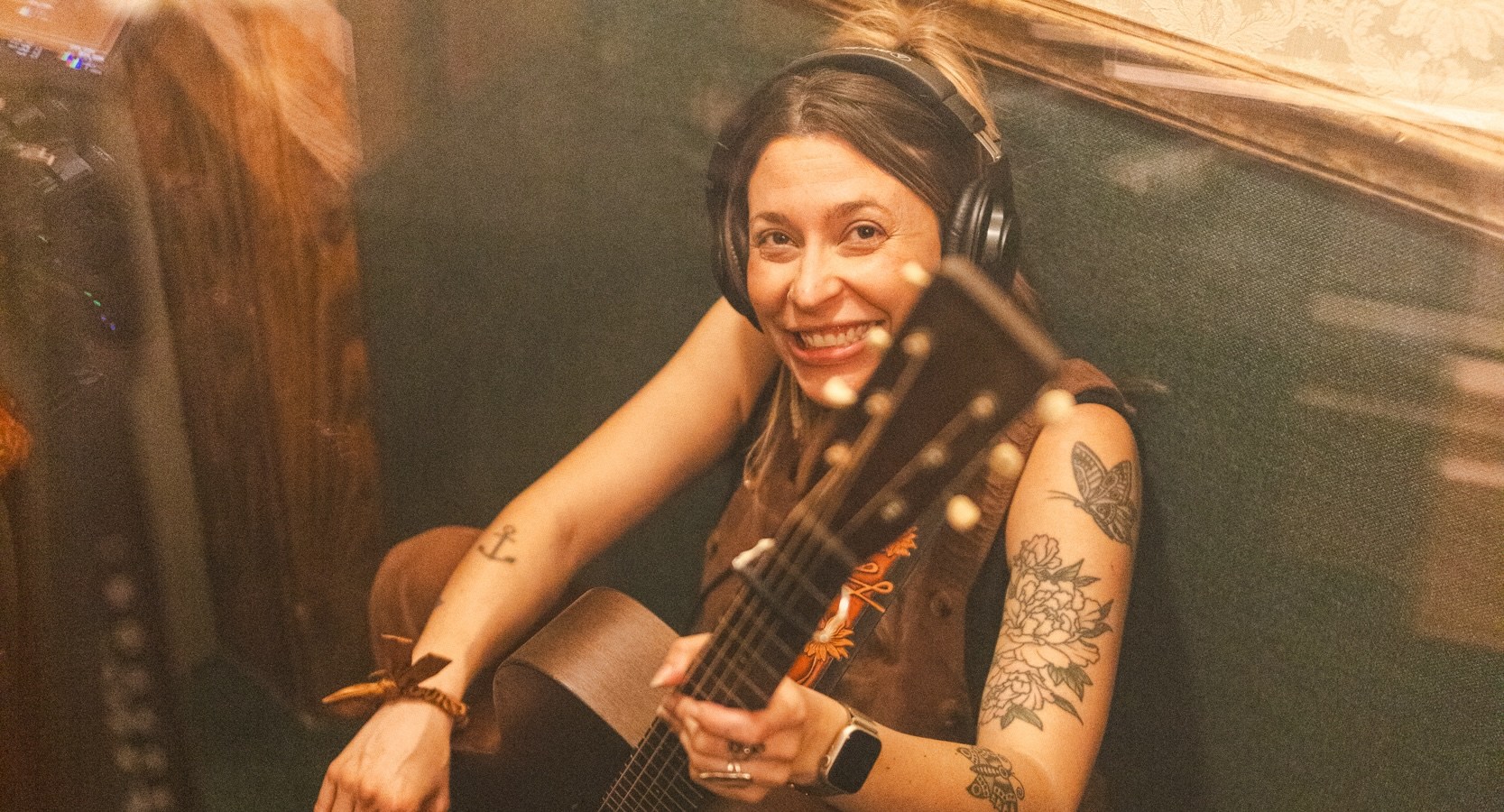
Live Dispatch Vol. 1 affirms that Don Was and the Pan-Detroit Ensemble were up to the challenge. The nonet, which consists of Dave McMurray (saxophone),Vincent Chandler (trombone), John Douglas (trumpet), Steffanie Christi’an (vocals), Wayne Gerard (guitar), Jeff Canady (drums), Mahindi Masai (percussion), Phil Whitfield (keyboard) and Was on bass, approached Blues for Allah with vitality and vigor. The results are enthralling, no matter the listener’s familiarity with the source material.
“We tried to figure out how this band could play the whole Blues for Allah album and not do karaoke versions, but extract the parts that were essential, then find a way to play them from the heart,” Was explains. “I was curious about what that would sound like. I used to tell the audiences before we played the whole thing, ‘I hope you'll forgive us. To do it right, we had to Detroiticize these songs a little bit. Some more than others.’ I think you could hear it in everything, but certainly a song like ‘King Solomon's Marbles’ had to get reinvented in a way for us to figure out how to approach it. I thought we found a way to present these songs that was original and yet soulful. In listening back, I was real proud of what we'd done.”
Rather than just releasing a single show, Live Dispatch Vol. 1 draws from multiple evenings, which Was attributes to an element he came to appreciate while touring with Weir. “One of the things that I learned from Bobby that I wasn't previously tuned into is how the audience becomes part of the band,” the bass player indicates. “When I started playing with Bobby, I could see people's faces and I could see physically how they reacted to certain things that happened. I could also feel the energy coming back. The audience becomes a member of the band. They actually impact your choice of notes, just like the other musicians in the band impact your choice of notes. So it's different every night with each new audience. You're going to pick up a distinctive vibe and all these inexplicable things will happen.”
The album is identified as Vol. 1, which begs the question as to what might follow. Was clarifies, “Starting next January, we're going to go out and play all of the Terrapin Station album in the middle of our show, just like we did with Blues for Allah. We'll play our songs and then right in the middle we'll carve out a 40-minute chunk and we'll play everything from top to bottom in sequence. So we’ll need to figure out how to Detroiticize some stuff that's undetroiticizable, perhaps.”
***
Help On The Way > Slipknot > Franklin’s Tower
This is like a three-act play or a film. It starts out easy enough and then it builds. When you get to “Slipknot,” there’s this incredible tension built into it and a huge release on “Franklin.”
Then we tried to build some additional tension and release into “Slipknot.” We made a few more compartments in there. I would say what we did was more rhythmic than anything else.
Detroit rock-and-roll grows out of blues and John Lee Hooker, then goes into Mitch Ryder and the MC5 and The Stooges. If you break that all down, it’s R&B. I've put up MC5 multitracks and just listened to bass and drums. They're a soul band at the core, but then they’ve got these blazing guitar sounds. It's a wild sheet of sound on top of an R&B groove.
The Stooges were like that too. The groove was a little different than James Brown, but it was the same basic concept of just locking in a pocket and staying there. So that's a very Detroit thing.
I think we've done that with this group as we’ve approached the music. Certainly as a bass player, I gravitate to that. It's kind of what I was trying to figure out how to do with Bobby as opposed to being a melodicist. To me, Phil is a melodicist on the bass. There are some people who do both incredibly well. I think Paul McCartney is a melodicist, but he also holds down the low end. I think he got that from James Jamerson who is playing counter-melodies as well as holding down the pocket. I'm less of that and more groove-oriented. So I'm looking for hypnotic patterns to play that I can change up every time, but the overall thing is more of a groove.
That was a really different thing to do when I was playing with Bobby. I don't think anyone had approached those songs in that fashion exactly. I think Oteil did a great job of walking the line in trying to combine Phil's approach and a more repetitive groove approach.
When I was playing with Wolf Bros, especially when we were a trio, the band was intended to feature Bobby's interpretive powers as a singer. We allowed him the freedom to tell the stories from the heart, but differently night after night. He didn’t just fall into a rote recitation, he actually inhabited the characters, which meant that he had to be free to change his phrasing every night. So I had to be very careful not to fence him in. As time went on, I played a whole lot less underneath what he was singing and tried to answer him, but he was also answering himself on the guitar.
The other thing about Wolf Bros was to let everyone really get a chance to hear his guitar playing without something else on top, because he was the most fascinating guitar player I've ever played with in my life. He was full of surprises—crazy angles and shifts. It was almost like a couple of guys. Sometimes I thought someone was sitting in with the band and I didn't see them come out. [Laughs.] Maybe Warren Haynes plugged in or something because sometimes Bobby sounded like two guitars at once.
I thought his playing was so beautiful and we never got to hear it like that before. So I tried to stay out of the way of that, too. It really came down to keeping it simple. We talked about it. It wasn't just a surrender kind of thing.
Tragically, I thought we were just starting to get there. We did a trio gig at the Parker Playhouse, which was almost two years ago. It was January ’25, right after New Year's with Jay, Bobby and myself. I thought, "Man, we're finally finding a way to be a trio together, lock together and play these songs." But it took all that time from 2018 to get to that point.
Once they started doing the Sphere, it was very hard to play enough shows with Bobby. That's why I started the band, because I wanted to apply what I'd learned from him and keep doing it. That's why we started playing Grateful Dead songs in the set because I love playing them. They're great songs to play.
So I tried to apply a lot of the stuff I learned in Wolf Bros to the way we played these songs with Pan-Detroit Ensemble.
King Solomon’s Marbles
My favorite thing about the Blues for Allah album is that they were trying to advance the language of rock-and-roll. They were trying to do something brand new, and they were influenced by all sorts of stuff.
I can hear a lot of Return to Forever and Mahavishnu Orchestra in there. I think they were listening to that music. My guess is that Phil was the force in the band who was pushing that kind of experimentation. I never asked Bobby who was driving the bus at that period of time, but melodically, you can hear it in “King Solomon's Marbles.”
That one was crazy, because originally I didn't even think it was a song. I didn't understand the foundation underneath. I thought it was just a jam that happened one time and that's why it was rarely performed by anybody.
I wasn't sure what you hung your hat onto as a song until I really got in deep and realized there's a structure that's as concrete and established as there is on “Ripple” or any of their songs. Then it became a matter of “How do we wade through this 7/4 thing and find a way to groove on it and be ourselves.”
I noticed at the beginning, Jerry basically quotes “Inner City Blues” by Marvin Gaye. I thought, “Well, we know how to do that.” So we moved it to 4/4 and did the groove of “Inner City Blues” but played the song faithfully on top of that groove. We got off on it every night.
This one has got different movements. Phil was never one to take the easy way out, let's put it that way. I think that attitude prevailed throughout the whole album.
The Music Never Stopped
“Music Never Stopped” is my favorite Barlow-Weir composition. They landed on some of the most enduring pieces. I think it's an incredible song. I love playing it and people love hearing it. I find all kinds of meaning in those lyrics. Then you’ve got some stuff that's almost unplayable or unrepeatable, which was the cool challenge of it.
First of all, I went through it and introduced the music to everybody in the band who wasn't familiar with it. I wanted to choose good versions, so I listened to maybe 50 versions of “Music Never Stopped.” There was one I found, which I think is from somewhere around 1980, where Phil was sitting in a pocket playing these driving eighth notes through it.
I thought, “Oh man, if I'd have heard that five years ago, I'd have approached the song totally differently. If I could go back and redo it, that’s how I would have played it.” I was doing something else with Bobby and I never thought about having that kind of locomotive bass driving the song. I only heard Phil do it one time. I think it was around 1980 that he was leaning more into the pocket. That’s what drove it—“Let’s just keep this pulse happening underneath all the time.”
Crazy Fingers
I don't even know how to describe the feel that the Dead had on this song. It's sort of reggae-inspired, but it's also kind of Irving Berlin. I always found it a little difficult to play, even with Bobby. I wasn't sure where to land on it.
So how could this band do it? We turned it into a 6/8 thing, like “Dreams to Remember” by Otis Redding. Then we were able to really sink our teeth into it.
We first tried playing it as written and it was not a feel that came naturally to us. I felt we were being imitative and missing the mark, and if you miss it by a millimeter, you miss it by a hundred miles. It just felt jive to try to copy this thing and not get it right. It was something peculiar to those guys.
So then it was like, “Alright, what's at the core of this song and how can we do it in a way that rings true where we're not thinking about what the part is anymore, we're just playing a song and playing it from the heart.” Going to that 6/8 thing, “Dreams to Remember” was the model, and as a nod, we even quote the horn break in “Dreams to Remember.”
A lot of it had to do with giving our singer, Steffanie Christi’an, the freedom to sing it like she sings. That really opened up the song for her.
Sage and Spirit
To me “Sage and Spirit” is of a piece with the first part of “Weather Report Suite” and maybe a little bit of “Lost Sailor.” It strikes me as a very Bobby guitar part. There's a precise composition to it, but it rambles. It doesn't really repeat itself. He’s challenging the conventional wisdom of song form, which I love.
So it's kind of a mood. What I pictured was being on the beach as the sun was going down and maybe you're barbecuing some food. Everything looks full of color and very relaxed, and it's sensory overload with the barbecue coming. I heard it as barbecue music. [Laughs.]
The weight fell on our guitar player,Wayne Gerard, to find a way to play this very complex piece that Bobby wrote. First you’ve got to learn to play it the way Bobby played it. Then you’ve got to say, "Alright, now how can I play this?" But you have to learn it first, and that fell on Wayne. Dave McMurray was able to improvise some flute over it every night and approach it differently, just as the keyboard player approached it differently, but Wayne had to get it right.
I said to him, "You're driving the bus on the song. Figure out how you play it. Good luck.” [Laughs.] He put in a lot of time, probably more than he'd admit to, because it's hard.
Blues for Allah
What we wanted to do with all of this music was conjure up a little bit of intention and feel the emotional content of what they set out to accomplish. We wanted to stay true to that, but play it the way we heard it and felt it.
There was something about this one that reminded me of Archie Shepp and Roswell Rudd, with that kind of staggered phrasing. It's unison, but it's staggered. The notes bend a little differently. It's not tight, but it's super expressive. It just seemed like that’s how it was supposed to be, so we started playing it like that.
When it happened, I was thinking of Miles and Bitches Brew. So it's very 60s jazz-oriented to have this repeating thing with the trombone building intensity on top of it. So that's how we fell into it.
This band just rose to the challenge. From the first day, it was evident that there was a chemistry and a shared sensibility. We were going to try to do something that hadn't been done before and create music that becomes hard to classify.
People ask me all the time what genre our band is and I don’t know the answer to that. [Laughs.] That might be a problem marketing-wise, but I don't think about it that way. I think that doing something new is a noble undertaking.
One time I asked Leon Russell—this is probably in the 90s when I first met him—the difference between making records now and making records when he started out in the late 50s and the 60s.
He said that if you handed in your record in the 1960s and someone at the record company told you that it reminded them of something else—“This is like the Everly Brothers meets The Outsiders”—that was the greatest insult you could give to an artist. Those were fighting words. You'd storm out of your record company if someone said that to you. But by the ’90s, if you couldn't give them a high concept marketing summary—“This is a cross between Mariah Carey and Tool”—you were a marketing problem.
I don't come from that era, though. I come from Leon Russell's original era where you want to do something unique. These musicians are all dedicated to that.
So no one said, “What is this stuff? What are we supposed to do with this ‘Blues for Allah’ song?” There was never any of that. There was excitement about how to tackle it—how to take this abstract notion and find a way to be soulful with it night after night after night.