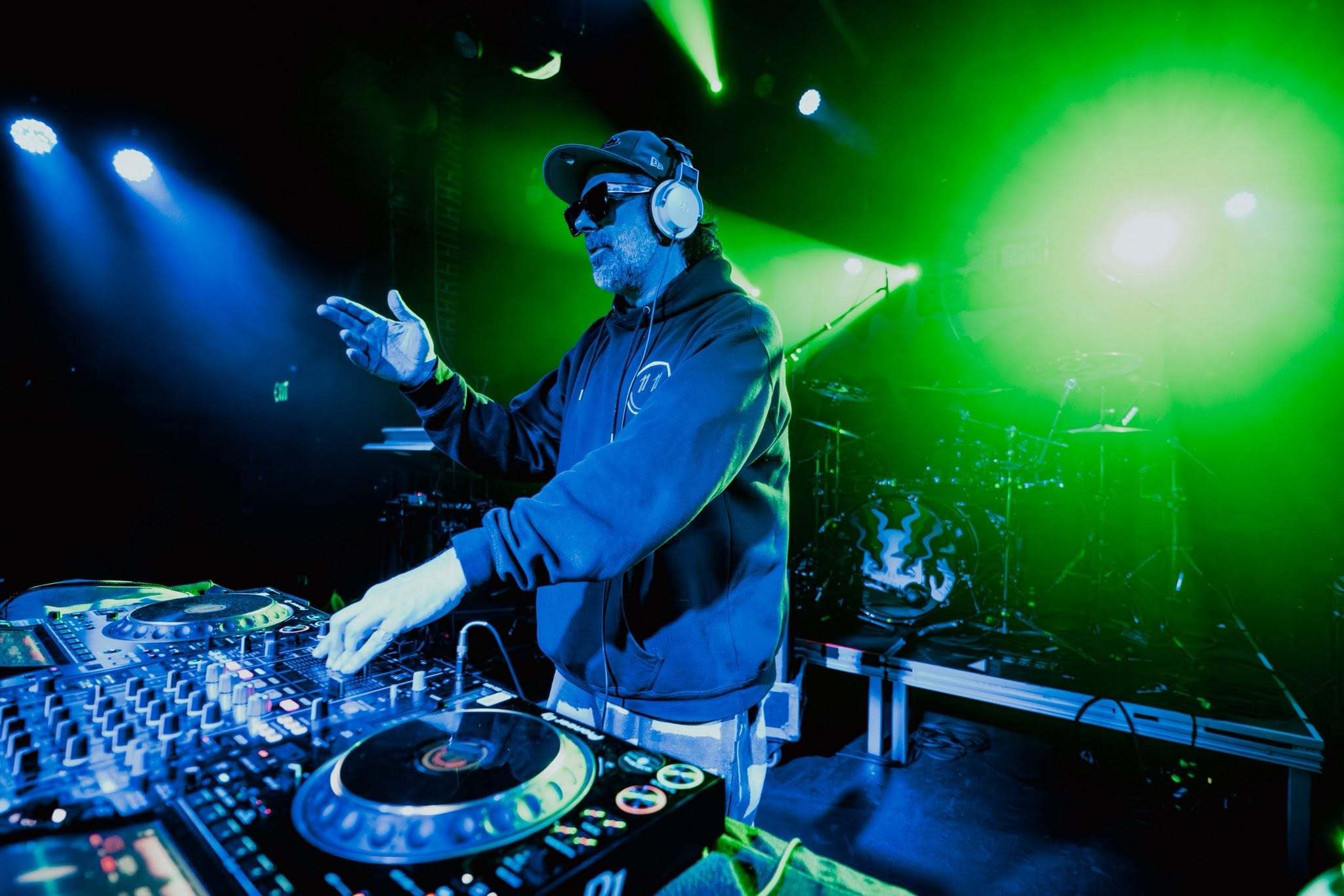
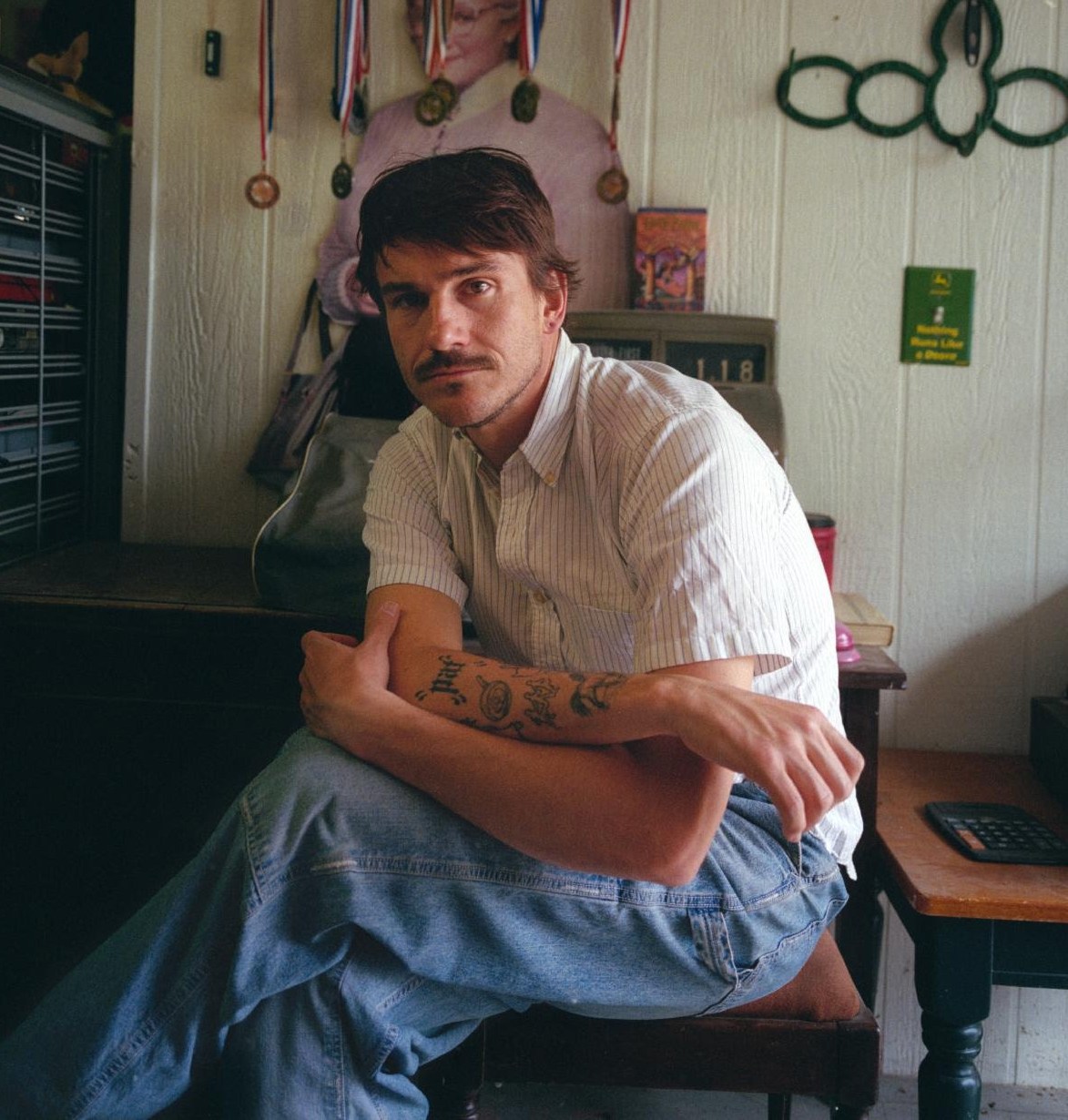
It’s only been two years since Medium Build released their major-label debut, the breakthrough LP, 2024’s Country, on Island Records, but in that time Nick Carpenter, the group’s primary creative voice, has experienced a lot of life. Thanks to the album’s success, Carpenter and his ever-evolving folk-rooted, R&B-inspired modern-rock outfit have toured the world, winning over fans across the once stringent indie-jam divide thanks to their high-energy headlining shows and marquee spots at carefully curated events like Newport Folk and Bonnaroo. He’s shared the stage with such divergent names as Role Model, Tyler Childers, Holly Humberstone, Briston Maroney and FINNEAS and recently opened for Mumford & Sons on their arena tour, sitting in on famed stages like New York’s Madison Square Garden along the way. In that time, the once hard-partying musician also made the decision to face his alcoholism head-on after a particularly dark night and subsequent crash in Birmingham, Ala. during the fall of 2024.
After taking a break to begin his sobriety journey, the Georgia-bred musician, who currently divides his time between Nashville and his longtime home of Anchorage, Alaska, returned to the studio to craft King of Having Fun, his second, inspired release for Island and first since he truly arrived on the national stage. The record, which was crafted with the help of his musical director Paul Rogers, engineer Jimmy Manfield and self-described “atmospheric moodmaker” Jake LiBassi, was inspired by Medium Build’s dynamic live show as well as his years working the open-mic circuit in Anchorage, where he honed Medium Build’s early sound after following his brother to Alaska. King of Having Fun also nods to Carpenter’s formative years on the jamband circuit, seeing moe. and The String Cheese Incident concerts long before he formed Medium Build in 2015.


As he prepares to bring the fall leg of his current tour to a close with a swing through the Midwest and Southeast, including a hometown show at Nashville’s Brooklyn Bowl on November 20, Carpenter opened up about his recent lifestyle changes, people-pleaser past and why he built an “escape hatch” into Medium Build’s spiritual persona.
Let’s start by talking about your new album, King of Having Fun. It’s been about two years since you released Country, your major label debut and breakout album. I know you experienced a lot of life in that time and spent many months on the road sporting the record. At what point along the way did you first start writing toward King of Fun and would you describe it as a reaction of a continuation of Country?
In 2024 we came out of the gates blazing, fresh off the first record and signing to the new label. For the first six years I was just making music alone in my room and I realized that, when you’re touring, the songs you make stoned in your bedroom at 10pm maybe aren’t the most fun to play live. So, out of this necessity of thinking like a DJ, I thought, “Well, if I want people to shake their asses or rock out or headbang, then what type of songs do I need in this set?” So I sort of reverse engineered a good-time record, realizing what works live. That was also because I took a good break. I got sober last year and had some time off and then I brought the boys in to work on the record. I had a lot of ideas, but it really just came down to what the five of us could do live. That was the goal—something we could do easily, night after night, that was fast, fun and singable, which I had never really had to think about before.
In terms of the songwriting specifically, can you elaborate a little more on how you reverse engineered a “good-time record?”
In terms of my songwriting, when you don’t think anyone is paying attention, songwriting is pretty self-serving, and I say that in a positive way. You’re just trying to get out your demons, or you’re making some art that would impress your five friends. That’s how Medium Build started. It was this small freedom for myself and, after years of it slowly growing, now there is more consideration about what I want to say, what I want to be known for, what I want to inhabit every night as a guy who has to get in character and sing these songs with fervor. I think about whose brain I want to live in. When I start writing songs, now I’m like, “Is this a darkness that I want to spend five minutes singing about in the middle of my set?” It’s weird I’ve never thought about it that way until now, and maybe some people are a lot better at compartmentalizing things, but I guess I get really get into character or am I just really good at reliving this shit. So I kind of leave little breadcrumbs for myself or put up rails so I don’t crash out on stage.
It’s interesting that you mention getting into character because your music is so honest. When you are playing these songs out live, do you try to disassociate from the real experiences that inspired them and approach the material from more of a third-person perspective or is it more just about how you are presenting these stories on stage?
It’s a little bit of both because I want to honor the me that wrote it and how I felt that day and, obviously, my shit is therapeutic for a lot of cats. As much as I wish I was cool or mysterious, I’m really not, and my lyrics are so ripped from the gut. And a lot of the people that come to see me finally say [out loud] the thing they haven’t yet—or that they’ve felt and I’ve put into words. So part of me is like, “I need to remember the Nick that wrote this and show up as that guy so the person in the room can have that transaction with their spirit.”
I feel like an operator. I’m just here helping people plug into some shit that they feel—that I felt. So it’s about getting out of the way and entertaining, but I know that there is a service element too. I bartended and waited tables for years and it feels similar to that experience where it’s like, “You're eating and I’m not really here.” There are art levels to it where it’s like, “I get mine, then you’ll be inspired,” but I do feel like if you’ve studied the album, if you’ve spent time with it, then my job is to put that album up and do it well and then you get to say, “Fuck yeah, they’re playing my song.” As a listener it’s about you. You come to see the guy do the thing that you love.
I was playing around Anchorage for so long, doing that performance art thing where it’s like, “We’re never gonna play the song the same way again.” And I love that shit—eventually I’ll get back to that and alienate fans. [Laughs.] But, for now, it does feel like I’m in a fan-service era.
Shifting back to the concert energy you touched on, you tracked a lot of this album live. Can you talk a little bit about those studio sessions and how that differed from your previous full-length release?
In the past it was like, “I’ll bring a bong, a laptop, and a drum machine in, and I’m going to make this beat and play this guitar riff and see what happens.” I was just piecemealing stuff together, collaging this record. Most of the bones were made when we just got into a room and played the song until we felt like it sounded right. We’d just go, “Is this the right tempo? Is this the right key? Should we speed it up three beats? Should we put it up half a step and see how it feels?” So when we started rehearsing the record, it immediately sounded like the album because it’s all of us who played it just playing it.
Obviously you can go back and record some harmonies and a couple layers that you can’t do otherwise, but most of it was about seeing what happens when five people come together. That was my question the entire time we were recording: “Is this something that five people can pull off?” I don’t want it to feel like a spaceship is landing if we don’t have the money to buy a space crew. So I thought, “Let’s have it be that this is the sound at this point,” which is so different from the past and so freeing. We don’t have to bring a bunch of fancy tricks, and we don’t have any stage décor. This is the simplest Medium Build has been, which is funny because it’s also the biggest Medium Build has ever been. So I guess less is more.
Over the years, Medium Build has ostensibly been a solo vehicle for your music and stories, but how that’s presented has changed over time. You’ve performed and recorded live as a solo act, a part of a duo, with a full band, and as an individual artist working with different musicians in the studio. This time around, you intentionally worked with a larger group of friends to capture that live, collective energy. Do you consider Medium Build a band at this point?
On this record for sure, but there have been like six iterations of Medium Build. As you said, there was a time where it was just two people and a producer and we could do an entire set off a drum machine, and then, obviously, I can tour it solo and do the stripped-down folky, John Prine/Leonard Cohen versions of these tunes, or I can do it with this band that rips and that I love, which is full of my best friends that I’m inspired by.
So it’s an ongoing question: “Is Medium Build a band?” Yes, we are literally a band that is playing. There are five of us on stage and we wrote the songs together. But then there’s always the escape hatch button where I’ll kind of get to be dictator when I want to and say, “OK, I want to do this song alone,” or “I want to go fuck off and play this solo show in Perth or whatever.” There are little agencies that I’ve left for myself, but I do think it’s more fun making music with people.
The other thing you mentioned that’s been a huge change since the last record is that you made the decision to get sober last year. You’ve talked in the past about how excessive drinking was affecting your live-performance abilities. When did you, ultimately, make that impactful lifestyle change and embark on your current sobriety journey?
Yeah, I love to party, it’s a big part of my life. I’ve got a lot of drinking in my family. I don’t personally see it as all bad, but I just knew the path that I was going down was leading to more darkness than it was joy. A lot of my shows were like this: If you saw us on our 2024 tour, there was a good chance you saw us performing drunk the majority of the time, and some of that was really fun and enlightening, but it was also leading to sloppy performances. It leads to disassociating. It ended up with me on stage in Birmingham, U.K. having a fucking panic attack because I couldn’t hear my monitors and I was drunk and I kind of just lost perspective. And you zoom out and you realize that I was trying to get drunk, which would lead to a global dissociation so I’m like, “Who am I? Who is Nick? Is Nick Medium Build? Are these real fans? Do they only like me because they like crying over me? Who’s here for what?”
The people pleaser in me was like, “There are too many people showing up at the door and I don’t know who to serve,” because when there are five people in the room, it’s like, “OK, there are five people, I can work that room. But now there are a thousand people in the room and I don’t know why they’re here and I don’t know who to be and now I’m just freaking out.” So sobriety was the first step of me dismantling my people-pleaser facade and the sun armor. It’s like, “If I take my armor off, will you put that blade through my side? Is it still cool to be me if I’m not that charismatic, if I don’t go out of my way to remember your name or to charm you?” I was thinking that I had to find out how everybody gets off, make sure everybody gets off exactly how they like to. I kept thinking, “How nice do you have to be to keep all of this going? If I just start taking care of myself will there still be a fanbase? What happens if the show goes from fan service to a sort of Neil Young self-worship thing, and I’m just like, ‘Fuck y’all, I’m doing me. Is anyone still here for that?’”
All of those questions felt wrapped up in, “How drunk am I going to get tonight?” So that was the first step in Medium Build evolving. Then it was like, “He got sober, maybe next record he’s gonna change the name or maybe it’s a different genre and the stage name stays.” I wanted to evolve and this just felt like the first part of that evolution.
It sounds like a lot of what you were struggling with was the self-described “character” you were playing on stage while running through these very personal songs. At the same time, being that you perform under the moniker Medium Build, you have another escape vessel where you can tweak the project’s identity a bit from time to time without it reflecting your personal identity.
I think about that all the time. I feel sorry for people who are stuck behind their legal name. I have this thing to hide behind, and I think that there’s a lot of power in that. If you think that Medium Build is just acoustic-guitar folk rock with steel-guitar, then we’re stuck with that. But everyone’s always said Medium Build is me and whoever’s around just showing up and seeing what falls out. So 10 years from now that might not sound anything like what you heard at Bonnaroo or what someone hears at the Metro in Chicago. And maybe those people won’t circle back but that’s sort of the fun of it for me.
The word fun has come up a few times while we have been talking and is, of course, in album’s title. Have you found this era of Medium Band has been more fun?
That’s a great question. It’s hard to remember, when you’re in the shit of tour and Instagram, that you are separate and that there is fun outside. The shows, technically and literally, are more fun. There are more people, the songs are more singable, they’re faster. I feel like I’m learning to let go of the “identity” of it.
The identity of it is where it really starts to be not fun, and in this world of comparison I’m like, “Should I be more like MJ [Lenderman] and Nate [Amos] from This Is Lorelei, or should I be more in the Noah Kahan, Kasey Musgraves and try to head for the for arenas? Who am I fighting with? What conversations am I part of?” It’s like, “Am I in the zeitgeist? Do I need to go away? Did my post do too much?”
It’s all of this shit that literally isn’t the job—the job is to write songs you love and go play them. But then there’s all of this minutia. You ask yourself, “How is this played? What is the font? What is the color? How is the image being colored? Who are you in conversation with? What does the algorithm say you are? Who are the fans? Who is showing up? What are they dressed like? What do you wear? Who is he wearing?”
There’s all of this shit I just don’t care about, and it’s taken me years to identify why that shit makes me sad. It’s taken me years to kill it and get off Instagram and not pay attention to the algorithm and just play my shows. Play your shows—that’s the job.
In terms of the live shows, you have had a banner year, headlining large-scale rooms across the country and playing arenas with Mumford & Sons, including Madison Square Garden. What have been some of your onstage highlights?
Newport Folk was our first show back from our hiatus, from the year off, and that show just felt so good. To play for people that don’t know who you are but also love music, and to have them respond, was huge. You could tell at the New York and Boston [headlining] shows we just played that there was a huge contingent of those kinds of Newport people there. MSG with Mumford & Sons was crazy, obviously, with an historic crew.
But these headline shows are really the ones that are starting to feel really special. We played Webster Hall in New York, which felt incredible. That back-to-back with the Royale in Boston, both of them sold out, was crazy. The entire East Coast leg was like that—D.C., Philly, New York, Boston—those shows were all sold out, everyone singing along, in 900-1,200 cap rooms. They were these perfect, sweaty parties and it felt like an arrival.
We played the Metro in Chicago, which is in Wrigleyville and right next door to The Gman Tavern, where I played five years ago for 40 people—literally five years ago to the month. That shit is not lost on me. It’s just this constant cycle of come back, growth, come back, growth, come back, growth. It’s about playing 1,000 shows so that doing MSG with Mumford & Sons doesn’t feel scary or weird. It’s like, “Yeah, fuck that, we can do this. These are my people.” Honestly, I like opening for people now. No one expects anything, and everyone thinks you’re great if you can sing a tune. They’re like, “Wow, that’s so impressive. You’re not bad!”
The headline shows have this different weight. There are people that are like, “Are they going to play my song? Are they going to acknowledge me? You’ve acknowledged me in your lyrics, but will you acknowledge me tonight?” It almost becomes more sacred and harder for me to sink into because, like I told you earlier, I want everyone to feel seen and served. But this run is full of legendary shit. We’re playing First Ave in Minneapolis, the fucking Purple Rain room.
I love seeing how each town shows up and how the markets are different. Pittsburgh is not the same as Philly, Milwaukee is not the same as Chicago. These people act differently and talk differently. We were playing during the Brewers game, so they had the game on, and they were making it into the World Series for the first time in 44 years while we were playing. The venue staff came out and gave us confetti cannons and now we’re shooting cannons while we’re playing “Never Learn To Dance.” That’s not going to happen in D.C. They don’t give a shit about baseball there, but in Milwaukee they do, so that’s gonna happen.
You came of age in the jamband scene and seeing improvisational bands, but your current music is more song-oriented on stage and on record. Do you feel that your concerts are informed by your years on the jam-circuit in any way?
That feels more pressing than ever because, with my best friend and band leader, Paul Rodgers, that’s our biggest beef. He comes from a professional pop-rock world where it’s on a grid. The setlist is dependable, there is no jamming. But growing up in the jam world—my first concerts being moe. and String Cheese and my brother being a Phishhead and following them around for years—that’s how I approach things. And then having the band grow in Alaska, where we would play these three-hour brewery sets where, essentially, people were just doing drugs and drinking, the music is just like the weather. It’s just around and you don’t think about it, so you get really good at playing, you get good at surviving mistakes, you don’t think too hard about what’s going on, and I think that informs my spirit for how I like to tour. I’m like, “Let it be different.”
We haven’t played the exact same set every night this tour and those are things that I’ve built in, while still thinking, “How much comfort and stability does Paul need to not blow his brains out?” And he’s honest about that. He’s like. “I need these 10 things to happen,” and I’m like, “Great, I need these five things to be a question mark every night,” and he’s like, “OK, I can give you three. You can change these parts.” And I think that’s essential for me. I need variety. Each crowd is different, sometimes you start a setlist that worked in Philly and it’s not working in Boston or whatever because these are different people or they haven’t sponged the new record as much or they don’t know the old shit as much. So I look at it like DJing, reading the room and understanding what the response is. I totally got that from the jam culture and, honestly, I also got some of it from some of my crazier religious experiences. My mom got really into hippy-church shit when I was in high school, so I was going to these churches where people weren’t wearing shoes and they just played horns and shit and then I moved to Alaska and played for a bunch of drunk hippies. I just think I have a better time when the flow is free.