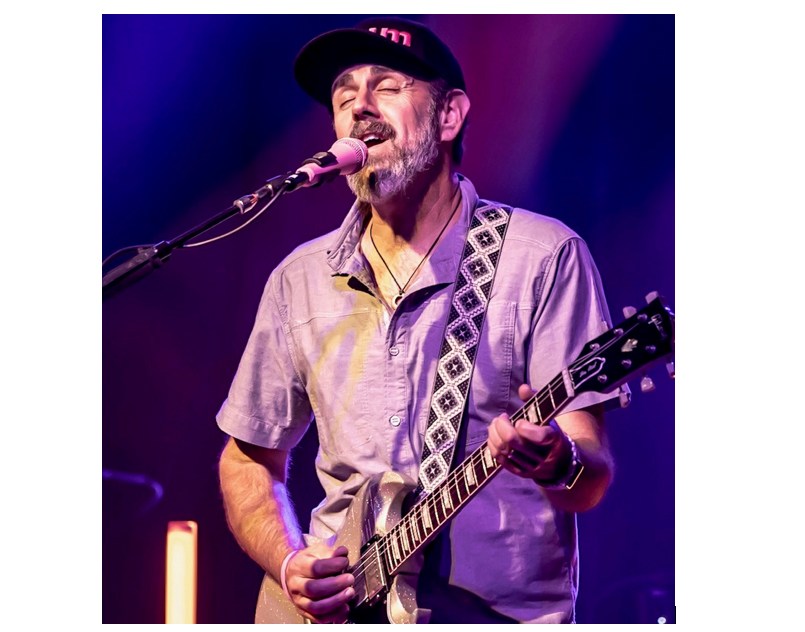
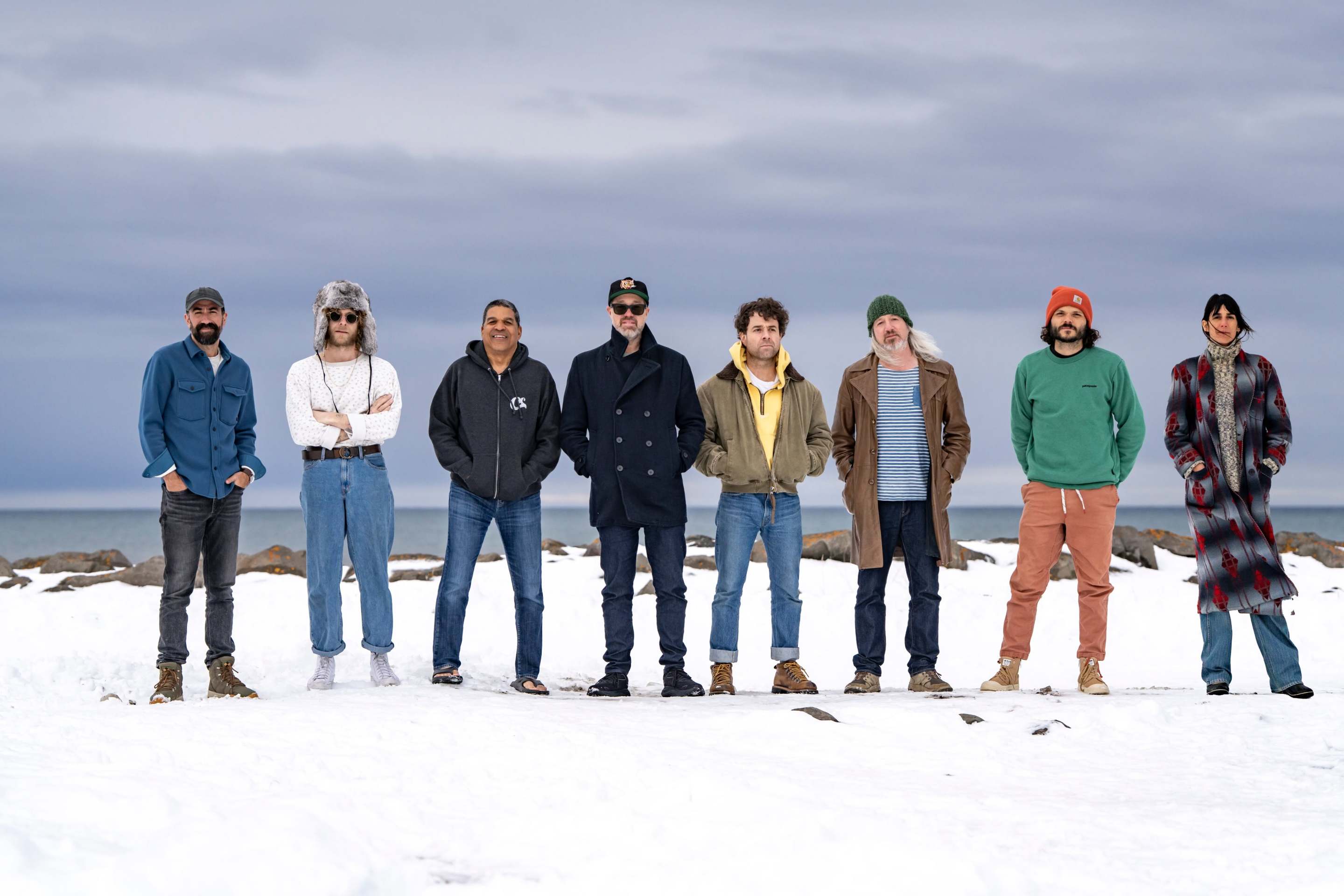
“At one point it just kind of dawned on me how lucky and miraculous the whole thing was,” Taylor Goldsmith offers, while describing the origins and evolution of the new group Rainbow Body.
Although this was their initial go-round as a creative collective, the adept and assured musicians were able to align their intentions and artistry, while crafting an album of elevated original material within a limited time window.


The Dawes frontman was joined in this venture by his brother and bandmate Griff, along with Eric Krasno (Lettuce, Soulive), Rick Mitarotonda (Goose), Ross James (Phil Lesh & The Terrapin Family Band), and Adam MacDougall (Chris Robinson Brotherhood, Circles Around the Sun). Their sessions at Flóki Studios in Northern Iceland also included appearances by Oteil Burbridge (Dead & Company, The Allman Brothers Band) and Nicki Bluhm.
“No one ever stated this explicitly, but it felt like we were all operating according to the principle of ‘Let's just say yes to each other.’” Goldsmith remarks. “We knew and trusted each other enough to allow that to happen. We also understood that this baby didn’t belong to any one of us. We had to hear everybody's vision or else it wasn’t a band. So we kept passing the ball back and forth. Everyone was letting the music happen and staying wide open to whatever was presenting itself. Even if we were seven minutes into a track, we’d be like, ‘That’s a cool idea. Let's do that, too.’ It was about maintaining a vibe and a spirit, while getting together with people we care deeply about and making music that was revealing itself in real time.”
The project began with the triumvirate of Goldsmith, Krasno and Mitarotonda, whose paths had intersected over a series of years. Goldsmith first saw Mitarotonda when Dawes appeared on the bill at Goose’s Fred The Festival at LOCKN’ Farm in 2021. Taylor remembers, “I didn't know their music at all. That was the first time I experienced it. Standing sidestage and watching the crowd respond to their superpowers was pretty mind-blowing.”
Mitarotonda was familiar with Dawes and invited Taylor to sit in on a few tunes. The musicians subsequently remained in touch and even began writing a couple songs together with no clear outlet.
Krasno met Mitarotonda in March 2025 when they were both part of the Grahame Lesh & Friends band that celebrated the life of Grahame’s father Phil during the Unbroken Chain event at the Capitol Theatre in Port Chester, NY. Krasno recalls, “I went into it thinking I'd be helping Rick through the tunes and showing him parts. But he came in and was just ripping from moment one. He was also singing and just killing it. He ended up driving me back and forth from the hotel because he lived near there and we started bonding. From there we were texting and having a bit of a bromance where we said, ‘We should make music together.’ Then I was with Taylor one day and he was like, ‘I'm talking to Rick about doing something.’ I said, ‘Dude, I've been talking about doing something with him.’"
Krasno and Goldsmith had been friends for a few years and lived in the same Altadena, CA neighborhood that was ravaged by fire in early 2025. “We got really close when that happened,” Krasno says. “We ended up producing a massive concert that raised a million dollars for Altadena. We put the whole thing together top to bottom. We had Stephen Stills, Aloe Blacc and it was a massive undertaking where we were talking every day for six months.”
In one of many full circle moments, the way that Rainbow Body eventually recorded at Flóki Studios in February 2026 was through Krasno’s sessions at Flóki in June 2025. He traveled to Iceland with Soulive for the trio’s first full-length album in 15 years at the suggestion of drummer Alan Evans, who had previously produced an Oteil Burbridge record at Flóki.
It was during the Soulive sessions that Krasno met the team behind the studio, who were associated with the folks at A New Earth Project, which focuses on removing plastic pollution from the world’s waters. Krasno began talking with them about advancing the organization’s environmental mission through musical expression. A conversation that began with talk of a compilation album, eventually led to the creation of band that could record, perform and help raise awareness for their new overarching environmental alliance known as Quoia.
In turn, the first-ever Quoia Session took place in January 2026. The Goldsmiths, Krasno, Mitarotonda, Ross James, and Adam MacDougall gathered in Topanga Canyon for pre-production on the album they recorded a month later in Flóki. Burbridge and Nicki Bluhm also were invited to Iceland and each appear on about half the songs.
As for the band’s musical ethos, Goldsmith reflects, “Griffin and I came into these relationships through Phil Lesh. When he invited us to do Phil and Friends, we ended up becoming part of the family. I'm not trying to be modest but I think we were always fairly outliers. The way I play guitar, the way my band's music sounds, I don't think a lot of people would hear Dawes records and immediately think, ‘Oh, these guys jam’ the same way they might with other artists. The Venn diagrams of our world as Dawes and our world as Phil’s band members overlapped, but not as much as they would for other artists. Frankly, that was exciting for me.
“The idea was this band could continue to explore that. I could take the way that I write and add the firepower of Eric, Rick, Adam and also Oteil. It was really thrilling because that was something we couldn't do on our own. I don't think any of these artists could quite do it on their own. So the goal was to recognize people's strengths and to what extent we wanted to combine them.”
Krasno notes, “I think at the very beginning I was like, ‘Imagine Allman Brothers harmony, but with jazzier chords and the best lyricist we know.’ That’s where my head was at. We may jam for 10 minutes, but there's a lot of guitarmony because that's my love. So we have great songs that are also a vehicle for me and Rick to go bananas but then we’ll have these cool sync-ups. Every time someone takes a solo, at the end of that solo, someone else harmonizes what the other guy does. That's my dream setup.
“But then we have all these other voices. Griff's one of the most creative drummers ever, so anytime we feed him anything, he makes it new. I think Ross is an unsung bass player. I mean, Oteil is obviously Oteil, but Ross does this Phil meets Allen Woody kind of thing that's pure rock-and-roll. Then MacDougall is just a wizard. He’s like Mickey Mouse after he gets his powers in Fantasia. That's Adam MacDougall to me, where all these different things start dancing together. So it was little bits of all that.”
The name Rainbow Body, which came after the sessions, was Goldsmith’s idea but it carried particular resonance with Krasno.
“We had been talking about different names but nothing was sticking,” he explains. “My dad had passed away in March. I had been with him for a while, then he passed a couple days after I left. The room he was always in had this beautiful view of the bay, and 30 seconds after he passed there was this massive rainbow. My stepmom sent me this photograph, which I was looking at on my phone and it was very much part of my processing. On Sundays we often do a kids hang at Taylor's house where they swim in the pool. At one of these Taylor said to me, ‘Hey, I have this idea for a band name, but I don't know if anyone's going to like it. There’s something in the Buddhist tradition they call rainbow body.’ As soon as he said that, I got chills. I’m getting chills right now as I think about it. My phone was already on that photo and I just turned it to him. So he came up with the name but I was like, ‘Are you kidding me right now? This is all I've been looking at every day.’”
On October 23, Rainbow Body will release their debut album via digital formats (with a limited edition vinyl release on January 8, 2027). To celebrate the occasion, the group will debut at Laguna Beach, CA’s Coast Film and Music Festival with Nicki Bluhm as a special guest. Oteil Burbridge is currently touring with John Scofield, although he may yet appear on some of the subsequent dates that are expected to follow next year.
As for the Rainbow Body live experience, Krasno comments, “I'm really excited to see how these songs open up as we play them. It’s going to be a really fun journey. I can’t wait to kick the tires on these tunes and see where we can take them.”
***
Track by Track: Taylor Goldsmith and Eric Krasno walk through Rainbow Body.
STRANGE MEMORY
Eric Krasno: We had been working together as a band on a few things and “Strange Memory” was the first song where I thought it really clicked. Taylor had the chorus and the riff, then we put the band on it. I came up with the guitar harmony stuff.
I thought it was a really strong concept and song. I feel like it like it reps the band well with a lot of different elements.
I'm listed as producer, but that was because I kind of corralled everyone. Once we were in the studio, it was definitely produced by the band, which is not usual for me, but in this case, everyone in the band is a leader. I felt like it went well in terms of that. We all kind of tag-teamed things and produced together.
I love that Rick sang the second verse on this one. I had to miss the last day where people were doing vocals because I had to fly out to do Love Rocks in New York. Griff was my man on the inside when I left. I called from the ride being like, "Make sure Rick sings on ‘Strange Memory.’" I'm glad he did.
Taylor Goldsmith: When we were mixing all of this stuff and everyone was talking about how it was hitting us, “Strange Memory” felt like the opener. It’s probably the most welcoming track of the whole batch, with Rick singing the second verse and the outro going to the places that it does. I feel like it touched on what the whole album was about to do.
I DON’T KNOW WHAT TO DO WITH MY HANDS
TG: This song feels like a mission statement to me. It came about in a cool way. Long before Rainbow Body, in 2021 or 2022, Rick stopped by and we were like, "Let’s try to write music together.". We came up with the very simple architecture of the song—the guitar figure, the melody and maybe the phrase for the title, but nothing else really. There was a whole other B section that didn't survive.
Rick and I had this idea that we should do something together someday—some kind of side project—but that's also the kind of thing people say to each other and don't really execute. So when we first worked on this it was very low stakes. We connected creatively and had this a germ of an idea but there was no Rainbow Body in the offing. This was just a little piece of music that was floating around.
When we got to Topanga, which is where we did the pre-production for this record and we were trying to come up with arrangements, it felt like this song demonstrated the DNA of the band. You can hear it in the drum figure, in the bass, in the guitarmony thing that Kraz and Rick were doing, in the parts that Adam came up with and the way the vocal melody sat on top of it all.
It felt like: "Let's let this be our North Star. This feels different enough and wild enough and true enough to keep in mind as we arrange and compose the rest of this stuff."
That song really felt like the beginning of the band to me. I don't believe it's the first thing we all worked on in Topanga, but it felt like the first thing that made everyone's eyes get a little bit wider and think this could be something more than just a bunch of good players who were going to jam. It was the first moment where we thought maybe this could be something singular.
The idea of a recording a record and becoming a band was thrilling because it would be an excuse to get us on stage together. But at the same time, I do think that we were all open to the reality that we might just end up with one or two songs. A week in a studio is not that long.
So if we had gone to Topanga and only arranged a few and then went to Iceland and recorded even fewer, that would have been pretty normal. We weren't ruling that out. I’m not sure what the next step would have been, but thankfully it didn't happen that way. Instead, we did get a full record and it felt like, “Okay, now we can stand behind this as a completed piece.”
“I Don’t Know What To Do With My Hands”wasthe moment where I felt like we had a sound to some degree. It answered the question for us. Then we met that in different ways with the rest of the material.
EK: Throughout the record, there were a lot of times when Rick and I were like a horn section. One of the things with this band is there are three guitarists and even four at times because when Oteil played bass, Ross would play pedal steel or even an additional guitar. So the question was what to do with those guitars. You can hear it in the very beginning of “Hands” and throughout the whole album where Rick and I are sort of a horn section.
That was kind of my department—making use of the guitars so that it wasn’t the usual guitar big chord thing. In this song there’s something that’s harmonic and percussive at the same time.
There are certain times in the album where we're doing Allman Brothers legato but on this song, we're like a horn section, sort of like Graceland.
It also gets weird and interludy at the end. Our secret weapon was Adam MacDougall. Every time there's a transition, it gets super psychedelic and that was him. It was a conscious thing of leaving space for Adam.
I also think Taylor does a good job of drawing you in. Once you hear what he's saying, it's really interesting.
FROM MIRROR LAKE
TG: There are some songs here like “Hands” or even the “Millie Fulbright Review” song which are a little zanier in a way that I'm really proud of, but in a way that if they were on a Dawes record, might soak up too much attention in their zaniness. Whereas that didn't feel as possible here because the nature of the project felt like an outlet for that. Then there was other songs, like “From Mirror Lake” or “Kicking Over the Traces,” which could have been Dawes songs in their primordial versions. What we did to them is not what Dawes would do, and I'm very grateful for that. If it all ended up sounding like Dawes, I don’t think we would have abided.
When it was something that could feel like a Dawes tune, the challenge was how do we make it feel like it belongs to Rainbow Body. If that question isn't answered in its basic form, then how do we answer it with our arrangement?
“From Mirror Lake” was about our neighborhood having burned down in 2025. I like that it's on a Rainbow Body album. Aside from all the trauma of the actual event, I had struggled with that experience as a writer,. Once it was over, people were like, "So are you going to write songs about it?" I was like, "Oh man, I don't know if I want to do that.” Part of me feels like slapping a bunch of songs on a Dawes record about my neighborhood burning up would have felt opportunistic. But at the same time, these thoughts were floating around and I was having reactions that I was willing to document and record.
So those words came and that ended up being what “From Mirror Lake” was about. But recording the song with Rainbow Body kind of took that fear of opportunism off the table. Given the nature of this project, there was so much going on to talk about for it to be like, "Oh, it's that album with the song about the fire.” That might have stuck had it been on a Dawes record. That's kind of how it hits my brain.
JALÜ
EK: I feel like this one is an outlier. Initially it was the “Whale Jam,” which didn't last. This one was going to be an instrumental and it was something that happened late at night. Me and Ross were staying in Topanga at the house, and the Goldsmiths were going back and forth. This one was kind of me and MacDougall writing and jamming on this chord progression that was kind of weird and a little outside. Our initial idea was that this would be an instrumental composition that would weave in and out of the album.
Once we got to Iceland we were thinking, “How can we make this music represent where we are?" The studio is right on the water, so we were kind of imagining what an Icelandic ocean felt like. When Rick heard it, he just started singing these melodies and I was like, "Oh man, you should sing."
I sort of nudged him to write and sing on it. So he went in the other room and started some full-flow journal writing. I remember we were heading out for the night but Rick was in the zone. He worked with Nicki to come up with these really cool harmonies and I ended up coming back.
I really love how it turned out. It's got a meditative vibe. Oteil played bass on that one and Ross is playing pedal steel, which sounded great.
I think our environment helped dictate the performance of the songs. We went into it thinking we would react to where we were and that came out through the way we played more than through the writing of the songs. In both Topanga and Iceland we were working in isolated places surrounded by nature. We allowed the music to be influenced by that. We were letting it breathe.
REVIEW OF MILLIE FULBRIGHT’S DEBUT ALBUM “COURTSIDE”
EK: One day when Taylor and Griff were going to be coming over, I woke up at five in the morning. I wrote a few instrumental things with my acoustic guitar and some voice memos, then I sent them around to the guys. One of them ended up becoming “So Many Words,” while another became “Album Review.”
We worked on “Album Review” first because Griff had been practicing to that music. We had my instrumental and Taylor had already written the concept. I don't know if he'd fully fleshed out those lyrics, but when he started singing, I thought it was a perfect fit.
When it was just instrumental, I was weaving together a bunch of different feels. I was trying to have this funky groove that would go into different times. It's in 7, then it goes to 4/4, then it goes to 6/8, and at the end of the song it's this David Gilmour Pink Floyd half-time thing. I am not usually like that as a composer, where I’ll put a million different things into one song, but I was kind of geeking out with Griff, who was into superimposing all these grooves and finding a way to make it work.
At first, me and Griff were just jamming over all the different grooves and figuring out how to piece them together. Then Taylor started singing over on the side. I couldn't really hear what he was saying, I just liked the melody. When I could actually hear him, I thought it was a really cool idea of an entire song that's a review.
It was a bunch of weird things that we threw into a pot and stirred up. I was prepared to toss it away, but when we were done, I was like, "Oh, this is actually perfect."
TG: I’m not sure if this will sound goofy but I was reading a lot of [Jorge Luis] Borges. He does this amazing thing in some of his short stories and he would even joke about it in some of his interviews, where he’d say, "Rather than write an entire book about an idea, I could write these little book reviews about books that don't exist and I can explore the themes without having had to write the book." It's such a thrilling experience reading those stories. Sometimes they're only four pages, but they make your brain start to boil. I thought I could do that in a song where I’d have a full album review of an artist that doesn't exist and a record that doesn't exist. Then I could play around with what it would be about and what lines could come from it.
Ideally it could create an experience where it feels like you're dipping your toes in a universe that is otherwise not available to you. And not for nothing—this is inside baseball—but we have a song on our record Oh Brother called “The Game” about a young female songwriter who’s referred to as Millie. All you ever get is her first name, and it was fun to marry the two songs to each other for anybody who is operating on an exceptionally nerdy level.
I had written the words over a bunch of very basic cowboy chords and the music just wasn't very compelling. So it just sat around but I liked the lyric and I liked the concept. Then when we started writing for this, Eric sent over a bunch of progressions and feels. I started singing that song over one and not only did it work, but it felt more true to the spirit of the lyric than what I had. We nudged a few things here and there to make the structure work, but that's it.
BLADE RUNNER ON THE BIG SCREEN
TG: This one kind of started as three verses that are all two lines long: “Respect your elders / They saw Blade Runner on the Big Screen… Mind your manners / Or we're not getting any ice cream... Take a deep breath / Let that air into your bloodstream.”
I think the title line was the thing that kind of propelled the rest of it. I turned 40 last year, which is when all this stuff was getting written and explored. Not that I'm identifying as old, but it's definitely a turning point of how one is perceived. In this changing world where people are getting left behind, it's hard to even keep up with this place that we live in. Sometimes I don't feel like the older generations get the credit they deserve for all the things that they witnessed.
I don't know if that's a cheesy or tired point to make, but it's said in the way of: "Hey, you little twerps, imagine being in the theater the day Blade Runner came out." These people that you were writing off or rolling your eyes at, that was their experience. I kind of got a thrill out of that.
Then these choruses came from a version of writing where Rick and I stayed up late one night and let each line kind of react to the next one or the one before it. This was less about meaning and more about feel, so if the line felt like it was right, then it was right.
That's something I respond to a lot with other writers but I don’t do a lot of it myself. As much as I flipped out over Highway 61 and that chaos, it's not something I've dabbled in a lot. So it was fun to indulge and explore a little bit with “Blade Runner on the Big Screen.”
EK: This is one of the more funky leaning songs on the record. I wouldn't call it funk, though, I would say it's groove. Even though it does have some changes in it, this was one of the easiest ones for us to play. When we recorded it, I felt like: "Okay, we've been so heady this whole time, let's just do something fun." Of course the record as a whole was fun but this one really embraced that spirit.
We wrote a lot of it in Iceland. From what I remember, it came together while we were jamming. We working on the song as we were recording it, taking it from one place to another. There are some interesting, quirky lyrics, too.
SO MANY WORDS
TG: After all the craziness and the ambitions of “Blade Runner on the Big Screen,” “Millie Fulbright Review” and “I Don’t Know What To Do With My Hands,”it felt like a more traditional tune would be nice. Something that went down a little easier.
This one also came from the batch of musical beds that Eric had created and sent over. I had the beginnings of the lyric for that but once I started putting it to Eric's music, then it really sunk in and became a tune.
I don't know if it tracks like this to the listener, but it felt to me like a reprieve.
EK: The way you hear this song on the record is close to what it sounded like as a demo. Everyone's additions were supportive of that, as opposed to “Blade Runner” where our parts completely manifested and changed it.
As much as Oteil and Griff can rip, they're also great at supporting the song, which you can hear on this one. Everyone's painting with watercolors instead of spray paint and razor blades.
This one is simply stated.
It's also nice to hear Nicki sing and harmonize with Taylor.
KICKING OVER THE TRACES
TG: I think this song could have either opened or ended the record. I like that it's the last one, where we’re saying: “Let's try to hit the ceiling and give people something to really chew on one more time.” I was really psyched about that quality of it.
“Kicking Over the Traces” was fun to play because the way that riff is structured, people could sink into it right away. Oteil is on it and he did some stuff on bass that was really thrilling.
The song beckons you to play it the way we played it. With some of other ones we’d have Eric or Rick or Adam take a solo, but the end of “Kicking Over the Traces” was sort of everyone at once.
In a way, it's the kind of the crescendo you'll hear at the end of a classical piece, where it's like: "Let's go to the furthest reaches that we touch and let that be the end because we're not going to match that energy anymore."
EK: When I was a kid, I loved listened to records where I’d discover all these nuggets. With this one you can be six minutes in and you’re like, "Oh my God, they're doing that now?"
I hadn’t heard this one in a while, and when I listened back in order to learn it for the show we’re playing, there were moments that surprised me. I was really proud of that. There are all these little guitar twists and turns. Oteil is also doing his thing and it hearkens a little bit to the Allman Brothers. Plus, I love the lyrics.
We worked on “Kicking Over the Traces” near the end. When we landed that one, I was like, "Oh, this is what the band is. This is the sound."