It’s been an impactful year for Marc Brownstein. Last October, the Disco Biscuits parted ways with Allen Aucoin, who had been the band’s drummer since 2005, and brought in Philadelphia-bred musician Marlon Lewis, whose credits include John Legend, Ro James, Brian McKnight, Ms. Lauryn Hill and Brownstein’s own funk-leaning side-project, Star Kitchen. Aucoin’s 20-year history with the Disco Biscuits and the dramatic fashion in which his split was revealed, combined with the fact that the group had been in the midst of a creative renaissance in recent years—debuting over 40 new tunes since 2019—led to some pushback from the community before Lewis even took the stage for the first time.
However, determined to move forward, the band has spent the past 12 months barnstorming the country, getting Lewis up to speed on a rage of material and revisiting some of their earliest compositions with a fresh set of ears. They’ve also continued refining Tractorbeam, the Biscuits’ electronic leaning alter-ego project, and thoughtfully navigated the current jamband landscape, which has both been bolstered by a new wave of interest from fans entering the scene thanks to acts like Billy Strings and Goose and stunted by the realities of the current economic landscape.


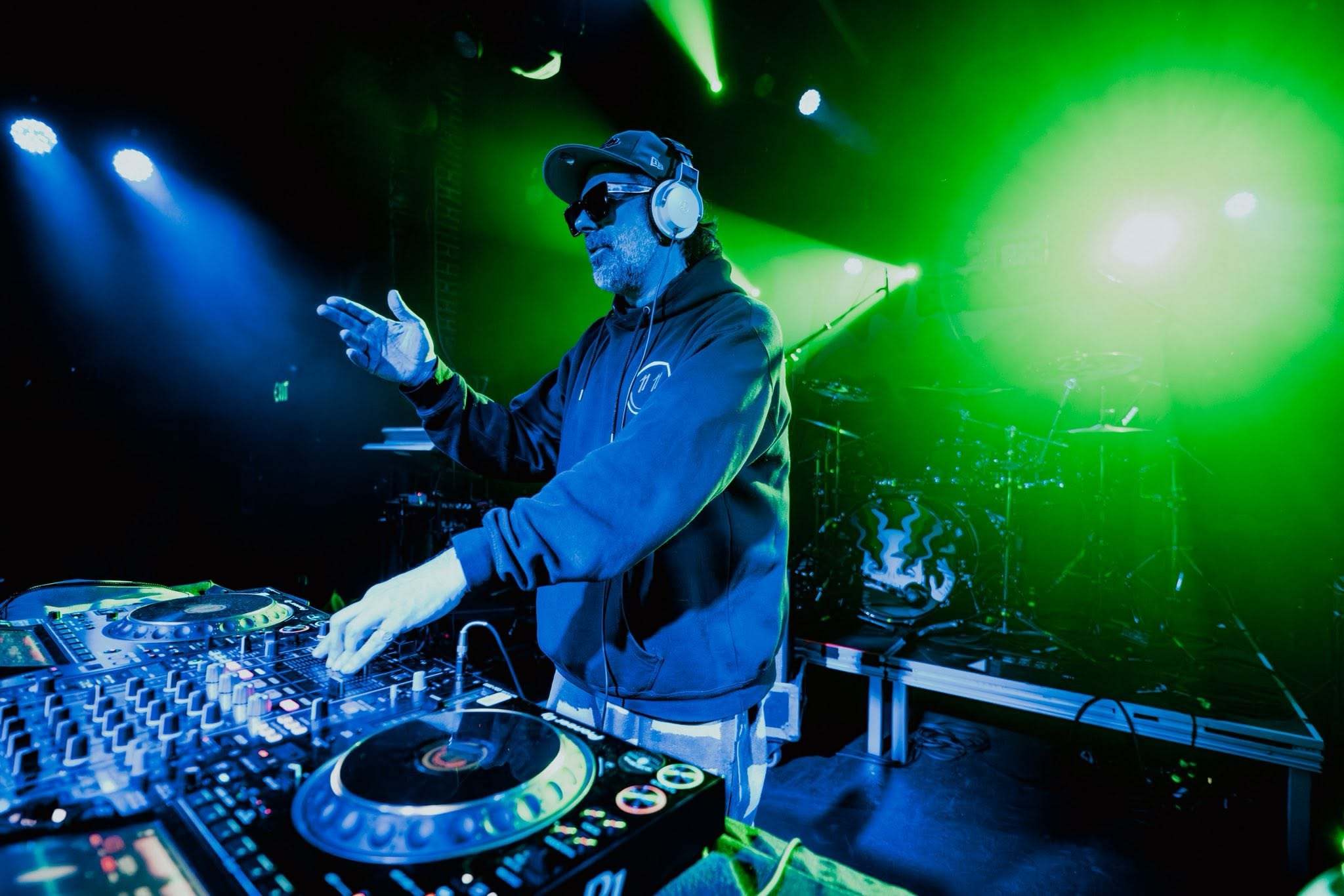
At the same time, Brownstein has been building a second career as a DJ, using the lessons he learned from the Disco Biscuits’ early years to nurture a grassroots audience. In August, he hit a snag when a support tour he had lined up fell through at the last minute but quickly pivoted and turned the run into a series of free shows.
The experiment was a success, with each show filling up and many even reaching capacity. More than that, it proved the DJ Brownie concept, encouraging the bassist to consider it his primary side-project outside of the Disco Biscuits.
Shortly after returning home to Philadelphia from a series of Midwest dates with the Disco Biscuits, Brownstein caught Relix up on his why he’s hopefully about all that’s yet to come.
Let’s begin by talking about your work as DJ Brownie. You have been increasingly focused on your DJ sets in recent years. What made you decide to start exploring that medium at this stage in your career and what was the learning curve like?
I started to DJ in 2014. I was talking to the Jam Cruise folks, and we had gotten to a point where it was like, “What project do you wanna bring on the boat this year?” I’ve literally formed bands to play on Jam Cruise before. This time, they suggested to me that they’ve got this great disco on the cruise with a DJ booth and asked if I would do a DJ set.
My son Zach was a DJ at the time. He was in a DJ academy, and he had a Traktor DJ controller in the house, so I asked him if he could just do me a favor and show me how to DJ, and he did. He was 8 or 9 years old at this point, but we sat down and he showed me the basics, and I watched a couple of YouTube videos about how to mix, and I went on Jam Cruise, and I played my first DJ set there.
People say that DJing is easy, but I learned very quickly that’s the furthest thing from the truth. It was fun but every mix was a disaster. I couldn’t beatmatch, even with the sync button. Now, it’s gotten to the point where it’s easy enough for me to jump up on any system and mix songs together without thinking about it. But, man, it was hard at first.
It’s been a little tricky building this thing. I already have fans because of the Biscuits, and they are fans of electronic music, but we’re a band and we’re a jamband so going deep into real electronic music, when you’re coming from an improvised live-electronic world, there can sometimes be a disconnect. I’m not playing the kind of music that my fans originally connected with me over, so trying to find that sweet spot where the Venn diagram is and that can be a little tricky.
Fast forward to this past Jam Cruise. The Disco Biscuits were on the boat, and I went up into the disco and Flying Mojito Brothers were playing. I took a massive amount of inspiration from that moment. In fact, it changed my whole trajectory and style of DJing because there was such an incredible energy going on between the disco music that they were playing and the crowd, which was a jamband, live-music crowd.
When I started in 2014, I was playing new disco and deep house. And little by little, I got further and further away from that and started getting more into EDM and harder electronic styles. I got really deep into the older style of tech house from the mid-2000s and now, after experiencing that set, I’m trying to pull it back and center myself in music that’s more organic. So it’s been a full-circle trip for me as a DJ.
At what point would you say it became your primary side-project outside the Disco Biscuits?
There are so many factors that usually go into putting together a side-project like Electron. I’ve got to find a date where the venue’s available—when Magner and I are available, when Lotus is off the road [so drummer Mike Greenfield can be available] and when JRAD or the Tom Hamilton Band aren’t touring so Tommy is available. It could be quite frustrating to plan even one date, to be honest, only to have that date get pulled at the last second, which is what happened with our last Electron run.
But when I DJ, it’s just my headphones and my USB and I put them in a backpack, and I can drive or fly to where I’m going and play a show by myself. I don’t have to worry about anyone else’s schedule. So once I realized how much easier it is to plan when I’m only planning for myself, I started to really focus on this project. I already loved the music. I already loved the medium. I already loved the idea of curating a party using other people’s music. And when you add in the easier logistics, I started to concentrate more on this being my main side-project, to the point where now, after Star Kitchen stopped playing together, this is my only side-project at this point—I’m either playing in the Disco Biscuits, Tractorbeam or I’m DJing.
There are still one-off things like Rock the Pink, and we’ll find a date for the Electron Christmas show, but I’m not trying to build multiple bands or brands at this point. And my DJ sets have turned into me producing. I’ve made 13 or 14 songs in the last year and a half. I got to that moment where I was like, “OK, I’ve been DJing for 12 years. How do I take this to the next level?” And the only answer, for me, was that this needs to be my music. I needed to get into the studio, I needed to start making music and I needed to do it repetitiously in a way where it’s going to improve to the point where my songs are going to sound good enough to just mix in with the professional DJ music I was already playing. Now, I can play entire DJ sets where it’s all my music if I want to.
Historically, the music you debuted with projects like Electron or Conspirator ended up filtering over to the Disco Biscuits and seeding the group’s songbook. Can you envision any of the new music you’ve been working on turning into the basis for new Disco Biscuits originals?
In the old days, I would write songs for Electron, and they would all end up in the Biscuits. It was like a testing ground for new music. My most popular DJ song right now is “I Saw You Dancing.” I wrote it last year on the worst day of the entire year. I woke up to a flurry of negativity online—it was as bad as it gets for being the bass player for the Disco Biscuits on that particular day. I was at my mom’s house, staring down at my phone, and I was like, “God, this is just a disaster. What’s going on right now in our scene?” My mom and my girlfriend were like, “Dude, you need to put your phone down and clear your head out.” So I put my phone down. I went outside. I worked out for half an hour, and then I came and I picked up my computer, and I sat down and I started writing. In about 24 hours, I had this completely composed thing and it was clearly the best thing I had ever done electronically, in terms of an electronic-music song.
I had just had this experience with Flying Mojito Brothers, and I started to work on a new disco/indie-dance song. Within a couple weeks from that, the Disco Biscuits and Tractorbeam were both playing at Okeechobee. I played the song for the band, and they requested that we add it into Tractorbeam. So to answer your question, these songs are really well suited for Tractorbeam, maybe not as much for the Disco Biscuits. They are much more electronic sounding and much less live sounding than some of the other electronic things that the Disco Biscuits might incorporate. But everything that you make outside of the Biscuits is definitely there for the taking.
Shifting back to your live DJ sets, you pulled off quite the experiment recently when you had an upcoming tour pulled at the last minute due to low advance-ticket sales. Instead of simply staying home, you figured out a way to make the shows free and then posted a very open, honest message about the state of the current live-music world. You also reminded people that some of the Biscuits’ seminal shows early on were actually for just a handful of people who went on to spread the word about what you were up to. And this free run of DJ sets turned out to be a huge success. Can you walk us through how all of that went down?
In August, I was in Iceland playing a DJ set, my first international DJ set, at the Iceland Eclipse festival. And I got a call from my agent who told me that my entire DJ tour for the following week had been canceled. Now, I’m the opener on this tour, so it’s not like my tour got canceled—the headliner pulled out of this tour due to low sales—but to me it was like my tour got canceled and I was relying on this tour. This is my job, right? So if I have seven shows canceled, it affects me in a bad way. I can’t go and get new gigs in three days and replace the entire tour.
So, basically, I said, “We cannot cancel these shows. I don’t care what happens from here on out in terms of this tour except for one thing—I want to show up in the cities that I said I’m gonna be in and I wanna play.” I had been getting messages from people saying things like, “I’m flying in from California for my friend’s 40th birthday, or 12 of us are going to the show on Saturday night in Albany.”
So what I said in the post was that when the Disco Biscuits started out, our first 100 shows outside of Philly had less than 20 people at them. We went to Memphis and played a show for the five people that drove there from Penn State. Nobody from Memphis even showed up at that show. How could they? Nobody knew who the Disco Biscuits were. We were on our first tour, but we had these five diehard fans from Penn State—people like Carla, The Goff, Benjy Eisen—and they got in the car and they drove to Memphis. If that was today, they would have canceled that show, and those five people would have just been in Memphis going to Graceland.
And here’s the thing: You never know who’s gonna be amongst those 10 people in the crowd. You never know which person is going to be blown away, and which person might have a magazine, a radio station, a record label or a website that reaches hundreds of thousands of people a day. What I learned was that everything that happened to the Biscuits in those early years came out of us getting on the road and playing those 100 shows— whether it was learning how to play together or learning how to improvise, it all came out of playing those shows. If we hadn’t played those shows to basically nobody, none of that would have been possible.
Any show with only 10, 20 tickets sold in advanced is getting canceled these days. All of the opportunities that would have come out of those shows are just gone. You’re taking away whole potential careers because you don’t know when and where the lightning is gonna hit the bottle. And you don’t need 100 people or 200 people or 1,000 people to have that magic moment. You just need one person that loves what you do and has the ability to spread the word.
So I told them to call all the venues ask them if they’d make the shows free. I didn’t care if five or 10 people showed up. Hell, the Disco Biscuits played a show in Oregon for two people once. We showed up at the New Deal Roadhouse in Deal, New Jersey, and the only person there was Tom C—one guy, a taper—and we played the show and it was a great show. And each of the venues agreed to let us still do the show. I just knew, in my heart, that if I went online and said to the fans, “Hey, I get it, it’s tough out there, so come for free and tip your bartenders,” that people would show up.
I’ve been trying to figure out how to get around these fees for 20 years, and I finally figured it out—no ticket, no fee. [Laughs.] And it worked. People wanted to come out. They were going to buy tickets and come see the show—they were just going to buy their tickets at the last second. And why do people buy tickets at the last second? Well, because shows get canceled all the time now. After all those canceled tours during COVID, people have PTSD. You wait a little bit—unless the show is definitely gonna sell out.
So I drove all over the Northeast by myself—60 hours that week—and we pulled off a great tour. I had a great sold-out show in Albany. I had a great show in Buffalo. I had three times as many people come out in Portland as I had the previous time I played there. I had 100 people in Brattleboro, Vermont on a Wednesday and I’ve never played Brattleboro before.
100 people might not sound like that many for someone who has been touring in a band for 30 years but having 100 people come to see just me felt like I was playing Madison Square Garden.
They call the phenomenon of potential ticket buyers seeing plenty of tickets available online and waiting until the last minute to buy their tickets “Blue Dot Fever.”
I have another story about that. Recently, the Disco Biscuits were playing a show in Detroit on a Wednesday night. We haven’t played Detroit since 2002, so 24 years, and we weren’t expecting a big crowd. There was a friends-and-family ticket link the venue was giving out to help fill the room a little bit and that link ended up getting posted and 250 people claimed the tickets instantly. Obviously, a lot of those people would have bought tickets anyway, but the room was so packed that people were buying upgrades to get off the floor and onto the balcony.
I didn’t know what happened at first and thought, “The Biscuits must be huge in Detroit.” [Laughs.] But it just proved, once again, that people want to go out, they want to go to shows, but it’s tough. It’s a very difficult economy. It’s very hard for people to be able to have luxuries at a time when inflation has squeezed them to the point where their paycheck is stretched to the limit every single month.
And it’s really hurting the mid-size venues. On a three-week tour we just booked, two of the venues ended up shutting down before our shows took place and we had to move venues. That’s never happened in 30 years of us being in a band. You have mid-size bands like Papadosio, Dopapod and Twiddle going away. People look at Billy Strings and Goose as bands from our scene that have blown up in the last couple of years. But those are the only bands from our scene that have blown up to that size in the last 20 years.
It’s a struggle with the way tickets are. You see bands like moe., Umphrey’s McGee, STS9 and the Biscuits playing smaller rooms and then you look at bands like Eggy and Dogs that are coming up and about to explode and they’re not jumping to that next size room at the moment when they should be.
And nobody wants to talk about it. It’s all smoke and mirrors. You have to appear big. But this is the reality of the music industry. It’s not a personal thing. The economy is in such bad shape that there’s only a handful of bands that are doing really well at this moment. We’re seeing a jamband recession.
But when people ask me if I’m worried, my answer is, “Not really.” Unless I’m a totally crazy person who’s optimistic, I think there are cycles and things are starting to pick up a little bit. In the next year and a half, I think people are going to loosen up a little bit and start coming out again and in bigger numbers. I look forward to that—I look forward to everybody winning together.
I’ve always felt that one of the reasons the jamband boom of the late 1990s/early 2000s happened when it did was because of the socio-economic climate. The economy was good. It was a relatively calm time, politically, in the US.
I watch the crypto markets, and they are starting to heat up in a big way. Crypto is one of the only ways that very young people have to make up the wage gap. It’s the only place to take your money and make 100x or 1,000x on your investment. Most people lose, but some people make a lot of money doing it, and then when the markets pick up and it becomes a bull market, everybody starts making money together.
They say don’t bite the hand that feeds you, and Live Nation and AEG are the hands that feed us, but you have Live Nation reporting a record-breaking income of $1.3 billion, 52% up over the previous year. But all of these small bands are breaking up, and these small venues are shuttering.
What happened is that they inflated the price of our tickets via ticket fees, which means all of that money gets rerouted back either to the promoter, the ticket company or the venue. But none of it goes to the artist. I have asked 50 times, “Can we just raise our ticket prices by 15% to account for the fact that everything else has gone up by 15, 20 or 30%?” And I’m told, “No,” because they are already raising the ticket price because of the fees. When I say everything else is going up, I mean that our bus costs went from $5,000 a week to $15,000 a week in the seven years since the pandemic, but our ticket prices have remained the same or, in a lot of cases, gone down. Do I blame ticketing companies for all of these bands breaking up? Not entirely—I don’t think the market should necessarily have to support everybody that wants to be a musician. Your music has to stand the test of time for that to happen. But for a band like the Disco Biscuits that has proven that our music does stand the test of time to be priced out of the business because the economy is in a place where we can’t keep up with inflation due to the fact that the companies are stealing from the band, that’s ridiculous.
At the same time, you have to do more to get your name out there or you could go viral. Sometimes going viral is luck and sometimes is algorithmic. And with that, what you’re losing is kids picking up their instruments, hitting the road and honing their talents in the clubs.
I feel unbelievably fortunate. The Disco Biscuits are having a great time. DJ Brownie has had a hard time selling tickets when I go out by myself, but the Disco Biscuits, man, we just played Madison, Wisconsin, for the first time in 20 years. It was a big room and when that show got announced, I was a little worried. I never asked for the ticket count, and when I stepped out on stage and I saw the room, it felt great. Same thing in Detroit—same thing all week long. So when I say I can feel the energy picking back up in the music world, I can feel it at the Disco Biscuits shows and I’m super optimistic about the future of the jamband scene over the next couple of years.
In terms of the Disco Biscuits, it’s now been seven years since the band declared that “set break is over” and started touring again and about a year since Marlon joined the group. How do you feel things are going at this point, musically?
It’s a tricky topic because it’s an emotional topic for a lot of people. So I will say that, when it comes to the band making a lineup change this late in our career, there were a lot of reasons for it and it’s hard. And it takes a lot of time to get somebody new up to speed in a band that has 250 songs. It’s not even as much the songs as it is the jamming styles and really understanding the arc of a jam and how a jam develops over time.
Marlon had a jumpstart on that because we played together in Star Kitchen. The first time we ever played together in 2015, when I started Star Kitchen, I actually took a loop of a Maceo Parker track, and I said, “I wanna put a timer on for 10 minutes and play this loop for 10 minutes. I just want everybody in the room to feel what 10 minutes feels like. We could just put our instruments down and close our eyes and breathe for 10 minutes to feel what 10 minutes feels like.” And these guys looked at me like I was a fucking lunatic. But from that, Marlon got the feeling of not playing a fill for 10 minutes, of not doing a drop for 10 minutes, of letting something build in energy for 10 minutes because it naturally built up, even though it was the same loop. And then we played together in that band for four or five years. So I knew that I had great chemistry with Marlon and Aron [Magner] had played with him in The Very Moon musical and he knew they had great chemistry. Barber also played with him in The Very Moon, and he used Marlon as the drummer in a thing called the Jon Barber live band.
So we all had our own individual relationships with Marlon before he joined the band. But there’s gonna be growing pains over the years. He’s still learning the songs. Shit, Allen was still learning the songs, 20 years in—not in an offensive way, in the way that there’s so much material that it’s almost impossible to memorize it all. It’s an absurd amount of work to memorize 250 songs, some of which only get played every two or three years. You play it once and then you don’t play it again for a year so it’s an enormous amount of work.
That being said, our drum tech looked at me yesterday in the airport and he said, “Man, you guys were really clicking this week. It really started locking in.” And I was like, “Was it not locked in already?” [Laughs.] And we’re going to keep hitting new levels over the next year or two because that’s what happens with a new player.
What we’ve noticed in the last couple weeks is patience—the ability to patiently hold back levels of energy is what I’m starting to get used to with Marlon. He’ll start down at the very bottom dynamically and patiently work his way through all of those builds until he’s cutting up the ride cymbal toward the end of the jam. He’s very cognizant of not going to that ride cymbal too early because he wants to leave levels to reach, he wants to allow us to hit the peak altogether and he knows that, when we all start to hit it, he still has a level to go up to support us.
How have you felt that Marlon has changed the band’s sound thus far or has it mostly been about trying to get him up to speed so far?
Over the last couple of weeks, we’ve gotten more locked in than before. It’s almost more on me than it is on him. It’s on me getting to the comfort level of letting go at the earlier parts where the dynamics are super soft and super low and being patient because, the more patient I can be there, the more it hits when everything does come in.
It’s a lot like electronic music when you think of how they construct their songs. It just starts with one little thing and then the next thing comes in. Then the next thing comes in and before you know it, everything’s in and each one of those moments that you have, you get a tiny, little hit of dopamine, and by the time it all comes in you can feel the energy in a way that you might not have had. It just all started right there. It’s about the build. So we’re starting to master that as a four-piece right now, and Marlon is just incredible at that. He’s getting really great at playing untz-style music. He’s leaning into it a little bit more, but he also has de-untzed some of the music, which has been really fruitful for us.
Songs that started out with a distinctive beat, like “I-Man” or “Helicopters,” turned into untz songs over time. We used to have a regular “I-Man” and a techno “I-Man,” and every now and then we’d play the techno “I-Man.” It was The Perfume version. [The Perfume is an alter-ego the Biscuits use to play their material in a different style.] But then, little by little, “I-Man” turned into an untz song. There’s a lot of beauty to the untz-version of “I-Man.” It's fucking awesome. You dance. It’s a full-on throwdown, but there’s also an incredible amount of beauty to the regular version of “I-Man” as well. It’s got a rolling snare beat that has a lot of swing in it, and it’s so beautiful and we had let it go completely and Marlon brought it back. We didn’t say, “Hey, play this kind of ‘I-Man.” We just said we’re gonna play “I-Man,” and he went and listened to all of the different versions of it, and he went with the original beat and he’s merged them a little bit. He’s got the feel from the original beat, but he puts the floor-on-the-floor kick under it, which keeps it really dance-y.
So what’s been really special about this last year has been the renaissance of some of our earlier music that wasn’t as electronic being played a little bit more organically, a little bit more how we wrote the songs back in the day. They have a little bit more of [original drummer Sam Altman’s] feel and a little bit less of Allen’s feel, but one thing I love about Marlon is that he has this ability to slide in between the Sammy feel and the Allen feel, so I don’t think that we’ve lost anything. I just think we’ve gained a lot back, and that, ultimately, it’s a more diverse presentation of the Biscuits and a little bit less just focused on what we ended up doing for so long.
A lot of the reason that we ended up going that way in the first place was because that’s just the way the world was going. Everything was getting more electronic—our festival [Camp Bisco] was an electronic-music festival, so in order to fit in at our own festival we needed to just untz everything up. But I am, in my heart, a jamband guy. I am a Grateful Dead fan and a Phish fan, and those are my two favorite bands in the world, along with The Beatles.
So as much as I’m a house-music DJ and a house-music producer and an electronic-music aficionado and lover, I just connect with the organic beauty of a soaring guitar melody with a beautiful layer of piano under it and some light, soft swinging drums and ride cymbals. That’s the stuff you get out of the Jerry Garcia Band and all the eras of Phish that I love.
I talk about this with the band a lot. Sometimes somebody will do something that not everybody in the band likes, and there is that Venn diagram, and we’ve gotta find the middle of it. We’ve gotta find that moment, that spot where we all connect together. I’m super excited to be playing “Magellan” more often—and to be playing “Little Shimmy” more often and these other songs we hadn’t been playing as much.
They feel so good right now. Marlon plays “Little Shimmy” like Clyde Stubblefield. That’s something I knew from the first audition he ever had for Star Kitchen. It’s as authentic as it gets. It’s like when [Adam] Deitch plays a funk beat. And that’s something that Marlon brings to the table that the Biscuits have never had, not even with Sammy. We never had a drummer where the funk beat sounds like it could be out of James Brown’s band.
I have a list of songs like “The Very Moon” that I cannot wait to play with Marlon because I just know that they’re gonna come back alive—songs that I really have enjoyed playing with him recently that we had basically stopped playing entirely like “Three Wishes” and “Chemical Warfare Brigade.” They just didn’t really fit into our style. But Marlon brings them back in a way where they feel like they’re at the right tempo and have the right feel again.
And this is not any kind of a knock on Allen. Allen is, literally, the single best drummer in the world when it comes to playing electronic-style music. I truly believe that there is nobody better than Allen at playing a four-on-the-floor beat. He is the most precise, technically proficient drummer that there is in that style of music, and I honestly wish him huge, huge success. I would not be surprised if we heard in six months that Allen was playing with The Chemical Brothers or The Crystal Method. Literally, the dude can be picked up by any EDM group that wants to go out and play with a live band, and he is the absolute single-best choice for that in the world.
I’m incredibly impressed with his technicality, his precision, the amount of work that he does to be at that level. It’s like how he’s a marathon runner. He’s a marathon drummer too, so when I talk about things that Marlon brings into the band that we didn’t have. It’s just that Marlon and Allen are different drummers with different styles, and so when you change it out, you’re gonna have different things happen.
For me, that’s exciting because what was awesome about the Biscuits in the first 10 years of the band was that we didn’t play anyone style of music. We played every style of music. We played jazz. We played classical. We played “Afro Blue.” And then it got to a point where we played jazz like two times in the last 10 years. We leaned into the things that Allen was the best at in the world, which you would be crazy not to do, right?
So the Biscuits have changed a little bit, but I really like preserving what the Biscuits started out as and what our intentions were musically—what we wanted to accomplish, which was to make the weirdest and craziest music of all time. Then, for me, I also wanna make beautiful music and I wanna make psychedelic music. So if anything, Marlon coming into the band is just about preserving the intention that we had early on to play all kinds of music.
He also lives in Philly and we’re able to get together at Barber’s studio to record and practice. It’s meant a lot to us to be able, as an organization, to be centered around one place. We hadn’t all lived in the same place for a very long time before he joined, and in the last year we have practiced together more in Philly, outside of being on tour, than we have in 15 years. We’ve practiced multiple times a week and you can’t buy that. You can’t buy confidence. Confidence is earned through repetition.
I have not felt this confident stepping out onto the stage with the Disco Biscuits as I do right now in several decades—at least in the 15 years since we stopped touring in 2011 and stopped rehearsing outside of touring.
I just call practices now. I’ll put it on Google Calendar, “Practice, Wednesday at 4,” and then everybody will just accept it. We don’t even talk about it. It just goes into Google. I was standing with a bunch of my friends who have bands and they all said the same thing, which was, “That’s amazing. We only practice when we get to tour and then we practice three or four hours a day on tour.”
Also, just to make sure people understand, it’s very normal for bands to not rehearse outside of tour when they’ve been together this long. That’s how we were for many years, but the bands that are at the highest levels, those guys get together and practice for two or three weeks before a tour starts and that, to me, says everything. That’s what drives me, knowing that there’s no shortcuts to success.
When the Disco Biscuits recommitted themselves to touring in 2019 and hit the road shortly before the pandemic, Barber said that he only wanted to fully jump back in if the band wrote an entire new repertoire of music, instead of simply relying on the back catalog you had built up during the 24 years before that. Since then, you have introduced a slew of new material, and the band released the album Revolution in Motion in 2024. Are you still actively writing new material at this point?
It’s really insane, but he was serious. It wasn’t just lip service. The dude did not want to go out and just play all of those old songs.
We have more than a handful of songs that we have not learned yet as a band. I have four or five myself that the Biscuits haven’t put into the set yet. We just put “Tantalize” in—that’s a song from 2010 that just got put into the Biscuits last year. And I have probably another 10 or 15 songs from the last 15 years that the Biscuits don’t play yet that are kind of on the backburner because we’ve put out so much music.
To answer your question, I do think that there’s such a thing as too many new songs. We only get to play 10-12 songs a night because of how long our improvisations are, and the new songs that we have from 2019-2025 are enough to launch a career off of. If that was all we had, you could go out and just tour on those 45 or 50 songs that we wrote recently. I started to trickle in some other titles into our setlists over the last couple of weeks for the first time in about a year, songs of mine that I know that the band knows exist. Jon and Aron have a handful of new songs as well that we need to add in. We have a song called “Atmosphere.” We have a song called “Without You” that I wrote when my brother passed away a couple of years ago [after a long struggle with Alzheimer’s]. He had asked me to write a song for him. He said, “I know you’re going to write a song for me after I die. Can you write it before I die so I can hear it?” And so I did.
It was both sad and funny. I would play it for him and he would cry and be like, “Oh, this is incredible, this is so beautiful, thank you so much,” and then a week later I would call him up and he’d be like, “Hey man, did you ever send me that song?” And I’d be like, “Oh, my God, this is the reality of late-stage Alzheimer’s.”
We would listen to it again and he would go through the whole thing again and cry. He heard the song for the first time 11 times, but he heard it all of those times, and every single one of those times he had an emotional reaction to it. At some point I hope that I’m able to play it for the fans and that they’ll be able to feel that same emotion in it. I’ve only played it once, even though it’s five years old. I played it at Magic Beans’ Beanstalk Festival with Scott Hachey and a couple of those other dudes.
But thinking about it, “Miracles” is from 2016, and that’s still a new song to me. It’s 10 years old and still feels new. [100x founder and former Disco Biscuits tour manager] Dan Berkowitz talks about anything after 2006 still being a new song. He’s just like, “What is ‘Catalyst?’” And I’m like, ‘It’s from 2009.’ He calls it all mishegas. He’ll look at a setlist and be like, “It’s ‘Crickets’ > ‘Mishegas.’”
So we’ve got l 8 or 10 things we could possibly pull out, and we have an album’s worth of material recorded that hasn’t been released yet—we have about 16 unreleased songs that we’ve recorded. Most of them have been played and they were actually recorded over a year ago and now we are re-recording the drums with Marlon, so it’s taken a really long time to get this album done. The last one took a little bit less time, Revolution in Motion. Joey [Longtime friend and recent band lyricist and “coach” Joey Friedman] was out there a lot working on it but this one’s going a little slower, and I think we just wanna get this done and get it out before moving on to that next batch. We have “Scars of the Brave” recorded. It’s about to get mixed, and that’s our first one. And, from there, we’ll move on and we’ve got “Country Royale,” “Risky Business,” “Trapdoor,” “Simulations” and some of these other songs coming down the line.
As much as I love the Revolution in Motion songs, I connect deeper with the new batch of songs that are about to become an album. That’s possibly because I was more deeply involved in the creation of them and co-wrote most of them, so I have more of a connection to them. But it also has to do with the fact that we sped everything up 5 to 10 beats per minute from the previous album to make this album a little bit faster so it’s little bit more energetic, like some of the older music. It’s more of a “Helicopters” tempo. I’m the Phil Lesh of the band. I like the music to be loud and fast. I don’t know who the Bob Weir is yet. We don’t know who wants it quiet and slow, but I’m sure we’ll find out in our next 15 years. [Laughs.]
I really think is new album is going to connect to a wider audience. We’re not trying to go pop. I just think some of these songs have a bit of a wider appeal. Every time we play anywhere near Goose, people will DM me asking for “Country Royale.” Songs like “Scars of the Brave,” “Risky Business” and “Country Royale” are a little easier to listen to and I think people in the greater jamband world could listen to them and enjoy them.
So I think the next few years are going to be the best we’ve ever had and shatter people’s preconceived notions of what the Biscuits are.