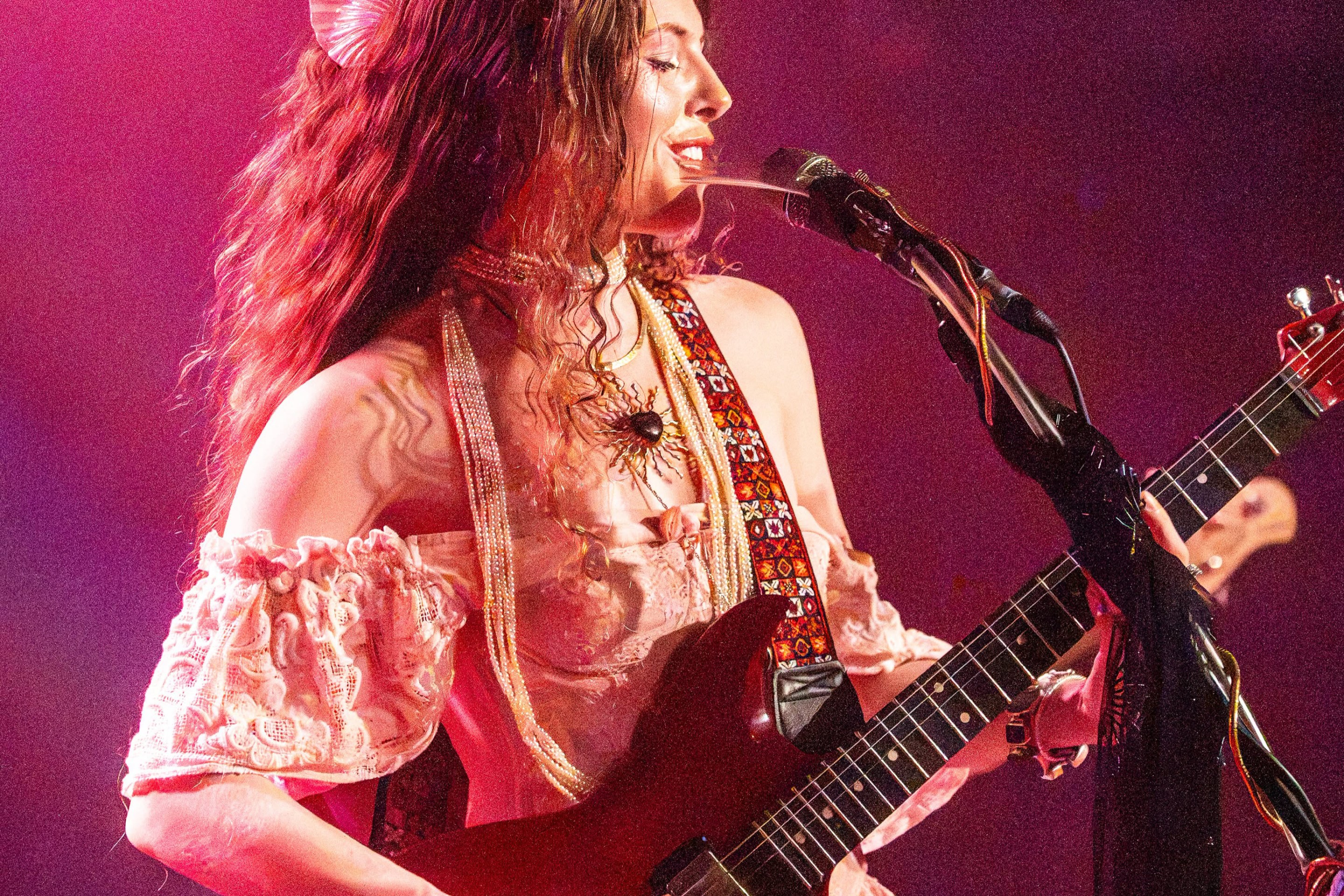
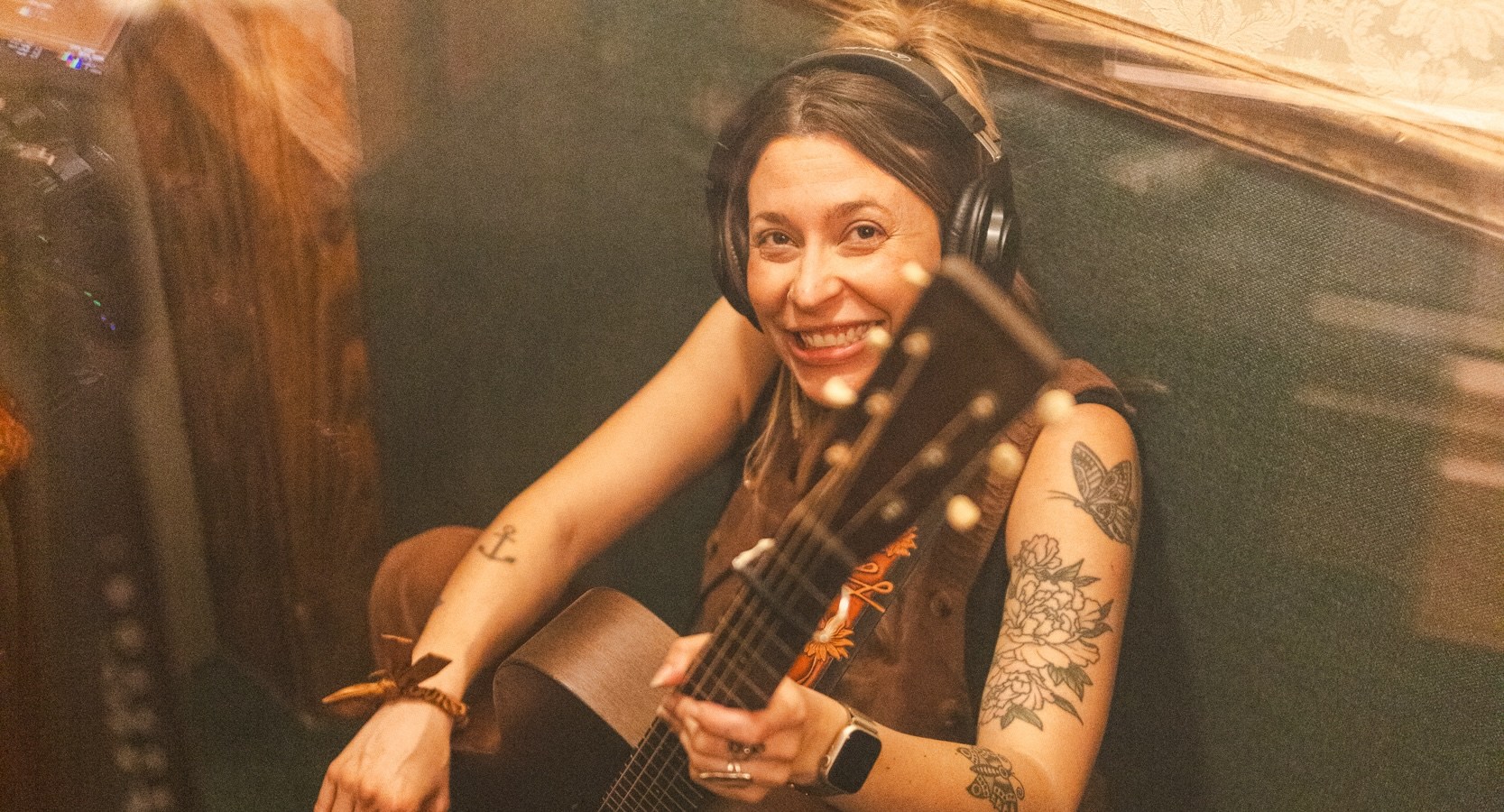
In August, Lindsay Lou released her fifth full-length album. As its title suggests, Bluegrass Women celebrates ladies’ significant and enduring stance in the musical tradition by renewing awareness of, and focusing on, the original songwriters with a multi-generational ensemble of all-female contributors.
A four-part docuseries accompanies the record. All of the installments are now available to stream on YouTube.


[Editor's Note: Yesterday, the Recording Academy announced that Bluegrass Women has been nominated for a Grammy in the Best Bluegrass Album category.]
…
Lindsay Lou first encountered the divine feminine during a DMT trip. The apparition took the form of a multi-hued, “glowing feline,” prompting further investigation in her work, which grapples with themes of womanhood, identity, and perseverance.
Released in August as the follow-up to 2023’s Queen of Time, Bluegrass Women (Work Of Bart Records and Soundly Music) extends her exploration of femininity into the bluegrass ether by giving greater credence to women’s historic and contemporary contributions to the genre.
Her latest project confronts the catalog's longstanding reputation of gender imbalance by selecting material deemed traditional or standard, particularly songs listeners might readily relate to male lineage rather than the women who wrote them.
“‘All I Ever Loved Was You,’ ‘I Only Exist,’ and probably also ‘I’ve Endured’ were real surprises,” Lou says. “Because I had learned them from The Stanley Brothers, Keith Whitley and Ricky Skaggs. I sang them for so long before I learned women wrote them.”
Drawing on her own experience discovering the authentic lyricists, Lou sought a similar effect for her listeners: “That surprise and delight that you feel, that ‘aha-moment,’ is really powerful when it’s a song that you know. So I wanted them to be all that. I wanted them to be standards. I wanted them to be classics, not deep cuts.
“A woman wrote this song. You know all the words. You’ve sung it a bunch. You’ve heard it on different stages at festivals for years and didn’t know that a woman wrote it. I wanted it to have that impact,” she explains.
Across 10 tracks, Lou challenges male-associated narratives and restores recognition to the women who helped establish and maintain the music style.
Bluegrass Women holds space for feminine perspective by prompting renewed attention and admiration for the lyricists and musicians behind some of the genre’s most beloved material, reinforcing women’s ever-present place as forebears of the genre's musical customs and an enduring force in its continued legacy.
…
In support of the project’s ethos, Lou invited more than 20 female participants, ranging from scene elites like Laurie Lewis and Allison Brown to progressive practitioners such as Sierra Hull, Aoife O’Donovan, Sarah Jarosz, and others, to take part in the Nashville sessions.
The album also includes bluegrass stewards AJ Lee, Allison de Groot, Brittany Haas, Bronwyn, Courtney Hartman, Emma Rose, Gena Furtado, Hasee Ciaccio, Jenni Lyn Gardner, Maddie Witler, Molly Tuttle, Phoebe Hunt, Sally Van Meter, Tatiana Hargreaves and Wila Frank.
“All of these women are people who I have a personal connection to. People who are friends, who I have jammed with, who I have crossed paths with, who I’m in the scene with, who I could easily text, ‘Hey, do you want to be on this record with me?’”
The task enabled the selected roster to serve as the majority rather than the minority, an unprecedented move in a scene and music style particularly known for its male populace.
“There’s a pretty obvious lack of women among the pioneers of bluegrass,” Lindsay Lou says while commenting on the genre’s population. “It’s not that there are no women; there just aren’t as many of them comparatively. There’s sort of an imbalance.”
Lou’s tracking list pays homage to pathfinders such as Hazel Dickens on “Won’t You Come And Sing For Me,” Ola Belle Reed’s “High On A Mountain,” “I’ve Endured,” the Jean Ritchie-sourced “Jubilee,” and Kate Wolf's “Like a River.”
Elizabeth Cotten’s revered “Freight Train,” Ma Rainey’s blues expression “CC Rider,” and Rosa Lee Watson’s co-authored “Your Lone Journey,” which collectively evoke tropes of nostalgia, heartbreak, and longing – not exclusive to women, but symptomatic of their plight.
…
The selected songs enable Lou and the all-women lineup to amplify the music's emotional impact by shifting the tracks’ lyrical perspective, taking something like Whitley/Skaggs's “All I Ever Loved Was You” back to the feminine impetus of heartbreak through the selected cast of players.
“Now that I’m a mother and I know what it feels like to have these hormones pulsing through my system, to be like a mother bear, and know the gravity and the magnitude of protection that I feel for my family, to sing the line, ‘My home you have broken/ You’ve wrecked my young life,’ to have dealt with heartache, it’s just a different thing,” Lou says, referencing the Dorothy Skaggs lyrics.
The result is a set of restored, moving recordings that grant attribution and respect to the original practitioners while giving today’s cast of bluegrass women a way to pay homage to their predecessors and celebrate each other.
Adding to the weight of the experience, Lou was gestating life while in the studio. And the record’s producer, Shani Gandhi, was only a few months behind Lou.
“Having another being, another soul, coexisting inside my body was just the most amazing experience. Even with all the heartburn and backaches, I wasn't in any hurry to rush through it. I was excited to meet him, but also, I didn’t feel a rush for that because sharing a body with him is such a wild and amazing experience,” she says.
“Knowing that every word I sang was reverberating in him… Having him inside of me while I was singing these songs drove that point even closer to home.”
Lou equates the making of the record to parenting: “It’s like motherhood; you sort of have to experience it to feel and understand it.
“All of us have been the only woman in the room, in the session, on the gig, in soundcheck, so we all have this sort of shared experience of being the outlier. To get all of us together, there’s a certain kind of mutual respect that is really felt.”
As a completed set, Bluegrass Women represents more than course correction; it provides space for women committed to the genre's principles to pay tribute to the female musicians who came before while affirming their own place in present-day practice.