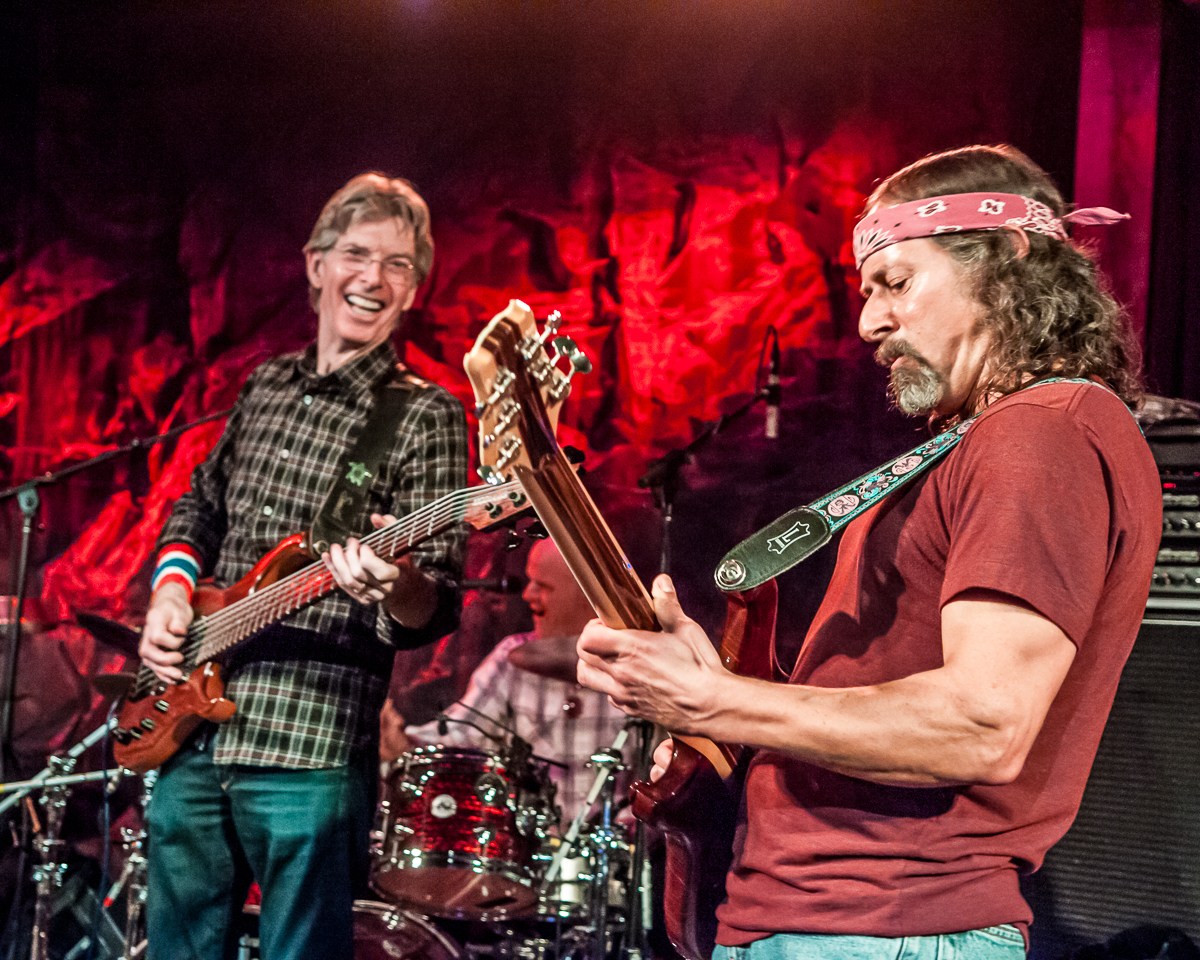

One of the initial reference points for the new studio album by Johnny Blue Skies & The Dark Clouds, was a live performance by the critically heralded but criminally underappreciated funk fusion innovators, Stuff.
“We were on a European tour early last year on those double-decker kind of tight claustrophobic buses,” Sturgill Simpson recalls, as he details his group’s collective connection to the pioneering act from 1970s. “We were on the bus with the crew, whereas in the States we're on our own bus. So at night we’d have these TV listening parties, and we just started watching all these old Live at Montreux videos. At some point we were like, ‘Let's just do that. It looks pretty fun.’ So when we went into the studio it had nothing to do with the music we’d just played on tour. It was us trying to capture songs based around serving these grooves as opposed to big, expansive instrumental features.”


In the letter he wrote to accompany the release of Mutiny After Midnight, Simpson also indicated that the band had revisited “off-the-beaten track concept records like Marvin Gaye’s ‘In Our Lifetime,’ where, in what looks like the end of the world, the artist’s response is ‘Let’s dance and make love.’”
He now adds, “I think when we went in the studio to make this record, we had no idea what was about to happen. We just literally came in every day and started from ethereal scratch. At the end of the day we’d made something out of nothing and that's where it went. Then, tomorrow was a different day and a different mood. If there was any method or premeditated approach to it, I knew we were going to make a protest record. I think the greatest protest is always liberation and freedom. But if we want people to listen to these social commentary songs, maybe we need to make them think it's a record about fucking.”
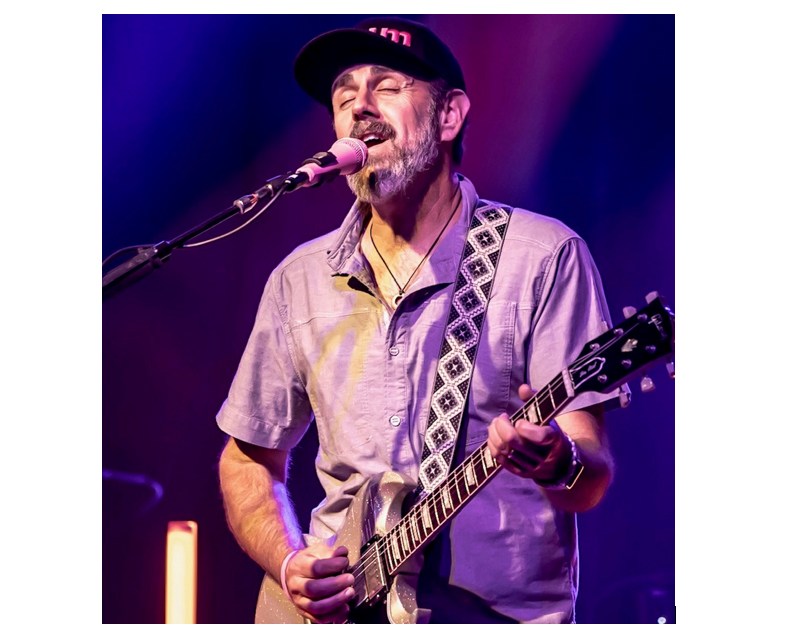
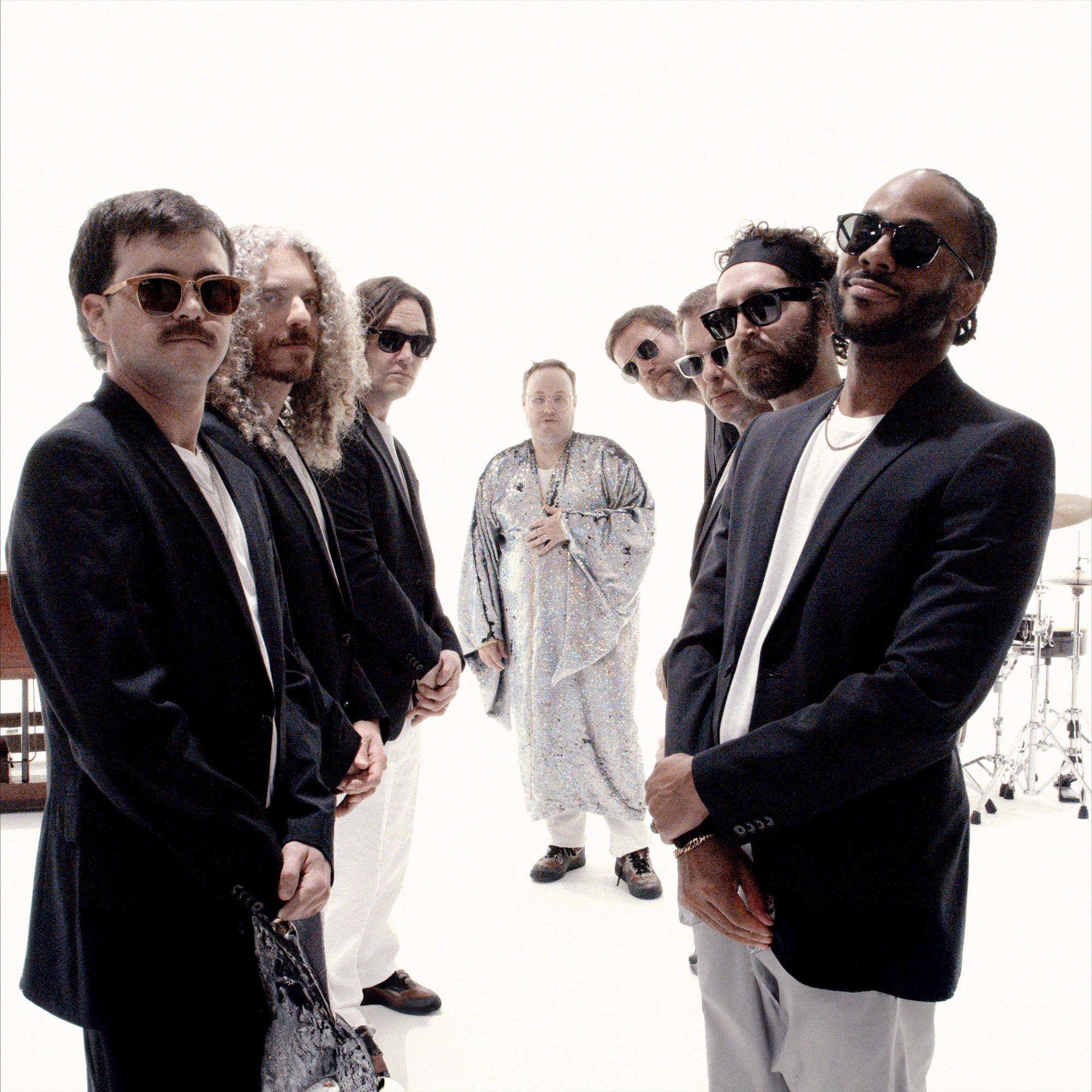
The following conversation with Simpson and his bandmates took place while they were winding down their rehearsals ahead of an extensive tour that opens in Austin on September 4 and continues through October 30. Simpson (aka Johnny Blue Skies) and the Dark Clouds, his crackerjack team of stalwarts—Kevin "Black Daddy" Black (bass), Miles "Easy Luvin" Miller (drums), Robbie "Raw B" Crowell (keys, sax) and Laur "Little Joe" Joamets (guitar)—reflect on the Mutiny after Midnight sessions and how this new music will manifest itself in the group’s dynamic, volcanic live performances.
In thinking about your relationship with the live setting, can you each talk about a show you attended as a fan that keyed you in to what the concert experience could mean for an artist?
Miles: Oh, man, that's a tough one to remember. My whole family is musical, so there was always a show. A concert was never a weird thing, it was just something you went to or did. I was a big fan of the Raconteurs back in the day when they were doing their stuff around 2007, right in that good alternative rock zone.
Robbie: I was raised pretty Baptist, so I didn't really go to shows. I was playing shows before I was going to them, starting at around 15 or so. The first real show I went to was Slayer and Damageplan, which was pretty awesome.
Laur: My dad is a guitar player, so probably seeing him play. My mother was a piano teacher, so I think the last boost was when I saw her pick up an acoustic guitar and play a few chords. I was like, "Wait a minute, if she can do it, I think I can probably figure it out."
Kevin: I grew up very Baptist as well in a musical family, but I was never really encouraged to do it. When I went to college, I had a rock-and-roll band. In September of 2005 we went to The Gorge to see Pearl Jam play three hours straight. It was the coolest show to this day I've ever seen and really important in my wanting to pursue that.
Sturgill: In grade school, maybe third or fourth grade, my dad took me to see Van Halen.
Kevin: Coolest dad.
Sturgill: The best show I ever saw, though, was when I was in high school. I used to go up to this club called Bogart’s, outside Cincinnati, because they had under-ages. Mr. Bungle was the opener this one night, and when they came out, the first song they played was “Paranoid” by Black Sabbath. The crowd started booing, so they played it about nine more times back-to-back. Then they walked off stage and I thought that was pretty rock-and-roll.
That reminds me of an Aquarium Rescue Unit show I saw where Bruce Hampton cleared out the room with all this atonal music, then when there were maybe two dozen of us left, he really hit the sweet spot with all these soaring, sublime instrumentals. I thought each half of the show was equally compelling but I suppose he was just playing what he felt in the moment. I imagine there’s some impulse you have relative to that but is there a balance you strike when you’re performing in arenas to so many folks?
Miles: I'd say that's about 95% of the time, what we're actually doing is exploring however the hell we feel right then in the moment.
Sturgill: I feel like in 2024 we had an unintentional breakthrough. We're on in-ears, so there's something of a disconnect anyway, but we're just locked in with each other.
From my perspective, it felt like the band I'd always wanted to be in since I was a kid, because it felt like five guys just jamming in a garage, no matter however many people are out there. So I don't really know to what extent we're literally playing to the audience. But around that same time is when everybody started saying, "Oh, this is a great live band." But there are no costume changes. It’s not Disney on Ice.
Kevin: He doesn't know we got him a catwalk for the tour.
Miles: Speaking to that a little further, when somebody asked Wynton Marsalis about who comes first, the audience or the player, he said, "Well, the player comes first, but the player is the listener as well." So it's like this double-edged thing. The listener is the player and the player is the listener. It's all one organism.
Thinking of the new album in the context of live performance, I’d like to ask each of you to name which song off Mutiny After Midnight you’re most eager to play on tour. But before I call on each of you, I was hoping that Sturgill could guess which tune you’re going to name. So Sturgill, what you think Miles is most eager to revisit?
Sturgill: Probably “Stay On That.”
Miles: That's correct. It’s not a simple groove, but essentially I have to play that groove the whole time. It doesn't change too much, so it's a nice challenge. I also like how it bounces. That’s a really fun one to play.
Sticking with the album for a moment, can you recall the first song you recorded where you felt that whatever larger idea you all had about how it would sound was finally being realized?
Kevin: The very first one we recorded was “Excited Delirium.” It was more of a straight-up rock song, though. It was a cool song but it wasn’t funky. So I was like, "I'm curious where the rest of this album's going to go."
Miles: That’s kind of the one little outlier, but it still fits in.
Sturgill: I think that probably happened because out of all those songs on the record, there were maybe two where I already had the tempo and the lyrics on a note in an iPad. We were like, "Well, we've got to start somewhere." So we went out there, started pounding a C chord and singing it. Then, literally two chords later, we had a song.
What about the first one that felt a little bit more like what you’d envisioned on the tour bus?
Miles: I think it was “Situation,” with the layering.
Laur: Kevin brought in a rhythm machine and they started playing around with it. Then we began recording on top of that.
Sturgill: “Situation” is probably where we found the grid, the blueprint for how this record was made. We had this bassline vocoder that would basically synthesize electronic music sounds. So I would have Miles put down a groove and then we'd fuck with this thing in a certain key. Like, “All right, we're going to make a song in the key of F.” Then we’d make this thing on a pattern grid and we’d go and record our parts around that sound. Then we'd pull the sound out of the mix and see what we had just done without the thing in there.
So that's where “Situation” came from. We were like, “Well that's the most disgustingly funky thing.”
Every record is different. It’s about finding tools to help you get out of your own head and capture where you're at now.
In terms of lyrics, did you write them then and there in the studio?
Sturgill: I'd say 90% of this record, the songs were written literally sitting in front of the speakers in like 10 minutes. Maybe in hindsight, that's not such a great idea. But yeah, a lot of it was just like, "All right, we got this." Not trying to take anything too seriously was an exercise in itself. Some of it was just singing a song about fucking.
Every day was literally going to the sandbox. Other than "Excited Delirium" and “Don't Let Go” which were sort of written, with everything else we'd get these blueprints mapped out and then I was like, “All right, I'm just trying to write Eminem lyrics.” I'd be like, "Give me 10 minutes…Okay, I got it.” There may have been a moment where I wondered if we should think about whether this is something that should be said forever.
Somewhat to this end, can you talk about what prompted “Stay on That?”
Sturgill: Again, we were like, "Let's write another song about fucking." So since we're a bunch of dorks, we thought, “Well, musical innuendo.” Also, it just seemed like a really great chorus. [“Stay on that D, baby, 'til you hit that G.”]
Miles: We were literally just playing a D chord. Then we were trying to figure out where to change chords. So we were like, "No, no, no. Stay on the D until you hit the G." At which point we were like, "Oh, shit!" It was literally just like that.
Sturgill: We were like, "Well, that's done..."
Miles: It's D and G chords.
Laur: That’s what the song is about—music
Miles: Yeah, it's about music, strictly.
Let’s move on to Robbie. Sturgill, what song do you think he is keen on playing from the record?
Sturgill: Anything with a sax solo.
Robbie: I was going to say “Situation.”
Sturgill: I think we all really enjoy it. Every day it changes because we're still learning. Now that we've learned the songs, we're learning what we don't want to do. So something that yesterday might've stressed you out, today is like, “Oh, we unlocked something.” Or you're like, "Why was I beating myself up so bad about this? It’s fun as shit. We got this."
Robbie: When you were asking about the songs where the focus of the record kind of came together, I was going to mention that we had the nuts and bolts of the “Venus” groove back when we were on tour. We’ve got a little room where we can play together when we're not on stage and the general pocket of “Venus” came from there. So that might've been the first coalescing of maybe this is where things are going.
Sturgill: Yeah, we played that groove on stage, sneaking it in other songs for the last half of the last tour. I was like, “We’ve got to do something with this.”
Robbie: It felt good.
Sturgill: We were saying that a lot of people probably thought we were playing “Happy” by Pharrell Williams.
Kevin: I would say also “Viridescent" is the one that really made me think we have our own sound. When that song came together, I was like, "This doesn't sound like anyone but us.”
Sturgill: Every day in the studio was really efficient and positive. Then the last song we recorded was the first time we had a false start. We'd been stacking up something for a couple hours and then we were sitting there asking ourselves, "Man, is anybody really digging this?" Then we were like, "No, this ain't us." So we peeled it all back to the drums and started over with a whole new approach. That turned into “Viridescent," which in my opinion, just as Kevin said, is the most us song on the record.
Thinking back to that “Venus” groove you mentioned, when you're on tour, will you go back and listen to yourselves for one reason or another?
Sturgill: Typically almost every night on the bus because we have the board recording that they'll load to nugs and it's great homework. We're kind of critical on ourselves and each other. So almost every night we'll listen to some portion of the show we just played to see what was really going on here. Then we'll say, "Let's remember that or explore that deeper tomorrow.”
Kevin: Or “Let's not ever do that again.”
Sturgill: Or “Let's not ever do that again.”
[Laughter.]
Sturgill: It's really strange. Tour is like a cocoon in a lot of ways because you're in this bubble with the same people. But these last two years, we'll go out and soundcheck for two hours. I think we get on the crew’s nerves. Then we play at night and you get in this head space where we'll listen to other things that people are into and we'll pull from that kind of thing.
Okay, Sturgill, let’s move on to Laur. What do you think he wants to play?
Sturgill: Laur's favorite song to play? It's probably something I would be surprised by. I think Laur really just wants to play steel most of the time.
Laur: That's not true. I just get on the steel whenever we stay on one chord for 10 minutes. I figure, “Well, I might as well practice steel now.”
Miles: They're off doing their own thing.
Is there one off the record that comes to mind for you?
Laur: It's really hard to pick favorites, but I guess what has surprised myself the most is how enjoyable it is to lock in with different parts of the record and find the groove. I enjoy playing R&B guitar and there's a lot of that on the record.
If I picked one, probably “Ain’t That a Bitch.” There’s such a nasty, almost Hendrix-y type of an Allman Brothers-y rock groove on the song.
Kevin: You sort of made my shit with that one yesterday.
Miles: I was going to say that. It was sick, do it again.
Thinking back to your last tour, can you point to a song that transformed itself in a major way over the course of those shows?
Miles: They all have micro things that change over time. So typically, it’s nothing drastic at once. It's the little things that morph into something.
Kevin: I’d say “Clockmaker.” It doesn't sound hardly anything like where it started.
Sturgill: “Scooter Blues.”
Miles: We were at the Gorge and you just started it in this totally different realm.
Sturgill: I don't know why, but when I started that song, I kicked it off and played the riff, but in my head I was thinking about some old Eric Clapton song or something. So I started it way too slow. The RPM on the record was just downshifted.
Then when the band came in, they were like, "All right, I guess we're doing this now." Then after we played it, we were like, "That was fucking nasty." So the rest of the tour, we’d ask ourselves, “How slow can we get this thing while holding the groove?”
Everybody loves J.J. Cale. He was the king of just sitting way back. So we basically spent the rest of the tour trying to chase what we did at that Gorge show, and I don't think it ever got better.
On to Kevin. Sturgill, what’s the song off the album that you think he wants to play?
Sturgill: I’m not sure if I know the answer to that question but I know the songs I really like playing because of what Kevin does—“Don't Let Go” and anything, really. He's in such a melodic pocket these days. I feel like this is a more fun record for him to play as opposed to some of the more traditional country stuff where he’s just holding it together.
Kevin: I would probably say “Viridescent" because I feel like I haven't stopped exploring yet, but it's really fun. Every time I'm like, "Oh, this can happen and that can happen." The guitars have a pretty set thing, so I have some forgiveness to move around differently depending on what's going on.
Does somebody want to guess Sturgill's favorite tune to play?
Kevin: That changes every day, but I feel like “Situation.”
Miles: “Excited Delirium” is pretty sick. He’s enjoying that one, I think.
Kevin: He's kicking that one off. It's a lot of fun. Maybe that one.
Sturgill: I just want to stay on that D.
[Laughter.]
We've been playing it for four weeks, but like Miles was saying earlier, it's all about the groove and locking in and everybody being a drum. But even now, a month in, I find I'll still go off in noodleville trying to find parts.
You end up playing things that are reminiscent of or straight out of a James Brown tune. You're like, "All right, well, how can I take that and turn it into something that I haven't heard that still fits the song in the same way?" So we're all still exploring. Then by the time the tour's over and we've played these songs for 200 hours on stage, that's when you realize, "Man, I wish we could go back and rerecord this record." At that point you've fleshed all the life out and it's like, "Why didn't I think of this in the studio last year?"
What was your approach to the sequencing on this record?
Sturgill: From a record-making perspective, I think about this shit too much. It's like the flow state. With everything, you're trying to reach flow state. That’s true of setlists as well because every night the goal is reaching a flow state. It's all about sustained emotional tension or release.
So sequencing records has always been the favorite part. This time was frustrating, though, because we recorded more songs than would optimally fit on vinyl. So there were technically two sequences. For me, the real record is the long version but we had to remove a couple songs that were covers for the vinyl, just for groove optimization and timing. But to me I feel like the sequence with “You Don't Miss Your Water” and “Party All the Time” is a more absorbing experience.
When it came to your vocals on Mutiny After Midnight, was there one that surprised you in terms of how you were able to execute it?
Sturgill: I think “Don't Let Go” was probably one of the top five songs I've ever recorded. I can hear how my voice has changed over the years and gotten a little deeper and gravelly. So I don’t think I could have recorded that song 10 years ago. It would've been a different sound.
The five of you have been doing this for a while in all sorts of different settings. Can you think of the most random or surprising place you’ve heard your music?
Laur: I was watching Yellowstone with my girlfriend and I was like, "Wow, I've heard this before."
Miles: In a couple NFL games, sometimes at the end of a commercial break, there'll be a song playing and I'll be like, "Oh shit, that’s us! Right on!"
Kevin: There have been a few times, but what comes to mind is when we were down with my fiancé’s parents in Cocoa Beach at a beach bar, somewhere you’ll hear Toby Keith or Jimmy Buffett. All of a sudden, a song from Metamodern came on. It was “Voices,” which is not even one of those songs that’s typically played. I was like, "What?" Then I told them, "This is us." They're often more excited than I am.
Sturgill: The last time we played a show in Lexington, Kentucky, my back was just prison tense. My shoulders were in my ears and a friend in town was like, "Hey, I know a really good masseuse. They can get you in today."
So I went to get a massage. I'm literally lying there on this table getting the shit beat out of me. There was some kind of auto shop or something next door. Then all of a sudden they started playing one of our records so loud that the wall was shaking. I was like, "This is the most unfucking relaxing experience I’ve had in my entire life. You’ve got to be kidding me.”
If I asked each of you to name a perfect song, what comes to mind?
Kevin: There are so many from different genres, that it’s almost unfair. But I’ll say Guns N' Roses’ “Rocket Queen” is a perfect song.
Sturgill: That's a pretty good song. I’ll say “Unchained Melody,” sung by anybody who can sing. “Whiter Shade of Pale” has always been one of my favorite recordings. Just the sound—whatever they did in that room when they hit record, everything was out of sync just enough. It's so beautiful.
Laur: “Running” by Baby Huey. He’s an artist that I really didn't know anything about, but I really got blown away hearing it on the radio, I was like, “What is that?”
Robbie: “Neither One of Us,” Gladys Knight.
Miles: “Overjoyed” by Stevie Wonder. It's not a big hit, but it's a moving song.
Will you take on a song that you know is going to be a challenge and may be somewhat out of your wheelhouse—so you may not perfectly execute on it—just because it’s something you enjoy?
Miles: I feel like that's all of them. Nothing’s perfectly executed. We're always reaching for it.
Kevin: We don't want to do it exactly like them, but you want to pay your respects.
Miles: And keep the essence of it.
Kevin: But you don't want to just be a bar band copying note for note. That's no fun for anyone. Except maybe the drunk guy in the back.
Sturgill: It's tough, man, because I'm learning. I don't sing the way I used to, or at least I don't want to. If you're going to do it, do it justice but make it your own.
Basically any song we choose to cover, there's a reverence or a reason we have chosen that song. There’s something about where it fits in and what we're saying with this band. Then every night we’ll just try to crush it.
So if this band actually decided to play “Free Bird,” people would be like, "Damn, they played the shit out of ‘Free Bird’ tonight." That'll never happen, but it if it did, it would be on like Donkey Kong. We would fucking destroy “Free Bird.”
Is there a song you’ve worked up during soundcheck or rehearsal, that’s never quite found its way out because you appreciate it but not on the requisite level?
Sturgill: As much as we might love to blast “Keep on Loving You” by REO Speedwagon in the studio, I don't think there's any reality where we need to go out and play that song live. It's a slippery slope that can turn into: “Oh, they want to hear a completely different setlist every night.” So then we’ve got to go out and play a bunch of half-assed, barely stitched together covers to make it look like we're this eclectic fucking diversity monster. But once that YouTube video comes out you realize in hindsight maybe you shouldn't have played that shit.
Then again, last time we were in rehearsals, we worked up Peter Gabriel’s “In Your Eyes” for a couple days, to the point we actually got it pretty locked in. At which point I was like, "We can't do this. Yeah, we could probably go out and bring an arena to its knees with that shit, but is this us? What are we doing here?"
The more I think about it now, “Yeah, why not? It's a beautiful song.”
Miles: We just didn't have enough boomboxes to hold over our heads.
You were talking about album-sequencing earlier. When it comes to performing live, have you ever considered playing two sets? That’s sort of like flipping over a record, so you get a second chance at an opening and closing track.
Sturgill: Oh, hell no! That's like pulling out mid-stroke. It takes us an hour to get really locked in and warmed up. Once you hit flow state at 90 minutes, then it would be like “Okay, we're going to go smoke a cigarette. We'll be back in 20.” Then you’ve got to get back in that zone? Fuck no, dude. We're going, let's go!
Also, with my ADHD I can drive 20 days in a rainstorm once I get focused on it.
Last question, swinging all the way back to the recording of the record, what image appears when you think back on the process of making Mutiny After Midnight?
Miles: We had just gotten off the road and we were just feeling ourselves. I was feeling myself personally, so I was just having a good time. I don't have a specific image I can share, other than just having fun.
Robbie: I've never enjoyed making a record that much. It was good vibes and no bullshit. It was a rare situation where everyone had the freedom to be themselves and no one was trying to be anything but themselves, which is usually not the case when you're making a record. There's generally some weird set of obligations or expectations that you're trying to fulfill. There really wasn’t any expectation of anything other than doing the best job possible.
Laur: Chocolate covered almonds.
Kevin: Yeah, the good trail mix. Double Trouble, I think it was called.
It was just a good energy. For me, the baby was on the way and I was just hanging out with the brothers, making music and wanting to be the best we could be. Like Robbie said, there was no outside producer in the room. We'd give each other some tips if we heard something and it felt like everyone was lifting each other up.
Sturgill: There were a good two days where the record was probably going to be titled Horny. That’s because it was devilish. Then I was like, "Maybe not." But that tells me we were in a very carefree, fun, relaxed state.