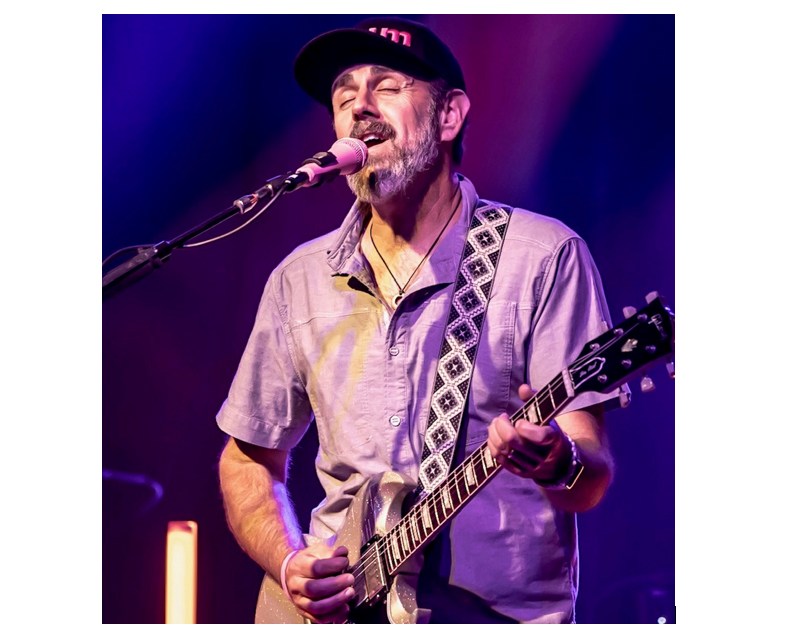

Photo by Casey Flanigan
It’s a late-April afternoon and three-sixths of Lettuce’s current lineup are sprawled out at Relix’s New York City office, two days after their 4/20 blowout party with John Scofield at Port Chester, N.Y.’s Capitol Theatre. This year, April 20 fell on the same weekend as Passover and Easter, and some band members have already scattered to spend time with their families, but a few principal members of the 27-year-old funk collective have stuck around their former city to chat about their newest LP, Elevate. They’re in the process of tracing the album’s origins, yet, somehow, their outfits and auras convey just as much about the band as their words.
Wearing a simple string of wooden beads, drummer Adam Deitch projects a calm authority while fielding questions. Vocalist/keyboardist Nigel Hall, sporting a baseball jersey modeled after Bad News Bears (appropriate given his knack for humor), exudes more visceral energy, gesturing freely as he speaks about Elevate. Bassist Erick “Jesus” Coomes—who has grown into perhaps the most recognizable member of Lettuce, thanks, in part, to the long blonde hair that earned him his nickname—is wearing a sweatshirt that declares, “Jesus Loves Trap Music.” At one point, Deitch jokingly refers to him as “Mr. California," and his West Coast charm is a breath of fresh air in the stodgy confines of Manhattan.
“If you’ve been coming to all our shows, then you’ve heard the songs on the record,” Coomes says, gearing up for the punchline. “If you haven’t, you should probably start coming to our shows.”
The joke lands well, with awink and a laugh, but keepingup with Lettuce’s seeminglyendless tour schedule isn’t aneasy task.
Over the past few years, the sextet has kicked into overdrive, circling the globewith a take-no-prisoners workethic. Simultaneously, they’veredefined their sound. 2015’sCrush portrayed Lettuce as thejam scene’s party-funk masters,while 2016’s Mt. Crushmoresaw them dip their toes intomore adventurous sounds. Butit wasn’t until their live release,Witches Stew that the bandfully committed to going biggerand bolder. Reimagining eightMiles Davis tunes, Witches Stewshowcased Lettuce’s cerebralside, dabbling in the worldof jazz-fusion and satisfyingtheir hunger for new, exoticsoundscapes.
Given Lettuce’s long history and evolution—they formed in 1992 around Boston’s esteemed Berklee College of Music—it’s amazing to think that it wasn’t until 2015 that guitarist Adam “Shmeeans” Smirnoff called up his bandmates and told them it was time to make Lettuce their primary focus. Though there have been a few lineup shuffles since then—guitarist Eric Krasno has mostly stepped away to work on other projects, keyboardist Neal Evans has been touring with Jack White and Hall, a longtime satellite member of the group, has returned—they have now settled on the steady core of Coomes, Hall, Deitch, saxophonist Ryan Zoidis, and trumpeter Eric “Benny” Bloom. (Lettuce’s list of past members reads like a rather impressive class notes section in a university alumni mag: Early keyboardist Jeff Bhasker has produced everyone from Kanye West to fun., trumpeter Rashawn Ross plays with Dave Matthews Band, saxophonist James Casey is a member of the Trey Anastasio Band and occasional sub bassist Matt Rubano spent time in Taking Back Sunday.)
“People were telling usthat we weren’t ever going tomake a dollar,” says Coomes.“Shmeeans basically figuredit out. He talked to each oneof us, saying, ‘Hey, look, I didthe numbers and figured outwe could afford to be a band.Would you like to be a band?’We were like, ‘Yes!’”
Phoning in a few days later, Smirnoff remembers that time vividly. “I started hearing through people that Lettuce had a little bit of an underground following around the country—more than some of us would have known,” he recalls. “We took a gamble.”
Smirnoff estimates thatLettuce have hundreds of songsin their live repertoire, and it’sgrowing all the time. They seemto be one of the few bands witha healthy democratic structure,lending to their free expressionin the studio and onstage. Hallname-drops the Grateful Deadand Phish as bands they’d liketo emulate. They want to build acommunity around their musicand enlighten the masses.
“Let us borrow your soulsfor a minute,” Hall says. “Wepromise we will give them backto you better than when we gotthem.”
On their new LP, themembers of Lettuce walk amusical tightrope, mixing theirhorn-laden bops and soulfulgrooves with adventuroussynth sounds and world-musicinfluences.
Russ Elevado, a Grammy-winning engineer who has worked with D’Angelo, Erykah Badu and The Roots, sat at the helm for the new record. Apparently, he was a self-professed fan of Lettuce far before they reached out to collaborate on Elevate.
Assembled outside Denver at Colorado Sound studio, the band would jam for 30 minutes at a time, getting a feel for one another and finding the music along the way. That relaxed environment kept the momentum moving forward; often, the first take was the best take. Recording sessions for songs like “Purple Cabbage” and “Trapezoid Dub” went deep and stayed experimental. The band only went forward with an idea if everyone agreed. They drank wine and laughed. In short, they had fun.
“Each album has had a goalof trying to capture some of ourlive elements to a record. Foreach record, we’ve capturedmore and more of that image ofour true self. This album reallydoes that,” Smirnoff confirms.
Perhaps the album is best exemplified by the Middle Eastern funk of “Krewe.” Deitch composed the song almost entirely before showing it to the band and sees it as a partial tribute to Éthiopiques, a ‘60s Ethiopian funk band. However, it wasn’t until each member of Lettuce put their own spin on the track that it truly came alive. Without that sense of collaboration—on or offstage—it could never fly under the Lettuce flag.
“Now that we know what’s possible, we want so much more and we’re looking forward to the future in a very confident way,” Deitch reflects. “Seeing how it unfolds is a beautiful thing that we’re very thankful for. If I went back, I’d tell those kids in 1992: ‘Keep your head up, go strong; these are your friends for life.’”
This article originally appears in the July/August 2019 issue of Relix. For more features, interviews, album reviews and more, subscribe here.