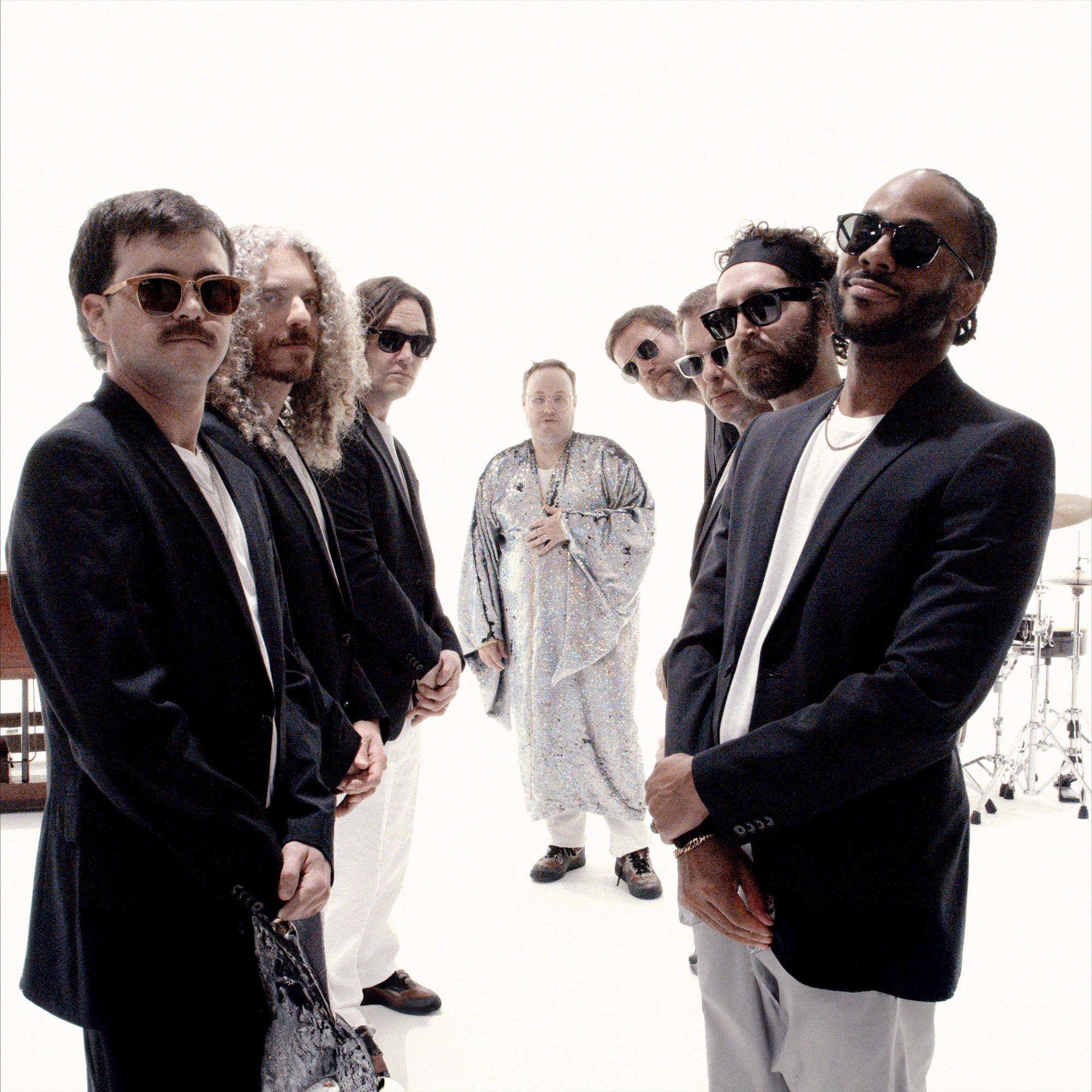
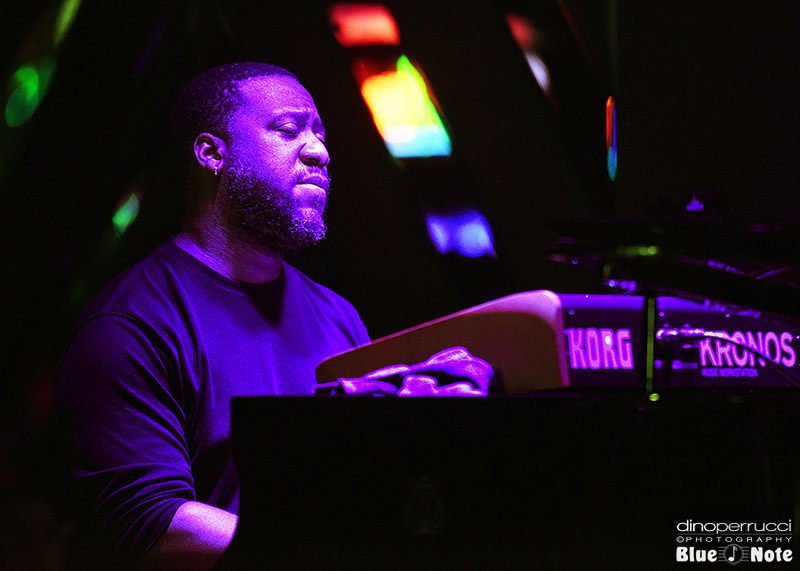
Robert Glasper is no stranger to apacked schedule, but this month has taken that to a new level. TheGrammy-winning pianist, producer and bandleader is nearing the end of a 28-day,56-show run at New York’s Blue Note jazz club, during whichhe’s brought together many of his various projects and offered tributes to thelikes of Stevie Wonder, Roy Hargrove and J Dilla, reprising the ambitious runhe offered at the venue in October 2018, but with even more nights of music.This week, Glasper is playing twelve sets over six nights with his originalExperiment quartet, featuring bassist Derrick Hodge, multi-instrumentalist CaseyBenjamin and drummer Chris Dave, the group that helped Glasper record hisGrammy-winning Black Radio.
Earlier this month at the beginningof the Blue Note residency, Glasper also released a new album, Fuck Yo Feelings,a mixtape-inspired collection that saw the pianist teaming up with an array ofmusician friends—including Herbie Hancock, Yasiin Bey, Andra Day, YBN Cordae,Terrace Martin, Denzel Curry, Baby Rose, Bilal and more—for a two-day,free-form, improv-heavy studio session.
Just before kicking off his finalstretch of Blue Note shows this week, Glasper spoke about the impressive taskof curating a 56-show, multi-band residency, how he attempted to bring his liveshow to the studio with Fuck YoFeelings, his work on Brittany Howard’srecently released debut solo album and why it takes real courage to be your ownartist.
How did the monthlong Blue Noteresidency come together, starting with the one last year in October 2018?
The whole thing came about because, throughout the years, I’ve had so many different bands and artists that I’ve worked with within those bands and special guests for different shows and on my records and all that stuff, so Blue Note had the idea of me doing this. I’ve done shorter residencies different places, like four nights, and Blue Note has done this maybe three times before with three different artists, but I’m the youngest one to do it. They thought of me because of all the different colors I bring and the different bands and special guests. They thought it would be cool, and I think it’s a dope idea. Normally, depending on where you live, you only probably get to see me once a year, and depending on what project I’m doing at the time, that’s the project you’re gonna see, that one thing. But here, it’s a hub—this whole run, I think I’m doing eight or nine projects? [Laughs.] I’ve had a lot of people fly in and catch something I’m doing on Wednesday, then Thursday I’m doing a whole different thing. There have been people from literally other countries flying in to see the different configurations I have, so it’s been dope for that, for sure.
Do you see a lot of the same faces inthe crowd, or does it change from night to night and project to project?
Definitely differences. You know, Ihave my jazz crowd, my R&B lovers crowd, my hip-hop crowd. The StevieWonder tribute was definitely an R&B-loving crowd. When I did my Mos Defweek, obviously it’s a hip-hop crowd. With my piano trio week, definitely ajazz crowd. When I did the J Dilla tribute just now, it’s the hip-hop crowd.And sometimes it’s a nice mixture of both—this week it will be a mixture of allmy different crowds, because it’s my Experiment band, which is the basis of BlackRadio.
How do you decide how to curate thevarious groups, especially going from the first year to this year?
I just try to do it as different aspossible from last year, you know? Everything has been different except for thefirst week, when I had Mos Def both years. By popular demand, they wanted itback again. But I had all different bands last year. It’s just me reaching intothe bag of goodies I have and being like, “Hmm, what can we do?” [Laughs.]It also depends on schedules of other people and stuff like that, so wedefinitely start the process a few months in advance to see what’s possible.Luckily, I know a lot of artists and musicians, so I have a lot of options.
And how often do surprise guests showup, either planned last minute or not at all?
Oh people hit me up all the time—Italked to two people this morning. Some people just show up out of the blue, andsome people just hit me up the day of. This artist I talked to this morning,she says she’s gonna come this Friday—I can’t say who it’s gonna be, because ifshe doesn’t come then I’m fucked. [Laughs.] But it’s a big deal.
This time around, we’ve had Q-Tip comethrough, Anderson .Paak, Black Thought, Common, even Miles [Brown] from Black-ish,Anthony Anderson, Angela Davis, Meshell Ndegeocello. Just a lot of people. That’sthe beauty of it—a lot of people come just for the show, just to be in theroom, not even for the purpose of jumping up, because it brings so many peopletogether. It’s a great experience.
Have you noticed an increase in peoplehitting you up this year compared to last?
It pretty much the same. Last year wasbonkers and this year is bonkers. It’s the same amount of bonkerism. [Laughs.]I think I just coined a word.
And the tributes—you mentioned theStevie Wonder one, Roy Hargrove and J Dilla, and last year you did Miles Davisand Mulgrew Miller. How do you choose those and who the band will be that joinsyou?
I pick people who really had an impacton me, not necessarily who’s the most popular person or who I think will selltickets. Like, Mulgrew Miller doesn’t sell tickets, but he was somebody whoimpacted me in a big way on my instrument. It’s great when you do that and givecredit where it’s due and show props to people who have gone on. Last year,Mulgrew Miller’s wife and daughter came, and this year Roy Hargrove’s wife anddaughter came. When I did the J Dilla tribute, his mom flew in. I think itresonates with people when I do tributes, because they know I’m a musical snob,in a way. I feel like I set my bar really high—I don’t have room formediocrity. When I do something, I try to do it with the best cats, the best musiciansand artists, and try to do it at a high level. I choose the artists I want topay tribute to and I choose musicians who I feel will represent that music thebest. And I know so many great musicians, so it’s not hard.
And when I did the Miles tribute, Ipurposefully did it without trumpet, because that’s something different andshows you that Miles was bigger than the trumpet, you know? All the years hewas around influencing people, he was going through all these different genres,and he brought all these people together—the Hollywood stars, the athletes, themusicians. A lot of people like to narrow him down to just a trumpet with amute in it, and he was bigger than that, so that’s why I took the trumpet outof it to show how he impacted music in general.
Any idea to who you might want to paytribute to next year?
Man, I can’t even think about nextyear until I get through this week. [Laughs.] It’s funny, with thisresidency, I don’t even think about the next thing I’m doing within the residencyuntil the day before, because I just have no time to wrap my head around it. Ididn’t start thinking about the Experiment show that I have today till lastnight, as far as getting the stuff together—what we’re gonna play, things likethat. Once I finish this residency, then we’ll talk to Blue Note, but I knowthey want to do it again. And I do, too. It’s great.
Is it exhausting jumping from genre togenre with all these different configurations?
Oh, nah. I jump genres like that in one show, depending on the band. [Laughs.] I feel totally at home.
Now that you are thinking about this week with the Experiment, is there anything that you're particularly excited about regarding the shows?
Honestly, this particular band hasn’treally done shows together in years. This is the original Experiment. We didone thing together maybe four years ago—one show—and before that, it had beenlike five years. So, in a real way, we haven’t played together since2011. So this is definitely going to be a reunion, and I’m really excited tosee what happens. I know it’s gonna be great, no matter what it is, becausethey’re all my favorite musicians. And we added another element: an amazingguitar player named Isaiah Sharkey. He’s joining the crew for this run.
Do you guys get any time to practiceat all?
Nope! We’ll practice at soundcheck.Soundchecks are my rehearsals. I’ve never had a rehearsal outside of soundcheckfor my shit, for this residency and stuff like that. It’s always been, “Hey,let’s meet at the club at three o’clock before the doors open.” It gives us afew hours, and we’ll be cool.
Moving on to your recently released FuckYo Feelings album, which seems to have come from a similar idea as the BlueNote residency—bringing together various musicians to celebrate theintersections of different genres and configurations.
Yep—and fuck your feelings about allthat shit. It’s just about, in a big way, leaving people alone, taking yourfeelings out of what somebody else is going through or what they’re doing—justleave them the fuck alone. [Laughs.] Whether you’re gay, straight,black, whatever your shit is—if you’re just being you, who you are, let peoplebe and let people do what they do. It’s not about your feelings at that point;it’s about letting people live their truth. Period. And that translates tomusic, too. If artists listened to what everybody had to say all the time, wewouldn’t have a Prince, a Miles Davis or a Michael Jackson—you can go down theline with all the great ones. They were put on this earth for a certain thing,and you may not understand it right now, but this is not your journey. So takeyour feelings out of my journey.
There’s a line from near the end ofthe record where you say, “It takes courage to be your own artist; anyone canjust be a killer musician.”
Exactly. 100 percent. That’s why thereare so many great musicians who will never be artists. It’s easier to just playwith other people and be a sideman. There’s not accountability. It’s easy. Ifsomething goes wrong, it’s not your fault. A lot of people don’t want to takethose risks and have all eyes on them. It literally takes courage. And somepeople that are mediocre rise above some people who are great. Because ofcourage.
And the record is also dedicated tothe art of improvisation and the spontaneous feeling of having all those peoplecoming in and out of the studio.
Yeah—I tried to make it as close to agig as possible. That’s how my gigs are, how this residency is. Half of theshit we’re playing we’re making up, we’re jamming in the moment, and peoplewill show up, like, “Hey, I’m in the building.” And that’s what happened at thestudio. I invited certain people, and certain people just showed up withoutbeing invited, friends of mine. And that’s how it happens at the residency.While I’m playing and we’re jamming, sometimes my manager will flag me down orcome over to me and whisper in my ear, “So-and-so’s here.” So I can call themup and figure it out. That’s pretty much what the studio session was—mebringing my live show to the studio. That’s why it was so comfortable. I wasvery at home; it wasn’t something outside of the box that I was trying out. Itwas literally, “Let me just bring that here.” Now we’re just recording it.
Specifically, I wanted to hear abouthaving Herbie Hancock in the studio. I see a lot of through lines from hismusic and jumping around genres to the way you work. What’s your relationshipwith him, and what was he like in the studio?
I got a chance to connect with Herbie first when I was on Blue Note Records and we did a Blue Note All-Stars record [2017’s Our Point of View], with Herbie and Wayne Shorter as special guests. From that point on, me and Herbie became real cool. I would play shows in LA, and he would pop up and hang out, come play with me. He’s just a real cool master that loves to be around young, innovative energy—people that are doing cool, newer things. So he’s always coming around, and it’s such an honor having him in the room. He’ll be 80 next year, but his mindset is literally like he’s 25. He’s always thinking outside the box and wanting to do new things. He’s not the old man that just sits on what he’s already done, and it’s so inspiring just having him in the rom, let alone him wanting to play. That’s a whole other thing. But just him taking time out to leave his house, which he doesn’t have to do, is always an inspiration.
There’s one quick track on the album, “TradeIn Bars Yo,” with you and Herbie going back and forth.
Yeah, that was during the session.That was just some kind of vamp that we ended up on, and me and Herbie justgoing back and forth. That’s the only time I’ll allow myself to get my asskicked on my own album. [Laughs.] It’s an honor to get my asskicked by Herbie Hancock.
You were involved with Brittany Howard’snew solo album, Jaime, which ties in with your idea of artists havingthe courage to do their own thing, as Howard stepped away from her Band,Alabama Shakes, for the effort. How did that collaboration come together?
We actually met in Alabama at theopening of this African American museum [Montgomery’s National Memorial forPeace and Justice], and we were on the same show that opened up the museum [TheConcert for Peace and Justice in 2018]. We were back stage, and I just walkedup to her, because I was a fan, and said, “My name is Robert Glasper. I loveyour music.” And she was like, “Oh I love your music, too! That’s funny—I wasgonna call you. I’m doing this solo album, and you are one of the pieces that Iwant to have in the band.” And I was like, “Fuckin’ awesome; let’s do it.” Sowe exchanged numbers, she called me a few weeks later, and I went to LA and didthe album. It was so cool—she works like me. She’s very open and carefree, butat the same time a perfectionist. I’m the same way. I’m very much “go with theuniverse, see what happens”—get the right people in the room and let them becreative. And that’s what she did, let us be creative and make up shit. Everyday, we were just kinda making up stuff, and there were some things that shehad that she wanted us to specifically play. But overall, she just got theright people in the room and we had fun. It was such an amazing experience towork with her. She’s incredible—such a great artist and at the same time agreat person. You can’t pigeonhole her when it comes to her artistic shit,because she can go so many different places—blues, rock, R&B, hip-hop, pop,metal. She has such a love for all kinds of music, and she has the ability tobe in those spaces and be authentic in those spaces. The ability to beauthentic in those spaces is the gift.
So with all the projects that you’reinvolved with—what’s next?
Right now, I’m just hanging, doingthis residency. By next year, I’ll know what my next move will be. Right now, I’mjust taking a break after this. [Laughs.]