“I've played hundreds of venues over the years and there’s something about the energy inside the walls of certain places that makes you want to go the extra mile. The Capitol Theatre is the epitome of that,” offers Eric Gould, as he looks ahead to his September 19 performance with Pink Talking Fish that will commemorate the Cap’s 100th anniversary. “I think you could talk to almost any artist who has graced the stage and they’d feel the same way. So to be able to design this show that marks the achievement and collectively celebrate all the different artists who have performed there is an incredible honor and a treat.”
Technically, it won’t be Pink Talking Fish leading the charge that night, as the group has been dubbed The Centennial Band for the occasion. Not only that but the core quartet will expand to a seven-piece for much of the evening with the addition of the Gotham Horns. The roster of revelers doesn’t end there as multiple guest artists will appear, including: Al Schnier & Vinnie Amico, Brendan Bayliss, Marc Brownstein, Karina Rykman, Robert Randolph, Andy Frasco, Greg Ormont & Alex Petropulos, Cotter Ellis, Kanika Moore, Sammi Garett, Jeremy Kaplan and Mike Finoia.
![[SCRATCH & DENT] Grateful Dead (3/20/1970) "Bertha" Main Edition Poster by Chuck Sperry](/_next/image?url=https%3A%2F%2Fcdn.shopify.com%2Fs%2Ffiles%2F1%2F1041%2F7172%2Ffiles%2FSCRATCH-DENT-Grateful-Dead-3201970-Bertha-Main-Edition-Poster-by-Chuck-Sperry.png%3Fv%3D1770119661&w=2880&q=75)
Pink Talking Fish is game for the challenge and has the musical range and facility to deliver the goods. The group’s signature “hybrid tribute fusion” entwines the sounds of Pink Floyd, Talking Heads and Phish in a spirited, skillful manner.
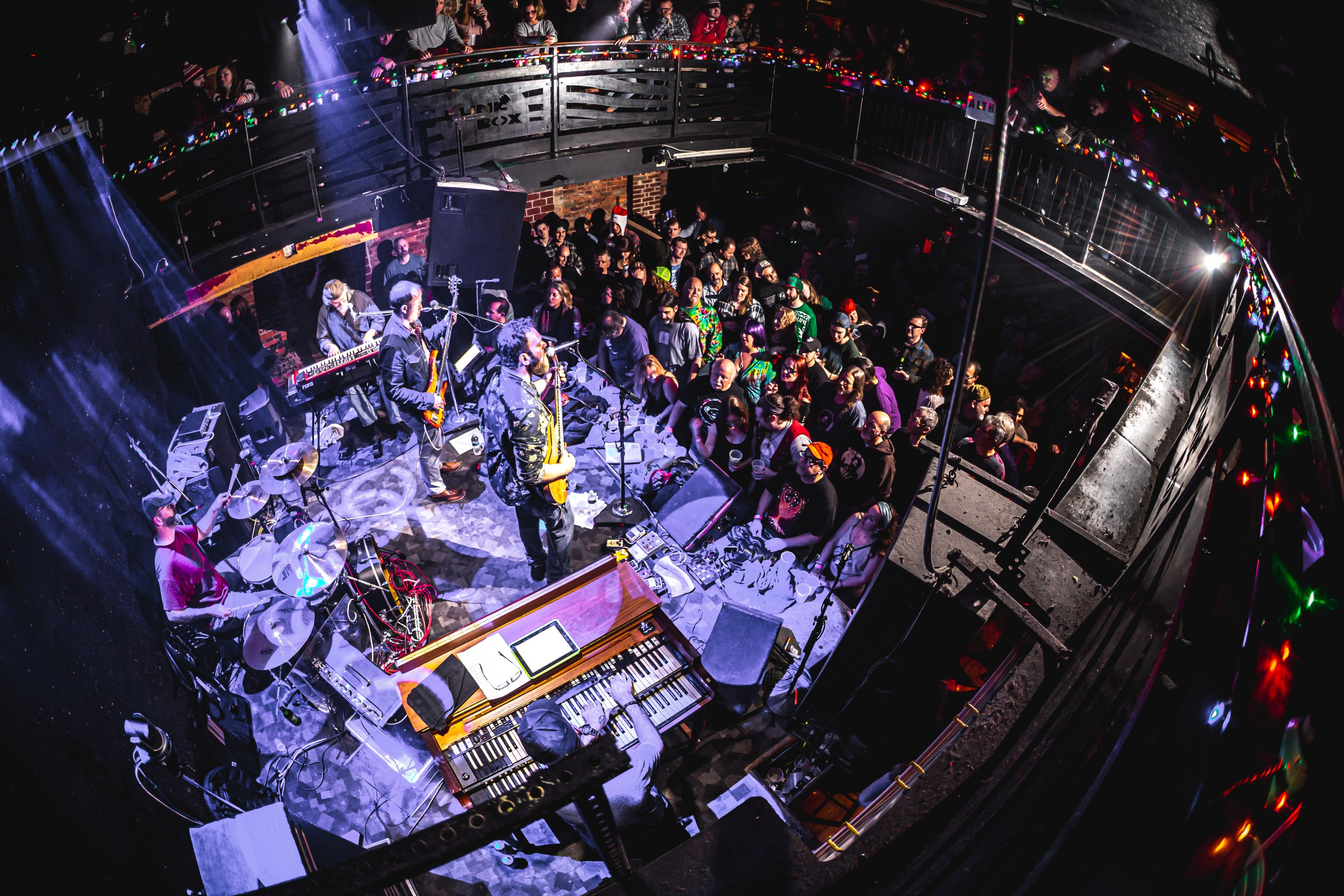
What’s more, the band has a rich history with the venue. After performing some after-shows at Garcia’s for Phil Lesh & Friends and the String Cheese Incident, PTF finally headlined the Capitol in February 2017 for the first of many memorable multi-sensory performances.
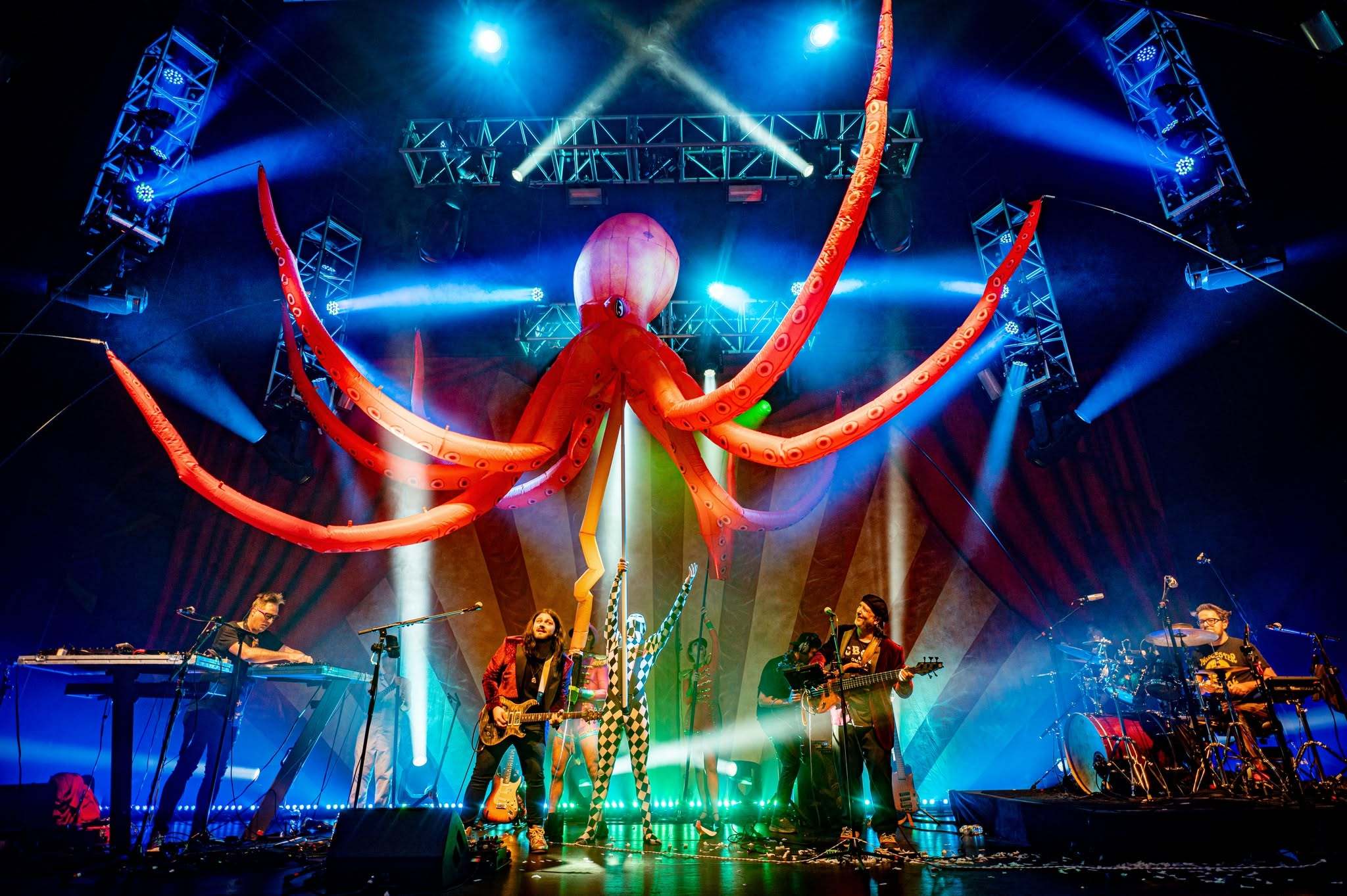
Gould explains, “The first time we played there, we did all of Stop Making Sense, intertwining Phish and Pink Floyd with a whole bunch of special guests. It was a three hour plus marathon. The next year we did Pink Floyd's The Wall. We had a giant LED screen and we approached it the same way. We completed the trifecta with Phish's Junta, but instead of bringing in musical guests, we did something called Junta Circus and we had the Big Apple Circus come in. We designed an entire show of circus attractions with the album, again with Pink Floyd and Talking Heads intertwined within it.
“Since then, we’ve taken a different approach beyond the albums. The following year we did a concept called Planetarium, which was heavily visually focused and space oriented with lasers and projections. Then it was a cirque show that we called This Must Be The Cirque, which again wasn't album-oriented.
“Now we’re preparing to create our next story in the Capitol Theatre. This time it’s a true union as we’re producing this with the Cap for their centennial celebration. What a journey it’s been for them and we’ve enlisted a gigantic ensemble to span the music of a hundred years on that stage. It's going to be epic.”
Before you formed Pink Talking Fish you co-founded Particle and performed with the group for many years. Can you talk about the throughlines from that band to this one?
That was such a special time when we were all developing the livetronica genre—us, the New Deal, the Disco Biscuits, STS9. We were all doing it along with some other bands as well.
Our piece of the pie on that was while some of those other groups were more electronic bands first and live instrumentation second, we were a rock band first and electronic second. So there was an energy within it that translated.
Since I was a kid, I’ve always viewed art as storytelling. I’ve been drawn to a combination of multimedia, whether it's a light show or projections, mixed with live music. I was inspired by U2's live shows, like Zoo TV and PopMart back then. They were such innovators. I was also drawn to what Chris Kuroda did with Phish.
To me, it's all telling a story. When I chose music as my main outlet with Particle, we had a projectionist before we had an LD and that had to do with some of my visual desires.
The other piece within there is I always wanted innovation involved in whatever I was doing. So back when Particle started, we were innovating a genre. We were innovating the livetronica scene. That was exciting beyond just the fact that we were writing songs that we liked and having a blast performing them.
The origins of Pink Talking Fish was a similar thing. I had moved out of LA to Kansas City. I was in a fun pickup band when I was off the road and I played covers more than I ever had in my life. Then I asked myself, "What would a tribute band that I would do look like?" My idea was to take three of my favorite bands that would be compatible and interweave them in a cool way.
I wrote a setlist for it and I was like, "I’ve guess I got to do this. This looks amazing." It opened up a window to what we call it hybrid tribute fusion. It turned out that one or two other bands were doing it at the time, athough I didn't know about that when I thought of it. We've had a lot of fun talking about it since.
With this hybrid tribute fusion genre, we’re taking the songbooks of bands and creating something fresh and new for people who love that music. That's the concept. What an honor and a treasure to be able to go out there and do this—not just write these dream setlists, but also constantly innovate and tell new stories within there.
With that in mind how do you approach creating a Pink Talking Fish setlist?
The art of the setlist is one of my favorite things in the world when it comes to doing something creative. When Particle formed, I would write the setlist 98% of the time and I would make sure that it was always something fresh and unique.
Then fast forward to Pink Talking Fish. I feel like we're over a decade into it and we still find amazing new things to do. It's great because I always want to differentiate if we're playing a particular city. What have we played there the last couple times? My goal is to write a new story within it, to make sure it's a different chapter each time we're coming into certain regions.
Sometimes it's song to song. Sometimes we're chopping it up. Sometimes it's totally different. We'll start off “Echoes” in the middle of set one and then towards the end of set two it comes back. Sometimes there are parts of songs that get split up throughout a show and sometimes we even don't do an entire song, we just take a piece of it. There are so many ways to make this happen—to innovate and tell new stories. It's just so much fun to be able to do this.
What’s the balance you strike between honoring the song and vesting it with your own identity?
The special sauce to Pink Talking Fish and really to anyone in the hybrid tribute fusion genre, is that we blur the lines of tribute and originality. You don't really understand that until you see it live. You can look at it on paper but that doesn't do it justice, even though it's pretty cool to see on paper.
In order to do this properly, you absolutely need to honor the music. This music is important to so many people and it doesn't make sense to water it down or to interpret it so differently that it loses the soul of what it is. For example, with Pink Floyd, people sing David Gilmour's solos like they do lyrics. So when we play “Time,” that solo's going to be note for note no matter what. We're not going to mess around with that. “Shine on You Crazy Diamond” is the same thing.
When we're doing a Phish composition, we're not going to mess around. We're going to nail that composition because it's important to people. If we're going to play “It's Ice,” we're going to make sure that we're doing that properly and we're going to rehearse it so that we have it show-ready. Having said that, the other thing that we need to do is be ourselves. We have individual creativity within it.
So when it comes to the improv and when it comes to the show design—how we mix and match—that’s really a producer's approach. One of us in the band will write a setlist and have some creative ideas on how to interweave between songs. We might start off playing Pink Floyd's “Dogs,” then take a journey in the middle before coming back to finish it later. Or we’ll do something that makes sense within “Mike’s Groove.” We find out together creatively the right ins and outs, the right ways to transition.
Sometimes the answer is we're going to improvise and find our way into a given song. Or we’ll have an idea for a tempo rise and then a certain cue for a key shift dropping right into the next thing It can go in lots of different ways but the setlist is very important to us. PTF doesn't go on without a setlist because part of our magic is in the setlist design.
When you perform in a new environment with people who may not be as familiar with what you do, how does that impact your approach?
We definitely have certain audiences where we know we're going to play the hits for Floyd and Talking Heads in particular, because we always want to make sure that we're engaging people. Then we can tell whether the audience might be along for the ride of more obscure songs. But no matter what, we always do a mix. We add our flavor.
We just did a show in Delaware at this Rocking the Docks series, where the first set was designed for the people we knew weren't necessarily familiar with the band. So we did “Naive Melody,” “Time,” “Great Gig in the Sky,” “Once in a Lifetime” and some of the Phish tunes that are a little more accessible.
Then we designed the second set where we were able to take more of a journey. Even with a hits set we still get creative transitionally, but in that second set we were able to dive a little deeper into it and add a couple less well-known songs. By that point, we had won over the people who didn't know those songs and didn't know us. They were along for the ride.
It's fun to watch the people who are fans of one of the bands, but not the other two—like someone who's a Floyd fan but doesn't really care about Talking Heads or Phish. When a Floyd tune comes up, we see them move up towards the front of the crowd, absolutely in heaven. Then when we go into the next song, they're not there anymore, they're in the back. But then the flip side of it is I see people who know Talking Heads and Pink Floyd but for whatever reasons, haven't dove into Phish. Then after seeing us, they get it a little bit more and it opens them up. That's happened a lot with Talking Heads as well, where people know some of the hits from the radio, but they don't really know the band as a whole.
It feels great to expose them to that music. They'll come in for one of the bands or maybe two and they come out appreciating all three of them.
What were some of the early songs you juxtaposed that led you believe in the viability and vitality of the project?
I'm going to start with one of the early attainable ones. One of the first connections I found was Talking Heads’ “Slippery People” and Phish's “Sand.” The sandwich, which we call “Slippery Sand,” was seamless. Out of the bridge of “Slippery People,” we drop right into “Sand.” Then, as the guitar solo of “Sand” ends, we wind up back on Trey's guitar riff and we go into the final vocals of “Slippery People.” When we first did that I was like, "Wow, here’s a glimpse into the magic of what this could be." That's just a rhythmic connector but there's so much more.
I mentioned “It's Ice” earlier. In the middle of “It's Ice,” we’ve found that things can go anywhere. We've done so many cool things with that song. In today's political climate, we recently did something interesting. We played a show in Worcester earlier this year where we had a friend of ours who's frontman for a Rage Against the Machine tribute and in the middle of “It's Ice,” we did a full Rage segment inside of the song. It was so powerful within that.
“Shine on You Crazy Diamond” is a great song to fit inside some of the Phish transitional big dogs. We've done “You Enjoy Myself” with the entire “Shine On” suite, where we start with “You Enjoy Myself” and in the ambient embers towards the front of the song, we go into “Shine On.” Then when “Shine On Part I-V” is done, we get back in right where the piano solo starts and then out of the vocal jam, we get into “Shine On Part VI-IX” and finish it. That is an amazing journey and it’s just one example. We’ve done many.
Moving on to the upcoming performance at the Cap, can you talk a bit about your horn section?
The Gotham Horns are awesome. They are named after the leader of the group, Matt Wayne. So “Master Wayne,” that's where the name Gotham comes from. It's a three-piece horn section, which at this show might turn into more.
Matt is a master composer-arranger and he's done amazing work with Pink Talking Fish. He's also worked with Twiddle, Giant Country Horns, Neighbor and my other tribute act, Prince/Bowie, which combines Prince and David Bowie. He's produced albums as well. He's done lots of studio arrangements and he's just amazing.
We also have Greg Sanderson formerly of Turkuaz and now Cool, Cool, Cool and Remain in Light on saxophone. Then we have a trumpet player named Gershen Rosen, who's just phenomenal.
We've had the three of them with Pink Talking Fish ensembles that we've done in the past. They just gelled so well. So we’ll have them on as a highlight of the show. Matt's doing some really cool arrangements to heighten some of these songs and it's going to be awesome.
The show will feature a number of artists that you’ve performed with over the course of your career. Who do you have the longest relationship with?
There are a few of us who have been doing this for a while. Umphrey’s and Particle, we say we graduated high school together. We were touring when we were baby bands together, so I've known Brendan for such a long time. With Brownstein, we were all developing the livetronica genre together. moe.'s been a staple since before I was even a professional musician. They're a little bit ahead of when I started. Robert Randolph and Particle were both up for best new band of the year at the Jammy Awards [in 2002] and Randolph took it.
I go back with that whole crew and we have great camaraderie with some of the younger artists who are coming in. We had a first wave of artists that we announced, then I wound up talking to Karina and Brownstein a little bit after the fact and they were like, "We're so glad you called. We were hoping we would be able to be a part of this." We've already had experience with Greg Ormont at the Capitol Theatre. He was the ringmaster when we did Junta Circus. So we did an entire show with him. With Greg and Gator [Alex Petropulos] it's so cool to have those guys.
Every artist who will be joining the ensemble is intentional. We believe they not have experience with the spirit of the Capitol Theatre, but they each have something to say in celebrating the 100 year anniversary of this incredible venue.
I wish we could invite another 20 artists because I know there are so many people who have these stories, but I think the collection that we have is just wonderful and I'm so excited about it.
What can you share about the nature of the nature of the show itself and how the guests will be incorporated?
Cal Kehoe, Pink Talking Fish’s guitarist, and me really took the creative producer's element to design the initial setlist. We thought about certain people that we would have in mind for particular songs. From there, after the first draft, it breathed its own life while we were talking to different artists about where they were at. There were some artists we thought would be good in one spot, and after speaking with them, we realized that there might be something else where they’d fit better, so it shifted a little bit.
The fine tuning has been very collaborative, but the ensemble artists who are coming in have been willing to go with the flow. They’re like, “Hey, we're ready for anything. Let's do it. Let's have some fun.”
As I'm looking at this show, it feels Concert for George style with different people coming in and out with everyone being part of certain highlights.
This show is a journey and it's going to be just the ultimate celebration of what the Cap is.
Before your first appearance at the Cap you started out at Garcia’s. Can you describe your path to the theater?
PTF started off doing after-parties. We did one with the String Cheese Incident. Those guys really jived with that stage. It was fun to see them on there.
We also did a bunch with Phil Lesh, which circles back around to what we're doing here. Phil always put together the right collection of people for that and to hear the Grateful Dead vibrating through those walls was a treasure in itself.
I remember seeing Phil's group one of the years when he did the Q while we were there and that was amazing. When he first started with the Q, I was on the West Coast but to see that at the Cap was a defining moment as a spectator.
We were still in the beginning of our journey at that point. Fortunately, Pete and his whole team has been supportive of Pink Talking Fish throughout our career and we're so appreciative of that. He gave us a shot at moving from Garcia’s to the theater.
When we came in we weren't just going to do a regular Pink Talking Fish show. We’ve done something extra special every time we were given the opportunity to come into that room. We’ve continued to do that.
Once again, we’re just so honored that they invited us to be a part of this experience. Nothing out there could have made us happier than when that invitation came in. It was one of the greatest honors and pleasures. So here we go, let's do it!