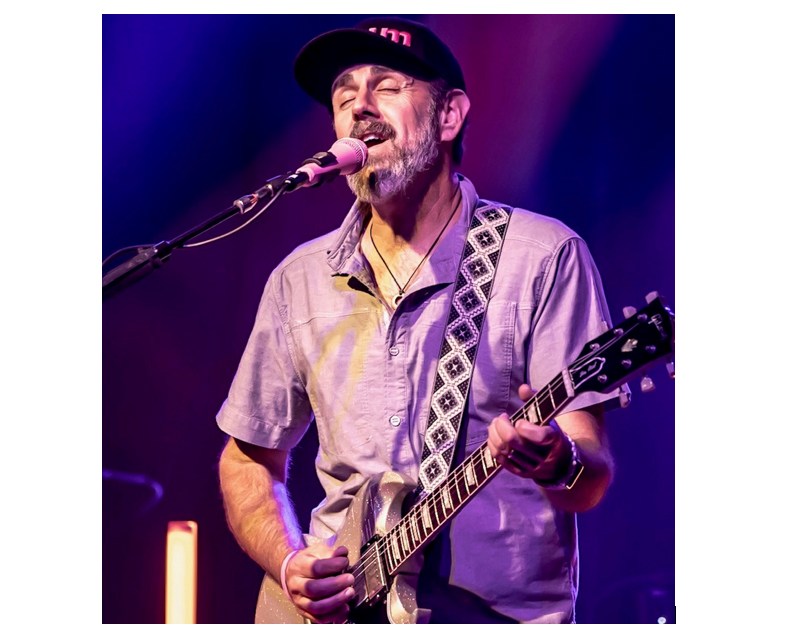
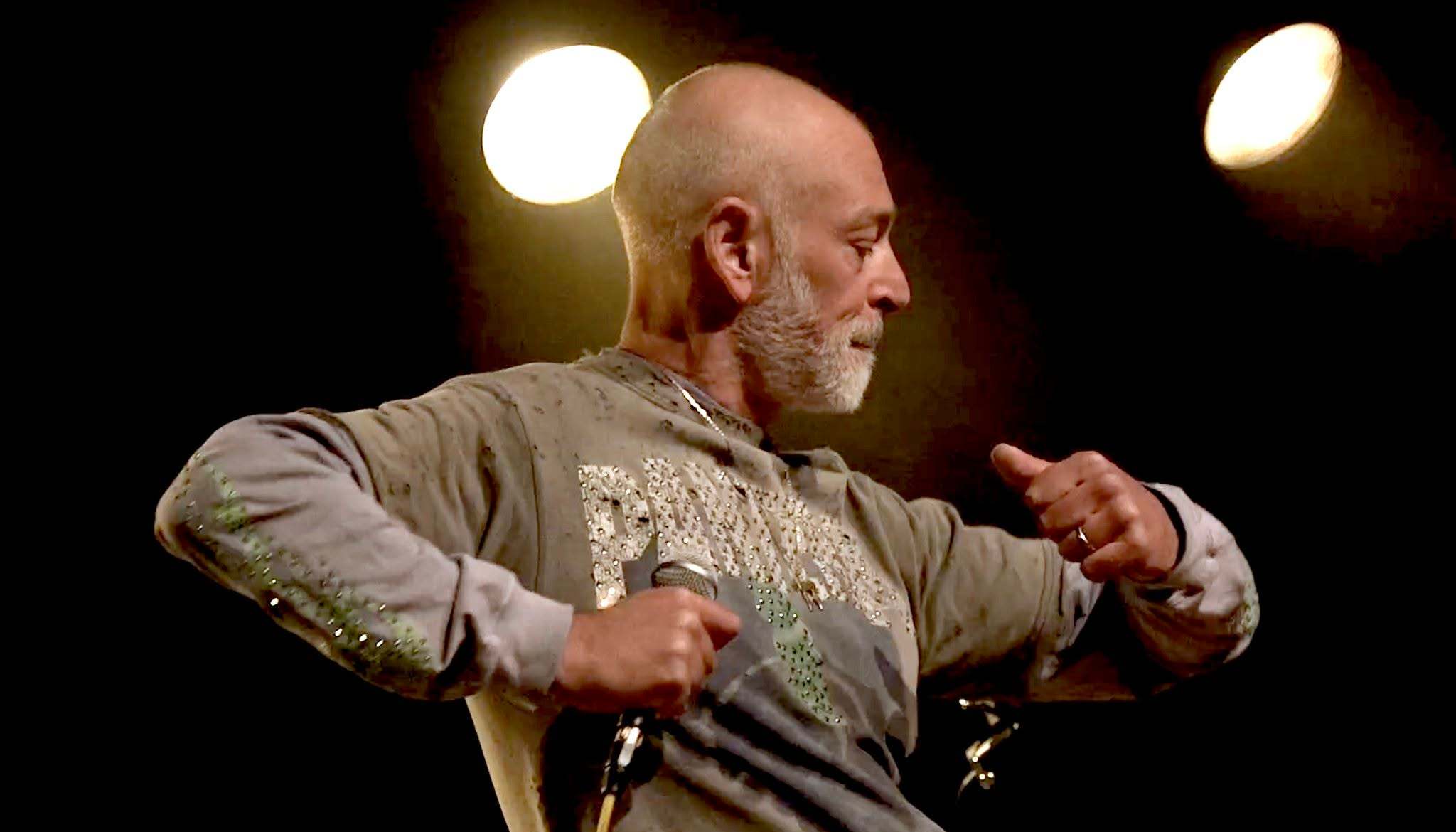
Matisyahu has long occupied a unique place in the live-music world. Though raised in a Reconstructionist Jewish home right outside New York City—where he frequently attended jamband concerts in the late ’90s—the 47-year-old-musician first stepped into the national spotlight as a Hassidic reggae singer and rapper in the mid-2000s, a few years after he started attending an Orthodox Jewish synagogue on the Upper West Side. In the span of a few short years, he churned out radio hits like “King Without a Crown” and “One Day,” the latter of which has gradually aged into a religious-school standard around the world. At the same time, the singer, who was born Matthew Miller, has long leaned into his love of improvisational music while on stage, collaborating with prominent voices from the jamband world and frequently drawing from the post-Phish playbook.
Throughout his career arc, and as is spiritual identity has evolved, Matis has also continued to utilize modern hip-hop and pop techniques in the studio, releasing his most recent LP, Ancient Child, this past fall. Like his best music, the record weaves his seemingly divergent interests in reggae, traditional biblical texts and Kabbalah-rooted mysticism into a wholly unique, utterly personal sound. Matis has remained active the concert realm as well and, in addition to his popular Live at Stubb’s records—which have documented his ever-morphing ensemble at different points during his career—he’s issued official bootleg-style recordings and energetic, conceptual live albums, including this year’s Ancient Child Live and Live in Colorado sets.


However, his most recent pivot is perhaps most impactful yet. Inspired by Trey Anastasio’s sobriety journey and an epiphany he had while seeing Phish in Mexico last year, Matisyahu, who attended rehab programs when he was a teenager, has recently given up drinking and vaping, recommitting himself to providing a dynamic live show worthy of the jamband community he holds in the highest regard. He’s also started studying Torah more regularly in recent years, digging into the connections he sees between his personal faith and the post-Grtaeful Dead world. He’s also continuously motivated by his six children, two of which, Laivy and Shalom, are now professional musicians who have gained tradition in the post-COVID era thanks to TikTok.
While sitting outside his house in Nyack, N.Y., overlooking The Tappan Zee Bridge, Matisyahu offered Relix an honest look as his recent life-changing decisions, his singular role as a singer in a tried-and-true jamband and the parallels he sees between Phish shows and his ancestors’ ancient, sacred pilgrimages.
Let’s start by talking a little bit about the live band. You’ve long changed up the players you are on tour with to fit the music you are making, though some familiar faces have popped up regularly throughout the past 20-plus years. What does the Matisyahu band look like right now?
Well, for me right now, we are in a little bit of a rebuilding phase, and part of that rebuilding is going back to players that I've played with over the years. The first band I had back in the day was Roots Tonic, which was my longtime guitar player Aaron Dugan and two other friends of mine from when I was at the New School, [bassist] Josh Werner and [drummer] Jonah David. And then we made some changes. We hired Skoota Warner, who has worked with the B-52s and Mary J. Blige. Then we had this percussionist from the Bronx named Daniel Sadownick, Rob Marscher from Addison Groove Project and Jason Fraticelli, the great bassist from Philadelphia. We did that for a little bit and then I really wanted to change everything up and go with the Dub Trio, that sound and style. So that was the band for a while and that was the Live at Stubb's II band. But Jason and Rob have come back a few times over the years, and we have been playing together a lot more recently. Rob is a very unique keyboard player. His musicality, his listening and his improvisational skills are par to none, and he's not a flashy keyboard player.
There's another keyboard player that I play with, Jason Matthews from Electric Kif, and he's also an exceptional keyboard player, but he has a very different style. I've played with great players, like Big Yuki, the jazz player. His style is also unparalleled. There is no one who plays like him, and I’ve played with Jason Lindner [who was part of David Bowie’s Blackstar record]. So I have a history with different keyboard players. I'm looking for them to do something very special—I want them to be able to bubble and chuck on the reggae tunes, but I really want them to, musically, be on a different level. Rob is on that level so any time that he is available for a gig, I’m including him—so much so that I'm actually blocking out dates for him now.
It’s the same with Jason Fraticelli—I am getting his dates right now. Stu Brooks, from the Dub Trio, obviously has a very unique style of playing. He's playing with Nine Inch Nails now, and he's really found his place. There's no one who changes keys like that and who can improvise in the way that he can improvise.
So I’m trying to build the next phase of the Matisyahu band around Rob and Jason and the tour we are doing in August is built around them. Matt Jalbert from Tauk is going to play with us. We did a show with Tauk at the Cap recently and that went well. The tour is going to be like Ancient Child 2.0 and then a mix of older songs.
One other thing we are doing now is recording everything for YouTube and putting out a few things each week—20-minute-jam things. It might be with the trio or with the full band and we can put out live compilations from the tours. We are releasing Live in Colorado [which captures Matisyahu’s March 21, 2026, set at Vilar Performing Arts Center in Beaver Creek, CO].
This spring you released a new album, Ancient Child Live. You’ve dropped different types of live releases over the years, ranging from “official bootleg”-style recordings to more produced efforts. What were your primary goals for this one?
We recorded the live album on the October tour. It’s a combination of songs that I had developed over the last few years. The main thing with the live versions on that one is the drummer, Ofri Nehemya. He’s an Israeli jazz drummer, and I don't know that I've ever played with a drummer quite like him before. He's exceptional. I’ve played with exceptional drummers. Joe Tomino, from Dub Trio, is exceptional at a certain style of reggae drumming. One interesting thing is that most of the drummers that I've played with are not Phish fans. But I’ve also been playing with Ben Atkind recently—him and Orfi are the two drummers now. Ofri comes from more of a jazz world/world-music-vibe, and Ben comes from Goose and is a huge Jon Fishman fan. So playing with Ben is so cool because a jamband needs a drummer that is dynamic and knows how to play at a low volume but, at the same time, with high energy. And a lot of drummers are just not built in that circular way. Jon Fishman is so unique as a drummer. He's a Pisces. He’s a fish. I’ve done the whole astrology-meets-the-Jewish-thing, and you can tell he’s a Pisces by the way that he plays. My daughter's also a Pisces and they are constantly moving like a fish. So it has been great playing with Ben because he naturally plays like that, and it’s been great playing with Ofri because he has that Israeli-jazz sound, which feels like the Downtown New York scene from years ago. That’s where Jason comes from as well.
Another big change coming up is that Aaron is gonna be taking a break for a while. He’s my original guitar player, and he’s been with me for a long time. But he's getting married and taking some time off so another guitar player that I'm gonna be playing with is a guy named Yotam Silberstein, who's best friends with Ofri. They're both Israeli. So it's going to be an interesting combination of musicians. In some aspects, what we are doing is a blend of all the styles I have made over the years.
You grew up listening to jamband music, as well as reggae and hip-hop, and throughout your career you have leaned into those often-divergent styles in different ways at different times. In terms of the live show, you seem to be currently honing the jamband approach to improvisation. What has your main stylistic focus, writing wise, been recently?
In terms of writing, Rob came to the house, and we are writing chord changes for a roots-reggae album that we are recording with Craig Welsch of 10 Ft. Ganja Plant in Boston. And the rhythm section is from Jamaica, from the original Roots Radics band. I'm approaching it, lyrically, from King David's Tehillim [Book of Psalms]. It’s in Hebrew, with maybe English mixed in. It's not really going to be a Matisyahu-style blending of sounds, like how most of my music is. It's going to sound like a 1976 roots-reggae album, with Hebrew, like an ode to Shake Off the Dust after 20 years. Reggae and biblical Judaism are intertwined in so many ways, and that is the original roots of Matisyahu, where I find that reggae music and Judaism connect. The place I am in right now is a place of honoring all these different parts of myself. There were times when I was growing into new spaces, and it required me to turn off certain parts of myself. But I love reggae music and, as I get older, I realize that there is no reason to run from the things that you love. When I am running, I’ll put on King Tubby, and I’ll realize that I want to make music for myself and for the fans. Sometimes, in the past when I’ve made albums, it’s just been about what I wanna hear.
When I was religious and I wanted to hear reggae music, there was no one that was making that music. I simply wanted to hear it, so I went to Philadelphia to record a song so that I could literally put it on my Discman and listen in between my studies on the roof of the yeshiva [when I wasn’t allowed to listen to secular music]. I would go and listen to that one song, and that was enough to inspire me. I heard Method Man and Wu-Tang talk about this once. He said, “We wanted to make some shit that no one else was making.” So if I wanna go for a run and listen to a dub album with Hebrew prayers and chanting, then I’m gonna make that album so that I can listen to it. I don't know that it's out there or exists in the way that I feel that I'm capable of making it.
I’m not trying to make sometime that fits in a box or will become a viral hit. I’m trying to make something that feels true and that will be the best music I can make and that there is a need for. When I wrote “One Day” with Bruno Mars, it was like, “OK, I need to write a world anthem, a call for peace, on a massive level.” Thank God, the stars aligned for me to be in that room at that time—and with that record company—and that the song came together in the way that it did and became a hit. It was pretty wild to be the one to bring that song out.
While some core modern jambands, from Phish to moe., Percy Hill and Goose, have made great studio albums, you are somewhat unique in that you have long employed modern pop and hip-hop recording techniques in the studio while still approaching your live act as a traditional jamband would. How do you balance those two facets of your career?
I've always, to some extent, separated what we do in the studio from the live-music thing that I do with the band. Live music has taken up so much of my time and so much of my life and so much of my love that I treat it as its own thing. So with any of the music that I record and then play live, I always want, especially now, the musicians to learn the music and how it sounds so that they can get the feel but, after that, I am really open to them exploring how it can go live. Sometimes there's crossover [between the studio and live versions], but you shouldn't necessarily kneecap either of those things. Besides Live at Stubb’s and Live at Stubb’s 2, the closest I've come to trying to do that is Undercurrent. I had a great band, a great combination of players—Dugan, Rob Marscher, Stu Brooks and a drummer named Tim Keiper, who is now with David Byrne. We had made Live at Stubb’s 3 and I went on tour and then I went right in and made that album.
Everyone from the Matisyahu band and crew has gone on to do great things. Pete Spadaro was part of my crew and now he works for Goose. Andy Cass, who has been the lighting guy for the Disco Biscuits and String Cheese, was a stage guy for us in the early days, before he ever did lights. Mark Janowitz, My Morning Jacket’s lighting guy, was our LD. He was the one who developed the disco ball dreidel we use during our Festival of Lights Hannukah show. And, of course, Ben—I was honored to play with him and I love his attitude. One of the projects that I'm hoping to put together in the future is a Jewish jamband with Ben on drums, [Marc] Brownstein on bass and the guitar player from Eggy, Jake Brownstein, on guitar. I have my eye on him, his whole mentality.
In addition to your full-band shows, you have also developed a parallel path playing in an acoustic format, where you are able to beatbox more. How has that approach shaped your song delivery?
Well, it's cool because, basically, I'm taking care of the bass and the drums, even if I have a drummer or a bass player up there with me. I might have Jason Fraticelli playing standup bass or Matt McElwain on a small kit or something—he's another drummer that I play with. He’s sort of an Adam Deitch protege out in Denver, and he's a great kid. But those shows allow me to play with the dynamics when it comes to these songs. And one of the things I've found, over the years, is that the storytelling aspect is hard to do when I am playing live with a band—especially a band, for example, like the Dub Trio or bands that don't usually have a vocalist because what they do is not centered around the vocals. You're creating a sound, but it’s been a challenge for me, over the years, to cut through all the noise. Judaism talks about the still voice—the small voice. When we've been at Phish shows, when it all just stops and it's just one note that Trey is playing and its divine, that’s the still voice.
I ask myself, “How do I tell a story in a song and play a show that captures that?” Acoustic shows work, but I want it to be more musical than just an acoustic guitar and me beatboxing, which is what I did for a lot of years. So, finally, I got this looper and some effects and I figured out how to do it so that I can actually create musical parts and so I can produce on stage while I'm singing and rapping. It's different thing.
I can do this solo with a guitarist, or I can do it with keys and guitar. I love doing it with multiple musicians because it allows me to switch from being a frontman—essentially a song and dance man that’s singing, dancing and rapping—to being part of the band. I’m channeling, producing and kind of guiding the musicians, which is hard to do when you're not playing an instrument. That has also been a challenge over the years.
But the looper has helped me with that, and I’ve been using it with the band now. So if we are going into a jam with the band, for example, and I have the full band on stage, I will move from being a frontman, and I will go to the back of the stage. It's the way I have the stage set up now, where it’s a u and I’m in the center of that. The feng shui of it changes me from being a frontman in the middle to being in the u part of the stage, in the line with the rest of the band. When I am beatboxing, if I want the band to follow me, I can turn it up. Then I can break it down and slow it down, and I can morph the jams if I want or I can just layer the vocals and control my own effects, delays and reverbs. So if I wanna layer in a “Shema Yisrael,” harmonized with delay and reverb, and have a “Sheyiboneh Beis Hamikdash” building underneath it with a “Aish Tamid” rap going, I can build all of that on stage while the band is jamming. I can put it, dynamically, behind them so that if they're improvising, then I can just drop in certain things. It allows me to get into this whole other art of live producing and being one of the musicians.
At other times with the full band, it's also amazing to be able to be like, “OK, and now I'm strapping on the knee brace. All these miles of running, it's time for them to pay off. I'm gonna go dance my ass off on stage and be the frontman and enjoy that.”
It’s interesting that you have figured out a way to incorporate your frontman abilities into a traditional jamband context. Besides The Black Crowes and a few acts like the Grateful Dead and Galactic back in the day, there are not many groups with a true “song and dance man,” as you put it, who can successfully lead an improv act.
At this stage—incredibly, thank God—my son, Shalom, inspired me. He is starting at Berklee this fall, and he started taking voice lessons with my voice teacher, Darryl, on the Upper West Side. He’s nice older guy from Yeshiva University that saved my life when I had a cyst on my vocal cords. I moved in with himso he could help me, and I started noticing Shalom doing those vocal warm-ups that I used to do all the time, and it really got me. I was like, “I gotta do it again.” So seeing Shalom got me back into the study of my own voice. Some people reach a certain age and say, “OK, I'm good with where I'm at,” and other people are constantly developing and working and practicing.
And, lately, I’m trying to be way more on top of it. I quit some habits, like vaping and drinking, that weren't good for me. And I’ve been working on my voice almost obsessively again—every day. It’s made an incredible difference to the point where I'm enjoying singing more than I ever have and that will shape the kind of music that I record because I wanna sing—I’ve been listening to Frank Ocean again and listening to this soulful music that makes me want to sing. You can start to get a glimpse of it from this last record, songs like “Ritual” and “Smoke and Mirrors.” “Love Supplier,” a recent song that I put out, also has that feel and so does “Rage.” So there are all these places where I'm singing more, and I'm enjoying that live, too.
The trio, with just the bass and drums, makes it harder to tell the story. So if I can take the bass and drums out of the picture or bring it down or change it up, it allows people to really lock into “Matisyahu the singer,” and for them to know that he’s laying the rhythm for all of this. And it allows them to understand that I'm changing the time while doing this. It's a little out there, but it's freaking awesome. When it lands and it works—because it's very hard for a full band of multiple musicians to be able to have that level of control and get on their keys and then just kinda be part of it—it’s almost heavenly, with the payer and this ethereal voice coming in on top of it.
I think that the contrast of light and dark that you just described, whether in a Grateful Dead jam or a Sonic Youth noise bit, makes a song even more powerful than if it was just one or the other. It's all super up-tempo, happy and kind of cheesy and then it gets dark. If it was all dark, then it might almost drain you. It’s about the transition.
Yeah, I'm trying to tap into the light and the dark. Sometimes I’ll go from this heavy, dark, beatbox-driven, sorta dubby reagge or hip-hop thing to this really beautiful, ethereal stuff. And that all comes from seeing Phish live. My kids are making music now and a lot of younger musicians are coming from a different place. My son spent a lot of time with the rapper BLP Kosher. And when a lot of people from the younger generation come around and see actual musicians creating music and improvising, they can’t believe it. It kind of boggles their mind. It’s something that AI can’t do. So it is reassuring to me that there will always be a place for it, and it's almost a responsibility to help further that. Look at the “thank you Mr. Minor” bit in “Harry Hood.” The “Piper” from Sphere was interesting—it was about the transition. It went out and landed somewhere different, in this beautiful place.
When you take people all the way out into that space and then you wanna bring them back, it's sometimes a tricky thing. You are taking people to places in their subconscious and then bringing them back. You have to lead them on a path. And that’s the path I’m focused on when we are making music now.But I don't know that, with the earlier Matisyahu stuff—when I wanted to jam and stuff—if I was hyper-sensitive to these subtleties of how jams work. I would just go for it. Sometimes it would be me and Dub Trio doing a 20-minute heavy dub jam and it would drain people. Over time, one of the things that I've really taken away from going to these Phish shows—I went to 28 last year, me and my wife—is that I’m listening to it not as much in an intellectual way because I'm a feeler. I'm feeling my way through it. My wife got into Phish more recently than us, so it has been fun to go with her.
I’ve always felt that the journey aspect of a jamband show is like a service, where you go to these dark heavy places, but you come through on the other side and the end with these euphoric prayers.
In today’s world, the group aspect of one of those types of shows is the closest thing I can experience to going to the Beis Hamikdash [the ancient Holy Temple].In my mind, that's what it is. In Jerusalem, all the people came from all over with their offerings, coming together for this massive festival on the mountain of Jerusalem, and then there's the Beis Hamikdash. That's the arena. And outside the arena, everybody is selling their shit, trying to figure it out how to get in and thinking, “Is the Cohen going to go into the Holy of Holies and survive and atone for the sins of the people or not? Is he going to die in there because he is not pure enough?” Only one person would go in all the way. And that’s what the last couple of weekss parsha was about, when the sons of Aaron bring the strange fire. And, because of that, we see in the next parsha, there's only one day a year, and there's only one person who can go all the way in, and they have to be pure else they die. They literally go in chained so they can pull ‘em out.
And the Beis Hamikdash was musical. There were instruments, and there was singing, and there was the clal, the group of people experiencing it all together and connecting. It is like being outside a Phish show.
What’s interesting to me is that I like being with a group. I like connecting and interacting with other people—I thrive off of it, But I don’t like having to be part of a group. That has never worked for me. So, for example, in synagogue when I was younger and there was a group prayer and everyone was singing the same melody together, it didn't do it for me unless the melody was incredible, which is what I experienced at the [orthodox] Carlebach Shul for the first time when I was maybe 20 years old. His melodies were different. They were real, incredible melodies. What was sexy or exciting to me in Judaism, when it came to prayer, was when I discoveredKarliner Hasidim. They daven loud. They tell. They are all singing and it’s melodic in some ways but it’s different. Everyone's having their own experience together, and it is chaos but, somehow, it’s all in key and beautiful. That is what, I believe, is happening at the base of the Beis Hamikdash or at a Phish show—all these people experiencing this thing together, but everyone having their own inner experience.
And the inner experience is honored by the music because the music allows for people to have that inner experience, like being in a fishbowl or underwater, as opposed to something that's like, “Look at me, look at this show, I will impress you with these solos—with these light shows, with these graphics, with this thing.” Phish and bands like that are creating a space for people to have these experiences and, moving forward, I’m started to ask myself, “OK, what is it about this whole thing that I love other than the fact that it feeds my family and gives me the ability to live?”
The thing I love about it, and the thing that I feel that I'm capable of giving to my fanbase, is this space. It has all 10 Sephiroth [the 10 divine attributes, emanations or energy centers in the form of Jewish mysticism known as Kabbalah]. It has kindness, darkness, light, endurance, victory, splendor. We go through all of those things. But at the core of it—what makes it different and makes it Matisyahu—is yud-kay-vav-kay, Hashem. That’s where, as a frontman, as a mouthpiece, as Yakov and Yisrael, if I am sensitive enough—and able to pick the right musicians that can help me make this music great—I am able to direct the sound through the songs that we use as the jump off spots. And at the core of it is Hashem and this sense that you belong, that we are here together and that there is a kernel of love in there. And that is a very Jewish thing.
People will ask, “Is it Jewish music?” But were King David's Psalms Jewish? They're for everybody, but they came from King David. It’s not just for Jews but it comes from a Jew.
At this stage, what I'm finally tapping into is the original Matisyahu energy. I've gone through this whole thing and October 7th really flung me around. And then, honestly, I quit drinking a little over a year ago. I wrote Trey about this, and we've been in an email dialogue. He has been really supportive—sobriety is the thing that he is really excited about in life.
What happened was I saw Phish in Mexico last year and, right before Pesach, I had my revelation during one of those shows. What I realized is that he made the ultimate sacrifice of love for the fans. He had addiction issues and he made a choice and, because of that, we have now been able to go to shows for many more years and we all continue to get to have this experience. And it is a therapeutic experience for so many of us. I realized what a massive mitzvah that was and what a massive act of love that was, to put the fans first. A lot of people say they are putting the music first, but they really putting their own stuff first.
It breaks me down to this day to talk about it, but I came back on Passover and I said, “I'm gonna fucking do that, too.” So I quit drinking and, six months later, I quit vaping on Yom Kippur. And here I am at a new stage in my life across the board. And I’ve been able to see who the Matisyahu fans are in certain places. When I look out, there’s the “One Day” people and there are the Jewish fans and the Orthodox fans who come at it from that place and there’s the jamabnd fans. I realized that it is this community of so many varied people from the outside. It happened a few places on this last tour, in Boulder, in Medford, in Napa. I’ll see people in the room of every age, race, religion, political background. When I hit that kernel, I hit that “Shema Yisrael,” and I build something with the band that I know is creating this holy space, I feel like we are going into the Beis Hamikdash. It’s a place of real prayer and devotion and that is when I can really connect with the fanbase. It’s special and I want to build on that going forward.
When we are in a place of real prayer and devotion, I'm able to connect to that fanbase and see them, and it's special. I don’t want people to be at the shows just so I can sell tickets. And that’s a shift for me. I wanted to sell more tickets. I wanted to build the thing and for it to grow—for a long time. But now I’m seeing who's the core and I wanna slow build and build that core of real fans. I'm coming back with a vengeance, and I have a lot more to offer.
How has you personal journey shaped the music you are currently writing?
I'm definitely gonna get into it. Lyrically, it’s a great question of where I'm gonna land. I have not really written lyrics in a long time, and that’s what happens. I go through these phases where I don't write for years. It’s been years since I've written a lyric. And, God willing, I have no fear that when the time comes, the lyrics will flow through me again. They'll come raging out of me like a dam that’s blocked up and, when that time comes, it will happen. But I don’t push that time. When it comes, it will come. It'll happen.
And a lot of what that has to do with is what I am listening to. So, for me right now, the new Oumou Sangaré record that just came out has six songs that are heavily developing what the next thing that I do is going to be. There are two artists in the Afrobeats genre that are really inspiring to me, Black Sheriff and Omah Lay, who does “Ye ye ye.” It’s not all the artists in Afropop, or the ones with the biggest hits, but those two are blending so many different, varied things. It’s blending into house music and these different things. These two specific artists and the way that they approach their vocals, their melodies and their attack, that’s changing my approach. I’ve been listening to them for several years—I got into them pretty early, and they are inspiring the next thing I am going to do. When I go on my Spotify and it says the age demographic of what I am listening to, it’s like 15. [Laughs.] When I listen to it, I'm like, “This is autobiographical as well as biblical and spiritual.” It's all the things. It's not just a story that he's singing.
So, going toward, I'm gonna write about my life. As I mentioned, I've gotten into a little bit of astrology and that’s gonna pop up in a lot of my lyrics—the sabbath, the Jewish lunar cycle, the flow of the holidays and how all that works. As I have gotten older and more rooted in time, that has become more important to me. I’ve been learning Torah again because I want to be tapped into what’s happening, so that’s gonna show up in my lyrics again. So there's going to be a lot of symbology and stuff like that. It helps me understand myself, too. At the same time, the more present and the realer I get, the more my lyrics become about real things in my actual life—a song like “Broken Car.”
The new release Live in Colorado features Adam Weinberg on guitar, Jason Matthews on keyboards and Matt McElwain on drums. You and Adam have been playing duo gigs together for several years and he is also helping you out behind the scenes. How did he enter the fold?
Our relationship was a friendship before it was a musician's relationship. He always advised me, and when the agents couldn't really handle the Orthodox Jewish community shows, he was like, “I will be that guy. I know how to talk to these people.” He was working with Bocelli and now he is my manager, too. The first gig we did was at WashU. My band was going to fly out on a Saturday and they got snowed in. And I had already flown in that Friday. He was like, “I play guitar” and we did that gig.
I've had a lot of different managers over the years. I didn't design it that way. I didn't want it that way. But I’ve had a hard time with managers over the years, in terms of really feeling that they had my best interests and that they were doing the work that I needed them to do. And with Adam the trust level is so high. I really believe that, to be really successful in this business, you need to have the right relationships. You can look at two artists that are equally talented, who have equally good songs, and the one with the right relationships will be more successful.
It goes back to the Torah. The Torah doesn’t start with the letter aleph. It starts with the letter beit, creation, to create. And to create there has to be two people. It goes back to what we were talking about before—it’s about the community, the relationships. You have to have it in therapy. You have to have it with musicians you are playing with on stage. You have to have it with your fans—you can’t just be up there. And you have to have it have it with your manager. You all have to be moving together. I’m lucky that I have a manager now who is also my best friend.
Looking back on your career, do you think you would have preferred to have been part of a band vs being a singer who has worked with so many different players over the years?
It's a blessing and a curse, shifting between being an artist and part of a band. The band aspect of it has always been very important because, coming from the live-music world, it’s all about the interaction. Of course, I’ll do DJ sets in Miami and places like that where it makes sense, but, when I started, I was playing open mic nights and, when I started doing music as a teenager, it was always about the live thing. When there is a community, there is a fire and you can create together.