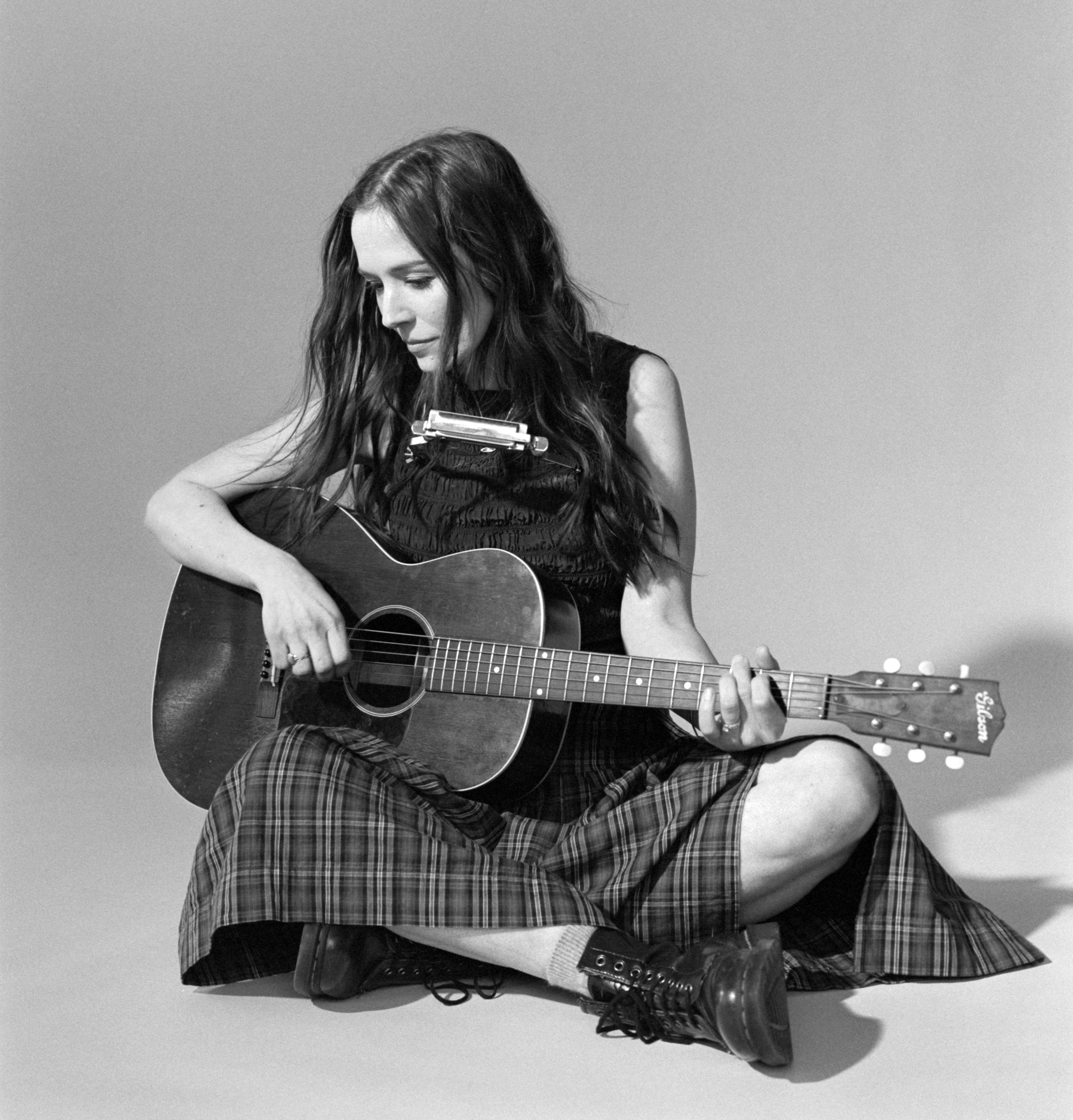
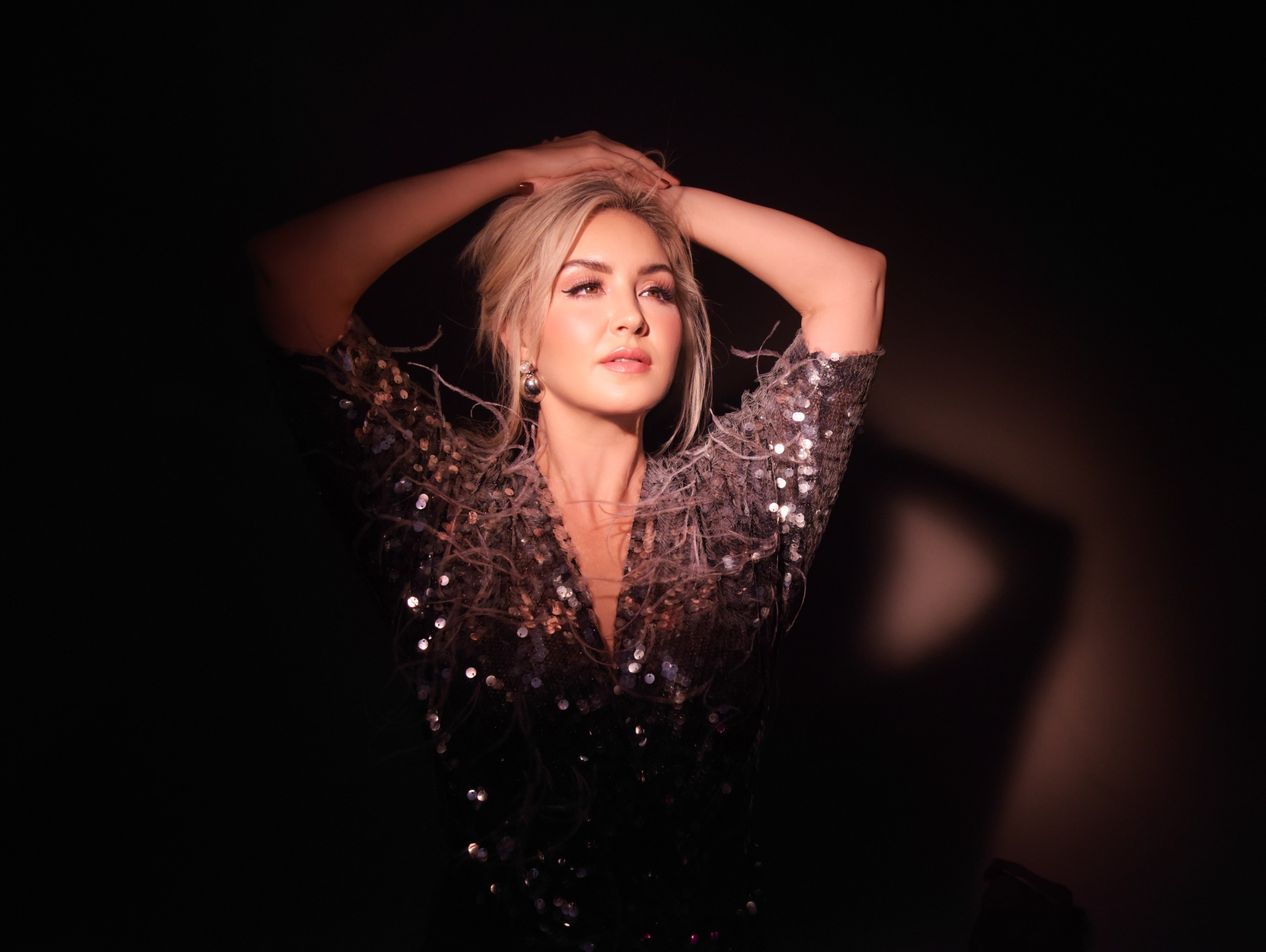
While all albums capture a moment in time, on occasion they also coincide with a resonant and revelatory experience outside the recording space.
Such a situation can supply a musician with heightened acuity and awareness that informs and inspires the matter at hand.
Of course that’s all well and good but at times even the best of intentions can fall flat.
Thankfully, Maggie Rose’s new album Half Moon, which is deeply entwined with the birth of her first child, is an elevated and enlightening artistic expression.
For the follow-up to her Grammy-nominated No One Gets Out Alive, Rose teamed up with two new collaborators as co-writers and producers: Lawrence Rothman (Amanda Shires, Bartees Strange) and Daniel Tashian (Kacey Musgraves, Sarah Jarosz).

Her initial connection was with Rothman, as she recalls, “I'd been a fan of theirs for a long time. I’d heard how generous they were with their creativity and just so supportive. I found that to be true at our very first writing session, which was before I knew I was going to be a mother. Then, about a year later, Lawrence guided me to this idea of doing a project that also involved Daniel.
“We began the process of writing when I was probably in my late third trimester. I was in this very exciting time when I was about to become a mother. Things were feeling abundant and prolific. This whole album is very much a documentation of that time and all the excitement I was feeling, but also some of the insecurities I was experiencing as well. Then we finished the whole album down to the mixing when my son Graham was only a couple months old.”
The roster of personnel blended Rose’s touring band with some accomplished guests. Her stalwarts included guitarist M.P. Gannon, multi-instrumentalist Cav Mims, bass player Judd Fuller and percussionist Timothy Burkhead. They were joined by such adepts as guitar player Tom Bukovac (Emmylou Harris, Stevie Nicks), bassist Dennis Crouch (Elvis Costello, Robert Plant & Alison Krauss) and keyboard player Peter Levin (The Highwomen, Jason Isbell & the 400 Unit).
Half Moon is set for release today, August 14. Maggie Rose will celebrate the occasion with a hometown release party at Grimey’s in Nashville, followed by a performance at the Grand Ole Opry the next night. Then, after a couple dates with Chris Stapleton, she will appear on a special edition of Austin City Limits (August 24), which will be livestreamed ahead of its eventual broadcast on PBS. Her tour itinerary includes festival gigs and headlining shows along with a marquee slot on CBS Saturday Morning (August 29).
As she looks back on the full sweep of Half Moon’s development, Rose observes, “I think making an album in such a concentrated time lent to the cohesion of the ideas and the sound. That’s especially true because I was working with the same two writers in crafting most of the songs. That also made it feel kind of special, like we were in this stream of creativity together. We were capturing all these raw emotions in the moment during an extremely transformative and sensitive time.”
***
Here, Maggie Rose walks through the 10 tracks on Half Moon.
Used To It
There is a duality to the record. It starts out with a nighttime feel, which is sexy and fun, although there’s a bit of darkness in some of the songs. Then on side B there’s a little bit more levity. It’s more about Graham and the transformation and giving away to that brightness. There's a flow of the songs that I wanted to unfold that way.
With “Used To It” as the opening track, the way the song is structured, it begins kind of pulled back, quiet and patient. Then by the end of the song, it's raucous, torchy and almost chaotic.
I love that the first line is “Stay here with me.” It's asking people to tuck in for a second and go on this ride with us. Also, from my vantage point, it was the first song when I was writing all of these songs for the album that raised its hand and said, "You're onto something." It kind of brought me into the mindset of, "Okay, we're about to start a whole new album."
It's worth mentioning that at the end of all my sessions with Lawrence and Daniel, we'd have really fleshed out arrangements. We wrote all these songs at Daniel's house and his studio in Green Hills. He’s kind of a mad scientist. He would jump on the Mellotron and the drums and then he'd borrow his mom's upright bass from across the street.
I felt spoiled because I'd have something I could listen to that was really close to what we eventually would recreate in the studio. I think what added to the cohesion of the whole record was having the luxury of being able to adorn our demos that way. So we had each song the way it was captured on the day we wrote it. Then we took that to RCA, this beautiful studio that brought a bit of a warmer analog feel to what we had done with the demos.
Red Shoes
I wrote “Red Shoes” when I was weeks away from having a baby and I was like, “Okay, this person's on the other side of this.” I was imagining the time ahead when I’d feel comfortable slipping into pair of high heels. I wasn't necessarily feeling in that moment like the character who now sings “Red Shoes” on tour every night. It was almost like I was betting on myself—that all those elements of my personality were going to be there. I would still be carefree and want to unburden myself of my worries by going out and having a good time.
In talking to some people, I think they’ve enjoyed the sonic elements in it. It's a very '80s LA kind of vibe. There are cool shuffle beats and a little wink to David Bowie with “Put on your red shoes and dance.”
I don't have a ton of songs out there that are like that, and I think we did our own spin on it. It's something people really look forward to in the live show, especially from an energy standpoint. I think it packs a punch, for sure.
Weekend Lover
“Weekend Lover” is the last of the three songs that open the album with a nighttime vibe.
Musically, this one started out with a cool beat. I think Lawrence actually broke out this old school beat machine and started playing something. We had a little bit of a Jamiroquai influence on this one with a “Virtual Insanity” reference. We also enjoyed the punniness of the weekend lover idea. It just feels like a super sensory after-after-party song.
I love Austin, Texas. So we were thinking a lot about, “Okay, what are the things that you hear and smell and taste when you're in Austin?” It was just a really fun trip we were able to take with that song to go to this space.
There’s also this idea that even when life gets serious you can still maintain the sultry part of the relationship with your partner.
The Mission
“Everything's Changed” was the first song that we wrote together, then the next day we wrote “Used To It.” Those two songs are so different back to back, but they both belong in the same record. So that’s what started the idea that led to “The Mission,” where we could have this light and dark Dusty Springfield Brill Building kind of vibe. The lyrics are sort of a promise to myself that although I wasn’t wearing my tightest fitting jeans when I wrote it, I wasn’t going to lose that side of who I am.
I love the stomping groove and the confidence that is has. When we were writing it I was already excited to play it live.
I also love where it lives on the album. It takes you out of the late night “Red Shoes” and “Weekend Lover” space. The way we did the sequencing, it’s a nice vehicle to pick up the energy.
The Other Woman
I feel like “The Other Woman” is a title that’s unintentionally provocative because it's not about what you might think.
I wrote this song with Austin, my husband. We’ve been married for 10 years and we've collaborated on so many different projects but we had never written a song together. That was one of the last things we hadn’t attempted. I was kind of hoping it would go well because if not, that would be awkward.
One night I'd just gotten a new Gibson electric guitar, we’d put Graham to bed, we were having some bourbon and we were like, "Let's do it. Tonight is the night we're going to start an idea."
What we came up with in that moment, was what if we had compromised our vision, and I had kind of played the game that I was initially told I had to play when I moved to Nashville. What if I had just sort of went with the flow? That's the other woman I couldn't remain.
We were like, "Okay, this is really good. Let's call Lawrence over." So Lawrence came over to our house at like 10:30 and we finished it that night. This was Saturday and I think we cut it on Monday.
It was the 11th hour. We had recorded most of the album and this one was just so high-octane, high energy that we were like, "Okay, we have this one last session. Let's throw it on there and see what we do with it."
It just stuck out and we loved it and what it brought.
I feel like the song's a little self-congratulatory in a way that I'm happy with, particularly writing it with Austin who's been such a big supporter. He knows who I truly am as a person, what I deem important and what I want to do with my music and my life.
He's been there to remind me of doing this with integrity, trying to keep my head down and not looking at what everyone else is doing. We created our own template, so it was very satisfying writing that song with him.
Sometimes I think it's okay to look back and say, "Okay, maybe I would have done that differently," but also say, "I'm so glad I did that the way I did it." You want to keep those patterns up, so it's good to acknowledge when you've gotten something right.
Half Moon
My son Graham was induced and I knew he was most likely going to arrive on April 13th. So I was looking up what was going on that day and it was a full pink moon. So he was going to be born under this amazing full moon and all the things that I was feeling seemed tied into themes of the moon and how it operates.
This was two days before his birth, and I told Lawrence and Daniel, "I might as well write a song today while sitting around waiting for this big event."
I was feeling so many things and I was able to get out some of those emotions that I probably wouldn't otherwise have been able to articulate. That was another reason I'm so happy that we wrote the song on that day, so close to Graham's arrival.
The moon is a constant. She shows up every night, depending on how much light she's given. She does with it what she can. She revolves around a being larger than herself. She waxes and wanes and she becomes and she returns to herself.
So I thought, “Isn't that a great analogy for what I'm feeling right now?”
I was holding all these feelings and emotions. Knowing that the first line was “Waiting on the sun,” was my wink too.
I was waiting for this person that I've always loved to arrive and complete this part of my identity and my world will revolve around him.
Then are some pretty honest lines in it too, just things that I wanted other women to hear. You can't give all of your love all the time and you can't be everything to everyone all at once, but you will return to what you need to be.
Mother or not, I think that that's something that we all feel. On certain days we're going to have to show up however we can and try and do it with the best intention and love, but also with some grace and acceptance aimed at ourselves.
So it's a big, heavy, complicated song that kind of accurately portrays how incredibly intense I was feeling about my love for Graham, the insecurity about what kind of a mother I was going to be, as well as what my art was going to be like on the other side of this. Am I going to be everything I need to be for him? I was also feeling the greatest joy I've ever felt.
All those things were happening at once. So that song felt like a gift and it makes more sense to me now when I listen to it than the day I wrote it. Some moments I was like, "This line feels right, but I'm not quite sure I fully understand it.” I feel like I understand those now.
I want it to feel not so super defined when people hear it. I think that's what motherhood is like, where you are so in love and also you're lonely and you can feel unreachable and no one can understand how incredible a change this is.
I also think that's like the human experience. We’re all just trying to bring our wholeness to each situation, but that’s not always what we have to give.
Everything’s Changed
“Everything's Changed” is meant to be the dawn breaking on the record and it’s kind of exactly what you think it is. It's this lightning-strike transformative moment that will incontrovertibly change you forever.
It's about Graham, and the moment of meeting him and knowing that going forward, things would be different.
It's about that kind of life-altering love you can find in lots of relationships, but I was speaking to my relationship with him.
Hiding In Plain Sight
This song ties back to some things that well-meaning people have said to me about my career: “You're Nashville's best kept secret.” What I’m feeling when I hear that is: “Okay, but I'm not trying to be. I've been pouring my heart out.” So the song is about feeling overlooked but I didn't want to frame it that way.
I took that comment as a seed to make the song. I think it was a good catalyst. I wrote it with Daniel, Lawrence and Natalie Hemby. She's someone that I've made a lot of music with who has been through a similar experience.
This is especially true in Nashville for artists like me who live in a pop/Americana/country genre that some people can't really seem to wrap their heads around. Natalie and I were kind of laughing about receiving comments like that, which is what got us onto this song.
There are label execs who have told me, "I love what you do. I just don't know what to do with you." That feels like a bit of a cop-out or a fear-based conclusion.
The arrangement is not as ornate as some of the other arrangements on the album but it’s appropriate for what the song is saying. It's like when you whisper because you want to bring someone in closer to hear what you're saying. The song feels like it has that approach.
Gentle Man
“Gentle Man” was first song that Lawrence and I ever made, which we wrote the first time we ever met.
We were discussing the big things right off the bat—gender identity and the roughness of the world and trying to give ourselves grace and each other grace. Lawrence is someone you can be that way with.
We framed the first verse as someone in the beginning of their life and the second verse as someone who might need to examine a few patterns they've been stuck in.
That was such a wonderful first impression. We were hugging each other and I think we maybe even shed a tear that day. It just was this instant friendship.
I think we walked away from the session that day with a very minimal, simple guitar-vocal voice memo on my iPhone.
Later on, after Daniel, Lawrence and I had written all these amazing songs together, “Gentle Man” was still there, as a song that Lawrence and I had always loved in the context of what was going on and what had come to fruition. We felt like this song was a shoo-in and it had to be on the album. We had some musical cues from the production we’d used on the songs we'd already recorded for the album.
That was one we did at RCA Studio A when I was standing in a room with the players. The vocal we use on that song is the one that I had done in the room. It's live and I think it has a sincerity that matches how earnest the song is.
There are those beautiful strings at the end too that we added later on.
We wanted it to be something that would make people listen to the lyrics without being too distracting, but also really carry it through to the emotional height where we wanted it to go at the end.
It was informed by what the album was already starting to sound like. If I have some incredible musicians in a room and we're all getting to make music together, I'm okay with getting a little carried away by the awesomeness of that.
This Life
When we were writing this, we were like, "Let's go ‘Bohemian Rhapsody’ on this and swing for the fences.”
The strings are so beautiful. I worked with Don Hart on my last album and he was part of this again. I think he knows that I want to let the dog eat. So he took it there. It was just so fun. I think it's a huge exclamation point on the end of the record.
When it came to sequencing, we were like, "Well, we know where ‘This Life’ is going to go." Everyone was very much in agreement that this was automatically the last song of the album. So that helped us. We we were able to back into it.
I think it would be hard to follow that with any other song given the arrangement and how just beautifully over the top it is.
That's also the feeling that I was having, where I was extremely hormonal. I was so incredibly sensitive to my gratitude and the miracle of life and the support I have from my husband and my family and the fact that Graham even exists, and this design of life, how is it so perfect?
I wanted to write a song about the marvel of it all. I feel like musically we really captured it. It's anthemic.
I wanted to bring this record to a huge close. If you're going to talk about life itself, I think the song needs to be pretty big. It felt like a great place to step away.