Against all odds, the members of Little Feat are still together and celebrating their 50th anniversary. Now, the question is: Where do they go from here?
A Little Feat article published in Relix’s February 1979 issue depicted a band that—as far as its still-expanding fan base was aware—had nowhere to go but forward. Feat’s first decade was one of hard work, unbridled creativity and steady growth; although it took some time, the group’s studio albums and frequent live shows were met with gushing critical reviews and a devoted, steadily growing audience, finally putting Little Feat in the position of being able to headline small arenas. The ensemble had released their first-ever live album, Waiting for Columbus, a year earlier and the set instantly became Little Feat’s best-selling recording, certified platinum by the Recording Industry Association of America.
“It’s been wild and crazy,” keyboardist, vocalist and songwriterBill Payne, who co-founded the band in 1969, told the magazineat the time. “People seem to like what we’re doing, so it can onlyget better.”
But it didn’t get better. Just weeks after that issue of Relix hitthe street, Lowell George, the guitarist, singer and songwriter who,more than anyone, had served as Little Feat’s figurehead, releasedhis first solo album, Thanks I’ll Eat It Here. On June 15, 1979, helaunched a tour in support of the record. Two weeks later he wasfound dead in his Arlington, Va., hotel room after a gig. The officialcause of death was a heart attack, but those close to George, who’dwitnessed his ballooning weight and out-of-control intake ofintoxicants, knew that the real cause was the rock-and-roll life. Hewas 34 years old.
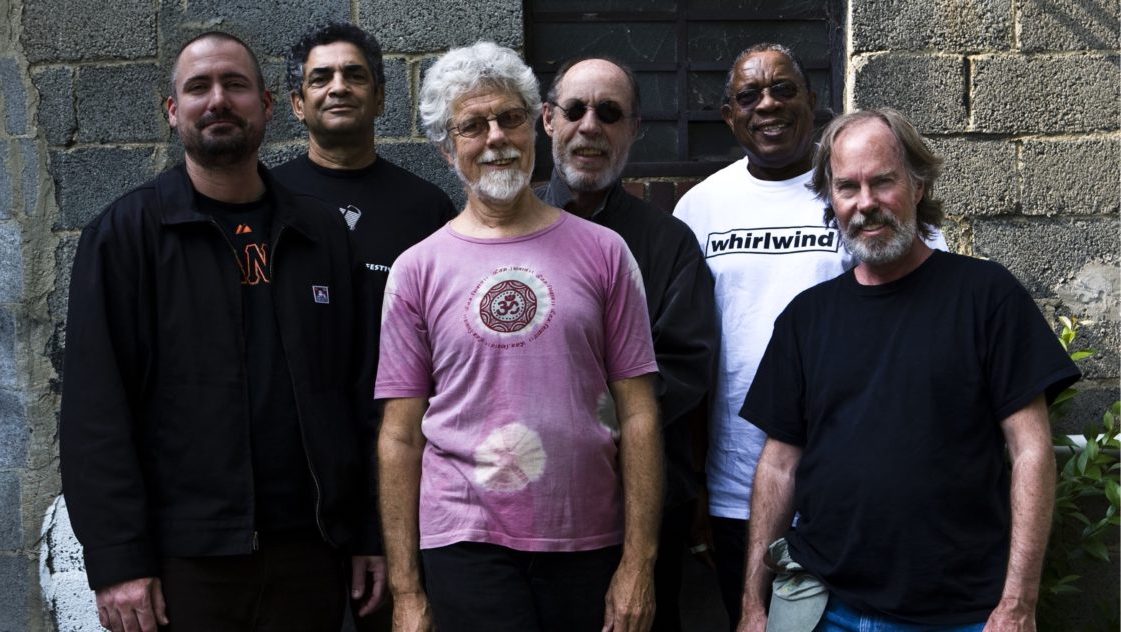
Little Feat ceased to exist for the next eight years but, save forthat gap, the players never stopped making music together. ThoughPayne is the only original member who still performs with thegroup, three of the four other members of the band’s classic ‘70slineup—guitarist/vocalist Paul Barrere, bassist Kenny Gradney andpercussionist/vocalist Sam Clayton—are still onboard. Foundingdrummer Richie Hayward remained in the lineup until his 2010death from cancer. Rounding out the present configuration aremulti-instrumentalist and vocalist Fred Tackett, who joined theothers when they reunited in 1987, and drummer Gabe Ford (thenephew of guitar great Robben Ford). In fact, their roster remainsunusually steady: Only two other musicians, vocalist/guitaristCraig Fuller (whose tenure lasted from 1987 to 1993) and singerShaun Murphy (from 1993 to 2009), have come and gone sinceLittle Feat’s reformation.
And, four decades after the George era came to a screechinghalt, Little Feat is currently celebrating the 50th anniversary of itsbirth and Payne is considering what has changed the most sincethose heady days. It takes him a while to answer; he wants to besure he words his response correctly.
“It’s a realization, honestly, of who we are,” he finally says. “We’ve gotten older; things have settled down in some ways and, in others, they haven’t. One of the things that has not fallen by the wayside is the quality of music we’re putting out. There’s a thread of consistency. [When Little Feat started], we didn’t exactly know who or what we were. Lowell and I both had aspirations of being in a band that was maybe not a household name, but would be known by other musicians, which absolutely came true. But in terms of looking at it over a 50-year period, you hopefully grow a little wiser in certain regards. You become a little more—if not a lot more—aware of where you stand in the realm of music that you love.”
These days, the members of Little Feat no longer maintain thegrueling schedule they stuck to during their prime—they may beresilient but they’re not immortal. The core members are in their70s now, and there have been health issues, notably a cancer scarefor Barrere, and other detours. Various artistic pursuits have alsooccupied the musicians’ time. Since 2015, Payne has served asthe regular keyboardist for the Doobie Brothers, a gig that keepshim busy throughout much of the year. For 20 years, Barrere andTackett have played together as, simply, the Paul and Fred AcousticDuo, and Barrere has a project he calls Better Daze with musicianRoger Cole. More recently, Barrere, Gradney, Tackett and Fordhave played events as Funky Feat.
The full Little Feat sextet plays only a small handful of gigs annually now, heading out for brief periods, mainly to East Coast venues that have been perennial strongholds for the band. This year, to mark the anniversary, they’ll also be hitting several favorites in parts of the country they’ve missed in recent years, including Nashville’s Ryman Auditorium and the New Orleans Jazz Fest. In late March, they’ll also host their annual Ramble on the Island in Melia Braco Village in Trelawny, Jamaica. Guests for this year’s gathering include Lucinda Williams, the Midnight Ramble Band (with Larry Campbell, Teresa Williams and Amy Helm), Leftover Salmon’s Vince Herman and New Orleans singer-songwriter Anders Osborne.
Although nothing is close to set in stone, Payne hopes there willbe another Little Feat studio album before it’s all over. He’s hadsome informal discussions with a high-level producer but, giventhe state of the music industry today, no one in the band is gettingtoo cocky about future plans right now, other than the sure things.
“As long as I keep waking up on the right side of the lawn, it’llprobably remain the same,” says Barrere with a chuckle.
“We’ve gotten older; things have settled down in some ways and, in others, they haven’t,” Payne admits. “One of the things that has not fallen by the wayside is the quality of music we’re putting out.”
Little Feat's golden anniversary has provided a perfect opportunity to look back to a time when anything still seemed possible. It all began with a push from Frank Zappa.
In 1968, George, whose band the Factory (which also included Hayward) had worked with Zappa as a producer, joined the Mothers of Invention as a second guitarist and vocalist, appearing on the albums Weasels Ripped My Flesh and BurntWeeny Sandwich. A few variations on thestory have long made the rounds, but theone that most Feat associates prefer isthat Zappa, having heard George sing hison-the-road ballad “Willin’,” told him hewould be better off starting his own band.George took his advice, as well as Mothersbassist Roy Estrada, and started Little Featwith Hayward and Payne.
Soon after their formation, Little Featscored a record deal with Warner Bros.and began work on their 1971 self-titleddebut with producer Russ Titelman.While the full length already reflectedtheir wonderfully weird trademark mixof rock, R&B, jazz, blues, country, folk,funk and whatever else the memberschose to toss in, it was perhaps too muchof a mishmash to catch on. The album,which included guest guitarist Ry Cooder,reportedly sold abysmally. “It was a greatstart,” says Payne, “but I had no idea whatI was doing, as a writer, as a player. I waslike a kid in a candy store, but I had no ideawhether to eat the candy or sell it.”
The Ted Templeman-produced follow-up, Sailin’ Shoes—the first to feature cover art by Neon Park, whose work would grace all of the band’s subsequent releases—was a vast improvement, introducing several songs that would become permanent fixtures in the band’s setlists: “Cold, Cold, Cold,” “Tripe Face Boogie,” “A Apolitical Blues” and a reworked version of “Willin’,” which had also been on the debut. But it wasn’t until 1973, with the release of Dixie Chicken, that Little Feat found their true groove. Estrada had gone off to play with Captain Beefheart, Gradney and Clayton were brought in from Delaney & Bonnie, and Barrere—who had actually auditioned to play bass and, in his own words, “failed miserably”—was recruited to support George, who was focusing increasingly on his slide guitar and “his own distinctive sound and style—these long, beautiful lines,” as Tackett describes it.
“Lowell welcomed me because, for the first three years, he was playing rhythm, lead and singing,” says Barrere. “It’s not the most ideal situation if you really want to portray the song, unless you’re Jimi Hendrix.” Although the album did not fare well commercially, it received solid radio play and, through word-of-mouth, the band began filling seats in more respectable venues. “You never know with music, or any kind of art, what the general public is going to embrace,” says Barrere. “But we felt really good about this album because there were a lot of extremely wonderful grooves and songs, like [the Allen Toussaint cover] ‘On Your Way Down,’ which was my first-ever live recorded solo. There was a lot of magic going on.”
Over the next half-dozen years, Little Feat remained on an upward trajectory, gaining a reputation as one of the country’s most dependably exciting live-rock acts while releasing one brilliantly executed album after another: Feats Don’t Fail Me Now (1974), the jazzy The Last Record Album (1975), Time Loves a Hero (1977), Waiting for Columbus (1978) and, finally, Down on the Farm (1979). Although the term “jamband” had not yet come into vogue, Little Feat was as much a prototype as any other band—consummate improvisers who could take a well-crafted song and turn it into a thrilling showcase for their high level of musicianship. On tunes like “Fat Man in the Bathtub,” “Oh, Atlanta,” “Rock ’n’ Roll Doctor,” “Skin It Back,” “All That You Dream” and many others, the six virtuosi gelled fluidly and soulfully.
By the end of the ‘70s, though, it was starting to come apart. “Itwasn’t really a split,” says Barrere about the final months of thefirst incarnation. “Lowell went on the road to promote his record.Billy wanted to have more of a hand in the production. I was kindof caught in between.”
Then George died. “I thought he had a few more years in him,honestly,” says Payne. “I actually thought that Richie or Paulmight go first. The drugs were getting ridiculous. I’d stoppedwhen I was 25 and thought something was wrong with me becauseI couldn’t keep up with these guys. Still, it was a shock whenLowell died.”
“The drugs were getting ridiculous,” Payne says. “I’d stopped when I was 25 and thought something was wrong with me because I couldn’t keep up with these guys. Still, it was a shock when Lowell died.”
Although, in retrospect, a reunion was inevitable, at first no one was looking to put Little Feat back together. After staging a tribute concert to raise funds for George’s family, the surviving band members decided to move on. Payne found work with heavyweights James Taylor and Bob Seger, Gradney teamed up with Bob Weir and Clayton partnered with Jimmy Buffett. Hayward drummed for Robert Plant and others, and Barrere spent time in a blues band. They all kept busy. Then, in 1987, the surviving members came together at a North Hollywood rehearsal hall called The Alley to christen a room dedicated to Lowell. “It felt really good,” remembers Barrere. “Later that night, Billy called me and said, ‘What do you think about putting the band back together?’”
The answer was yes all around. They also brought in Craig Fuller, a virtual Lowell George soundalike and a fine songwriter in his own right, and guitarist/mandolinist Fred Tackett, who’d known George since his Zappa days and had actually contributed a song to DixieChicken. He’d been occupied as a studio-sessionmusician, working with Jimmy Webb, Bob Dylan,Bonnie Raitt, Jackson Browne and many others, andwas playing in Bob Seger’s band with Payne when theopportunity to join the new Feat came along.
All of the musicians had already reached an agreement before they even played a note. “Our mantra was: If it’s not as good as we think the [original band] was, then we aren’t going to do it,” says Tackett, who’d played on George’s solo album and tour. “Even some of our friends were like, ‘You can’t do Little Feat without Lowell.’ But, obviously, we figured it was as good. We had a really great response.”The revived Feat made a new album for Warner in 1988, Let ItRoll, that was highly regarded and even went gold. The nextone, Representing the Mambo, fared reasonably well but not wellenough for the label to keep them on its payroll. By 1993, Fullerdecided he’d had enough of the touring lifestyle and bowed out. Hewas replaced by another Seger alumnus, Shaun Murphy, the firstand, thus far, the only female member of Little Feat.
“She became a really good friend of the band and started singingduets,” says Tackett, “So when Craig left, we said, ‘Let’s just get Shaunin the band.’ That was met with resistance from some fans whowent, ‘I don’t want a girl in the band.’” Nonetheless, Murphy stayedfor 16 years, recording and touring with them on a regular basis.
The only other personnel change occurred when Ford, who’dbeen Hayward’s drum technician, took over for his late mentor.“Gabe had been with us for three years, and I didn’t know heplayed drums,” says Payne. “I walked into a soundcheck and Iheard somebody play the drums, and I knew it couldn’t be Richie.It was Gabe. I talked to everybody and said, ‘We cannot replaceRichie Hayward. He’s irreplaceable. But I still want to keep playingwith this band. What about you guys?’”
They also wanted to continue and Little Feat has, in its half-century, graduated from oddity to institution. There’s been a tribute album, Join the Band (featuring guests like Seger, Buffett and Dave Matthews); a box set, Hotcakes & Outtakes; vintage live releases; and more. Their songs have been covered by Linda Ronstadt, Dylan, The Byrds, Emmylou Harris, Bob Weir, Gov’t Mule, Garth Brooks and even Van Halen. In 2010, Phish covered the entire Waiting for Columbus album at their Halloween show. Little Feat’s gigs still sell out.
No one is quite sure where they will go from here. Payne, who’s written a batch of songs with Robert Hunter, is hopeful they will lay down a new studio record—the most recent one, Rooster Rag, was released in 2012—but, as Barrere notes,“That takes dollars. We’ll probably keep it alllow-profile, do gigs when they make sense andplan for the next vacation in Jamaica. Whenwe do get together and play these songs, italways brings out the best in us because webring in whatever we’ve been doing in themeantime. It’s a testament to the fact that allthe cats can play.”
One thing that’s for sure is that no one is getting ready to call it a wrap. “Little Feat is bigger than each of us. It’s built on quality and an inner gyroscope as to what legacy is all about. I feel fully engaged at this juncture,” says Payne, “and I’m really proud that we’ve got a 50th anniversary to share with people.”
This article originally appears in the March 2019 issue of Relix. For more features, interviews, album reviews and more, subscribe here.