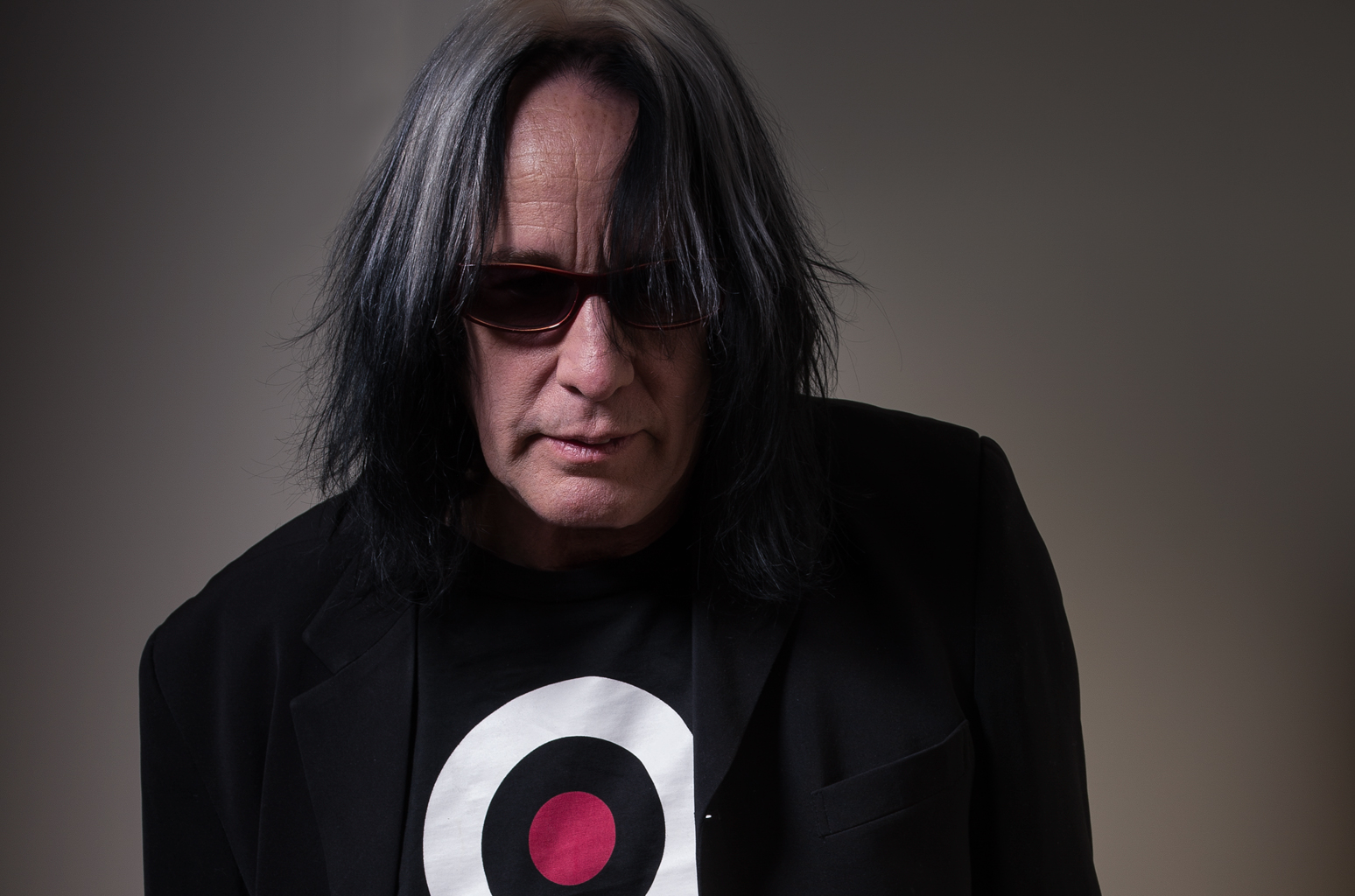
Todd Rundgren first agreed to memoir in the late-1990s. Although he made some initial progress at that time, he explains, “The more that I wrote, the more it seemed like homework to me. My high-school years are such a horrifying memory; it put a damper on it. But, now that I am 70, I realized that if I didn’t write it, then somebody else would. And, I wouldn’t enjoy that.”
The Individualist traces hislife growing up just outsidePhiladelphia through avariegated musical career thatincludes work with Woody’sTruck Stop, Nazz, two versionsof Utopia, a myriad of soloefforts, as well as productionwork for The Band, PattiSmith, Meat Loaf, XTC, NewYork Dolls, The Tubes andnumerous others. Frank Zappa,Duane Allman, Iggy Pop andBill Kreutzmann all makecameos as well.
In April, Rundgren will hit the road for a hybrid tour where he will perform two sets of music spanning the era covered in The Individualist—which ends with his 50th birthday and marriage in 1998—and will bookend each night with a Q&A.
In your book, you reveal that when you were approached about producing Meat Loaf’s Bat Out of Hell, you saw his act as a “genius spoof on Bruce Springsteen.” Did he see it in the same way?
No. That was the reason why I did it, but I never told him or [Jim] Steinman [who wrote the songs]. I don’t have to necessarily reveal to an artist exactly why I’m doing something or detail the vision I might have for them. It was a substantially realized concept because Steinman had been laboring over this idea for years, trying to get what was essentially a musical he had written for The Public Theater of New York produced. And the irony is that the Bat Out of Hell musical that's playing in Germany right now is ultimately what Steinman was going for. It took him 40 yearsto get there. That’s why thewhole thing is so theatrical andthe songs are so long.
Speaking of musicals, you wrote the songs for Up Against It, which opened at The Public Theater in 1989. You mention that Joseph Papp (who founded the theater) had been talking to you about writing an opera before he passed away in 1991. In the intervening years, have you been tempted to create another musical?
I’ve been approached constantly about doing what might be a jukebox musical—a lot of my stuff put into a story and then taken to Broadway. If we could ever come up with a proper storyline to go behind it, then we’ve got all the ducks in a row to make that happen. But we’ve never found the story that we think works. If you haven’t been involved in a Broadway show, then you probably don’t realize the importance of that. There’s so much money and so much time and effort involved in mounting a successful musical that nobody even wants to start it unless everything is absolutely set and everyone is on board. So, that process is still ongoing. I still get treatments about what the story might be—I’ve seen a least half a dozen different approaches, and they keep coming. But until we find one that really works, it’s unlikely that we’ll pull the trigger on that. That doesn’t mean it won’t happen, it’s just that, right now, there is no plan to go forward with it.
In The Individualist, you describe a private performance by the “whirling dervishes” in Turkey, which later inspired your song “Hodja.” The experience sounds psychedelic. Do you think what you witnessed was substantially different from what the general public would see?
Most definitely. Sufis were considered mystics and subversive in a way. And when the Ottoman Empire was unified into the nation of Turkey by Mustafa Kemal Atatürk, he banned religious expression in public. Since the dance was an aspect of Sufi liturgy, they were not allowed to do it in public as part of a religious ceremony. So when anyone sees the whirling dervishes in their fancy costumes and tall hats, that’s just a show put on for tourists and it’s completely out of context with what serious Sufis actually do. If you were a tourist and watching it, then after 20 minutes, you would say, “OK, just guys spinning around—I get the idea, alright.” Meanwhile, the guy spins on for another 40 minutes.
In a somewhat analogous manner, on the first season of Full House, Uncle Jesse [John Stamos] and his a cappella group performed “Hodja.” What was your reaction to that?
Well, I didn’t really watch the show. [Laughs.] In the ‘90s, there was a big a cappella revival. I don’t know what the status of it is now, but around that time, a lot of stuff from A Cappella [Rundgren’s 1985 album] became popular for those groups to perform. I did some judging of competitions and, in almost every single one of them, somebody did “Hodja” because it’s just made for an a cappella group.
What has it been like to watch “Bang the Drum All Day” [from 1982’s The Ever Popular Tortured Artist Effect] become a staple at arena-size sporting events?
It was never released as asingle, so most people don’tassociate it with me. Mostpeople who know of the song,or have sung the song, don’tknow who originally recordedit. They’ve just heard it on theradio, or they’ve heard it at asporting event. It’s pretty easyto learn, especially the chorus,which is easy for everyone tosing along with. But the ironyof it is that, as little energy asI invested into that song, ithas returned more moneythan any other single or songI ever recorded. It got usedby the Carnival Cruise Lineand for movie themes; it gotlicensed to dozens of things.And for a single tune, itmade millions of dollars inmechanical licenses.
When it was originally released, my records were still coming out on Bearsville, but the label was losing interest in promoting anything off my records because they realized they would get a hit out of one song, and then I would never repeat anything like that, which meant they would have to start all over again. My lack of consistency discouraged the label from making an investment in anything. Otherwise, they might’ve released “Bang the Drum” as a single, but it never occurred to them.
This article originally appears in the March 2019 issue of Relix. For more features, interviews, album reviews and more, subscribe here.