The “Golden Voice of Africa” celebrates 50 years in the music biz with his final hurrah.
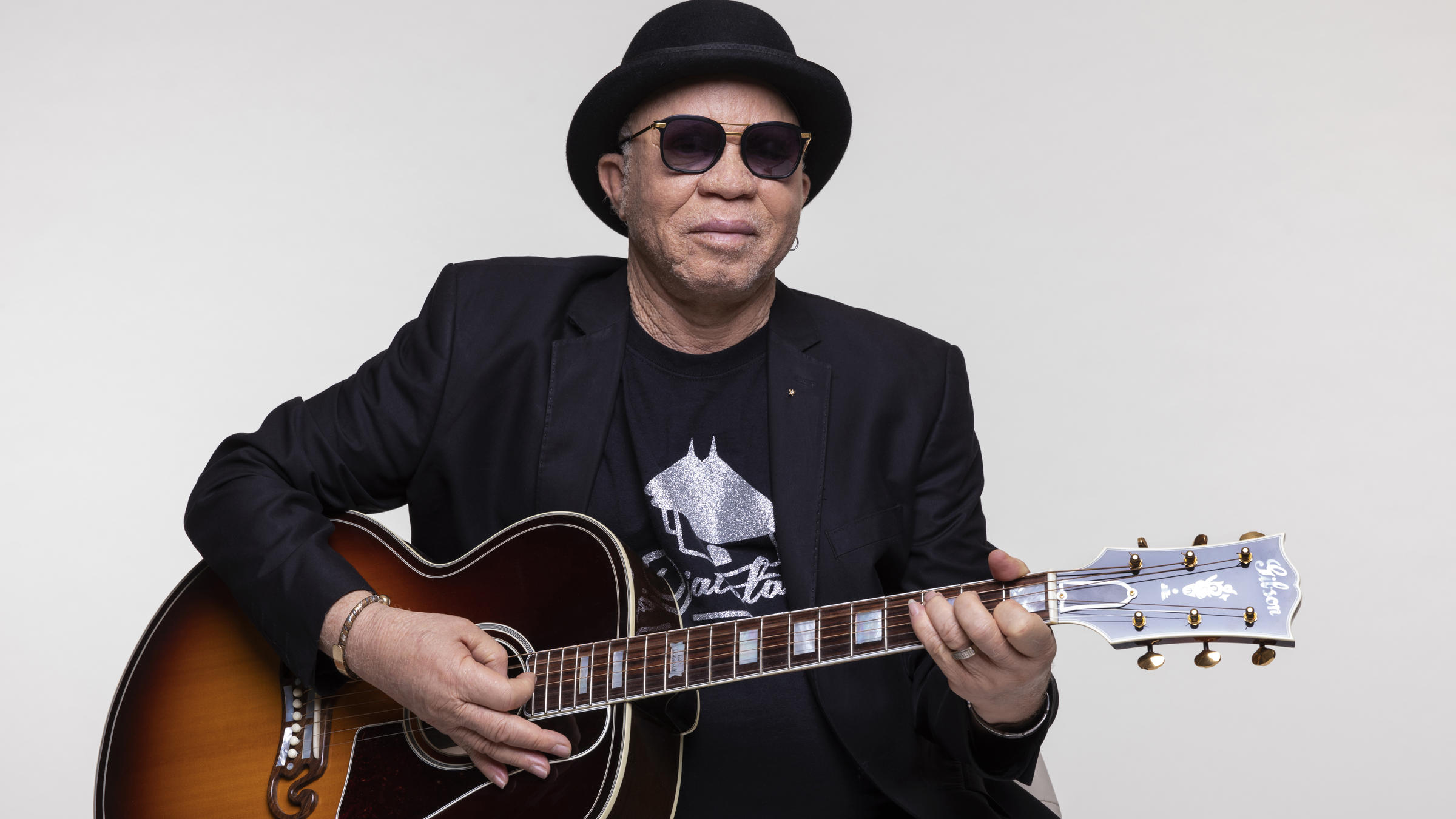
In the vast turn 70 this year and mark afull half-century in the musicindustry. He’s been called the“Golden Voice of Africa;” he’salso long been an outspokenhuman rights activist andleading advocate for peoplewith albinism. He’s toured theworld time and time again,collaborating with CarlosSantana, Esperanza Spaldingand Wayne Shorter alongthe way, and grown into oneof Africa’s best known starsin Europe and the UnitedStates. And now it’s time tosay goodbye.
In late 2018, Keita releasedUn Autre Blanc—“AnotherWhite”—an album over threeyears in the making, andthe one he’s calling his last.The 10-song record includesdeeply spiritual Malian folkand soul music, equipped withsomersaulting percussion, abright backing chorus, Keita’sunderstated, mesmerizingguitar and, of course, agorgeous from-the-belly voicethat could rattle even the moststoic listener. With LadysmithBlack Mambazo, AngéliqueKidjo, Alpha Bondy and morelending their services, Un AutreBlanc is also a showcase for awhole lineage of African stars,proving that Keita is the seedfrom which so much music hasgrown. But that doesn’t mean itwas easy to create.
“Quite simply,” says Keita, through a translator from his native French, “I am tired. Recording an album is a long and exhausting process for me. And as most young people seem more interested in individual songs rather than complete albums, I’m content to say this is my last.”
Un Autre Blanc was recorded between Mali’s capital city, Bamako, and Paris, Keita’s adopted second home. The songs center on the same uplifting themes that have carried his work for decades: “Love, gratitude and concern for fellow human beings,” he says.
But, as his first solo album in a little over six years (since 2012’s critically acclaimed Talé), it stands to introduce Keita’s music to an audience that’s only been growing. In recent years, Malian acts like the Saharan bluesmen Tinariwen, the effortlessly funky Amadou & Mariam and the guitar warrior Vieux Farka Touré have all joined Keita as Malian musical ambassadors across the globe.
Keita, though, is hesitant to embrace that role. Malian or not, he sees himself merely as a vehicle for his songs—and for the joy and love they inspire.
"I've never felt that [I represented Malian music]," he says. "I can only compose and perform the music that I find within me, the songs that I want to express. I’ve nevertried to pursue a particulardirection.”
Thankfully, what he’s wanted to express is what made Salif Keita a star. Born with albinism in Africa in 1949, Keita grew up misunderstood and often ridiculed. Despite being a descendent of royalty—or maybe because of it—he was born an outcast, his community fearing him as a harbinger of bad luck. Music became an escape, a salvation. By his late teens, he’d left his village for the capital and linked up with the Rail Band and, later, Les Ambassadeurs, both pioneers in the burgeoning Malian Afro-rock scene. A bold move to Paris in 1984 opened the door to unlimited opportunity for Keita; by the mid-‘80s, he was an international star.
The sting of his childhood never faded, but Keita became a leading crusader against the persecution of people with albinism through his Salif Keita Global Foundation—a role that will likely continue after hanging up his studio cap. And, people seem ready to hear his message.
“There is still deeply rootedprejudice and pre-conceivednotions [about people withalbinism] in Africa, and there’san urgent need to educateand inform people of howtraditional healers and witchdoctors continue to exploitthese people to fill theirpockets,” he says. “There maybe cultural differences—fromMali to Tanzania to SouthAfrica—but these practicesare still widespread acrossthe continent.”
With Un Autre Blanc wrapped and released, Keita will play around Africa and beyond through December 31, then he’s taking a well-deserved break. Fans will likely find him at home with his family, or kicking back at his island resort outside Bamako, Djataland, tucked alongside the Niger River.
Keita maintains that we may hear his voice on a song, or from a stage, down the road. But his days of spending endless hours chipping away at a full album have ended. And what of his legacy?
“Is that for me to say? I would want my music to help people all over the world appreciate the power and beauty of African music,” he says. “Our music is a universal language. Everyone can understand.”
This article originally appears in the April/May 2019 issue of Relix. For more features, interviews, album reviews and more, subscribe here.