
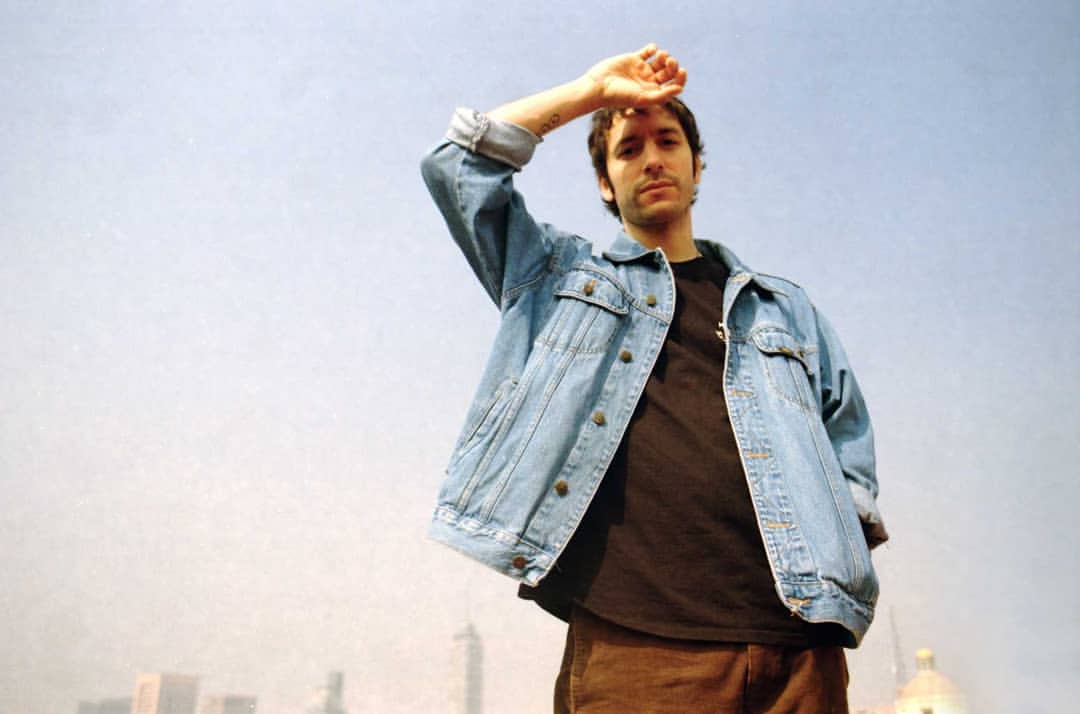
Building bridges and transcending cultural barriers, this Ecuador-based DJ and producer is redefining “ethno-trance” music with a unique palette of sonic colors.
With all the strident, isolationist talk these days about border walls and national security, it’s instructive to remember that music has always been a positive force for open exchange between cultures, whether you’re reminiscing over the British blues explosion or digging the latest guitar-slinging rock band to emerge from the Malian desert. And for an artist like Nicola Cruz, born in France and raised in Ecuador, that exchange is much more than just a two-way street. It’s a cosmically charged freeway of the mind—a place where ancestors and contemporaries can communicate by way of tradition, intuition and creative symbiosis.
If all that sounds a bit heavy and highfalutin, then it’s not meant to be. In 2015, when Cruz released his debut album Prender el Alma—a slow-cooked brew of homegrown South American sounds, Afro-Latin rhythms and swing-conscious electronic beats—he spoke in interviews about how music could inspire a conscious awakening, and that the ritual of making the album had a lot to do with that sense of discovery.
“I think I referred to it as a ritualistic process,” he says over the phone from Ecuador’s capital city, Quito. “Music, for me, is a ritual—when you go into the studio, in the way you approach composition with other musicians and even with the machines in electronic music. With [my latest album], this vision becomes a bit wider with all the traveling, with all the collaborations and with new spaces to record in—even working with people that I’ve known for so little time, and connecting at the point when we’re gonna make a song together. So the creative process with this album was very ‘nomad,’ I would say. I took advantage of my touring time to find interesting places to record, or just be open to collaboration.”
Building on the distinctive ethno-chillout sound he dubbed “Andes step,” Cruz has elevated the conversation with his new LP, Siku—which takes its name from the Andean wind instrument, akin to the more widely known pan flute, that’s central to Ecuadorianculture. “Siku refers to anAndean tradition that means‘playing in pairs,’” Cruzclarifies. The definitiondescribes the instrument itself,which consists of two rows oftuned lengths of bamboo, thearca and the ira. But the wordalso connotes the spirit ofcollaboration.
“It’s not just the actual exercise of playing music—I feel it in a higher sense,” Cruz says. “There’s a feeling of fellowship around many things we do, and I wanted to name the album Siku because of the special connection that I have to all the musicians who participated. I grew up in Ecuador since I was three, so this is my place. I feel a strong connection to it, and I’m inspired by folkloric tradition and the culture and music here, of course. But I wanted to take this a bit away from the South American continent.”
While the title track and several other cuts on Siku (namely “Arka,” with flute maestro Esteban Valdivia, and “Voz de las Montañas,” with Colombian singer Alejandra Ortiz, who records as Minük with bandmate Marcus Berg) capture some of the traditional folk music styles of his homeland, Cruz clearly made the most of his time on the road. In São Paulo, he connected with singer-songwriter Castello Branco to write the song “Criançada”—a quietly grooving samba-style ballad that ruminates over the love between mother and child. In Lisbon, he met Portugese percussionist Marcio Pinto, who lends his infectious chops on balafon to the hot-blooded “Esu Enia,” which closes the album. And to capture the atmospherics he needed for “Arka,” Cruz recorded Valdivia in the reverberant caves of Ilaló, a dormant volcano just outside of Quito.
“I’ve always been one ofthose analog gear nerds,” Cruzreveals, “so my main aim isalways to get high-quality,trustworthy analog equipment.I like to be very expressivewith sound, so even if I’mdoing the recording, I try toget the most out of an acousticenvironment. I try to keep thesignal quiet and make it feelloyal [to the performance]. Andsometimes, when I work withmusicians like Pablo Vicencio,who plays the percussion onthe song called ‘Obsidiana,’even if they’re human, Iprogram them [Laughs].That might be a crazy thingto say, but that achieves theelectronic sound, you know?It’s programming a personthe way you’d program arhythm machine.”
Cruz is an acknowledged wizard in the studio and an in-demand DJ and remix specialist, largely because his talent for merging acoustic sounds with organic-sounding beats comes as second nature. “Obsidiana” is the real head-turner on Siku; it starts with a tribal conga-and-shaker rhythm, gradually picking up more drums and percussion until, out of the ether, a sitar eases into the mix. The instrument guides the song into otherworldly textures and colors (some of them manipulated electronically) that suggest a distant dreamtime of magical realism right out of a Borges poem or a García Márquez novel. Conceptually, it circles back to the “higher plateau” that Cruz is always striving for as a producer.
“I don’t find that to be easy, to be honest,” he says. “That ‘mantric’ trance state feels great when you get there, and I guess that’s why it’s so hard to reach.” More often than not, Cruz has found that electronic processes are a big part of the equation, whether he’s treating a sitar or a human voice but, again, he stresses that collaboration is the glue that holds it together. “That’s the thing about Siku,” he continues. “It’s colloquial. It’s songs made with other musicians because of a real connection. I’ve been friends with some of them for a long time, but we have a really nice connection through the music. That’s why the songs came out the way they did.”
This article originally appears in the March 2019 issue of Relix. For more features, interviews, album reviews and more, subscribe here.