Dave Harrington digs into a deep set of reconstructed improvisations for his latest “phase change.”
"This is the first time I've talked to anyone about this music,” Dave Harrington says as he nurses a beer among toddlers and parents at the Gold Star Beer Counter in Brooklyn’s Prospect Heights neighborhood. “I’m still figuring out how I want to—or even whether or not I want to—talk about this music.”
The music Harrington refers to is Pure Imagination, NoCountry, his second album of mostly improvised, and thenradically reconfigured, futuristic fusion. A longtime bassistturned guitarist with synthesizer, Harrington leads projects thatevoke everything from Weather Report imagining the AllmanBrothers to Karlheinz Stockhausen jamming on electric MilesDavis material with Bill Frisell.
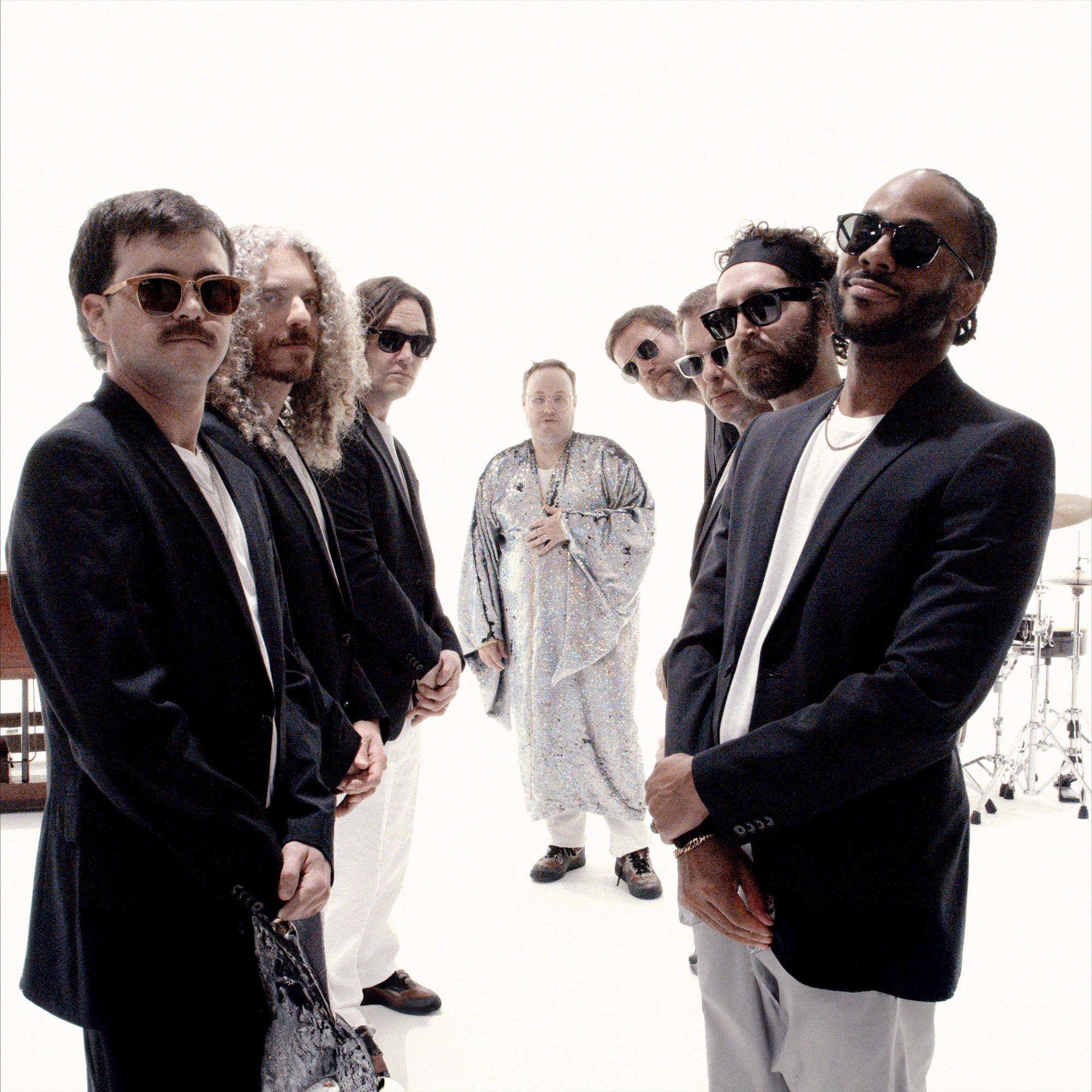
Both the improv-centric Dave Harrington Group as well as its even freer extension, Dave Harrington’s Merry Pranksters, defy categorization. “Jazz is infused in the tea bag,” says longtime Harrington drumming comrade Samer Ghadry, “but it’s not jazz tea.” It is neither rock nor electronica tea,
yet you’ll find both those styles in this strange brew as well. Despite hovering at the edge of the cosmos, there’s a sense of joy in Harrington’s distorted psychedelic darkness. And improvisation has always been his comfort zone.
Harrington—along with Ghadry, keyboardist Andrew Fox and rotating collaborators including Will Epstein, Will Shore, Morgan Z, Spencer Zahn, Stuart Bogie, Dr. Nate Sloan and Tlacael Esparza—began recording Pure Imagination while touring and playing music from his 2016 debut album, Become Alive, which, with the exception of ecstatic closer “All I Can Do,” was completely improvised. Then, he transformed that spontaneous music into a workable repertoire.
“We took what was on the record and turned them into structures,” says Harrington, whose unruly strawberry-blond mop and rocker black leather jacket perfectly represent the yin and yang of the scenes he runs in. “It seems convoluted but it’s really quite simple: Whether there were three people or 15 people on that original track, we approached those improvisations as a quartet.We’d be like, ‘This is the first event, this is the next thing and that’s thething at the end.’ We turned the improvisations into compositionswe played on tour, which, in turn, became new improvisations thatbecame new songs that became the next record.”
He laughs, a bit maniacally, and summarizes: “We tookthe ‘smear’ of the music from the first record, reformulated it,learned how to play it live and then came up with new things wewanted to do.”
Call what Harrington does a type of “phase change.” That’s the scientific term for what happens when, for example, water turns into ice or, conversely, into vapor. He gives the example of “Slides” from Become Alive. The track was originally a duet pairing Harrington’s fuzz tones with John Stanesco’s bass clarinet. The tune is reimagined on Pure Imagination, though, as “Slides Redux,” with other bandmembers almost unrecognizably taking control of the clarinet part over some enhanced distortion.
If Pure Imagination displays a lot more focused intensity than Become Alive, then thank the emergence of a core Dave Harrington Group. Harrington and Fox were roommates at Brown University, which Ghadry also attended, and the trio have been playing together in one another’s bands for more than a dozen years. “From the second Dave and I crossed paths in Boston in the summer of 2003, I knew that red-headed string demon was going to fuck me up musically,” Fox remembers, adding, “and I was going to like it.”
“Dave was like a tiny, powerful ball of flame,” recalls Ghadry of their Brown days. “He had dreads at the time, and energy just sparked off him.” Already as a student, Harrington had a natural knack for juggling several musical projects simultaneously. The frequency with which they played together resulted in what Ghadry describes as a “private musical language” based on archetypal reference points—record labels, albums and specific artists—they’ve subsequently stitched together into an infinite variety of combinations.
A sense of camaraderie naturally plays a large part in their alchemy as well. When a backstage tiff caused some pre-showangst at the 2016 Gent Jazz Festival (“I was a little bitter abouta comment,” Ghadry admits), Harrington suggested a “dronemoment, something gentle and simple,” for their opening move.Ghadry soloed softly as the rest of the group retired to thesidelines, demonstrating that a good bandleader knows how toread the moment.
Fox, meanwhile, savors the night a couple of months later, whenthe group played the Prince Charles club in his former home,Berlin. “Live neo-acid jazz in techno town: Who knew if we’dgo over well?” recalls the keyboardist, who provides the group’ssynth-bass lines. “In the end, the club was packed and the crowdwent wild. I think about that set often—for its channeling of austereGerman vibes into our psychedelic freakout, finding our inner Canand as a sweet homecoming. That’s playing with Dave for ya: a mixof the familiar and foreign, roaming in the ecstatic.”
Born on New Year's Eve in 1985, Dave Harrington is a product of Manhattan’s Upper West Side in all its media-saturated glory. “I woke up every morning with the Today show on televisions in three different rooms,” he says. His father was a highly respectedbehind-the-scenes newsman probably best known for launchingMSNBC (back when “MS” still stood for Microsoft). When MarkHarrington died in 1998, former CBS President Howard Stringercharacterized him as “the ultimate collaborator” in a New YorkTimes obituary. Harrington’s mother, Kyle Good, was the firstfemale news director at CBS before transitioning to NBC.
The younger Harrington was “super serious” about jazz bassbefore he became a teenager. He devoted the next decade of hislife to the instrument, initially spending afternoons, weekends andsummers at the Harlem School of the Arts. His private teacher wasBrad Jones, who has worked with Muhal Richard Abrams, OrnetteColeman and Marc Ribot. Guitarist Kelvyn Bell, of punk-funk-jazz combo Defunkt, directed the school’s jazz band. Bell, whohas performed and recorded with Steve Coleman was “sneakilyfar out,” according to Harrington, and would teach the ensemble“Monk tunes you’ve never heard of” and odd-metered music byArthur Blythe, alongside standards like “My Favorite Things.”
In high school, Harrington took advantage of his proximity to the Beacon Theatre to catch Medeski Martin & Wood’s fabled Halloween shows as well as performances by the Allman Brothers Band. He’d also sneak downtown to catch wild cards like JohnZorn, Marc Ribot and Sex Mob at Tonic on the Lower East Sideand at the Knitting Factory’s Tribeca iteration. He acquired a tastefor jazz as “social music, party music,” a preference that informsthe free-flowing Merry Pranksters.
He earned a degree in modern culture and media at Brown,where he played in jazz combos and took bass lessons from“amazing upright player” Dave Zinno. Over the next several years,Harrington cut his teeth playing with more Brooklyn indie-rockgroups—including ARMS, Thunder & Lightning, Translations,Drunken Forest, El Topo and Bladerunner—than Phil Lesh hasfriends. He also began hosting end-of-the-year holiday showcasesyou could take your grandmother to.
His career received both an artistic and professional boostwhen fellow Brown alum and longtime collaborator Will Epsteinintroduced him to Nicolas Jaar, who needed a guitar player fora tour supporting the electro wunderkind’s Space Is Only Noisein 2011. On the road, Harrington and Jaar concocted the dense,spacey and immersive mind-blowing duo Darkside, whose lushand layered Psychic effectively catalyzed Harrington’s sonic vision.Darkside made a substantial splash but is currently on “indefinitehiatus.”
“Darkside was Nico and me finding our way together,” Harringtonsays. “A lot of how I became a performing guitar player was byplaying in Darkside.”
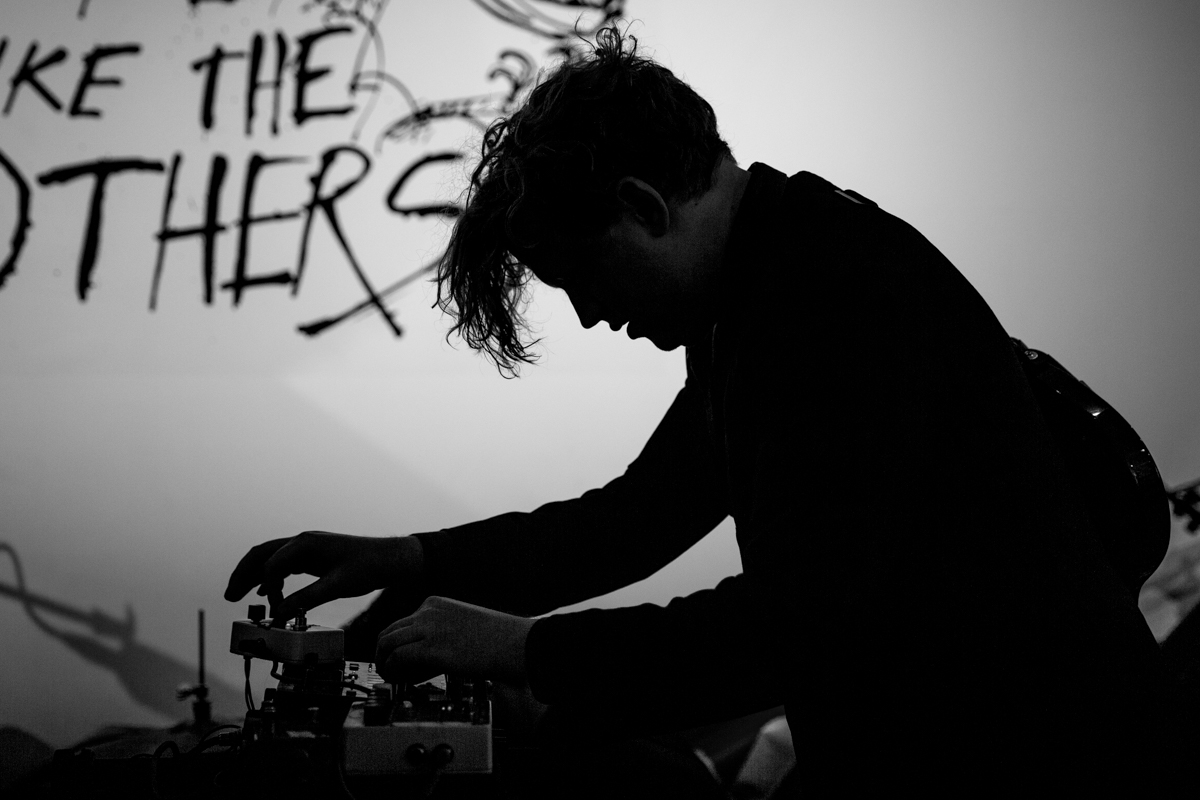
As a guitarist, Harrington is an insider’s outsider, who you mightsay subsumes style to strategy. His electronics rig transforms hisinstrument into an almost symphonic source of everything fromthe scummiest distortion you’ve ever heard to patient eddieslapping at your pleasure center. He tends to eschew crescendoingjam-rock climaxes in favor of a more ambient approach to playing.
“I’ve seen those types of bands and shared the experience ofwhen that magic happens,” he says, “and an audience sharingthat moment together is still one of my favorite things. So I feelconnected to, and influenced by, that tradition in a really deepway. Even if it only seems like I’m glancing at it, it’s part of mymusical DNA.”
While you wouldn’t necessarily guess that the Grateful Deadinforms Harrington’s music any more than the greater jazz world,he likes to warm up with a pass or three through “Help on theWay> Slipknot,” which, he says “sometimes comes out by accidentduring a show if I’ve played it too often.” In 2015, he made his markon the modern jamband scene when he participated in Relix’s“Brooklyn is Dead” 40th anniversary celebration, playing witha mix of musicians led by Real Estate’s Alex Bleeker. He clickedwith another of the show’s guests, drummer Joe Russo, duringa particularly deep onstage moment and the musicians havecontinued to explore their improvisational connection in varioussettings ever since. (Throughout the Dead’s 50th anniversary year,Harrington continued to pay tribute to the jamband titans withBleeker and his band, playing a late-night show in Chicago thatearned him a discounted ducat for “Fare Thee Well”—which hedescribes as “great”—and sharing the stage with Bill Kreutzmannat San Francisco’s Outside Lands on the anniversary of JerryGarcia’s passing.)
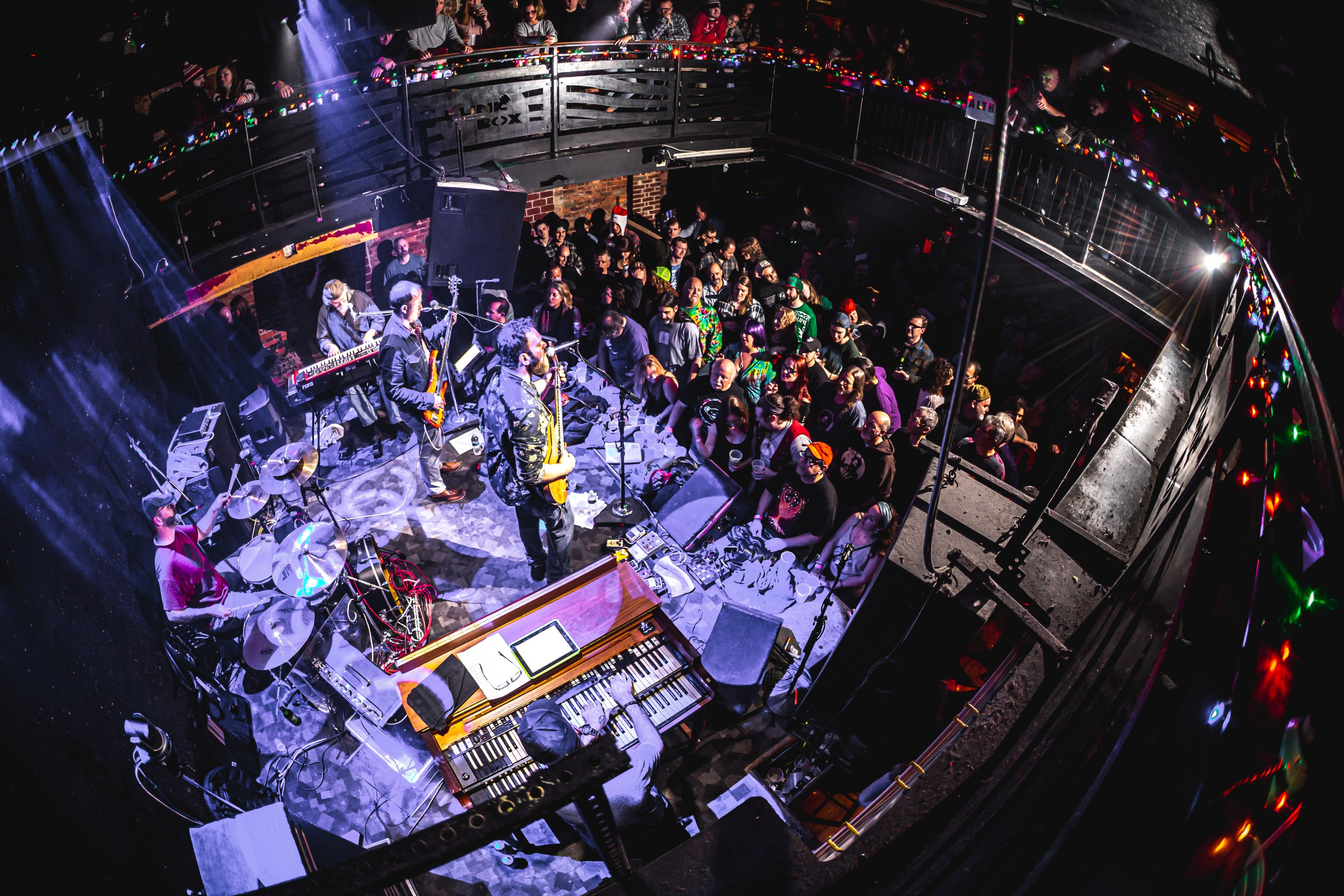
The Merry Pranksters were born when New York DJ andpromoter Chris Tart saw Harrington with Russo and then askedhim to organize a Dead & Company after-party. “He said I coulddo whatever I wanted and I was like, ‘Whoa, are you sure?’ I satdown with Fox, who said, ‘Get as many people as you can fit onRough Trade’s stage, do the biggest band you’ve done in the city,and call it the Merry Pranksters.’ I was like, ‘OK, done.’ Andrewkind of invented it for me and I’ve been trying it in different waysever since.”
According to Russo, “Dave has an overflowing commitment to freedom that not a lot of people possess, and he’s a joy to play with.” Harrington returned to bass for Russo’s 2017 reworking of Jerry Garcia and Howard Wales’s jazz-rock Hooteroll? album, and the duo’s onstage chemistry was palpable. “He can wear a lot of hats, and every one he puts on is perfect,” Russo says. “We don’t have to say a word when we go onstage, but I know it’s all going to work out.”
The title Pure Imagination, No Country refers not to a dislike of the workingman’s blues but rather to a boundaryless state of mind—it’s a recording of dramatic shifts, jump cuts and moods.
Its first two tracks clock in at less than two minutes each. Whilethe excitedly exuberant group piece “Well” is a “tiny sculpture”that Harrington says was thwacked out of something much longer,the ambient “Dreamfield” was a solo effort. “At some stage, theystarted feeling like two poles of an idea, maybe, and I wanted to getthat out of the way and dive into the rest of the business.”
It’s only on the next two tracks, “Belgrade Fever” and “ThenI Woke Up,” that Harrington steps out as a soloist amid an ever-changing landscape that he both shaped in real time and alteredafter the fact with the help of audio engineer Philip Weinrobe.“I brought Phil a big pile of what I was pretty sure was a record,”he says, “and, four days later, he and I had wrung it into the musicit is now.”
Like a chef protecting secret recipes, Harrington gets a little coywhen discussing Pure Imagination’s 11-minute centerpiece, “PatchOne.” “Some very esoteric strategies were used in the creation ofthat song,” he says of its code-red alien landscape of drums andindustrial electronics. “Going into the technical details of how thatcame about would be so boring and not fun. Phil pitched me anidea for something he’d always wanted to do but had never beforetried. An element of spiritual risk was involved, and I couldn’t helpbut say yes.” What sounds copiously overdubbed turns out to bethe core trio plus Lars [Horntveth] from Jaga Jazzist.
Listening to Pure Imagination, No Country sometimes resemblesa fever dream or sensory-overloaded amusement ride gone awry. Itwraps up with the ambient “No Country” followed, naturally, by“Pure Imagination” from Willy Wonka & the Chocolate Factory. Thealbum’s only real composition is a longtime Harrington favorite.
“I’ve been playing it for years and years,” he says. “I love GeneWilder, the film and the [Roald] Dahl books. I used to play it duringDarkside soundchecks in humongous venues when the sound guywould ask me for a little guitar.”
After recording it in a day, he almost gave this solo slice of guitar-electronics bliss away for a compilation. “My partner, Tamara, said, ‘Don’t do that. Save it for your record.’ That hadn’t occurred to me because there wasn’t a record then. ‘You mean the one I’m a million miles away from making?’”
This article originally appears in the March 2019 issue of Relix. For more features, interviews, album reviews and more, subscribe here.