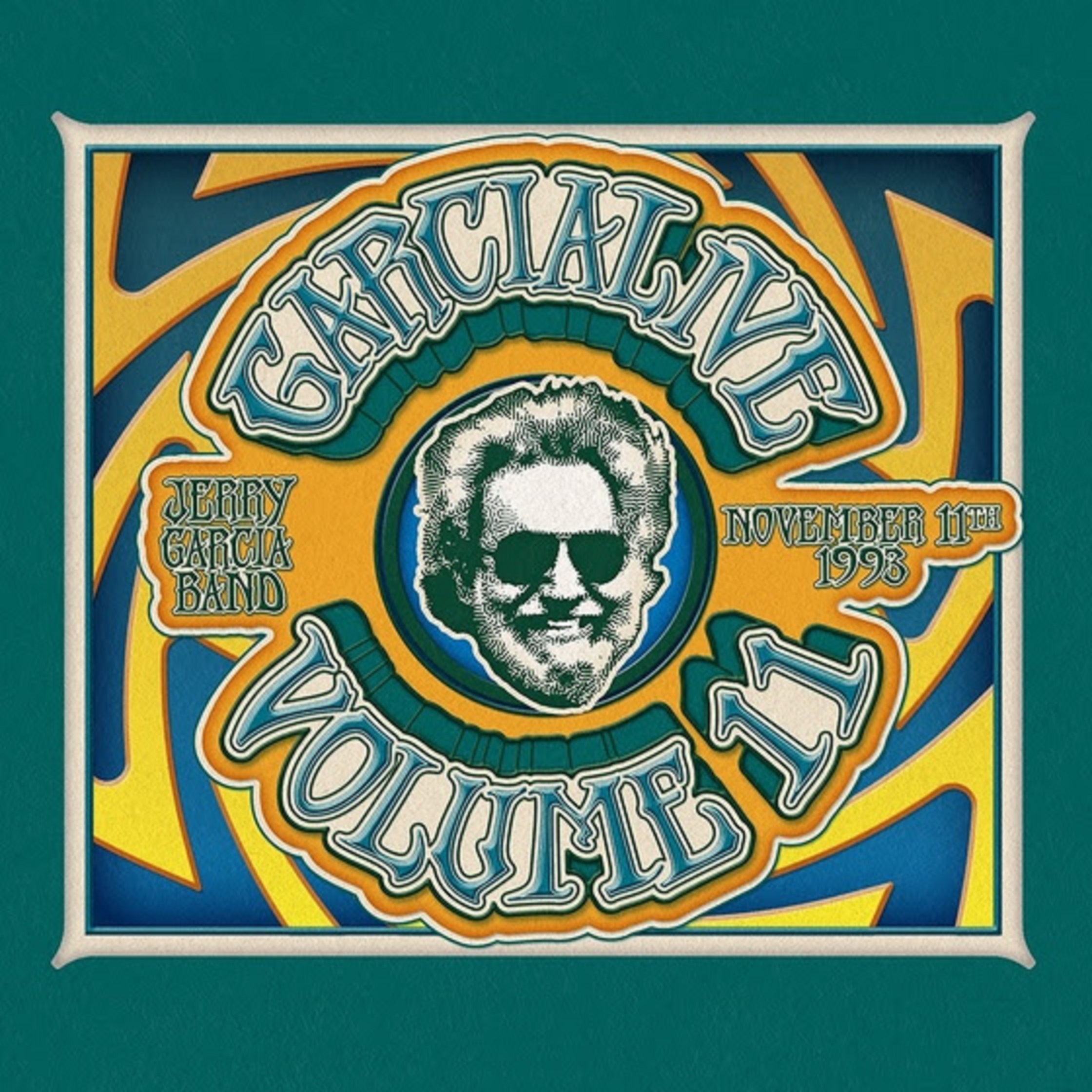
The author, Jerry Garcia biographer and all-around Grateful Dead chronicler digs into the latest JGB archival release.
In August 1999, Viking Presspublished Garcia:An American Life,Blair Jackson’sdefinitive biographyof Jerry Garcia.Jackson first wroteabout the GratefulDead back in 1983,with the bookThe Music NeverStopped, which, in turn, ledhim to publish the beloved,informative Dead fanzine, TheGolden Road, alongside his wife,Regan McMahon.
While Jackson has gone on toother writing and editing venturesover the years, he’s retained apassion for the good ol’ GratefulDead, penning additional bookssuch as Grateful Dead Gear,serving as producer on compilations like the So Many Roads boxset and contributing liner notesto various projects includingthe latest GarciaLive release.
GarciaLive Volume 11 presents the Jerry Garcia Band on Nov. 11, 1993, at the Providence Civic Center in the middle of their final East Coast tour, two years before Garcia’s death. The Providence show opens with “Cats Under the Stars,” and Jackson writes, “I always viewed it as a theme song for the group—after all, it’s about a band layin’ it down funky onstage night after night.” Other highlights include the band’s versions of Norton Buffalo’s “Ain’t No Bread in the Breadbox,” Van Morrison’s “He Ain’t Give You None” and Smokey Robinson’s “When the Hunter Gets Captured by the Game.”
Looking back at Garcia: An American Life 20 years later, how do you view the experience of writing it and then sharing it with the world?
It’s probably the project I’m most proud of in my whole life. It was done pretty soon after Jerry died. Viking contacted me toward the end of ‘96 about doing it, and I immediately said yes. Then, I began the interviews and all that kind of stuff, and it was still an extremely raw time for everybody. All these interviews were incredibly emotional. People were crying and remembering stuff they hadn’t really talked about much, if at all. For instance, I spent an entire evening with John Dawson of the New Riders and his wife at their place in Mill Valley, and they just poured it all out.
One of the many cool thingswas that everybody loved Jerry.They all had almost nothing butgreat things to say about him,even though they were aware ofhis foibles and his shortcomings,just as Jerry was himself.
After writing about the Dead and loving the Dead as long as I had, it was also extremely cathartic. I had to go through his life and death in my own terms while writing about it. I remember I had a good cry when I finished writing about him dying in the book.
It also set the stage for manyof the liner notes and magazinearticles that I’ve done—muchmore so than The Golden Road,which was always very niche,even though it was loved on itsown level. So, it really openedthe door for everything thatI’ve done about the GratefulDead since, in a way.
Your latest such endeavor is contributing the liner notes to GarciaLive Volume 11. How would you characterize the musical relationship between the Jerry Garcia Band and the Grateful Dead?
It’s interesting because the JerryBand obviously never ascendedto the commercial heights thatthe Dead did. That’s partlybecause the Grateful Dead havethat incredible chemistry—eachperson was so integral to theoverall Grateful Dead soundthat you couldn’t imagine onewithout the other, and they hadthis incredible body of workthat inspired a culture to growaround it.
The Jerry Band was really alowkey showcase for Jerry toplay and sing tunes he likedwithout the pressure of meshingin that Grateful Dead way. Thatis not to say that Melvin [Seals],John Kahn and all these peoplearen’t important—obviously, theywere integral to the sound andall that. But it was much morerelaxed on all levels than theGrateful Dead. What’s coolabout it is that if you really likedto hear Jerry Garcia play guitar,you really got to hear JerryGarcia play guitar.
With JGB, there were veryrarely vehicles to go outsideand jam in that classic GratefulDead spacejam way. There wereusually one or two songs thatallowed them to go slightlyoutside—you might hear it in“Don’t Let Go” [which appearson GarciaLive Volume 11] or“Lonesome and a Long WayFrom Home.” But mostly he wasstaying within the lines of asong but taking them far out, interms of modern extrapolationon a theme.
My favorite quote about Jerry Garcia is from David Kemper, the drummer. I’m not going to say it correctly, but the gist of it is: “People wanted to be in the same room with Jerry.” That was really the appeal. You felt like you were connecting with him on a different level than the Grateful Dead because the songs he was choosing were a lot of ballads and love songs and Dylan tunes. They were tunes that he connected with, lyrically, in terms of their mood, but that didn’t have the weight of the Grateful Dead on them. And I don’t mean that in a negative way.
Since you mentioned David Kemper: One of my favorite quotes of his described how Jerry would make tempo changes but would never articulate that directly. Instead, David would figure it out based on how Jerry counted off the songs. Can you talk about his role in the band?
He was just so versatile. He was just loose enough to let Jerry stay loose but also had enough of the fundamentals and drive of his own to keep it on track too, if Jerry was going to wander a little bit. He had to be on top of that at all times to keep it swinging, so to speak, because if it didn’t swing, it was going to thud and a thudding Jerry Garcia Band show was not good.
He contributed that swing oncertain tunes so the music camealive in a way, in part, becauseyou didn’t hear John Kahn beingquite as prominent as he was inthe early days of the band. So itdepended more on the drums tobe the rhythmic underpinning.You also find Melvin playingsome really nice rhythmic stuffwhen he’s not soloing. It’s almostlike a band full of rhythminstruments, with Jerry layeringon top of that. But even he likedto play rhythm occasionallywhen Melvin would solo.
Speaking of those Melvin solos, the first set in Providence closes out with “Deal.” I was at this show and I really enjoyed the big, beefy organ sound during an era when the Grateful Dead’s version of “Deal” often sounded a bit thin to me because Vince Welnick wasn’t playing a B-3.
In ‘79, when Brent [Mydland] first came into the band, it also coincided, more or less, with Jerry going away from the piano sound of the Garcia Band. Keith [Godchaux] and Nicky Hopkins had been in [that role]. Once Melvin joined, there was a long time where both the Garcia Band and the Grateful Dead were dominated by organ.
So it didn’t really surprise mea ton that when Vince came intothe band [during the fall of 1990,after Brent passed away], theysaid, “We’re sort of done with thisfor a while.” They did try to givehim a B-3 patch, which waspretty bad at the beginning, but itgot better over the next couple ofyears. It was just a way to break itup a little and get some newcolors and textures in the group,just like when Brent came in—headded all sorts of new colors andtextures that had not been thereduring the Keith era. I thoughtVince was a breath of fresh air.I agree that, for the first year ortwo, the synth textures he wasusing could be described as thin,but he got better as he grew intothe job. If he hadn’t introduced“Samba in the Rain,” I thinkpeople would have given himmore slack.
I listen to my fair share of Jerry Garcia Band. However, I had a couple experiences during the second disc, in which I was called out of the room and, when I returned, I had to reposition myself to think, “Where are they?” I really enjoyed those moments of disorientation.
It’s the tunes on this particular one. When you get to something like “When the Hunter Gets Captured by the Game” that they didn’t play that much, it has that kind of loosey-goosey feel, like they don’t know it completely but it’s still cool. “Dear Prudence” also always had its own vibe—there’s so much space in between the notes and in between the beats that you weren’t exactly sure where they were going to go with it. That’s always fun.
Jerry Garcia liked being on thatedge of unknowingness, whereyou’re not exactly sure whethereverybody is going to come in atthe same time or whether he isgoing to come back in time to getback to the verse. That was partof the fun for him, or part of thechallenge at least. He’d probablysay, “No, I don’t do it on purpose.I’m trying to get back on the beat.”
What are some of your favorite moments on GarciaLive Volume 11?
I really like “He Ain’t Give You None.” It’s an interesting tune and another one they didn’t play that much. It was a basic, raw, bluesy mid-‘60s Van Morrison song, and Jerry had a real affinity for that kind of thing.
“No Bread in the Bread Box” has got an interesting rhythm and then, the way it gets into the chorus, it sounds like The Band. It’s also got an Americana vibe to it with the lyrics, which made it feel like a good match for Jerry, vocally and musically. It’s one of those songs that fit Jerry like a glove.
This article originally appears in the September 2019 issue of Relix. For more features, interviews, album reviews and more, subscribe here.