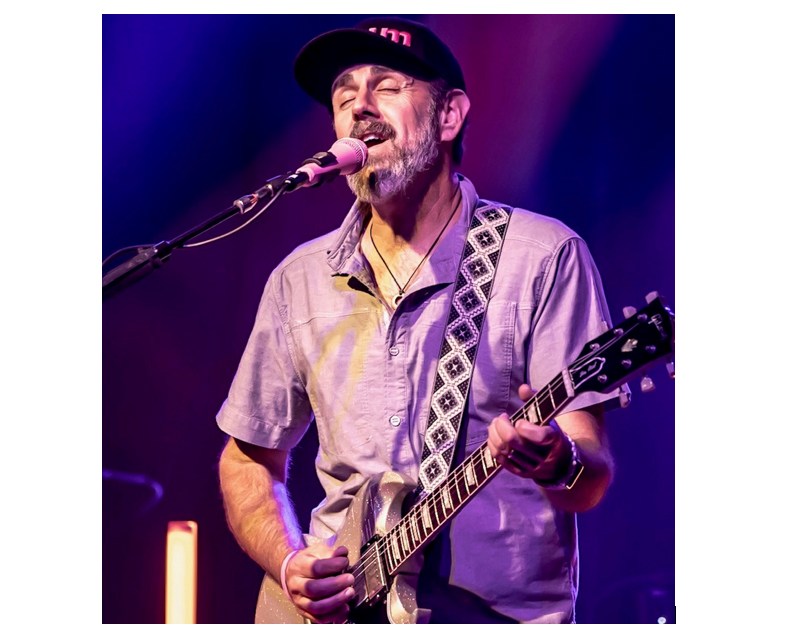

Cass McCombs’ ninth LP, Tip of the Sphere, sets his Bay Area alt-folk roots against the moody backdrop of New York City.
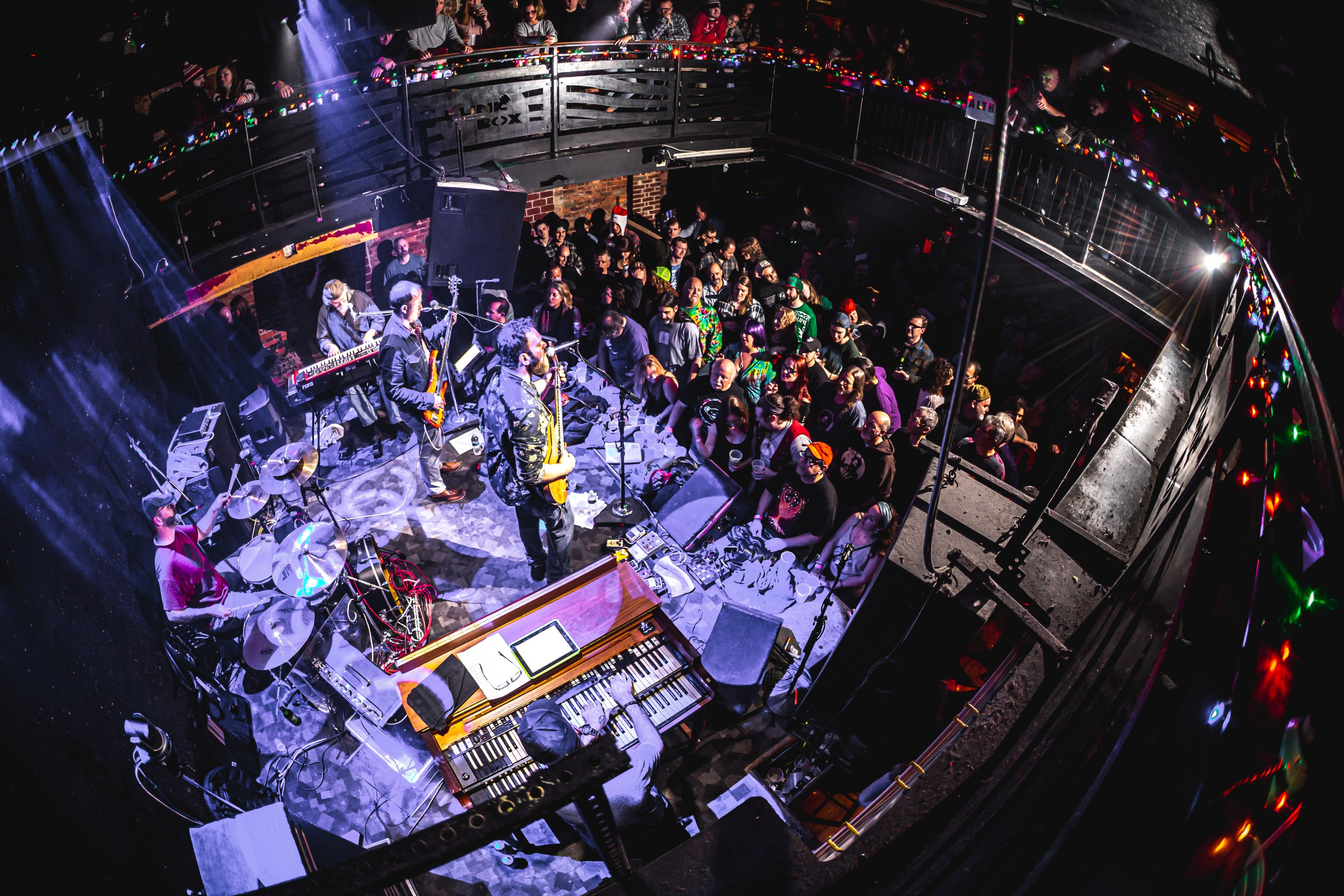
As the lights go down over a packed house at New York’s stalwart Bowery Ballroom, keyboardist Frank LoCrasto eases into a haunting, free-form synth fugue to set the tone for Cass McCombs, who casually strolls onstage and slings a weathered Stratocaster over his shoulder. Cheers go up from the crowd, while the rest of the band—guitarist Dan Iead, bassist Dan Horne and drummer Joe Russo—build expectantly to the opening chords of “Sleeping Volcanoes,” the twangy, Americana-esque first single from this year’s Tip of the Sphere, and quite possibly McCombs’ most sweeping, soulful statement to date.
From the get-go, the song’s intro sounds thicker and moreexpansive than the album version, and when the band crashes intothe unifying groove of the opening verse, there’s a sense of beingpropelled forward by sheer emotion, as though McCombs and hisbandmates are pulling from a vast collective reservoir of pent-upexpressive energy, steering the music into realms of the unexpected.Just from his relaxed demeanor, it appears that McCombs enjoysthis part of the process a lot more than he does talking about it.
“Well, when you write a song, it has so many different permutations, you know?” he says a few days later, elaborating on an observation he’s made in the past that a song can “continually reveal itself,” to the point where the recorded take almost ceases to be the definitive one. “There’s when you write it, there’s when you record it and then there’s when you perform it. And you perform it again and again, and each time, certain elements of it are discarded, and other new elements come up. I mean, even lyrics can change when we play live.”
McCombs has been known to switch up his band’s personnel, too. At the Bowery show, Russo’s presence on drums gives the band a heavy-hitting dynamic that differs radically from the stripped-down, funkier approach of Otto Hauser, who plays on most of Tip of the Sphere and has toured steadily with McCombs for the last five years (most notably in support of 2016’s Mangy Love). “Joe is obviously a force to be reckoned with,” McCombs notes with an enthusiastic chuckle. “Some things come out of that chemistry that you wouldn’t expect.”
Of course, it’s also notable that Russo, as a founding member of Furthur and his own Almost Dead outfit, is holding down the rhythm section with Horne, whose own tenures with Circles Around the Sun and Grateful Shred have been well documented. There are moments on Tip of the Sphere that sizzle with a more overt nod to vintage Dead (and arguably Cats Under the Stars-era Jerry Garcia) than just about anything McCombs has released since he started making records 15 years ago. But even when he’s confronted, for example, with the lilting, hypnotic Garcia-isms of the nearly eight-minute-album opener, “I Followed the River South to What,” McCombs gently resists the reference. As he sees it, those influences are an indelible part of his northern California upbringing, but he doesn’t want his music to be “filed” in any way that’s too recognizable.
“Again, when I make a record, my philosophy is this is oneversion of the song,” he says. “Unfortunately, the arrangementbecomes burned into the psyche of the listener, and it’s really hardto offer a different perspective, but it’s also entirely possible. I talkto a lot of musicians these days that are bored with the ‘classic-rock’ensemble, and they’re seeking other arrangements. And I totally getit. Sometimes it feels a little bit like auto-pilot. It’s like, ‘Oh, this iswhat a rock band is supposed to sound like.’ Well, then why do Ineed to do it?
“Don’t get me wrong. I do love rock-and-roll. I love it when the drums sound big and really good. I love that. But there are so many great bands who’ve used the motifs and history of rock-and-roll while offering their own voice, experience and experiments. They’re into fucking with and altering those preconceptions about ‘What is rock?’”
McCombs has spend most of his carer carving out a songwriting style that defies categorization and thwarts convention. Although he has an unmistakable sound and lyrics that hover somewhere in the spaces between Lou Reed, Elliott Smith and Brooklyn-based troubadours like Steve Gunn, his influences can swing from the lonely highway of outlaw country music (on 2011’s Wit’s End, which pivots on dark ballads like “County Line” and “Buried Alive”) to top-down, radio-ready folk-rock (on the aforementioned Mangy Love), with plenty more shimmering at the edges.
And once again, this is where Tip of the Sphere, as its titlesuggests, reveals a wider, kaleidoscopic sweep that’s not easilycaptured with paint-by-numbers labels like “dark Americana” or“California psych.” Strangely enough, the album was tracked almostentirely in New York, at Brooklyn’s low-profile Figure 8 Recording.It was a situation that required the band to work quickly.
“We didn’t have all the time in the world,” McCombs points out.“In New York, a studio is expensive. On the East Coast, people spendmaybe two weeks making a record, and on the West Coast, theyspend more than two months—sometimes two years. I mean, it’sa generalization, but time is shorter. So it was more of an impulse,just in the process. We were playing the songs live, like we wouldonstage. We had played some of them on the road already, andmaybe a few of them were brand new, but it’s not that complicated,you know? The idea was to make something that doesn’t just soundlive. Most of it actually is that way.”
Bluesy dissonance and sweet harmony merge in the upbeat “Estrella,” a song of love and infatuation that tails out with a chorus of synthesized flutes and plucked bass as McCombs croons in Spanish, “Estrella esta noche va bien para compartir.” [It translates to “Tonight a star goes well to share.”] Further on, “Real Life” surges with Indian classical drones and tabla rhythms as McCombs harnesses his inner George Harrison, while “Sidewalk Bop After Suicide”—which boasts a crafty interlocking guitar riff laid down by McCombs and Iead—might have emerged from a lost Tom Petty session if it weren’t so saturated with a flowing wave of oscillating guitars, synths and Mellotron. And then there’s “American Canyon Sutra”—an epic freestyle dive into drum programming and improvised sound design that McCombs performed and tracked himself back home in the Bay Area. Shifting between spoken-word and sung passages, McCombs recalls the poetry experiments of none other than Allen Ginsberg, replete with harmonium-like drones that seem to herald the end of the world—or at least one possible ending.
With McCombs, spontaneity isn’t just a strategy; it’s practically a calling. Onstage, “American Canyon Sutra” morphs into a hypno-trance sermon as Horne strikes a handheld gong to accentuate McCombs’ anguished lyrics. Gradually, LoCrasto—who is also a member of Grateful Shred—switches from the harmonium to dial in an undulating wash of synth atmospherics over Russo’s persistent beat, while McCombs lends his echo-drenched guitar to the slow-building mayhem. It’s a transcendent performance that seems to unlock the desolate landscape of the album version, from its “broken bed frames” to its “residential coffin,” with a hellish Walmart looming in the distance.
Still, as dire as Tip of the Sphere can get with its imagery, McCombs makes it clear he’s not preaching. He’s known for his interest in Eastern texts like the Bhagavad Gita—after all, he was born and raised in the afterglow of San Francisco’s hippie heyday—and though these influences pop up throughout the album (in the “heathen shambala” of “Sleeping Volcanoes,” or the tamboura drone in “I Followed the River South to What”), he doesn’t profess to have found a definitive path that guides him as an artist.
“That’s a huge topic, and I don’t know if I’m qualified at all torap about the Gita,” he says humbly. “But I’ve returned to it overand over throughout the years, like any other book. I’ve read NakedLunch many times. I think returning to the texts that inspire you isessential. We listen to albums over and over again, so why shouldn’twe have a similar relationship to literature?”
That thought has led him to question the “chimera culture”forcing us into being the sum of our social profiles, instead ofstriving to be truly open-minded and free. “And let’s be real, this isway before social media,” he insists. “I don’t know what you want tocall it—the commodity of the individual or whatever—but we’re justan amalgamation of different humors. [Laughs.] So then who’s thereal person? I’m attempting to use music to answer that, or expressthat for myself—or to myself. It’s hard to know, but my approachis to work and write always, like constantly, and just try to be asdynamic as possible. And then somewhere in that chaos is, maybe,not the person, but the heart. It’s almost the collective heart, or thecollective experience.”
Which brings us back to what beats at the center of McCombs' music, and why live performance is so important to him: a sense of community. It’s a notion that extends back to his earliest bands in high school, among them the semi-legendary collective California Asparagus. McCombs plans to self-release Fun in Hi Skule, Live 1993-1996 later this year, in tribute to that group of friends—and to a scene that he credits with giving him the tools to get to where he is today as a singer-songwriter.
Along with guitarist Jafar Thorne and bassist Peter Sax (laterof the Mobius Band), McCombs and California Asparagus wouldoften host marathon shows in and around the Bay Area. Theybonded over their love of the Grateful Dead and their generallove of adventurous blues-rock, from Primus to Hot Tuna to JimiHendrix. (“Whether we had tickets or not, we were a part of everysingle show those last few years, from ‘92 to ‘95,” McCombs says ofthose latter-day Dead shows.)
“I was actually hanging with Jafar last night, and we were talkingabout Jimi,” McCombs reveals. “It was like, ‘Oh, Jimi doesn’t get alot of love these days, for whatever reason—not like the way he didback when we were kids.’ We were in a guitar club together, andthere’s an old photo of us all crouched around this Jimi Hendrixposter. It’s like the altar of Jimi, you know? He’s this godly figure,like a sacred presence. He showed us not just the possibilities, butthe unlimited possibilities of the instrument. I mean, he burned theinstrument and kept going.”
For McCombs, these shared experiences—discovering yourheroes, picking up a guitar and then setting out to shape your ownsound and message, with everyone in your immediate circle alongfor the ride—drive him to create. “We were kids, but we were allgoing through profound changes. It was like a chrysalis. I feel reallylucky to have been around all those people because that communityset the tone for me in many ways, musically and in my life. It can’tjust be about music. It has to be about something more. It has torepresent something and enrich your own experience in some way.”
If this current tour is any indication, then McCombs seems tohave found that “something more”—that higher ground wheremusic isn’t just a way to make a living, but also a ritual for bringingpeople together. At one point during the Bowery show, he’s joinedonstage by former Chavez guitarist Matt Sweeney, who has lent hisservices to numerous albums and tours over the years, includingas the bassist on Iggy Pop’s vaunted Post Pop Depression outing.
(Another side note: Sweeney was the host of Vice’s excellent, andnow sadly defunct, web series Guitar Moves; his hilarious sessionwith McCombs is well worth Googling.)
When Sweeney uncorks the opening power chords of “RancidGirl” from Mangy Love, the electricity in the room is palpable.Later on, when Sweeney, Iead and McCombs trade licks over thesong’s bludgeoning groove, a jolt of energy seems to shoot throughthe crowd, drawing everyone closer to the stage. The emotional liftis umistakable—the telltale sign that a live show is accomplishingwhat it should.
“It doesn’t work always,” McCombs warns. “A touring band hasits motifs and strategies. You rehearse before the tour and then,on the road, you come up with certain loop dynamics that you candeconstruct along the way, but just the way the mind builds things,it’s only natural that you’re refining the dynamic of that ensemble.And then when we have a guest, who’s untethered to those rules,they can bring an elated moment—a spontaneous moment of someethereal, unscripted thing. And obviously that just makes it fun foreverybody.”
Elsewhere in the set, Joan Wasser (aka Joan As Police Woman)steps out to play fiddle for a suite of songs. On “Tying Up LooseEnds,” one of the more introspective gems from Tip of the Sphere,multi-instrumentalist Sam Owens takes a turn on saxophone,blowing freestyle filigrees that decorate the song’s repeatingchorus. He’s opening the tour under the name Sam Evian and alsoengineered the Figure 8 sessions with McCombs. With friends likethese, it’s easy to grasp why McCombs is so insistent on maintainingan honest commitment to community—it’s all in the spirit ofcollaboration, the ongoing quest to reach something higher.
“I also forgot to mention the madness,” McCombs says, again with an easygoing laugh that dispels any notion he’s taking himself too seriously. “You can’t disrespect the madness, you know? It’s there in all of us, whether we want to recognize it or not. We’re all a bit mad, and when you’re real about that, you can please yourself by just embracing it. Pleasure is a big part of it, too. It doesn’t all have to be so heavy and cathartic and painful. I think accepting the insanity and the chaotic can please people. It can please me, at least.”
This article originally appears in the September 2019 issue of Relix. For more features, interviews, album reviews and more, subscribe here.