***
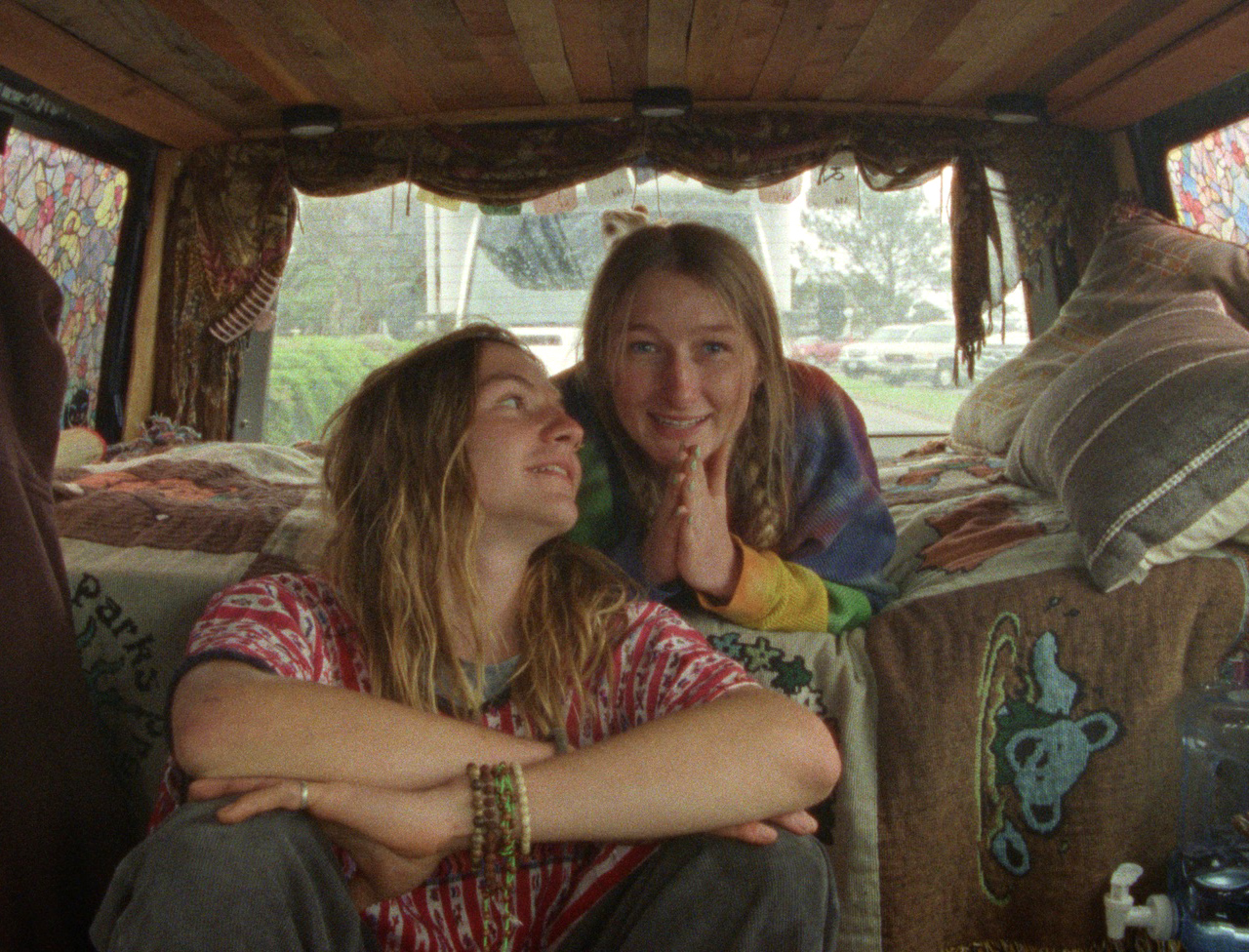
After premiering at the Telluride Film Festival last August, Mischa Richter’s sweet and sun-dappled documentary Summer Tour moves into wide release this week. The documentary tracks two young and earnest Deadheads during Dead & Company’s final tour. Richter follows Jerry and Annie as they make the rounds from the lot into the show and back onto the road. Summer Tour is an empathetic look at Shakedown circa 2023, from a director who experienced Shakedown circa 1990. The film places an emphasis on sounds and visuals rather than armchair sociology.


Richter is a Provincetown-based photographer and now a two-time filmmaker, whose initial foray into the medium, 2020’s I Am A Town explored the area of Cape Cod that has been home to his family for nearly a century.
Summer Tour is screening in over 200 theaters nationwide this Thursday, July 23, with additional engagements beyond that date as well.
After a long career as a visual artist, this is your second documentary in relatively short order. Had you always contemplated directing feature-length docs or is it something that’s captured your attention more recently?
What happened was I made an art photo book about Provincetown. I grew up in Provincetown but then I moved away for many years and when I came back I was kind of struck by the changes. So I made a body of work that was sort of looking for my childhood Provincetown.
I made this book and I had a big show at the Provincetown Art Association Museum. After that, I felt like it still wasn’t enough. With all the portraits I did in the book, I wanted the characters to have a voice. That’s what prompted me to make a film. I didn’t go to film school. I don’t really know about filmmaking, but like you said, I’m an artist and a visual artist.
I felt like that was my way of giving these characters their voice. So I gave it a go, made the film and I fell in love with filmmaking. So I Am A Town was a love letter to my home. It was a poetic art documentary love letter to my home and my childhood.
There are also aspects of Provincetown that are tied into the American history. The pilgrims landed there and made a compact that had roots to the Constitution. At the time when I made the film, I felt like America was falling apart and I felt like this small community that I grew up in was upholding the ideas of what America has been and can be with immigration and working with each other and living off the land and things like that.
So I made the film to extend that still project and also to try and say something positive about the country at that time.
To what extent did your decision to make Summer Tour begin with a similar purpose?
After I made I Am A Town, I really loved that experience of filmmaking and I wanted to make something else. So I kind of looked at what was similar, what was another home for me. What was another thing that I felt a real part of and really understood. Also something that was similar to Provincetown in a way that was a little unusual and truly American.
In I Am A Town, I use musicians. All the music I used in the film was actually performed by characters in the film. So I wanted to do something else with music because I really enjoyed that. So I started thinking, “Well, I’ve been a Deadhead. I’ve been into the Grateful Dead since 1990 and I know the community. I go to these shows. I’ve traveled. I’ve toured. Maybe I could do something around that.”
Then when they announced the final tour, I thought, “Oh, there’s a bit of drama in that.” Then I wanted some more intentions and more direction. When I met Jerry and Annie, I thought, “Wow, I could really focus on this young couple in love, feeling so free and really traveling the country.”
When I met them, they had just turned 20, but they had already been on the road for a couple years. I was so impressed that they had been all over the country and they knew so much about it. Also, Jerry could play and he knew a lot of the catalog and a lot of the history around the music. So I just felt that was something that could sit beside I Am A Town.
Why did you want to tell the story through their perspective in the moment, without careening off and exploring historical context, since this was billed as the Final Tour?
Again, going back to I Am A Town, I felt like there’s such a bad taste in everyone’s mouth about what’s going on in this country. I have children Jerry and Annie’s age and there’s this idea that the youth are just stuck in their phones or on the computer playing video games or something like that.
I felt that this was such a beautiful opportunity to show a different side of youth in America. That was important to me. I wanted to make a film that Deadheads would like but would also be a positive look at youth today. This group of young people latched onto something that started so long ago, but they’re still doing it the same way. They’re still reaping those benefits of fun and adventure and learning about the country. In the film Jerry talks about scaring yourself a little bit and sort of going for it. I think that was really the focus.
Going into making it, I really felt like, “Oh, there’s such drama that this is the final tour and it’s going to be over and done after this.” But what I really learned throughout making it is that this isn’t going anywhere. So I felt like I could show these kids without talking about how they’re doing it differently than we did it.
It felt the same and it felt positive. When I saw them, it reminded me of how I felt when I was young. That was me running away and seeing this country and having a blast and being in nature and the experiencing the excitement of chasing a band. Also, being part of community and how in this community what’s trendy is being kind and accepting people, which is something that we as a country don’t always get right.
I just really wanted to highlight that more than anything and not give a history of Dead fans or the Grateful Dead.
Something I didn’t initially appreciate when I first saw the Grateful Dead was that there are many kinds of Deadheads, stereotypical and otherwise. For instance, I traveled across the country to see the band but I mail-ordered for tickets and my plans were slightly more regimented than Jerry and Annie’s. I can also remember a Madison Square Garden show in the late 80s, where this guy who sat next to me was wearing a suit and carrying a briefcase. I sort of assumed he was there to attend the circus but in speaking with him before the show, it was clear that he knew what was going down. Then, as a bonus, when the show started he opened his briefcase and began passing around the cans of beer that he’d snuck in. You focus on a particular group of Deadheads but were you ever tempted to widen your scope?
I feel that with this film I had to show what I knew and these were the Deadheads that I knew. I love that you’re saying that and it’s so true. That’s why we have that bit from Tales from the Golden Road when that guy calls up and asks, “What is a Deadhead?” It was really important for me to put that in for exactly what you’re saying. A Deadhead is just someone who’s into the music and they can come from anywhere.
And from any time as well. Something the film conveys quite effectively without being too on the nose about it, is that someone can be just as passionate a Deadhead as anyone else whether or not they ever saw Jerry Garcia perform.
Yeah, that’s right. There is that and we’re seeing it a little bit with the response to the film from a certain gatekeepers who ask, “How can these kids be Deadheads because they weren’t even born when Jerry died?” The funny thing about that is Jerry Garcia would have hated that sort of thinking.
Thinking about the film from a more administrative perspective, did you know that you were going to be able to clear the music before you started or was that something you addressed after the fact?
Both. When I decided that I wanted to do this, the first thing I did was go after the music because I wasn’t going to make a film about tour without it. I know what it’s like touring. The music is in the parking lot. It’s in the cars on the way there. It’s in the shows. I really went after the music first.
I knew a guy who knows a guy and I used that to give me enough reassurance that we were all set. But nothing was on paper and that was a big lesson that I learned. When we were done making the film, it wasn’t there anymore, but then we worked our asses off and we got it back. So yes and no.
I really think we worked miracles because the film is full of the music. I think in the end, people understood that it was in the right hands. We worked really hard on not taking but contributing. We also really worked really hard on representing it well.
We did a lot of research about the music and when we use music outside of the Grateful Dead, it’s by the bands that influenced them, like the Penny Whistlers and Jim Kweskin Jug Band—Jerry and Hunter went on tour and followed them, so we put one of their songs in. I think the powers that be in the end kind of saw that.
We had a very good music supervisor come on right at the end and she really helped us a lot—Lindsey Driscoll. She really worked miracles. In the end we didn’t drop anything. We got everything we wanted.
You also were able to shoot inside the venues. Can you talk about the process of securing permission for that?
As I described, the first thing I did was go to Warner Chappell [the music publisher]. Then after we thought that was resolved, the next issue was we wanted to film in the shows. So my second meeting was a Zoom call with Bernie Cahill.
He liked our idea of not showing the band in the film. He thought it was interesting and unique. He said he was contacted all the time about doing a Dead & Company documentary and they weren’t interested, but they liked our twist and our intentions. So he was very helpful with giving us that access.
Dead & Company’s major concern—which I absolutely understood and respected—was how we would be affecting other people’s experiences in the shows. What I said to them was: “Hey, I’m so pleased you’re saying that because I’m usually one of those people that doesn’t want my experience disrupted.” So I designed a way to film where I wouldn’t affect anyone. They didn’t let me film the first two shows inside, then they gave me one song on the third show of the tour and watched me.
I had a meeting before it where I showed them my design. I knew what to do because I’d spent years in those areas dancing.
What approach did you take to be as unobtrusive as possible?
Most of those shows, especially after LA, were all these amphitheaters where there’s a roof over the seats and no walls on the side. Then there’s this big channel before the lawn. Where a lot of people like to dance, including myself, is in that channel because there’s space and it’s flat and it’s close. You can hear the music and you’re not on this sloped lawn.
I also know that right after that channel, there’s a little section before the lawn starts. So I knew if we were between those sections, sloped and low, that we wouldn’t affect the people on the lawn, we wouldn’t disrupt the channel and we certainly were not going to disrupt the people sitting in the seats.
The second show was in one of those amphitheaters and we had a meeting before it where I showed them how we would film. We did a demonstration with our equipment because we’re a very small crew and we could strip our camera down to where it was small for a film camera.
Then once we had done that, they opened the doors. At the Gorge, they gave us this VIP kind of deck where we wouldn’t disrupt anyone, but we had this incredible vantage point of the whole crowd. In the baseball stadiums, they let us shoot in their suites with these long lenses so we weren’t disrupting anyone. They were very accommodating once we showed them what we had in mind.
Why did you decide to shoot on film, which is more expensive and slightly unwieldy?
I looked at these kids and felt like I was looking at me in the ’90s. Then I sort of imagined Deadheads looking at me in the ’90s saying I was like them in the ’80s and on and on going back to ’60s. So I really wanted to use film.
First of all, I use film in my own artwork. So it’s an extension of my art practice. But we felt like I could film this group of people in this situation and we could make it look somewhat timeless. I feel like the film really gave us that. You can look at some of this footage and maybe be mistaken. I think that helped the film show that this had been going on for 60 years. It could carry on and it’s kind of timeless.
That reminds me of the guy in Summer Tour who describes being dosed at his first show and finds himself captivated by a person dancing in the aisle across the arena. Then he returns to the venue a couple years later as a more seasoned Deadhead, dances from the same spot where he’d seen this other person and realizes that someone else is watching him. On and on it goes.
Yeah, that’s Buckwild. I said, “Buck, I really want to interview you for the film. ” I didn’t know what I was going to talk to him about, though, and he said, “I have a story to tell, so I’d like to tell it to the camera.” That was his story and I related to it.
I had no idea what was going to come out of his mouth. I know Buck a bit and I know he’s a tripper and a great dancer, but for me that was gold because that’s what I experienced. My first show was in 1990 at Madison Square Garden and I took a pretty hefty dose and I was totally blown away. What I was so blown away by at first was outside—this community that I knew a bit about but I hadn’t experienced yet—Shakedown and that kind of thing.
But then to go inside and see everyone dancing in the way that they were dancing was something else. We were up quite high and I remember looking across Madison Square Garden into the hallways and through those holes—the access to the hallways—and just seeing these silhouettes moving like whirling dervishes in some ritual.
There’s also the woman who says she can express herself through dancing in ways that she can’t through words. She almost seems to be a proxy for you, given the focus you place on dancing in the film.
That’s Faith and we catch her at The Gorge where Dead & Company’s playing “Here Comes Sunshine.” We caught her with a long lens laying down and I kind of knew she was going to get up and just be taken by the music. A lot of those scenes were synced so when you saw the people dancing, they were dancing exactly to the music being played. That was very important to me.
With Faith, I just wanted her to talk about dancing because I got to know Faith throughout the tour and we didn’t interview her until right at the end. I just asked her to talk about what dancing meant to her because I’d danced with her and I watched her dance where I could see that she was being just totally taken by the music and completely letting go.
I didn’t prompt her to say that, but I knew she was going to say something similar just from observing her. We had filmed that bit of footage of her before I interviewed her, so I wanted to interview her because I wanted a voice with that visual.
You mentioned being taken by the scene outside MSG at your first show. While that was certainly unique for New York, can recall the first time you had one of those full-on lot experiences?
I went to College of the Redwoods for a half a year just so I could see Dead shows. I never went to school. I just went to Shoreline, Cal Expo and Oakland and down to Vegas to see shows. That’s when I first saw that. When they were playing, I forgot what that place was called, but it was outside of Vegas a bit.
Sam Boyd.
Yeah, Sam Boyd. I felt like I was in Morocco or something with the big markets. I just blown away. That’s when Shakedown really got me with the drum circles. I remember being in Oakland in a drum circle and there were like 50, 60, 70 people dancing and playing drums.
The other thing was at that time when I started going, there were so many people going there not for the shows and it was tough to get in. But the lot was so fun, it didn’t matter. You could have a fucking blast on the lot. There used to be a disco bus. I don’t know if you remember that. It played disco all night from the top of the bus and everyone was just dancing. So that just captivated me—this carnival, this freak show that rolls into town.
There was another time where I saw Jerry Band and it was up north in New York, maybe Albany. It was the late fall and it was very cold. Well there was a mall near the stadium, so we all went in the mall.
This mall had a center area with a fountain, and we were everywhere—sitting, playing drums and all that. At some point the security just gave up and there were people shopping in the mall looking at us like, “What the fuck are you doing here?” I just loved that. It was so fun.
Earlier, you mentioned finding Jerry and Annie. What was the context in which you initially connected with them?
What happened was my girlfriend at the time and I went to see Bob Weir in Connecticut. We were dancing and Jerry and Annie were there, and we were kind of dancing with them. We didn’t even really talk, but we really had fun dancing together. Then I went home back to Provincetown and I was talking about making this film, but I really wanted a focus and I was looking for particular characters that I could build the film around. So we said, “Oh, let’s go out to San Francisco,” because Bob Weir was having his 75th birthday shows with Wolf Bros at the Warfield. I went out there and after the shows, Jerry and Annie walked up to me and said, “Hey.” In that moment I thought, “This is it. This is them.” They were just so sweet.
So we exchanged numbers and after I went home, I sent them my first film and they started sending me stuff. We started having FaceTime calls, getting to know each other. Then I really thought, “Okay, I feel like I can make something around them.”
At what point did Jerry start playing in Mason’s Children?
During the tour, he was playing the lot with Mason who’s the rhythm guitar player of Mason’s Children. It was just him and Mason. They’d pick up people here and there and they were just busking in the lot. But by the end of the tour Manny came on his bass and they kind of formed the band. So it pretty much happened after that tour.
Were you taken aback whenever you first saw the band live?
I started seeing online and I was like, “Whoa, here we go!” Then when I first saw them live, I was like, “Oh shit!” They really took off.
Can you talk about most gratifying or surprising feedback you’ve received thus far?
I think for me, which was the most gratifying—not as a Deadhead, but as a filmmaker—is we got into CPH:DOX, which is a documentary film festival in Copenhagen. Showing the film there and the response from people was just incredible and so rewarding because most of the people there didn’t really have a connection with the Grateful Dead but they were engaged by the film.
So just as a filmmaker, I felt like I’d done something that I’d wanted to do. I wanted to make a film about something that I loved so much with the hope that it would connect that way. I felt like most of the Deadheads would be into it other than the gatekeepers. But I wanted to do a bit more and possibly create more Deadheads.
The other thing is that the venue where we showed the film was one of the most beautiful cinemas and it was about a block away from Tivoli where the Grateful Dead played those great shows in 1972. So that was pretty special.
Summer Tour is going to play in over 200 theaters on July 23. As you were making the film, did you have any inkling that this could be a possibility?
I didn’t have any of those expectations. I dreamt of doing a free tour across America with Mason’s Children and showing the film for free. I never could have imagined that we’d be playing like Wichita, Kansas and all over Idaho. I mean, pretty much every state in America is going to have this film available even if it’s just for one day,. I was happy with IFC and some indie cinemas in San Francisco. So no, I couldn’t imagine this and I feel really grateful and honored and blessed for it.