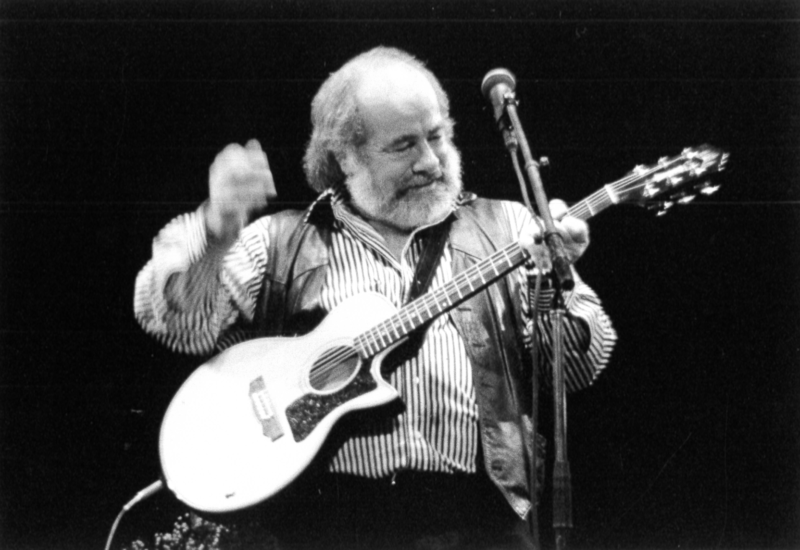
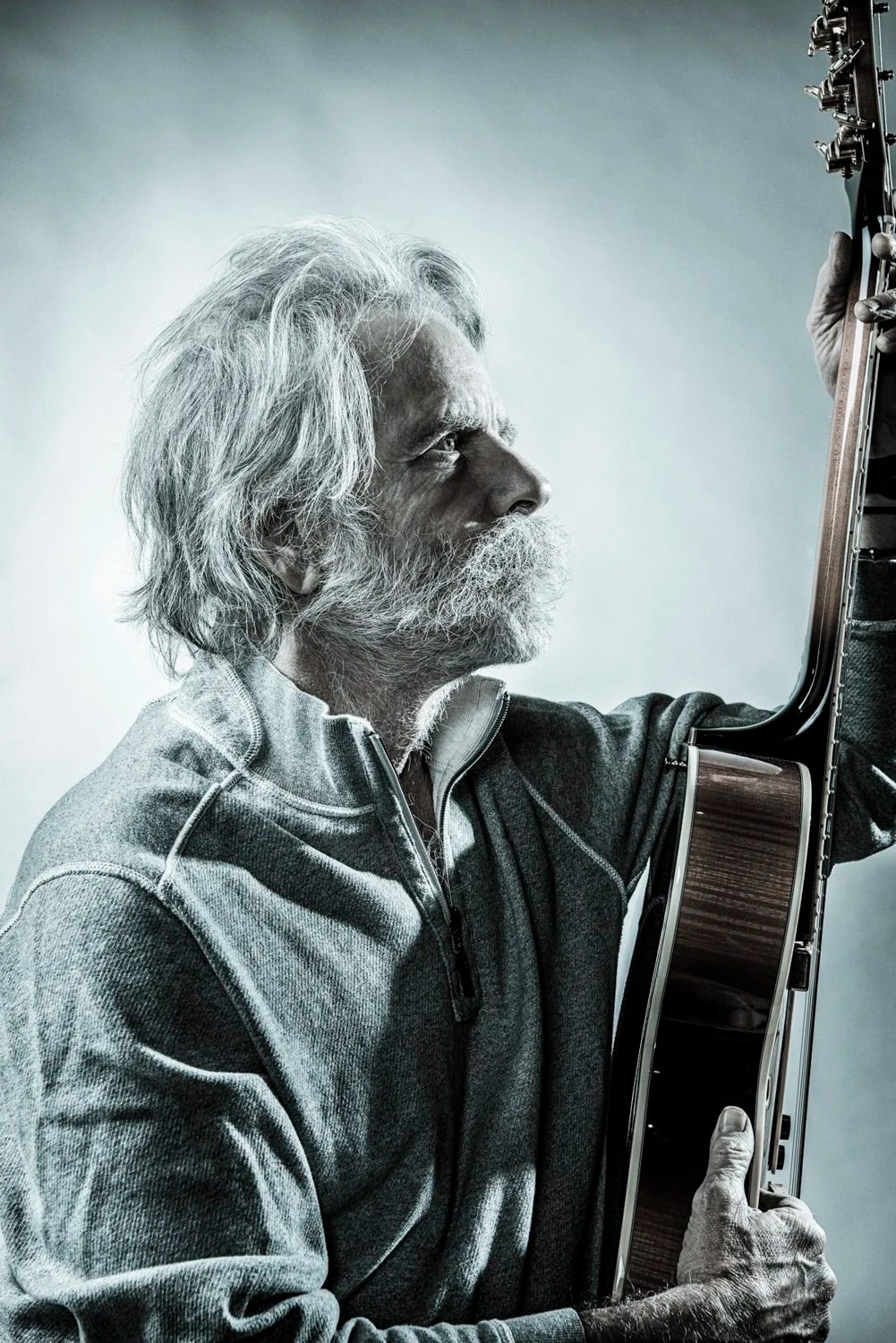
Bob Weir, Grateful Dead pioneer, the group’s rhythm guitarist, and an inimitable songwriter known for his gaucho kinship with the late John Perry Barlow—a partnership that galvanized “Mexicali Blues,” “Estimated Prophet,” “Cassidy,” “Hell in a Bucket,” “Throwing Stones,” and multitudes more—passed away on Saturday, January 10, 2026.
The cowboy of the cosmos’ passing was confirmed in a post shared by the family, who disclosed the cause of death as “underlying lung issues,” after "courageously beating cancer.”
It is with profound sadness that we share the passing of Bobby Weir. He transitioned peacefully, surrounded by loved ones, after courageously beating cancer as only Bobby could. Unfortunately, he succumbed to underlying lung issues.
For over sixty years, Bobby took to the road. A guitarist, vocalist, storyteller, and founding member of the Grateful Dead. Bobby will forever be a guiding force whose unique artistry reshaped American music. His work did more than fill rooms with music; it was warm sunlight that filled the soul, building a community, a language, and a feeling of family that generations of fans carry with them. Every chord he played, every word he sang was an integral part of the stories he wove. There was an invitation: to feel, to question, to wander, and to belong.
Bobby's final months reflected the same spirit that defined his life. Diagnosed in July, he began treatment only weeks before returning to his hometown stage for a three-night celebration of 60 years of music at Golden Gate Park. Those performances, emotional, soulful, and full of light, were not farewells, but gifts. Another act of resilience. An artist choosing, even then, to keep going by his own design. As we remember Bobby, it’s hard not to feel the echo of the way he lived. A man driftin’ and dreamin’, never worrying if the road would lead him home. A child of countless trees. A child of boundless seas.
There is no final curtain here, not really. Only the sense of someone setting off again. He often spoke of a three-hundred-year legacy, determined to ensure the songbook would endure long after him. May that dream live on through future generations of Dead Heads. And so we send him off the way he sent so many of us on our way: with a farewell that isn’t an ending, but a blessing. A reward for a life worth livin’.
His loving family, Natascha, Monet, and Chloe, request privacy during this difficult time and offer their gratitude for the outpouring of love, support, and remembrance. May we honor him not only in sorrow, but in how bravely we continue with open hearts, steady steps, and the music leading us home. Hang it up and see what tomorrow brings.
A man of few words on stage, Weir spent 60 years using his songs as a form of communication, transmitting his tales in varying shades, or, as Bruce Hornsby so eloquently puts it, “a palette of musical colors: original chord progressions with unexpected and exciting harmonic movement (‘Estimated Prophet,’ ‘Weather Report Suite’), beautiful ballads (‘Looks Like Rain,’ ‘Black-Throated Wind’), stirring jam vehicles (‘The Other One’), titanic old-time western country-rock songs (‘Jackstraw’ – wow, ‘Mexicali Blues’), and durable, jamming night-closing rockers (‘One More Saturday Night,’ ‘Playing In The Band,’ ‘I Need A Miracle,’ “Truckin’,’ ‘Sugar Magnolia’).”
…
Robert Hall Weir was born on October 16, 1947, in San Francisco. Put up for adoption by his college-age birth parents, he was raised in prosperous Atherton, Calif., in San Mateo County. A rebel from the very beginning, Weir was dismissed from pre-K, Cub Scouts, and nearly every school he attended while facing the challenge of undiagnosed dyslexia.
The motif of shifting educational facilities led to Weir’s check-in at Fountain Valley School in Colorado Springs, Colo., where he met future writing partner John Perry Barlow. The twosome struck up a fast friendship, sharing an interest in folk music that would lead to their own striking lyricism.
Weir had begun playing guitar at age 13, experimenting with piano and trumpet before committing to the six-string instrument. His interest took him to the Palo Alto folk music venue known as the Tangents, where he began trying out bluegrass numbers and crossing paths with future bandmate Jerry Garcia. Early lessons also connected Weir to Jorma Koakonen (Jefferson Airplane) and David Nelson (New Riders of the Purple Sage).
On New Year’s Eve 1965, 16-year-old Weir heard banjo music coming from Dana Morgan’s Music Store, and went inside where he met 21-year-old Garcia. The fortuitous introduction birthed the acoustic band Mother McCree’s Uptown Jug Champions, with Ron “Pigpen” McKernan, Dave Parker, Tom Stone and Mike Garbett also serving as members.
Name changes and lineup shifts occurred during the interim, and on May 5, 1965, the Warlocks performed their first concert at Magoo’s Pizza Parlor in Menlo Park. On December 4, Weir, along with Garcia, McKernan, Bill Kreutzmann and Phil Lesh, debuted as the Grateful Dead and played an Acid Test in San Jose, where they were dosed by Ken Kesey.
The brush with the beatniks fortified the band’s break into the counterculture movement, a sense of nonconformity that attracted their initial and enduring following. Weir captured his own willing submission on “The Other One”: “The bus came by and I got on, that's when it all began/ There was Cowboy Neal at the wheel of the bus to never ever land.”
Before the twilight of the ‘60s, the Grateful Dead had turned out a handful of records: The Grateful Dead (1967), Anthem of the Sun (1968), Aoxomoxoa (1969), and their first official live album, Live/Dead (1969).
Weir entered the bell-bottomed ‘70s with assurance, accruing more clout as a foundational contributor with the arrival of Workingman’s Dead, where he received co-writing credits on eternal classics “Uncle John’s Band” and “Cumberland Blues.” The set also presented with increased twang and a pillar of Weir’s own sound.
American Beauty arrived months later to commercial and Billboard success. The album ushered in “Friend of the Devil,” “Sugar Magnolia,” “Truckin’,” “Brokedown Palace,” and “Candyman,” all of which became enduring standards in the Grateful Dead’s live canon and pivotal pieces of the great American songbook.
In the wake of Pigpen’s failing health status, Weir carried the torch, leading songs and aiding the band through some of its most tender musical periods. Following the keyboardist’s passing 1972 Weir turned out his debut solo album, Ace, cementing his co-writing status with Barlow on “Cassidy,” “Black-Throated Wind,” “Mexicali Blues,” “Looks Like Rain,” and independent take on “One More Saturday Night.” Weir also worked with Grateful Dead drummer Mickey Hart and lyricist Robert Hunter on "Greatest Story Ever Told" and "Playing in the Band."
The band sampled the material on their enduring tours, including their legendary Europe ‘72 trek, and its resulting album. Keith and Donna Godcheux also matriculated into the lineup for the band’s 1973 jazz-leaning album, Wake of the Flood on which Weir contributed “Weather Report Suite.”
In 1974, Weir joined Kingfish, and accompanied the group on tour as well as their self-titled 1976 album [“Lazy Lightnin’,” “Suppplication,” “Home to Dixie” and cover of Marty Robbins’ “Big Iron”] and their sophomore follow-up Live ‘n’ Kickin’.
The success of Wake of the Flood set the Grateful Dead up for From the Mars Hotel, which was released in June 1974, just shy of the band’s touring hiatus, which held for two years. In 1975, they put out Blues For Allah, an increasingly experimental leap influenced by Middle Eastern musical styles and scales.
The Grateful Dead returned to the road in June 1976, supporting Steal Your Face, and followed with their seminal Terrapin Station record the following year. The resulting tour is widely regarded as one of the band’s strongest, with their performance at Cornell University on May 8, 1977, considered a peak, and a night when Weir delivered strong versions of “Jack Straw,” “El Paso,” and more.
The band’s concert in September 1977 at Raceway Park in Old Bridge Township, N.J., broke records as the highest ticketed concert with 107,019 fans in attendance. They seized the moment through the resulting arrival of Shakedown Street, with Weir offering “I Need a Miracle.”
With band members’ reputations at a commercial high, Weir delivered his second solo album, Heaven Help the Fool, in 1978. The set included “Bombs Away,” “Shade of Grey,” the title track and a memorable version of Lowell George's "Easy to Slip." The same year, Brent Mydland began appearing in the Bob Weir Band, before joining the Dead.
Weir formed another side project in 1980, Bobby and the Midnites, which ran through 1984 and yielded two albums: their self-titled debut in 1981 and Where the Beat Meets the Street in 1984. The Grateful Dead's Go to Heaven appeared in 1980, featuring Weir’s “Feels Like a Stranger,” “Lost Sailor” and “Saint of Circumstance.”
The band’s double live album, Reckoning, followed and offered a mix of originals and traditional covers. The same year, Dead Set presented the band on both coasts, the Warfield in San Francisco and Radio City Music Hall in New York (recorded between September and October 1980).
In 1987, the band achieved double-platinum certification for In the Dark which included Weir's “Hell in a Bucket” and “Throwing Stones,” while "My Brother Esau" appeared as the B-side to the "Touch of Grey" single. The Grateful Dead gained notoriety from a new generation of fans through this recording and toured stadiums that summer with Bob Dylan, leading to the subsequent live record, Dylan & the Dead. The band came back in 1989 with Built to Last, their thirteenth and final studio album, which included Weir's “Victim or the Crime” and “Picasso Moon.”
By the late 1980s, Weir had also launched a musical partnership with Rob Wasserman, quickly becoming known for their powerful jam sessions centered on the duo’s bass-and-guitar intimacy. The union resulted in Live (Weir/Wasserman), recorded mainly in 1988 and released in 1998.
The Grateful Dead's final new live album during the group's tenure, Without a Net, compiled performances from October 1989 through April 1990, and included Weir’s “Cassidy,” “Let It Grow,” “Feels Like a Stranger,” “Looks Like Rain,” “Victim or the Crime,” and “One More Saturday Night,” recognizing his revered position in the band.
Following Jerry Garcia’s passing in 1995, Weir remained an active live performer, forging ahead with RatDog. The band released Evening Moods in 2000, which included “Ashes and Glass,” “Odessa,” “Corrina,” and “Two Djinn,” which endured as prominent pieces of his live catalog.
In 1998, 2000, and 2002, members of the Dead reconvened as The Other Ones, and later as The Dead in 2003, 2004, and 2009, before the arrival of Furthur, which affirmed Weir and Lesh’s musical relationship.
Weir opened the Tamalpais Research Institute in 2011, lovingly known as TRI Studios, where he could record and explore the concept of virtual entertainment.
He kept up appearances in 2012, touring with Black Crowes’ Chris Robinson and Jackie Green, under the Weir, Robinson, & Greene Acoustic Trio. The next year, his RatDog project returned as The RatDog Quartet with Jay Lane, Jonathan Wilson and Robin Sylvester.
In April 2014, The Other One: The Long Strange Trip of Bob Weir debuted, presenting viewers with a documentary-style deep dive into Weir’s past.
In July 2015, Fare Thee Well: Celebrating 50 Years of Grateful Dead brought Weir, Lesh, Kreutzmann and Lesh together to celebrate the Grateful Dead’s 50th anniversary with Bruce Hornsby, Jeff Chimenti and Trey Anastasio, at Soldier Field in Chicago and Levi Stadium in Santa Clara.
Later that year, Weir, Kreutzmann, Hart, Chimenti, John Mayer and Oteil Burbridge formed Dead & Company, reprising the spirit of the Grateful Dead’s music and bringing it back to stadiums across the country.
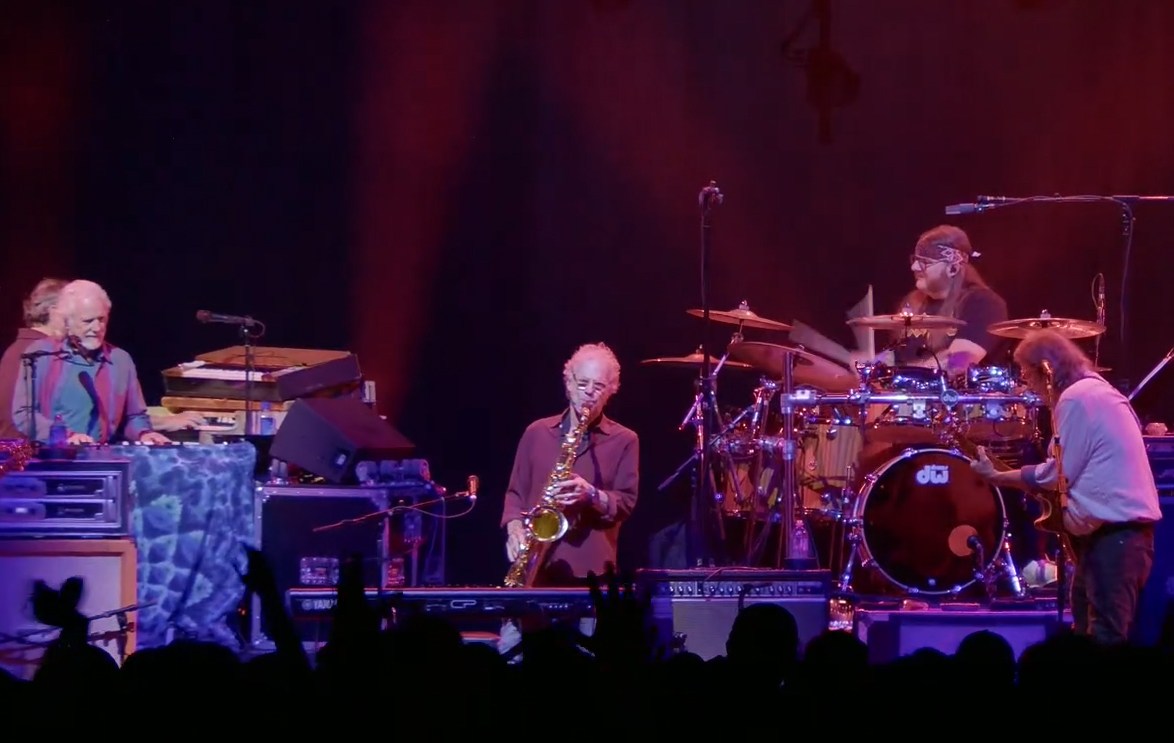
When Dead & Company did not occupy Weir’s calendar, Bobby Weir & Wolf Bros did. The ensemble delivered evocative classics from Weir's catalog, with horns elevating the improvisations. In 2022, they performed four sold-out symphony concerts with the National Symphony Orchestra at The Kennedy Center.
Dead & Company put on their final tour in 2023, ending in San Francisco as an ode to where it all began. They proceeded with concert residencies at Las Vegas’ Sphere, delivering 30 gigs through August 2024.
In spring 2024, Weir and the Grateful Dead were honored by The Kennedy Center for their immeasurable social and musical impact.
Weir delivered his last public performance, celebrating the Grateful Dead’s 60-year anniversary in his hometown’s Golden Gate Park on August 1-3, 2025.
From the time the keys clicked into the ignition, Weir was on an eternal ride. His long, strange trip will be remembered for its formidable mileage, copious partnership, and, of course, the music. “Let there be songs to fill the air.”
Faring thee well now
Let your life proceed by its own designs
Nothing to tell now
Let the words be yours, I'm done with mine
Bob Weir joins departed bandmates, Jerry Garcia, Phil Lesh, Ron “Pigpen” McKernan, Keith Godchaux, Donna Godchaux-MacKay, Brent Mydland and Vince Welnick. He is survived by his wife, Natascha, and daughters, Monet and Chloe.