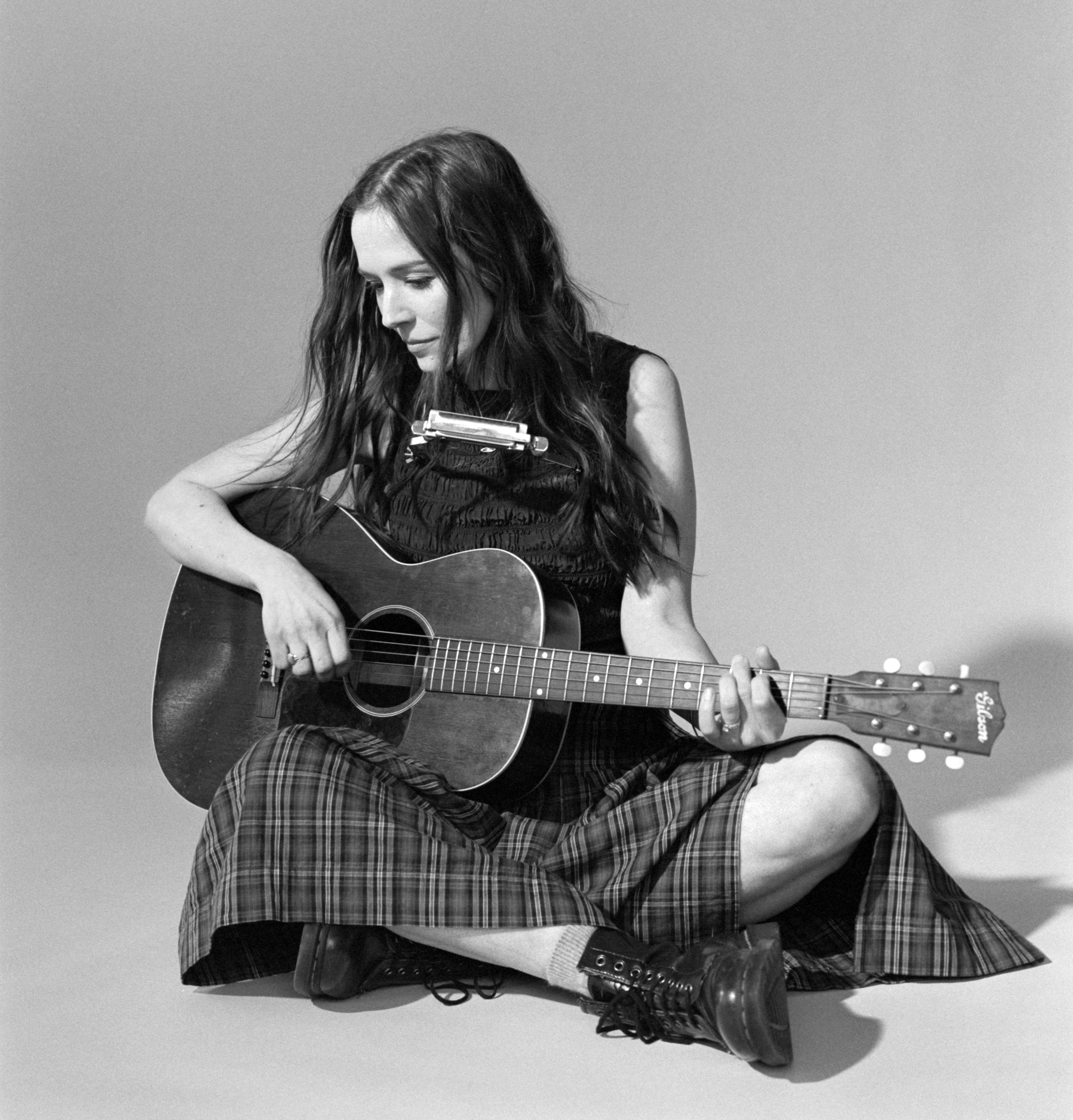
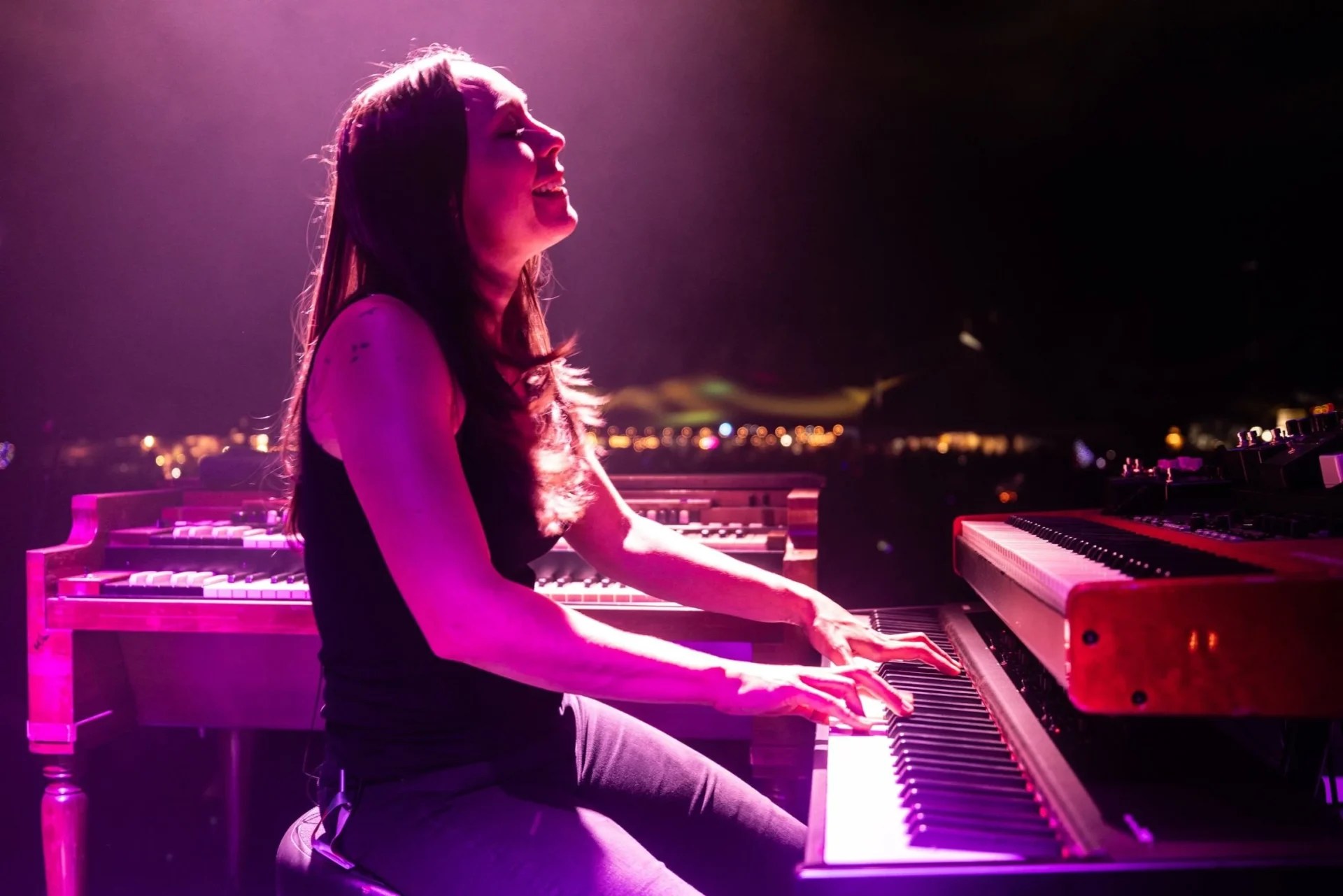
“I find playing music for other human beings in the same room to be a quasi-religious experience,” Holly Bowling professes. “It is the most connected to other people through wordless expression that I have ever known. It’s also the closest thing to a religious experience for me internally when everything is really clicking.” She shares this observation while musing on the artistic objectives and personal predilections that prompted her to transition from performing and teaching classical piano to pursuing less traditional forms of expression on the instrument.
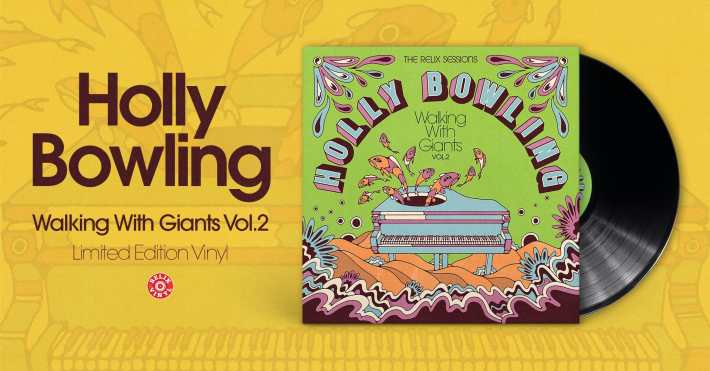
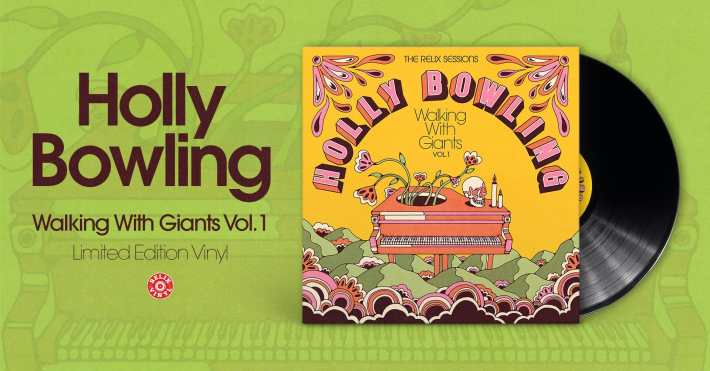
The arc of her career is manifested on Bowling’s double live LP, Walking with Giants. One record is devoted to her solo interpretations of the Grateful Dead’s “Althea” and “Dark Star,” each of which occupies a side of vinyl. Volume Two presents three Phish tunes, followed by an original composition, which is projected to appear on a forthcoming album of her own material, Bowling’s first such effort.
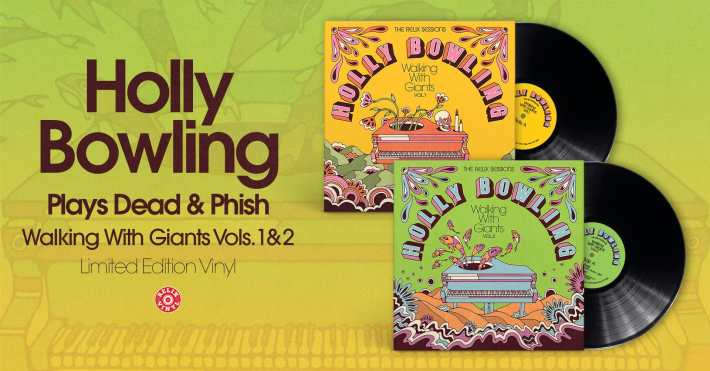
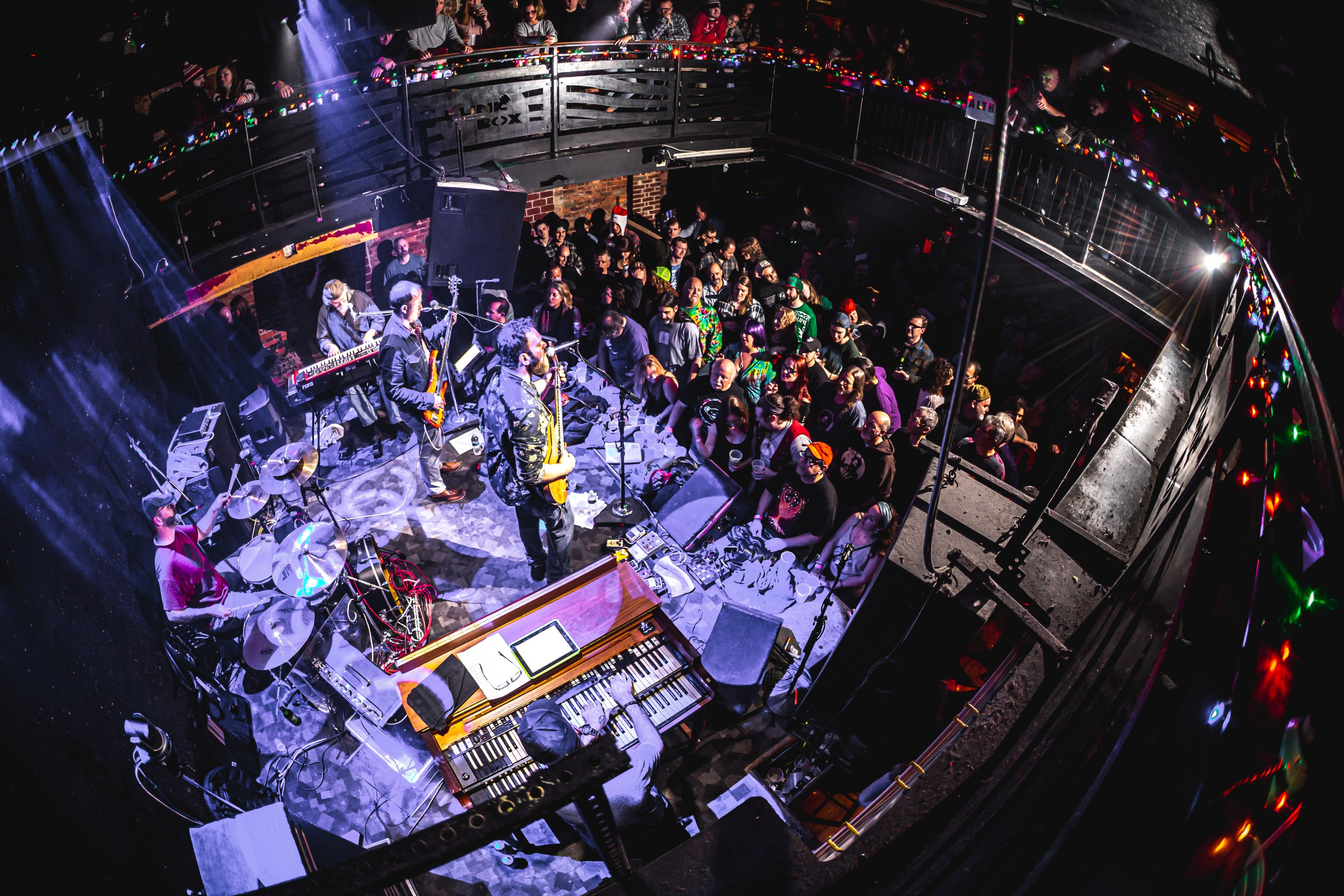
The pianist is a vibrant, inventive live performer, who will make her way to Garcia’s in Chicago this weekend, the locale where she recorded three of the tracks on Walking with Giants. Her upcoming dates also include a special gig on March 20 at the Peace Dome in San Juan Capistrano, CA where she will debut her “Head Set” series, which will provide an elevated listening opportunity for audience members who can absorb the full dynamic range of the show through headphones.
Bowling shares an additional observation regarding her live mindset, in remarking, “As a musician there’s an aspect to the experience where you're just trying to make all of the pieces of the machine go—whether you're practicing intensely in advance or playing the mental game while you're performing and thinking really consciously, ‘This is going to happen right now.’
“Then there's the flip side of that, where you're improvising a piece of music so well that it's inside you and you don't have to think about it. You just have to open the door and get out of the way. When that happens, it's the same feeling that I spent years and years chasing as a listener in the crowd when I first started seeing shows. Finding any access to that kind of experience for myself or as a shared communal thing with other people is the thing for me. I can't imagine life without it. Any pathway that will get me back to that place is something I'll keep pursuing.”
While growing up your initial focus was on classical piano. Was there a formative experience that opened your eyes and ears to what you’re doing today?
I can think of two of them, and they're from opposite sides of the fence.
I have a crystal clear memory from very long time ago when I was still spending a lot of my time playing classical piano. I was playing a Beethoven piece while auditioning for something, and I was able to get out of the mental game and get into that quasi-religious experience or flow state while performing in this super high pressure environment. It was the first time that had ever happened for me while I was playing. It just shook me.
That experience stuck with me but those were very few and far between for me in that world. I think it was a harder access point than improvisatory music, although there were other things that made me fall in love with that side of my musical being.
Then, as a listener, when I was in high school I saw a whole bunch of shows and it was at one of the first Trey shows I attended. I was a kid, but I remember discovering that feeling and committing to the chase. [Laughs.]
Did you have any expectations going into that first Trey show as to what it might offer?
The thing that initially drew me into Trey shows and Phish shows was the compositions. I remember stumbling across Rift in high school and being like, “Holy shit, you can do this? A rock band can do this? What is this, even?” [Laughs.] I had never dipped my toes into the waters of prog or anything. So I was like, “Wow, you can take classical and jazz and all these things, then throw them in a blender and you can get away with it?”
It was so cerebral and just a cool puzzle for my brain to pick apart. I told myself, “Okay, I need more of this. I need to go see this performed. I need to learn everything about this that I can.”
That threw open the door to “You can have this totally different experience, be completely in the moment and everything else disappears.”
It’s kind of the antithesis of the super cerebral mental stuff that takes an insane amount of technique to pull off. The flip side of that is the improv and the unknown and the letting go and getting out of the way.
I didn't know what I was signing up for, but once I got a taste, that was it.
You’ve touched on something that I think gets overlooked at times. Beyond the improvisation, the songs themselves are an essential component of the experience.
I don't think the Grateful Dead or Phish would be what they are for us without both sides of that coin. One without the other doesn't carry the same weight when it's delivered. There are two polarities and through the arc of a show, it swings back and forth between them. That’s a huge part of the character and personality of these bands and the shows that they put on.
I think the freeform unknown without some of the touch points and the structure would fall a little flat. Although I do have to acknowledge that I’ve fallen in love with some all-improv performances, like by Keith Jarrett.
I think my own approach goes the same way I feel about the shows. Each thing shepherds in the other. The song that comes before a stretch of improvisation informs the character of that improvisation with the ideas that are being fed into it. Maybe it strays from that and eventually goes somewhere totally different, but the thing that you're putting in at the beginning is part of the trajectory of where it’s all going to go.
For listeners too, I think there’s a push/pull between the known and the familiar. There’s the thing that pulls you back into reality if you're getting lost in it. Then there’s the ability to let go and forget what song started this whole thing—to be in that moment and not know what's going to happen next.
The push and pull between those two things is hugely interesting and valuable for me in putting together my own shows. As a listener, if I go to a show and one of those things is absent, I miss it.
Since you mentioned Keith Jarrett, have you ever gone all-out Jarrett and delivered a fully improvised performance?
Years and years ago, I did an all-improv set at this little club called The Lilypad in Cambridge, Massachusetts. I haven't done a set that's been all improv since, although I love the concept.
The thing is that when I'm putting a set together, I spend a lot of time thinking about it. There's an arc. It's not always the same arc, but I do think about it like a book or a movie in terms of what shape it's going to have.
I find it really challenging with an all-improv show to get the arc to have a cohesive and convincing shape. So I've been a little nervous to do it again. Maybe if I played all-improv shows as often as I play shows with songs as touchpoints, it wouldn't feel that way. So perhaps it's just a question of using that muscle. But I do have a love for songs and there's still the part of my brain that was a classical musician for years and enjoys the intricate stuff that’s fun to play.
I love having the plan, the execution, the satisfaction and the glory of coming back to a landing point out of the ether and the confusion when you don't know what's going to happen. I enjoy having the ability to return to something, which can feel like a collective “Boom! We're back!”
I think that can be difficult to pull out of nothing when there is no familiarity to bring everyone back to. But it's a worthy challenge and it's one that fascinates me. I certainly wouldn’t rule out doing it again.
At what point after your initial experiences as an audience member seeing Trey and Phish, did you begin gravitating toward exploring that music on the piano?
I kind of always lived in two different worlds on the playing side with the piano. I played classical forever and was really steeped in that scene. But I don't think I ever had the goal of becoming a classical musician. I don't even know what my aim was other than I’d played for as long as I could remember. I was in love with it, so I didn't want to stop.
I didn't need to have a career goal in mind in order for it to hold meaning for me. A lot of my peers in that world only listened to classical music, and that was their entire sphere of being, but I did not live that way. Even thinking back to my childhood and the way my family rolled, my parents listened to classical music and they also listened to the Dead and Little Feat and Hornsby and all kinds of other stuff.
So I always had these dual threads. When I was in college, I was getting a degree in music and only studying classical stuff in school, but then I would go out and miss a few weeks of school to chase my favorite bands. So I already had these two threads that were coexisting with each other, they just hadn't collided yet.
When I finally stumbled into it, I was instantly like, “Wow, I'm home. This is me in a way that nothing I've worked on before has been me.”
That was the beginning of running with it.
Was there an epiphany that led you there?
It was an accidental epiphany. I went and saw Phish in Lake Tahoe and they played this 37 minute version of “Tweezer” [on 7/31/13]. I was instantly obsessed with it. I loved the really clear thematic elements and the sections. I thought that for a piece of improvisation, it wasn't meandering. It felt like different rooms you walk through that are all different colors or different episodes in a miniseries. It was one of the most impressive pieces of improvisation I had ever heard anyone do live.
Whenever I listen to a piece of music a lot, I end up messing around with it on my instrument. It's just rolling around in my head. I started doing bits and pieces of it and then I just had this idea: “I should just learn the whole thing and string it together.” That snowballed into me sitting down with manuscript paper and headphones for many late hours at night, writing the whole thing out and then turning it into a piano arrangement.
That kind of opened the door for me to do more of this. I turned my attention to arranging a bunch more Phish songs and then experimented with trying the same approach with “Eyes of the World.”
When I started exploring the Dead's catalog that initially seemed like it might be an easier fit for my instrument, but it also came with a whole new set of challenges. The songwriting is so different and the whole experience was really fun.
After working on the Tahoe “Tweezer,” you also made the decision to share it with others. Did that give you pause in any way?
It was more that I was surprised it had legs. I did this whole Tahoe “Tweezer” arrangement and transcription, then I thought that was it. For me, it was an interesting puzzle. I like Phish and I like pianos, and I really liked that piece of improvisation. When I transcribe something or learn it or arrange it, I get all these cool little windows into bits and pieces of the music that I don't hear when I'm just casually listening. So I love that stuff.
Then when I was done, my husband was like, “You should really put this online—take a video of you playing it and put it on there.” My response was “Dude, there are probably only two people on earth who are nerdy enough to also appreciate this.” At which he said, “I think you're underestimating the nerdiness of Phish fans.” [Laughs.] He is a longtime Phish fan and it turns out he was correct. My nerdy little pet project that I was doing for myself ended up opening the door for me to have a bunch of opportunities to play for people that I wouldn't otherwise have had.
Then once I had that opportunity, I was like, “This is what I've always wanted to do.”
The funny thing is this all started with transcribing other bands’ improvisation, which is something that has a long history in jazz. But after maybe a year of that, I moved away from it towards wanting to do tightly scripted and carefully executed arrangements of the songs and really dive into that structure.
Then I wanted to improvise on the piano and let myself have those in-between stretches that I'm chasing when I go see live music. Again, it was selfishly a chance to crack open the pathway to that feeling we all chase, as well as an opportunity to explore my instrument in a different way. It’s gone through a lot of evolutions since then, but the first big shift was moving away from arranging improv I had fallen in love with and starting to improvise on my own.
Recording that music and sharing it with the world is one thing but deciding to perform it live adds another level of complexity and challenge. Can you talk about the decision to move forward with that?
At the time I didn’t see where the road led, I was just excited to play.
It’s like when you know a person and then you have some experience with them and come to know them even more deeply. That's how I felt about all the music.
I thought I knew these songs inside and out, and then when I picked them apart to learn them and try to present them in a way that preserves what they are at their core on my instrument, it was a different way of knowing them. I just loved that.
The first time I performed my arrangement of the Tahoe “Tweezer” was really crazy. It was at this little bar in San Francisco and it was during Phish’s Bill Graham run, but it was also during the Giants World Series. It was like all my worlds were colliding at once. A little too much excitement, perhaps. [Laughs.]
So clearly you were not reticent about playing out. Had you otherwise been doing so?
Off and on. I didn't have a steady project or anything, but I've always been comfortable performing because I grew up performing classical music. I never did it professionally, but I did it forever as a kid and through university. So it's always been a place that I feel at home.
I had a few points in my life where I was kind of burnt out and stopped playing altogether, then came back to it. I had done that in the classical sphere.
I had also done that while trying to put bands together—nothing serious, just the stuff you do in high school and college that didn't go anywhere. I also played some gigs with one-off projects.
I had kind of reached a point where I was like, “I don't think this is going to be the thing that I can do as my sole career. So I’ll teach, and the playing part will just be for me.” At the time I was running my own teaching studio.
Then when opportunities started to present themselves to go out and perform for a living, I was like, “This is the thing I had kind of given up on that I wanted to do my entire life.” So of course I was going to say yes and go out there. The question I had was “How long can I do it?” So far, the answer is that I’m still going. I'm really grateful for it.
I imagine that particularly at the outset, you were required to use whatever piano was already in the room and adjust your performance accordingly. Has that experience become any easier for you over the years?
It's always a challenge. It's really funny, I feel like people don't think about this, but guitarists would never do a tour where they're handed a different guitar every night and they're playing a solo instrumental set where they're totally unfamiliar with the instrument.
Every piano has its own personality. Even an instrument that has been meticulously maintained has stuff that it wants to do and stuff that it doesn't want to do. There are things it's really good at and things where that’s not the instrument I would pick to do a particular thing.
Earlier on in my career, but still sometimes now, I'll walk into a room for soundcheck, sit down at the instrument and be like, “Oh, this one has some problems.” So I try to work with the instrument instead of fighting a battle that ultimately I'm going to lose with reality or with the instrument's physical capabilities. Even if I might have had something in mind I wanted to do that night, when I sit down and play the piano I’ll go, “You know what? It's not going to work well on this instrument. I'm not going to be able to do it to the full degree that I want to, so I'm going to do something else.”
I've had experiences too, where I just work with it. I once had a string break on me midway through a set. It was on an upright at that point, and it made a really weird sound and threw something off. I don't remember exactly what I did, but I was able to use that imperfection. It was a glaring imperfection in the instrument that would shape what was happening in the improv but it became a focal point and I decided to work with it.
To some degree, I am always doing that depending on what the instrument decides. Then some nights I sit down and I'm like, “This is my dream piano. I never want to leave. How late can I stay in this room and play this incredible instrument?” Eventually they throw me out. [Laughs.]
When you don't have your dream piano and you're trying to course correct for whatever's in front of you, will you ever discover something that you can utilize later?
I think sometimes when I’m wrangling I just try not to get too hung up on the imperfections and realize that at the end of the day, perfection isn't the goal. It's about trying to convey something from one human being to another. People in some cases have worked really hard to be in the room with me, whether it's driving a long way or even just buying a ticket. People clear all kinds of hurdles and shitty things in their lives to make it out to live music. I'm not going to be the person who's sitting up there on stage going, “Eww, the A is broken. I can't do this.”
I still pour my heart into it and try to find the most open conduit I can to get what's in my heart that day out into the room. The piano is just one intermediary tool between me and the people I'm trying to convey something to in that moment. So it's a matter of working with it as much as possible to do the thing that we need to do.
One moment that stands out to me wasn't even on a piano. I did these Wilderness Sessions during the pandemic and I dragged my keyboard out to these super remote places and played sets to the landscape. Then we filmed them and put them online.
One of the most challenging ones we did was out on the Salt Flats. We struggled with all kinds of things and it almost didn't happen but it ended up being one of my favorite sets of music I've ever played. One thing that was challenging was the wind. It was super windy and I had this little zither. When the wind would blow it would activate the strings and start making all kinds of noises that I didn't want it to make.
I had it on a volume pedal and I could cut the signal so that it wasn't getting in the way, but when I was starting the set, I let everything open up because I was going to pluck it, run it through effects pedals and do all this weird stuff. But when I opened it up, the wind came by and suddenly all these sounds started coming out of it that I wasn't making.
But then I realized it was cool because I was able to respond to what the environment around me was making my instrument do. Even though I would’ve viewed that as a mistake and tried to eliminate it, all of a sudden I was like, “Oh, I'm going to do this more. It's an element of uncontrolled chance that's going into the music, so now there's a back and forth between me and the wind.”
I also think it taught me a lesson, which I kind of already knew, but it really drove that home for me. The lesson is that if you're trying to do one thing with the instrument, especially with extended techniques or weird stuff—like you're putting objects in the piano or making sounds in unconventional ways—and you think it's going to do one thing because that what it's always done when you've rehearsed it and it does something different live, you should just listen and pay attention. Don't be like, “Oh shit, that was a mistake. This is ruined.” Instead, think about what you can you do in response to that. Then maybe that turns into the new thing.
Moving to Walking with Giants, Volume 1 presents two Grateful Dead songs that you recorded at Garcia’s last May. What was it about those arrangements or the overall performances that led you to select them?
I feel like I've settled into a place that feels really good right now. One of the reasons for putting this record out was I felt like I hadn't released anything in a while that reflects how I'm playing now. About five years ago, around the time of the Wilderness Sessions, I started messing around with effects pedals in the context of solo piano rather than the stuff I’d done with bands. It was kind of uncharted territory. There was a lot of experimentation and a lot of things that didn't work because there wasn’t a great roadmap out there for how to do it.
Once I started tinkering with it, I really fell in love. It expanded the boundaries of what I think I can pull out of my instrument. It changed how I play and how I improvise.
I spent years chasing that while playing live shows, and I hadn't put out a recorded version. I thought, “I'm really proud of where this has landed. It's a totally different beast than it was five years ago.” So we decided to make a live record.
Splitting it into a Dead album and a Phish album wasn't initially the plan. I was kind of combing through the archives of all these shows we've recorded and listening for stuff that stood out to me and things that had different personalities to put on there.
I play a lot of improvisation and a lot of things that are continuous—one song into another. So finding chunks of music that will fit on a side of vinyl is also really challenging. [Laughs.]
But as for those two songs, I think my approach is really different between them. “Dark Star” has always been a canvas. I think my approach to that solo is very similar to how other people approach it in a band setting. It’s a touchpoint that you come back to and then it’s whatever it wants to be. That's why people enjoying playing and hearing it.
“Althea” is a really good example of how different my approach has become in interpreting a Garcia tune on the piano. With the Phish songs, a lot of it is super technical, with lots of modulations. When it comes to a song like “It's Ice,” I feel like I don't need to add anything to make the arc of the song do what it does. It has so much complexity in the notes and the rhythms and how they all fit together in this really compact, dense puzzle. So it's about what I need to subtract in order to make the things that are important still shine through.
The Garcia songs are challenging because he’s a storyteller, and I'm playing those songs without the words. There's verse after verse, and without the story being told, I still have to find a way to convey the story as it unfurls, and have that arc and that build without having it fall flat because they're the same.
Then I also have to find ways to vary the music to help the story tell itself—to ensure that it still unrolls that way in the listener's mind. So I try to differentiate each verse of “Althea” and each little section of improv in between each verse. I try to challenge myself so that it has a different character. It's going to be the same chords, but it has to make people feel something different. It has to use different tools to get to that point. To me, that's a beautiful challenge.
Since “Dark Star” is so open-ended, I imagine that comes with its own set of challenges to delivering it regularly on an elevated level.
That's the thing. There can be songs where the structural elements are simple but that doesn't mean they’re easy to play well. With “Dark Star” or any song like that where you can do whatever you want, with ultimate freedom comes ultimate responsibility. You can do whatever you want, so you better do something different and something interesting and something you haven't done before. The more you play something, finding that space again is going to be harder and harder but that’s also a challenge I am very interested in.
The versions of “Dirt” and “Sand” that you picked are both from 2023. What led you back to those?
The show at The Chapel that “Sand” is from I remember very distinctly in my mind. It was a night when a lot of the things clicked that I had been working on as far as integrating effects pedals into the acoustic piano.
During that show I stumbled into a few sounds where I was like, “This is going to be a foundational element that I come back to in ‘Sand.’” I'm a huge fan of “Music for 18 Musicians” [by Steven Reich]. That piece of music is very close to my heart and I found myself in this delay thing with the piano that had this irregular meter and a texture that reminded me of it.
Sometimes I stumble into these things and then I'm like, “Now that I'm here, I can't wait to live here for a long time or even try to find my way back here sometime.” So that song and that whole show had a lot of moments like that for me.
When I change things in my rig on the equipment side and the technical side, there's a breaking in period where I try a lot of stuff. Some of it works, sometimes it's uncomfortable, but that's all part of the process. I'm only able to get to a new world that I can settle into by that process of experimentation. Part of that is failure or imperfect execution. I can practice it a whole bunch of times by myself in rehearsal, but you’ve got to try it out live a few times before it all starts to become second nature and really click.
So one of the reasons I chose the “Sand” from that show is because a lot of things finally fell into position that night. They've become regular parts of how I approach my effects and how I approach my instrument in the live context.
Finally we get to your original tune, “The Victory Will Always Go To Rust,” which closes out Side B of Volume 2. Why did you drop that one in at the end?
It’s a track off an album that I've been working on for longer than I'd care to admit at this point. I had a collection of originals that I wrote as sort of a soundtrack to my insomnia a few years back when I was wrestling with some big stuff that I think a lot of us have with mortality and the passage of time.
I had been holding these compositions really close to my chest and finally I was like, “You know what? Even if the record isn't out yet, I want to start letting these songs breathe in the live environment and let them evolve a little bit.”
I feel like once I play songs live, they go through an evolution. I almost didn't want to do that before the record was fully recorded, because I wanted it to capture a moment in time and the way I heard those songs then. Once that was set in stone and I had it captured, I was like, “Okay, now these can go out into the world and start to develop into whatever they're going to be in their next phase of life.” So I set that one free.
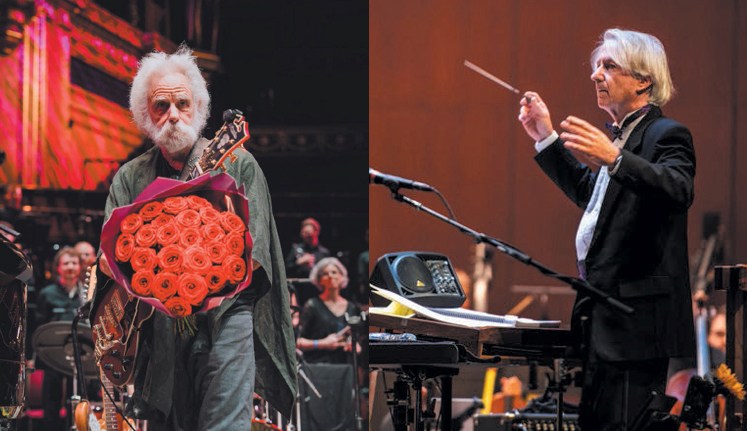
Finally, these days a lot of folks are looking back on the life and legacy of Bob Weir. I believe the first time you first played with Bobby was in 2016 at Christmas Jam and the Pre-Jam. Looking back, what would say you’ve taken away from your interactions with him that you’ve applied to your own musical ethos?
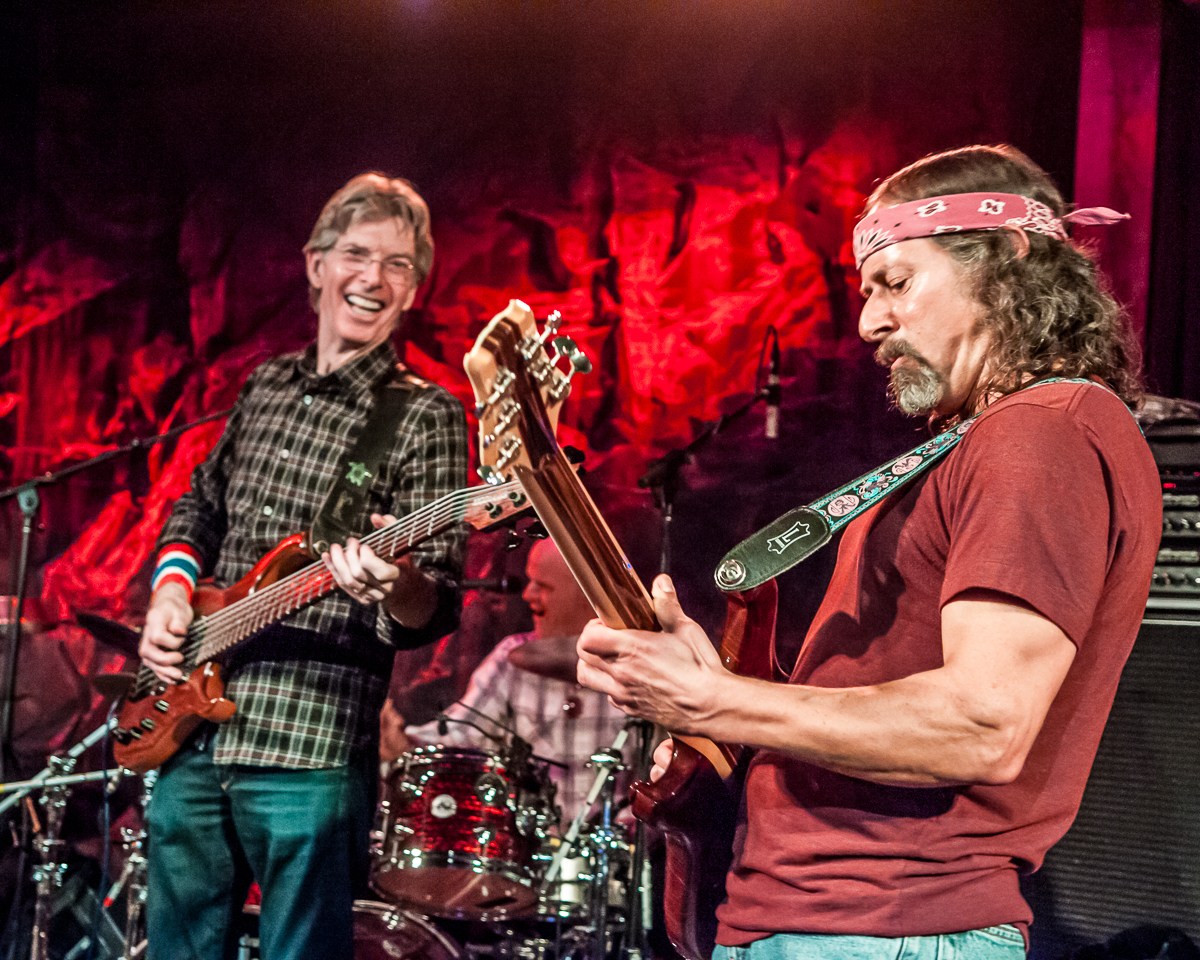
As you mentioned, my first time playing with Bob was at the Pre-Jam and then Christmas Jam. It was a crazy experience for me. I had put out my first record of Grateful Dead Music on piano right around that time, and had also just played with Phil for the first time, all within the span of a month or two. So as someone who grew up as a lifelong fan of the Dead's music, it was a pretty wild few months.
But my answer to that question is a delight in adventure. The opportunity I found myself in where I was able to play with heroes of mine could have put me in a mindset of “Okay, I don't want to screw this up. I want to do this the right way.” Whereas the message that I got from them and from the music and from the experience of playing in those settings was always, “Don't get hung up on that. Be in it for the adventure. What are we going to do with it today? Have fun with it and take a risk.” I find an incredible comfort with continual risk taking, and the real possibility of something not working, but being okay with that in pursuit of chasing something new and having a grand adventure. That's the whole thing. I try to carry that with me in the way I approach anything I play.
I think people get sucked into this reverence in trying to be respectful to the music, but I think the best way to respect what they were doing is to have a certain irreverence with it. It can be an informed irreverence, but the minute that you're too delicate with it because you're being too reverent, that's when it dies. That's when it stops evolving and having fresh life breathed into it. I never want to do that. I hope somebody stops me in my tracks if I ever start to do that.