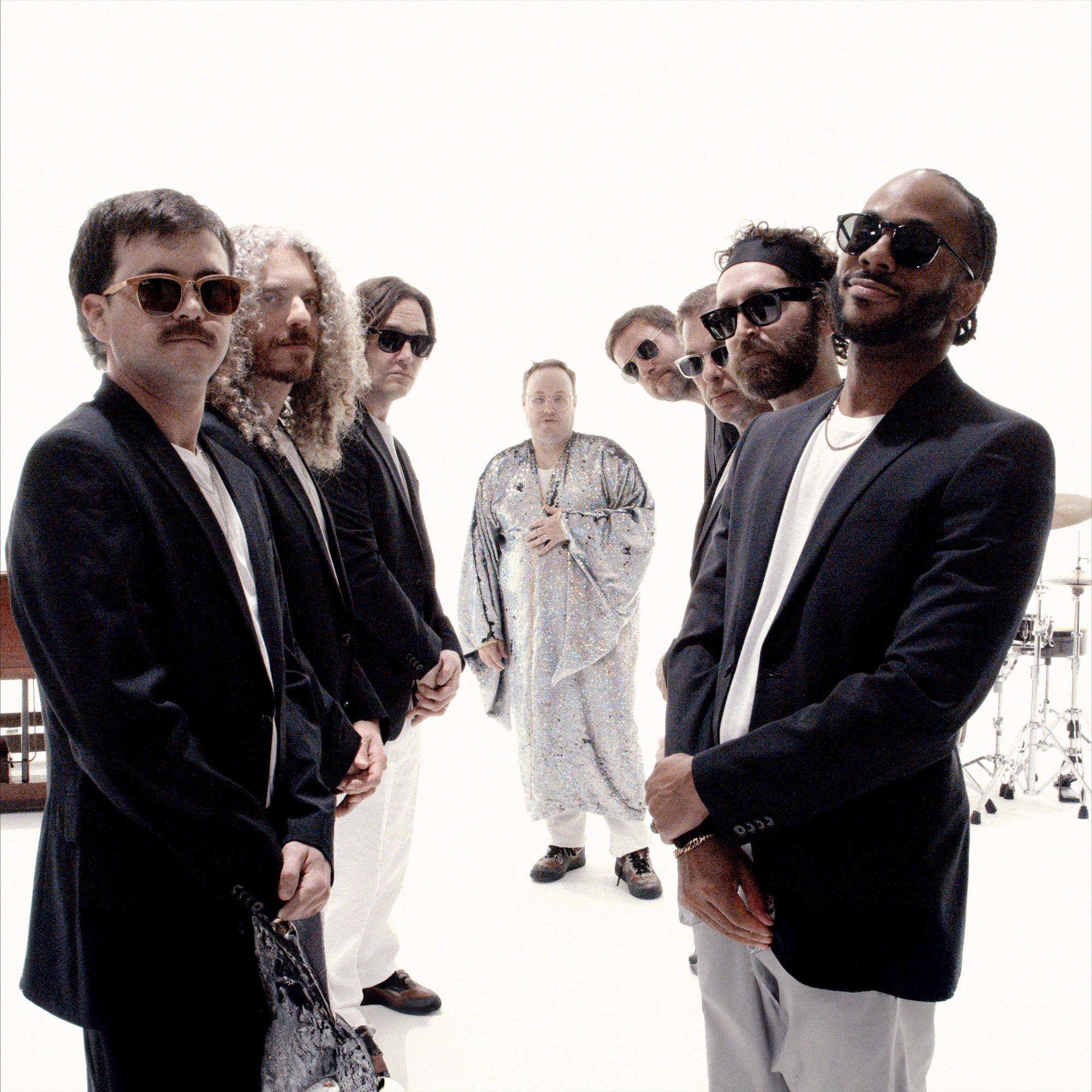
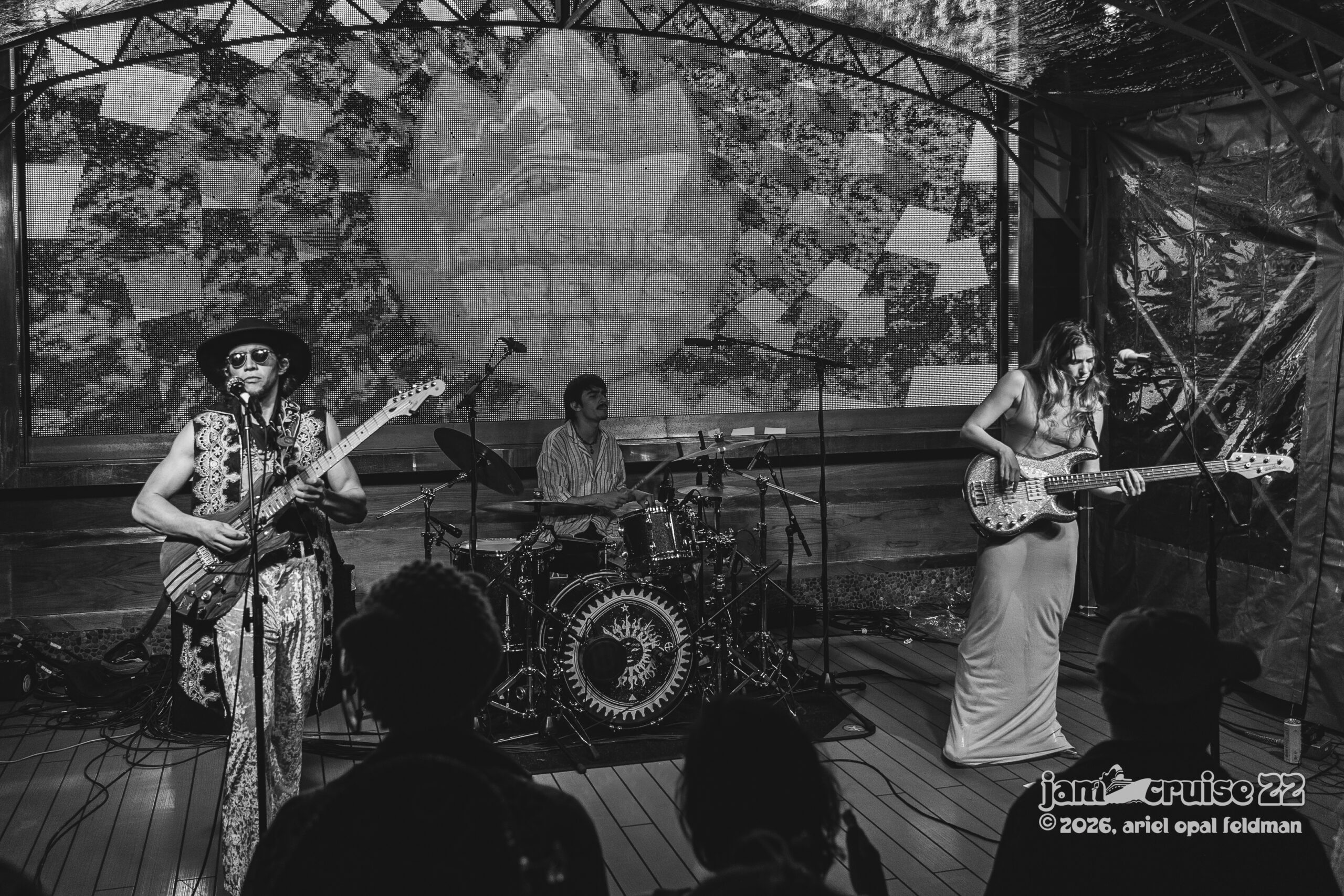
BALTHVS, photo by Ariel Opal Feldman
Psychedelic rock exploded globally in the ‘60s not just because it mirrored the mind-expansion dosed out by underground chemists, but because those altered states mirrored a generation’s breaks with the status quo. By bending time, extending techniques and improvising, participants used music to imagine freedom from social norms. Pioneers who borrowed odd tunings and trance-like repetition from non-Western musics both simulated selflessness and created possibilities for kinship with liberatory social movements around the world. Six decades after the psychedelic revolution, BALTHVS are retracing its legacy of transnational connection.
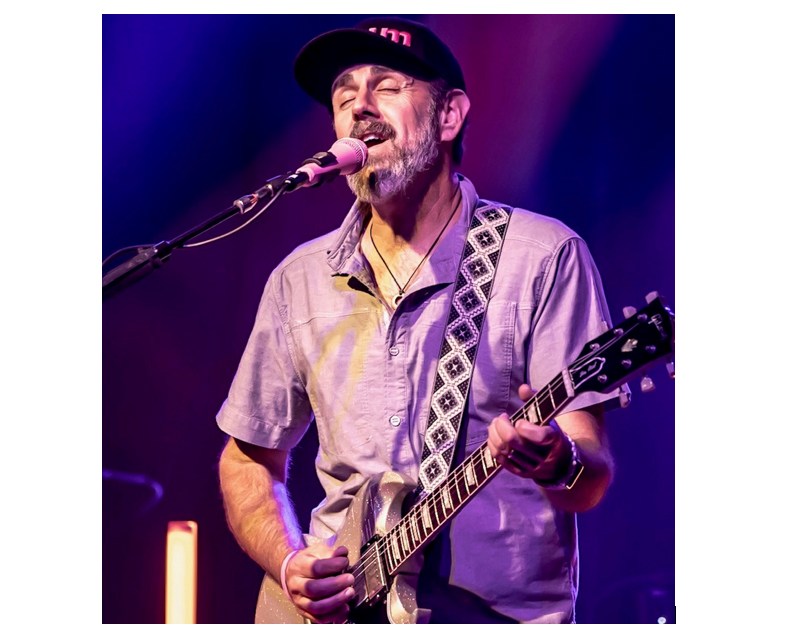
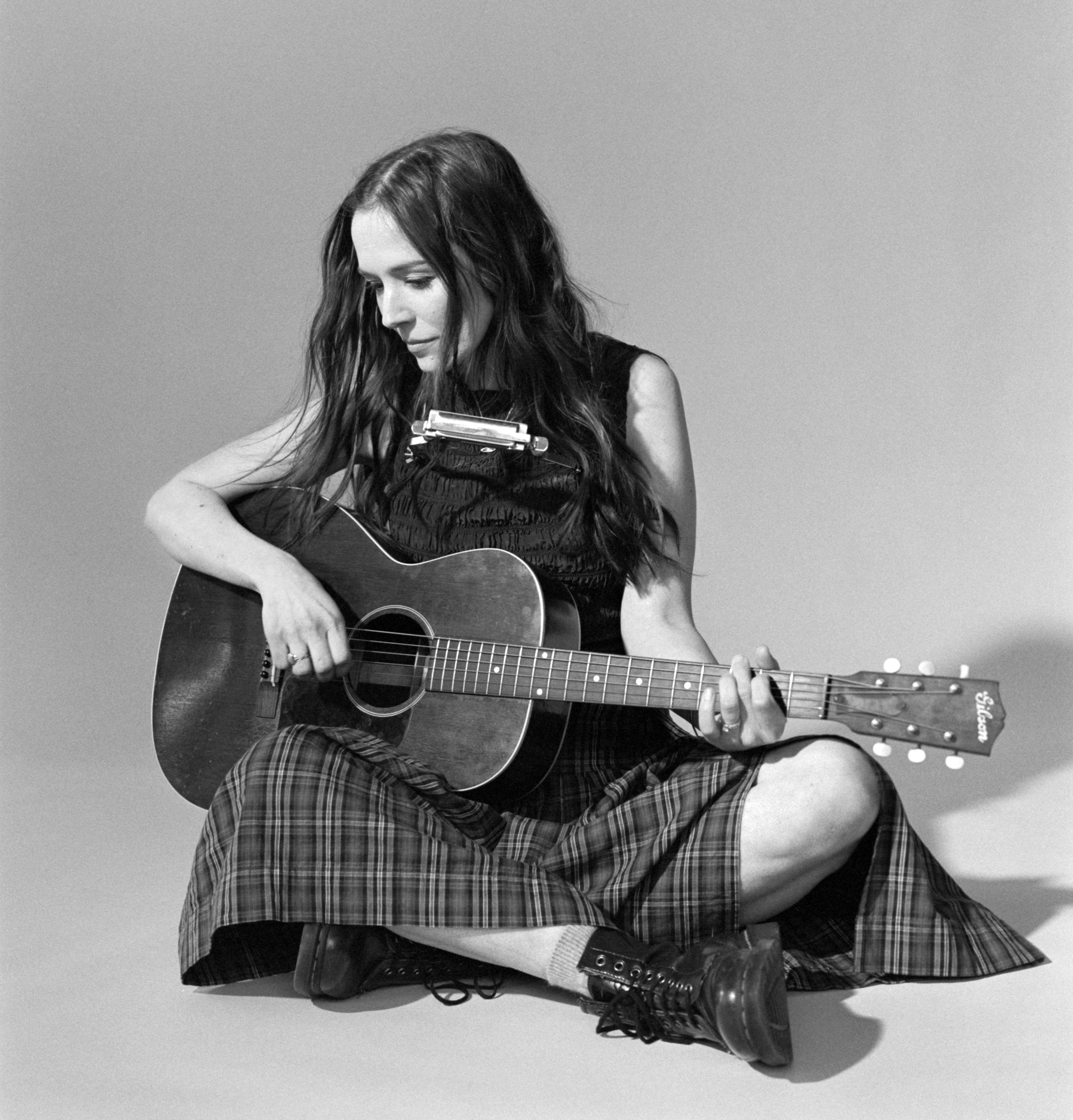
BALTHVS are guitarist and bandleader Balthazar Aguirre, percussionist Santiago Lizcano and bassist and vocalist Johanna Mercuriana. Since 2019, the Bogota-based trio has advanced an omnivorous neo-psychedelia, weaving in new fixationswith each release. Beneath surf-rock shredding, Turkish microtonal miracles and cumbia rhythms, they count themselves as descendents of musical psychonauts like the Grateful Dead and Santana, and they wear that foundational influence proudly; on Transmutations, their recently released fifth album, they shared a take on “Shakedown Street” that’s long been a setlist staple.
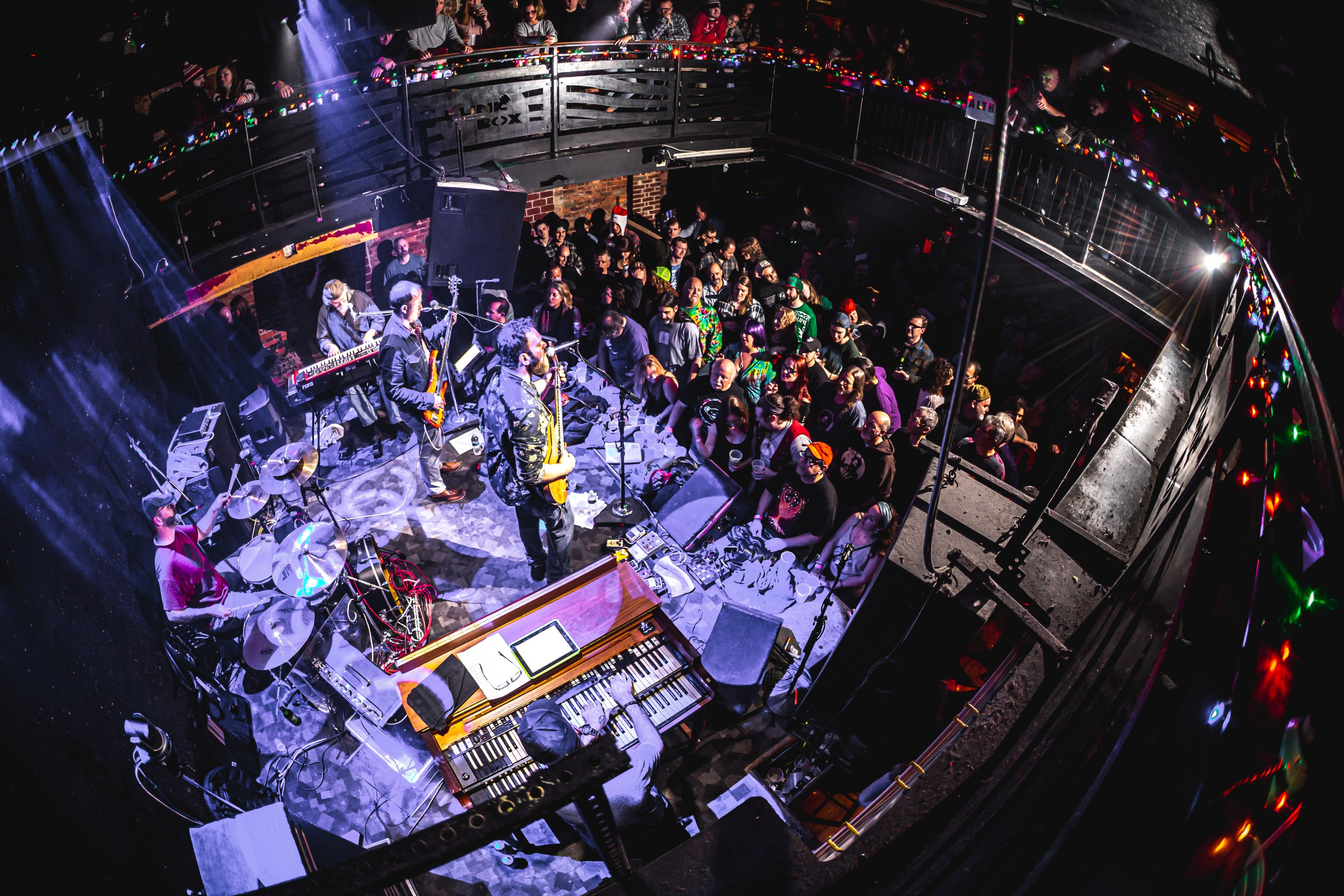
While their recorded output earned them an international following, the hybrid live and studio-alchemized Transmutations shows that BALTHVS truly thrive on stage. In rich, sweltering jams, Mercuriana’s warm, faraway vocals and spry basslines simmer over whip-crack funk backbeats from Lizcano, leaving just enough headroom for bold and vibrant guitar lines from Aguirre. The trio is just as adept with slow-burning dub meditations as floor-filling uptempo funk, both of which invite listeners on journeys out of the body – no psychoactive supplementation necessary.
“The records are very tight, loungey things, and people have told us, ‘You're so different live, people are dancing their asses off,’” Aguirre says. “With Transmutations, we finally showed the exploration and all the maturity and evolution we've had as musicians and stuff… There is a magic between the little songs we made in the studio and the giant 10-minute compositions we've made out of them in concert. It’s like studio ‘Dark Star’ versus ‘Dark Star.’”
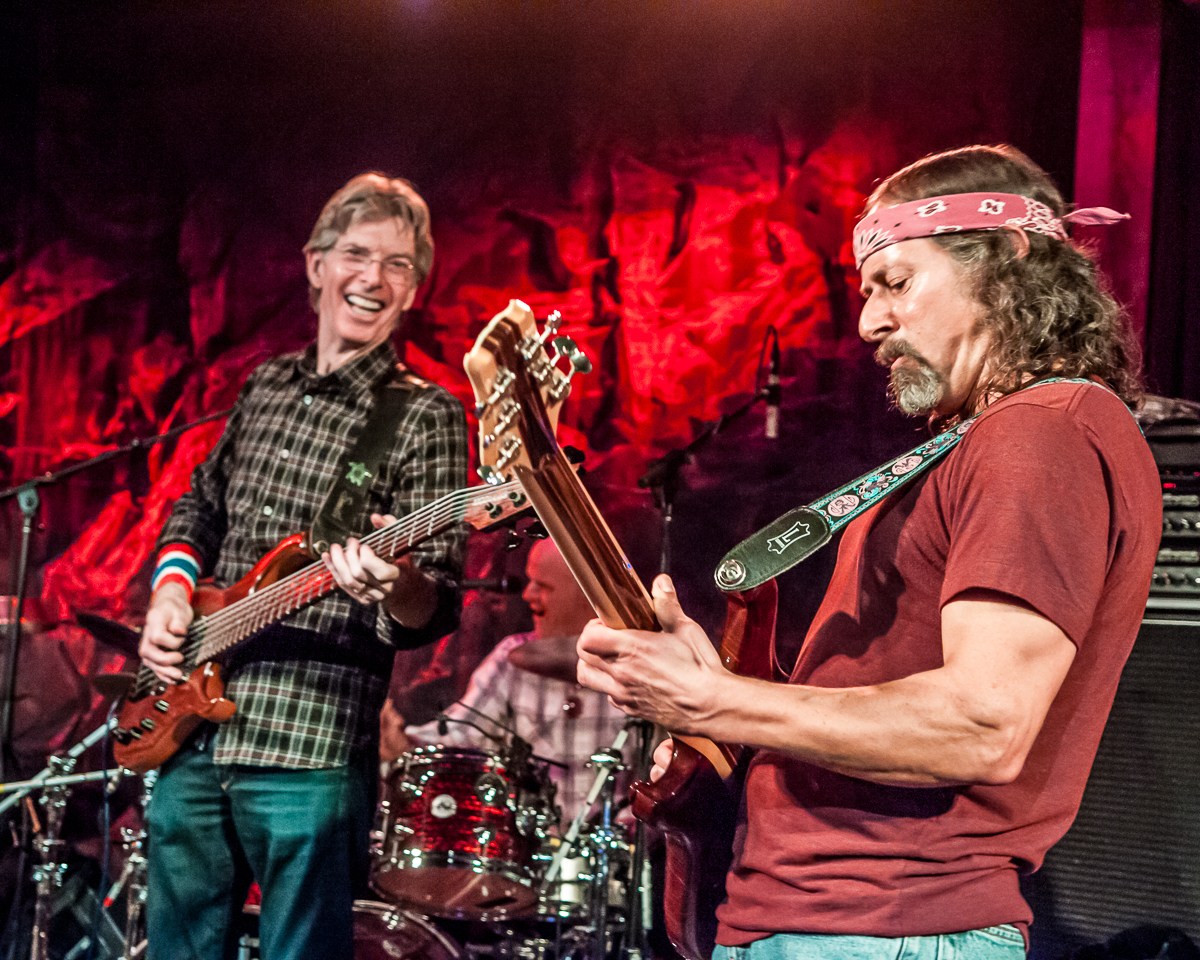
Last year, BALTHVS circled the globe on their most expansive tour to date, including a series opening for My Morning Jacket that Aquirre remembers as “one of the best experiences of our lives,” as the veteran act introduced them to “another level of touring.” In February, the band lit into another year on the road by applying those lessons in spectacle on Jam Cruise 22. To fill in for Mercuriana, currently on parental leave, they called on ace bassist and vocalist Sarah Elaz, a familiar face in the scene for her part in Bushwick’s Dead, Bearly Dead, Boojum, KATZROAR and more. Elaz proved a perfect fit with her love of psych rock’s halcyon era and commitment to renewing it. By a porthole looking out on the open ocean, the trio passionately reflected on that shared mission.
[Note: BALTHVS has just released a new single that marks the return of bassist Johanna Mercuriana. The following conversation begins with a discussion of the Jam Cruise’s spiritual origins and attendees’ personal lineage as fans of the Grateful Dead…]
Balthazar Aguirre: The foundations of this go all the way to the '60s, so I'm not surprised that there's older hippies who saw the Dead, and like they say, "I saw them with Jerry." There's people like that, and it's great to have that connection.
It's as close as a Colombian person like I am can get to that – someone who was fantasizing and idolizing the whole era like I was for many years, just being on an escapist trip in my country, looking at Dead videos, looking at the whole counterculture, and wondering, "Why didn't that happen here?" That thing didn't happen back home. So the prevailing tastes of my country are very different: It's more urban, rap, reggaeton, and that's fine, that's just not my thing. That's it. Nothing personal, I just have another thing.
So I was escaping myself. That was my therapy, Jesus, just smoking weed and listening to Dead shows. For years I got into that trip, like so many people our age; at some point, something happened and that clicked. Much like every Deadhead has said, it doesn't click for everyone, but for whoever it does, that thing is like catnip, and you just start digging and digging and listening to the Dead shows, and comparing the eras... and then there’s the whole universe that spawned, because it transcended the Dead. Phish formed, and the other bands formed, and you can't forget the Allman Brothers and all the other bands that grew alongside the Dead and made it to the '90s and beyond. So that's what I'm very passionate about; they got me on the bus, and I really wanted to be up on stage playing as well, and we manifested that, with the gentleman over here, Santi, and now with Sarah.
It's a beautiful thing to have this idea of the counterculture's music, and then to be able to create that and live that today, in this incredibly different world.
BA: Oh, it's great. We're not there yet, though. We just had that brief glimpse of the '60s, where everything was like a free for all. I really want to go to an acid test. There's no acid tests anymore!
No. People are just doing acid without making an event out of it.
BA: Nobody invites me to those parties, man! They invite me to parties with alcohol, and that's fine, but that's every party in the world. Yeah, I would love a party where everybody's like, "All right. We're gonna go to the party, and everybody's gonna go on a certain dose of LSD." Whatever's comfortable, but we're all on the same trip. Nobody's mixing, nobody's on a different frequency. We're all like trying to mesh into a single being.” Unfortunately, the world is still so backward that everybody would have a paranoia trip, because the government is like, "Oh, that's a scheduled, controlled substance," and things like that. It's a shame. That's why the first generation hippies didn't have a bad trip, because it was legal at the time, and the establishment didn't understand it, so nobody had fear around it, you know? It's not even the drugs themselves, but the whole fear that the world puts on these things.
Psychedelics are definitely a catalyst, and they're not habit-forming—that's the beautiful thing about that. I don't want to touch that shit, and I haven't in years, and I don't need to. Once you've opened the doors of perception once, they're open. But I certainly emphasize having the experience once, and that's it: You're marked for life.
Jam Cruise is great, but it's not the '60s. I think we're always trying to recreate the '60s with these festivals and events, and we get as close as we can, and the music keeps evolving in very high-level performances, but I think if we really want to embrace the spirit, we've got to lose the paranoia and embrace certain things.
As a final comment, because I've been rambling: I've been noticing a very marked decline in alcohol, for example, and that, for me, shows that people want something different. People are not convinced by what the establishment is selling them: tobacco, alcohol, pharmaceuticals. I think there are alternatives, and the vegetable world has always offered ways into connecting with God and nature and the universe and the earth.
Colombia, actually—and that's one of my big frustrations as a Colombian—is very psychedelic. It's very normal in Colombia, even among regular citizens and people, that if you're depressed, an alternative to a psychiatrist is going to an ayahuasca session. It's not a therapist; a shaman goes in and lights up the fire, and you're staring at the fire and vomiting all your demons, inner and spiritual and physical, and cleansing yourself. That's just such a common thing, something that mainstream America would look at like, "What's wrong with you?"
It's all part of the indigenous culture of our country, not only ayahuasca, but other psychedelic substances like yopo and mushrooms. My sadness is that there is no psychedelic music that reflects the psychedelic culture we were brought up in. With Santi, because this is our second band—we started as kids, doing what all kids do—we want to show that we live in such a fucking psychedelic country. You land in Bogota and in Medellin, and you smell the weed immediately. Immediately. You can smell it for miles.
You're in the sky when it hits you.
But it doesn't reflect in the music, you know. The weed has been associated more with rap, and it's always such a strong weed. I can’t smoke that. I just think in this genre and style of music, nobody can hide that there's an intertwining of mind expansion, altering of psyche, and music, and the Dead started that. So that's the elephant in the room. When they revealed all these files, they showed that the FBI was always on top of the Dead. They were constantly surveilling the Dead as a communist band that was gonna do something…
Sarah Elaz: Well, they were countercultural leaders. They posed a threat to the establishment.
BA: Right. So that's the great revolution: To change your mind and to change your psyche and your consciousness. So definitely I'm in the same boat. Music is one of the ways. There's other ways as well that we've discussed.
But music's a great way.
BA: Music is the way, because you need a job. You need something to do.
Yeah. Who's gonna pay you to do drugs all day?
BA: Yeah. And don't get me wrong, we're very healthy, I learned that from Jerry. A Deadhead tripping at Electric Forest once told me "Jerry paid for our sins." He was almost crying. I took him very seriously. I'm always sober, I don't take anything, and I said, "Yeah, you're right." He says he already ate the shitty processed foods, he already tried all the shitty, low vibration drugs. I don't need to do that anymore. He did it for me, so now I should embrace the positive things from Jerry, like the music, the magic, and just do the cool ones. So it's all about clean living. I love exercising, and hiking, and music, and that's pretty much all I do. I work out and play music, because I don't have time for anything else.
This all translates into the music. You guys have an eclectic, ever-shifting balance of influences, but it's rooted in that psychedelic experimental tradition. You've touched on this, but do you feel that there's a philosophical perspective that's necessarily attached to that sound that you're imparting through the music?
BA: I'm always leaving hints, but it's not about proving an already mashed-up answer, you know? People should figure it out. There is.
I just stress the power of the mind, the fact that humanity can change this world and create whatever. Like a big city in the sea. Isn't that amazing? Somebody thought of it, and somebody imagined all the engineering challenges that had to be overcome to create this thing, and this experience. So there's no limit to imagination, and as long as the mind is clear, you can create everything. That's part of the idea, is that you can be the master and creator of your own reality. But I don't want to preach anything at all. I just want to make music.
That's more coming out in the music, then.
BA: Yeah, I believe that's coming out definitely in the music. I hope I don't have to make political lyrics in order for people to understand a little bit of who I am. Instrumental music speaks a lot; even if you're not saying lyrics, you are saying a lot. Miles Davis wasn't using lyrics, but he was saying a lot. You could feel it.
When you're composing your own expressive instrumental music, what's the seed of that? Are you working from improvisation, or do you come in with a mood or a theme to center?
BA: The music of the world. We're the most privileged generation. A lot of people say, "I wish I lived in the '60s." I don't. I love this era, because I was born right at the cusp of when I could open my computer, and suddenly I could listen to music from Vietnam from 1975 for free. Boom. Click.
That's just one of a billion examples of music – and keep in mind, we're not American. We were born in a completely different world in Colombia. So we're accustomed to listening both to classic rock and things, but also to joropo, champeta, reggaeton and vallenato, and so many other kinds of our music, which might for other people feel like world music or exotic or whatnot. So we're very open to other styles of music. So to answer your question of how does the thing begin, I just listen to a lot of ethnic music, because I can.
It was harder just 20 years ago to be able to have such an access to a library of world music and culture. I love hearing music that didn't have a commercial intent; rather, what I love from a lot of music that I hear from, say, Kazakhstan tribal music, is that it was more a communal ritual or a spiritual experience, religious music. It was not music for a capitalistic purpose. I try to get a little bit from those melodies and themes. Obviously, I'm in the West with an electric guitar playing in E, so I just try to adopt these melodies, and in that translation from their very different tonally structured instruments to my standard guitar on E, it changes. It's a new song at that point, because they're in a different world and context of drums and bass and guitar.
So that's a typical approach I'll take. It's like, "Where should we go now?" And embrace the challenge of playing that musical language. For some reason, Turkey, more than any other country in the world, has connected with me a lot, and I don't know the answer to that.
All kinds of strange microtonal modes, yeah?
BA: Right. But there's some music I've tried from other countries, like Kazakhstan, that I couldn't do. My fingers just didn't have it. But with the Turkish music, my fingers just flow. It's effortless. When you truly click with something like that, there's no effort. I don't know why. And that's why we have more fans in Turkey than in Colombia, or many countries, actually. We've been to Istanbul twice.
So the Turkish influence is huge. I think it's because it's melodic, and it only requires a bass, percussion, and usually a saz, or a kanun, which is a zither-type instrument, and these melodic runs lend themselves very easily to the trio format. We don't rely on secondary harmony or things like that, so I believe it tells the story with very few notes.. And it's melancholic. The Turkish people and their language are very poetic and melancholic as a theme, because they've gone through so much, and you can tell it in their language. And I'm a very melancholic person, too, so that it just translates perfectly.
For listeners, I would say Erkin Koray would be the greatest star, because Erkin was a Turkish musician who loved the '60s, and Jimi Hendrix, and he was a boomer born in that time,. He's playing with a white three-pickup golden SG in an Istanbul live show, playing his traditional Turkish songs in a rock setting. He's a legend there. He's the Jimi Hendrix of Turkey. I saw that and instantly thought it's so cool. It has a flamenco things, and flamenco is so close to our culture as Colombians, that it just felt so easy. In Turkey, we played "Cemalim" and tried to learn Turkish and not butcher their songs, because it has lyrics.
SE: Really?
BA: Even though we have no idea what we're saying.
So working in this improvisational rock environment, as all three of you have for a considerable time, do you think that lends itself particularly well to this global flow of influences? Do you think that this is a form that facilitates melding more than others?
BA: I don't know, because jam music and the Dead are my DNA. I kind of force-fed the Grateful Dead to Santi. But now there's two of us, so he's really screwed. Maybe Santi can take that question, because he came from a non-improvisational music background. The music of Colombia is very structured, for the most part, even pop, rap, rock. Then you've been entering this world...
Santiago Lizcano: Yeah, I'd say that I can like find a very open ear here in this kind of music, you know? At the same time, I think that with ethnic music, to get—like what Balthazar was saying—to God through the music, you have to get in the trance of repetition. But, here, that's by improvisation, and letting God get into your plane somehow. So I think that people here are expecting this deep connection with music, and ethnic music has it, and improvisational music has it too. It's just a perfect mixture of things.
BA: How did someone call it? "The last great American adventure?"
SE: I like that.
That’s a Phil bomb.
BA: Because it's one of our last rituals. The modern world has kind of killed rituals. Religion has declined for obvious reasons, and I get it, and I even support it sometimes, but we need ritual as humans, and I think the music provides that, and the fact that it's non-choreographed makes the ritual. That's why this music has so much devotion among its fans, because these aren't regular music fans. We've been to the festivals and stuff, and it's not the same. This is because they're looking for an experience, and they're willing to go through like six shows without getting it, but then there's gonna be that one night where the stars align and there's this moment of collective bliss and unity. We can still get there.
So that moment, you think that's the same as what you're talking about, this finding God in improvisation? And how has your approach to that changed as you guys have become more experienced improvisers – in what you're doing practically on stage, how you're listening, how you're engaging with yourself to try to get to that moment of creation?
SL: Wow.
Tough question.
SL: Yeah, tough, because it's actually questioning yourself, you know? I guess that it's like in order to talk, you need to have a very expanded vocabulary, and that's what I'm finding on my own. That way when I'm talking to my fellow bandmates, I have things to say back to them, so they can respond to me and each other, you know?
BA: It's also the fact that Santi and I have developed intuition. Being monogamous helps, I would say, because we don't play with anyone else. That's my only drummer for eight years. I think that has to be a part of it.
SL: Definitely. I used to play a lot of football when I was a kid, and when I played with the friends I'd always been playing, it was like I know where he is without looking. I can just throw the ball out there, and he's gonna be there. It's the same here. We know each other very well. The things we do, we're just telepathically talking, and even if I'm not doing like any harmony shit, I know where he's going, and we land together.
BA: It's love.
SE: It's so cool to hear you guys say that, because as the person coming in, your monogamy helps, but I think my non-monogamy is what made this whole thing possible. I think my skill is coming into a new situation and being open enough—again, confident enough that I have the language, confident enough in my ability to reach that flow state of just creation and trusting—and also being able to say yes, and being able to follow and lead, and know when to do either one. So you two knowing each other so well is really an amazing backbone for me to come in with my skill of being able to create with everyone.
BA: And Sarah has the mojo. We knew since we met; she was the bass player in a band called KATZROAR, a chill, witchy band, and her band opened for us at The Atlantis, and I was like, "Wow, "one of the most talented bass players I've seen. And that always stuck with me.
SE: Yeah, it's a long time coming. That was a great show.
When was that first meeting?
BA: Atlantis was 2024. It was our first DC concert.
SE: It was a great show. It was packed.
BA: Yeah, we went from Atlantis to Anthem. We skipped 9:30 Club. We gotta do 9:30 at some point. Gotta get those cupcakes, you know.
SE: I was just about to say about the cupcakes.
BA: So that's where we met, and I was very happy to find someone like Sarah, someone who loves the improvisational music, and just loves live music and lets go. There's so many talented musicians who are just so stiff on stage. They're too self-conscious that they're on stage, even though they're performing perfectly. So I always like people who are capable of letting themselves go and still execute at a high level.
SE: That's kind of the sweet spot that I really try to find, is being so on it, and your fingers are moving, but you have this freedom and ease. I have to say, last night, I feel like I was pleasantly surprised at just how easeful it was, and how joyous. I don't want to say casual, because it's not casual, it's high energy and beautiful, but it's comfortable.
BA: I like that word, because I didn't even have to think of, like, "Oh, what is she doing?" I could trust my rhythm section. I could trust the rhythm section, and I could just do my thing. I knew they're gonna hold it. They're gonna hold that shit like the musicians on the... They're just gonna keep playing.
SE: Down with the ship?
BA: I didn't say it because I don't want to say negative things.
Can't be jinxing that on day two.
BA: But I do believe that's the strength of that rhythm section. It will keep going, even if it shakes, it'll keep going.
Just the day before, I'd spoken with Sarah about that same kind of balance in what you guys are doing up there. I think there's a misunderstanding about psychedelic rock in that people view it as very freely flowing. It's an extremely intense and regimented thing that you're doing up there, but also one where you're trying to slip into that state of nature. It's a balance between control and release.
BA: Structure and freedom. You have to honor the songs too. I think the magic about the Dead was that their songs are just as strong as their jams, and I aspire towards being able to create compelling, timeless, simple songs that people like, and then go into crazy ass jams. There's plenty of jam-oriented bands where it's just jams. It's like Lucky Charms, but they just pick the charms, you know? I like the full cereal.
You need the brown bits, yeah.
SE: Phish would talk about that too. Some of their most revolutionary jams came out of their most composed songs. Think about the song "You Enjoy Myself"; it's 10 minutes of thinking, and they would say, 'We're using these constructed parts to get all on the same page and create this hive mind, which then explodes into more improvisational creativity." So again, it's that yin and yang, the up and the down. You can't have one without the other. Intense structure leads to intense freedom, and vice versa.
BA: You need both. I gotta give props to every single musician on this boat, because on the festival scene, you know, the Lollapaloozas of the world, half of the acts are backing tracks, vocal performances, dancers, pyrotechnics, explosions; it's more about the show than musicianship. And it's a good show. There's a lot of craft behind the performers and the pyrotechnics and the makeup, but here it's just really high-level musicians delivering spontaneous sets of music, and people don't notice how improvised it is, and the margin for error when you're playing live at that level in improvisational music is very hard, and, it's great that there's a section of the planet that, that cherishes that music, these musicians, for what they are. We're more than honored that we fit the bill for something like this.
The chances people are taking on this boat, at that frequency and scale, are awe-inspiring. Of course, there are things that can go wrong in doing that, but last night you kept it alive and in constant flux. When you're improvising, how do you keep it from getting stale?
BA: Our whole team isn't here. There's also Seb on front of house, and Roland assisting Seb. We're getting bigger now, big team. Seb is a DJ, and because last year we were on tour all year, I got to hang out with him and learn a few things from him. One is that a DJ, is always thinking about the transition. The magic about being a DJ is you're a tastemaker, you pick a good song, but the craft comes when you're ready to shift gears into the next song. They're very creative and technically skilled, in the way they sync two completely different songs and mesh into the next one. That's something that musicians don't do enough, because we're always like, "Here's our song. Here's the next song." Whereas for DJs, the beat must go on. People are dancing, you gotta keep the beat.
So I'm always trying to figure out the next move, never let anything stale, always remove parts and exchange parts. Because there's a point where you can't go any higher. Everybody's playing as loud as they can with all instruments, so you can't go any higher. You need to remove things, so that you feel there's an emptiness again, and then you can go back and drop the bass again. That's the magic of electronic music, because they don't even switch chords sometimes. Sometimes they'll stay on a song for 12, 20 minutes in A, but they make it very interesting, because it's just high hat, then the kick disappears, or it's a high-pass kick, or there's a transition. They always fluctuate with dynamics and things, and I try to think more like an electronic musical artist. We want to be like the DJs, getting people in sync and in flow.
SE: It's all about the dancing. "Worship the groove," you know. That's the heartbeat.
BA: The beauty about our music, just like the Dead, is that we can allow ourselves for gentle, tender, vulnerable moments, and I think one of the things the Dead crowd and myself cherish the most is the ballad after the freak-out. You've got a high-energy, uptempo song that meshes into a monstrous jam, and everything is getting really crazy, and you're just peaking, then suddenly "Stella Blue," or "The Wheel," or "Morning Dew," you know what I mean? These moments where you could hear a pin drop. And that's something DJs can't do, whereas musicians, we can go gentle on the ballads as well, and ballads are beautiful for that. BALTHVS is recognized for chill music, so we're always trying to use those as well. I hope on the next show we get to show some gentle moments, you know.
While we're on electronics, in the past year, a lot of what I've seen you guys come out with has leaned into a new interest in electronic music. "Year of the Snake" I think had it, and the snare pad I saw in use last night has a real crack to it. Then that Dave Hilton remix is great, of course. I guess the question is, what's coming forward in the fusion of sounds right now?
BA: I think the fact that life has allowed us to be full-time musicians. It's completely different when you have to go to work, because unlike most people, I'm devoted to BALTHVS 24/7, and it allows for magical things. It's like any sport, you can't compare someone who only trains on the weekends and someone who trains every single day. So we're excited because we're high-level musicians now, because we've just been doing it for years, and since this is our profession, we can allow ourselves to just think about music and play music every day.
So we took this year off, for a lot of days, compared to last year, where we were just busy… It was 10 tours total, 26 countries, 23 states. We're getting our mile packages there. Silver. But next month, we're gonna hole up. Colombia is great to get into natural spaces, rent a house or something, and just make an album, and we have no idea what we're gonna make, but we're excited because we're at a very different level as musicians and as people than last year. Two years ago, we were just getting into it, now this is our thing. The truck is rolling, so I don't doubt that in a month we're gonna come up with songs, and see what happens.
So Sarah, when did you connect with the band? How did this all happen, and what was your preparation process?
SE: Yeah, so we met in 2014 at that show...
BA: 2024.
SE: 2024, right?
BA: Not 2014?
SE: 2024. Do you remember how many months ago you called me?
BA: Yeah, I was in Europe. Our contract with Vanessa [Muñoz] was over, we were taking different musical directions, and I wanted something special for Jam Cruise, because it was a very special date. As I love all the bass players, Vanessa and Johanna [Mercuriana], they don't come from the Jam Cruise world. So I wanted somebody to be there, and I remember Sarah would be perfect for that, because I saw with the KATZROAR performance that she could perform the chill, funky songs that we know, but she's also Dead to the core. So I just called her while I was finishing that European tour, and she heeded the call, thank God.
SE: And I was on tour with Bearly Dead, right, so I've been pretty busy on the road with a band that really does push into new territories with the Dead, not only by playing deep cuts, but making everything dancier and faster. I think everything that Bearly Dead plays is like 20 bpm faster than the Dead played it. So it kind of felt perfect that I was already getting a little bit more groovy, really digging into the Dead, and then Balthazar called me. It felt meant to be.
SE: So I got the song list and got to work. I mean, the nitty-gritty of it is we just had a shared Google Doc, and I would be writing out tabs, and we'd be messaging back and forth, and no, it's like very corporate, almost. Like, "Hey, the bridge on this, is this on cue?" And like sending references back and forth, and I mean, it was collaborative, and it's a job.
BA: She's at that level. Because we're all musicians now, we can just like connect like, "Hey, can you get these songs ready for this?" and "Sure can."
SE: There was a really beautiful moment yesterday in his room before soundcheck, where we brought out our instruments, and they're electric instruments, but we played them acoustic, and we're getting as close together as possible because you can't hear it. And we're running these songs for the first time live, and just smiling, and just feeling excited about it.
BA: Effortless.
SE: Effortless, yeah. But, then again, effortless because I feel like I've been listening to this music five hours a day for the past two months. You really have to immerse yourself in it.
BA: She did impeccable work. My hat is already off.
SE: I think I've found what we're talking about with my Dead repertoire—I've learned hundreds and hundreds of Dead songs. As a musician, you start being able to recognize what is essential to the song and what can be expanded on or made your own, and it was really fun listening to BALTHVS, which is very specific, very groove-driven, and very bass-driven...
BA: We love bass. Every time I tell the guy in the mix, the bass is the loudest instrument in our mix.
SE: And so that's a huge job coming in, and for me that means knowing that this groove is essential, and then, of course, asking not physically but musically for permission to improvise on it and expand on it and bury it, which is my specialty.
BA: We're just getting started.
SE: I mean, that was our first show!
BA: We talk like we've been doing this shit for years, it's funny. I'm very grateful that we've connected like that, because this has just happened in two days. In one day!
SE: One day! Half a day.
BA: We already talk like we're pals from the old days,
Way back in 2014.
SE: You know what it comes down to? I've been thinking this for this whole conversation. There is something about having a shared goal or a shared philosophy on music that does make you an old friend, right? If we all know and understand that transcendent moment, we're all looking for that same feeling…
BA: Everybody cherishes the same songs.
SE: We listen to the same music, so of course we're old friends. We're from the same tribe. We're from the same community, and so that's why you see so many sit-ins on Jam Cruise: because everyone is in on the ritual.