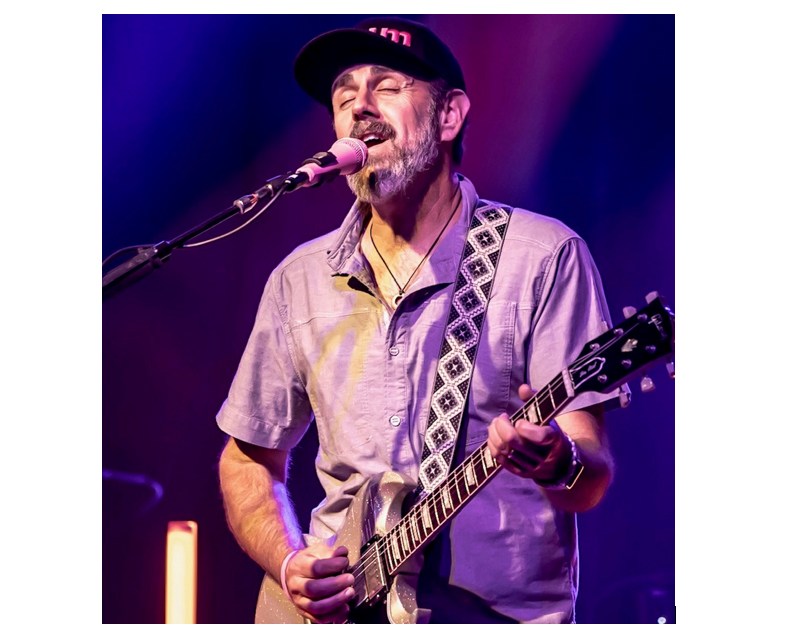
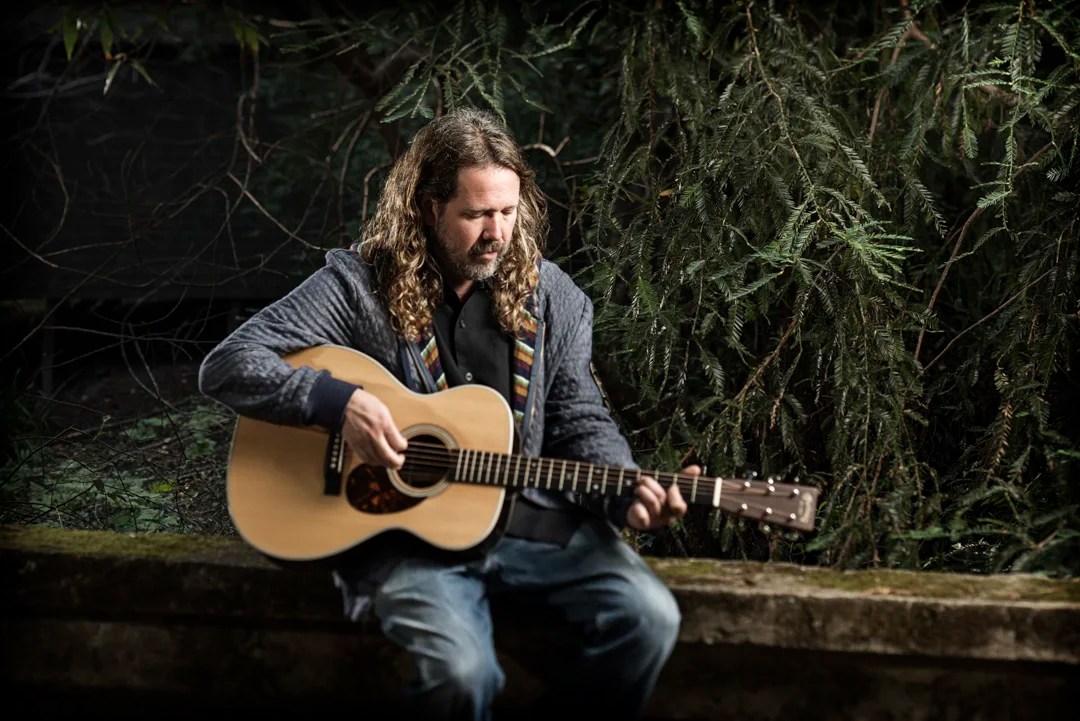
“With Phil, and later with Jackson, I was nervous because I wanted them to understand that the music was respected,” Jason Crosby discloses, while describing the first time that he played “Scarlet Dog” for Phil Lesh, Crosby’s mashup of the Grateful Dead’s “Scarlet Begonias” and Led Zeppelin’s “Black Dog.”


Lesh recognized the spirit in which this was intended, as did Jackson Browne, after Crosby played him “Takin’ Er Easy” which blends Browne’s own “Take It Easy” with Steve Miller’s “Rock’n Me.” Indeed, Browne was so taken with the concept that he wanted to collaborate with Crosby on a new mashup in anticipation of the debut performance by the Crosby Collective on January 18, 2025, at the Fillmore in San Francisco with special guests Browne and Oteil Burbridge. Crosby and Browne eventually worked up “Running Happy Everyday,” a combo that included Browne’s “Running on Empty,” the gospel standard “Oh Happy Day” and Sly & The Family Stone’s “Everyday People.”
On Saturday, June 20, the Crosby Collective will make their East Coast debut at Brooklyn Bowl. The roster of performers that evening will include John and Steve Kimock, Jackie Greene, Jen Hartswick, Lamar Williams Jr, Andy Hess, Tom Guarna and Alethea Mills. This will be something of a homecoming for Crosby, who has been West Coast-based for over a decade but grew up in New York, where he often created music with his late brother Chris, a fellow mashup enthusiast, who passed away in 2021.
Over the years, Crosby has gigged with Lesh, Brown, Burbridge, Bob Weir, John McLaughlin, Susan Tedeschi, Robert Randolph, Pete Seeger, The Blind Boys of Alabama, Jenny Lewis, Father John Misty, the Terrapin Family Band and additional accomplished artists. He notes, “Pete Shapiro once said to me, ‘You're the Forrest Gump of music. I’ll see these photos of historical people throughout their career and there you are in the background somewhere.’"
At Brooklyn Bowl he’ll be in foreground, even though he often defers to his bandmates, while they move through a setlist that may well include the aforementioned mashups along with many others, such as: “Friend of the Lithium,” (“Friend of the Devil” and “Lithium”), “I Know You Reprise” (“I Know You Rider” and “Tweezer Reprise”), Billie Rider” (“Billie Jean” and “Riders on the Storm”) and “Casey’s Eclipse” (“Eclipse” and “Casey Jones”). Crosby and Greene might preview some of this material as part of their duo appearance a few days earlier, on June 16 at Bearsville Theater in Woodstock, NY.
As he reflects on the animating principle behind the mashups, Crosby explains, “There's an element of humor to all of this, but it's really about creativity. It’s not meant to be something like Weird Al—not that there's anything wrong with that, but I didn't want it to be a parody-type thing. It's intended as a fresh and exciting way to look at these musical connections.”
Over the years you’ve been both a utility player and a band leader in your own right. Have you modeled your career after someone in that regard?
I’ve always looked up to Oteil and Kofi Burbridge. Me and my late brother Chris aspired to be like them. Oteil was the one who pushed me to do a show under my own name. Those first Crosby and Friends shows at the Wetlands were at Oteil's urging. The idea was: “I'm going to call my six favorite people to play with and we're going to do music that features all of them—the stuff that they write or sing or play.” I've always been in that support role, even as a leader, so I want to incorporate that and have a group of people who can share their abilities.
I've been so busy as a band member and a sideman that I don't think I've ever had 100% focus on myself as an artist. I don't know if I ever will and I'm okay with that. I feel like what I've been able to do partnered with Jackson or Phil or Oteil or John McLaughlin or anyone in my life has had meaning to them as part of their artistry and what they were presenting, so that's very fulfilling to me.
I think if I somehow won the lottery, I would still play all of the gigs that I have. I want to be there for everyone that I'm playing with, everyone I'm supporting. So that's what I aspire to do.
I feel like Oteil and Kofi were very successful at that. It's amazing to still be carrying on with Oteil 27 years later. I met him in ’95 and we started playing together in ’99. It's been a long road for us.
When did you first have a conversation with Oteil, let alone play with him?
I was in this band Solar Circus and we opened up for Aquarium Rescue Unit, so I met Jimmy and Kofi and Oteil all at the same time. I was a teenager and they would say, "When you get older, we're going to start hiring you."
Back then there wasn’t social media and cell phones in such a way to stay in contact. So I had these moments with them in the mid-90s. Then I saw Oteil go on to the Allman Brothers and Jimmy playing with the Dead, and I was like, "I'll never see these guys again."
But sure enough, a few years later it actually started happening with all of them. I started playing with Jimmy in ’01, I think. Jeff Sipe put out a solo record and there's a violin and flute duet that Kofi and I do that I’ll still go back and listen to on occasion. Now that I’m in my 50s, I reflect on those moments in my 20s. It’s wild to think that I'm still not that kid. It feels like nothing's changed otherwise.
I'm a big fan of Project Z, with Jimmy, Sipe and Rickey Keller. You joined them on the road and in the studio around that time.
Yeah, I was on that Lincoln Memorial record, the second album. I remember that tour kind of got interrupted by 9/11 where it stopped and started again. Rickey passed away not too long after that.
Rickey was such a generous, gifted artist. In more recent years, there have been a few folks you've worked with who have also left this worldly plane.
It’s tough to have that be a reality. You never know how long anybody has, but when you work with artists who are significantly older, you know that at one point you're going to lose them. I don't think I was prepared for either Phil or Bob to be gone. It's taken a long time to really accept it because sometimes you go weeks or months without seeing somebody and you're like, "Oh, I'll still see them."
I remember my first time back at the Capitol Theatre after Phil passed, I just stood there kind of paralyzed. Amy Helm walked up to me, put her arm around my shoulder and was like, "I know. " I just kind of froze. It’s when it really dawned on me that I wasn't going to see him.
Returning to Oteil, can you remember the context in which you initially performed with him?
The first time that I would have played with him would have been like ’98 or ’99. He was living in Manhattan for a brief stint with a mutual friend and I was playing every Tuesday on the Upper West Side. His friend told him, “Remember that kid? He plays every Tuesday.”
Kofi had just joined the Derek Trucks Band, so Oteil was looking for somebody to play in the Peacemakers. He came and checked me out at this club. Then he came and jammed with me and my little brother at my parents' house and taught me his songs.
Actually the first recordings that we did, my brother played bass and Oteil played drums on my little brother's four track. Then Oteil overdubbed Kofi's keyboard parts on his bass. At that time I was classically trained, so he knew I had perfect pitch and could play all these instruments, but I didn't have the jam and jazz experience, just as he didn't have the classical notation experience. So we had to bridge that gap together.
He kind of took me under his wing and I feel like I owe him everything because he gave Susan my number and then Robert [Randolph] was opening up for Susan. So my moving from Susan to Robert a few years down the line wouldn't otherwise have happened. That whole chain of events was really through him.
Can you continue with that chronology?
I was with the Peacemakers from like ’99 through like ’02, Susan from 2000 through ’03 and then Robert from ’04 through ’08. From there I was with the Blind Boys and Pete Seeger.
I was living in Manhattan in 2012 when God Street Wine brought me out here [the Bay Area] and that's when I met Bob and Phil. Then I moved out here, which is how I eventually met all the LA people. I met Dawes first and they introduced me to Jenny [Lewis]. After that I met Jackson, then I met Father John Misty and this whole new LA thing that I've been attached to lately. That's all through being up here.
Let's move to the Crosby Collective and your penchant for mashups. What was the first one you pulled together?
Well, it's a great story for me when it comes to this band because it started with me and my brother Chris. We were preparing for a Jason Crosby Band set at the 2013 Gathering of the Vibes. After sitting in with Furthur, playing with Phil and Friends and a couple of RatDog shows, all of a sudden I was on the scene here in the Bay out of nowhere. I had been playing with my brother and doing local stuff in New York before I moved, and that project was offered a nice slot at Gathering of the Vibes.
So we were rehearsing for that and we didn't really play a lot of Dead tunes, but I told my bro, "I feel like we should honor Bob and Phil. I feel like that's why we're here, so let's do a Dead tune." We chose “Friend of the Devil” and we were also working on “Lithium” by Nirvana as a standalone, not necessarily for that set, but it was just one of the things that we were thinking about playing.
My brother was living at my folks' house at the time and we were sitting there with a couple guitars in my old room, when all of a sudden I started singing the verse of “Friend of the Devil” over the “Lithium” chords. My brother immediately said, "Let's do that!” I was like, "Oh man, well, let's see if it works." So I found a way to make it work all the way through the song and it ended up being the hit of our set. It had the best response of anything we did that day.
I kept doing it at my annual birthday shows or the occasional Crosby and Friends shows at Terrapin. I even did it with Phil in Seattle, which was awesome.
It was just something I did for a long time here and there. Then when I started playing with Oteil and Friends a few years ago, it kind of caught fire. It had this incredible response. I remember we did it in Mexico at Dead Ahead and people were going nuts. Usually as a sideman, I can just kind of be incognito at a festival like that, meet my friends at the bar and just be chill. Maybe somebody will say “Hi, great show” or whatever.
But after we’d played that, when I went to go meet my friends at this pool bar, everybody in the surrounding pools and at the bar, they all started applauding. So I took a bow like a little kid. Then people started lining up, asking for selfies and wanting to know, "How did you come up with that?" So I got to say it was me and my little brother, which was sweet because he's not with me anymore.
Then Oteil encouraged me again. He was like, "You've got that brain, you should just write a million of these and form a band." So I did.
I set aside some time to be in the right head space where I could listen to a lot of music and be like, "Oh yeah, that goes with this, this goes with that.” I came up with a whole bunch of them and then formed this band in Chris' honor. Crosby Collective is his initials, Chris Crosby. That's kind of how the project was born.
Do you recall which mashup came next, after you kicked yourself back into gear?
Well, there were so many at once after that. I was thinking about the people around me, so one of the early ones was “Takin’ Er Easy,” which is “Take It Easy,” the Jackson Browne tune, with “Rock’n Me” by Steve Miller. I recorded it with Jackson's band—everyone in his band but him. He didn't know about it and then at a rehearsal I played it for him and he had to hold onto the piano because he was laughing so hard. He started walking around to the band, asking them "Have you heard this?" And they were like, "I'm on it. It's all of us." His response was: "Why aren't I involved?" So he ended up doing three out of the first four Crosby Collective gigs because he was so excited about the mashup.
Then the two of us wrote one with “Running on Empty,” “Oh Happy Day” and “Everyday People.” So it was really prompted by people who were excited about it.
I guess the next Grateful Dead ones were “Scarlet Begonias” with “Black Dog,” and “Eclipse” with “Casey Jones.”
Can you describe the process of pulling one together?
I try to find connections but there’s no single way I do it. For example, the “Estimated Prophet” and “Money” mashup was based on those songs being in 7/4 time. I was just like, “Okay, ‘Estimated’ is in 7, what's a classic song in 7?” Then I was like, “Oh, ‘Money.’”
So that was the starting point. The phrasing is totally different but they're interchangeable in the sense that you can sing the “Estimated” lyrics over the “Money” music or vice versa. It takes additional work than just making the initial connection, but that's where it usually starts.
I knew I wanted to do something with “Eclipse,” and for that one, I was listening to Grateful Dead songs looking for something that had a lyrical meter to fit with "All that you touch and all that you see…" Then once I got to “Casey Jones,” I was like, "There it is. ‘Driving that train...’" So it's about finding that initial connection.
I've got one with “Billie Jean” and “Riders on the Storm” where the initial connection that I found was in the bassline. I was like, "Oh, that's cool. Let me explore this." With some of them, you make a connection and it dies because you can’t take it all the way there. Those two songs go to the IV chord at the same time, and they have the same bassline, which is enough connecting points.
Sometimes I'll hear things that are based purely on the key.
How did your collaboration with Jackson Browne come about?
We did our first show at the Fillmore and I just assumed that he would want to participate in “Takin’ Er Easy,” because we had recorded that and it was already set. But he was like, "No, we’ve got to write our own." The way we set up the show was that we did a set of mashups, then we did kind of a mini Jackson Browne set, then we closed with mashups, and I wanted him to do one.
He was like, "Well, if we're going to do one, we’ve got to write one together." He had always heard that connection in his head, but wasn't sure how to get there. There was kind of a history that preceded it because he was always looking for something different to happen at the end of “Running on Empty” when the solos happen.
Sometimes while I would play my piano solo, he would come over and call out different suggestions. One of them around that time was "Gospel." So I'd start playing gospel.
I was hanging out one day when we were about to play this show at the Santa Barbara Bowl. It was the one year anniversary of my brother's passing and I was staying at a friend's house, just kind of chilling out playing the piano. Then I started working on these alternate changes to “Running on Empty” when I came up with this climbing gospel thing. So I sent it to him as a voice memo and he was like, "Let's do it tomorrow." The next day we did it at the Santa Barbara Bowl and I thought it was just something nice he was doing for me at the time, but he said, "That's how we're going to do the song from now on.”
So “Running on Empty” became this whole gospel thing for a moment. That was a year or two before we did this mashup. Then it was like, “Okay, let's fully go for it and take this into a gospel tune.” He loved “Oh Happy Day” and he heard it. So we worked on it for a while together, then we got on a Zoom with his two singers, Chavonne [Stewart] and Alethea [Mills] to work out an arrangement and then we got together at the Fillmore and pulled it off. It was incredible and I still can't believe it happened.
Then I got to do it again with Bonnie Raitt. I was able to collaborate with her on a mashup at the Fillmore. You can count the shows that we've done on two hands at this point, but they've been good ones.
Can you talk about working with Bonnie on that one?
We did this Rainforest Action Network benefit where she was the guest. I knew Bonnie from her coming to Jackson shows and the two of them palling around. I think what sealed it was that I had done some playing with her. I've been in this house band at the Masonic in San Francisco for these Sweet Relief benefits, and she was there honoring Joan Baez last year.
Then when we played the Rainforest Action Network benefit at the Fillmore, she allowed the Crosby Collective to be her band for the night. I was the musical director and I had the Collective as the house band. We backed up Bonnie and she agreed to do a mashup. The suggestion that I had was her song “About to Make Me Leave Home” with “Come Together.”
I'd spent a lot of time listening to Bonnie’s music and when that song came on, I was like, "Oh yeah, there it is...” In that instance it was more of a guitar line than a bass line. I was so happy that she was into it and she even had ideas on how to do it lyrically.
A funny thing that I should mention about “Takin’ Er Easy” is that when Jackson heard it, we ended up changing a word because it goes from the “Take it Easy” lyric about standing on a corner in Winslow, Arizona to “Rock’n Me” where the line is “I went from Phoenix, Arizona.” So we changed “Phoenix, Arizona” to “Winslow, Arizona” when we went back to “Rock’n Me.” Jackson was like, "To keep the arc of the story straight, we’ve got to have the lyrics be: ‘I went from Winslow, Arizona all the way to Tacoma, Philadelphia, Atlanta, LA…”
Bonnie and Jackson are so amazing. To me they seem like brother and sister, and their attention to detail and musicality is something else.
When you’re in mashup mode will you constantly find things floating in the air?
All of the time but I think that's always been the case with me. I always was hearing these things and sometimes playing them. I would make Phil crack up with little things that I would play where it just be a three or four note motif over a certain improvisation that was happening. It could be classical music or something else.
I'm hearing things like that all the time and I'll throw that within the existing mashups. I play “Feel So Good” by Herb Albert in my violin solo over Nirvana. I've also got one with little “Spanish Flea” and “Mahna Mahna” by the Muppets that I feel could be like a whole Coltrane kind of thing.
I imagine you and Phil shared a common language given your classical backgrounds.
Sometimes we'd be playing “Let It Grow” and I’d give him a little “Flight of the Bumblebee” for a couple seconds.
I'm glad we were talking about Phil because when we recorded this stuff, one of the first people to hear it was Phil. There was a session I helped put together with Phil and Oteil and me and Graham. Oteil played drums and this was shortly before we lost Phil. We played “Dark Star” and it was for a Terrapin Crossroads YouTube thing. Oteil was in town because we were recording these mashups, so I suggested to Phil and Grahame, "We should do something with Oteil."
We went down there and recorded, then I got to play Phil the mashups. The first thing I played him was “Scarlet Begonias” over “Black Dog.” The music was all Zeppelin and after I started playing it for him, Phil said, “Wait, where's the Grateful Dead part?” So I told him it was in the lyrics and he asked me to begin it again. Then he started beaming and he wanted to hear all of the mashups. I’ll never forget it.
That really was the moment the project was validated for me. This was before I played “Takin’ Er Easy” for Jackson.
Phil looked me in the eye and said, “Garcia would have loved this. And Hunter too.”
I remember Oteil was next to me and he kind of tapped my knee, like, “There you go. Approved.”
Looking ahead to next week, you’ll be performing with Jackie Greene as a duo, then again a few days later in the Crosby Collective. When did the two of you first meet?
I go back with Jackie to when he was opening up for Susan in 2001. We just became pals and stayed in touch. I was living in New York and he was out here, so there was a decade where we would kind of pass each other on the road, but we were always friendly. Then when I first started playing with Phil in 2012, he was on that show.
I moved soon after that and we started playing together more frequently. He asked me to play on his record Back to Birth, which was the first time I played on his music. Then I started playing on his shows, and when I put out a record about 10 years ago, he played bass in my band for my record release party.
More recently, we thought it would be fun to get together and write. Then we thought that we might as well do some shows while we were doing that. So it's been great to get to hang with him.
We had a couple great shows in Sonoma where we did a mix of his tunes, some mashups, a couple of my originals and some other covers. We told a couple stories about our history and it was a good hang. Jackie's so talented that we can change instruments a little bit too. At the first jam we had at his house, he played upright bass, I played piano and he was just making up lyrics to blues progressions that we were coming up with on the spot.
There's a good amount of spontaneity once we get going. There was one jam in Sonoma we talked about later, where we kind of forgot what song we were doing. It went on a little journey and that's the Phil influence.
I was just reflecting on that first Phil show at the Wellmont in 2012. Phil thought he was going to have to introduce me to everybody. Then he saw us all hanging out and he was like, "Oh I guess you guys know each other." We all had Js in our names. It was Jackie, Jeff Chimenti, John Kadlecik, Joe Russo, me and Phil. So it was Phil and the Js.
With the Crosby Collective, how challenging is it to get everyone up to speed on the mashups?
It's scary as hell because it's not as easy as just being able to write a Grateful Dead setlist or a cover setlist, where you say, “These are the tunes,” then work out with the singers what key they’re in. These are very arranged, detailed things. So it does become a challenge.
The original Collective when it started—and it was not intentionally so meta—was like half of Jackson's band and half of Oteil's band. I had Alethea, Chavonne and Greg [Leisz] along with Johnny, Tom and Lamar. Then I had Oteil and Jackson for the shows. So it was truly like a mashup of my two worlds at that time. I think at the Bowl, this is an extension of that because Jen and Steve and Jackie are all part of my world with Oteil or Phil.
Luckily at the Bowl, I've also got my spirit brother, Johnny Kimock. We’ve kind of worked on this since the beginning, along with Lamar Williams and Alethea Mills. Tom Guarna has been there on guitar as well. So they're the foundation of the OG Collective that played the first set of shows here on the West Coast, but then we've got Jackie and Steve and Andy, who I've known for so long and I love and trust that we're all going to show up and do it.
There's also a bit of crossover and familiarity with this because Jackie and I did some of these mashups at the Sonoma shows, while Steve has been playing a lot of them with Oteil and Friends.
So I feel like we all have kind of a head start for this, but it's also important to assign the singers and make sure we’ll all the same page with the different moments, because the songs flip. So for “Riders on the Storm” and “Billie Jean,” you've got one singer singing Jim Morrison and one singing Michael Jackson and everyone needs to know who's who when they're coming in.
In a way, I kind of created a monster as far as something to be set up as a normal “And Friends” thing, but I'm stoked about people getting to know the book. Having the foundation of the guys I mentioned at the front of that, you can have other players kind of come in, float above it, listen and react. There's nobody better than Steve Kimock for that. Normally on the West Coast I would have Greg, who plays in Jackson's band, but with this being kind of a one-off, it was great that Steve could come in. It's going to be quite an event.