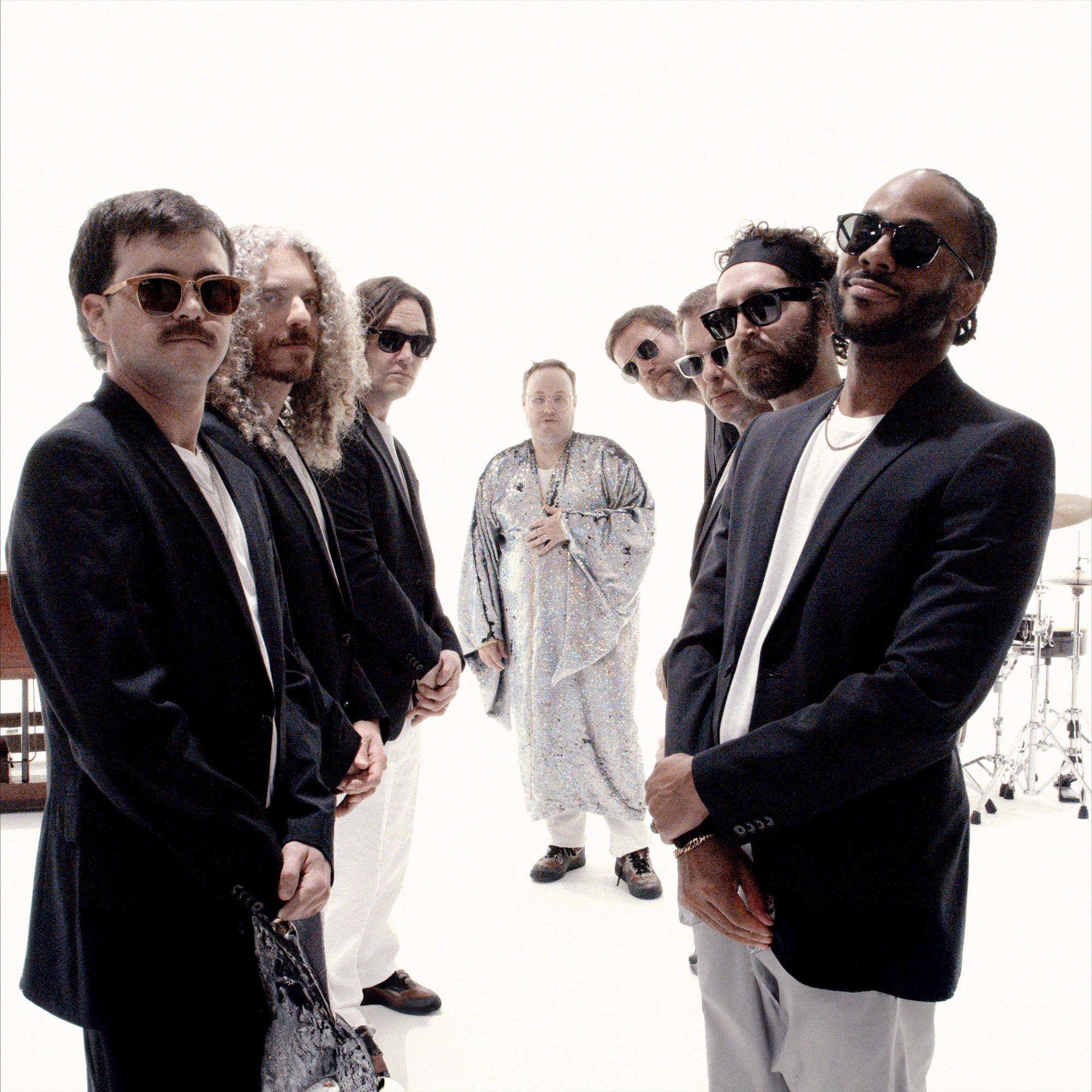
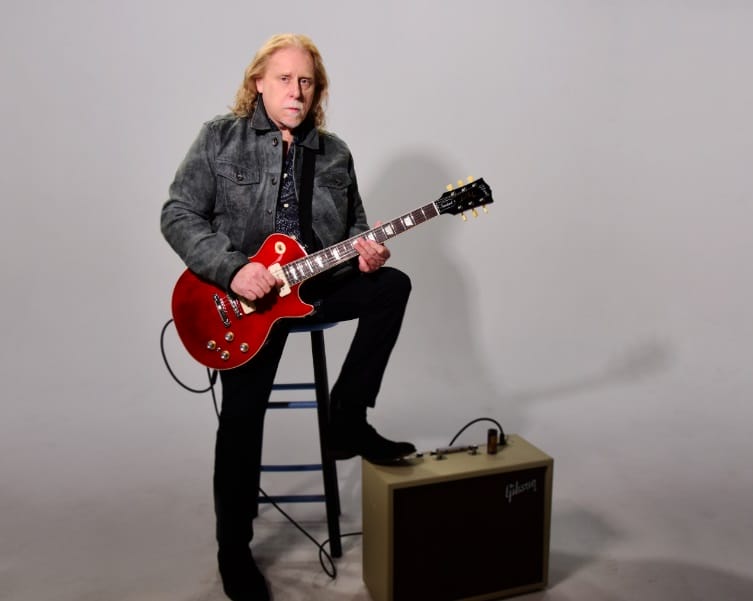
The Winter of Warren is upon us.
Last evening in Northern California, Warren Haynes began an extended touring trek that will find him on the road through early May performing in multiple musical contexts. Haynes will start things off in the solo setting for a series of dates that will culminate in Pelham, Tenn. where he’ll tape an episode of The Caverns Sessions for PBS. Then he’ll travel to Live Oak, Fla. for a gig at Suwannee Amp Jam 2 with the Warren Haynes Band, followed by a special show with Grahame Lesh, Nels Cline, Rob Barraco and John Molo. Additional WHB appearances will continue into March before he embarks on a Gov’t Mule tour. The Mule will route across the U.S. over the course of April, finally arriving in New Orleans, where the Warren Haynes Band Dreams & Songs Symphonic Experience will take place at the Orpheum Theatre.


Meanwhile, Haynes has occupied himself with a variety of other projects, as is his wont. On January 30, Megaforce Records issued a remixed and remastered version of his debut studio record, Tales of Ordinary Madness, originally produced by Chuck Leavell and released in 1993 by the label known for its early association with Metallica, Anthrax, Raven and Manowar. This new version features “Tear Me Down” a previously uncompleted track, which was later recorded in a new form for Gov’t Mule’s The Deep End Vol. 1. Haynes’ recent creative output also includes the fall 2025 release of The Whisper Sessions, a stripped-down companion to his 2024 record, Million Voices Whisper, as well as a collaboration with Billy Bob Thornton on a song for the soundtrack to Thornton’s television series Landman.
In the conversation that follows, the adroit and ever-active artist discusses all of this, as well as Matt Abts, Terence Higgins and the current state of the Gov’t Mule drummer’s seat, his longstanding musical relationship with Derek Trucks, the jamband all-stars he enlisted while producing Kevn Kinney’s The Flower and the Knife, as well as the first time he performed with Bob Weir, which occurred on February 11 and 12, 1999 at Wetlands Preserve.
When you initially listened back to Tales of Ordinary Madness,what struck you about the album?
It's always weird to go back and hear your early work, in this case, my first solo record as an artist. I had been preparing for that record for many years. I started the idea of recording it somewhere around 1987. Then I got the call from Dickey Betts to join his band, write a bunch of songs with him and record his album, Pattern Disruptive.
I did a couple of tours after that with him. Then it was like, “OK, now I'll go back to focusing on making my solo record.” But in January of ’89, I got a call saying “We're reforming the Allman Brothers and we want you to join.” So once again, I put my record on the backburner. I finally got back around to making it in 1992. By then, I had written a lot more songs, but most of the songs on the album were written in the 87-88 time period.
I hadn't heard a lot of that stuff for a really long time, and with “Tear Me Down” the bonus track which we never completed, I hadn't heard what was on tape in over 30 years.
I was really glad we were able to finish it and include it on this record. I hated that we couldn't complete it before, but we were out of time and over budget, which drove that decision. Hearing it now, I think it fits very well and it helps the overall balance of the record. It’s turned out to be one of my favorite tracks.
Although you originally recorded “Tear Me Down” for that album, the song was never releasedand eventually you rerecorded it nearly a decade later for Gov’t Mule’s The Deep End Vol. 1. In your mind do you associate it with one band or another?
Oddly enough, that song has remained in the Warren Haynes Band repertoire and very seldom gets played by Mule, even though the Mule version is the one that came out. Mule recorded it with Bootsy Collins for the Deep End sessions. I have been playing it in Warren Haynes Band for a long time and for whatever reason, we’ve just never played it much with Gov’t Mule.
The reason that we recorded it with Gov’t Mule was because Bernie Worrell had played on the original version intended for Tales of Ordinary Madness. Then fast forward to the Deep End sessions when we were looking for something to record with Bootsy Collins, and I thought, "Well, ‘Tear Me Down’ would be good. That's something that Bernie is a big part of and Bernie and Bootsy were such a team.” So that was the incentive to record it with Bootsy.
Since we were bouncing around back and forth with different bass players back then, the song just never got played very much. But as I mentioned, it's kind of remained in rotation with my band. So I think of it being more of a Warren Haynes Band song, even though Mule released it first.
As I understand it, you hadn’t met Chuck Leavell until you began talking with him about producing the record. How did that come about and what did you take away from the experience?
My manager at the time was a guy named Doc Fields, and he was the one who was shopping a record deal for me. We were discussing possible producers, and he brought up Chuck, who he’d worked with in the past. At that time, Chuck and I had never met. We knew each other through reputation and through our mutual experiences with the Allman Brothers, but we had never met or played together. I was obviously a big fan and enamored with the idea of Chuck producing the record. Then we scheduled a meeting, hit it off great and it all kind of fell into place.
Chuck was someone who I had really looked up to as a musician. He had done so much great stuff that I felt comfortable trusting his expertise in the studio. In a case like where you have to trust someone with your music, it needs to be someone who you think shares a similar vision, but is also going to bring their own ideas to the table. Chuck was really easy to work with in that regard, always had cool ideas and was open to any suggestions from anyone. It was a real relaxed kind of studio atmosphere.
Did it give you any pause to work with Megaforce, since Jon and Marsha Zazula, as well as the label itself, were so entwined with the metal scene?
Well, Jon and Marsha were both very passionate about music. They were very hands-on and active in all the discussions. They had their opinions about which songs I should record because we were choosing from a lot of material. But at the same time, they allowed me to make the record I wanted to make, which was part of the reason that I signed with Megaforce. They offered me the best deal and they also were the most encouraging in the way of me making the record exactly how I wanted to make it.
A lot of the major labels that I was talking to back then, had visions about how it should be similar to other things. For instance, when I was signed to Epic for a brief moment, they really wanted me to go down the Stevie Ray Vaughan path and I didn't want to do that.
Megaforce was looking to branch out and sign acts that weren't heavy metal. It was an odd combination because for the most part, I wasn't a huge fan of the stuff on their roster, but there were several that I really liked a lot, like King's X. I thought King's X was really cool, and Megaforce was having success with kind of oddball projects that major labels might not get behind. So that was a lot of the incentive.
Jon and Marsha were also both very passionate people about the music, and the team of people they had put together was also very passionate. They had this mission to break out of the heavy metal mold and venture elsewhere, which I thought was cool. It was a positive experience.
Thinking back on the material you wrote for the record, how would you compare your songwriting to what you do now?
Well, I think I've zigzagged a lot. I go through phases where I'm writing in one direction, then I'm writing in another direction, then I'm writing in another direction but I feel like that’s a creative path a lot of artists and songwriters go through. I think my writing has changed a lot since the late 80s, early 90s, but I had a lot to get off of my chest at that time period, and I think that record helped me do that.
I was kind of rebelling against the normal love song lyrics and cookie cutter stereotypical songwriting. There was a whole door opening up for rock music in the late 80s, early 90s, whether it be with Black Crowes, Pearl Jam or Nirvana, where there was more to say than the previous era.
There was a lot of angst and anger and frustration. I felt like the things I was writing about kind of portrayed that side of me. Obviously, I was writing a lot of other stuff as well, but when Chuck and I decided which songs we were going to record for this record, we tried to use songs that all worked together and had a similar approach.
It could have been more of a soul music type record but I was interested in going through this rock door that was open at the moment, and I had an abundance of tunes that fit into that direction. So, the two of us went through all my songs, deciding which ones belonged together to make an album, and not only an album, but my first album.
Jumping ahead to your most recent album, what led you to record the material on The Whisper Sessions as you did? Was there a particular song that prompted it?
It kind of came about by accident. We had made a decision to video some solo performances of me doing some of those tunes just for promo purposes because everybody demands more content these days. So I thought it was a cool idea to showcase these stripped down versions to give people a little more insight into where the songs came from before they were turned into full band productions. After we did a handful of those tunes, I started realizing that some of the performances were quite good and that maybe people would be interested in that perspective as an actual release.
So it kind of came about through happenstance that way. I don't remember if there was any particular song that made me think it because we set up in several different locations—several visual settings—to do these videos, and it was more about the video aspect of it.
Then when I was listening to the performances, I was like, "I think they could work as audio only." In the beginning, I thought it would mostly appeal to hardcore fans, but the more I listened to it and the more we talked about it, the more it made sense that even new fans, if they're open to stripped down versions like that, would enjoy it.
Derek Trucks appears on three of those tracks. When I spoke with him recently, he expressed a reverence for the chemistry the two of you have developed over the years. He indicated that he wasn’t sure if The Brothers would perform together any time soon but he expected that the two of you would do something. Is anything in the works that you can talk about?
Well, it all started when he was 11 years old. That's when we met and played for the first time together. Obviously he was way more advanced at 11 than most adult guitar players. A few years later we started working together more. I appeared on several Derek Trucks Band recordings, playing and singing. He did several tours opening for Gov’t Mule, sat in with us and was part of live recordings. We played together so many times, long before the notion that we would ever be in the Allman Brothers together. We had established that sort of chemistry before the idea of the two of us being in the Allman Brothers was an option.
That kind of chemistry is built on the right balance of similarity and contrast. I've always said that if two guitar players are too similar, it's a bit redundant sounding, and if they're too different, it doesn't mesh. But if there's the right balance of similarity and contrast, then you get this thing where the sum's greater than the parts. He and I had that at the very beginning. It also is really important that you're listening intently to each other without losing the flow, and that's just such a big part of improvisation. He had that even as a really young man and it just grew and grew and grew.
Then when we were hurled into this situation where we were in the Allman Brothers together, there was a lot of pressure for us to take that chemistry even further because that's a daunting spot to be in, but a beautiful opportunity that I wouldn't trade for anything. I think we expounded upon that.
After the Allman Brothers stopped playing as a band, some time went by and we didn't have that in our lives for a little bit. So when we started doing it again, it was like, “Wow, this is such an easy, familiar, beautiful thing that exists in our lives. It would be a shame not to take advantage of this more often.”
I feel like he and I will continue to do some stuff. We've enjoyed writing together recently, which we never did a lot of in the past. The songs that we've been writing, some of them are working out for me, some of them working out for him. It's just another aspect of our relationship that feels really good.
I hope we can get together and play music with Jaimoe and the other remaining members. That's up in the air, but without question, Derek and I will do some stuff in the future. I don't know if we know what that is yet, but I look forward to it.
In the interim, you’ll be out on the road for much of the next few months, including a series of gigs with Gov’t Mule. Can you share an update on Matt’s health?
Matt and I spoke a couple of days ago. He's having issues mostly with his back, but also with his shoulder and there also are health issues based on what he described as 60-something years of playing drums. He's optimistic and I think in some ways he’s turned a corner and feels like some progress is being made, but it's a long, painful progress. More than anything, he hates not being out here playing, but he knows that it's not something he can rush, and it's a very personal, painful situation.
When Terence is behind the kit how would you describe the balance he strikes between drawing on his own style and honoring Matt’s approach?
I think Terence's interpretation of the Gov’t Mule catalog is really interesting because he's being himself, which is really important, but he's also honing in on what Matt brought to the table. Terence is such a fan of Matt and what Matt has contributed to that music, but he's also very different from Matt stylistically.
I think the fact that Matt gave Terence his endorsement and told us he thought Terence was the perfect person to be filling in for him made Terence feel really good about the role that he's taking because that's a daunting chair to sit in. Matt's such a stylist and that style is such a huge part of the Gov’t Mule sound.
There are people who would probably approach it more similarly to the way Matt approaches the music, but this is a family situation where Terence is part of the family and he kind of organically found himself in the position of being the right person to play this music.
What he’s doing is inspirational. He's straddling the fence constantly on how much of Matt's influence to show and how much of his own personality to bring to the songs. Of course, myself, Danny and Kevin are encouraging him to find the balance himself and feel positive about that balance. There's no pressure put on him to play more or less like Matt because none of us would want to be in that situation.
Thinking back to Gov’t Mule’s New Year’s Eve show, what prompted you to perform a series of songs from 1971?
I was watching that documentary 1971: The Year That Music Changed Everything. It has multiple parts and I watched the whole thing. I've always cited 1971 as being an amazing year—one of the best years for music—but as much as I had already paid attention to all that, watching that documentary, it just blew me away how much amazing stuff happened in that year. At that moment, I wasn't thinking, "Oh, that's what we should do for New Year's." But then fast forward to when we started talking about themes and that became an option.
During that evening you played three iconic guitars: Mike Bloomfield's Telecaster, Dickey Betts’ Les Paul Goldtop and Jerry Garcia’s Travis Bean. Do you think there's something physical, spiritual or imaginative that comes out of you when you're playing one of those instruments?
Well, yeah, and that’s true on multiple levels. First and foremost, those instruments sound great. They not only have a unique sound of their own, but they have an inspiring sound. So that alone without the history would be inspiring. But then when you add the history of the instrument and what ghosts may be inside there, it's not something that I'm thinking about at the moment, but in the back of my mind, I'm going to pay more homage to the person whose instrument it was previously, and that's going to make its way into what I'm playing. But then also just the sound of the instrument is going to inspire me to play differently and put me a little closer to that person.
When you knew you were going to have those guitars on hand, did it inform any of your setlist choices?
Yeah, a little bit. I knew we were going to do something from the Dead on the Travis Bean, and I knew we were going to do some Allman Brothers stuff on Dickey's Les Paul. I didn't know what I was going to do on the Bloomfield Telecaster far in advance. I didn't figure all that out until the last few days but it did inform the setlist a little bit. Speaking of that Tele, that may be the best sounding Tele I've ever played.
Billy Bob Thornton appeared on the last Gov’t Mule album contributing vocals to “The River Only Flows One Way.” The two of you just teamed up to write “Desiree” for the Landman soundtrack. How did that happen?
We've been friends a long time and he's always been a music guy. He was a musician before he got into acting and we’ve hung out a lot. So he called me when they were on the set of Landman and told me about doing this soundtrack with different artists. Then he said that he had written this tune with Mark Collie, who has been a country artist for a couple decades and now he's an actor. He plays the sheriff in Landman. They had written this thing together, and it was kind of in the beginning stages, but Billy wanted to bring me in. He said, "I envision it being more bluesy and less country. If I send it to you, do you want to work on it?” I was like, "Yeah, absolutely."
As you mentioned, he’s had that music connection for a while. He directed a Widespread Panic video and people might not remember that he tapped Col. Bruce and Vic Chesnutt to appear in Sling Blade.
And Dwight Yoakam, who's fantastic in there.
When Billy reached out to me, I didn’t know the song would wind up as part of the soundtrack, but it turns out that he's involved in several tracks on that record.
Thinking of your upcoming tour, you're going to do an event in New Orleans with the Louisiana Philharmonic. You've performed with so many orchestras by this point. What have you learned from those experiences that you’ll apply to a situation like this?
Well, when I first started doing the symphonic stuff, I was really green as far as working with an orchestra, and I got better and better and better at it. Now I've done it a lot and it gets easier all the time. Thankfully, our secret weapon is this guy, Rich Daniels, who is our conductor.
We met him midway through the first symphony tour I did, where we had a different conductor most every night that came with the orchestra. We were playing at Oakdale, that venue in Connecticut, and from the beginning he was so easy to work with and communicative. But the way it came about was that I was hanging out in one of the dressing rooms with Jeff Sipe, who was playing drums on that tour, and he said, "Man, I just walked by the conductor's room and heard somebody in there playing saxophone. I think it's him." Jeff said that someone was in there blowing jazz, so we walked over and listened. Sure enough, it turned out that in addition to being a symphonic conductor, Rich was a jazz sax player. So we made a connection with him.
Then Jeff and I had a conversation where we said, “Man, it would be great if he could do all the shows.” We looked into that as a possibility and were able to do it.
Eventually we worked it out so that in the middle of the show, he would step off the podium, go up to the mic and blow a solo. People would freak out.
Working with Rich just makes life so much easier. He can go to every orchestra in advance and cut through all this red tape. He's just great. I love working with him.
I’ve been told that there are union rules in that setting related to decibel levels, rehearsal time and the like. Has any of that been an issue for you over the years?
Yeah. If the symphony is not comfortable with a song in the program and feels like they didn't have enough rehearsal time for that song, they can refuse to play it. That happened to us at Red Rocks where the string section was going to refuse to play “Dark Star,” which was the opening number in the show because they felt like they didn't have enough rehearsal and they wanted to take it out of the program.
I was like, "We can't do that." So we got into a discussion and somehow they were able to finagle some more rehearsal time and we went and ran through it another couple of times and then they agreed to do it. But otherwise, they would have said, "No, we're not playing that song."
There were other situations early on when I first started doing it. One night with the Boston Pops, we couldn't do an encore because the symphony had timed out. The encore would go past their cutoff point, so we just couldn't do it.
Have you ever had a problem relative to sound volume?
Well, yeah, I told this story after Bobby passed. I did two nights at the Symphony Hall in San Francisco, the first of which was Jerry's birthday. Bob and Jeff Chimenti came out and joined me for both of the nights and it was fantastic. Bob and I traded verses on “Days Between,” which is a song I love, and hearing it with the orchestra was just fabulous.
However, adding two more instruments to the band made it a little bit louder. This was before Bob had gotten into his super soft volume thing, but he wasn't playing loud. It was as quiet as rock musicians can play for the most part, but apparently some of the string section thought it was still too loud. They walked off and someone made the comment to the conductor, "I'm not damaging my hearing over this." So yeah, they're particular about that sort of thing.
Speaking of Bobby, it’s been nearly 27 years since you first performed with him. That occurred over two nights at Wetlands in February ’99. Tom Hamilton just told me about the first time he played with Bobby, in which they rehearsed a number of songs and then at the actual gig, Bobby only played “Bird Song,” which wasn’t one of the tunes they’d worked on together. What do you recall of your experience?
Well, we played “Bird Song” and we didn’t rehearse it, but that’s because we weren’t able to rehearse anything. I remember Bobby called me and asked about joining them at Wetlands. By them, I mean Ratdog. [Note: It was the Ratdog Trio with Weir, Jay Lane and Rob Wasserman.] When he called me, he asked me about doing a couple things, including “Bird Song” But we didn't have time to rehearse it. So we just played and it went as it should. It was unscripted and fun and no pressure and very cool. We had a blast and it was pretty memorable. Bobby and I just took to each other right away.
As I remember, those shows took place while you were in the midst of producing Kevn Kinney’s album The Flower and the Knife. This past November you released a version of the title track with the Warren Haynes Band for the Kevn Kinney tribute compilation. What was it like working on the original record?
That was fantastic. Kevn was supposed to do that record with Peter Buck, and Peter's schedule got crazy that he was going to have to push it way back. Then Kevin was like, "I don't want to wait. What do you think about doing it? " It happened to be a time that I had available, so I told him, "Yeah, let's do it."
It started out just being Kevn by himself with me augmenting here and there. Then we began calling these different people to come in and be part of it. It all came about really quickly. It was really great, fun experience.
Kevn's just a fantastic songwriter and he has a really endearing voice that is dripping with personality. He's also a sweetheart of a human being. Everybody loves Kevn. Even back then, we had no budget to make that record, and all the people who came in, I'm pretty sure they played for free. If you look at the lineup, especially looking back now from the jamband world, it's Derek, myself, Jimmy, Oteil, Allen Woody, Matt Abts, John Popper, Edwin McCain, Danny Louis. That was the first time Danny Louis had played trumpet in the studio since his bout with Bell's Palsy, where he thought he was never going to play again. Hook Herrera's on there. Allen Woody played guitar and mandolin, he didn't play bass. The only bass on that whole record is Oteil on one song. I love that record.
At end of this month you’re going to appear at the Suwannee Amp Jam in a five-piece band with two fellow members of the Phil Lesh Quintet—Rob Barraco, and John Molo—as well as Grahame Lesh and Nels Cline. It will be fascinating to hear Nels in that setting.
I love Nels. He's got this great, quirky approach to whatever music you're playing. What he plays is always different than what I would think, but we're very compatible in the way we approach music and he's a beautiful person.
In December, Grahame was part of the group you assembled for a Phil Lesh tribute at Christmas Jam. Back in March he appeared with the Q for a night at the Cap, which brought some of the people around me to tears. Can you talk about your relationship with him over the years?
Graham's playing and singing is fantastic. It's been amazing watching him from when he was a kid until now with the progression that he's made as a musician and an artist. He really surprised everyone when we did that show with the Q at the Cap. I'd previously played with Graham when he’d played guitar and he always played really great guitar, but none of us knew what to expect from his bass playing until we started doing it. It was so cool to hear him playing that music with that group of musicians and rising to the occasion in an amazing way. He had all of Phil's open-mindedness about the jamming, and rightly so. It was just so great.
What was the experience like for you returning to Asheville this year after Christmas Jam was canceled in 2024 due to the damage caused by Hurricane Helene?
Going back to Asheville and doing Christmas Jam after not doing it the year before was really emotional. They're still struggling. It's going to be years before they can bounce back in true fashion. It got devastated a lot more than people even realized.
For a few weeks, the spotlight was on Asheville and Florida and all the places that got hammered, but life goes on and people forget unless they're reminded of how real that was and still is.
I'm so glad we could do it again and being able to pivot and turn the previous year into the Soulshine benefit at MSG was the best call we could make under the circumstances.
Final question: During the course of this year’s Christmas Jam, you performed with a number of younger artists, like MJ Lenderman, Daniel Donato and Maggie Rose. To what extent do you see it as an affirmative duty to pass along the music to such folks?
I feel like I can establish some sort of rapport or bond with anyone who's interested in carrying forward the music that we all learned from. I think it's really important to do that. The young musicians out there who are making the most impact on people like myself are the ones who really acknowledge where it all comes from and don’t just study the previous five or 10 years, but keep going back 20, 30, 40 or 50 years. The music that gave us all this is super important historically, and the more that young musicians understand it, the better the future is.