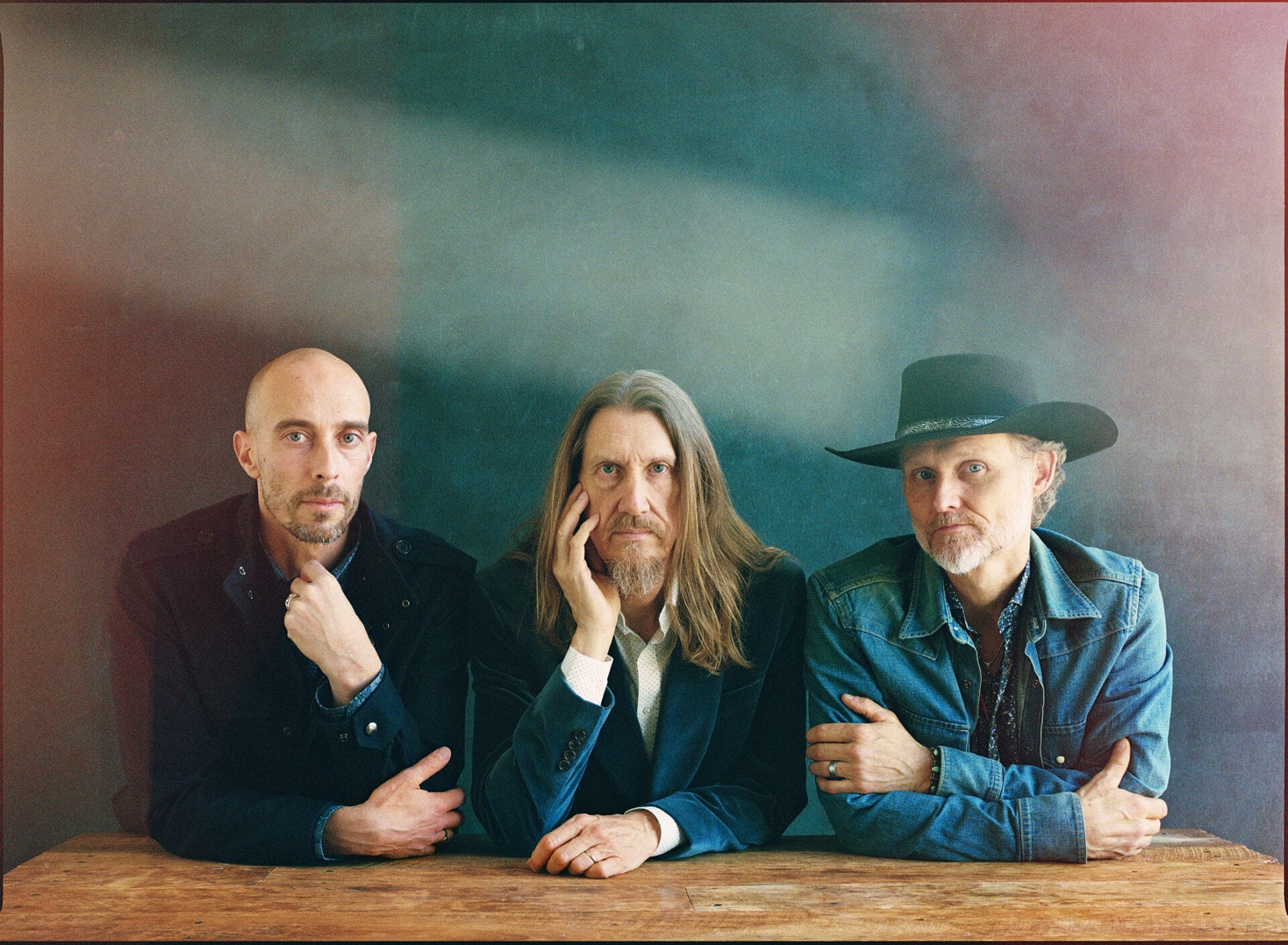
“We talk all the time about how the best stuff happens when you accept the fact that you’re not in control. The misconception about the creative act is that it comes from you,” Chris Wood observes, as he looks back on the process of creating Puff of Smoke, the latest studio effort from The Wood Brothers. “The more that I’ve witnessed and experienced it, the more I’ve come to believe that it’s not me. We’re not separate from our environment. For example, I’m a bass player. If I want to groove with a drummer, I don’t listen to me—I listen to the drummer. So I try to think of myself less as someone doing something and more as someone receiving something.
“It’s the same thing with songwriting. It’s trusting yourself, allowing yourself to receive what’s happening. That’s when it happens. It’s like you’re not actually doing it, it’s coming through you and from your environment. I believe that true, honest creative acts don’t come from the artist. They’re a mirror on the environment, the surroundings, the time or the culture.”


His brother Oliver shares a similar sentiment: “When we go into the studio, we’re not thinking in terms of what this album is about. We’re not making a concept album. We’ve just got a bunch of songs that we wrote in this span of time, where such and such was on the news, when such and such was going on at home. All those things come out in the songs. So if there is a thread in the album, it’s not something we planned. It’s something subconscious that comes out. Since we’re the guys doing it, and we lived in that era and created the music, there might be a theme, but it’s not one we premeditate at all.”
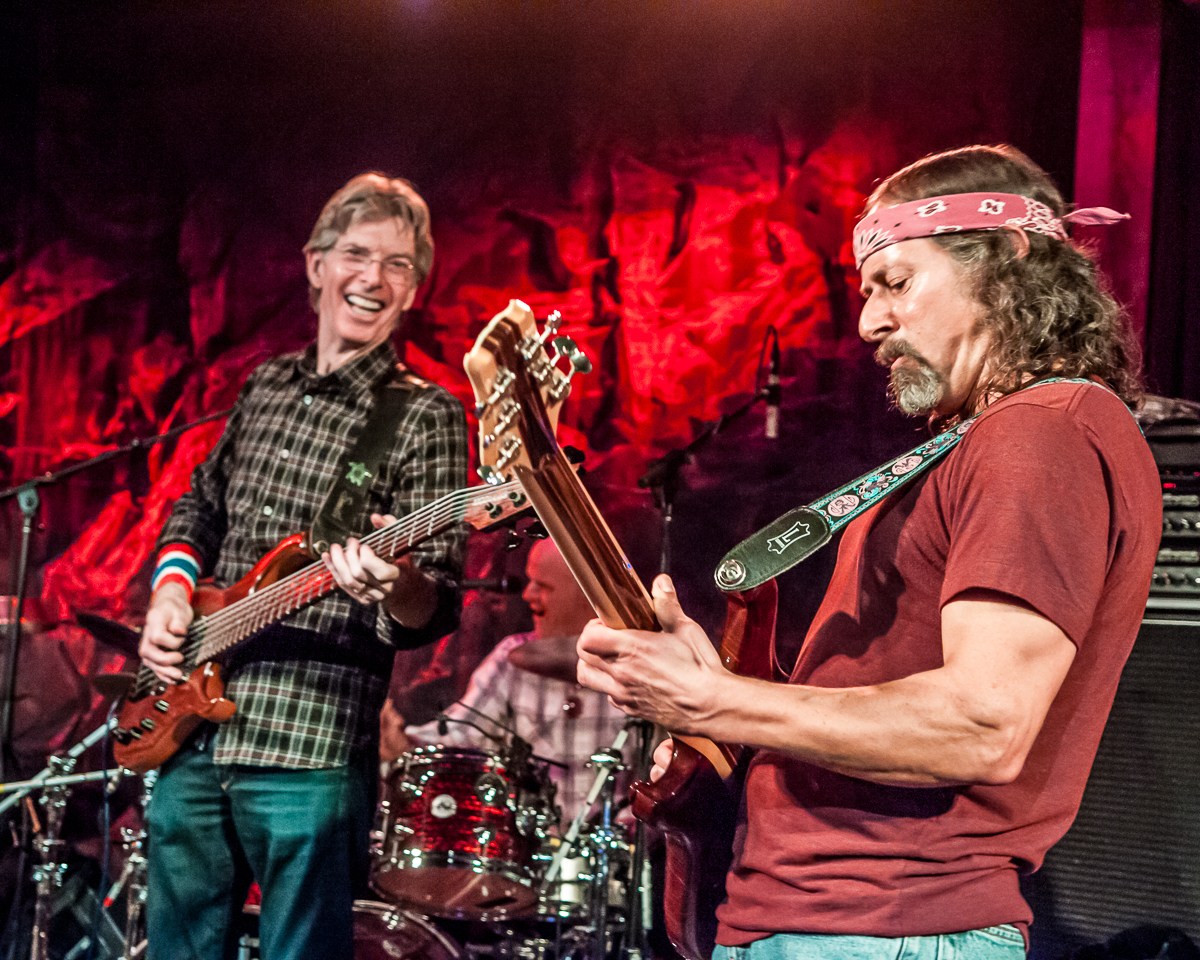
To this end, when one listens to Puff of Smoke, a few common ideas do predominate. For their ninth album of originals, Chris (bass, harmonica, vocals), Oliver (guitar, vocals) and Jano Rix (drums, percussion, shuitar, keyboards, vocals) present 11 songs that often muse on the nature of remaining responsive to one’s surroundings and yielding to the spirit of the moment.
The trio was assisted by fellow producer and engineer Brook Sutton, while in familiar environs. Oliver notes, “Over the last six or eight years, we’ve had our own studio in Nashville. We basically have this clubhouse that’s very cozy and comfortable for us. We can hang out there and make espresso or drink rye whiskey and just have fun. I think all artists probably learn that we do our best work if we’re curious and childlike, and don’t judge ourselves too harshly.”
Still, he explains that the band does benefit from having boundaries to facilitate the creative process. “One built-in limitation is time. Even though we have our own studio, and we could be there as long as we want, life is busy,” the guitarist, and elder Wood Brother by four years, remarks. “We have touring, and we have families, and we don’t live in the same town, so we’ll agree to meet there for 10 days or two weeks. But another thing we’ve discovered more recently is that we’ll limit ourselves by using a tape machine to record. Since the digital age, a lot of people have used that for sonic reasons—“Oh, we want that old vintage sound.” But what we’ve been doing lately is using it for its limitations. You can’t fix something so easily. It’s like analog film in a camera; it’s a snapshot. We find when we do this—when we set these limitations of time and remove some of the technical possibilities—that we are much more present.”
Chris adds, “Now that we don’t all live in Nashville anymore, when we get time together, it’s so precious and exciting. We love our studio, and we love creating together, especially with Brook Sutton, who’s almost like a fourth member of the band. We know something interesting is going to happen if it feels playful, so we don’t become stressed out that it’s going to turn out right or wrong. We don’t even know what that means. There’s no precise vision for the end results. It’s just keeping that playful spirit from the beginning.”
Witness
OLIVER WOOD: I’m into mindfulness meditation, which is about detaching yourself from your feelings. You’re separate. You can sort of witness it—you can watch yourself feeling or thinking—but you don’t have to get caught up in it. That can be a really good de-stresser. That was my first idea of what it could be to be a witness. Then there’s also the literal concept of being a witness, which can be a humorous thing— “It wasn’t me. I didn’t do that.”
But there are also these songs that are basically lists, and that’s what this one became. It’s kind of a list—“I’m not this, I’m not that. I’m not this, and I’m sure not that. I’m just a witness.”
It took me a long time to come up with my favorite parts. I wrote way more than I needed, and then whittled it down based on which ones sounded good in each particular spot—which had the right amount of syllables and stuff like that.
So there’s a little bit of forethought and there’s a little bit of randomness to the list— just enough that it’s ambiguous and fun and half-kidding. It sort of has meaning and it sort of doesn’t. My favorite kind of songs have that ambiguity.
CHRIS WOOD: I would say that this song was the least clear of all the songs on the record, when it came to our initial vision of how it should turn out. We tracked it in a circle in one room together. Jano was only playing a conga, I was playing upright bass and Oliver was playing a little archtop acoustic guitar. We got a take of it and, after we’d captured that really barebones version, we started hearing what it needed. We knew that was the essence of it and that we could then add some percussion and other things to fill it out.
What I think is beautiful about tracking something that way is that once you sit back in the control room and listen to it without playing it, you can hear the space in the music. In this case, I started hearing a horn section right away, so I wrote an arrangement. We felt it out that way, but we didn’t know that in the beginning. We were just reacting to what we did. It’s like we’re always improvising—“OK, we’ve captured something and now we’ll listen and react.” So we allow it to keep evolving until we feel like it’s finished.
Puff of Smoke
CW: Although this song has a deeper meaning, it’s a very playful way of talking about the impermanence of life and everything in your life. It also alludes to someone’s sense of control. Are you really in control? Or maybe you’re not in control and you’re just going to go for a ride. “No matter how you fuss and f ight/ You’re gonna ride,” are some of the lyrics in the song. You can fight it all you want, but ultimately, what’s happening is what’s happening, and you’ve got to ride with it. So it’s got this fun, playful energy using metaphors that sort of imply smoking and getting high; but in a metaphorical way, it’s all about impermanence.
OW: I think all of us will occasion ally hear something like, “Every day is a puff of smoke.” In a metaphorical way, that could mean a lot of things. In general, though, I feel like life is fleeting, so it’s comforting to minimize it and go, “Ah, it’s just a puff of smoke. Don’t take it too seriously and make the best of it.”
Pray God Listens
OW: This was one inspired by an actual billboard one might see in certain parts of the country— “Pray. God listens.” There are lots of funny memes about punctuation and how it changes meanings and can flip-flop something pretty quickly and sometimes can be dangerous. So I liked the ambiguity of that one, where you could look at it both ways. -I think it’s a little bit cynical and humorous, but it’s not meant to be anti-anything. It’s more sort of having that human cynicism of, “Why would God let some of this shit happen and why should I believe it?” But you are also thinking, “I hope it’s true because I want it to be true. I need a girlfriend and some guitar strings and a new transmission,” which is silly. So it’s kind of a mishmash of all those things.
CW: I think this was the first song we tracked. We didn’t know exactly how we were going to arrange it or what instruments we were going to play. Before we started recording, we all gathered in one room around the piano to rehearse it, like we would later do with “Witness.” We were playing through it on the instruments that you hear on the album, and it just sounded really good right away.
So our engineer said, “Don’t move!” Then he brought in the mics, and we captured it just like that, as if we were gathered around in a circle rehearsing. With that style of recording, the bleed is a good thing—the fact that it’s not a perfectly isolated studio environment, but you hear the room, you hear a lot of personality in the instruments. Jano had his hand inside the piano and was making weird sounds. So it’s that playful energy of saying, “We don’t really know what we’re doing, but we’re having a good time,” which leads to the end result.
Money Song
OW: Chris is the architect of this song, but I’ll speak to the music. On this one, he’s playing an electric Hofner bass—it’s like a Paul McCartney, Beatles-style bass. Chris is such a virtuoso and versatile player that he can play it so that it functions a little more like a guitar.
On this song, he plays it with a pick, which bass players don’t always do, and that gives it sort of a twangy sound. So it’s a little bit more in the range of a guitar. There are few songs on the album where the electric bass is functioning like that and it’s something I love about this song. We’re all following that bass, and it’s very guitar-like and very melodic and bouncy. I feel like it almost has a Calypso-y thing to it—an island vibe.
CW: There are a million songs about the idea of not having enough money. I guess the little twist on this song is that, in this age of billionaires, you constantly hear about people trying to live forever, build a bunker in the ground to escape the annihilation of the human race or download their brains into a computer or the internet so they can achieve immortality. It’s this idea of asking, “Can money actually get you these things that are sort of unattainable by mortal human beings?” You see all these stories in the news of people who are immensely wealthy but frustrated by something like that. It’s such a juxtaposition with all the people in the world who have nothing and are suffering. It’s just a bizarre time that we live in. So it’s inspired by all of that.
There’s a song in the musical Cabaret that says, “Money makes the world go round.” So this one is like, “Well, money doesn’t make the world go round. The sun goes up and down anyway. It doesn’t matter.”
I have a weird alternate life with touring and music but, when I’m home, my wife and I have a farm. We’re working outside all day long, prepping beds and planting and growing things. When I’m in that zone, having that kind of separation makes you realize that, at times, we become f ixated on something that is not what life is about at all.
The Trick
OW: This one came together on the day that we recorded it. I had just finished the words.
It originated from a jam session at our studio where Chris and Jano were playing the basic groove. Jano had plugged his Wurlitzer into a weird pedal to make it sound really aggressive and crazy. He was playing that with two hands while he played drums with his feet because he’s a freak like that. [Laughs.]
So he just came up with this thing that I recorded on my phone. Then over the following months, I got this idea for lyrics that would go with it.
We never even talked about it, then we got into the studio and we just kind of went for it. It’s not a complicated song, but we had to give it a quick form and just play it. It came out like a ridiculous, weird monster. It was a lot of fun.
Is It Up to You
CW: I think as we live, as we get older, we’re constantly playing with this idea of asking, “What’s real to me? What’s really real? Is everything perception, so that the way I feel, the way I am, is up to me?” It’s a song about what the actual reality is and if we have a choice in it. If something makes you upset or makes you feel strongly, then is the only choice to feel that way? What is up to you?
That may be something every individual is going to answer for themselves, but it’s the idea that things aren’t set. You can interact in your life and your reality and your environment in a playful way, not just physically in the physical realm, but inside you, in the way you perceive things.
I think, as you get older, you start becoming more playful with this kind of thing and having fun with the choices. Even in unpleasant situations, if you’ve lived a certain unpleasant experience enough times, maybe you get tired of feeling a certain way in that experience and you decide, “I’m going to mess around with feeling differently about it this time and not take it so seriously or actually enjoy it in some strange way. I am going to enjoy the tension, enjoy the discomfort because why not? I’ve tried the other option and that was no fun.”
OW: This was a really neat one, like “Money Song,” where Chris had a handle on the lyrics from the start and then he invited me to contribute.
When it came to recording it, I really enjoyed the sounds that we got. Jano had this weird little thuddy drum sound, and I used a rubber bridge guitar that was kind of dead and had no sustain. Of course, Chris’ upright bass sounds awesome. It’s a pretty song and it’s subtle, too. It had this sonic window of mellowness that was new for us and I really love how it turned out.
Above All Others
CW: There’s a little bit of a funhouse, psychedelic, calliope aspect to it where you think of a Beatles song, like “For the Benefit of Mr. Kite.” I thought Jano captured that in a neat way and then we juxtaposed it with an anthemic rock-and-roll chorus. The thing that attracted us to the arrangement was we thought we would make a sort of pop song, but we could also be kind of funny. It’s a silly combination of two styles to get the point across.
The song plays into this idea that you just can’t get enough. It’s almost like what we talked about with “Is It Up to You”—is it your choice? You get the sense that the characters in the song don’t realize they have a choice. They can’t get enough, and they can’t get off the treadmill. They can’t get off the merry-go-round.
OW: Brook [Sutton] is our partner at the studio and has a full-time job running it and recording other people’s albums as well— we just happen to be the home team there and get to hang out. But Brook has become such a great collaborator because he approaches the recording in a similar way that we do. We’re all trying to discover something. He always wants to try something he hasn’t tried yet. That could be finding a different corner of the building to record in or using a different microphone.
A song like this one is challenging because it’s super dynamic. There’s a really weird kind of quiet first section where Jano plays a calliope circus organ part, and then suddenly, it’s like Queen and we just do this huge power-chord rock chorus—sort of an over-the-top, operatic thing, which is so much fun.
Brook is the guy that can handle all that stuff because recording and especially mixing, something like that is a delicate balance between making the loud part not too over the top and making the quiet part not get lost. He did a masterful job there.
The Waves
OW: Chris lives on an island off the coast of Vancouver in British Columbia. So he’s in touch with the ocean, and I’m sure he was inspired by that. I could be wrong, but that’s my take on it.
This is another one where the bass is the second guitar. In fact, it’s like the first guitar. I’m playing slide guitar on that, but Chris’ bass is the foundation.
Musically, Chris really sculpted this thing. He’s been writing songs like a guitar player would use a guitar, but he’s been using his bass. You usually think of the bass as playing a more supportive role and just playing the low notes for the guitar. But, in this case, he really uses the bass as the lead instrument, which is something you just don’t hear very much. It leaves my guitar with the freedom to float around. Hats off to Jano, too. His cool organ stuff captures the vibe completely.
CW: This is the same thing that happened with Medeski Martin & Wood when we were evolving our sound. I’d always played electric bass, but we’d started something that had a certain sound, and a big part of the sound was the upright bass. Some musicians talk about these genre signifiers, like as soon as you add a certain kind of instrument it can remind you of other kinds of music. So how can you do that and still do something original, something unique? One way that I’ve been trying to do that, and it kind of started a little bit on the last album with one song, is that I play a Hofner violin bass, the same kind Paul McCartney played.
What I love about that instrument is it can sound very much like a bass and function great in a classic bass role, as The Beatles made crystal clear. But it also can sound almost like a baritone guitar. So it can be very guitar-istic in a way. For some of “The Waves,” I’m playing chords, really strumming and playing through an amp that makes it sound good.
There are a lot of bands we love that have two guitar players and that’s the feature. Then there are bands we love that have no bass player, like The Black Keys in their original formation. So sometimes it’s nice to get a break from the bass in the normal role of just a bunch of single low notes.
“The Waves” is a song about surrender, especially when it comes to conflict and the relentlessness of life. I started it during a time when I didn’t have my upright but I had the Hofner nearby, and the Hofner is a convenient thing to write on. So “Money Song,” “The Waves,” and “Till the End” are all songs where I’m approaching the Hofner bass in a little more of a guitar istic way. I’m using a pick for “Money Song,” for a single note, sort of an arpeggiated line, very up high on the instrument, so you might not even know it’s a bass. Similarly, for “Till the End,” I’m sort of doing a waltz chordal progression very high up on the instrument, and it sounds like a baritone guitar. So it just was a way to introduce the electric bass but find our own way of doing it.
Slow Rise (to the Middle)
OW: This one we’ve been thinking about for a while. I’m sure this is something that’s come up in interviews before, but we’re on our 20th year as The Wood Brothers and it has not been a meteoric rise to the top—it’s actually been a slow rise to the middle. We’ve always joked about our slow rise to the middle and this one is about our appreciation for that—“Wow, we’ve been able to sustain ourselves this long. We have a great career doing what we love. We’re very grateful.”
A lot of the material in there is about the tales from the crypt of those who did have meteoric rises and met their demise. So there’s Buddy Holly, who died in a plane crash. John Lennon was assassinated. Stevie Ray Vaughan went down in a helicopter. Jim Morrison drank himself to death, etc. It’s inspired by those who didn’t make it—whose rise was quick. So do you want to make it big, or do you want a slow ride to the middle? We’ll take what we got.
You Choose Me
OW: Chris started that song out. He also had that really cool bass lick, which I ended up copying for a guitar. I remember when he started this song, it was darker, but he kept pushing to make it more positive and sweet. Then we tried to make it sonically different than stuff we’ve done before. We haven’t really recorded something straight up, that sounds like a classic-rock song.
CW: It sort of evolved from the idea of a negative relationship, where someone is asking, “Why do you keep choosing me even though I keep hurting you?” That didn’t feel right, though, and it evolved into something where you’re grateful that you’re being chosen. You realize you’re not the youngest thing on the block and you’ve endured hardship. You’re a little bit broken because you have the wisdom of being damaged, but you’ve survived all those things. You might not be young and pretty anymore, but you’ve got something else that maybe you can’t even articulate. So it’s worth sticking with it and making that choice.
Till the End
OW: From doing this a long time, there’s almost always a standout song that goes on the end of the record. You could put it somewhere else, but it just has the most impact at the end. It’s a little bit sad nowadays because who knows how many people even make it to the end of a record, except for hardcore fans. A new listener might only get three songs in, you never know.
But this one just made sense where it is. It’s a spare, beautiful song. I don’t even play guitar on it. I just sang a little background vocal. It has the electric bass as the foundation and then Jano’s amazing piano work. I think it was the obvious closer, not just because it’s called “Till the End,” but also because of the vibe and the sonics. It’s a nice way to cap it off.