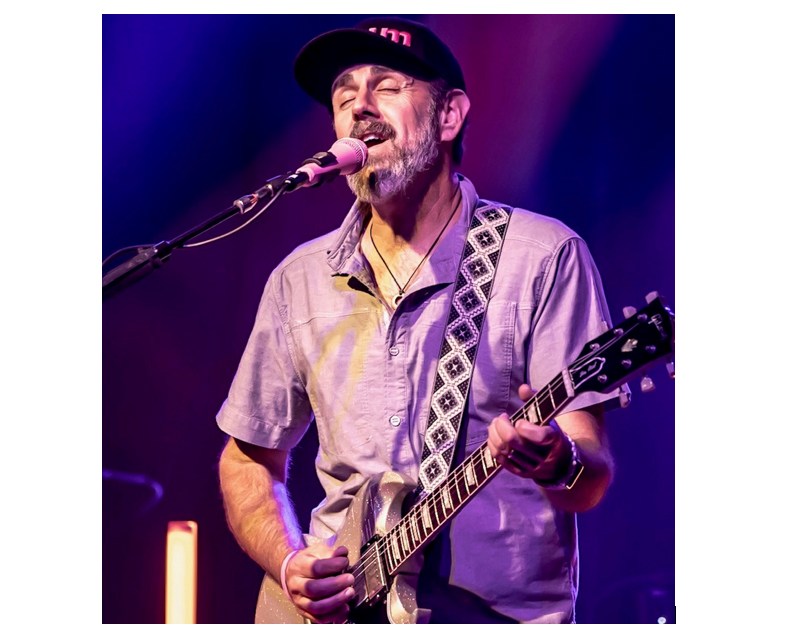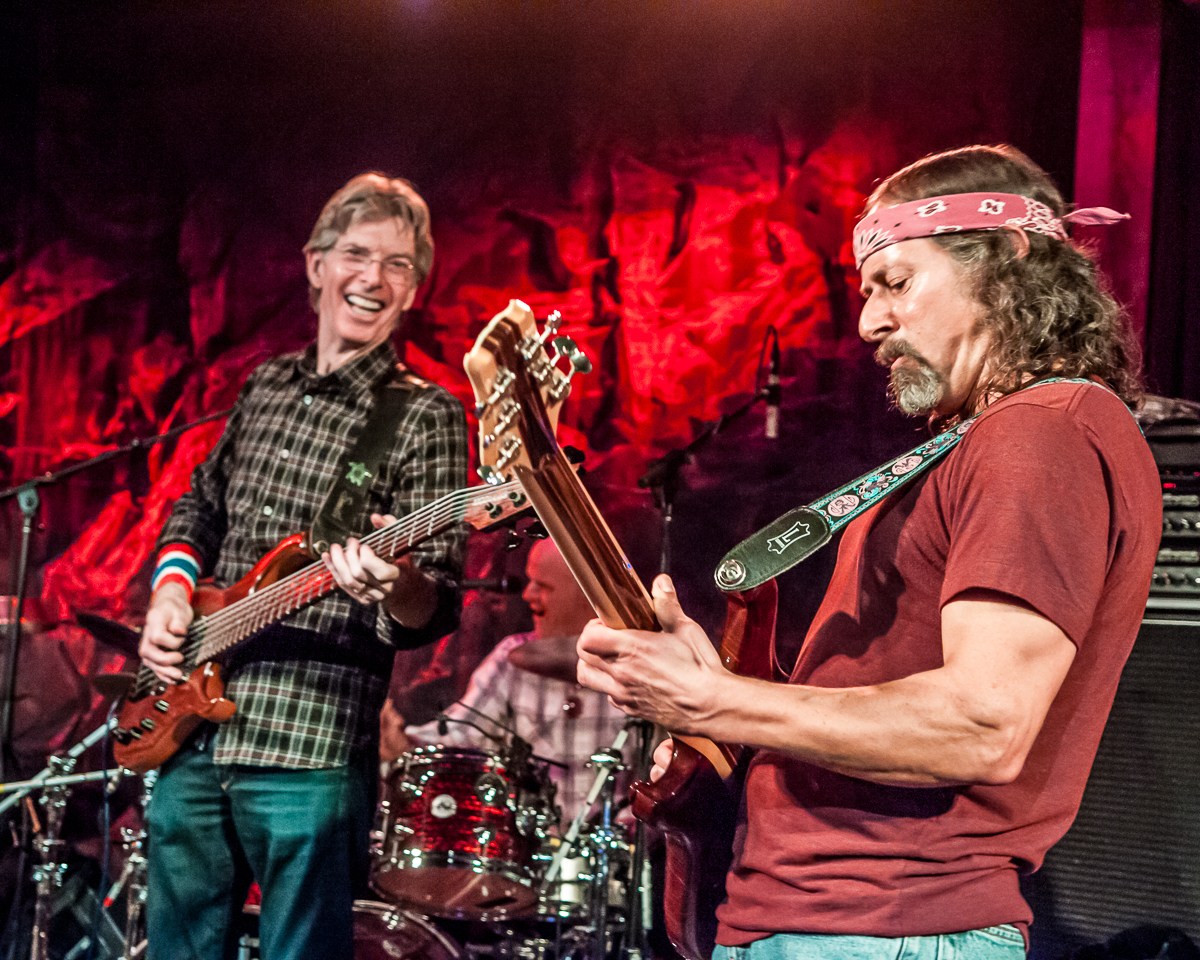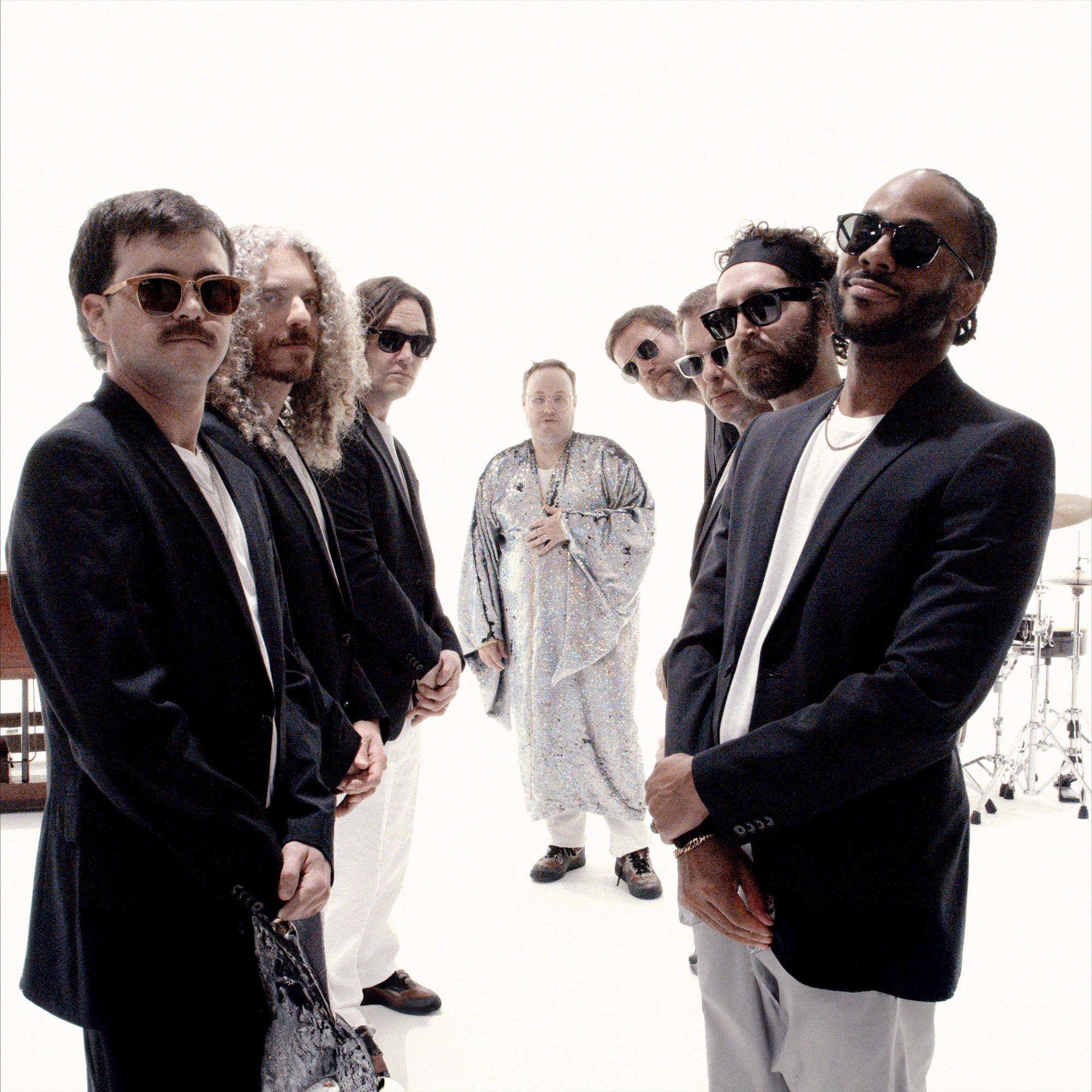
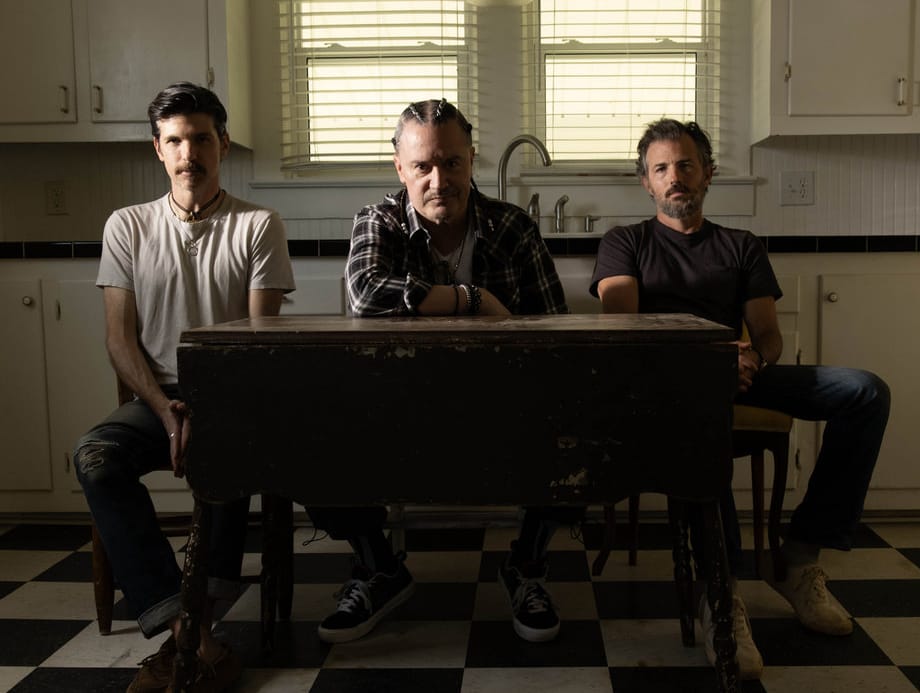
Photo credit: Crackerfarm
***
“This record was not done with a particular strategy,” Scott Avett says of AVTT/PTTN, the collaboration between celebrated folk-rock denizens the Avett Brothers and Mike Patton, the iconic frontman of brash, freewheeling groups such as Faith No More and Mr. Bungle. “It began with a sort of secrecy, but not intentional secrecy. It started with a conversation I had with Mike, who was someone we first studied as kids, then continued to watch and learn from as adults, as fellow artists. That initial conversation quickly transitioned into the process of creating together without any sort of specific goal in mind.”
His brother Seth adds, ‘Something sort of happened where it morphed from an unspoken idea that we were making something we might never share—in keeping with its preciousness—to a point where we had no choice but to share it. That happened organically because I can’t remember a specific moment where we made a decision as far as saying, ‘Guys, we should release this.’”
Release it they did though, in November 2025, eliciting equal measures of astonishment and acclaim. AVTT/PTTN is one of those rare collaborative expressions that the blends moods and modes to their fullest form. This amalgam takes on additional coloration and intensity in the live setting, where the aggregated artists present the new material along with some Avetts classics and a few of Patton’s signature selections, including Faith No More’s “Digging the Grave” and Mr. Bungle’s “Retrovertigo.”
There is plenty more of note in the Avett Brothers' vast terrain as well. Longtime bassist Bob Crawford, who is the host of American History Hotline on iHeartPodcasts and cohost of The Road to Now on SiriusXM’s POTUS channel, is the author of a new book, America's Founding Son: John Quincy Adams, from President to Political Maverick. Seth commends, “In terms of independent study, what Bob has done is one for the ages, given his commitment and follow-through. He's got a way of focusing in that's really beautiful to watch. Bob also has this wonderful ability to translate historical events with a modern voice.”
“Over the past two decades we've watched Bob give himself to this,” offers Scott. “So I think it's really great that Bob has a place to put the detailed knowledge he has about this because at any moment you can be talking with him about any subject, even lunch plans, and it can turn into a conversation about American history for hours. It’s pretty awesome.”
Meanwhile, following a brief but heralded run on Broadway in 2024, Swept Away, the musical that is roughly based on the nautical tale that inspired the Avett Brothers’ album Mignonette and features the band’s songs, is back on the boards. Swept Away is running through May 23 at Boston’s Speakeasy Stage.
Speaking to the show’s vitality, Seth says, “We’ve received an education about what it means for there to be a completed musical. We were so involved in Swept Away’s path to New York that I think I misunderstood it as more of a one-time event. But really that was just the launch of a thing that now exists and is part of the canon of musicals. Anyone who has the inspiration and the gusto to put it together can do it.”
“To me, it seems natural and right for this show to settle into this,” his brother indicates. “When you hear a record or go to a concert or go to an art show or meet someone, you often walk away thinking, ‘Man, what did I just experience?’ It takes a while to process it. I have a feeling that this show is going to be like that for the long haul. I think it's going to be a slow burn with steady growth because it's an archetypal story that has staying power. It wouldn't surprise me if it ended up back on Broadway down the road because I think it's that kind of show.”
Before we talk about the process of working on the new album, thinking of songwriting in general terms, will you write with a specific project in mind or will you write just to write and see where the song is going to take you?
Seth Avett: Initially I just write to write, but in the early stages it's hard to not fantasize about where something might go. Sometimes right out of the gate there's a certain kind of feeling I might get with a particular kind of idea where I’ll think, "I can't wait for Scott to hear this.” Those sort of distinguish themselves.
Anything that I'm writing I think of it as a priority, but there's something about a certain kind of song that will prompt me to highlight it for Scott when we get back together and look at new ideas.
So my answer is that generally I do just write to write, but during the process it does occasionally cross my mind as to where something might land. That’s because the goal is to make an idea as great as it can be with whoever can be involved to help achieve that goal.
Scott Avett: I think we both want to write because we want to write well. One of the priorities in our lives is to contribute something to the world that will help make it more like we think it ought to be. We’re trying to do whatever we can to add beauty to the world.
Relative to this record, did you batch songs together and then set them aside thinking they’d be ideal for Mike?
Scott: It began somewhat haphazardly after I began speaking with Mike. Nothing was thought out in advance. We were talking with each other, then I started working on some themes in my studio, which I passed along to Mike. At the time I was thinking, "Oh, this is just something we're just playing around with. Maybe this will turn into something. Maybe they'll get edited into something else. Maybe they'll never see the light of day. Maybe we'll make two or three songs and throw them out there in the world. Maybe we won't throw any of it out in the world."
As Mike kept going with this, whenever he would text or email me, he would do it in plural. He’d say, "You guys are doing great." I think he had this vision that Seth and I lived together in an old house and were joined at the hip.
I would say, "Well, I haven't talked with Seth about this. I just sent it to you to see what would happen." But he never responded, "Well, we should talk with Seth about it." Instead, he just kept addressing the two of us collectively. I think he thought that we do everything together all the time. What I realized though, was that it was going to be better if it we did it that way. I felt that just having Mike and myself was too narrow of an expression.
So I approached Seth and said, "Look, this has gotten off the ground faster than I expected.” At first I thought these songs would be the next ones that I would present to Seth for Avett Brothers. Then as I started going back and forth with Mike, the thought process became: "Well, maybe this is just a little side venture.” But, again, in a lot of ways Mike sort of insisted that he just wasn't dealing with me. He thought he was dealing with Seth and I, which I realized would certainly make the songs better. For instance, “Heaven's Breath” is a song where Seth came in and reminded us—me in particular—of how it should be played with guitar and drums.
So then we opened it among the three of us, where it became something of a conveyor belt situation. Seth and I would each work on a song that might have very straightforward playing with guitar, bass, drums and vocals. Then it would go to Mike who would deconstruct it completely and send it back.
One song came back where I thought, “Wow, that's kind of oddly both what I would expect and as bizarre as I could imagine.”
In a lot of ways, Mike and I would mess these things up really good, then Seth would take them and add a beautifying process to them.
So all three of us equally had a role. It can't be a collaboration unless people have free reign to do whatever they think will make the song better. But that was unspoken here because we had very little direction or discussion about where we were going, other than working on the individual songs.
While I suppose that was haphazard, I also think it served what we were doing. Things happened that wouldn't have otherwise happened, even if it meant that we kind of chased our tail around at times. When I listen to it, I feel like these three artists made this thing that could not have come to pass without the unified effort of us all.
What you call haphazard I might characterize as serendipitous but as you were sharing songs back and forth was there one in particular that you felt defined the palette of what this would be?
Scott: What was the first one you worked on, Seth?
Seth: I really have no idea. To me, it's a weird thing the way this record emerged because I just don't recall any discernable mile markers. I mean there were memorable moments like Scott saying, "Oh, I've been talking to Mike Patton a lot. I believe there's this thing that's happening, maybe you should get involved." Then I remember working together on “Heaven's Breath,” playing drums in my studio. I recall moments here and there, like spending 10 hours one day on a single song, then being like, "Okay, now I can give this one back.”
The whole thing was just so fluid, which really helped it. But the way I view the authorship of these songs is that each of them sort of represents the whole thing. It was so intensely spiritual and ethereal that any one of them seems like a sensible mascot. I don't remember a watershed moment where I felt, “This is what this is.” We're still kind of figuring out what this is.
When it came to the shows, I imagine this material took on all sorts of surprising new hues. Can you talk about one of them that you performed live which helped you recognize the vibrance of what this could be in that setting?
Scott: Well, we started off with a weekend in New York which broke the seal as far as being on stage with Mike and seeing his approach—his detailed attention to things. That was a confirmation of admiration beyond a childhood view of someone's status. It was more like the view of a craftsman you admire, which was encouraging and exciting.
Also, Mike’s a veteran of the practical things, like how to communicate when we're in the van, the shuttle, the bus or backstage. This communal, familial world that we live in takes a lot of compromise and work with each other, like it does in any family. Mike is natural at that because he's done it so long. So that was really awesome.
We had a week of rehearsals before we took it on the road, and that was key for us. It was like going to school. There’s a fatigue you feel after talking it out and working through these things. Tense is not the right word but there is a tension that comes from that learning process.
On the first leg of the tour, we had a show or two that was more challenging, which was really good in our growth. It’s good for us to shake off some of our comfort. I don't think Seth or I would sign up for those kind of discomforts and challenges but when they happen and we get through them, we come out sharper.
It's not that we did it by choice, but when we were younger, we used to be positioned where there were many variables and we would be slugging it out every night. It felt like we were sharpened infinitely, and this show does that for us.
It's a sort of a life-giving machine in that way because we're still figuring out which songs are doing what. We're seeing songs like “To Be Known” and “Too Awesome” come across in ways that we didn't anticipate. When we first played them live we realized that these songs have a dynamic and an ability to magnify or exaggerate themselves. There's a fluidity and a flexibility about them in a way that they grow in magnitude, which is exciting. It's the stuff we live for. That's the fruit of writing, the fruit of creating.
When it came to selecting Avett Brothers songs was there a particular trait or element that made a tune particularly suitable for this collaboration with Mike?
Scott: I'll say that our view is probably different than Mike’s. He was probably kind of like, “Just bring it!”
Seth: I’m not sure if we thought that any specific Avett Brothers songs would be appropriate for Mike because what we realized pretty quickly is that when Mike is singing with us, he makes songs that we’ve played a thousand times new for us again. If anything, some of our decisions were informed by the ones that he really liked and it was a sort of a two-way street. So we brought the idea of doing “Digging the Grave” and “Retrovertigo.”
To go back to the prior question, some of the attraction of this is that it’s so challenging. When we’re playing live, both Mike's skill set as well as the songs from our record together really push us to do things that are quite scary for us. I mean, you’ve got Joe back there doing xylophone solos. So there’s different instrumentation and it’s also different vocally. It’s just a big experiment.
The AVTT/PTTN record is a starting point for us to have this new experience. I think crowds are seeing that we're learning some of these things in real time, but as a result of that, some of the pinnacle moments in the set have been really high. A few of the more, for lack of a better word, angelic aspects of some AVTT/PTTN songs are reaching new heights in the room. Just like the rocking-ness of “Retrovertigo” or “Digging the Grave,” which are very energetic and exciting.
Can you talk about the decision to cover “Easy,” a song that revealed itself to me in a new way when it was featured in the Edgar Wright film Baby Driver?
Scott: Faith No More did such a great cover of it. I think Mike might say that they did those songs from a humorous perspective. They were poking at things, but we grew up on the Commodores. That was one of the records in our record collection. So when we saw that one of our favorite lead singers was covering “Easy,” the satirical side or the cynicism was lost on us. We were like, "This is killer." So for us, it was straight up incredible.
There's this divide that starts at around 12 years old. I see it in my kids now, and maybe it starts a little younger these days because they get into stuff so much earlier. For me, it was about 12 years old. Before that, with Hall & Oates, Bruce Springsteen, Lionel Richie and some Van Halen, there was no judgment on what was cool or what was not. All that mattered was whether it sounded great or it didn't. Whether I was moved by it or not.
But then after that age, there can be a honing in on what your preferences are, which can be tied into your identity.
Bob is from Jersey and knows Springsteen through and through. He never stopped loving Springsteen, but he told me that there was a point for Springsteen fans when Born in the U.S.A. came out and some people fell off because he became too popular and they felt that he’d sold out in some way. For us, there was none of that. There was just Born in the U.S.A., which was our introduction to Springsteen for young kids in North Carolina. We heard Born in the U.S.A. and thought, "This is great. I love it. " We didn't have any of that judgment.
It's funny because with something like “Easy,” Mike's playing in both those worlds. So all that is wrapped up in our relationship with some of those songs.
Seth: This may be a bit of an aside, although for some people it's kind of everything. “Easy” is a song that is imprinted on me and Scott. We grew up with “Easy.”
But I think of a similar thing whenever we play Jim Croce's “Operator.” There are plenty of younger people who never heard Jim Croce's “Operator,” just like they've never heard “Easy.” So there’s an opportunity to play a great song like that, when for people our age it's kind of a given that those songs exist and they’re out there. For these other people, it's like a brand new song. It's a very cool thing to be able to present a time-tested great like that.
To my mind, it's always a mitzvah when that happens with any form of art. I’ll run into people who I suspect will be instant fans of Mahavishnu Orchestra or Earl Hooker or The Slip or Lou Donaldson’s Midnight Creeper, which will prompt me to mention them. That's also true of Baby Driver, which I just referenced. When it comes to Lionel Ritchie, though, I had this very strange moment when he appeared at Bonnaroo many years ago. I found myself responding to the music but then sort of getting stuck in my own head as to whether I was caught up in the pure nostalgia of it all. I wondered if I was just acknowledging that these songs were ubiquitous while I was growing up because I didn’t necessarily love them in my teens. I was sort of torn about that and distracting myself in the moment, which is never ideal. Does any of that resonate with the two of you?
Scott: Well, there's a lot of that wrapped up in our relationship with Mike, our relationship with music, our relationship with our own families and music. With my son, I'll hear him performing these post-grunge songs that they've pulled out from somewhere. Back when those songs first came out and we were immersed in some of the natural imitators, I was like, "Oh, they're just sounding like Eddie Vedder. They're just sounding like Layne Staley.”
It offended me as a kid but I don't blame them now. These days my kids will find a song, it can be by anyone, and when they're down in the basement performing it, I’ll hear it and go, "That's a great song." I’ll forget what it once meant to me. [Laughs.]
It's an interesting concept to think back on the songs that were so imprinted on us, like “Girls Just Want to Have Fun” or “I'm On Fire” by Springsteen or all these John Cougar Mellencamp songs that I just loved. Now I might go back and ask, "Did I only like those songs because I was ripe to like whatever was coming my way?" Then with some of them I’ll go, "Man, I really do love this song." There are songs that I had sort of discounted along the way that now I’ll go back and appreciate all over again.
So with Mike, what's particularly interesting with us as fans of what he did when we were younger and what he’s doing now, is that he put things out there in the world a certain way because he’s a provocateur. Mike knows how to push buttons. However, in knowing Mike personally, he’s a very loving person.
I assume that's always been there. He knows how to provoke, but he's also a very caring guy. So I would assume Mike would not visit a song without a connection to it, maybe even a surprising one.
Of course, as he’s also quick to say, lyrics or sentiments aren’t really his first concern. He’s more concerned about how it sounds and how well we all can do it.
It's really fascinating. He would say, "I love these lyrics," but he really was all about “What does this sound like? What can we make it? What kind of experience?” Like an abstract expressionist, he was like, "The painting's not the issue. It's the act of the painting that's the issue."
So that's where the live thing comes into play. I think that's all wrapped up in us asking, "Do I like this song? Have I heard this song too many times? Does it even sit with me anymore?”
Seth: The only thing I would add to this whole conversation, is how it sort of lays bare the reality that we are participants. I heard a Journey song recently, maybe “Don't Stop Believin’.” I grew up with that song meaning a certain thing, or maybe somebody made fun of it in a certain way or had it on a soundtrack and it was used as a punchline or something. So I had a certain way of thinking of it.
There are some Aerosmith songs like this as well, where they were at a disadvantage in a way because of how they got presented to me and where I was in my life.
But as I got older I realized that it’s really not about the song. “Don't Stop Believin’” is an incredible song. If I heard it for the first time as a grown man in a different context, I would probably place it on the altar with a bunch of Zeppelin songs that I think of in a certain way.
The point is that we are participants. It's not just the work, it's our judgment. That generally is a big part of my conversation with myself before I start speaking negatively or judgmentally about something my son likes. I have to think, “This is about how I'm hearing it. It may have nothing to do with where it's coming from because I'm not the one who made it.” So I think Scott and I both can really sympathize with that Lionel Richie moment.
Finally, beyond the songs you’ve already mentioned, is there one you’ve performed live on this tour that has really knocked you on your butts for one reason or another?
Scott: At our Opry performance, we did this Dean Martin song, “My Rifle, My Pony and Me.” It was Dean Martin and Ricky Nelson in the movie [Rio Bravo]. I think “My Rifle, My Pony and Me” has extracted some stuff from us. After the Opry, our manager told us that if nothing else comes from that, just being able to play the Opry and play those songs, pulled something out of us. It called for an ability from us that's ushered in a new chapter of our artistic and creative careers, which is exciting for me.
Seth: I would say “Retrovertigo.” It's just a masterpiece. That word gets thrown out a lot these days, but it really is a masterpiece and it feels very special to be involved in presenting it.
Just on the ground level, it also meant a lot to present it to Bonnie, our sister, who had never heard it. Tania, our fiddle player, never heard it. So for anyone who hasn't heard it, it's nice to watch people absorb that song.
There have been quite a few moments like that on this tour and I expect there will be more.