***
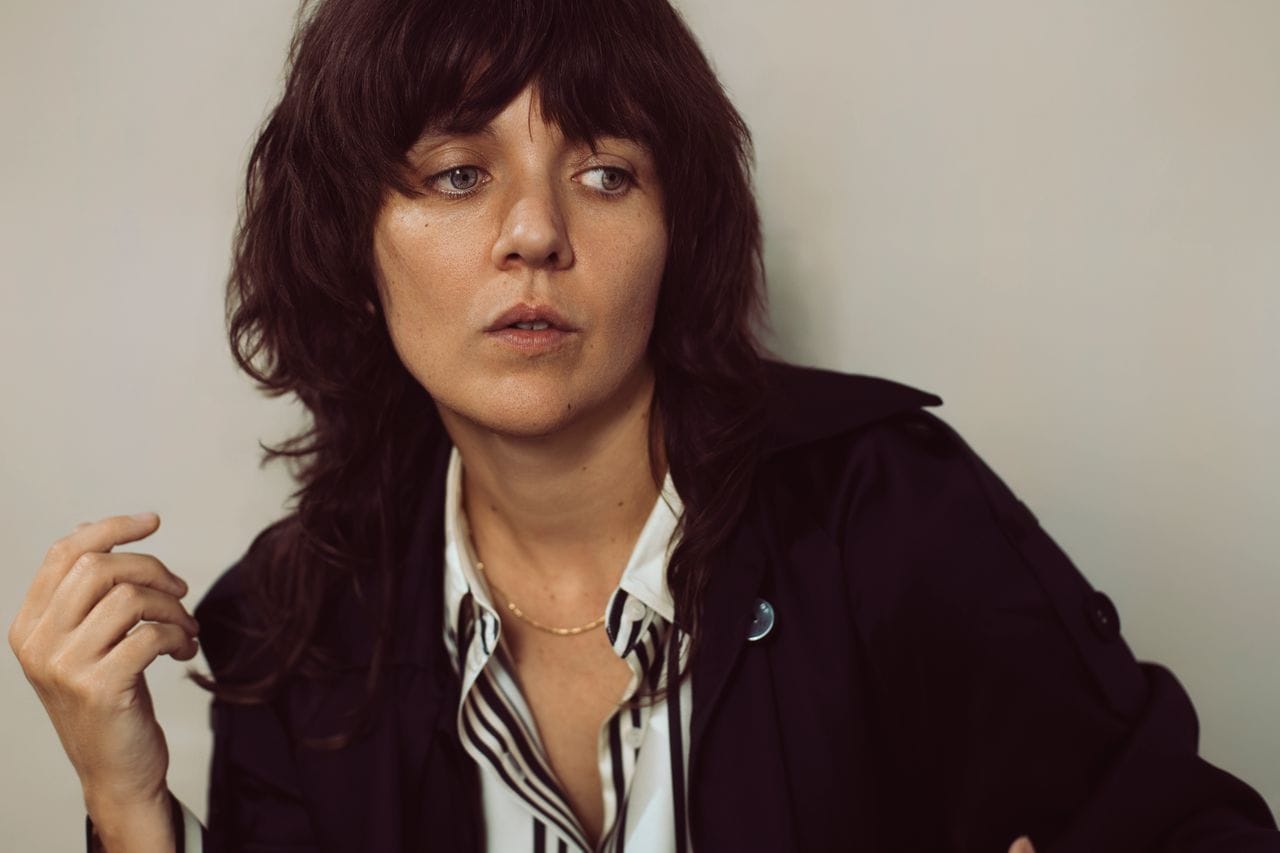
Sometime since the pandemic, Courtney Barnett caught the live-music bug all over again.
“I really did fall in love with music again and just being a fan—going out and enjoying the experience of standing in a room with other people and being consumed by a show,” the 38-year-old singer/songwriter/guitarist says. “It was fun, and you can’t force that. It was nice to allow myself to feel that, especially coming out of COVID, when there weren’t concerts for so long.”
Though she was born in Sydney, and firmly rooted in the Melbourne musical community as she stepped out onto the world stage, Barnett has gradually drifted toward Los Angeles recently. And, as the world began to reopen following a few impactful years, she started exploring the city’s varied musical offerings as a fan—remembering why she decided to pursue a life of music in the first place along the way. In that time, she checked out Nick Cave’s piano set; went to see Kim Gordon’s new solo act; popped in to catch several more underground acts at the experimental music incubator Zebulon and attended Joni Mitchell’s big comeback with Brandi Carlile and a range of assorted friends at the Hollywood Bowl.
“It was incredible. I never thought I’d see Joni Mitchell live, and LA has all these gorgeous venues—Hollywood Bowl and the Greek Theatre—to see shows at,” she says excitedly. “I saw PJ Harvey. I’d go to these smaller venues to see different people. It’s about a love of not only playing but also going to shows and being around other people in person again.”
And that rekindled passion for music in general can be felt throughout Barnett’s standout fourth studio album, Creature of Habit, which arrived on March 27 via Mom + Pop Music. Barnett’s first proper LP since 2021’s pandemic-era project Things Take Time, Take Time, the 10-track release came together during the past three years, tapping into the excitement she’s felt since her stateside relocation. Indie-rock veteran John Congleton served as Barnett’s producer this time around, helping extract her knack for memorable hooks while honing in on her heartfelt songwriting, slacker-guitar swagger and recent embrace of the natural beauty around her.
The Australian-bred musician says that she started inching toward Creature of Habit in March of 2023, when she began sketching out some early ideas in Joshua Tree, Calif. The low-key session took place a few months before the release of her instrumental set, End of the Day, a collaboration with Warpaint’s Stella Mozgawa that began its life as the soundtrack to a 2021 documentary centered on Barnett, Anonymous Club.
“Once that was finished, I could focus on starting a new chapter,” Barnett admits, while sitting for a Zoom interview at home in LA. “I hadn’t really written much during that time, but I set myself this really loose deadline of one year. I said, ‘March 2024, I’m gonna get into the studio—no matter what’s finished or what’s ready. I’m just gonna give myself this guideline and see what happens if I work toward it.’”
Throughout her life, Barnett has crafted her music in many different ways—on her computer, utilizing her phone’s notepad apps, jotting her thoughts down in both yellow legal pads and physical notebooks. But, as Creature of Habit started to come into focus, she found herself enjoying the flow of putting pen to paper.
“I think differently in every format, and I was writing on my computer a lot. It felt like homework,” she admits. “Emails pop up, and you’re so distracted, and then you start shopping for something, and it’s horrible. For this album, I tried to keep everything in order. I bought a big plastic tub, and I just threw everything in there—all the physical stuff, all the notebooks, all the notepads. It was this one box. Then I separated everything via song, so that I could just go back and find different versions of songs and notes and research. It was pretty nerdy, but I’ve figured out that my brain works like that.”
Meeting her deadline in early 2024, Barnett entered a studio in Joshua Tree, near where she lived at the time, and started laying down her nascent ideas.
“I hadn’t completely finished many of the songs, but we started recording anyway,” she says. “From there, I went to LA, and then just did things piece by piece. I would finish a song, go into the studio and record it. So it was a bit more spread out.”
She says that Joshua Tree’s serene setting also had an impact on her artistic headspace.
“Maybe the second time I came to America, I went out there to do a show, and I just fell in love with it,” she says. “I’d never seen anything like that desert landscape, and I’ve always tried to go back there whenever I can—I’ve always had this little fantasy to live out there for a while, and then post-COVID, I was like, ‘Just do it.’ After all the lockdowns and not knowing what the future was gonna look like, I was kind of like, ‘Just go for it and see what happens and have a fun adventure.’ That was my mindset.”
Barnett drafted an early version of the album at home and, when she started recording, booked time at Rancho de la Luna, which was only about a 20-minute commute from where she was living. She says that once she regrouped with her core band—Mozgawa as well as longtime bassist and fellow Aussie, Bones Sloane—she was able to, relatively quickly, nail many of the instrumental beds. But the lyrics took a little longer to come to fruition.
“I had a bunch of songs—some of them I thought were mostly finished—but sometimes this thing happens where I get into the studio, I show them to the band, we run them and then I have this tendency to say, ‘I’ll figure that bit out later or I’ll finish that lyric later or that’s not ready or I’m gonna drop something in there later on,’” she admits. “But then it gets to be the day when we are in the studio, and it’s still not there, and then it just becomes this thing that gets put off. It doesn’t get done, and I get stressed about it. I feel like I’m wasting everyone’s time in the studio, and I go to these weird, dark places in my head. So while the sessions were great—we made so much cool music in the desert—a lot of the songs didn’t get finished there. These are just micro-moments where I suddenly psyched myself out, and that’s part of being in the studio for me sometimes. They’re just weird human emotions.”
She ended up taking those unfinished lyrics with her to LA, tracking a good portion of her vocals at Animal Rites studio, where she was joined by a mix of new and old running mates. The version of “One Thing at a Time” Barnett cut in the desert felt a little slow, so she reworked it back in the city—and the final incarnation contains some epic guitar shredding worthy of Barnett’s high-impact live show. Red Hot Chili Peppers’ Flea lends his services as well.
Likewise, “Slight Unseen,” a dreamy selection that touches on the question of one’s choices, was finalized in LA. “Site Unseen” also features a powerful guest appearance by Katie Crutchfield—the musician who performs as Waxahatchee and has built an entire ecosystem of her own over time—that was engineered by indie-Americana regular Brad Cook.
“She’s incredible, and we have known each other for a while,” Barnett says. “We toured together in 2018, and we must have met just before then—being on the festival circuit and doing shows—so we kind of see each other every now and then. I’ve always really admired her as an artist, as a songwriter and as a performer. I think she’s great. When I wrote that song, I came up with that harmony idea, and I thought of her voice because I thought she would sing this so beautifully in that high range. So I texted her to see if she liked the song and if she felt connected to it. I was so happy, so grateful that she lent her time to the song because I think it made it really special.”
***
In press materials, Barnett describes the music she was gravitating toward for Creature of Habit as a “dichotomy—beauty versus the darkness.” Once Congleton entered the mix, he helped flesh her work into a fuller, more polished and straight-ahead package while keeping her stylistic signatures intact. The resulting album is punchy and vocally driven but still filled with sonic Easter eggs and some grooving guitar heroics.
“I only knew Courtney through other friends before this, so I didn’t have a personality profile or a deep understanding of what a creative process in the normal sense is, or was, for her—or even much knowledge of what she’s like as a person doing person things,” the producer says. “So I accepted it all at face value. From what I understand by what she shared with me, the last few years were hard creatively, and I think I saw the tail end of that. Getting going was the toughest part of the record, it seemed. There was most certainly some massive writer’s block that she was struggling with when it came to lyrics, but she worked really hard, was super diligent and was determined to make sure the record was something she could stand behind. I loved every minute of working with her and Stella and would do it anytime.”
At one point, in the midst of the creative process, Barnett also put the material down to tour and started marinating on even more originals.
“There are all these distractions. I did some shows when I was supposed to be finishing these songs, and then I’d be sitting at my desk, trying to finish this one line of a lyric. And instead of doing that, I would write a brand-new song. I wrote ‘Stay In Your Lane’ in one of those sessions. I was supposed to be finishing something else, but I was like, ‘I’m just gonna try a brand-new song, and maybe it’ll shake me up a little bit.’ So I did that and then, when that was finished, I went into the studio for one day with my band, and we tracked that. ‘Sugar Plum’ was the same,” she says, noting the origins of one swampy-but-sultry tune. “It was a procrastination exercise, but that ended up being a song that I really loved. So, it was a very strange process for me, and it was very stressful in certain moments, but I had to just let myself trust in that weird process and trust that I’ve kind of done this before—a few times—and I always figure it out at some point, even if it’s a year later than I thought I would be. So I have all these little tricks to try to get past those roadblocks.”
Those tricks were often as simple as trying out new routines and staying disciplined with her goals.
“I would go through phases of getting up, having a coffee and then writing for a few hours— writing a few pages. I’ll do that for three weeks, fall off and do something else. Each time you try those things, it gets better and a bit easier and you learn your patterns a little better,” she says. “Instead of hating myself for all my bad habits and these annoying patterns, I tried to approach it with kindness and just gently tried something else, or I pushed myself in a different direction because I think that self-hatred is not useful. It’s not helpful.”
However, she is quick to admit that “starting a song and then finishing a song was not as easy as that sounds.”
She elaborates: “Completing songs was hard for me. I could start things and get really excited about them, and then go off and start something else, but then I’d come back to it and just be lost about that song in specific or maybe just some of the ways that you were noticing those other elements as you were writing and observing the world.”
Since first bursting out onto the festival-friendly, psych-approved indie circuit in the mid-2010s, Barnett has had a knack for making seemingly mundane details feel like milestone musical moments. Her breakout number, “Avant Gardener,” like much of her repertoire, has been described as Seinfeldian thanks to its wry, observational commentary, and she’s been able to use that keen sense of humor to navigate her way through songs that often touch on an increasingly dark and disturbed outside world. Barnett’s 2015 full-length debut, Sometimes I Sit and Think, and Sometimes I Just Sit, her 2018 follow-up release Tell Me How You Really Feel and Things Take Time, Take Time—as well as her 2017 collaborative effort with Philadelphia counterpart Kurt Vile, Lotta Sea Lice—proved the musician to be a master of her domain and she has long since grown into a major headliner across several different continents. For much of her journey, Barnett also ran her own Milk! label and served as a lynchpin for her own local artistic community.
“Like a lot of yanks, I’m fairly certain I got turned on to her by hearing ‘Pedestrian at Best,’ which feels like the first song that really penetrated America,” Congleton says of a standout Sometimes I Sit and Think, and Sometimes I Just Sit single. “My friend Julia had signed her over at Mom + Pop and I feel like I immediately told her I wanted to work with her someday. That was more than 10 years ago. I guess patience is a virtue.”
Yet, during the past decade, Barnett has experienced profound change. For several years, she dated fellow Australian musician Jen Cloher, an early inspiration and close artistic collaborator both on and off the stage. Following their 2018 breakup, Barnett ended up spending more time in LA, but she rode out much of the pandemic in Australia and sorted through the madness with Things Take Time, Take Time. The well-received album also kick-started her fruitful partnership with Mozgawa, who has continued to work with Barnett in a mix of capacities. That included playing a major role on End of the Day, which highlighted Barnett’s more experimental, ambient side—and allowed her to take a break from lyric writing.
“It was a nice reset, in a way, that album,” Barnett says. “The instrumental album was made from just two days’ worth of experimenting and improvising. I didn’t spend long amounts of time crafting those songs or writing them. We improvised for the film—we projected it onto the wall—so it was a really different way of making something for me.”
Originally intended as a film soundtrack, Barnett massaged the recordings into End of the Day and then did a few tiny, mostly instrumental shows with Mozgawa. At each gig, the duo screened the accompanying visuals while they performed—echoing their approach in the studio—and then Barnett offered a few stripped-down fan favorites.
“After we decided to release it as an album, we repatched it a little bit, so it flowed as a full album,” she says. “And it was fun doing that. I think the time away from the traditional lyrical songs that I normally write was probably kind of nice at that point. I’d released that documentary and done a lot of press about it, and I was just exhausted by the sound of my own voice. That documentary is all about me and my feelings, and I was like, ‘I don’t want to talk about that anymore.’ So it was nice having this break where I could kind of focus on something else, and then it just felt like the right time to start writing again.”
Once Barnett resettled back in California following the COVID era, she started therapy and also embraced some of the joys of everyday life—she enrolled in a pottery class, signed up for a gym and experienced the spark that led her to concerts of all shapes and sizes. Those changes helped bring a little bounce back to her own music as well.
“While moving can be so unsettling, scary and disorientating, it’s also such an adventure at the same time,” she says. “It’s a combination of those feelings, which is confusing, I guess. But it felt like a gradual thing because I was over here [in the United States] touring quite a lot and spending a bit more time here. And, just before COVID happened, I was thinking about staying. So it goes back to even then. I think I probably just crave that in a way—I do love stability, but I think there’s part of my creative brain that craves those new experiences. And in some of my downtime—or the time in between tours or in between albums and writing—I did find myself going to a lot more shows and exploring the city.”
While working toward the record that became Creature of Habit, Barnett drew particular inspiration from Georgia O’Keeffe, whose move from New York to New Mexico felt like a signpost for her own relocation.
“I started accumulating all these books of hers,” she says. “They just started showing up. And, sooner or later, I had eight coffee table books about Georgia O’Keeffe. I found her really interesting, fascinating and inspiring as an artist and as a person. I started studying up on her and her artwork. And her story just became this slight backdrop to some of the things I was doing—not in a massive way, but she was present in my world.”
Interestingly, Barnett was particularly drawn to the artist’s cookbook A Painter’s Kitchen: Recipes from the Kitchen of Georgia O’Keeffe, noting her love of the volume’s simple ingredients while she prepped meals at home. It felt like a parallel thread to her own writing as well.
“It had these really nice, little anecdotes about her everyday life, which I found really interesting,” Barnett says. “It’s the kind of stuff that wouldn’t be in a typical biography, like that Georgia liked to grow the herbs she used in her backyard. And I just found those little, more mundane, everyday pieces of information to be really interesting. There’s a lot of information in those small moments, so it’s nice to try to get them under the microscope.”
That experience helped fire up her own detail-oriented songs.
“I don’t quite remember why I did it, but I just remember sitting down at the kitchen table and, each day, I would try to start a new song—just as a little exercise, just to kind of get me going and that felt good,” she says. “It felt like, by that point, I must have felt ready to go.”
Likewise, she took influence from the natural world around her.
“That was the really nice thing about being in Joshua Tree—going to the national park, experiencing that part of the world and finding inspiration from that,” she says. “Something like the song ‘Same,’ I came up with the idea for that at the very top of a mountain that I’d hiked up,” she says of the at-times synthy, ’80s-adjacent selection, which fades into some welcome glitchy noise. “It’s just so subtle—that song might not have existed if I hadn’t had that little thought on that one day.’”
Barnett considers “Mantis,” a descriptive, dreamy track in part about an insect she saw outside her window while writing one day, to be the centerpiece of the set.
“‘Mattis is a really special song to me because, once I was in the middle of writing it or when I finished with it, it made all the other songs around it make sense,” she says. “It made them feel like a collection instead of just a bunch of random songs.”
It was also an example of the muse working in unexpected ways.
“I was struggling with the chorus,” she says. “I couldn’t come up with what the chorus was and then, one day, I was in my kitchen in Joshua Tree. I was by myself and probably about to make a coffee, and up on the doorframe there was this little praying mantis—this little green, cute, praying mantis. It was on a day when I felt lost and lonely—depressed and confused—and I didn’t know what I was doing with my life. And then this little praying Mantis was there. It’s hard to explain because it sounds so funny, but it was just this really incredible moment where I felt like it was trying to send me a message. I looked up the meaning of seeing a praying mantis, and there was all this stuff about good luck. Coming across one means you’re on the right path, and, like when you read a horoscope, you see the bits that relate to you, and you’re like, ‘Yes! That’s exactly what that means. That’s exactly what I want to hear.’ So it was just this really beautiful moment that kind of gave me a little bit of hope in some weird way.”
A line from the tune also provided the LP with its name.
“That [experience with the mantis] became the chorus of the song, and then I ended up picking a line from that for the album title,” she says. “It just became this little symbol, so when it came time to do the artwork, I was toying around with the idea of using some sort of mantis image. I tried a million other things, but I kept coming back to it, and I found this image by a photographer named Lilo Hess from the ‘60s. I really fell in love with the photo, and it just seemed like the right image.”
The line is pure Courtney Barnett, a play on words that can take on several meanings based on one’s mindset.
“Often I leave the title to the last minute, and I write this long list of ideas,” she says. “And when I saw that, when I had that one on the page, I was like, ‘Yep, that’s it. That feels perfect for the record and sets the mood.’ It can be read in so many different ways and different people might have a slightly different idea of what it means or what it means to them. And I quite like that.”
Before formally announcing the album, Barnett tested out the new tracks live this past fall, beginning with a two-show stand at Levon Helm’s famed barn in Woodstock, N.Y., while backed by Mozgawa and Sloane. “Wonder,” “One Thing at a Time,” “Same,” “Great Advice,” “Mostly Patient,” and “Sugar Plum” all received their first readings at the storied space on night one, while “Site Unseen” was debuted on night two. From there, she moved over to some massive stages like San Francisco’s Hardly Strictly Bluegrass and The Tonight Show with Jimmy Fallon, where she performed “Stay In Your Lane”—a cut that had been kicking around since earlier in the year—with Mozgawa and Creature of Habit contributor Zach Dawes. Later that night, Barnett also snuck in an intimate gig at New York’s Lucinda’s, a honky-tonk located at the former location of the long-defunct East Village haunt Brownies. Then, this spring and summer, she’ll embark on a run through ballrooms and large theaters, wrapping up in August with a hometown stop at the Hollywood Palladium.
“That was fun—I really love that venue,” Barnett says of Helm’s Barn. “I did a solo show there years ago, and that spot feels magical. I think we played the whole album during those shows, and then we’ve been doing a few of the new songs at the live shows we’ve played every now and then ever since.”
And, as she prepares to hit the road, Barnett’s bringing her reactivated passion for the concert-going experience to the other side of the rail as well.
“Honestly, it’s so fun playing the new songs and—with my band—they’re incredible. With Stella on drums and Bones on bass, they just sounded so good, and everything just feels really exciting and fresh,” she says. “That’s always the feeling when you are playing new songs, but sometimes there’s also a bit of fear when you are playing the new stuff. But, this time, I didn’t feel any of that fear—I was just really excited to share this new music with people because I feel really proud of it, and it means a lot to me. I’m just excited to get out there.”