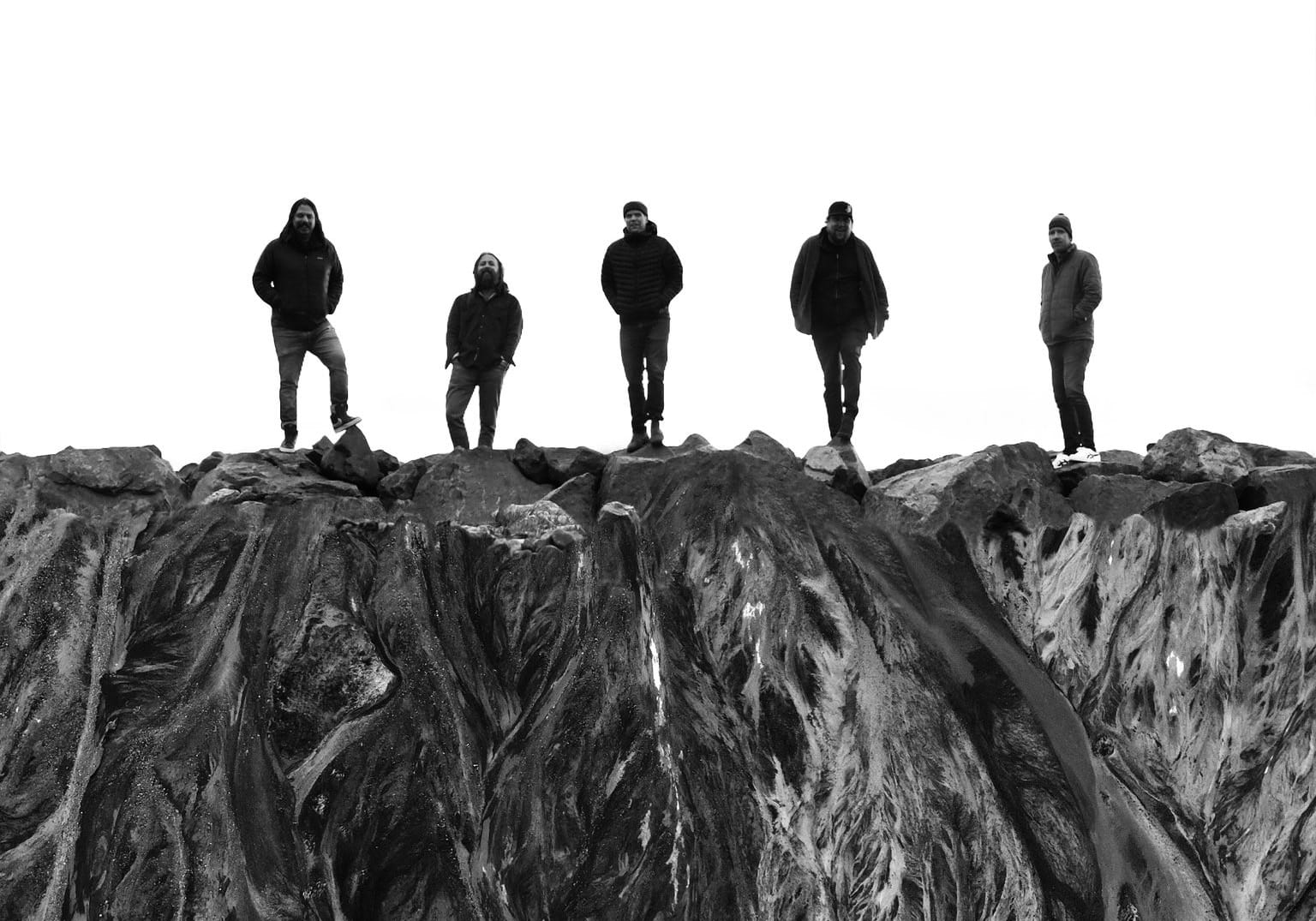
In June 2023 Greensky Bluegrass traveled to rural Iceland for a recording session at Flóki Studios. The splendor of the surroundings was amplified by a natural phenomenon whereby the sun never quite set, instead it lingered just below the horizon. Joining the band on this journey, with the goal of tracking the visual spectacle and its impact on the group’s creative process, was René Huemer, the longtime photographer for Phish and the Dave Matthews Band. However, rather than solely shooting still images, Huemer and his partner, Chérie Hansson, were on hand to create a documentary about the experience.
The result is the visually striking and emotionally resonant Find Ourselves Lost: The Iceland Sessions. Huemer and Hansson not only capture the extraordinary physical environment that surrounds Flóki, they also present the creative and interpersonal struggles and triumphs of a group then approaching its 25th year.
Find Ourselves Lost is both sweeping in scope and deeply personal in essence, as it shares an account of five friends and coworkers charting a collective path, while balancing individual expression, artistic strife and struggles with sobriety.
Following the Flóki sessions, Anders Beck (dobro), Michael Arlen Bont (banjo), Dave Bruzza (guitar), Mike Devol (upright bass), Paul Hoffman (mandolin) and longtime auxiliary member Holly Bowling (piano) traveled to Reykjavik for a special three-night Camp Greensky Iceland event with the group’s fans. Director Huemer and cinematographer Hansson also attended this gathering and offer a narrative on music’s magnitude.
As Huemer has said in conjunction with the documentary, “The journey of creating Find Ourselves Lost has been one of profound discovery and passion. This film was born from a deep desire to delve into the psychological landscape of the acclaimed band, Greensky Bluegrass, as they embarked on the intimate process of recording an album in the remote, stunning landscape of Iceland. I was inspired to highlight that even well-achieved artists grapple with their own struggles, a reality often obscured by the facade of social media. This revelation is crucial in a world where we often mistakenly believe that success shields one from the human experience of fear and insecurity.”
Longtime fan and intermittent film reviewer Billy Strings recently said from the stage in Tampa, “One of the best bands in the whole damn world, one of my favorite bands ever and a band I would not be here without, I’m talking about Greensky Bluegrass, they made a documentary called Find Ourselves Lost. I watched that the other night and it was just extremely touching, vulnerable sweet and just beautiful. So you guys should check that out.”
One can do so forthwith, as Find Ourselves Lost is currently streaming on YouTube and Nugs.
Just prior to their spring tour which opens on April 16, Beck, Bruzza and Devol made some time to reflect on the film and the Iceland expedition as a whole.
What were your expectations going into the process of making this documentary?
Dave Bruzza: The proposition for the film that René and Chérie gave us was "Hey, why don't we come with you? We have this idea to make a film about the correlation of nature and creativity." We were like, "Well, this all sounds great. We'll go to this remote studio in Iceland and film it, make some recordings and play some shows."
I think we were all excited about the opportunity and the experience. Then it kind of turned into something different. The whole point was to have a beautifully shot film with the idea of the coexistence of nature and creativity. Unbeknownst to each one of us when we were doing our little interviews, it became so much more personal than the original mission.
Mike Devol: I rewatched it recently to remember everything that not only took place in Iceland, but just the nature of the film and that process. The narrative kind of took on its own shape a little bit through what we experienced there and the place we were all at.
We didn't have a goal. We were just going on this adventure and recording this music. I guess the story kind of told itself. It's interesting for me to see it in retrospect, watching what the narrative became through what we were all feeling and sharing while we were there.
Anders Beck: René had this very artistic idea of using Iceland and nature as this metaphor for all these things—total visual artist storytelling stuff. We were cool with it. I think the important part to me is that we had faith in his vision and enough trust to let him do whatever he wanted and loved the idea of it being something that was visually stunning. His big pitch was “Let's not just make it a bunch of stuff in the studio.” He wanted to use Iceland kind of metaphorically, he'd probably say, which I think was cool and certainly sounded artistically stunning to me, and a lofty goal as well. I think that he really achieved that though, in the visual nature of the black and white thing.
Then the emotional side of it all just kind of unfolded. We didn't really know what everyone else was talking about in those little interview rooms because we were making a record. I think it really unfolded for René over time.
Was there a moment where you recognized that beyond an exploration of nature and creativity, this film was going to be something else, as well?
Beck: I think probably when I walked into my second interview portion with René, and he started asking questions about the time when the band showed up at my house. I was like, "Oh fuck, here we go…” [Laughs.]
It certainly wasn't planned. Nobody was trying to hide anything, it's just the way it went.
I felt very comfortable talking to René because he's such a sweetheart and he's a friend. I think I can speak for all of us when I say it didn't feel like we were talking to a camera for a documentary. We were just having chats with our buddy René, which I think is a great way to do it.
I also remember being in a hotel room on tour when he sent us pieces of the doc. He sent it to us in sections as he was working on it. I remember we were all excited to get part two because that's what had the whole addiction-focused stuff.
I remember sitting in my bed in a hotel at like midnight, watching it. I didn't sleep that night. It was like, "OK, it's out there or it's going to be..."
Devol: There's a scene in the movie where I'm like, "Oh, we're talking about this…" That was the last day we were in Iceland. I think I was doing my last interview before our last show and René started to ask me questions about Anders and our intervention.
It's not that we were avoiding talking about it. It was just that I hadn't yet talked with everybody, including Anders, about they may have been saying about what we had gone through with him. But like Anders said, it felt really comfortable.
Bruzza: It was very organic. I can only speak for my personal part of this but at that moment it was a very tender time for me. I was still pretty early in my sobriety.
I was at a tender spot which was a place my former wife and I had always wanted to go together. So getting there kind of really rocked me in a personal way. The camera enabled me to get some things off my chest.
It was easy to talk with René and Chérie about that kind of thing—just where we were at as human beings. It was very organic in a way of opening up and letting it all out.
Do you think the tone of the film was a product of the location on some level?
Bruzza: Well, it was absolutely breathtaking there. The landscape was dramatic and epic. It was big and the sun never seemed to go down. So it was kind of an interesting position to finish at the studio at one in the morning when it still felt like noon.
It was kind of a weird experience as far as daylight all the time. I mean, I've seen the midnight sun in Alaska as well as Iceland. It was kind of bizarre because the sun never really set. It would dip to the horizon and just go back up. It was a bit of an Insomnia vibe.
I think we were all kind of veering our ways through that at our various stages of life. I had been sober for a bit but that was still something new and it was fresh.
Devol: I think that Iceland is inspiring and that I think there was a real sense of adventure in this record. The Greensky way is sort of to go somewhere where we can immerse and not be distracted by a big city or by being comfortable and able to see our families. We have a way of going way out there, which has really worked for us. I think the fact that it was Iceland this time was similar in the sense that we were there with each other and our engineers, doing this project in a really immersive way.
We were exhausted, though. We flew overseas and then drove through the night to start on that same day recording this project. There was a ton of adventure because we were there for only a few days and had to figure out what this was going to be. I think that was captured in the film.
Then going to Reykjavík was like a return to reality. We came from the other side of the country and we were going to see people instead of sheep, but we were still in Iceland and there were our fans who had come from the States to see us. The next thing you know, we were all standing around a single mic playing bluegrass in a brewery in Iceland. It was a little surreal. I think that whole displacement contributed to the energy of the project.
Beck: I think the location and René being there really just opened up a lot of things. In hindsight, I sort of believe that maybe we were all just dying for someone to ask us these questions without knowing it.
Devol: Somebody please ask me how I feel. [Laughs.]
Beck: Somebody please ask me how I feel about the other guys. [Laughs.] But I think there's a beauty to it because René had never made a film, just like we hadn't ever made a film. I think that’s important in that there was a kind of an innocence going into it of like, "Well, what's it going to be? We don't know. We're just going to try." That’s the classic Greensky way to go about things, if you want to look behind the curtain. René was all in to be like, "Yeah, let's just see what happens. We've got ideas, but we don't know what's going to take shape."
I think an away game like Iceland certainly played into it. No one was at home, no one was comfortable, everyone was exhausted. I think those things in hindsight really worked in the favor of the documentary.
Dave, you make the point in the film that growing up as a hockey player your mental health wasn’t prioritized in a way that continued to impact you for many years. Can you talk about that?
Bruzza: I grew up playing very competitive hockey. That was my first love in life, and that's what I did until I became a full-time musician. The mentality in the '80s and '90s of how kids were coached was a lot different.
What I’ve learned from therapists is that back at the time I had a lot of self-doubt and a lot of questioning and a feeling of not being good enough because I always had these guys screaming in my ear growing up. That made a negative impression on me and it's where I got my drive from. I never realized I was succeeding because I never had any kind of confirmation that I was.
I mean across the board, even into music, I think the focus of mental health is important. I'm happy that there are more outlets for people to get the kind of care that they need to help them keep their heads together. I was probably concussed a million times as a kid and my coaches didn't know and didn't care. They just said, “Shake it off.”
I think that with music, Backline is a great resource for people. There are resources in all these youth sports for kids to make sure that they keep their heads together. It's good to see the growth.
Beyond just sharing an account of a band, this film offers some fascinating commentary on workplace relationships in general.
Devol: There's tons of dynamics. I think you see and hear us all talking about it in the movie. It's like we are partnered with four other dudes and all of their partners and personal lives. To be where we are 25 years into this still together is really a testament to the ways we've existed in those dynamics, understood those dynamics—and known each other well enough to see everybody through those dynamics because we're all individuals with different needs and communication styles.
It's not always easy being in a democratic scenario where everybody has a voice and everybody cares about everybody's opinions. It requires a lot of time and commitment to navigate that and take good care of each other. We don't always agree, but we know how to work through things.
Beck: I mean each of us is married to four other dudes and is basically living in a submarine together, a tour bus. One of the things that I really love about the movie René made is that it does sort of highlight that, which is the human aspect of being in a band. I would think that if you don't know who Greensky is and you watch this, you would still think it was pretty interesting, which to me is important.
Another major thread is the relationship with your fans. When you saw that aspect portrayed in the film, how did it strike you?
Beck: The film reminds me how special that relationship is. It reaffirms some stuff for me about our band, which is the fact that sure, we're a jamband, a jamgrass band, whatever. But I think what makes us special and unique is the lyrical content of these songs that Paul, for the most part, and Dave and the rest of us write. To me, that's what the band has always been about.
So when the fans who are being interviewed are talking about Greensky, they're talking about the songs and they're talking about what those songs mean to them. When I first watched this thing that was really reaffirming because that's the way I've always felt. I guess it was captured really well, but we all go through phases of "What are we doing? I'm 40-something years old and driving around playing music for people."I'm not doubting it and what sticks out is the fan part and what these songs, and therefore the band, means to our fans. It's amazing.
Bruzza: The fan experience has always been part of it. It's very important to us because without them, we’d just be a couple of guys playing music. We've always been very good about being mindful of that and trying to curate experiences by bringing people we love, bands we love, to open.
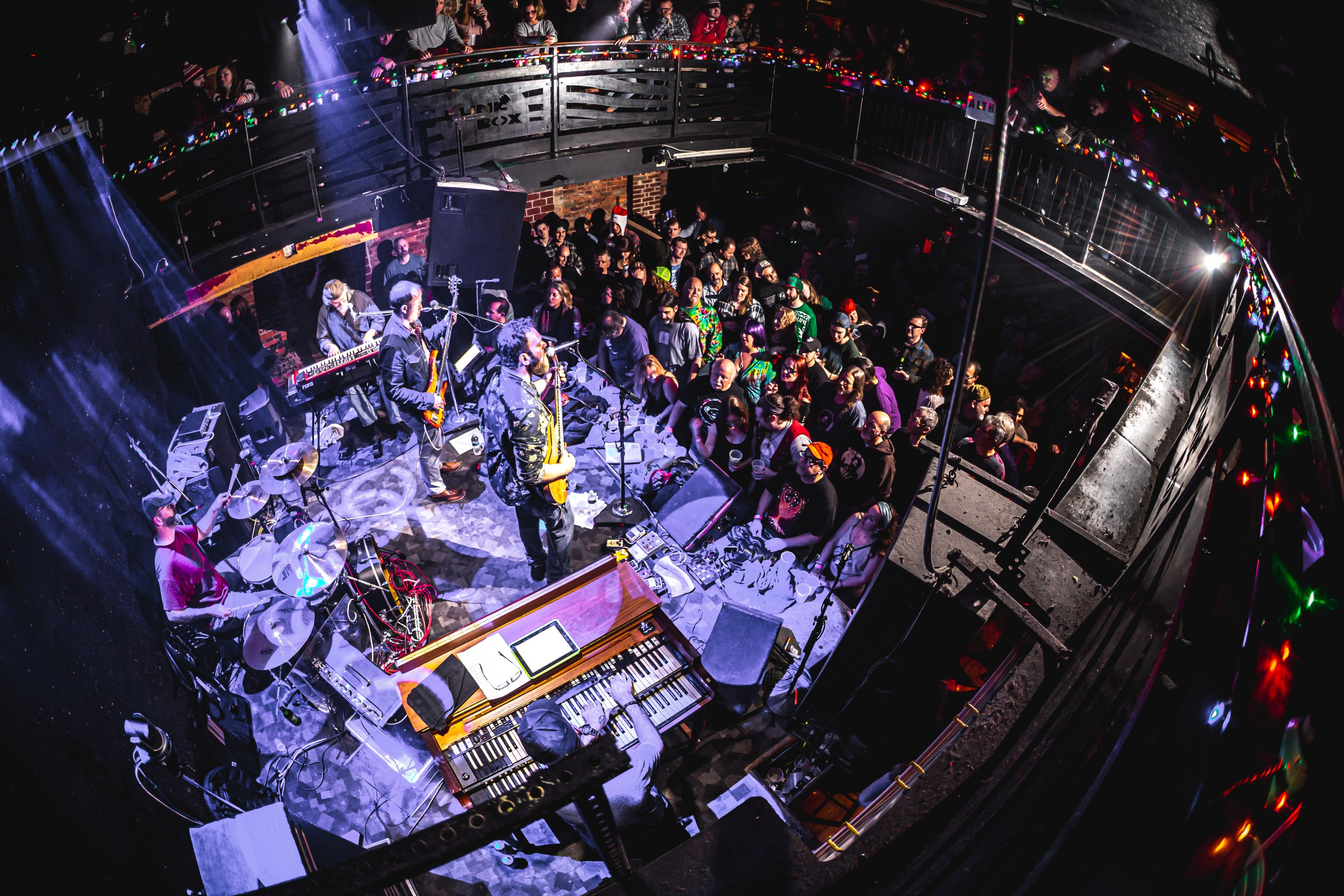
We make sure to be a part of these community-type events so we can be accessible to fans. I think the Iceland shows offered a really good, intimate experience for people who were willing to go on the ride.
We all got to hang together and did some special things around the shows after having been in that studio for about a week with nothing but sheep around us. Then we showed up at this brewery in Reykjavík and there were all these people. That was a little jarring, but the intimacy of that experience was really special and it's definitely a high watermark in my life.
Devol: In the movie, during the fan interviews, Max says something about being able to express his own heart through his experience with our band. That's really powerful to me. So as a viewer—admittedly I'm biased because I’m in the band—I was moved by that. For me to have been any part of helping someone find their voice or help them through a hard time, like we hear in these interviews, that's huge.
Do the expectations associated with those relationships ever feel daunting?
Bruzza: Sometimes it feels like responsibility but we don't do this for ourselves. I think we expressed this in the film where I don't think we're the band that people come to our shows because they're like, "Oh wow, these guys are the most killer players I've ever seen." But they go to a show and they experience it alongside us instead of just watching us. It becomes one big organism that's living and breathing.
I think that’s something truly special and it’s something we’ve been able to achieve throughout all these years where the community experience is very important. I get choked up at times about it. I'm very grateful for what I've had all these years. It's very special to be in a band that has been the same guys the whole time and is growing together, learning together, along with an audience in front of us who can grab onto this along with us. That doesn't come along to everybody. I'm extremely grateful that we have it.
Devol: When we're on stage and doing what we do, it feels separate from the analysis of what it means or being worried about being too under the microscope or something. I don't feel this weight of responsibility when I'm in that moment on stage.
But for Paul, when people are talking about, "Oh, this song got me through the hardest time of my life," I can think of songs that they're talking about, and I think a lot of it is geared to him because he’s the writer.
I can't speak for him exactly, but my impression has been that he’s always taken that very seriously. In the movie, he said that when he's singing the lyrics he's written and that people are connecting to, he's processing that meaning each time. When I heard him say that I was really struck by it.
That's a lot of emotion for him to process.
Devol: That's Paul. He means it, and he says that because he's very expressive, and a little bit dramatic, which is great. He should be. That's what he brings as our sort of fearless frontman, writer, singer, heartthrob. He should be wearing his heart on his sleeve, and to hear that from him, from his own mouth, I was like, "Oh, yeah!"
To what extent do you think that the Iceland experience or the documentary about the experience has influenced Greensky moving forward?
Beck: One of the things that I really appreciate about our band is our ability to put on a really fun, live, improvisational show. I love that we have that. I also love that we can make really good records. It shouldn't sound like a juxtaposition, but I feel like sometimes in the jamband world, it is a juxtaposition. It's either a live band or a good record band or a song band or a jamband. I think that we've always been able to drive in multiple lanes, which is awesome.
The reason I bring that up is because we take making records really seriously, and I think that comes through pretty well in the movie. It's not just throwing some songs together to make a record.
I also think that the documentary about making music in Iceland, and getting to see someone else's window into ourselves was probably beneficial to us as individuals in a band. I think we certainly learned about each other a little bit through this process, which is fucking cool. It was a weird way to do it, maybe group therapy would've been better or cheaper, but I think that it certainly informed us about our processes.
We're all best friends still. That sounds cheesy, but it's true. I think that comes through to some extent. I think that as we get older, we're not just making music together, we're navigating life together, whether that's kids or drug problems or whatever. I think that that really comes through and it was certainly a window into that for us.
I also see some light at the end of the tunnel vibes in that documentary. It's like, "Oh, thank God they lived through it." That’s part of what I see but maybe I'm too close to it.
Devol: For me, it's not necessarily that our trip to Iceland or the movie coming out was impactful. It's just that this was a piece of our life. We went there and did this thing together and it became a moment of processing for everybody of the various positive and challenging things that we've been through together. It didn't stop there or start there.
So I think in relation to where we were then and where we are now, we're still processing. I think we always will be, and growing into the next better version of ourselves.
There's a lot of talk in the movie about just not really being able to be as present for some of our live performances as we would hope. I think our lives have moved into another phase as individuals and as a band. I know to all of us that's really exciting and really important too. I think the movie is a brief window into the growing and processing that has to continue for us to be healthy people and do what we do.
I've always felt such gratitude for the fact that even though there's dynamics and we get under each other's skin, we love each other. We take good care of each other, even though that doesn't always feel like the easiest thing to do or what's happening in every single moment. But I’ve never questioned that my band has my back. I can say with confidence that everybody feels that way. I truly believe it, and we're so lucky to have that.
Who at our age has this many close friends? I’ve got four all the time, right here. We've all got that and it's fucking awesome.