***
"We like to have parameters,” Dan Horne says on determining the access point for Grateful Shred’s full-length debut LP, Might As Well. “For this recording, the parameters were songs that hadn’t been on a Dead studio album.”
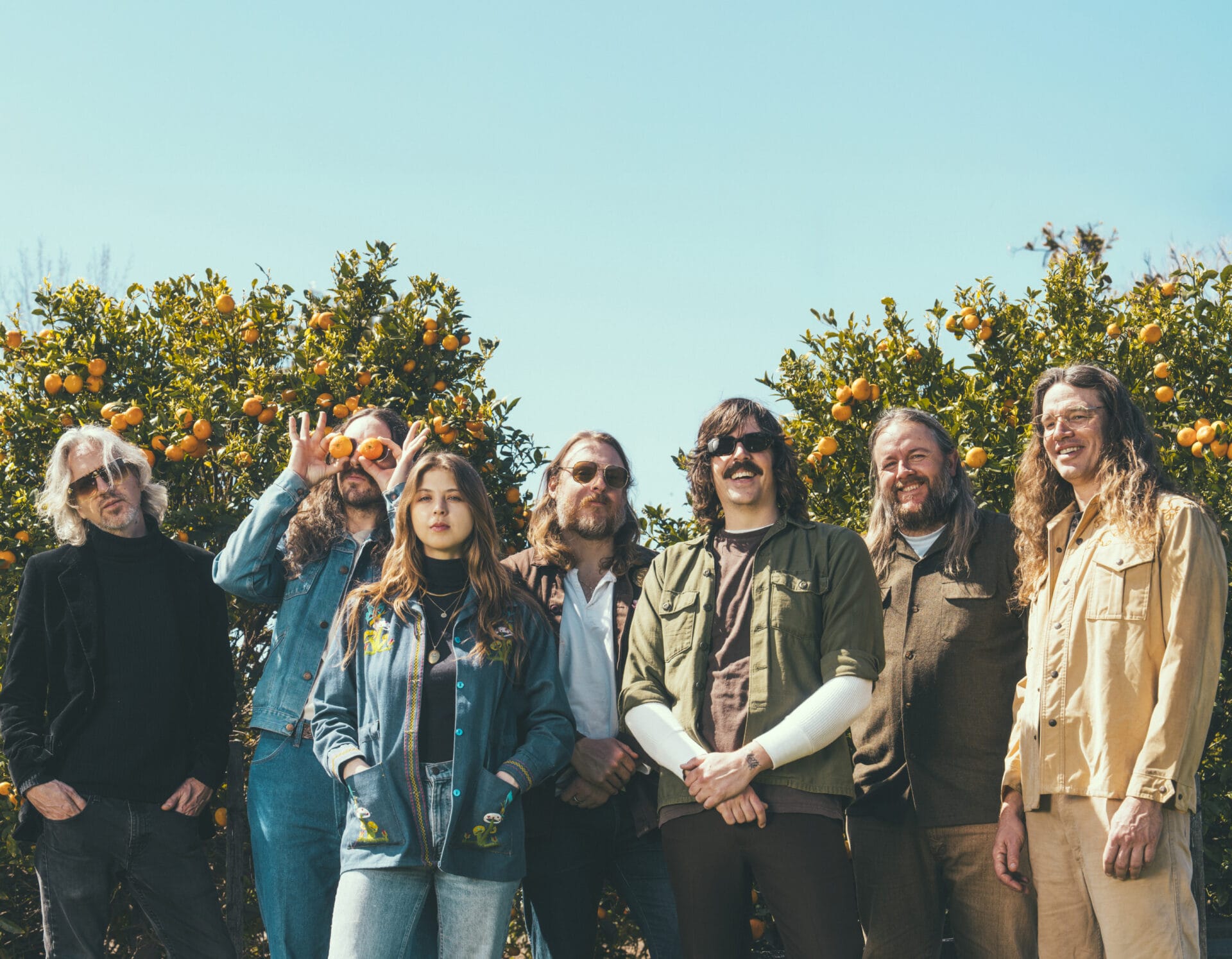
Released in June, the eight-track set presents a 45-minute retrospective of Grateful Dead concert material that underwent studio revisions by Horne, his Shred co-founder Austin McCutchen and the rest of their present-day lineup—Adam MacDougall, Alex Koford, Austin Beede, John Lee Shannon and Mikaela Davis.
“Everyone brought different songs to the table. We sifted through and decided on songs that we thought were strong, songs that we had played before and we thought we could do justice to,” McCutchen asserts, accounting for the breakdown of covers.
That justice is an astute understanding of originality, accentuating each member’s skill set when producing jam-fueled ad-libs. “We all come at it with our own experience with the music. We know how the songs go, more or less, but everyone has their own imprint,” he continues.
“What comes out is just the way we do it. Sometimes we talk about things, but a lot of times it happens naturally,” McCutchens adds. That’s what makes the band different. They’re not recreating what the Dead did before them; they’re seeking different channels to entice their creativity.
“We’re trying to keep the spirit alive,” Horne clarifies. “And, the main focus of that spirit is for us just to be ourselves.”
The result is a heavy offering of ‘70s- sourced concert material that touches on the Dead’s originals and covers (“Jack Straw” and “Jack-A-Roe”), Bob Weir and Jerry Garcia’s solo staples (“Cassidy,” “Sitting Here in Limbo,” “To Lay Me Down”), a Pigpen-associated Junior Parker piece (“Next Time You See Me”), an incandescent ‘90s outlier (“Lazy River Road”), which captures Shannon singing lead for the first time on a studio album, and the Donna Jean and Keith Godchaux number “Sweet Baby” strikes a knowing similarity between the Dead’s leading lady and Shred’s heroine.
“It’s not like we’re trying to change our playing to be like somebody else’s,” Horne continues, drawing a stark contrast between their approach and the general understanding of what it means to be a cover band. “We all do our own thing, which is what’s authentic.”
***
Grateful Shred’s formation was the fortuitous result of timing and experience. From the start, there wasn’t any intention to resurrect the Dead; when the band began a decade ago, happenstance was the catalyst more than a fixed music catalog.
“I cut my teeth playing country music at bars in New York and had been doing that for a while. I wanted a change of pace and ended up moving to California and starting a country band in LA,” McCutchen says of the events that led to Shred’s first gig and a background that underscores his cowboy connection to Weir.
“Dan Horne produced a full-length record for me when he had his studio in Echo Park. Around that same time, he made an album for my friends Sam Blasucci and Clay Finch. We all lived in a house together, and everyone was playing their own music and gigs,” he continues, accounting for the Mapache twosome that served as half of Shred’s original lineup.
“There was an event that I got booked for,” McCutchen says. “It was a small festival, and everyone in my band was out of town. Sam and I were swimming in the pool, and I asked, ‘What if we did a Dead set for this thing? Would you want to play guitar?’ Sam was stoked. Then, I asked Dan if he wanted to play. That was the start.
“We weren’t billed as anything. It was just under my name. It wasn’t official, but we played a set of all Dead stuff. I think we played five songs, but we just jammed them out and went full tilt,” he continues.
It also helped that they were familiar with the music prior to the initial gig.
“The Dead was music that my various friends and I would play when we got together; it was that common thing that we all knew,” Horne says, breezing past his inclusion in creating set-break music for the 2015 Fare Thee Well concerts and resulting album, Interludes for the Dead, with the late Neal Casal.
Shred’s early ascent is also likened to an impromptu parking lot set before Dead & Company’s 2017 appearance at the Hollywood Bowl, dubbed “Busted at the Bowl” after being broken up by police. A video of the performance was shared on their YouTube, furthering the fandom. [As of this publication, it has amassed 620,000 views.]
“There was no intention to put together a Grateful Dead project. It just happened naturally,” McCutchen admits.
Yet, the band’s impactful arrival was partially due to exposure to the music, which dates back to his early teenage years and a CD passed along by a friend: “I think I was 14 or 15, and my friend gave me Skeletons From the Closet. That was my introduction to the Dead. I hadn’t really listened to them much [before], I was listening to a bunch of Led Zeppelin and Pink Floyd, and the Dead were a blind spot for me. Then I had a cassette deck in my car in high school, and I got a dub version of Cornell that basically lived in my car till the car died. I wore that tape out and went down the rabbit hole.”
***
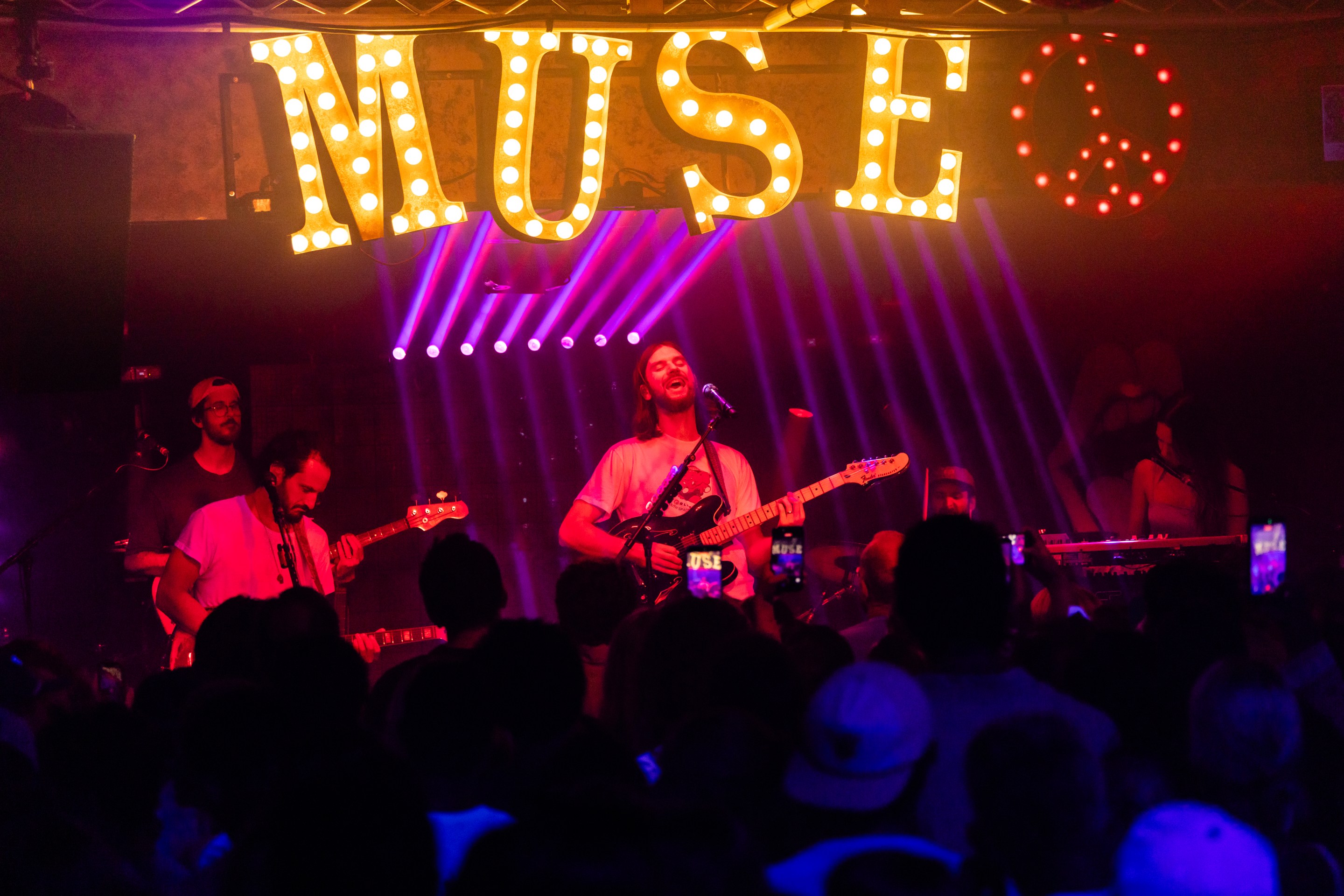
Grateful Shred’s perseverance was rewarded with a devoted following, particularly in their native Los Angeles, where they filled bars before graduating to marquee theaters. While Horne and McCutchen remained constants, the band experienced a series of personnel changes that account for the current roster and Might As Well lineup.
“Dan and I started the band together almost 10 years ago, and we’ve been playing with this lineup for the last couple of years and feeling really great about it,” McCutchens observes.
“Austin Beade is the original drummer of the band. He played the very first gig with us. Alex Koford joined when Sam and Clay left. Alex is such a talented singer and a great drummer. It’s cool to step into the double-drums thing,” he continues. “John Shannon joined shortly after Alex. Adam MacDougall’s been in the mix for a while. It’s always fun to play with all these people, including Dan.”
Over time, Shred also started introducing Davis into the mix. “Austin always asked me to sit in and sing harmony on one or two tunes, which turned into two or three. Eventually, I was just up there for the whole show,” notes the harpist, who cut a 2024 EP, After Sunrise, with Circles Around the Sun—another group featuring Horne, MacDougall and Shannon, which grew out of the Fare Thee Well house-music project.
It was a fitting role for Davis, who has shared the stage with some of the Dead’s original members and performed parts of the catalog with her own self-titled project—Koford was also a live contributor during the encore of Lesh’s career.
“I’ve played harp with Bob and Phil,” she says casually, before turning it back to Shred. “It’s not like being in a cover band, it’s really like you’re learning this material, studying it, to become a better musician. I grew up as a classical harpist, studying the harp repertoire and performing songs that were hundreds of years old in an orchestra, so why not do that with more contemporary music? It’s a study and so fun.”
Like the other members, Davis presented her knowledge of the Dead’s songbook in concert before receiving a formal invitation to join the group in the studio. “We asked her right away if she wanted to do it, and she was stoked on it,” McCutchens affirms. “We’re really happy that she’s in the band and wanted to be a part of the recording.”
**
Together, the ensemble entered Horne’s Liberty Hair Farm Records, where they took the live batch of songs and began re envisioning them as studio entries. The f inal eight covers largely entered the Dead’s repertoire in the ‘70s, except two cuts—the late-‘60s arrival “Next Time You See Me,” and 1993’s “Lazy River Road.”
The members of Shred say that there was less of a focus on pulling from a particular decade than the fact that their approach simply fits the era. However, 75% of the material used on Might As Well was activated by the Dead between 1970 (“To Lay Me Down”) and 1977 (“Jack A Roe”), including the heavily featured concert favorite “Jack Straw,” which was performed on over 450 occasions by the original band and appears on countless live albums.
A number that might not initially resonate as a Dead feature is “Sweet Baby,” the Godchaux composition that was a surprise favorite during the mid-‘70s.
“John Shannon found an old video of Donna singing ‘Sweet Baby’ with the Grateful Dead in 1975—I think it was at Winterland. He found a YouTube video, sent it to me and said, ‘You should sing this.’ I listened to it, loved it. So we brought that to Shred,” Davis says of what became the band’s first Might As Well single.
The initial preview struck a chord with listeners, especially the similarities between Davis and Godchaux, but what’s more, it offered a rare pulse of femininity in an otherwise masculine songbook. With mentions of mother and child, it dances with a lullaby-like effect that envelops the listener in soothing coos.
Alongside Davis, the band conjures a tone similar to the Jerry Garcia Band, with MacDougall evoking a likeness to Melvin Seals’ gospel stylings on the keys. At the same time, Shannon christens the track with guitar licks nearly identical to Garcia’s melodic resonance.
It’s the closest they get to allowing themselves to sound like somebody else, yet there’s still ever-present originality. “We’d get the gist of how the Dead did it, but it’s really how we feel it,” Davis distinguishes. “They didn’t play a song the same way every time, which gives every Dead band permission to play a song however they want.”
“They took a lot of older folk tunes and reimagined those, which is how they were born. So, it’s just passing it on to the next generation,” she notes of the process, one that Shred adopted when they reinterpret the traditional “Jack-A-Roe” into a psychedelic-tilted ballad.
“Sitting Here in Limbo” leans into McCutchen’s country gravitas and gleams with pedal steel from Horne, who offers a backstory: “The cowboy’s sad because he’s at the beach, instead of out on his ranch in Montana. He’s stuck in Florida in the sand.”
It’s an unexpected twist on the Jimmy Cliff number, slowed to match a horse’s pace on a hot day. The track also drips in harmony. “Harmony singing has always been an important part of this band,” McCutchen says.
“For me, it’s really fun to sing harmonies with [Mikaela]. We get to cherry-pick songs, some of the duets that Bobby and Donna would do, or Jerry and Donna. She elevated the vocals in a special way.”
Euphonious vocals swell on many of the tracks, bringing to mind Garcia’s early 1970s collaboration with Crosby, Stills, Nash & Young, as evidenced by the pedal steel on “Teach Your Children” he provided in exchange for harmony lessons. (Garcia received his beloved Alligator Strat from Graham Nash as a thank you for his contribution.)
“I think a lot of people miss the fact that the Grateful Dead were a vocal group,” Horne states. “It’s all about the songs. The jams come out of that, and you can’t have a great jam unless you have a good home for it, and that comes out of the song and the singing and the harmonies.”
Harmonies aren’t the only flourishes that enhance the compositions; instrumental interludes are also a heavily featured part of the Shred experience. Like the Dead’s own presentness and ability to produce solos, Shred maintains the same free wheeling spirit while also stamping their covers with a genuine sense of ease, akin to their indie ethos.
There isn’t a sense of urgency, racing to perform a song. This group takes their time and lets the sound live in the moment, feeling out the proper timing to add a personalized pulse—like Shred’s cover of “Jack Straw,” which bears no resemblance to the original for the first 20 seconds. Instead, MacDougall unleashes a spacey exploration before the guitarist’s moan of Americana, licks inspired by the Dead’s Paris ‘72 entry on the same number.
It’s a different approach than most take to playing the Dead’s music, and one that might require a deeper listen.
“We try to talk about it as little as possible. What is the Fight Club thing? Number one rule: Don’t talk about the jam; just do it,” Horne delineates, speaking to a certain sense of sacredness that is associated with these jams and appeals to his fewer words, more frisson policy.
***
Like the Grateful Dead before them, Shred embodies the latter half of Bill Graham’s famous phrase, “They’re the only ones who do what they do.” Through their inventive adaptation of existing material, delivered on Might as Well and showcased in concert, they have taken something familiar and made it feel and sound entirely new. That’s no small feat for a cover band.
Considering the studio outcome, McCutchen notes, “I’m proud that we were able to collaborate effectively. Live music is different from being in the studio; it’s more challenging in a lot of ways, and you have to make a lot of decisions that feel more permanent.”
“It’s a record of things being created together, so I was proud of the collaborative spirit of us all coming together and doing it in a thoughtful way. We got some beautiful sounds,” he says with a sense of pride.
Horne taps in, fronting his own takeaway: “Sometimes when you get into the studio, you’re like, ‘Oh, I can fix that later.’ We managed not to do that. We managed to do it all live, except for most of the vocals, which we redid. All the tracks are basically what we played, which gives it a good energy.”
That energy follows them to the live stage, hypnotizing crowds with a chapter of meaningful music for all involved. And, they will continue to breathe new life into the Dead’s songbook and their very own full-length record on tour this fall, including an All Hallow’s Eve event at The Capitol Theatre.
Offering a final reflection, Davis says, “I feel extremely lucky to be in this world. Everyone I meet is really inspiring to me, and being able to venture out and really focus on this music with Shred feels different than playing it with my band. It’s fun to take it in a different direction.”