The erstwhile CSNY singer and outspoken ‘60s icon takes stock of his evolving legacy in a new, Cameron Crowe-produced documentary
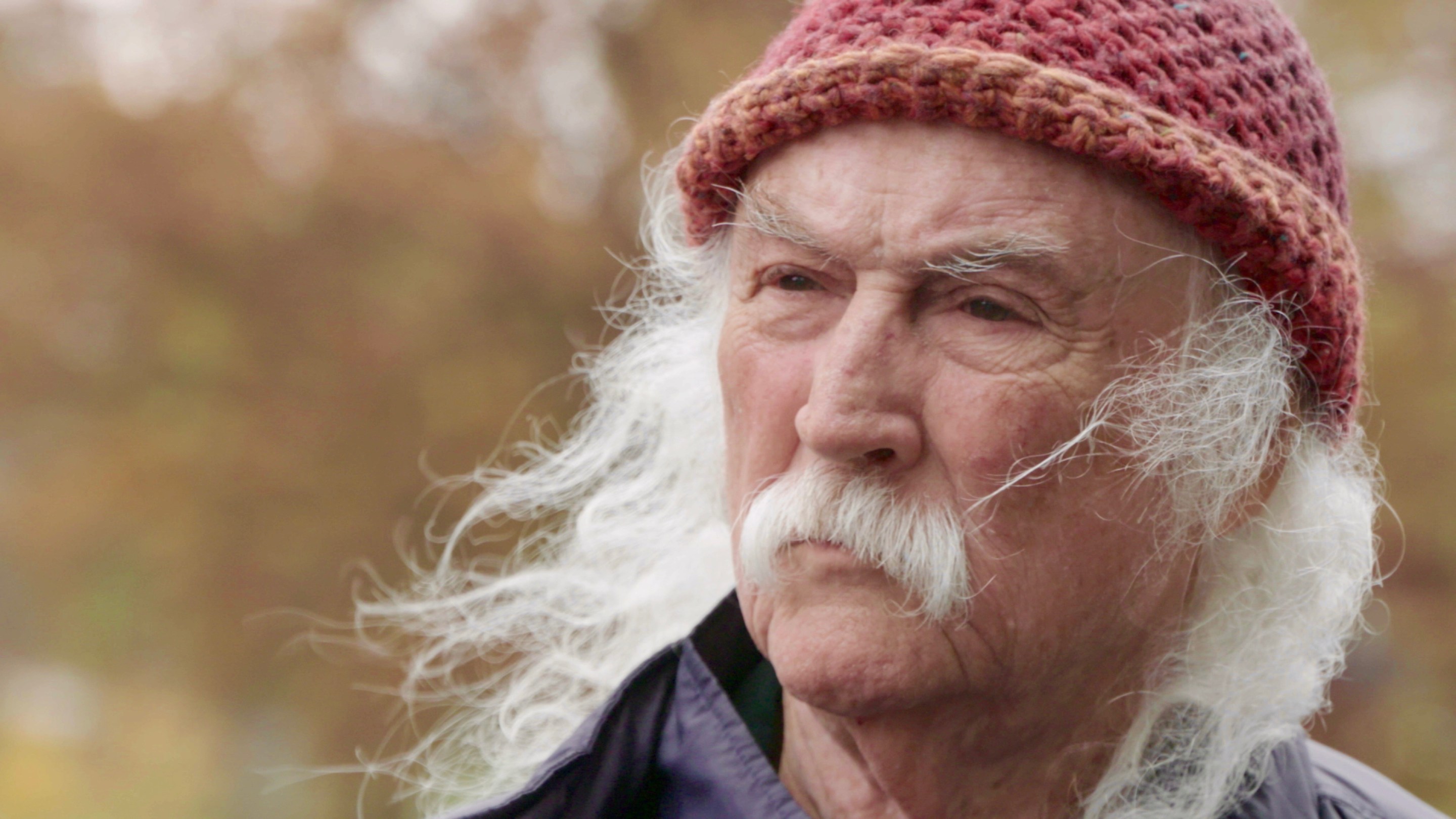
David Crosby has pissed off all his old musical friends—perhaps beyond repair. That’s the sad truth that hovers over Remember My Name, the eerily candid new Cameron Crowe documentary that traces the sweet-voiced singer’s singular journey from a self-described “pudgy” son of an Academy Award–winning cinematographer to his folk-rock highs with The Byrds, Crosby, Stills & Nash and Crosby, Stills, Nash & Young, and his nasty split with the latter two harmony-laced groups. Along the way, Croz opens up, in riveting detail, about a struggle with drug addiction that led to nine months in a Texas state prison; he reflects on the trail of woman he left behind before meeting his current wife of 32 years; and he weighs the cost of the continued fallout from his often opinionated comments online and in the media.
“I still havefriends, but all of the guys I made music with won’t even talk to me,” Crosbyadmits deep into the film. “One of them hating my guts could be an accident.But [Roger] McGuinn, [Graham] Nash, Neil [Young] and Stephen [Stills] allreally dislike me, strongly. I don’t know quite how to undo it.”
The projectstarted innocently enough when Crosby agreed to meet with director A.J. Eatonabout documenting his recent later-in-life creative comeback. “A.J.was at [J.J. Abrams’] Bad Robot Productions visiting a friend and Cameron walksby and says, ‘You’re going to do a documentary about Crosby? You should let meask the questions,’” Crosby recalls shortly before the film’s July premiere.“Cameron knows where the bones are buried, and he gave me nowhere to hide. Andthat’s exactly what I wanted.”
Crowe first interviewed Crosby as ateenage rock-journalist in the ‘70s, during the formative period he eventuallyused as inspiration for Almost Famous. They’ve remained in touch overthe years, even as Crosby’s story has spiraled in unexpected directions.
“He is a tremendous storyteller, alwayswas,” Crowe says. “He could have Garrison Keillor’s old career if he wanted it.After seeing so many music-based documentaries that always felt like areverberation of Behind the Music—the same tropes —I had this instinct.If I just got out of the way, Crosby would take center stage in a compellingand exceedingly honest, maybe even heartbreaking way.”
Crosby made it easy for Eaton and Croweto avoid those tropes. In recent years, he’s shattered the Behind the Musicstoryline, stepping away from CSN as they were sailing through the show’straditionally joyous pre-credits segment and rebooting an adventurous solocareer that prioritizes musicianship over, as he says in the film, “turning onthe smoke machine and playing the hits.”
Despite an 11-year lag between soloalbums—though he did work outside CSN and CSNY with Nash and his own CPR bandin that time—Crosby has released four albums in the past five years with moreLPs on the way. He’s settled into a comfortable pace, pivoting between workwith Snarky Puppy’s Michael League and their acoustic Lighthouse band and withhis son James Raymond and their electric Sky Trails Band. He’s also startedwriting with two members of those groups, Becca Stevens and Michelle Willis,and has collaborated with a new generation of Americana musicians, includingJason Isbell, Jonathan Wilson and I’m With Her.
“It had to do with me leaving CSN. LeavingCSN was definitely a big deal—risky—and made me very nervous, but was also agood thing” he says of his musical fertile period. “It also had to do withmeeting Michael and meeting my son, James [as an adult]. James and Michael arethe two best writing partners I have. And it’s been unbelievable working withboth of them. It's been partly just good fortune and partly justdetermination.”
In one of the film’s most intimate,revealing moments, Crosby can be seen packing up for the next leg on hisnever-ending tour and, later, wheeling his bags through a lonely hotel. Eventhough CSN’s numbers had softened a bit since their stadium days, they remaineda steady draw into this decade, packing even bigger arenas during theiroccasional runs with Young. Now, following their break-up, Crosby believes hewill remain on the theater circuit forever.
“It's not a creative decision so much assimple math, man,” he says pointedly. “They don't pay us for recordsanymore—streaming doesn’t pay us. You do your job for four weeks and they payyou a nickel. I love to sing, I do, but I have no choice but to work—or I willnot have a place to live. I have a family, I have to take care of them.”
And despite CSN and CSNY’s legendarybody of work and best of collections, Crosby is also keenly aware that he isthe only member of the group to never score a major hit. “I never did writehits, and wasn’t really trying to, but I didn't,” he says. “And I do write oddstuff, that's always been the case and I can't deny it, but that's definitelytrue. I enjoy the fact that I write so strangely. It kind of makes me happy, Ilike it.”
Crosby’s measured candor whiledescribing some of his darkest moments never comes off as smug. Instead, itadds to the honest revision of his life story.
“He hated that we took him to the LaurelCanyon Country Store and then proceeded to sit outside the store and pour hissoul out,” Crowe says of a particularly memorable scene where Crosby revisitshis old stomping grounds and precedes to deconstruct the California dream hedefined for so many generations. “I just love interviewing him. I showed upwith two notebooks and a file of photos and, within three hours, we’d workedthrough everything. So I came up with more, and we did more interviews until hecame to the moment of grace that ends the film. His last moment in the film isso striking to me. It’s someone reviewing their entire life in one small momentand his expression was priceless. We looked at each other in the editing andsaid, ‘Is that the end?’ Which was the perfect thought to end the film on!”
“He was a very bright kid who grew intoa fascinating man,” Crosby says of Crowe. “He’s a very intelligent guy andsomeone that I look upon as a real friend. But that doesn’t mean when he'sdoing a documentary that he is gonna cut me any slack. He asked me, truthfully,the hardest questions I’ve ever been asked. But that was a good thing—that’show we ended up with a documentary that people don't have. Documentaries areoften too shallow—they are little shine jobs, bullshit. They don't tell youanything about the person. I want to know more about the them—what they like,what they are afraid of, what they love. I want to know about their insides; Idon’t just want to hear a list of their greatest hits. There were about threetimes where I said, ‘That’s not going in the film,” but they all went in. Theymade the best movie they could make without regards to anybody’s comfort orgiving anybody a free pass. I’m very happy with what we did.”
That level of trust allowed Crosby toget emotional when describing the tragic 1969 death of his girlfriend ChristineHinton, take responsibility his terse relationships with McGuinn and Young andlook closely at CSN’s final days. They even show an uncomfortable clip of whatmay end up being the trio’s last live appearance at the National Christmas TreeLighting on December 3, 2015—a performance of “Silent Night” that was such atrain wreck even President Obama can be seen making some curious faces. (Crosbynow says that part of the problem was caused by technical issues, adding it was“definitely something sad.”)
Perhaps the only hot-button topic Crosbystops short of answering was what exactly caused his recent rift with Nash, hiscloset collaborator for decades. Crosby admits the two haven’t spoken in yearsand that one of his last interactions with Nash included a nasty spat onstage.Though McGuinn sits for the doc, neither Stills, Nash nor Young weigh in fornew interviews. When Crowe asks Crosby in the documentary if he would like toreach out to Nash to make amends during such a reflective time in his life, hesimply responds that he doesn’t even know “where he lives”
As he lays out clearly in Remember MyName, Crosby estimates that he only has a few years left, thanks to a lifetimeof hard-living and a cocktail of health problems that include diabetes, a livertransplant and multiple heart attacks.
“We don’t know how much time I haveleft—I could have 10 years, I could have two weeks,” he says. “What we canfigure out is what we do with that time. The only thing I can do with that timeis what I said in the movie—this is the only place I can lift, the only place Ican make it better. So I am gonna do it. When you get old, the last thing youwant to do is slow down, you want to keep pushing yourself as much as youpossibly can because that's how you keep up, that's how you keep going.” Crowesays that he was “extremely surprised” about Crosby’s recent prolific outputand sees that “story about facing your mortality.”
“You think you’re going to live forever, especially when you’re filling stadiums with just songs and guitars,” he says. “But then the day comes when you realize you are not going to be around too much longer. You’re put together with Band-Aids and rubber bands. How do you make up for all the lost time? Crosby is heroic in that, even after all his mess ups, he doesn’t want to leave without trying to make all the music he was ‘too smashed to make in the day.’ It’s a crusade and it will continue until, as he says, he takes his last breath—hopefully in front of an audience, with his wife nearby.”