Paul Riddle truly believed his days on the road were behind him. But, as is often the case, the universe had other plans.
“I never thought about suiting up again,” the drummer and Marshall Tucker Band co-founder says, as he traces the origins of his new, all-star combo Toy Factory Project. “I love teaching. I love producing, playing on some records and doing a couple of special concerts here and there, like Christmas Jam. I was completely content.”
It’s a balmy August afternoon, and the 71-year-old musician is relaxing on the second floor of his suburban home in Greenville, S.C., not far from the Blue Ridge Mountains. The building’s decor has a distinct Italian vibe, but there are still traces of Riddle’s years as an undisputed architect of Southern rock—including ample pictures of his old running buddies and, most prominently, a wall by the stairs displaying Marshall Tucker Band’s various awards and chart certifications. The Grammy recognition he received in the ‘90s for his live recording of “Jessica” with The Allman Brothers Band, when he subbed for Jaimoe, is also represented.
On this summer Tuesday, Riddle is enjoying some well-earned downtime after a particularly busy stretch. He recently wrapped up several summer sessions at his cherished drum camp, where he instructs children who are often blissfully unaware of his days in a major band, and he’s gearing up for another semester teaching music at Christ Church Episcopal School. His wife serves as a chaplain at CCES and, in October, it’s where he will receive the Order of the Palmetto, South Carolina’s highest civilian honor. A cross-generational mix of musicians sent video congratulations for the occasion, including Greenville-bred singer/guitarist Marcus King; Blackberry Smoke singer/ guitarist Charlie Starr; Tedeschi Trucks Band founders Derek Trucks and Susan Tedeschi; and Chuck Leavell, the keyboardist who has spent time in the Allman Brothers and The Rolling Stones.
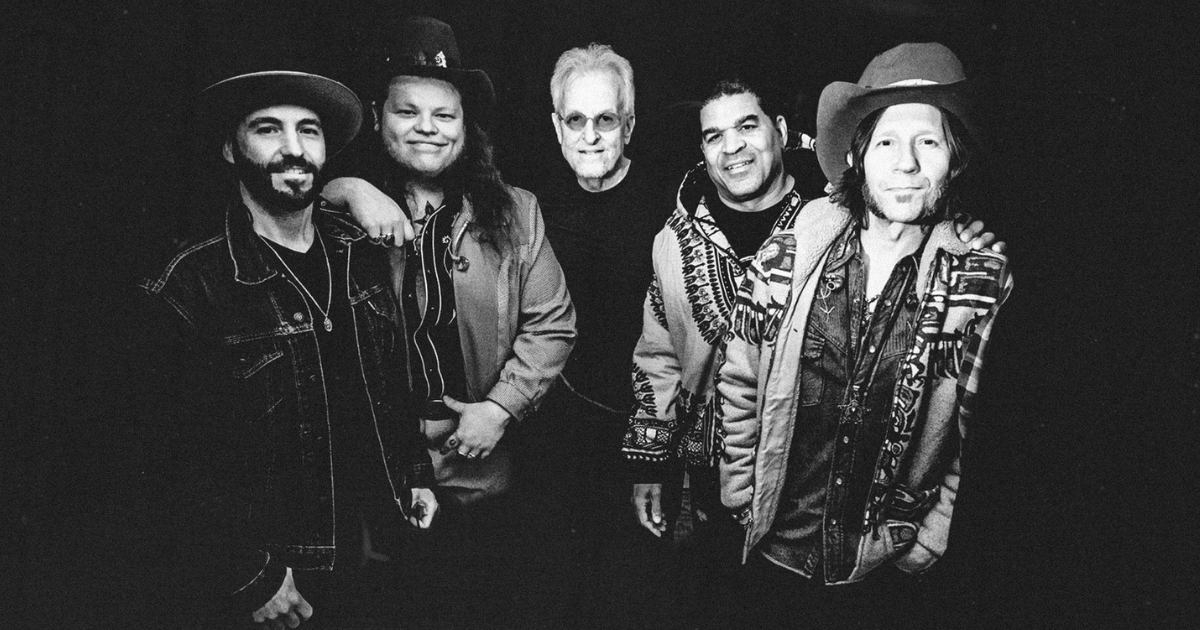
And, just as notably, this past June, Riddle officially debuted his long-gestating Toy Factory Project at the famed Telluride Bluegrass Festival—a new marquee act featuring King, Starr, Mountain Heart keyboardist Josh Shilling, percussionist Jimmy Rector, fiddler/violinist Billy Contreras and bassist Oteil Burbridge, known for his work with the Allman Brothers and Dead & Company. Similar to the latter group’s spirit, Toy Factory Project serves as both a tribute to, and a continuation of, The Marshall Tucker Band’s story, honoring the legacy of lead guitarist/primary songwriter Toy Caldwell. Their self-titled debut LP is slated for release next year.
“The same way that I see the incredible work that they’ve done with Dead & Company, our goal is to breathe new life into the music of The Marshall Tucker Band—making a whole new generation aware of this music that is so powerful and inspirational. I’ve got goosebumps talking about it,” King says, shortly before playing a set of Marshall Tucker Band chestnuts with Riddle during his Family Reunion festival in Simpsonville, S.C. “It’s almost the same feeling as when I saw André 3000 get that Source Award. He talked about the music that the South has to offer.”
The project’s origins actually stretch back over 13 years, when Riddle had the idea to put together a tribute album celebrating the music of The Marshall Tucker Band. His initial thought was that he would produce the set and play on some tracks, rounding things out with friends and contemporaries like longtime Charlie Daniels Band bassist Charlie Hayward, onetime Allman Brothers guitarist Jack Pearson and Leavell.
“Charlie wrote the bass line to ‘Can’t You See’—that answering line,” Riddle says of the signature Marshall Tucker Band track. “We were in the barbershop next to the recording studio where everyone used to practice, working on the first record. That’s where I first met Charlie and Chuck. We were the young guys.”
Riddle also sought out the “blessing, support and opinions” of two onetime fans who have long since grown into friends— country star Vince Gill and singer/guitarist Warren Haynes. He approached both men in person—Gill when he played the opening show for the outdoor amphitheater associated with Greenville’s Peace Center and Haynes when The Allman Brothers Band appeared in nearby Charlotte, N.C.— and they both quickly signed on, intrigued by the idea of working with each other.
“Warren said, ‘Man, I’ve always wanted to play with Vince,’” Riddle recounts. “I assumed that they had already because Warren plays with everyone. He said, ‘Could you imagine Vince singing ‘Fly Eagle Fly?’ All I could think about was them singing together—Vinny’s beautiful voice and Warren’s R&B thing.’”
Haynes also encouraged Riddle to reach out to Burbridge, who agreed to lend his services. An old-school fan of Riddle’s music, the bassist first heard about The Marshall Tucker Band through his brother Kofi, who—as a flutist—was intrigued by their use of the instrument in a rock-and-roll context.
“The first time I heard of the Allman Brothers or Marshall Tucker was when my brother was in school at North Carolina School of the Arts,” the bassist says. “I must have been about 15 at the time. He also turned me onto Mother’s Finest at that same time. I went down the Mother’s Finest rabbit hole the most back then. After getting the Allman Brothers gig, I understood Tucker a lot better. Plus, Paul and I became good friends.”
It took about two years for everyone’s schedules to align but, eventually, Riddle and the ad-hoc ensemble congregated in Nashville to work on the project. (The drummer notes that they even took a field trip to see The Time Jumpers at 3rd & Lindsley while in town.)
“I had 14 charts of our stuff, and we were having a blast. Vince would go, ‘Warren you should sing this,’ and Warren would go, ‘Well, Vinny you sing this,’ and they ended up singing together. It was so cool to hear how they would phrase things,” Riddle explains.
However, the project was not meant to be—that evening, while at dinner, Haynes received a call that his close confidant and longtime roadie, Brian Farmer, had passed away.
“We were all devastated and went home,” Riddle says. “And 10 years passed—Vinny started doing the Eagles, Oteil started doing Dead & Co. Mick calls Chuck, and then he’s gone for months. It’s nobody’s fault, but life took over. And I became more and more undecided.”
Then, one Saturday morning, Riddle was sitting on his couch, watching YouTube, when he stumbled upon a video that activated him.
“Some of my friends were doing ‘Can’t You See.’ It was fine, but I don’t know how to explain it,” he says with a shrug. “The very next video was Marcus doing ‘Can’t You See’ with the Mule at the Beacon. He was playing the hell out of his granddaddy’s 335—Charlie Daniels always said that Toy acted like he was never gonna take another breath singing that song. It just blew me away. I picked up the phone right then, called Vinny and I told him: ‘Man, I got it. I’m going to call Marcus. He grew up with our stuff—his daddy brainwashed him with our music. He knows more about my catalog than I do.’ And Vince said, ‘Pauly, that’s the smartest thing you’ve said about this whole thing.’”
“The Marshall Tucker Band has always been my greatest influence—the boys that made it out of this town and made it on an international level,” King says. “They took the music that we all hold so near and dear to our hearts, and they made it worldwide and massive. They’re such a lovely band—so honest and truthful with their music. Their music is family—it’s one in the same to me.”
During the lag between Riddle’s ill-fated original sessions and his YouTube revelation, he kept in touch with Burbridge, who’d periodically check in on the status of the Caldwell tribute. The bassist also recruited Riddle to play on a Barry Waldrep record that Starr was involved in.
“I loved Charlie in about two seconds,” Riddle says. “He was a sweetheart, and he had heard about what we were doing. And he goes, ‘If I could play anything on that record, I’d do anything. My wife and I had them play ‘In My Own Way’ at our wedding. I grew up with it.”
Starr and Riddle shared the stage at Haynes’ Christmas Jam and on the road with Waldrep, deeping their bond. Always looking for a reason to play with his old friend, Riddle recruited Leavell for the Waldrep record, but when the keyboardist had other commitments, Shilling stepped into the fold. Riddle was impressed and decided to bring him into what became Toy Factory Project as well. He also made the bold decision to add a new instrument to the mix, inviting Contreras, who has clocked in time with Lionel Hampton, George Jones, Zach Bryan, Ricky Skaggs and Béla Fleck, to join the party.
“I wanted to use B3, violin and fiddle instead of flute and saxophone. I knew that if we used flute, especially, it would sound as if we were copying the original band because it was such a signature sound. That was not our intent. We wanted to pay homage to Toy’s songs by allowing our love of the music to inspire us to make new versions his great songs,” Riddle says. “And Josh covered all of Chuck’s piano stuff on the [Waldrep] record. He didn’t sound like Chuck, but you could hear his influence, being from the South. Plus, he could sing his ass off.”
Immediately, they were all adamant that this would be a true band.
“I’d tell Marcus and Charlie certain things that Toy had done, and they loved to hear stories, but we didn’t discuss anything [about their approach],” Riddle says. “With everybody, I just said, ‘We don’t want to copy it—that’s not our intent here. We’re not a tribute band. It’s all about the love of this music.’ And they loved it as much as me. It just completely overwhelmed me.”
***
By the time Riddle started playing with Caldwell in his teens, he had already been studying the drums for years. The musician grew up just north of his current locale, in Spartanburg, S.C., inspired by drumming greats like Roy Haynes, Joe Morello, Art Blakey and Buddy Rich. He developed a deep reverence for jazz at a young age—everything from big-band music to Miles Davis, Charlie Parker, John Coltrane and Oscar Peterson—and studied musical technique, setting his sights on attending the Berklee College of Music.
“From 7th grade on, I was going to get a scholarship—I wanted to study with Alan Dawson. I played in a few bands, but I really just practiced when I’d go home after school. My drums were in my parents’ bedroom,” he says. “They said I could practice until they got home and then I’d give them a break. Then, after dinner, I’d play until 10 p.m., when daddy came out of the bathroom reading his Bible and I had to go to bed. And they never complained.”
He pauses to highlight their support, mentioning that they followed his career as Marshall Tucker Band ascended to New York’s Madison Square Garden and appeared at Jimmy Carter’s inauguration.
“They saw me play every time. My mother got to meet the president and the first lady. But the thing that trumped all that—oh, God, pardon the pun—is that she got to meet Cher,” Riddle says with a laugh of the singer, who was married to Gregg Allman for a stint in the ‘70s.
When Riddle met Caldwell, the guitarist had recently returned from Vietnam, where he received a Purple Heart, and started a group called Toy Factory that featured several of his future collaborators. The Marshall Tucker Band officially coalesced in 1972, boasting the classic lineup of Riddle, Caldwell and his bassist brother Tommy, as well as guitarist George McCorkle, singer Doug Gray and Jerry Eubanks on flute, saxophone and piano. “Can’t You See” was the first Caldwell song Riddle learned to play.
“When we started the band, the idea was that we were going to play original music,” Riddle says. “Everything Toy wrote always seemed to have those melodic hooks, those signature ‘Toy Licks.’”
Thinking back on his early years, Riddle points out that they were part of a close-knit musical community based around Capricorn Records, which was then a welcome home for the emerging Southern-rock movement. Noting his own tendency to share long winded stories, he then launches into an aside about seeing Hayword, Leavell, future Sea Level guitarist Jimmy Nalls, trombonist Earl Ford, and drummers Lou Mullinax and Bill Stewart rehearse with Dr. John in Macon, Ga.
“That’s one of the best bands I ever heard, but I never got to see them play because Mac fired the whole band while we were there doing the record,” he says. “Bill was one of the first people I met when we went to Macon. He was really kind to me because I was barely 19. And you can certainly hear Mac’s influences in Chuck’s playing. Paul Hornsby, who produced our first six records, was there. Lou later OD’d—a waste. I went in there one day, and Mac had them working on this crazy, second-line funk thing. It was the coolest thing I ever heard. Mac knew what he wanted, and they finally got it. It was so cool, and then Mac fired the whole band. They were supposed to play at this club in Macon called the Yellow Bandana and everybody was going—the Brothers were home and, at that time, Macon was just cooking. Mac ended up playing with just Jaimoe, when he was really on his game. It was amazing, but Paul [Hornsby] was about to flip out because he loved Dr. John and Chuck. I loved Mac, and he got even better later on when he got clean, when he got straight.”
The Marshall Tucker Band dropped their self-titled debut in 1973 via Capricorn and quickly distinguished themselves, thanks to their progressive blend of country, rock, jazz and blues. They released a stream of well-received records throughout the ‘70s, earning Grammy nominations and prominent chart placements along the way. Toy’s songs spoke to the Southern experience at a particularly turbulent time in American cultural history, while Riddle’s percussive style emphasized their soul and musicality. Live, they also nurtured a devoted following, stretching out improvisationally and inspiring a generation of future jamband arena acts.
“Look at ‘Take the Highway’ and all the songs—the reason why I was able play so well was there were no rule books, there was nothing but encouragement,” Riddle says. “Toy and I’s connection was the music and the Redskins. We’d listen to music, and Toy would play me his tunes. Toy would call me and be like, ‘Man, listen to this chorus.’ I loved that process—I loved making music with him and working on our songs and practicing. One night, we were on the bus, and we stopped at a truck stop. Toy was like, ‘Paul will you go in there and get me a cheese sandwich?’ I said, ‘Hell, yeah, man.’ He played me the chorus of ‘Searchin’ for a Rainbow,’ and said, ‘Go get me a cheese sandwich and I’ll have the rest of it up for you in a minute.’ So I got him a cheese sandwich, came back and he played me the song, top to bottom.”
photo: Ben Staley
Riddle says that their improvisational pockets would develop naturally and, as they started earning gold and platinum records, they made a point to avoid stretching out in rehearsals.
“We’d bring the sound and lights to an auditorium in Spartanburg, set up and those jams would form, but any time we would start blowing—and the band would start jamming—Tommy would shut it down,” Riddle says. “He would not let us go there. He loved it but wanted it to develop naturally.”
As the 1970s segued into the ‘80s, Marshall Tucker Band experienced a series of setbacks. Tragically, Tommy passed away in 1980 after suffering a head trauma in a car wreck and the group’s output started to slow. Their lineup also splintered, with Toy, McCorkle and Riddle all stepping away in 1984. Gray and Eubanks continued on with a revolving lineup until the flutist/ keyboardist left in 1996, leaving Gray as the only founding member of the band still on the road as Marshall Tucker Band. That version of the group continues to this day, though Riddle mentions they are often associated with a biker crowd.
“When Tommy died, I wanted to change the name,” Riddle says. “Doug started changing lyrics and things, and it wasn’t the same.”
Meanwhile, Riddle mostly stuck close to home, working with local artists and educating the next generation of musicians at CCES for over 20 years. He notes that he produced a record for country musician Jeremy McComb—which contains “the best version of ‘Wagon Wheel’”—and that he maintained his friendship with The Allman Brothers Band, often sitting in when they rolled through the area. The drummer rarely played big hits like “Can’t You See” live during that time, with notable exceptions like when he participated in the Brothers’ 40th-anniversary run at New York’s Beacon Theatre. Instead, he pushed things creatively, releasing a fusion album with area guitarist Steve Watson and Leavell under the name Watson’s Riddle. And it was through Watson that Riddle first heard about King when he was still a teenager.
“He started telling me about this kid in his jazz class—and Steve does not do that,” Riddle says. “I’m a guitar freak—I love guitar players of all shapes and sizes—and Steve was like, ‘Man, this kid is so down your wheelhouse. Plus, he can sing. It’s unreal.’”
As it turns out, Riddle was already familiar with the young musician’s father Marvin King, a prominent local guitarist who has been gigging in South Carolina for decades. “Toy had turned me on to Marvin,” Riddle admits. “Later, I went to see Marcus, and he covered ‘This Ol’ Cowboy,’ and I just couldn’t get over it.”
Marvin called Riddle, and the drummer ended up helping Marcus with some early industry connections, including Haynes, who produced his first album. They’d jam together occasionally, and Marcus even pushed Riddle to play some Marshall Tucker standards on stage. In one moment that still makes Riddle chuckle, they paired the group’s “Fire on the Mountain” with the Dead tune of the same name. As he recounts his reintroduction to his own songbook, Riddle leans back into his chair, clearly still moved by the experience. “Part of that emotion is thinking back to being a boy learning all this stuff,” he says wistfully, reminiscing about Toy, who died in 1993.
Comfortable with King on guitar, Riddle decided to not only rerecord some of Toy’s classics but to also turn the tribute into a living, breathing band. Peter Frampton offered his studio about three years ago and they started making plans to track in Nashville, where they cut much of the record live on the floor. “[Frampton and I had] never met. I said, ‘This is just too much—it’s overwhelming.’ When I started practicing to record all this stuff, it was a blast. I had been picking songs for 10 years. I started working on all the material because I knew I wasn’t going to copy what I did and I wanted to play some things differently. I used to say that there ought to be a law that we couldn’t cover certain songs—leave certain songs alone, they are sacred. And I started having some of those thoughts: ‘Am I being arrogant here? Who am I?’ And then, immediately, it was like, ‘You idiot. Toy doesn’t want you to just practice it. You need to go play it.’ It was a really spiritual experience for me. It was just Toy screaming at me like, ‘Man, you go play that thing like I used to, damn it.’ And I was just totally confident in it.”
The sessions had the raw, jam-forward energy of Riddle’s ‘70s prime. The drummer, who shared production duties with four-time Grammy winner Chuck Ainlay (Mark Knopfler, George Strait, Reba McEntire), notes that Starr immediately nailed a particularly complicated chord that many musicians flub while tracking “Can’t You See.” It served as a litmus test of sorts. They decided to incorporate tunes The Marshall Tucker Band rarely, if ever, played live, and chose “Running Like the Wind” to showcase an often overlooked side of Toy’s writing. Gill, Waldrep, Frampton and Trucks—who Riddle calls “the chosen one”—all lent their services as well.
“When we were running down ‘Take the Highway,’ we hadn’t gone over the ending yet,” Riddle says. “I just thought, ‘We’ve dug in a little deep now.’ When we played it back, I was like, ‘God, almighty.’ We were just shocked.”
***
On June 21, the Toy Factory Project made their debut at the famed Telluride Bluegrass Festival. The ensemble kicked things o¢ with “Hillbilly Band,” a cut from The Marshall Tucker Band’s first record, and charged through a 12-song set that stretched, in Riddle’s estimation, well past most of his peers’ bedtimes.
“It was magic,” Riddle says. “We wanted to punch them in the face with the first five songs—nothing was going to be down. We had to cut four songs, like ‘Southern Woman’ and ‘You Ain’t Fooling Me.’ I thought we had 15 more minutes. ‘You Ain’t Fooling Me’ is an old one that Marcus and Charlie loved—it was Toy’s tip of the hat to Leslie West. If you shut your eyes, you could think that’s Leslie West.”
Riddle spent considerable time constructing the setlist, talking with friends and longtime Marshall Tucker Band family members about where he should slot certain selections. He took the advice he received to heart.
“I was told, ‘Don’t say a damn word—all they want to hear is you count off 1, 2, 3. And then go. They don’t want to hear about your plane ride or your dog. And then, after a few songs, have Marcus introduce the band,’” he says. “I used to do the band’s setlist. Tommy came in a few years on, threw the setlist at me and said, ‘You’re doing the setlist from now on.’ When Tommy Caldwell said something like that, that’s what you did. And I was really flattered by that. I did it for years and had a blast putting it together. [Before Telluride], I went round and round trying to figure it out. It took a minute to figure out the pacing, but everyone was patient with me.”
Telluride regulars Sam Bush and Fleck even stopped by to lend their services— Fleck played banjo on “This Ol’ Cowboy” and “Blue Ridge Mountain Sky,” with Bush joining him on “Long Hard Ride.”
Riddle has a particular affinity for “This Ol’ Cowboy,” detailing the tune’s origins. “Toy told me: ‘You’re going to love this, it’s right down your alley—think about it as a big-band thing,’” he recounts. “I’ve always said I’m a song guy. Doing this has made me relive all this stuff, and it was so dear to my development—musically and personally. Toy knew I loved melody; I named my youngest daughter Melody. Toy had the gift of melody; nobody can argue that.”
Riddle has grown close to his Toy Factory Project brethren and keeps in touch with them while at home, despite their busy schedules. At one point, during this interview, Starr calls him out of the blue to chat about an idea he had, and he and Burbridge have been known to have hours long conversations.
“It only takes about 60 seconds to love Paul all the way to the souls of your feet,” Burbridge gushes. “I always say now, ‘If you don’t like Paul Riddle, then, ‘F you!’”
“It overwhelms me—the love and the respect they have for the music and each other is completely egoless,” Riddle says, a few days after his initial interview, while listening to a mix of his forthcoming album in his home jam room. “They are all dear friends and great human beings—there’s no musicians on the planet I admire more than those guys. Oteil said, ‘We’ve got something that everybody wishes they have, and that’s complete joy.’ It’s about the love of the music. I thought for so long about who would fit, and how it would all work, and Oteil said, ‘If God hasn’t told you yet, he’ll let you know.’ It was meant to be, and it’s been really hard for me to get used to their love of the music. Oteil didn’t leave my side for 13 years.”
Looking ahead, Riddle is ready to work in some Toy Factory Project dates between his collaborators’ various commitments. He says that the Beacon, given its storied history, was the locale where he had hoped to debut the group originally and that he wants to make a stop there soon. Likewise, he already has an appearance at Port Chester, N.Y.’s Capitol Theatre in the works and plans to weave in the songs the septet left on the cutting room floor at Telluride as well as other new ideas.
And, like The Brothers and Dead & Company before them, Toy Factory Project are committed to taking the music further, instead of simply retreating to cover band territory. “We want to pay homage to the songs, the writing and the band, but we are not copying,” he says.
“We keep surprising ourselves. It’s just a blast and we’re determined not to let anyone mess it up for us. If someone starts throwing mud at us, we just keep wiping our faces o¢ and keep adjusting it.”