I have been singing since I could talk. At 3 years old, I enthusiastically joined a beat performer in Litchfield, S.C., to sing my favorite songs, “Give a Hoot, Don’t Pollute” and “Let a Frown Be Your Umbrella.” My life, in many ways, has been one big stage. I have always been surrounded by artists and the arts. When I was 16, I started playing with friends in a rock band. Since then, I have never looked back. When I arrived at Florida State in 1991, I was in a band within a week.
Being in a band taught me that I could have a sustainable life in music. While we were very popular in college, I knew that hard work and dedication would be required to take my music to the next level. After graduation, I moved to Atlanta with my songwriting partner and formed the band Brighter Shade. We recorded our first album in 1996—in our garage— on an eight-track, half-inch tape machine. Somewhere in the late ‘90s, I met Zac Brown at an open mic I was hosting at CJ’s Landing. We became fast friends. In 2005, Zac came to my studio with Shawn Mullins, and we started recording what would become our first No. 1 hit, “Toes.”
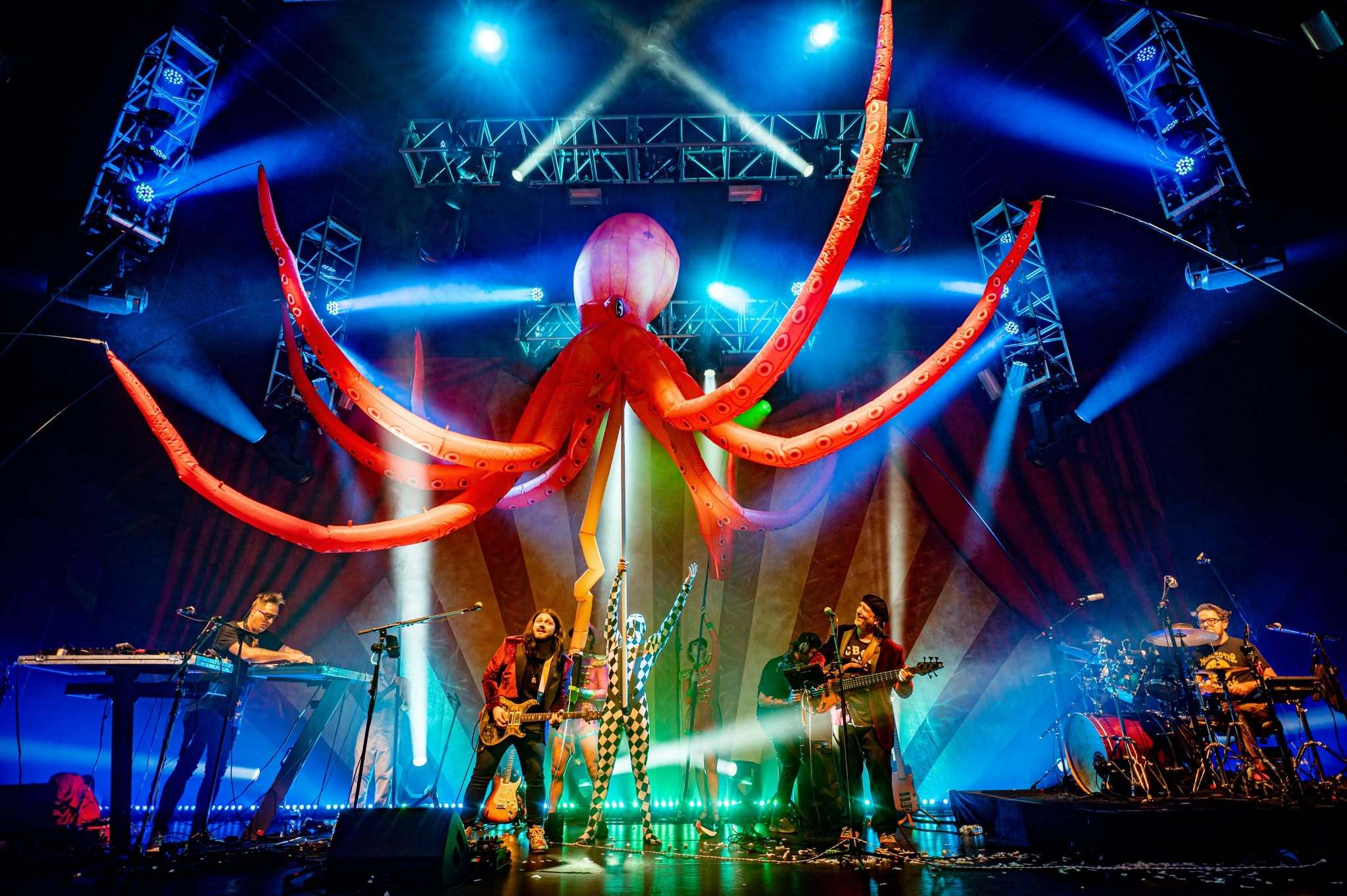
Zac needed a bass player, and I filled in. I have now been in the band for over 20 years. My first four years in Zac Brown Band were grueling. We were facing victories and failures that would shape our personality as a unit. When “Chicken Fried” went No. 1 in 2008, the heavens opened up for us. We started supporting giant bands, playing award shows, headlining basketball arenas and then amphitheaters. We were running around the stage like mad men, jumping off of risers and colliding into one another with reckless abandon. My favorite picture to this day is one of me and Clay Cook jumping in tandem under a dynamic light show. This band is everything that any musician dreams of when they are young and jumping on their bed with a tennis racket.
In 2019, at the very peak of my vocal abilities and of my instrumental prowess, I started noticing that my right hand was laboring to keep up with the double-time guitar. At first, I chocked it up to getting older and decided to grin and bear it. When hydration and rest didn’t help, I started to be concerned. I had recently been put on statin medications for cholesterol and thought that could contribute to my lack of energy. That was the year I also fell down while rushing around backstage four different times. I couldn’t explain it. I’m not a dancer, but I have always had great movement skills and balance. This was really out of character for me. In the beginning of 2020, I looked at everyone on the band bus and I said, “Something is wrong with me. I don’t know what it is, but I can’t keep up and my balance is off.” Then COVID hit.
When we returned to the stage in the fall of 2021, I remember playing a show at Jones Beach Amphitheater on Long Island. I walked over to Coy Bowles on the opposite side of the stage and screamed in his ear to make him laugh while he was singing his encore song. In turn, I began to laugh and I noticed, when I was walking back to my position, that my legs were out of my control. They were rigid and I was walking like I had boards in my pant legs. I had already seen two neurologists at this point about my symptoms. After we got done with the tour, my primary care physician urged me to see a third to rule out ALS. After an EMG, ALS was ruled in.
ALS is a neuro-degenerative disease with a two-to-five-year life expectancy. You can imagine my shock after hearing that my balance issues and my slow right hand were in actuality symptoms of a brutal terminal disease. It took months to process this information through tears, sleepless nights and anxiety medications. In March of 2022, my wife Jennifer and I attended the Team Gleason Game Changer Gala and met a community of incredible people that inspired us to persevere.
We founded Hop On A Cure in May of that year and have since granted over $4 million for ALS research. ALS is not incurable. ALS is grossly underfunded. Miraculously, I am still on tour with the Zac Brown Band. My progression is markedly slower than the vast majority of ALS cases. While I am grateful to have more time than I expected, ALS continues to present challenges for me that I hold in great contempt. Thankfully, the music hasn’t suffered as a result of my shortcomings. I am still able to play most of my parts and the ones that I struggle with I have been able to adjust. My voice is slower, but 90% of the background harmonies that I sing are unaffected. The band has been incredibly supportive and I owe our success in fundraising to the platform Zac Brown Band has provided.
I continue to write and record my own music as well, but I have noticed that I am limited in the things that I want to sing and the speed with which I can deliver lyrics. This is my journey. This is my quest. I refuse to perform anything with the Zac Brown Band if there comes a time when I can no longer perform with excellence. This band deserves nothing less. That being said, they can wheel my ass out there in a chair if I can still sing and I will be there on time. My life in this band has been incredibly rewarding and I want to continue as long as I can. With God’s grace, I will be on stage for many years to come.
***
Zac Brown Band’s John Driskell Hopkins, who is best known as Hop, was diagnosed with ALS in December 2021 and founded Hop on a Cure with his wife Jennifer to raise awareness and combat the terminal disease the following year. In May, Hop released his deeply personal new track, “I Love You Forever,” which he wrote and dedicated to his daughters after learning the life expectancy associated with his diagnosis.