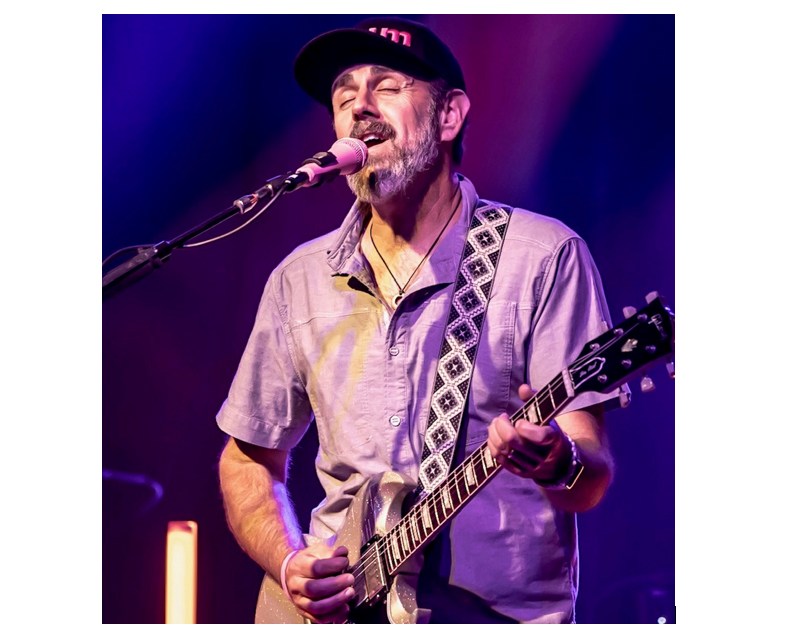
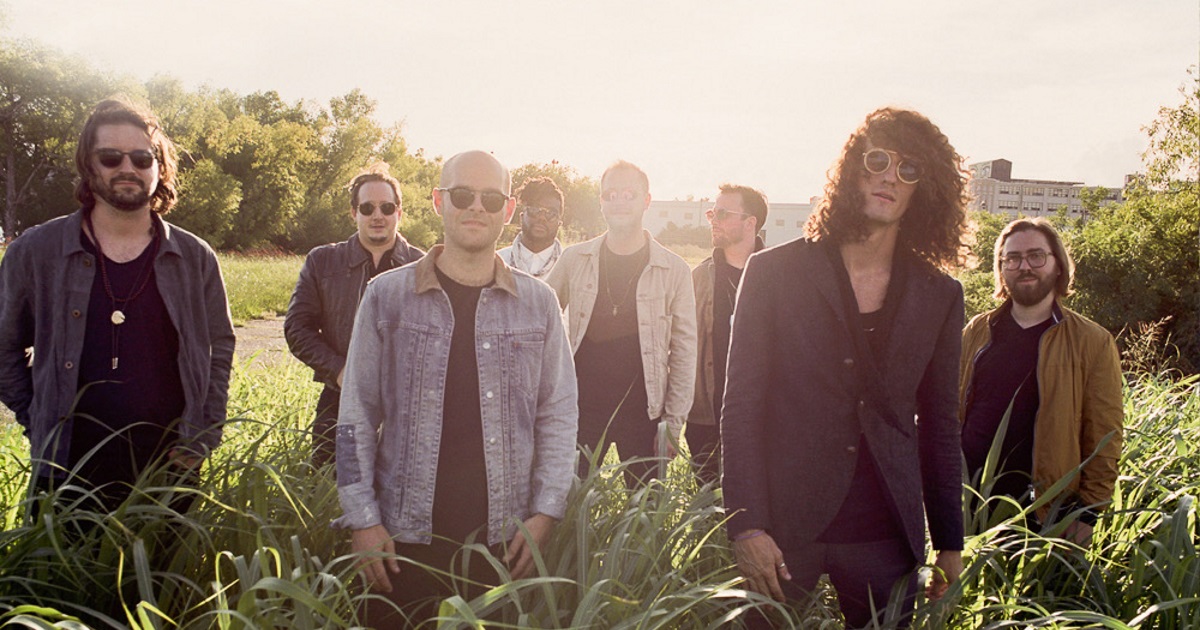
The Revivalists were perennial festival-scene underdogs for the better part of a decade but—thanks to years of hard work and some frontman flash—they may soon become the rare jamband to make a Super Bowl-sized leap.
This article is part of our 50 Years of Jazz Fest celebration and appears in the special Collector’s Edition April/May 2019 issue of Relix. Subscribe here using code NOLA50 and get 20% off.
David Shaw knew he was onto something when he brought “Wish IKnew You”—the infectious crossover hitthat pivoted The Revivalists from road-loggedfestival favorites to epic games of ping-pong withEllen DeGeneres—to the rest of his band. But thatdidn’t stop the future chart-topper from almostgetting voted off the island, so to speak.
“I had a special feeling about that song,” the tall, charismatic singer and guitarist says, displaying a whiff of the laid-back, humble Midwestern offstage demeanor that belies his powerful, Mick Jagger-like onstage moves. “But we are a very democratic band, and we vote on what songs make an album.”
“And that song didn’t have the votes to make the record,” the band’slead guitarist, Zack Feinberg, adds with some good-natured New Yorkdirectness. “It only had three votes but Adam Kowalski, who was ourmanager at the time, said, ‘Guys, you need to put this on there.’”
It’s a chilly afternoon and Shaw and Feinberg are sitting at a high-topin a bistro around Manhattan’s trendy NoMad district. Though the bar’sdécor is technically Victorian-style, the space’s ornate fixtures and creativeflair could pass for the New Orleans backdrop that gave birth to their bandjust over a decade ago. The Revivalists co-founders are back in the BigApple for a few days of promo behind Take Good Care, their fourth LPand first since “Wish I Knew You” skyrocketed after the band’s appearanceon Ellen, earning a record for the most plays ever recorded during a week’stime for a track on Alternative/Modern Rock radio. (Their numbers wereeventually surpassed by fellow jam-adjacent rockers Portugal. The Man.)
These days, The Revivalists are an octet: Shaw, Feinberg, pedal-steelplayer/guitarist Ed Williams, saxophonist Rob Ingraham, bassist GeorgeGekas, drummer Andrew Campanelli, keyboardist/trumpeter MichaelGirardot and drummer/percussionist Paulet “PJ” Howard. Yet, for thisparticular media blitz, only Shaw and Feinberg are making the roundsfor understandable logistical and economic reasons.
“We got a boost of radio success from ‘Wish I Knew You,’ but, all thewhile, we’ve been growing gradually with the live show and our albums,”Shaw says. “‘Wish I Knew You’ is three and a half minutes on the album,and it’s eight and a half minutes live. We still love stretching out.”
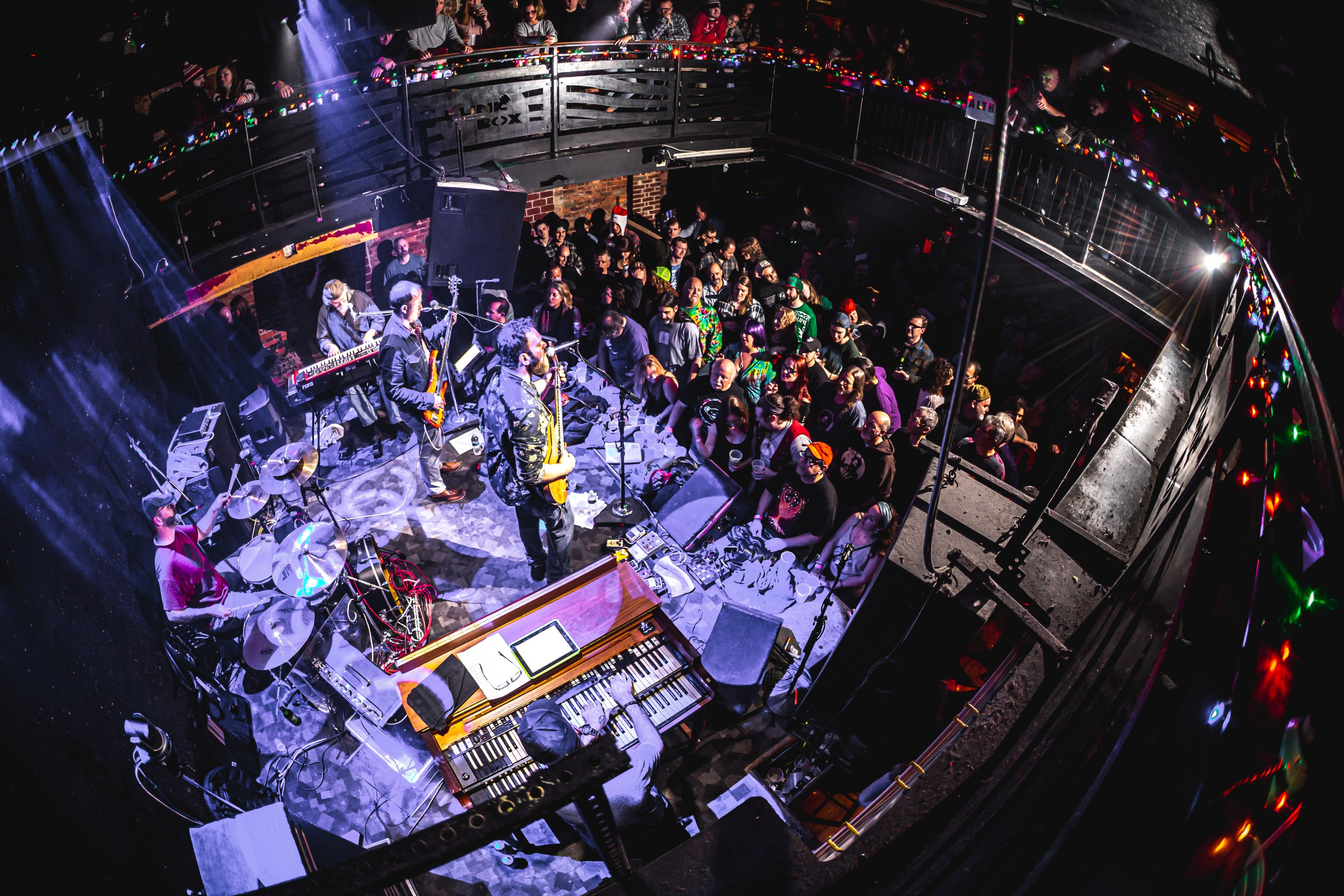
A high-energy, seamless blend of soulful, horn-abetted rock-and-roll, post-Black Keys garage-blues, beat-heavy indie jams and earnest, main-stage energy, Take Good Care, like most of The Revivalists’ recent work, has the rare ability to reference any number of modern, anthemic pop touchstones while still feeling natural and authentic. In fact, despite being lumped in with a mix of jambands, indie acts and New Orleans stalwarts over the years, The Revivalists’ most appropriate genre descriptor may very well be, simply: festival.
The Revivalists’ rise through the ranks has also been so natural andgradual that, in certain circles, their recent promotion to the upper echelonof lineup posters almost masked their mainstream media acceptance.Take Good Care’s genesis was similarly low-key, but focused. Themembers of the band are always working on songs and, in April 2017,they booked 10 days at a local New Orleans studio to demo those ideas.
Though Galactic’s Ben Ellman had produced the ensemble’s previoustwo albums, everyone felt it was time to explore something different, withouttotally pivoting from their sound and approach. “We were always extremelyloyal to Ben and love working with him, but we wanted to try workingwith some new people,” Feinberg says. “We were also a little bit reluctant tocommit to a whole record with somebody that we hadn’t worked with before,so we ended up booking sessions with all these different producers.”
Their hit list included some of the biggest names in modern rock andhip-hop, and The Revivalists eventually linked up with Dave Cobb (SturgillSimpson, Jason Isbell, Chris Stapleton), Andrew Dawson (Kanye West,fun., Sleigh Bells) and Dave Bassett (Elle King, Vance Joy), setting up shopoutside of their home state for the first time for some sessions atNashville’s RCA Studio B.
“We have multiple sides to the band and each of their strengths spoketo a different side,” Shaw says. “Dave is really great at recording a liveband, with everybody in the same room, and he did about half thealbum. This was also the first time I went outside to co-write, and Ilearned a ton from that. We’ve all learned how to play to our strengths,and the success of ‘Wish I Knew You’ afforded us the ability to go outand meet these writers who do this all day.”
Feinberg notes that even their big-name producers felt the collaborative vibes. “Andrew ended up mixing a lot of the tracks that Dave Cobb worked on,” the guitarist offers. “We love representing the live-band energy, but a record is a different beast, and we’re fond of contemporary mixing and production techniques. Andrew is the only guy that has been able to sustain a working relationship with Kanye West for over a decade—it’s crazy.”
“I was conscious of the fact that, with this album, we were turning acorner,” Shaw says. “Sometimes that’s a little scary—it’s easy to just dothe same thing that you’ve been doing. But one of the ways you becomeirrelevant is by just staying the same. So this album represents a changein the band.”
Feinberg notes that he had his eye on Cobb for some time, especiallythrough his work with the New Orleans musician Kristin Diable. He’s proudthat the tracks “Celebration” and “Got Love” are relics of an old-schoolapproach where the band, including Shaw, performed live in the studio.
“We’ve gotten better at making demos, so we included these self-made pieces on the record and added in different vocals and solos,” he says. “Dave Cobb was really good at tying all these riffs and parts together. We were also able to add in some ear candy and made some cool mixes. The Beatles were a live band who had ‘The White Album’ but they also had Sgt. Pepper. We’re interested in exploring all those different facets and capturing our different sides.”
The Revivalists' story started, serendipitously, in 2007 when Feinberg, who was a student at New Orleans’ Tulane University, decided to take a different bike route than usual and saw Shaw picking on his front porch. “I heard his voice. He was giving it his all, just belting it out and killing it, and I stopped to appreciate what was going on,” he says. “We struck up a conversation and, from there, basically started playing out together.”
Feinberg grew up in Pleasantville, N.Y., in the shadow of New YorkCity, and selected his college strategically because of New Orleans’ richmusical history, numerous venues and nurturing creative community. Aproduct of the early-2000s jamband boom, Feinberg’s older brother,who performs as Seth Winters, was a child guitar prodigy who appearedat sacred spaces like Wetlands, Manny’s Car Wash and Tobacco Road asa teenager, and both Feinbergs received an early education in theburgeoning, rootsy festival scene.
“The jamband world was really open-minded, and that exposed me tojazz, bluegrass, funk, hip-hop, all these different styles,” he says. “WhenI met Dave, he liked Nickelback—though he said he’d punch me if Iever told anyone that. So I made a 600-song playlist of various artists forhim called ‘Shiz for Shaw.’ I was like, ‘You just moved to New Orleans.You gotta hear The Meters.’”
A few years older than Feinberg, Shaw—a Hamilton, Ohio native—also relocated to New Orleans in search of a musical community after graduating from college. But his decision to plant roots in the Big Easy was less pragmatic.
“I was thinking about New York, LA or Nashville, but my girlfriend’scollege roommate was looking for someone to live with in New Orleans,so we went down and checked it out,” he admits. “My dad has his ownconstruction company and I grew up working construction, so I was ableto get a job working with a gas company when I got here, basicallyrebuilding the entire gas line in the city right after Katrina.” (Displayinga bit of their personality yin and yang, Feinberg interjects, “I thought itwas a cool move that you just worked on the front line and didn’t tell theguys in the field that you had a degree in construction management forsix months—until you earned everybody’s respect.”)
Slowly, Shaw and Feinberg started to assemble The Revivalists and,following a few early changes, their lineup coalesced. They started,naturally, with their immediate social circles. Feinberg first bonded withCampanelli—who was weaned on a similar mix of blues, funk andsinger/songwriter sounds in the D.C. metro area—while attending aworkshop at Tipitina’s and brought in the Milford, Conn.-bred Gekas, afellow student of rock/funk/jam, who was studying nearby at Loyola.
“My first meeting with the band was at Tipitina’s during one of their Homegrown Night shows,” the bassist says. “The Revivalists were the first of three bands, and I was playing in the second. I remember thinking to myself, ‘They could be really good if they could just figure out a wayto have some flow to their live show.’ My first show with the band wasduring the summer of 2008 at a now defunct bar. We were hired for a fratparty and were playing Zeppelin grooves and jamming to fill up our timeslot. No one was watching besides my now wife and her friend.”
For a while, the musicians gigged out as a four-piece, but decided toexpand their instrumentation to make the live set more dynamic.Ingraham—who is from Tulsa, Okla., and cites everything from ‘80smetal to jazz as sonic influences—was Feinberg’s lab partner at Tulane.(“In psychopharmacology, he took the rat’s temperature, and there’sonly one way to do that,” Feinberg says with a laugh.) Williams, aManhattanite who has also lived in Miami, Dallas and London, had notonly started sitting in with the group before he formally joined, but hehad also already written “Catching Fireflies” with Shaw. Girardot grewup in Austin, Texas, and was part of their local community.
“Being a fan of the jam scene, Robert Randolph was the one thatshowed me that the pedal steel could be played this way,” Feinberg says.“I saw him at [New York’s] Irving Plaza with Citizen Cope when I wasin ninth grade. He and Cope are huge influences on the band.”
Early on, the musicians’ varied geographic backgrounds helped cementtheir fan bases on the road and, of course, made lodging more manageable.Their true turning point came in 2012 when those regional audienceshelped them win a contest to play Gulf Shores, Ala.’s beachfront Hangoutfestival. The Revivalists’ set time turned out to be a dud—the musicianssay they were heartbroken—but booking agent Phil Egenthal stopped byand was impressed enough to help with their routing.
Though Shaw was still working construction, he was able to leave hisjob for a few weeks at a time to tour. They started to nab high-profilefestival bookings and aligned themselves with Hard Head Management,helping them build a strong bond with the company’s co-founder WarrenHaynes (who took the young musicians out on the road with Gov’t Muleand joined them onstage). The Revivalists quickly became summer festivalstaples and were able to jam with some of the musicians who inspiredthem to think independently about music in the first place (includingRandolph himself). After moving on from Hard Head, they signed withthe C3 team that looks after funk stalwarts Lettuce, among others.
“We always wanted to play original, impactful material,” Gekas says.“That has never changed but, in the early days, we stretched our songsout to take up the time we were given. It’s a lot different when you havea five-song catalog and you need to play for an hour.”
Through their hometown circles, The Revivalists also nurtured a closerelationship with the members of Galactic, and Ellman agreed to producewhat ended up becoming their 2014 Wind-Up records debut, City of Sound.
“I was obsessed with the Galactic album Ya-Ka-May and our managerat the time knew Ben through the New Orleans venue The Howlin’ Wolf,and he agreed to cut two or three songs with us,” Feinberg says. “Once wegot in there, we ended up laying down the basic shit for 10 songs with him.”
Galactic also brought Shaw on the road with them as a guest singer,which left an indelible mark on The Revivalists’ own live show. “Beforethat, I was always behind a microphone with a guitar in my hand, but Irarely played guitar with Galactic,” says Shaw, who often rehearsed infront of a mirror and with fellow Galactic guest and housemate MaggieKoerner. “Their crowds were 2,000-3,000 strong and they gave me freereign at the front of the stage, and that taught me how to be a frontman.I think that is part of our success.”
If utilizing pedal steel and brass helped The Revivalists distinguish themselves from the traditional rock bands they were competing against for playlist spots, then having a commanding frontman like Shaw allowed the group to translate their show outside the jamband scene to modern music festivals like Governors Ball. So when New Orleans native Ellen DeGeneres asked the band to appear on her program and their 2015release, Men Amongst Mountains (which Ellman also produced),started to gain some traction, their success was already cued up. MenAmongst Mountains landed near the top of the U.S. Heatseekers chart;Kathie Lee Gifford and Elvis Duran were just a few of the celebritieswho name-checked the young musicians. Meanwhile, Shaw started todisplay the type of onstage charisma that allowed him to grow fromperformer to entertainer. He’s been known to not only use his voice asa true instrument, but also engage with the audience in a way thatcomes off as both exciting and earnest. The band continued to solideron, keeping pace with their grueling road schedule while still workingon what would become Take Good Care. They also fleshed out theirrhythm section to include Howard, a Chicago musician whose bandThe Heard had backed Shaw.
Despite their recent accolades and Hollywood hype, The Revivalists remain a true New Orleans act. All of the members of the group, except for Howard, still live in the city and continue to participate in local jam sessions and celebrations. This spring, The Revivalists will headline the massive Gentilly Stage at the New Orleans Jazz & Heritage Festival on Friday, April 26, and their eclectic instrumentation has introduced a new generation of radio listeners to those spiritual sounds.
“New Orleans is slow—it’s chill,” Shaw says of his adopted hometown. “But it also has that dark, deep, creative underbelly that I love.” Take Good Care, which was released in November via Loma Vista, cracked the Alternative Top 10 and, as a sign of their naturally widening audience, reached 78 on the U.S. charts. Their recent concert conquests have included sold-out shows and runs at Morrison, Colo.’s Red Rocks Amphitheatre and New York’s Beacon Theatre, and their docket remains as far-ranging as ever. This summer, they will move from fests like Bethel, N.Y.’s Mountain Jam and Arrington, Va.’s Lockn’ to stops on Willie Nelson’s traveling Outlaw Music Festival, and engagements with The Lumineers and Sharon Van Etten. Offstage, the band members continue to mature as well. Williams recently became the first of the collective to welcome a “Revival tot,” and they’ve figured out unique ways to give back to their early boosters. In order to bring a sense of creativity back to an area of Ohio that he feels could have a majestic, mountainous bohemian quality, Shaw established the Big River Get Down in his childhood home of Hamilton.
While years in the club trenches have allowed The Revivalists to build a faithful, organic audience independent of their current buzz, alleviating some of the pressure of a follow-up, the members do feel a new sense of responsibly. That mission has trickled into their songwriting, as evidenced by the album-closing, gun-control rallying cry, “Shoot You Down.”
“The 2016 election was a wake up that I need to start utilizing this platform because I was very dismayed at what’s going on in our country,”Feinberg says. “So here’s a song where we’re taking a stand. I’ve vowedto myself that we’re not going to sit on the sidelines of historyanymore. We might upset some people but, overall, they’re going torespect us for taking our stand and they’re still going to like our music.”
That sense of populist honesty has always been one of TheRevivalists’ calling cards and, with some fresh production polish, theirmessage really pops. “Hate to Love You,” an outtake from the band’sprevious LP that they recut with Cobb as a soul tune is, in certainways, the album’s lyrical centerpiece.
“It’s a very honest song—it’s not about my current significantother,” Shaw says. “As artists, we have to be honest with ourselves andalmost too personal in our lyrics. But if it’s too personal, thensomebody else has felt that way. And that’s the shit that really matters,so we need to take a deep breath and put this stuff out.”
And, if The Revivalists have managed to take one lesson awayfrom their time running with some survivors of the classic-rock-era,then it’s that their original charge still matters.
“At the heart of this band, we wanna speak the truth,” Shaw says. “Our overall message is hopeful—that’s who we are.”
This article originally appears in the April/May 2019 issue of Relix. For more features, interviews, album reviews and more, subscribe here.