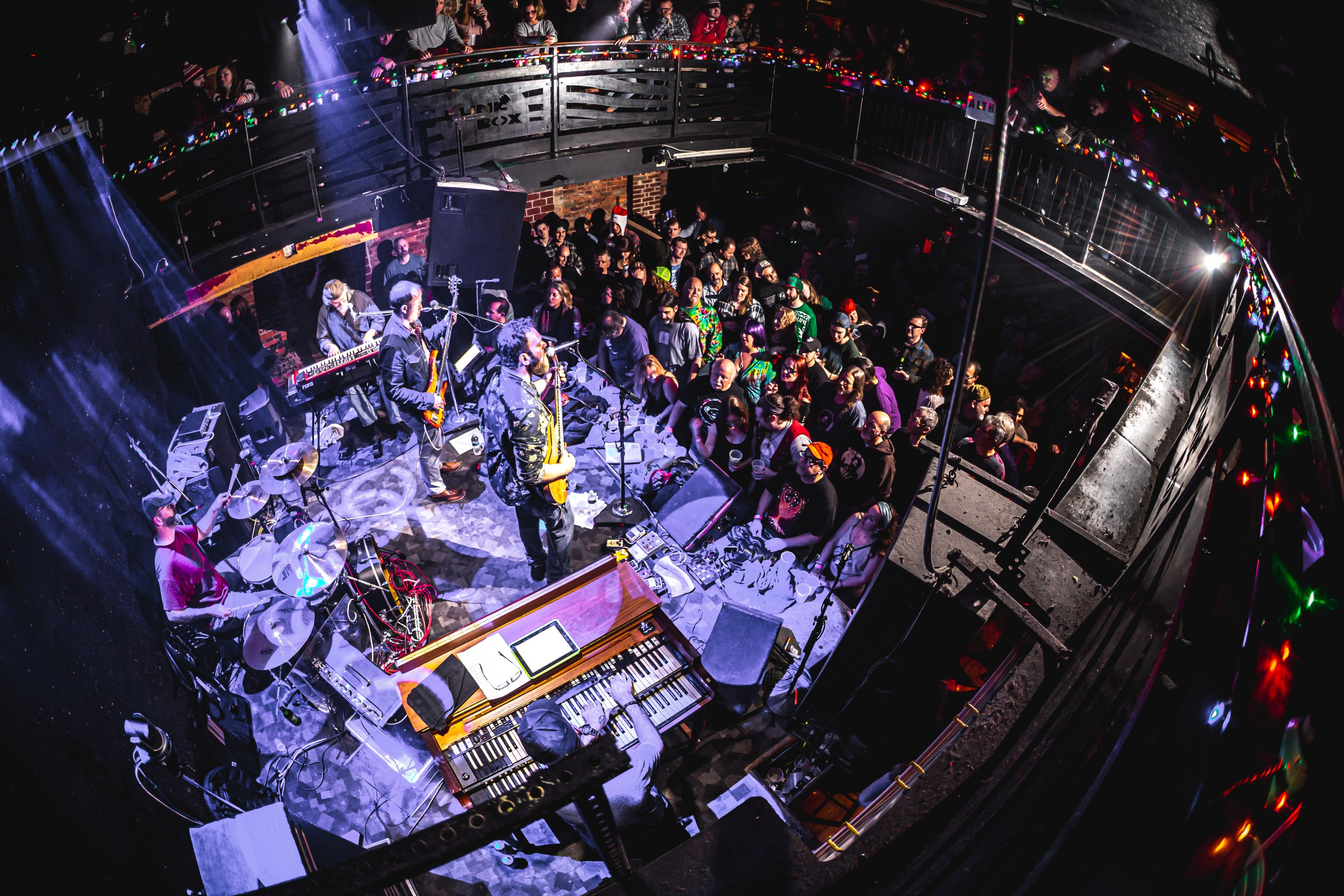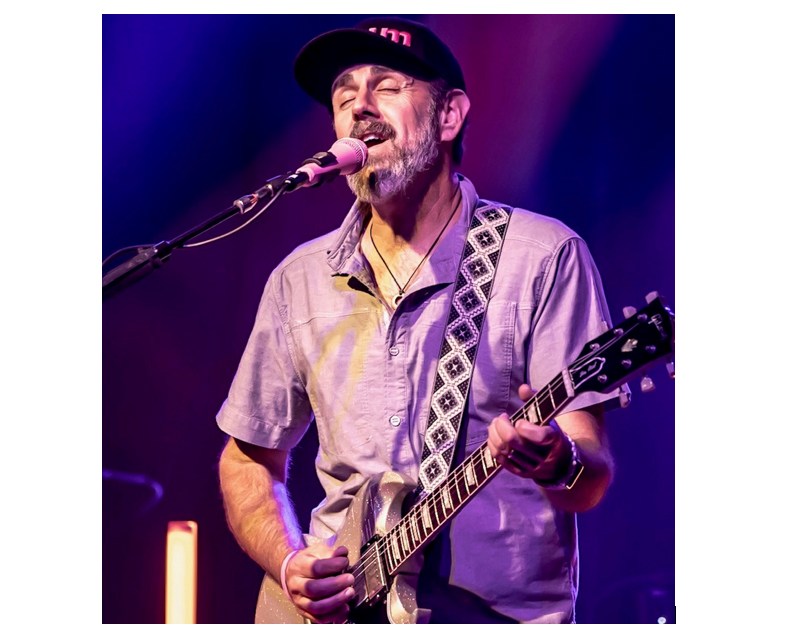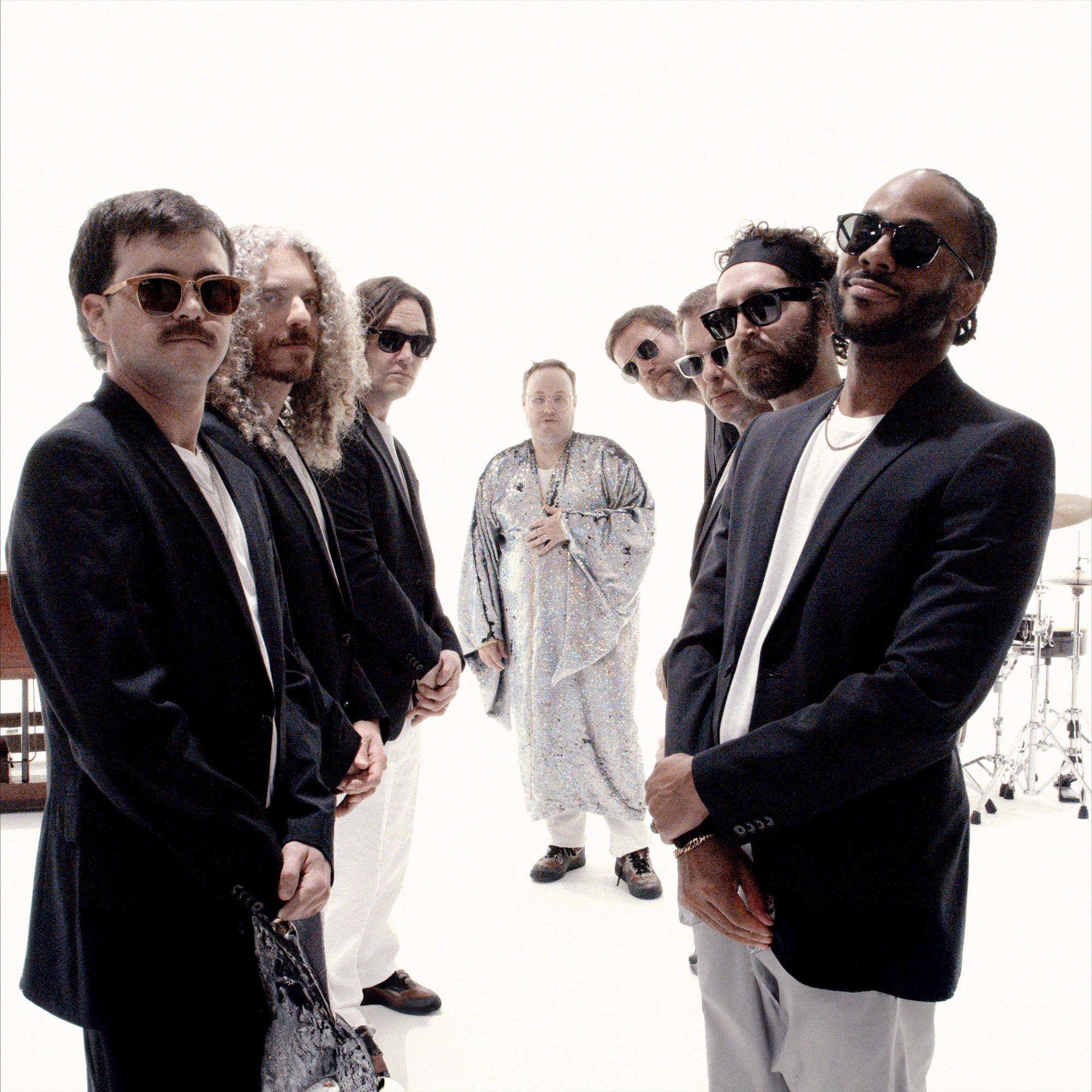
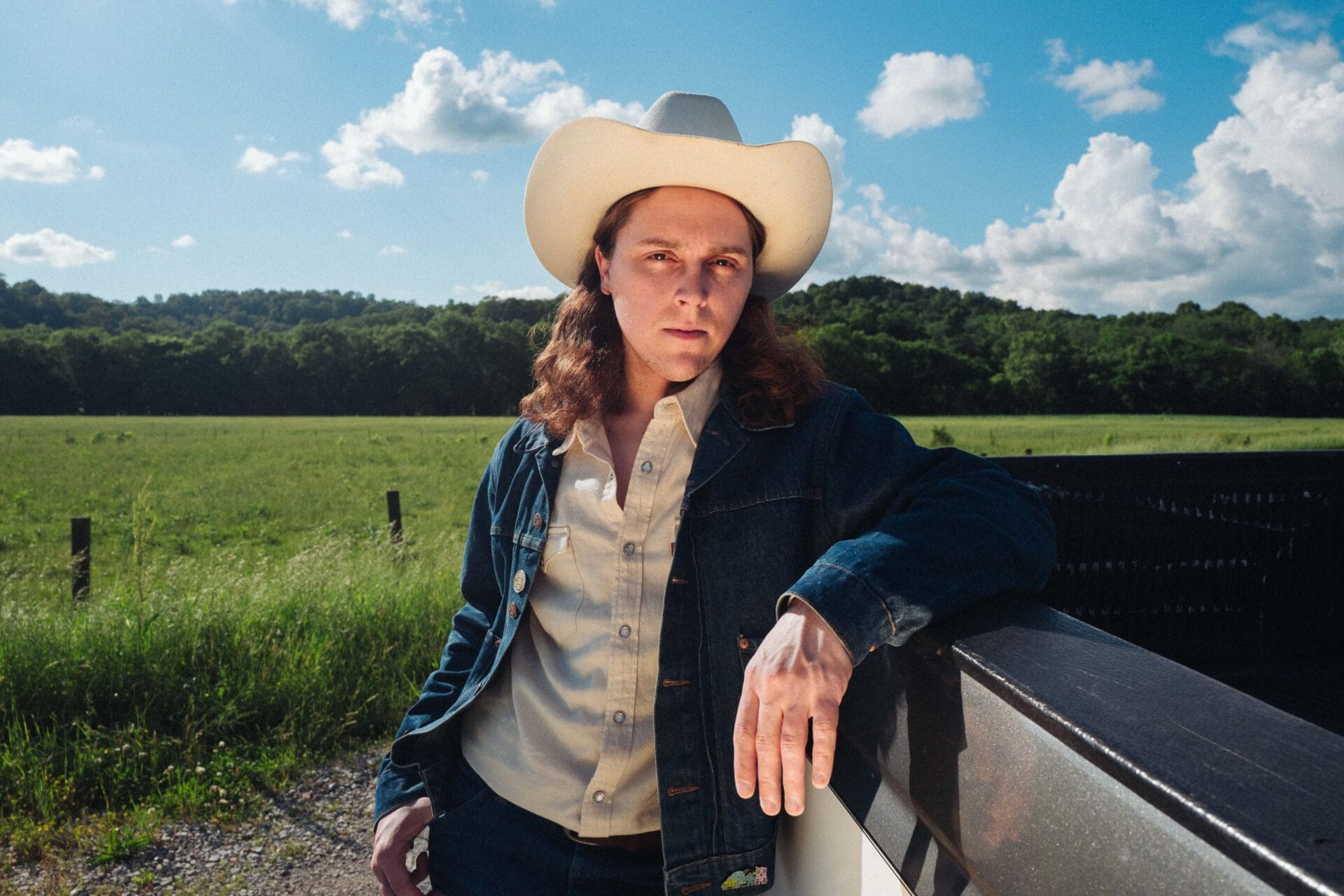
“The sound of Cosmic Country exists in the past and the future simultaneously. The present moment is a bridge between the tried-and-true values of the past that harmonize with the wonderous potential the future could hold for us. When you come see us in the present moment, I don’t want to pretend that the past is the only place to look at and I don’t want to shy away from the future,” muses Daniel Donato, while describing the animating principles at the core of his radiant and rousing musical project.
Donato’s principal instrument manifests this ethos. As he attests, “The guitar I play live is a DGN Epoch. It’s a signature Telecaster-style guitar that I designed with Dan Neafsey. It has the ability to stay traditionally sound to early-era Leo Fender designs while also being able to fill space and reach dynamic heights that a more modern sound might require, such as digital effects and signal processing in stereo for the FOH [front of house] mix. It’s both country and cosmic.”


The guitarist, who turned 30 in April, was just 14 when he first tuned into the frequencies that would later reverberate through Daniel Donato’s Cosmic Country. Serendipity led the Nashville resident, who had just started busking on lower Broadway, to discover Robert’s Western World. He soon became a regular visitor to the honky-tonk, which is steeped in the classic sounds of the 1940s through the 1970s. Two years later, he began gigging there with the venue’s house collective, the Don Kelley Band, which served as something of a proving ground and finishing school for young players. Meanwhile, Donato’s high school history teacher gifted him a treasure trove of Grateful Dead live recordings that supplied the cosmic cipher.
Donato characterizes Kelley as “a quintessential American musician, who came from a time when music and entertainment were at very high levels. He was an amazing band leader and his task, every night, was to take unknown people on a journey for four hours like his life depended on it because he played for tips. So there was an urgency to his organization and his consistency, musically and entertainment-wise. He knew how to capture a room full of 150 people who had no idea who he was and curate an experience with them that would cause them to stay there all night. So they would purchase CDs, request songs and buy drinks at the bar. Then they would come back every year to see Don down on Broadway, which is not what normally happens.
“He was much older than me at the time—Don was 67 by the time I got into the band. So there was not nearly the amount of discovery in his life that was going on in mine. It was really valuable for me to be able to work with somebody who had already exploited all of the trails out in the vast forest of what’s happening on stage. So I learned how to take a songbook of covers, how to curate covers, how to curate a band, how to lead a band, how to create a show, how to be a part of a show and how to watch a show unveil itself with intention.”
The young novitiate first attempted to put all this into practice beginning in the late 2010s with a series of shifting lineups, before the present-day Daniel Donato’s Cosmic Country began to cohere in 2021. He explains, “When it came time to hit this lost highway and head West to see what gold was in the hills, I wanted to find a band. In Nashville, there’s a duality—some artists have hired guns behind them—but the way I started playing music was always in a band sense. Even unconsciously at a young age, I could sense that would be the enduring, emotional reality for me, rather than the other situation where the artist is on a separate bus and doesn’t show up for soundcheck because all that’s handled by a musical director.”
By contrast, Donato indicates that “the band that everyone sees on stage are my best friends and brothers. Each one of them is a blessing in my life. We go through everything together and they’re all so unique in their own way. For me, it’s a one plus one equals three kind of a situation when we play together, and everyone has such unique influences.”
The current quartet also consists of Nathan “Sugarlegg” Aronowitz (piano, organ, Clavinet and Rhodes), William “Mustang” McGee (upright and electric bass) and William “Bronco” Clark (drums and percussion).
Donato reflects, “I wouldn’t be having this conversation if it wasn’t for those guys. Nathan Aronowitz—Sugarlegg—his influences come from the gospel world and then also the jazz world of complex musical harmony. Will McGee—Mustang McGee—comes from the R&B and modern songwriting world, which gives him a sensibility for melody, rhythm and singing in vocal arrangements. Our drummer Will Clark—Bronco—comes from the funk world, which is heavy pocket, and then also the jam world with the heavy listening that allows him to exist on all these dynamic levels that are all emotionally relevant at any given point in time. He can respect a song enough to treat it like a country ballad, but he also loves the adventure enough to really get dramatic and loud and complex in his rhythms and jam, without bottoming out.
“We’re all tethered to each other in different ways at different points of the night. It’s a really dynamic, living, breathing experience that is so rare, especially living in Nashville where there’s so many musicians who would rather just get a paycheck and not even think about how it feels spiritually on stage. So we’re able to create something and show up for something that hopefully, is singular to itself.”
The term singular is an apt descriptor, since the band’s performance goals are nonpareil. Daniel Donato’s Cosmic Country aspires to be both temporal and timeless.
The bandleader remarks, “Even the way that we mix our show, for the first 40 minutes we try to emulate the mix of what would happen at the Grand Ole Opry. Then, once we visit the past with everybody, we try to take it to the future and we have all new kinds of hardware that we’re using all the time, especially on my end with the guitar where I’m always trying new things. I get a lot of that from my dad. He’s been a software developer for 30 years, and he was always big on new ideas, new concepts, new user experiences, new programs and the spirit of that always stuck with me as a musician.
“Trey does that very well. Garcia did that very well, obviously, with the MIDI synthesizer pickup that he had on his guitar. How do you go from five-string banjo to an Alembic guitar with a Roland synthesizer on it? It’s nuts and I love that. What we try to do with Cosmic Country is use all three frameworks of time simultaneously. That’s not easily done and we don’t hit it every night.”
Without even grading on a curve due to elevated aspirations and degree of difficulty, Daniel Donato’s Cosmic Country enjoys a particularly high success rate in the live setting, which is resonating with a burgeoning fanbase.
What’s more, on Horizons, the ambitious and euphonious new studio album, the group’s aim is true.
“It’s two records in one,” the guitarist offers. “We try to give ‘em a cosmic record and a country record simultaneously.” Indeed, the band delivers on this promise with vigor and verve.
Donato produced the record with Vance Powell (Phish, Chris Stapleton, Sturgill Simpson), who served in a similar capacity on 2023’s Reflector while engineering both releases.
The opening songs hew more closely to the traditional forms that Donato mastered in the early years of his career. Then, about halfway through—starting with the instrumental “Hangman’s Reel”— the sound palette expands as the quartet generates some cosmic radiation. It’s a tantalizing turn.
“We sequenced this record in a place that starts on the ground and ends in the heaven, just like a horizon does,” Donato says. “It’s where the land meets the sky. The content of each song leads you to that. It starts on the ground, literally along the trail, and then we end up at a place like ‘Down Bedford,’ which is ‘Time works a magic/ It shines right through,’ where we’re talking about time itself and the magic that it creates.
“If you’re looking at a horizon in the distance, I wanted to start from the place where you first see it. Then I wanted it to end from a place where you’re looking back and you see everything that you’ve traversed in your adventure.”
***
One of the ways that one might receive the songs on this album is as a journey West. Do you think that’s encoded in some way on the record?
My U.S. history teacher, who turned me on to the Dead, also taught us about Western expansion, with people heading out there in the early years of the country. That was when I started correlating all these old cowboy songs that I was listening to. There’s this sense of freedom and journey and adventure. At the time, I was also reading Kerouac, and the Grapes of Wrath by Steinbeck, so this spirit of heading West has been looming in my unconscious creatively. I wanted Horizons to feel like that, and aesthetically, I think that it kind of looks like that as well.
Yet given the nature of the album, that doesn’t preclude the idea of a metaphoric or metaphysical travel as well.
That was a strategy I envisioned at the onset of the album, and it came from years of doing it live across the country, where it is just like your life. You start in the material realm and then, as you grow and have more sovereignty in your individual experience, it becomes more of an experience that is in between what’s material and what’s spiritual in that vast intervening space between those two polarities of the duality. There’s a gradient to that, just like there’s a gradient to the kitchen stove—it’s not just one to 10. There’s 2, 3, 4, 5, 6 and so on, which means you’ve got to turn that volume up. So we try to start with what’s country and then land in what’s cosmic, hopefully finding success while building that bridge between each step. A lot of people pick up on that too, which is really fascinating to me. I think it’s a musical reflection of what happens in our lives.
Beyond the gradual accretion of steps, it feels like there’s a leap with the lone instrumental on the record, “Hangman’s Reel.” Can you talk about the movement embodied in that track?
Yeah, that’s totally a pivot point. The influences on that have to be credited to Jerry Reed and my old band leader, Don Kelley. Don had this way, and so did Jerry, of taking really old, traditional public domain songs and making them into compositions that were transformative and felt like a journey musically.
I studied both of those men for so long, and so intensely, that I used all that in arranging this song. The origins of it go back to the late 1800s—or at least that’s what I’ve read. I haven’t heard any recordings from that time, but I’ve read about the story of the song from that long ago.
There’s something about the melody that’s true enough for it to have lasted over a hundred years. There’s also something about the song that allows it to be presented in a unique way through the Cosmic Country vehicle.
When it comes to lyrics, it feels like most of the language you’re utilizing on Horizons remains grounded in the lexicon of the past. Was this a conscious intent?
There’s this concept that I’m sure you’re aware of called floating lyrics. Charlie Poole might have the same lyric in one of his songs that Elizabeth Cotten had, and it might be the same lyrics that Bob Wills used in one of his songs. Then a few decades later, you get Bob Dylan using those lyrics and Robert Hunter using them as well. These are word symbols. When you put them together, they’re road signs to venture into the past. And when you venture into the past, you get values of the past that we might have lost contact with as we’ve moved forward into a more materialistic and futuristic place. “I’m bound for where the river flows/ Where the red, red roses grow/ The weather is going to suit my clothes”—that goes all the way back to Woody Guthrie and Jimmie Rodgers. So I’ve tried to use some of that language in “Along the Trail.” I like using those. It’s not about authorship at that point, it’s about carrying on a spirit of tradition that this country has. These words—they’re just word symbols—they point to a different point in time that has different values and a different shape to it than the time we’re in now. The over arching theme behind this whole record is to have an undoubtable, unquestionable faith in humanity.
It’s a pro-human record. The idea is that America is the most pro-human country that’s ever been, just on the idea. Obviously, the execution has been flawed because there’s been humans doing it full-time. But the idea is that the human is where it’s all at, and what the human can do is where it’s all happening. That’s where all this truth, beauty and goodness can come from on this planet that we’re on. So that’s what I’m trying to do there. I think that’s why I’m trying to honor tradition so much.
With that in mind, I think the song “Another Dimension” is quite an achievement. While one could imagine that it’s framed in the present, it’s delicately constructed in a way that doesn’t discount a reading that places it in the distant past.
That very strange, mysterious, sweet spot you’re talking about is exactly where I aim my bow and arrow. When is this happening? Where is this happening? And if it could happen in the past, then maybe it’s good enough to happen in the future.
I think what’s happening is that you’re taking something that specifically is happening now, but it is framed into the thought of eternity. And eternity has the bandwidth to include all paths, all futures within it and then some.
I try to aim at eternity. I really do. Just like van Gogh said that he was at the gates of eternity. That’s what I’m trying to do.
I thought “Another Dimension” was perhaps my favorite Cosmic Country song lyrically that we’ve done yet because it walks that fine line.
The manner in which we’re discussing these songs, and your music in general, doesn’t entirely do it justice because it’s not altogether self-serious. There’s a playful component as well.
Absolutely, but the way that I approach playful is not “Turn on, tune in, drop out.” I think I’m approaching it more from a spiritual standpoint, as opposed to a societal standpoint of telling people to be so playful that we go and we burn our draft cards. I love Merle Haggard—“I’m proud to be an Okie from Muskogee… We don’t burn our draft cards down on Main Street… We don’t take our trips on LSD.” Even though we in Cosmic Country definitely take our trips on LSD, it’s not so anarchic in the play sense. I think it’s more of a spiritual play, and that’s just part of the duality of our entire experience, isn’t it?
There are so many forms in which we could qualify this mysterious strangeness of duality. One of these forms encompasses both play and seriousness, and you’ve got to have both. That’s where Jerry Garcia was unconsciously perhaps the greatest ever. He was always playing, although he also knew it was serious. It’s really hard to do. Billy Strings does an amazing job at that. He’s very playful on stage, but he’s up there doing it like his life depends on it. That’s a hard thing to do.
Given everything you’ve just said, can you discuss the balance you strike to ensure that your creative efforts don’t become too cerebral?
I don’t think I strike it very well, I really don’t. Anything that happens, I just process it materially and I also see the spiritual implications of it and the effects. I can’t help but socialize these ideas and that’s just how I’ve always been my whole life.
So I’m really just running on faith with my perspective. I personally think if I were able to process things more concretely, like Bukowski, we’d probably have a lot more successful songs, commercially speaking, because I have a hard time talking about things plainly. It’s something that I’m actively trying to focus on and create from that intention. But it’s hard for me. I’m a very cerebral person.
Beyond Bukowski, another example would be Dean Dillon or Harlan Howard. Harlan Howard wrote “Heartaches by the Number” and “I’ve Got a Tiger by the Tail” and some other really great country songs. Dean Dillon wrote a lot of George Strait songs that were just absolutely fantastic, like “Ocean Front Property”—just great, beautiful songs. The thing about them is that they’re so easy to understand and because they’re so easy to understand, it allows more people to chew on the lyrics, which allows them to access the more cerebral side of what’s true. It’s one of those things where I wish I were more like those writers, so I could write something like “Big River” by Johnny Cash, which is the best example. That song’s easy to understand, but you’ll never stop understanding it.
photo: Ant Braaten
I once heard you say that when you’re on the road, one of the initial thoughts that comes to you each morning, before you even get out of bed, is what the first song of the set will be. Is that still the case?
Oh, yeah. Just after I wake up, before I even open my eyes, I’ll pray. And at the end of that, I’ll ask myself: “What’s the first song we’re going to play tonight?” Sometimes it sticks, sometimes it doesn’t, but I try to write the setlist before everyone else wakes up, and then it changes. However long we’re playing on stage that day, I also require of myself that I practice that much guitar. So if we’re playing an hour, then I’m going to practice for an hour.
When we go on headlining tours, it becomes really intense and I kind of turn into a different person. I’ll practice for three hours that day, and I’m writing the setlist and we have our three-hour show that we’re playing. So I’m locked in. My purpose that day is to deliver that show and be a vessel for its potential.
I also like the regimen. As you’ve said, it’s very clear to you that I’m a cerebral person. I digress a lot. So the regimen is really good for me to stay tethered and connected to what’s immediate and what I can make the most out of today.
But yeah, I like to do that. I got a lot of that from Trey. I’ve read that Trey was really determined and practiced a lot. I was always like that, too. When I first started practicing guitar, I would do 30-hour practice routines and stay up for 30 hours of practice on the weekends.
So all that still goes on, now on a tour bus.
Given the intensity you’ve just described, when you don’t have a gig, does it become a challenge for you to adjust your mental focus?
I live out in the country. I like to go out to the nature and see what she has to say. I love spending time with my family, but I’m a hard person to live with. I’m just a very focused person, and I’m hard to be around for long periods of time because I really am just always on. There was a friend of mine who used to play at Robert’s. His name’s Chris Casello. He’s a hero of mine—an unsung hero, who’s mostly known by musicians. I remember when I was 14, he was wrapping up a gig and I was about to go play mine. I was walking on stage as he was walking off. We were each carrying a Telecaster, and I said, “Chris, what are you going to do for the rest of the week now that you’re off?” And he said, “In the music business Dan, there’s no time off. Just time less on.”
That reverberates in reflection in my head every day. So I’m always on. I’m just less on when I’m home.
I’ll still always practice and I’ll always try to write something and show up every day. The way I see it, the universe doesn’t turn off and my mind doesn’t turn off, so why should I? I’ve got to turn off a little, but I can’t turn off fully. That sometimes creates a lot of personal problems in my life. I’m a really hard person to cohabitate with because I’m always doing something. [Laughs.] I’m aware of that, but I’m willing to pay the price.
You’re currently on tour with Yonder Mountain String Band and Railroad Earth. Can you talk about what you’ve taken away from watching those musicians out on the road?
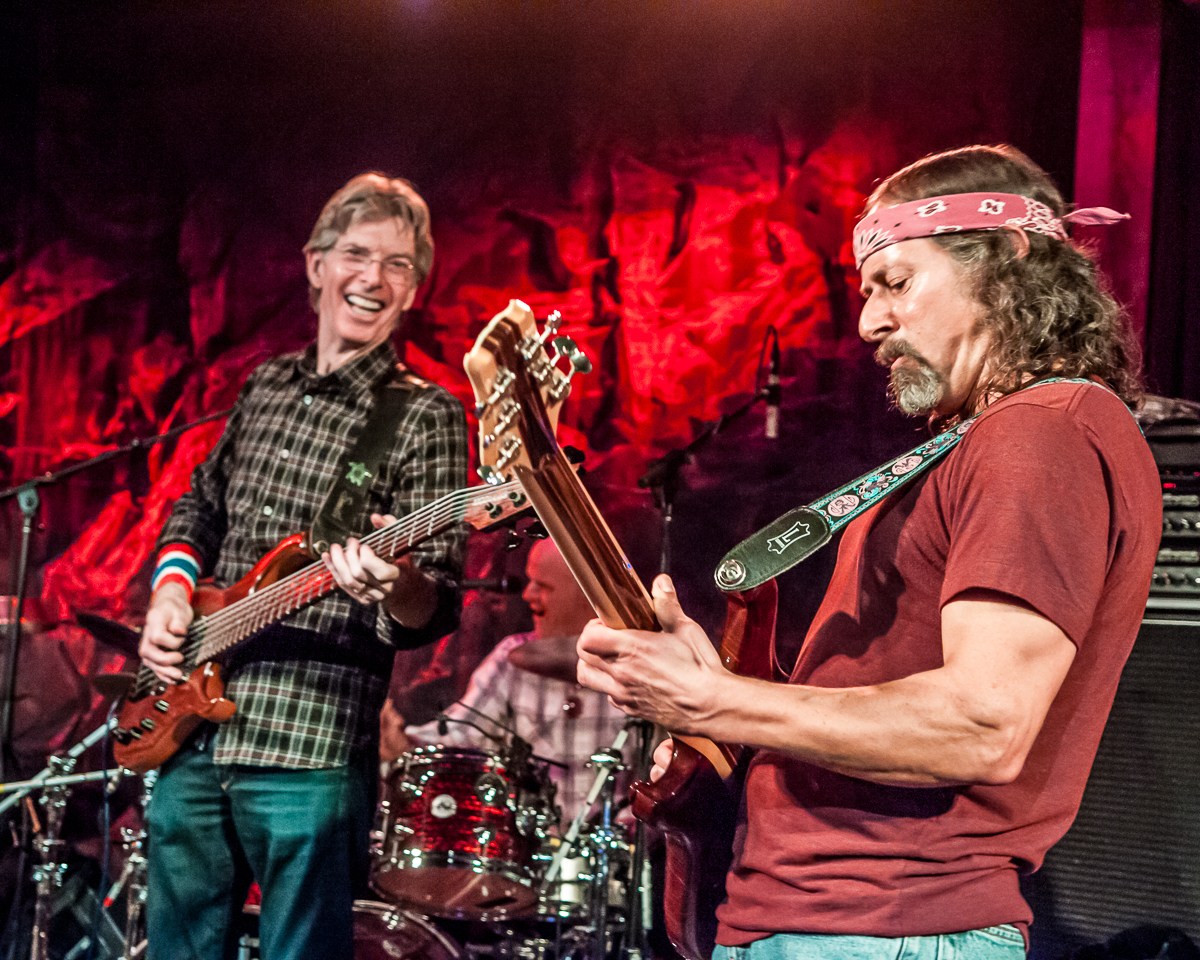
When I get to engage with people who have been doing this longer than I’ve been alive, I always wonder what they are aiming at. We just did Red Rocks with String Cheese, and I was hanging with Bill Nershi afterward in the green room. He was passing around the Don Julio bottle, and we were all having fun. When he’s in that building, his aim is to have fun. That’s primary, and the musical form is secondary. It’s a vehicle for the spirit of fun. It’s a vehicle for the spirit of play. I saw that with Phil Lesh, and I saw it with Bill Kreutzmann. I see it with Yonder and I see it with Railroad in different ways because they’re on their own trips.
Young bands and young artists aim at different things. They sometimes will aim at how many people are here, how many girls are in the front row, how many people are singing along to the songs, how many streams they are getting—very transient, material, quantifiable things. Then there seems to be a trend with the people who have been doing this at a high level for longer periods of time. Their aim is less material, less transient, more enduring and more spiritual. But there’s usually an element of fun or play that imbues that aim.
I saw that when Dylan played at Brooklyn Bowl. They took the phones away, closed the bar, dimmed the lights and he was having fun up there. He was playing with his band. Literally, he would fuck with his band with stops. There was one point in the show where he made them stop, and he was like, “I’m joking.” Then he went back into the song. I was like, “Are you kidding me?”
So I just try to see what everybody’s aiming at. Even if they don’t know what they’re aiming at, I try to see it. Usually, if they’ve been doing it for a long time at a high level, their primary aim is to have fun, which is fascinating to me because logically, that wouldn’t necessarily make a lot of sense, but it turns out that it does.
Bringing it all the way back around to Horizons, did you write a particular song that served as an entry point to the record?
One day I would love to write a record like Dylan did with the Pat Garrett & Billy the Kid album. I would love to write an album for a specific project where the presentation and the framework is premeditated and the songs aren’t in existence yet.
However, that’s not how Reflector or Horizons unveiled themselves. The way that those records came to fruition for me was that we always tour. So I’m getting all this external experience of always touring, and I feel a necessity to create from that experience because that experience is a gift. So I want to bear some fruit from that experience, and a good fruit to bring to the table is a song.
Whenever we’re on the road, I’m writing songs all the time. I was up until four in the morning last night writing a song as we pulled into Park City. So I wrote all these songs and then we played them in real time as they happened. On this tour with Yonder and Railroad, we’ve debuted five new songs. I just let these songs live.
With Horizons, these songs were already written. Some of them could have gone on Reflector. When it came time to decide which of the 40 songs should go on Horizons, the way that I approached it was I tried to think of a theme spiritually and artistically in a commercial sense. I’m talking about the artistic side of it— something that is materially relatable and harmonious to Cosmic Country, but something that also has a spiritual truth.
In this case, I was sitting on my porch, I rolled up a spliff and I meditated, trying to think about what these songs were trying to tell me. What is it they were they trying to say? Then the word horizons came to my mind, and it turns out that horizons is a perfect word for Cosmic Country because there’s a material definition and a spiritual, psychological definition. The horizon, in a material geographic sense, is where an individual is standing on any part of the land and the land meets the sky—that itself has a spiritual overtone to it. Then psychologically, it’s the limit of somebody’s understanding of a certain concept. It’s where their limit meets their desire to learn more. So when you’ve reached the horizon of something, it’s when you’ve learned everything you can about it, but there’s still more to learn and you keep pushing forward.
I liked how the word exists in that way. There’s something Cosmic Country about it. All of the values of this record are about the call to journey, the call to adventure and the seeking of truth, with the playful element in that as well.
Over the years has the idea of Cosmic Country remained static for you or has it evolved in some way?
It’s constantly unfolding and unveiling to us. There just needs to be what I call reflectivity, because there’s this phenomenon that happens when you read something, hear something, see something and feel something. It reverberates in that nonphysical space that you participate in, in a way that feels truthful. So that feeling is what we try to stay tethered to and it’s constantly unveiling and unfolding to us.
I think it’s a frequency that can take form in the mind, the spirit and the flesh. A lot of people are adding to it and they have in the past, too. I love that it’s not all about me. That’s why I called it Daniel Donato’s Cosmic Country. It’s just my take on it. The greatest thing about Cosmic Country is that it’s not just us.