The Barr Brothers: Owning Up to Everyone
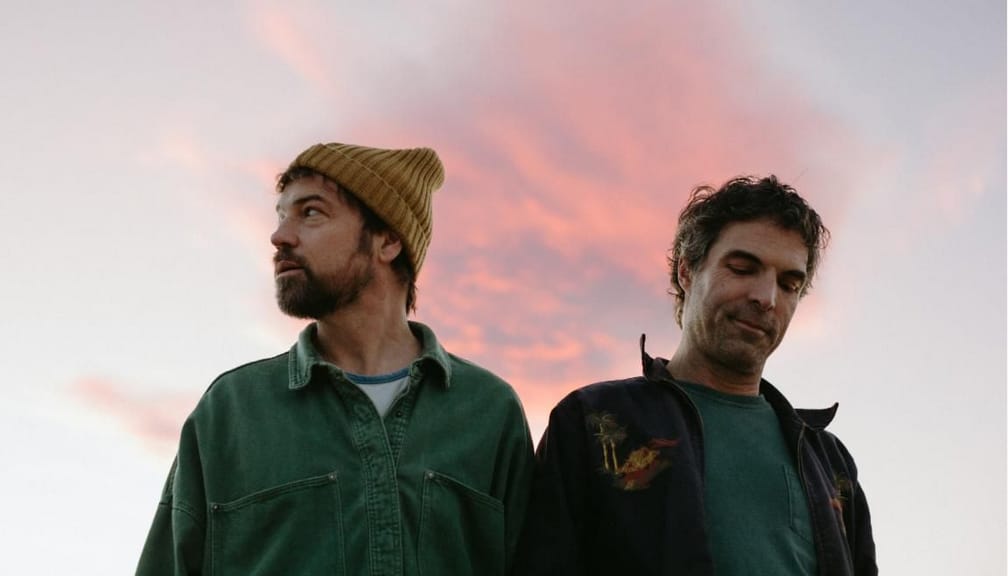
In the spring of 2004, The Slip were in Montréal when a fire broke out in the nightclub they were performing at and everyone was suddenly forced onto the street. The connections that drummer Andrew Barr and singer/ guitarist Brad Barr made during that unexpected pause started a ripple effect that led the Rhode Island-bred brothers to relocate to The City of a Hundred Steeples and eventually start their song-driven, improvisationally malleable project The Barr Brothers.
“This is our 20th anniversary,” Brad says in September, as he thinks back on his decision to relocate to Canada. “In May of 2005, I packed up my Honda Civic and came up here. Andrew had been up here for a month. I didn’t expect to stay—I didn’t know what I was doing. I knew I wanted to be in Montréal for the summer and let loose a little, and it turned into a life.”
That new life included moving into an apartment where Brad would hear harpist Sarah Pagé practicing through the wall. He wrote a song about the experience, aptly titled “Sarah Through the Wall,” and then started blending her classically rooted instrument with the exploratory mix of folk and rock that the Barrs had started developing on their own.
As Slip appearances became more scarce, The Barr Brothers became fixtures on both the Canadian and U.S. indie and avant-garde circuits, releasing critically acclaimed LPs like 2011’s The Barr Brothers, 2014’s Sleeping Operator and 2017’s Queens of the Breakers. They gradually expanded their sound and instrumentation too and, when Pagé stepped away, brought in another adventurous musician, Eveline Grégoire Rousseau, to fill the harp role.
“My move was not political—it was purely selfish,” Brad says, while noting the precarious state of U.S. politics today and his full immersion into his local artistic community. “I was like, ‘I wanna walk up and down the street with all these crazy cool bars and meet all these interesting people and try something diŒerent than Boston.’”
Now, The Barr Brothers are marking two decades in the Great White North with their fourth full-length album, Let It Hiss. Their first record in nearly eight years, the 10-song set tracks an impactful few years that included the pandemic, Brad’s decision to get sober and the rebirth of his creative relationship with Andrew. It also documents their turn away from the harp focused music that informed their early releases while still weaving in the blend of influences that have long been The Barr Brothers’ signatures. And while Let It Hiss is, in many ways, the story of Andrew and Brad’s reconnection, a number of friends lend a hand as well, including Jim James, Arc Iris’ Jocie Adams, Patrick Watson, Marco Benevento, Stuart Bogie, Sam Cohen, Land of Talk’s Elizabeth Powell and La Force/Broken Social Scene’s Ariel Engle.
The range of guest appearances is fitting given how busy Andrew has been away from The Barr Brothers in recent years, working with the likes of Feist, Aaron Dessner, Broken Social Scene, Gracie Abrams and Kevin Morby. He can also currently be found on the road with Mumford & Sons where, Brad jokes, you can see “one of the best drummers in the world play ukulele.”
After making only a handful of appearances as The Slip between 2012-2021, Andrew and Brad have also regrouped with bassist Marc Friedman a bit more frequently recently and plan to celebrate the 20th anniversary of their as-of-now final album together, 2006’s Eisenhower. According to Andrew, their various outside endeavors have helped them understand just how important The Slip remains.
“I saw Bradley Cook not too long ago,” the drummer says of the longtime Justin Vernon collaborator who has produced high-profile records for Waxahatchee, Nathaniel Rateliff & The Night Sweats, Mavis Staples, Suki Waterhouse and Morby. “He sat me down and said, ‘Dude, you need to know the effect that The Slip had on us when we were young. It was the fact that there was this group going on stage and just exploring group improvisation in front of an audience. When it worked, it was so special—you were getting something that was only happening at this time and at this place.’ And it took hearing that from him for me to realize, ‘That’s what The Slip does.’ So when we continue to play as The Slip, it’s really important to me that group improvisation is at the center of things. That’s what’s fun about that band for me.”
Though you have both remained busy with other projects, it’s been almost eight years since you’ve released a full-length Barr Brothers album. At what point during that time did you actively start focusing on the material that became Let It Hiss?
BRAD BARR: We finished Queens of the Breakers in 2017, and we toured it for about two years. In that time, I wasn’t necessarily writing that much. And, when that tour wound down, the pandemic hit. Suddenly, everything paused, and it was really the f irst time in my and Andrew’s lives, since we were 16, 17, 18, that we stopped. Before that, there had always been the prospect of making an album and touring it—we tend to make records thinking about the live situation. We’re inspired by the live context. And, at the beginning of the pandemic, there was all this talk about how concerts were never going to be the same again and it gave us this reason to take a step back and understand our studio better. We started taking on a bunch of work that was as demanding as making records, working for a company based out of Montréal that does these highly conceived, immersive light show experiences. We did four of them and it takes six months to make each one, so we basically made four records of music between 2020-2023 that nobody has heard about because they weren’t credited to The Barr Brothers.
Besides that, we knew that the songs needed to simmer and, personally, I also need to get sober, which was creating a huge hurdle for me to get my music to the finish line because I stopped believing myself and the shit that was coming out of my mouth. So I stopped—I recognized, around 2023, that if I’m going to get this record to the finish line, I need to start really believing that I have something to say. Deep down, I needed to be spiritually moved again. I’ve always had an infinite relationship with music and my brother, but those things had come to a point where neither of them could keep going the way they were going.
I looked around for anything else I could change, but it really boiled down to: “Man, you need to get a handle on your substance abuse and start developing some new patterns”—a new relationship with music and with Andrew. We could have released the record in 2022-2023, but it would only have been a fraction as good if we didn’t take the time that we needed and I didn’t do the work that was needed. And I’m still doing it. I feel like I’ve been given this amazing gift, and every show I play now, I have this energy that I’m so excited to bring—and every track on this record has that energy to it. I’m really glad that it took the time it did.
ANDREW BARR: The first song on the record, “Take It From Me,” was written at the same time as the Queen of the Breakers stuff. And, for me, that song always stood out. I thought that song had an element to it that I could build a whole record around, so I was holding on to that one, but we just couldn’t seem to move forward with the rest of the writing on the record. It was a writer’s block that was beyond anything we’d experienced. After Brad realized he needed to change some life things, we knew some communication things also needed to change. If you’re sitting in a room, looking at each other and trying to make a song come out but there’s all this other stuff that’s unsaid lingering, then that song is probably not going to come out.
So we started exploring new elements of our brotherly relationship and that led to a lot of personal work. For Brad, that was the recovery work he talked about, and, for me, it was like, “We’ve been doing this a long time. How do we want to be moving forward when that champagne cork pops or that can of worms is opened.” It was a bit of both of those things.
On this record, there is a transparency between us which is, ultimately, about being open and honest and not afraid to show your flaws to each other and to talk about what’s really going on down below— if that feels like something that can be artistically represented. When Brad writes, he’s not always thinking about influence, but, for me, the music has this classic American songwriting feeling—Nilsson, Cat Stevens, Randy Newman. Then, when he presented “Naturally” and “Owning Up to Everyone” to me, I said, “We have a record here.” Those three songs stand out and will always represent the record to me. When I heard “Owning Up to Everyone,” I said, “This is Brad being his most vulnerable and exposed.” We recorded it that day and that’s the recording on the record. And then we started to fill it in.
Early on, the harp was a signature element of The Barr Brothers’ sound, and you have mentioned that one of the original goals of the project was to see how that instrument functioned in an electric folk-rock band framework. However, over the years, that’s shifted a bit. At this point, what role does the harp play in The Barr Brothers’ music?
AB: Working with Sarah was an incredible lesson in dynamics. When we first met her, we were playing mostly acoustic—we had an upright bass, I would play the drums as quiet as possible and we’d leave this huge ceiling. So when we got loud, it was really impactful, and we loved playing with that dynamic range. Brad and Sarah would sit for hours and come up with harp-and-guitar arrangements that were really unique to that first record—and the second record, too.
Brad and I have been doing this for 30 years and have been trying to find a direct way to write songs that represent where we’re at, and that just didn’t include Evelyn. She’s still on tour with us, but our access point didn’t include sitting down and writing with her. And by the time the songs were finished, they didn’t seem like they were really harp songs per se, whereas with some of the older stuƒ, the foundation of the songs was instrumental music based around the harp and guitar. The lyrics were placed on top.
BB: We leave everything open-ended—you don’t have to look much further than The Slip than to know that. So our relationship with the harp is still open-ended. The harp is still on at least four or five of the tracks, but we wanted to free ourselves from the need to write for the harp. Having Sarah as a member of the band was one of the coolest things we ever could have hoped to have happen. And then to have Evelyn replace Sarah—we couldn’t believe our luck to have a second harpist show up in our lives that was just as experimental and up for anything. The thing, for us, is that we started to wonder how much of the band’s identity is wrapped up in the harp and also what it feels like to strip things back to just Andrew and I for a while, which is how we have been touring for the last year.
There was a big effort, when the record was being finished, to strip everything back to its core essentials. That was our life philosophy and, musically, everything feels new and like it’s being rebuilt. We felt like, “Let’s pull it back to just the bare essentials and start building it up again from there.” Our career felt like that a little too because seven years is a long time to not put out a record. But instead of worrying about that, we wanted to use it as an opportunity to see what the music would feel like if it wasn’t so linked to the sound of the harp. And it was extremely liberating and really efficient when we did want to use Evelyn’s sound. We knew where we needed to use it, and Evelyn knows she still is, and always will be, an honorary member of the band. She’s also really busy with her own work—everyone that we play with in Montréal is a working musician, and she gave us her blessing to go figure things out. We love playing together and know we still will.
A big part of this record was rebuilding your relationship as brothers. How would you describe where things stood at the outset of the process?
BB: There was no clarity in our working relationship. We still live together—we bought a house together. I live upstairs and he lives downstairs—we were both showing up in the studio a lot. As I said, we distracted ourselves with these other projects, anything that distracted us from making a Barr Brothers record because we knew that, with The Barr Brothers record, we had to really hold the mirror up and see where things were at. So there was a lot of distraction, procrastination. We’d try a song and maybe I couldn’t find the lyrics. So there was a dysfunctional process for a few years there—at the beginning of the pandemic—and then, when I made this decision to get sober, it was like we switched to jet fuel. The first thing we did when it was clear that some sanity and clarity were returning, and we were galvanized, was we went in to work with Sam Cohen at his studio in Accord, N.Y. There was nobody else there, no other bandmates, and we played music as a trio with Sam on bass for a lot of it. And at least two or three of those songs are on the record. Sam was feeling really good about this music that we had been sitting on for, in some cases, five years. That put us on a good track. Then we brought some things into our studio and to Patrick Watson’s studio to see if he had any things to lend.
There’s a couple of studios in Montréal, like Hotel2Tango and Studio Dandurand, but we also hit a stride in our own studio. We bought a 1/4-inch tape machine, and we started running a lot of the drum buses and [other equipment] into that. The record title came out of that—the tape machine beefed up the drums but added a bunch of hiss. Also, some guitar pedals that I had were just hissing all over the place. It’s also a metaphor—however shameful the shit is, you’re like, “Let it rip, be honest about it and let the chips fall within that. I’m not trying to curate a band identity for anybody. Let’s record everything we feel like recording.”
That feeling, that liberation, is what started to overcome us in a good way. That’s when the really fun songwriting began because I just started putting everything down. We started letting ourselves enjoy whatever delight was to be had in the studio. It was fraught for years, and then easy and joyful toward the end. Usually, it’s the other way around.
AB: When this theme for the album became present, it almost had all these different phases. The first plea was like, “I don’t need it anymore. I don’t want it. Let it be exposed. Let it hiss.” Then another one was running toward the thing that you’ve been running away from and facing things head on. So when “Run Right Into It” popped out lyrically, it was an “aha moment” of, “This record does all work together.” “Run Right Into It” was a 12-minute jam that had been sitting around forever. Somebody else might hear it and say, “This is as disparate a record as I’ve ever heard.” But for us, there’s a lot of themes going on that make sense together and are coherent in our world.
Sam was the first person that we played this music for as if it was a body of work, which was really helpful because it can be really hard, especially when a record takes this long, to see the throughline. We trust Sam so much and his tastes. He’s not gonna sugarcoat anything for you—ever. You see his smile if he likes something and he was really clear with us about what he liked and what he thought needed help on the record, which is a classic producer role. We worked with him for about a week and he helped push things forward and slightly left. Ideally, you’re not going to a producer, or another musician, for a validation, but inevitably that can be part of it. You’re like, “I need you to tell me if I have something here.” So Sam brought these 10 songs into focus, and we also rerecorded some things with Jon Low, who mixed the record.
Brad, you have mentioned your sobriety a few times. How much of that journey informed the lyrics on the record?
BB: I wrestled with how much to go on record with that because it was a part of the story of the journey of the record, but we also didn’t want it to color other people’s interpretations of the songs. I truly believe that all the songs are relatable across the board—whatever the struggle is that you’re going through, whatever the thing is that you need to let go of, whatever you’re running from, whatever the object of your desire or your obsession is. I believe all these songs speak to that across the board. I don’t want people to feel that they can’t relate to it because it was about somebody’s journey when, really, it was all this feeling of joy that came after I got over that big bump and started to see the road ahead. It was clear, wide and beautiful. So the songs aren’t necessarily about recovery or anything, but they were certainly inspired by it.
The pandemic was a really easy time to lean into all of our dysfunction—it absolutely was for me. It very much ramped up during that time—isolation is the fuel for any obsessive, addictive behavior. So it snowballs. The reason I like to talk about it is because I know how much I got out of reading about others who have [gone through recovery]. When you’re at that point where you’re struggling, any sign that someone else was able to get through it brings so much hope.
A number of friends and special guests contributed to this record, including Jim James and Jocie Adams, who appear on “English Harbour.” I heard they happened to have just been together in LA when you suggested they both appear on the song, which was fortuitous.
BB: We had sent them a message like, “Hey, we got this track, we’d love for you to both play on it,” and they were like, “We just had dinner together last night.” They were both incredibly generous in totally different ways. Jim has always been so supportive, especially given his profile.
I don’t need any greater sign that I am in a good place, musically, than all of these people turning up to help out. With Lizzy, in typical Lizzy fashion, I know they are going to come in and kill it. We just cranked them up in the mix.
Another great contribution is Klô Pelgag, who is a Québec singer, on “Moonbeam.” She sang in French—the first French song on one of our records. It’s the track I play people when they haven’t heard any of the new music. It’s also the one track that Jon Low built from the ground up. Ariel Engle is another awesome Montréal singer who sings on “Let It Hiss,” and Marco [Benevento] plays on “Naturally.” Sam’s bass is on a few tracks, and Stuart Bogie played a wicked solo.
AB: The first time we really met Jim was when The Slip did a tour opening for My Morning Jacket [in 2006]. We were like, “There are still rock gods on this earth, and he’s one of them.” We’ve been fortunate, over the years, to call him a friend. We sent him “English Harbour” at 4 p.m., went and picked up our kids and, by 9 p.m., he had sent it back as a duet where he had sung every word of the song in harmony through to the end. It sounded like he had done it once and it was perfect. I remember getting chills.
With Lizzy, when they came down to the studio, that’s when that song really came together. Brad and I had been hearing The Raveonettes as an inspiration for a little bit in the way there’s this male/female vocal there—it’s not a background vocal. Lizzie and Brad have a really nice blend. And with Klô on “Moonbeam,” I thought it would be really lovely to have a French verse on this song. It means a lot because, where we live in Montréal, it is mostly French and there are a lot of people that come see us all over Québec who only speak French. It was nice, poetically, to be able to say, “We hear you; we see you.” And Ariel, La Force—who also sings in Broken Social Scene—is effortless.
Brad, in recent years, you have performed as a solo act more regularly. What has that format provided you that you’ve been able to bring back to The Barr Brothers and your other endeavors?
BB: I’ve been really enjoying playing that way recently. At first, I’d just get up there and play some songs that people knew. But over the last year and a half, I’ve committed to the format because I love that feeling of being in a small room—or in a big room— stripping the song back and connecting with people in that way. While Andrew was out with Feist and Mumford, it was a great vehicle for me to explore, try things and fail. [Laughs.] It was a great place to fail because it’s only me to be accountable to. I’m trying some weird stuff up there and trying to be loose with the audience and let them know we are on this journey together. I’m really just here to nurture the feeling that got you in the door, this open heartedness. And perfection be damned. I’m gonna try something and I’m probably gonna fall on my face.
There’s a lot of pedals up there, so I love having that space to try out different stuff. And, after the last year or so of doing a lot more of that, I feel really confident in my role up there. I’ve developed a repertoire and it’s not necessarily Barr Brothers music either. So while the solo format was a place for me to test new Barr Brothers songs for a while, and still is, it is also a place for me to feel really free. I can do things where, if I was doing this while Andrew was on stage, he’d be sitting by his drum set like, “Can we move on from whatever the soundscape is you’re doing and get to some music?” The solo format is an incredibly important format for music.
Andrew, in the past few years you have toured the world with Feist and Mumford & Sons, and also played drums with Kevin Morby and Broken Social Scene. What have you taken away from those experiences?
AB: I’ve always enjoyed making music in different situations, with different people, whether it was playing around town back in Boston or various pub or jazz gigs. It’s really healthy to be able to explore the way you communicate with other people, musically.
You get in a band and it can be very easy for these ski slopes to get created where you just do this one thing, but it’s always been important for me to be able to shift and know how to respond to di‘erent people’s songs, which is a long way of saying I love playing in di‘erent musical contexts— whether it’s Feist or Mumford & Sons. I’ve been working with Aaron Dessner a lot on the music he’s producing, which has been great. Usually, the music is almost finished when he calls me and I can come in and play drums, instead of spending three years on a record. [Laughs.] I’ll do like 12 songs in two days. It’s a nice escape from The Barr Brothers, where Brad starts writing a song and I hear it through the ceiling because he lives upstairs—and then I hear it every day until we start to learn it together and I start getting my hands in there to help him rearrange it. So it’s almost a relief to play this drum part that’s written and then play the live show.
Aaron works with Mumford a lot and he was the one who introduced us. They like to have a dynamic live show, and they’re fierce. They have a lot of energy live, so it is really fun. If I excel anywhere, it’s live. I love picking up on the energy of the band— of the singer and the audience—and riding that. In their early sound, Mumford were tapping into this Appalachian, Americana sound, but because of where they came from, it just sounded so unique, and they had this British-punk element. People that know me are like, “Mumford? Really?” But we have a mutual desire to tap into an audience and take them on a journey, so it works.
[We just did the Railroad Revival Tour], which was a blur. Every day, we had to learn a whole new set of music. With most people, like Maggie Rogers and Noah Kahan, we had to really go and sit and learn the songs, though Darius Rucker just showed up. He was like, “Do we really need to run this? You know it.” It was a fun tour. Every band I’ve ever played with has talked about doing a rail tour, but the budgets never worked.
Aaron has used you on some of his high-profile recordings, including Gracie Abrams. How did you first connect?
AB: There was a festival in Berlin called PEOPLE in 2018 that Justin Vernon and The National guys put together. I was there on Justin’s request—he’s an old Slip fan. It was this meeting of 150-200 musicians—no bands, just individual musicians, and we collaborated all week in different contexts. I met both Dessner brothers there and we stayed in touch. Aaron realized that I’m in Montréal, which is as close to him as New York City.
In 2023, you both performed with Billy & The Kids. Though you have been a part of several musical communities over the years, the Grateful Dead was an early inspiration. What were your takeaways from that experience?
BB: I really hope I get to do that with him again, and the thing it proved to me is that I’m highly qualified for this job, even if Deadheads don’t think so. [Laughs.] I caught an amazing amount of shit on the forums, which was surprising at first, but then I was like, “I actually feel really qualified to do this because I love these songs. I know these songs and improvising on traditional song formats—and non-traditional song formats—within a certain Americana framework is just what I’m good at.” And these songs are part of my foundation.
It felt like a real full-circle thing to play the music that jump-started a life of music for me. My first show was Hartford Civic Center 1989. My dad drove us to the show, parked outside the Civic Center and waited for us until the show was over. Then he drove us two hours back to Providence. I probably saw the Dead 20 times, so playing with Bill is actually a quite familiar space. He’s a much di‰erent drummer than Andrew, and everything is extremely malleable—endings are extremely unrehearsed. There was a real trust. He’s like, “I love your music. I wanna hear you guys. You’re making me feel like a musician again. That’s why you’re here.” So to have that kind of confidence placed in me by someone who I idolize, that’s all I ever wanted out of music. Being able to commune with my heroes has helped me live out one of my dreams.
Sadly, at our last show with Bill, he got COVID and couldn’t make it, but we had Chris Tomson from Vampire Weekend f ill it. I’d never met him before, though Andrew had met him once before somewhere— super nice guy, an incredibly disarming and sweet individual.
AB: Europe ‘72 was one of the first vinyl records I bought when I was 12, and I got to see them quite a few times from the age of 13 until Highgate, Vt. in 1995. I probably saw 10 shows and always respected that band and their creative freedom. It was a little unclear, until the day I sat down and played a show with Bill Kreutzmann, how they maintained such a level of spontaneity. It would seem like a risk for most people to step on stage and play a song that you’ve played a million times but so differently. And when we played with Billy, he counted off songs we had rehearsed at one tempo in another tempo during the live show. It was just about how he was feeling in that moment.
In that moment, everybody needs to find a new way to play it—you do it together and it galvanizes the band and the audience when it all comes together. It might fall on its face, but it was Billy, and his brain, that allowed so much spontaneity to happen in how the songs were presented. Before we played with him, I thought that some of the changes were predetermined but they aren’t. He’s just such a badass. He’s in his 70s but has these old-school drum chops from the Buddy Rich/Elvin Jones school. He militantly explores freedom, and I say militantly because he looked at me and said, “Brother, when we walk out, I want you to play whatever you’re feeling. It’s really important to me that you just play whatever you want. That’s why we’re here.” Nobody says that before they are walking out to play in front of 2,000 people. And when he was unable to make that gig because of COVID, it was this culmination point where he was pushing us out of the womb.
Between Barr Brothers releases, you also regrouped with The Slip to release some tracks and mount a few short tours. 2026 marks the 20th anniversary of your last Slip album, Eisenhower. How did it feel to revisit that material after so long?
AB: After doing all this work with not just The Barr Brothers but all these other artists, to go back to The Slip you have to say, “What is this band?” It’s not just a bunch of songs. In fact, I think Brad and I would both say that songwriting wasn’t the forte, necessarily. That’s not to say that there’s not some really sweet, beautiful songs in there, but when it came time to walk on stage and play with The Slip, Brad, Marc and I—to go back to what I was saying about Bill— wanted to explore freedom. That’s not something you always get to do. When we are walking out in front of 20,000 people with Mumford & Sons, we’re exploring freedom in a way where you want to liberate the song, you want to connect to people, but you’re gonna pretty much play the song down the way it goes and that’s the right thing to do.
But with The Slip, we built a whole career on this group improvisation. So for me to go out there and just remember the songs wasn’t enough. We had to go out there and access that group improvisation because there are all these really interesting colors in the harmonies and rhythms, and things can go any which way. There is a lot of motion built into the songwriting— these chord changes that can be improvised over. So The Slip isn’t about the songs necessarily as much as the way that you get inside the songs and find ways to communicate with each other.
BB: Something about having The Barr Brothers as an outlet has made playing with The Slip a very liberating experience because it doesn’t have to be everything that I hear in music. It can just be The Slip. That has happened naturally since we started putting out Barr Brothers records and Marc started playing with Ryan Montbleau and other projects. He’s busy and plays with tons of people. Something about taking that step back made me realize that The Slip doesn’t have to be all the music that we love. The Slip is already 10 different bands. I don’t need to force that upon it anymore. It can be liberating to know that it can exist as this thing where the three of us can come together without much discussion—without much rehearsal—and the songs come back very quickly.
Also, our manager for The Barr Brothers has taken on managing The Slip and is excited to get some Slip shows on the books. He wasn’t necessarily a Slip fan, but since he’s been made aware of it, he’s been like, “What the hell? This is something you do? Why aren’t you guys doing this more? Can I have your blessing to work The Slip back in our lives?” And, of course, we said yes. We are hoping to do some festivals and stuff. Being able to play at High Sierra and feeling that camaraderie—that old friendship, that absolute confidence with Marc and Andrew and our chemistry together—made me feel like that Bill Graham quote. We’re not the best at what we do; we are kind of the only ones that do what we do.