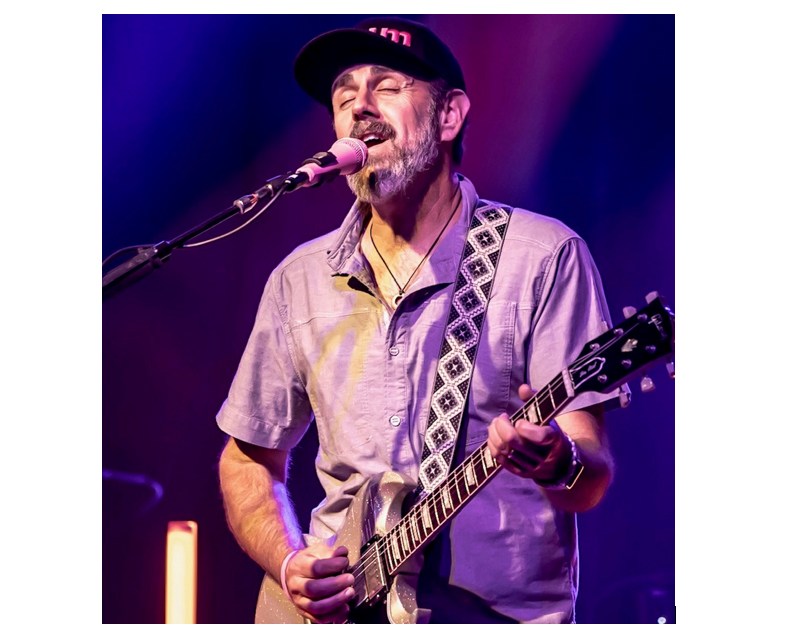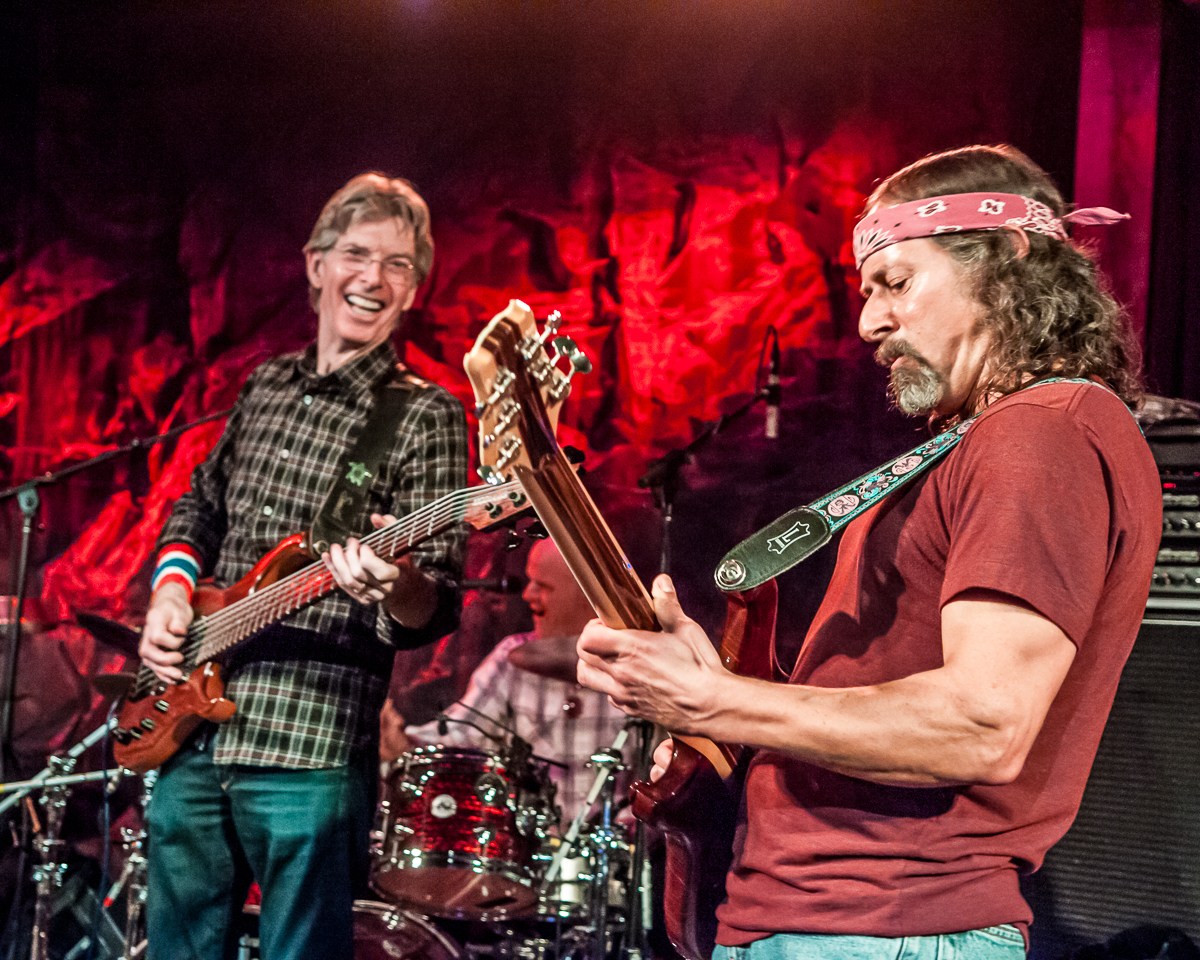
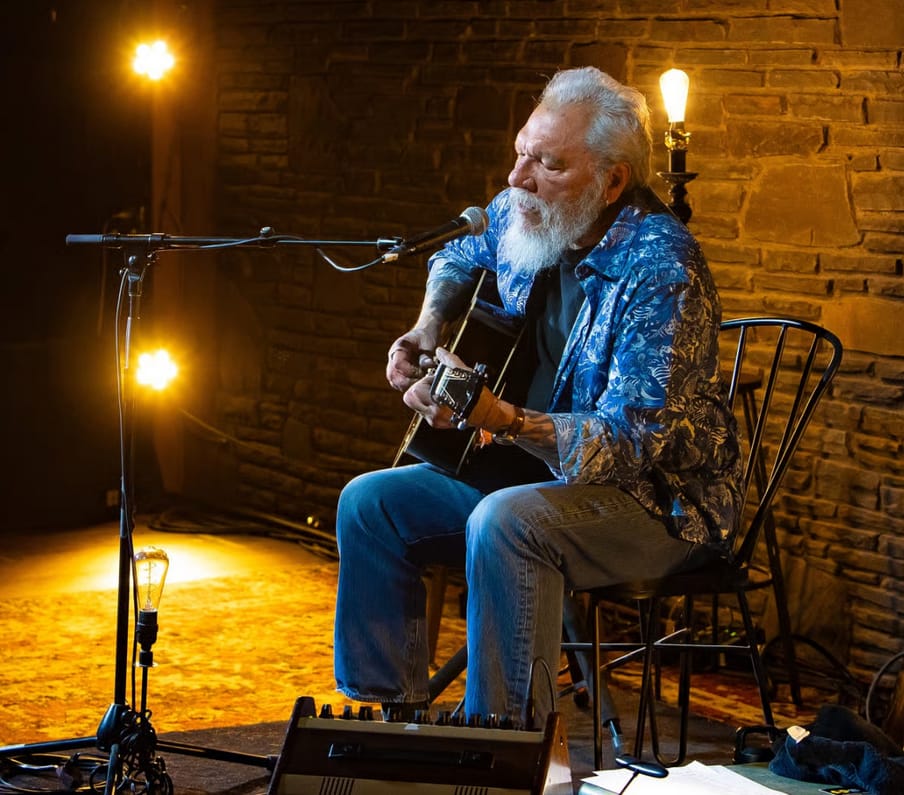
photo: Vernon Webb
In his own words, Jorma Kaukonen is entering the “cresting wave” of his career. The guitarist—who helped lay the groundwork for the modern improvisational-rock world with Jefferson Airplane and continues to stretch the blues’ boundaries with his long-running Hot Tuna project—will turn 85 on December 23. And, as the Washington, D.C.-bred, Ohio-based musician prepares to mark that milestone, he’s also shifting up his touring approach after over six decades on the road.
“This is by no means a farewell; I am not retiring,” he said in a statement earlier this year. “I am calling this my cresting wave. The music remains my most profound passion, and the connection I share with you during my live performances is something that feeds my soul and I will always cherish. This change means I will be playing on a different scale. I am focusing on exploring new formats, like special one-off events in select cities, exclusive residencies and festival appearances. This new chapter will grant me the freedom to create in more innovative ways, embrace different creative opportunities, and, most importantly, perform for you when I can deliver my absolute best. I am excited about what this new format will bring and the fresh energy it will create.”
It’s just one of several changes Kaukonen has made as he’s segued into his latest era. In 2023, the guitarist and his longtime creative partner, fellow Airplane alum Jack Casady, decided to retire their electric Hot Tuna format, choosing to focus on the combo’s original acoustic configuration for the foreseeable future. Then, the following year, Kaukonen and his wife/manager Vanessa sold Fur Peace Ranch, the 126-acre Ohio property where they’ve hosted immersive musician workshops since the late 1980s. However, even as he appears to be shifting gears, Kaukonen’s schedule remains packed with interesting opportunities. And, this fall, he marked his big birthday with all-star shows at a series of marquee venues across the country.
“When I’m doing my own thing, I’m doing the one-man band kind of stuff,” Kaukonen, who also continues to perform as a solo acoustic act and in a duo configuration with singer/guitarist John Hurlbut, says during a Zoom conversation in early December. “But I love playing with other people, whether it’s Steve Earle or John or Derek [Trucks] and Susan [Tedeschi]. So to get the opportunity to do these shows was really something else.”
At the moment, he’s in Denver, practicing for a birthday concert at the Paramount Theatre that will feature Casady, Los Lobos’ David Hidalgo, harmonica player/keyboardist Ross Garren and regular Hot Tuna drummer Justin Guip, among others. “We just got in last night, and people will start filtering in tomorrow,” he notes. “Hopefully, one thing will lead to another, and we’ll avoid too many train wrecks.”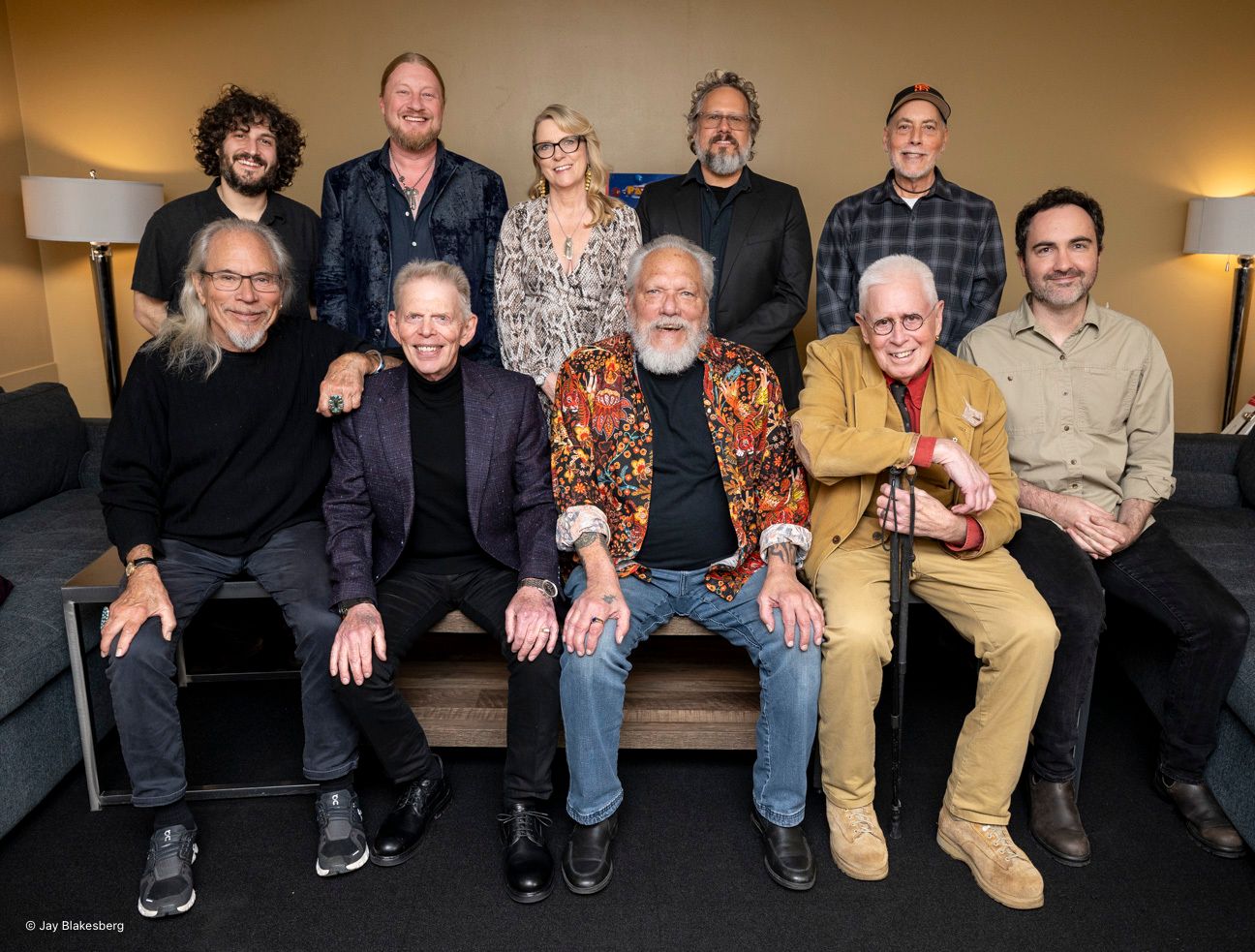
Jay Blakesberg
Each of the special 85th birthday shows have provided an immersive look at Kaukonen’s singular career. The events kicked off, fittingly, at Washington, D.C.’s Warner Theatre on Nov. 1, with friends and collaborators like Casady, Steve Kimock, Jim Lauderdale and Cindy Cashdollar sitting in at different points. Then, later that month, the party moved to New York, where Hot Tuna had traditionally played over Thanksgiving weekend, for a Nov. 29 gig that boasted Earle, Larry Campbell, Teresa Williams and GE Smith. Sadly, Casady was forced to pull out of the show at the last minute due to what was described as a necessary heart procedure. But, thankfully, he was able to join his lifelong friend in their old San Francisco stomping grounds on Dec. 5 for a gig at the Masonic Auditorium with Tedeschi, Trucks, Sam Grisman and Kaukonen’s brother Peter.
When Casady’s name comes up, Vanessa slides into the Zoom window to assure fans that the famously active bassist is healthy. “I just came back from the gym,” she says. “I have to get ready for Jack because he’s a machine, and if I don’t get prepped just to walk a mile with him, then I’ll never make it.”
She also mentions that, for the first time in Jorma’s career, his schedule is relatively open after the spring, though they already have some festival irons in the fire. “There will be one-off [gigs] and Jorma’s gonna do artist residencies,” she says. “But I think we’re gonna have a life.”
Ever the musical scholar, Kaukonen looks to the blues musicians who inspired him at an early age, and continued to perform into their final years, as he thinks about the future. “They played well into their 80s and were still more than awesome,” he says. “So I look forward to that.”
However, setting up another space of his own to host concerts on the regular doesn’t seem to be in the cards at the moment. “Buddy Guy is one of my heroes, and he’s got Legends and all that kind of stuff, but I don’t see myself owning a club. That’s real work, and Vanessa and I have had venues. But I see myself keeping current with my skills and playing games for people.”
In conjunction with his birthday shows, Kaukonen also recently released an archival live album, Wabash Avenue, which captures one of the musician’s earliest public performances. The tracks were recorded at San Jose, Calif.’s The Offstage in 1965—shortly before a then 25-year-old Kaukonen co-founded Jefferson Airplane—and include a mix of roots classics and early originals, like “Embryonic Journey.”
The material sat untouched for years until the Kaukonens started filling a dumpster in preparation for a recent move.
“When I met Jorma in Woodstock, he had crates of this artwork, and I said, ‘What is all this bleepin’ shit?’” Vanessa adds with a laugh. “It filled our museum—it started The Psylodelic Gallery [at Fur Peace Ranch]. We have it all—the original Fillmore posters, handbills, clothing from Monterey and Woodstock. We saved it all.”
“I said, ‘We’ll never fill this dumpster.’ And as a matter of fact, one of the guys that works for us had to jump on top of everything and stomp it down with his feet to get more stuff in,” Kaukonen says, as he segues from their recent move to the period of his career documented on Wabash Avenue. “Some of the tapes had mold on them. We didn’t bake them or anything, we just did one pass. That’s what you hear. We cleaned up the spaces in between the songs and that was it.”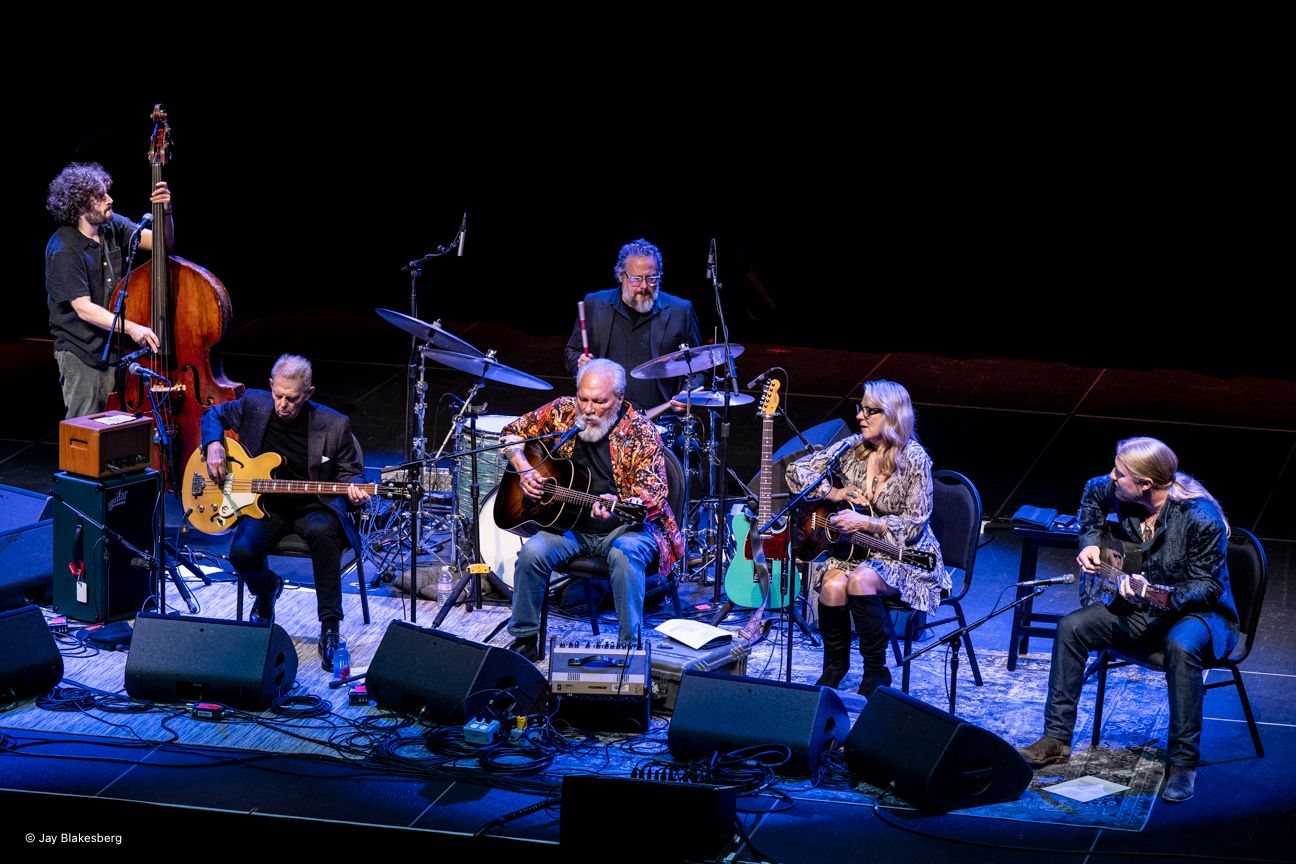
Jay Blakesberg
Let’s start with the big announcement. You recently confirmed that, shortly after your 85th birthday, you are going to stop touring, at least in a traditional sense. Yet, you intend to continue to perform. Can you walk us through that decision and what we can expect going forward?
Jorma Kaukonen: We’ve been thinking about that for a while. I’m really lucky because I’ve remained pretty healthy for a guy my age, and I’m pretty vigorous, blah blah blah, and all the stuff that goes along with that. And so I’ve been able to do this for a long time, but the traveling is a little more tedious than it used to be—though the gigs never are.
I used to love all that traveling—getting to go on the bus or whatever—but, to be honest with you, it’s become a little less enjoyable over the years. The gigs are always awesome, so we just decided that we would try to figure out a way to do the gigs with a little less of the traveling. And one of the things we came up with was residencies.
It’s a work in progress because we’re still pulling into the end of the old way of touring—we’ve got one more with the old way of touring this April. But the bottom line here is that I’m not retiring in the sense that most people think about that. I need to keep playing gigs in order to keep up my guitar playing, my singing and all the stuff that goes along with that, especially at the level where I like things to be.
And the good news, for me, is that my buddy John Hurlbut is my neighbor at home, so we get to do lots of little local things that nobody hears anything about. I get to go on stage and be in front of people and stay active. Time is marching on. But, in my humble opinion—and I’m not writing an editorial for myself—I’m playing and singing better than I ever have. And I don’t want to lose that.
When you are at home between gigs and relaxing, do you still find yourself picking up the guitar just for fun or is it more to prepare for the next tour or recording project?
JK: No, I play every day just to play. I was really lucky. Chris Smither and I had this discussion once. We were in a joint interview, and Chris said, “I fell into it when I was a kid, and I never fell out of it.” And I feel the same way. I really love the guitar. In fact, I’m holding up a guitar and a pick right now because I was just stringing and giving some TLC to my guitar when this interview happened. So I still love the darn thing, and I love everything that goes along with it, which includes geeking out with like-minded spirits and whatnot. So that’s never changed. It’s still awesome. The guitar is awesome.
You mentioned John, an old friend who has grown into a regular collaborator, especially in recent years. You’ve released a few records together since the pandemic and have been touring as a duo this year, including an appearance at the Hudson River Music Festival this past spring. How has that partnership informed your latest artistic period?
JK: I met John at some point in the ‘80s—1983 or around then. I was on a solo Jorma tour, and I got a job in Columbus, and it turned out to be promoted by this guy that owns Schoolkids Records. John was also in the record game and had his own thing, and he had something to do with it. We became friends, and we’ve remained friends ever since. For example, when I bought the piece of property that became the Fur Peace Ranch and I wanted to go look at it, I flew to Columbus, and John drove me down. I mean, we’ve just been buddies forever.
Along the way, we’ve played a little music together, but never really seriously. But, at the Fur Piece Ranch, we had these little shows and, because we spent so much time together, we just wound up, without even thinking about it, building up a small repertoire of songs. And one of the things that made it so much fun for me is that John did all the heavy lifting. He sang and played rhythm guitar, and I just got to play lead in the same sort of context that I did with the Airplane, which obviously I don’t get to do on my own or with Hot Tuna. It’s a different animal. And so, to be able to be liberated in that way to explore that sort of a linear harmonic concept with my guitar playing—which I don’t really do when I’m fingerpicking—was just so cool. One thing just led to another. And, sort of in spite of ourselves, all of a sudden, we discovered we had a repertoire.
Since we were sitting around during COVID and the early post-COVID [period], and since we had this repertoire of stuff, we decided that we might as well do some recording. We had a relationship with Culture Factory, which is a great company that’s been so nice to us, and their packaging is great. They’re top-draw guys. And they gave us an opportunity to basically do whatever we wanted to do.
We did all those recordings that we did for Culture Factory absolutely live at the Fur Peace Ranch—no movie magic, no digital this and that. So what you hear is pretty much what we played. I’ve got my own little repertoire or world of songs, whatever you want to call it, but one of the things that I love about what John brings to the table is that he’s just such a music aficionado, and he just knows all of these different songs. These are songs that he knows I’ll love but that I never would have thought about playing as a solo artist myself. And all of a sudden, it was like, “Wow, I love this song, and I get to play on it, and I don’t have to remember lyrics.” [Laughs.] It was really organic, and it’s developed into a thing where we can count on being able to do gigs together, whether it’s in Vanessa’s little shop in Athens, Ohio, or in San Francisco at the Masonic. [The albums were released as The River Flows and The River Flows Volume Two in 2000 and 2001, respectively.]
So it’s been great playing with John. My nutty friends in the Jefferson Airplane gave me an opportunity, because I was never a lead guitar player before that, to actually learn how to play lead guitar in a more freeform context than if I was in a traditional blues band. The Airplane was, obviously, not a blues band. Even though I love the blues stuff, just to be able to have these great writers—Paul [Kantner], Marty [Balin] and Grace [Slick]—coming up with these great, idiosyncratic pop songs or whatever you want to call them, with great changes, gave a guy like me a chance to really find melodic stuff to do within that.
Jeff Fasano Photography
Speaking of that era of your career, and the period directly before that, you recently released some long-lost recordings from 1965 as a new record, Wabash Avenue. Can you describe the context in which those tunes were recorded and how you ended up, fortuitously, rediscovering them in a family storage bin shortly before your 85th birthday shows?
JK: So, when I moved to California in 1962 to go to the University of Santa Clara, I had been working in New York. I was really a complete non-entity, but I was on the scene everywhere, playing with this person or that person and just hanging out and doing all that stuff. And when I moved to California—and I would have loved to have moved to San Francisco, but it didn’t work out that way—I ended up in San Jose, and I had this self-inflated sense of importance that I’d be bringing all this East Coast culture out there. And, immediately, I met all kinds of people in California that were like-minded spirits, many of whom were light years ahead of me. It was just an exciting artistic environment.
When I was going to school down there, and just getting out of school, we had a huge folk community. I was teaching at this music store called the Benner Music Company and playing all these gigs. There were a few different places in San Jose, like The Offstage. Kantner and some of his pals wound up being part owners of that place for a while. It was a very incestuous little scene there, and I had this repertoire that I had put together. So I thought, “Well, this would be a great time to make an album.” So I started out with some recordings at The Offstage, and I was working with another guy named Paul Ziegler, who owned a club called The Shelter in downtown San Jose proper. We wound up making this recording.
Now, one of the things that also happened is that my roommate, when I was going to school, was this sort of electronic-music-loving nerd, and he had this Akai tape recorder that he had hot-rodded to record at 15 IPS. That’s nothing today because these things will do better, but it was a big deal back then. So we got some really decent recordings at the time, and my thought was that I was going to release this album and maybe I’d become an underground folk hero. But, right around the same month that all these things wound up happening, Kanter seduced me into the band that would subsequently be called the Jefferson Airplane. And immediately, once I fell into that world, that was it.
To be honest with you, I had almost forgotten about these tapes completely and time marched on. But, the good news was that, back in those days, whenever one of us wrote a song, we’d package up the disc—or rather the reel. There’s a certain kind of brown paper you had to use, and then you went to the post office and sent it registered to yourself with all these stamps so that it was unopened. And that’s what we did with these recordings. I’m sad to say, these ones were not the 15 IPS recordings, these were 7s, but they were packaged and sent and then there they lay for the better part of a lifetime.
How did you end up unearthing them again?
JK: Vanessa and I have moved many times since we’ve been together. Hopefully, we’re not going to move again, but we sold the ranch a couple of years ago, and we moved to Athens, which is a little town not far from there. We had all these boxes, and I decided to start going through all this stuff that was just sitting there. I’ve never thrown anything out—for guys like us that are involved, in some way, in evolving cultural history, you never know when something is gonna be relevant. But this time we got a 30-foot dumpster and ended up filling it up. I pulled this one out of storage and we sent it to Rick Sanchez, who does all of our restoration.
Any artist, of any sort, goes through developmental periods and, when I moved to California in ‘62, I’d only been playing fingerstyle guitar for two years. So, I got pretty good at an early age. I obviously have some [natural] talent for it, but it’s also all that I did back then—I practiced at it, relentlessly. As a result, as I learned stuff, it opened my eyes to a lot of things, and one of the big eye-opening things was the Drop D tuning that “Good Shepherd” is in and “Embryonic Journey” is in.
At one point, Roger Perkins and his musical partner Larry Hanks came through. Roger’s since passed away, but Larry’s still alive. Roger did “Good Shepherd” with the Drop D tuning. And, of course, I heard this thing that was utterly new to me and flipped out. I learned “Good Shepherd,” sort of mutated it a little bit, but not that much, and I wound up writing “Embryonic Journey.” And the way that happened was that I picked up the guitar and just talked to it. That’s the way that I did it back in those days and I still do the same thing these days. Now and then, something emerges. This time it was an alternating thumb thing with the Drop D and the little hammer-on at the beginning, from the D to the G chord, and it just seemed to make sense. One thing led to another and my ex-roommate at the time said, “This could become a song.” Luckily, he recorded it—otherwise I would have forgotten everything, I guarantee that. But I was able to go back in and tidy it up.
Interestingly enough, though the recorded version on Pillow is less than two minutes, it’s a lot of music for 1:59. 
Jeff Fasano Photography
I think people often forget that, when Jefferson Airplane first came together, the concept of a rock outfit where everyone wrote their own parts was a relatively new thing. Many of you had also been performing as solo acts on the folk circuit, as you mentioned, and in that respect, the band that emerged was almost like a “supergroup.”
JK: That’s right. It’s hard to imagine that today, but to be in a band where people were allowed to be creative, without having a band meeting that would kill the band entirely, was a new thing. It was interesting stuff. With a band like the Airplane, except for Spencer [Dryden] and Jack, nobody else was really a professional musician yet at that point. So we brought a lot of odd takes to the creative table, most of which actually worked. Some didn’t work, but most actually did and the amazing thing, given what strong personalities all the members of that band had, was that everybody gave, in a creative situation, a lot of latitude to everybody else to find a place in the band.
For example, I was not a prolific writer back in those days. But I’ve got a song on almost every record that the band made, starting with Pillow, because that’s just how it was.
You have long amassed a large repertoire of your own material, as well as your signature arrangements of standards across several divergent roots genres. Was there a point where you felt like you truly hit your stride as a writer and an arranger or is it more something that you gradually chipped away at over time?
JK: I think it was an over-time thing more than anything else. I’m fortunate enough to know a lot of great artists that are tunesmiths. That stuff just flows from them. For me, I usually needed something to stimulate or to open the door to any given composition. It might be a guitar lick, like the “Embryonic Journey” thing, which doesn’t have any lyrics—or it might be a little guitar lick with a lyric, like with “Genesis,” [which came from the lyric], “The time has come for us to pause.” And then one thing leads to another.
Now, my normal method for writing songs–and I don’t recommend this to songwriters because you won’t write many songs if you do it this way–is to wait for something to just kick me in the ass. Usually, it’s a lyric that goes along with a guitar lick or something like that. And then the sound and the emotional context are able to follow that until I get through with at least a rough draft. That’s important for me. If I had to sit down and write a verse today, and I had to write another one next week, then I would have never written anything.
This fall you have been celebrating your 85th birthday with a series of special shows in a few cities important to your career and development—Washington, D.C., New York, San Francisco and Denver. Each night has featured a mix of special guests and a unique setlist. When it came time to plan the celebration, how did you go about putting together each concert?
JK: Vanessa and I really just got together and sort of brainstormed things. Vanessa’s also my manager, so she knows more about me than I know about myself, and she came up with great ideas for people that she thought would work for each gig. The guests tend to be from each area we are playing in, but that wasn’t always the case. We had Susan and Derek in San Francisco; they’re not from San Francisco, but they were on their way to Hawaii, so it made sense. We also didn’t want to repeat songs, if I could help it.
I exist in my own sort of Jorma-esque bubble. I play with other people, and you’re familiar with the nonsense that I’ve been doing for a long time, but the good news about all of this is that I have a lot of long-term friendships with people who have had careers that have grown into all corners of the Americana category. They’re doing something that’s very different from what I do, but we still have a relationship together, so we can have that conversation, and they will bring their world into mine, which I find exciting.
For the D.C. show, we had Cindy, and we had Steve [Kimock] join us. These are musical friends that I’ve gotten to know over the years. That was important—to have some sort of relationship [with the guests we had]. I’ve known Cindy since she worked at the Tinker, which is a bar in Woodstock, when I lived there a lifetime ago. Cindy’s just a world-class human being, and if we’d have had more time, and if I was playing electric guitar, I would have had her play electric steel guitar, too. So our friendship goes way back. The musical threads that all these guests were able to bring to the table were just so exciting for me.
[In New York,] we had Steve Earle. I’ve known Steve since we were both in our dark ages, in some respects. Around ‘83 or ‘84, we met at First Avenue in Minneapolis. We both had shows within a couple days of each other, so we were both in town. Underneath the stage was an incredible den of unbelievable iniquity. There were things going on there that we can’t even begin to talk about here. But, in my defense, it was the ‘80s. So we became friends there and we retained our friendship. If we could just get Steve to come out of his shell a little bit, you know? [Laughs.]
His record Guitar Town is one of my desert island discs. Every now and then, we get a chance to play together, and I love playing with him. He never lets me down with the songs—ever.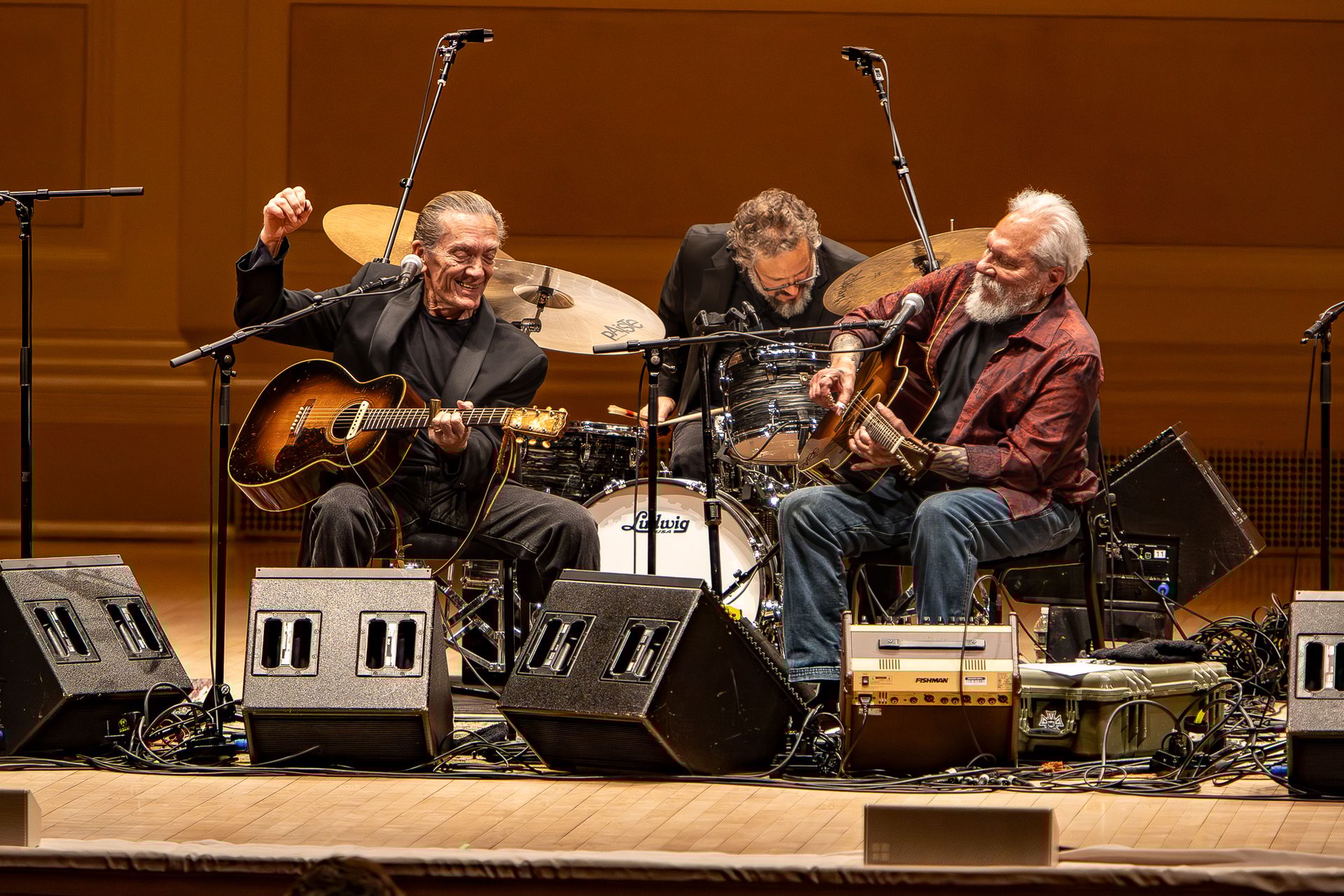
Vernon Webb
At the Washington show, you opened with “Too Many Years” and then you had Jack Casady out for “Ain’t in No Hurry” and Reverend Gary Davis’ “Oh Lord, Search My Heart.” It felt appropriate to have a Reverend Gary Davis tune so early in the set given his influence and then, a few numbers later, you covered “Operator,” the Pigpen original from the Dead’s American Beauty. You and Pig obviously both shared an affinity for the blues, but what led you to tip your hat to him and the Dead with that selection in particular, which is a bit of a left-field choice?
JK: I got turned on to “Operator” by my buddy John Hurlbut. I’ve always loved the Dead, but I guess you couldn’t call me a deadhead, otherwise I’d know every song they ever wrote. [Laughs.] They just brought so much to the table.
Then, sometime in the early 2000s, I was part of an American Beauty tribute at the World Financial Center in New York. [The guitarist took part in the two-day American Beauty Project performance that was held at the World Financial Center in 2007]. I was just one of many acts on the bill, and I was looking for something that I could somehow adapt to my style, and “Operator” was just such a cool song. I’ve always loved Pigpen, he just brought so much to the musical table, and all of us that knew him back then certainly miss him. He died way too young, but “Operator” was just such a fun song. And as a guitar player, it’s such a weird little song, too. For Pig, being the blues maestro that he was, that is the most atypical song for him. I wouldn’t even know how to categorize it. And so, I took some time back then learning how to make it work, and I played it at that show. Then, over the years, I kept refining it.
Now, Johnny and I do it together. I finally have, if I do say so myself, a really excellent guitar part for it. That show in the Winter Garden was also the first time I met Larry Campbell.
That’s a natural segue to my next question. Larry and his wife/musical partner Teresa Williams have been a big part of your musical ecosystem during the past decade and a half, joining Hot Tuna on the road and in the studio when you recorded Steady as She Goes at Levon Helm’s barn. They also appeared with you at Carnegie Hall during your 85th birthday show. What has been their greatest impact on your music?
JK: Well, again, I met Larry at that show, and he was buddies with Barry Minnerhoff, who was playing mandolin with me at that time. We just became friends, really good friends, and then I got a chance to do a show at Merkin Hall in New York for the New York Guitar Festival. And Larry and T were on that show. We shared a dressing room together, and one of the things that makes for a really great musical relationship is having a good personal relationship, and we just became friends. Larry is a master of so many instruments, so many genres, this and that. He’s just an exciting guy to hang out with. Through Larry, I also got the chance to do that album up at Levon’s place because Larry was working a lot with Levon back then. That’s also where I met Justin Guip. He was an engineer at that session, but he’s become our long-term drummer. Again, it was just such an inviting, personal environment to make music.
Everybody likes to work differently. Larry likes to control things, and he’s one of these guys that can see the whole finished project in his head. I’m not that guy. [Laughs.] He knows what he wants to do because that’s just the way his noodle works, you know? But, for me, usually one thing leads to another. So between my haphazard approach and his extremely unified approach, we discovered that we worked really well together and had a lot of fun playing music together at the same time.
Sadly, Jack had to miss the Carnegie Hall show for medical reasons. As you note, you’ve known Jack since his mom still made sandwiches for the two of you. How did his absence change how you approached that concert?
JK: There was a scare with a test, but it turned out to be a false scare. It’s better to be safe than sorry. As you know, Jack’s my oldest buddy. We’ve played together since before rocks and water. But, in a lucky way, it wasn’t a Hot Tuna show, so he wouldn’t have been on every cut anyway. So not having him there, obviously, was a downer on a lot of levels, but at the same time, we were able to still put it together. If it had been a Hot Tuna show, then we would have had to cancel the show. Luckily, we also got Jack back for San Francisco and, I’ll tell you what, I had so much fun having him and Sam Grisman together out there together—hearing Sam’s upright bass and Jack’s electric bass together was awesome stuff. You just gotta kind of roll with the punches. Like I said, had that been a Hot Tuna thing, it would have been a disaster. So we missed him, obviously, but he did what he had to do, and we’re glad that he’s the animal that he is.
Before that show, it was declared Jorma Kaukonen Day in San Francisco. Though you no longer live in the Bay Area, that city looms large over your career. Looking back, what does San Francisco symbolize to you today?
JK: Well, my time in California was more than fortuitous. What happened in San Francisco in the mid ‘60s was just a magical time. I don’t think it will really be replicated in that way ever again. Just in terms of the bands, if you can think back on the dark ages, there were San Francisco bands like The Beau Brummels—a Top 40 band. They were a great band, not noted for jamming or pushing boundaries, but they were noted for selling a lot of records. Of course, before the musicians, there were the beats and the poets. Whatever was happening in the ‘60s, whether it was just a new incarnation of the Beatnik headspace or something else, it was just a place where you could be anybody, where you could do anything. So for the Airplane to get the opportunity—as we did, thanks to Marty—to be part of the Matrix was so significant for all of us, in terms of what happened with the music. I just don’t see music developing in that way in any other place in the world. Now, if you drive by where the Matrix was on Fillmore Street, it’s just a tiny little hole-in-the-wall bar, but it’s still a bar.
The other thing that I think is still true, but it’s not true in the same way, is that San Francisco was a small town. It has to be a small town because it’s on a peninsula, and it just can’t get any bigger. It’s grown up, but it can’t grow out. [Laughs.]
I was sharing this with somebody the other day, but San Francisco in those days was also a cheap place to live. I had a third-floor walk-up when I moved on Divisadero Street, right around the corner from the Fillmore. I had a garage, too. It was, like, $80 or $90 bucks a month. [Laughs.]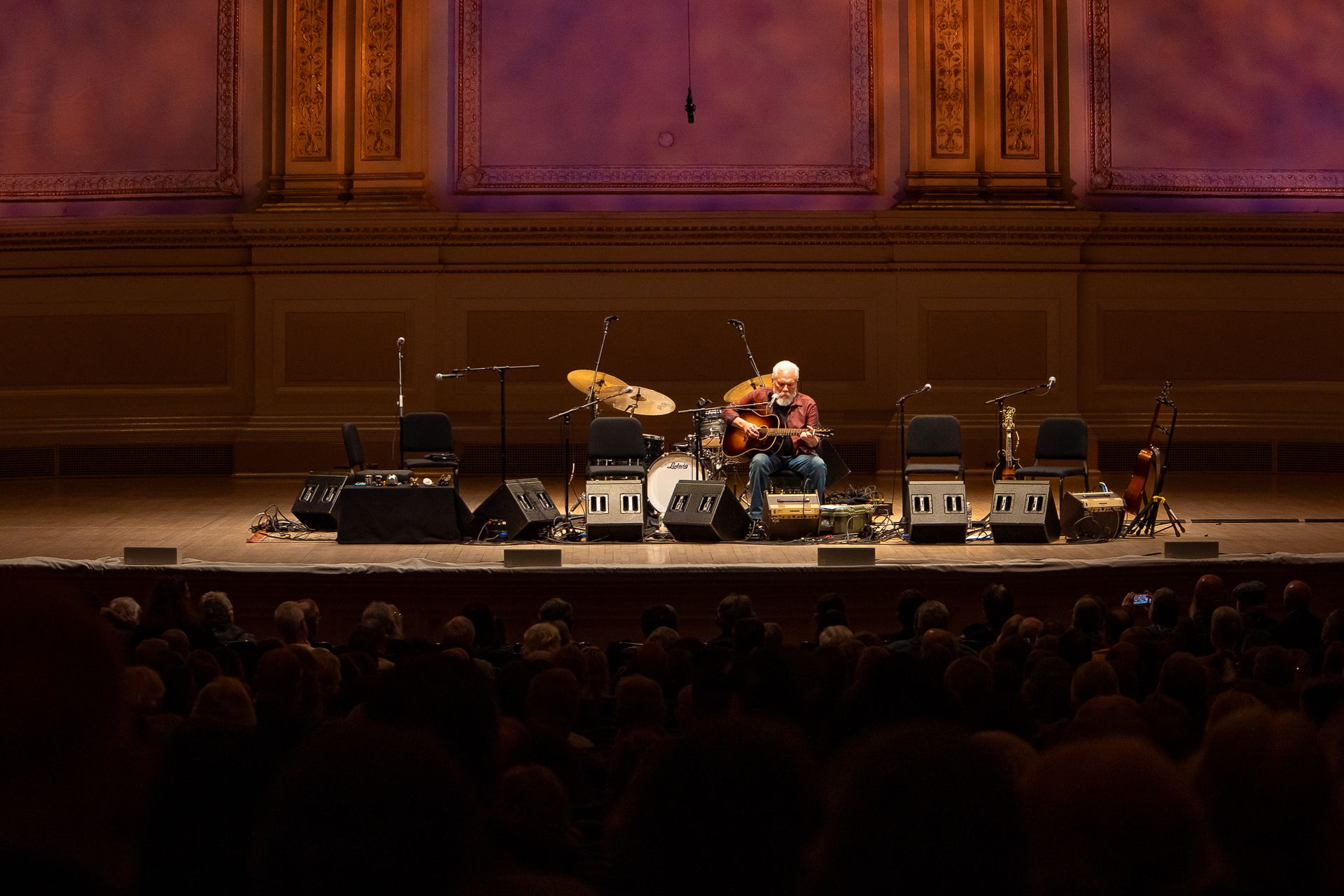
Vernon Webb
You also had your brother Peter, who contributed to Jefferson Airplane, Jefferson Starship and Hot Tuna at different times, join you in San Francisco for your 85th birthday show. How has your musical relationship developed in recent years?
JK: You know how families are. My brother and I kind of grew apart right around the time that my parents died, if for no other reason than he lives in California and I live in Ohio. He always came by and we stayed in touch on sort of a superficial level, but back in the day, when I was starting with the Airplane, my brother was out there at Stamford for a while, so he was around. He had been playing guitar for quite a while back then, but I’m almost five years older than him, so I’d already left the house, and I wasn’t there as he was learning his craft and stuff like that. And so, for him and I to get together at our age and play music together now, given our communal love of music, was a magical family thing. It really was. And, not only was it a magical family thing, but because my brother’s a great musician, it was also a magical artistic thing.
During your birthday celebration, you also nodded to the younger generation that is bringing this music into the future by inviting Derek and Susan to perform. And, of course, you spent years mentoring different musicians at your Fur Peace Ranch. What do you look for in emergent young talent?
JK: I first met Derek when he was a young teenager, probably at some show down South, but then we shared a bill at a House of Blues gig in Boston. It was probably in the late ‘90s. So our orbits had crossed, but I didn’t know him as a kid, and I didn’t see him going through what he needed to do to learn how to be Derek. But I do remember that Derek was always one of those really magical people. He was Derek at a very young age. His connection to the blues, and Susan’s connection to the blues, was in a really traditional, primal way. I think it’s so important for people who love that kind of music to play with these great people [that came before them], like they did. They played with Hubert Sumlin, for example, and they had the great sacred-steel player Aubrey Ghent perform their wedding. So Derek and Susan’s connection to the roots, that foundation, is so solid, and it’s awesome. And if you think about both of them as musicians today, they can be traditional or they can go places that defy traditional imagination. That’s important.
It’s been about two years since you retired the electric Hot Tuna format, though you have continued to play acoustic gigs with Jack and still perform in a myriad of other non-electric contexts. How do you feel that focusing solely on acoustic music during the past few years has impacted your style?
JK: For me, I just love playing the guitar. And, over the course of my life, I’ve played a lot of really fun electric guitar gigs because I also love that. But I think that, as I get older and I start to look back, my personal opinion is that my take on acoustic music is more multidimensional than my take on electric music. I am sure somebody will tell me that I’m wrong, but that is my take on it.
I started out with an acoustic guitar, and I just loved the darn thing. And it just seemed to make more sense to me. The other thing that is important, too, is that I never practiced electric guitar except when I was playing with a band. It just wasn’t fun to set it all up and stuff like that. So, for whatever reason, it really made sense to me, at this point, to basically go acoustic, without lugging around all that electric gear. Now, that being said—and we need to geek out on this a little bit here—almost none of us acoustic guitar players really play without being plugged in. The only exception was Derek that night at the Masonic. He was playing purely acoustic because he was playing his slide stuff unplugged.
We all plug in now in order to be heard in today’s environment. That’s just what you have to do. But, I could see, at some point, doing a real acoustic gig in a great hall like the Masonic, where the acoustics are great, or at Carnegie Hall. I remember seeing Segovia do a gig with no amplification, when I was a kid, at Constitution Hall in D.C. That’s not a small venue, but I remember truly hearing those strings. Of course, we weren’t drinking beer and smoking pot then either.
It’s been several years since you’ve released a set of new material or a studio album under your own name. And it’s been over a decade since Hot Tuna’s most recent LP. Have you been working on a new recording project recently and can we expect another release in the near future, especially as you shift your approach to touring?
JK: I’ve been doing a little bit of writing lately. I don’t have enough material for a full record yet, so I would want to wait rather than be thrust into having to create stuff. But what Jack and I have talked about doing, and what I think we would do so well together, is a live record. Jack and I are doing it very well right now, and I could see making a recording of that. Now, I know everybody’s out there with their iPhones recording everything anyway, but I’d like us to do a nice quality recording of what we do. And then I could think about maybe, quote-unquote, writing an album.
Jay Blakesberg
Your children are in their late teens and 20s. Do they continue to introduce you to new bands or push you to rediscover some old favorites as they are learning about those acts for the first time?
JK: Our daughter is a musician and she’s up at the University of Vermont in Burlington. She’s a DJ there and turns both Vanessa and I onto stuff all the time, stuff that I would never have heard in a million years if left to my own devices. I tend to go to the same well all the time. So to get a good, sharp kick in the butt, to get a chance to listen to somebody new is fantastic. Just don’t ask me for names because I can never remember names. [Laughs.]
I will put it this way: The future is safe for music. It’s not like the only good time was San Francisco in 1965. That’s bullshit. There’s great players coming up all the time and breaking boundaries, and there’s great players coming up who are doing it in a strictly traditional way that are just superb as well.
That is definitely true. And one thing people also forgot is that Jefferson Airplane got signed within a year of forming. That would be considered viral today.
JK: I have a sneaking suspicion that it certainly is possible that things can happen today as quickly as they happened then. I just think the time was right. It was a real zeitgeist in a lot of ways because the audience, as a whole, whether they knew it or not at the time, was ready for something new. And we just happened to be very fortunate that, all of a sudden, the nation’s attention was focused on San Francisco. I mean, you can’t script something like that. I know there’re many San Franciscans that sort of take it as their due in San Francisco. It is a magical place in a lot of ways. But the fact was that we were allowed to become visible in that time, largely or in part, due to little clubs like the Matrix that allowed us to play. There was also the Family Dog people—they started putting on those Family Dog shows at Longshoremen’s Hall and that subsequently became the Fillmore scene. And there was Bill Graham and all this synchronicity happening there.
So it wasn’t just musicians, there were these promoters that were our age and they had a vision for this stuff. I would have never had a vision like that. I just picked up a guitar and went to the gig and had a good time.
The last time you spoke with Relix, sadly, was for our tribute to Phil Lesh in late 2024. In that interview, you talked about being part of some of the very first official Phil Lesh & Friends shows, which were recorded for Love Will See You Through at the Warfield Theatre in San Francisco. You also participated in Phil & Friends shows toward the end of Phil’s life. Looking back a year later, what’s the first thing that comes to mind when you think about your musical relationship with Phil?
JK: Phil really was an amazing guy. As you said, the first Phil & Friends thing that I was a part of was at the Warfield. Steve Kimock and a whole bunch of really talented people were part of that show. I can sum that whole thing up this way, and it was the same thing when I played with him at the Capitol Theatre later on: When Phil started to encourage the jam thing, there were no prescriptions. It was like, “Follow this beast wherever it goes and see what happens.”
I remember, at the Warfield, we were playing and this jam was happening. As we were playing, I went over to Steve, and I said, “Steve, I can’t think of one more thing to play.” And Steve said, “Neither can I. Don’t stop playing.”
Phil was a really cerebral guy. His take on music was multi-dimensional in so many ways, so to be able to be a small part of Phil’s epic concert life was really cool.