Tom Constanten: The Artist’s Way
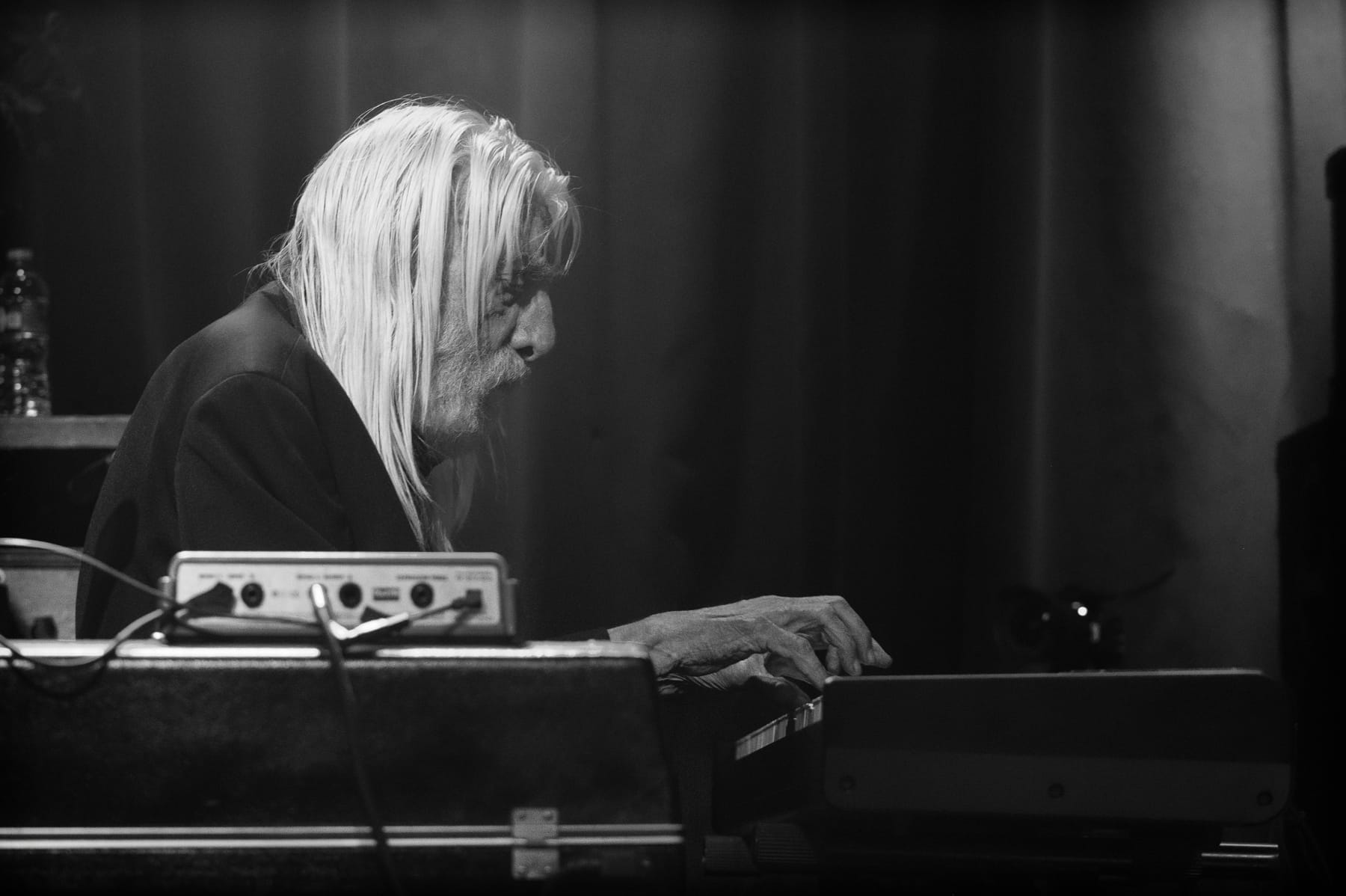
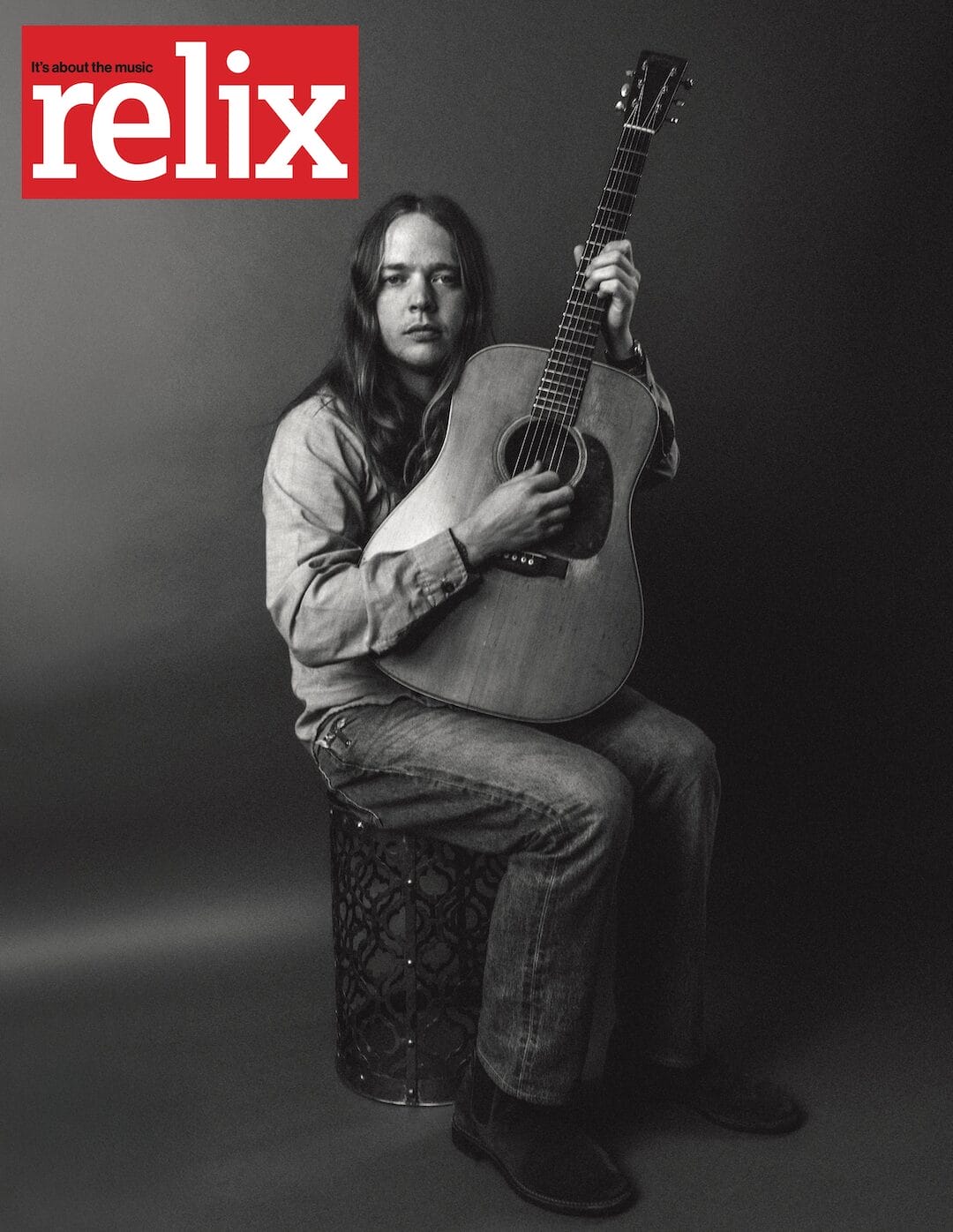
photo: Marc Millman
***
Tom Constanten has long embraced and embodied the artistic life.
He was still a Las Vegas teenager when his passion for music prompted him to compose a series of classical pieces that were performed by a local orchestra. Then, even as he attended UC Berkeley on a science scholarship, he continued to explore avant garde music, which eventually yielded a European tutelage via Luciano Berio. A bit later, during a stint in the Air Force, he reconnected with former Berkeley roommate Phil Lesh, resulting in both studio appearances (Anthem of the Sun, Aoxomoxoa) and live gigs with the Grateful Dead from 1968 through 1970. He then took on new challenges, helping to develop the play Tarot and produce a film score for The Love Song of Charles Faberman. TC subsequently balanced creative explorations both as acomposer and performer, including his ongoing Dose Hermanos project with Bob Bralove, as well as stints with Jefferson Starship, Henry Kaiser, Jazz Is Dead, Terrapin Flyer and the Live Dead ‘69 ensemble.
Unfortunately, the capricious nature of such artistic pursuits does not always allow for financial stability, which can produce dire outcomes when compounded by health complications. Earlier this year Constanten not only discovered that he had lung cancer, he learned that the cost of his treatments was beyond his means. In response, Greg Martens launched a GoFundMe campaign to help defray these expenses.
After hearing about this initiative, Constanten, who is known for his candor, commented, “Unlike some of my friends and acquaintances, my participation in the Sixties parties didn’t bring me an abundance of wealth and fame. Well… maybe a couple of dollops of fame, but wealth was scarce. And my taxman adventure of a quarter century ago pretty much wiped all of that out. One of the literary works that influenced me profoundly in my youth was Ralph Waldo Emerson’s essay on self-reliance. It made me reluctant to ask for help, even sometimes when it would’ve been justified. Like when the taxman was on my case, garnishing my wages and attaching my bank account. Circumstances this time have forced my hand. At $250 a pop, the copays are coming thick and fast. And this is before the anticipated Medicare cuts have taken hold…I count my wealth in friends, and they have been so generous over the years it boggles my mind. It makes me reluctant to ask for more.”
Constanten’s reference to Emerson’s “Self-Reliance” is certainly on point but not solely due to the musician’s initial reticence to solicit financial assistance. Indeed, at the heart of that 1841 essay is the quote “Trust thyself: every heart vibrates to that iron string.” TC has pursued this charge in many manifestations over the course of his robust creative life. (He looks back on some of these ventures with his signature turn-of-phrase in two recent Relix articles: “The Ongoing Interstellar Journeys of a Travel Agent” and “Dark Stars, Dead Bolts and Dose Hermanos.”)
TC’s friends and fans have responded to his predicament not only through the GoFundMe but also via a pair of benefit shows that will take place in the Bay Area. On Monday, December 22, O’Reilly’s Pub in the Haight-Ashbury section of San Francisco will present Scott Guberman & Friends with Reed Mathis, David Gans, Bob Bralove, Sam Whitman, John Hanrahan, Anna Elva, Skip Eye and others. Then on Tuesday, the Ashkenaz Music & Dance Community Center in Berkeley will host a show with Mark Karan, Prairie Prince, Sunshine Garcia Becker, John Paul McLean and Ryan Densmore joining Guberman, Mathis, Gans, Bralove, Whitman, John Hanrahan, Anna Elva, Skip Eye and additional guests.
Constanten won’t be in physical attendance as he has just started his second of four chemo treatments. He explains, “With the first one, the symptom was exhaustion and it hit rather hard, so I’m not expecting to be fit for travel for the next weeks or so. The thing I’ll mostly be participating in for the next month and a half will be walking down and upstairs in my house. I wish I could be there communing with friends old and new.”
If you’re comfortable with it, plenty of well-wishers have asked me to inquire as to your general state of health.
I have these moments of almost normalcy, although I’m not even sure I’d recognize normalcy if I saw it again. The symptom of the chemo is mainly exhaustion. Thankfully that’s the only symptom I’ve experienced because I’ve heard there are a lot of others. It’s just a feeling of zero energy, no wind in the sails. In fact, I just looked and there aren’t even any sails up.
There are quite a few folks like you, who have given their lives to music only to face economic challenges due to the lack of a proper social safety net that’s provided for artists in other areas of the world.
Well, it’s not just musicians. I’m also a veteran of the US Air Force, and when I see reports of homeless veterans, I mean, if you can send them into harm’s way, you best be able to take care of them when they get home. That’s an even more egregious example.
But yes, you’re right in several ways. For one thing, if you’re going to be a freelance artist—this is true of music, the graphic arts, dancers, actors—you have to take a leap. You have to pass on that biweekly paycheck. There are a lot of security blankets that society has to offer where you have to say, “No, I’m going to take a deep breath and dive into the deep end of the pool.” Then, as time goes by, eventually you have to pay the consequences of that decision, and that’s sort of where I jolly well am.
You responded to the GoFundMe that Greg Martens set up by invoking “Self-Reliance.” Emerson’s ideas regarding personal independence build on the fundamental precept “Trust yourself,” which I believe is an apt characterization of your creative path. Does that resonate with you?
It sounds like one of the secrets of this world, doesn’t it? I heard a Paul Tillich quote from Anne Lamott, which was “The opposite of faith is not doubt but certainty.” When life looks like easy street, there’s danger at the door, to bring up another well-known quote.
Yes, I have managed to avoid that, and a whole lot of wonderful things have fallen into my lap. So it doesn’t seem to be my choice all the time, although it is occasionally. Again, it’s all for the art, which is an elusive butterfly in its own right.
That feels like the essence of what you’re doing in Dose Hermanos with full-on unmitigated improvisation at the heart of every performance.
Oh, yes, it definitely is. Talk about diving into the deep end of the pool. We were definitely all about that, and as we started our rehearsals, we were amazed that we found these things, quote unquote out there. There are these musical archetypes that you can hang your hat on and go back to and rediscover and explore some more if you wish.
Despite that shared backdrop you’ve been able to start anew and explore fresh locales every time.
That was also true of the Grateful Dead back in the day. I mean, on any day there would be frontiers of improvisation. Things would come up that would surprise everyone, including the members of the band. Then you’d have another night that was just an ordinary night, although probably for a substantial percentage of the people in the audience, it was pretty amazing to them, too. There’s just no way of telling. So you throw the spaghetti against the wall and you see what sticks there. Or doesn’t, who knows.
With Dose Hermanos, have you found that your rate of hitting the bullseye has increased over the years or has your familiarity hindered that?
Our earned note average has improved as time goes by, so to say, but that’s mainly because of stuff we discovered while doing it. It’s a very unstructured, no rules barred kind of milieu. We also would have different viewpoints as to what was happening. Bob and I have our own I don’t know if I dare say unique, but rather rare backgrounds and occasionally things would happen coincidentally. One of us would come up with an idea, the other one would recognize that idea in a different form and respond accordingly. In its way, it’s like human conversation. A lot of us don’t hear what the other person is saying or we’re rehearsing what we’re going to say in response. Again, in conversation, we each have our own mindset, our own repertoire, our own library of ideas—templates, if you will—and the friction of these is where the action is a lot of times.
When you were growing up your primary musical emphasis was composition. Can you recall when live performance became a focal point for you?
It only shifted to that when the Grateful Dead came along. Up until the mid-’60s, I fancied myself more of as a composer than a performer. I had compositions performed by orchestras in Las Vegas. I had a performance at Darmstadt, Germany and several other performances of avant garde pieces. I thought that’s where the path lay, but life is full of surprises.
Even with that altered focus you continued to write new music. For instance the Kronos Quartet performed some of your work. How did that come about?
I met them through Jerry Hiller. Lejaren Arthur Hiller was one of the foremost experts on computer applications of music or musical applications of computer, if you will. He was a colleague and sometimes employer when I was back at SUNY Buffalo in ’75, and he was having his string quartets recorded by the Kronos Quartet. He put me in touch with him, and that’s pretty much how that happened. I wrote as many as a half-dozen pieces for them. Basically your mid-1980s rock-and-roll string quartet. Those times they performed them, they worked rather well, I dare say.
I saw the Kronos Quartet perform at Sanders Theater in Cambridge on the Harvard campus. In 1986 you were an artist-in-residence at the university and you recently shared a letter from that era sent to you by former Harvard president Derek Bok. What was your takeaway from that experience?
Oh, it was heavenly. It was a number of weeks in the ivory tower. I mean, you’re surrounded by all kinds of really bright people doing amazing things. It reminded me of the ’60s in some way because in the Haight, you had all kinds of amazing people doing amazing things, although this was different.
I actually asked them about going back there to get an advanced degree, and Donald Martino, the head of the music department, was generous enough to give me an hour of his time to flesh out possibilities. If I could have come up with $15-20,000, I would’ve gone for it. Who knows where that would’ve led.
Given your knowledge base and temperament, I imagine you would thrive in the academic environment as an educator. Did you ever contemplate that?
It might have made things a lot more convenient in a lot of ways if I had pursued that path more. Through my life the pencil pushers have been my natural enemy—like the dog and the mailman sort of thing—and it would’ve allayed that somewhat. Although on the other hand, one of the responses I got at Harvard when I was floating the idea of going there, was from the graduate students, who said, “Why do you want to do that? You’re out there doing what we want to do after we’re done here.”
I come back to Emerson’s “Trust thyself.” I think you have a pretty good track record in that regard.
Well, we are all moving targets. All of these things—academia, commercial music, the various styles and genres of music—they’re evolving. Things are way different now than they were 50 or 60 years ago. If you go back a couple of hundred years, most intellectual activity didn’t exist outside of academia. We see a few stories of somebody who made it anyway, but those are the egregious exceptions.
You look at famously musicians, this one studied with this one at such and such a conservatory, and it was only in maybe the ’40s or ’50s with the big bands that commercial music started to take off to the point where there were some musicians who did rather well behind it—Artie Shaw, the Rat Pack, on back to jazz players like Duke Ellington and Bix Beiderbecke. Before that, if you were playing popular music, you were strumming a Stella guitar on your front porch.
All of these things change and mix and move along. I mean, there are people who have degrees in the kind of rock-and-roll that we were taking LSD and playing for fun.
In terms of your work as a composer, as what point did you feel that you’d found your voice?
I guess the honest answer to that is I’m still looking because I’ve explored so many different musical worlds. It’s like languages. Over the years, I’ve become comfortably functional in about a half dozen and which is the true personality, which is your true self? When you’re speaking English, when you’re speaking German, Italian, Norwegian. Dutch, anyone? With every one of them I sort of turn into a different person.
It’s like Leonard Bernstein was a classical conductor and composer, but he also wrote for Broadway musicals. It’s as if he changed masks or costumes. So much was the same, but so much was different as well. Here’s a hallmark as to how things have changed—you listen to classical radio stations today and they can’t tell the difference. They are playing film scores on classical stations. That would not have happened 50 years ago.
I remember KFAC, a classical station in Los Angeles pioneered playing individual movements from symphonies and sonatas. Before that they were old school, they played the whole thing or not at all.
The way it was put to me once is that the FM or AM bands are like real estate and as they get more attention, the real estate values go up. So if you’ve got an FM station, you need to push your product and pay for that wavelength. Again, it’s a moving target and all sorts of things are happening.
It’s interesting though, particularly what you describe relative to these classical stations, they’ve broadened, but in general, I think that music has become a lot more balkanized with very narrow bands. There’s a Grateful Dead Channel on SiriusXM. There are multiple jazz channels and so forth.
That’s like a lot of what happened to the FM stations in 1970s. Going into 1970, stations would be all over the place. They would have news reports. KPFA would rebroadcast the season’s performance in Bayreuth. You’d have New Orleans Jazz coming up for a couple of hours. In the 1970s, stations started to concentrate on a unique realm. It would be all news, it would be all jazz, it would be all classical, and now that process has just continued on infinitum. Yes, it’s all jazz, but no, it’s New Orleans Jazz between 1910 and 1940, that sort of thing. It’s become so incredibly specialized.
It feels like we’re gaining something in terms of access—somebody has an opportunity to hear all that music in one fell swoop—but it also limits exposure to other sounds as well.
I share your disconcertion. I know in the 1960s there’d be radio shows like Tom Donahue’s that would segue the tunes. You would have shows with music from Burundi then Apache drummers, and then Frankie Laine singing “Ghost Writers in the Sky.” You felt like the sequences could go anywhere, and that has definitely attenuated to a degree.
I remember once during a Jefferson Starship tour, we were in England and they gave me a solo set, so I did a medley starting with John Dowland’s “Can She Excuse my Wrongs” from 1590, which I segued into “For No One” by Paul McCartney, then followed that with a song by Anton Webern, and there was a thread that connected them.
The depth of your musical knowledge has facilitated some memorable segues over the years. November 10 was the 50th anniversary of the SS Edmund Fitzgerald tragedy. Can you recall what initially prompted you to include Gordon Lightfoot’s “The Wreck of the Edmund Fitzgerald“ in some of your shows?
Wherever it came from was I just noticed that it was really it easy to take it out to “Dark Star.” I mean, you’re looking at these sequences and segues. What tune can go into another tune and you have all these possibilities. It’s like you’re playing a video game and you’re thinking, “Where can I go now?” That was an eminently fun opportunity to pick up on.
I remember I was in Detroit once and I went to the Maritime Sailor’s Cathedral. There was a word changed in the song after Gordon Lightfoot visited it. He originally said “A musty old hall in Detroit, they prayed.” He changed musty to rustic, which was a bit more respectful, and having seen it, I would say a bit more accurately descripted.
You mentioned the John Dowland composition from the 16th century. When you’re playing something from a distant era do you find there’s any value to envisioning yourself in that time period or do you remain in the moment and the historical context is irrelevant?
Well, one school of thought—and I believe both of these actually—is that we just cannot possibly know. There are too many variables. There are too many things that are different between now and Paris in the 1840s. There are subtleties that you just can’t pick up. I mean, just from what I know having been alive in the 1940s and comparing that to today, things are so incredibly different.
On the other hand, or maybe both other hands, I’ve been practicing, let’s say an étude by Frédéric Chopin and the experience is almost like him looking over my shoulder saying, “Yes, that’s what I had in mind.” There is an image there, an iconic shape that is so compelling that you figure, “Yes, this is what he had in mind.” There is a kind of communication that transcends centuries that way, and sometimes it’s salutary. We’ve just come through a thing in the 20th century, with 19th century performative norms. You’re supposed to have lush strings. Think of Mantovani 1930s film scores, then this period of focus, even austerity followed and the pendulum swings this way and back.
I enjoy reading novels from the 19th century and what’s fascinating to me is the nuance and subtext, since social norms often prevented the authors from direct expression of certain ideas. Do you think there is a musical analog to that?
Oh yes, for sure. You mentioned reading 19th century novels. I had a binge where I was working on the Chopin Études. I folded in all 27. I would break them into four-bar segments, which I would work repeatedly, doggedly and then shuffle, going anywhere. I noticed a pattern among them, and it was like reading a 19th century novel except before every reading I would shuffle and deal the pages. The story was twisting around and moving all over the place. Yet there was a background, there was the scene that over a period of time that you get familiar with.
Speaking of novels, since we’re approaching a time of year when people have a have bit more time to read, do you have a recommendation for folks?
I have a favorite and I might even try to reread it. It’s called The New Decameron by a Polish author named Jan Potocki. It’s full of interlocking stories. During a story, someone will start telling a story, there’ll be a dream sequence which connects to another story. It is like wandering through a dream and a fun house at the same time. The very beginning of it was made into a movie called The Saragossa Manuscript. Some of my favorite stories are later in the book, though, long after what the movie did.
I know you’re also a baseball historian. How about a non-fiction work on that subject now that we’re in the hot stove league is upon us?
As a matter of fact, another one I might come back to is a book by Christy Mathewson. It’s called Pitching in a Pinch, which is an insider’s view of what it was like to be a major league pitcher around 1911.
This general subject leads me ask you about L. Ron Hubbard, who was a science fiction author, as well as the founder of Scientology. I recently learned that you exchanged letters asking him why all drugs, including psychedelics, were prohibited. What was the nature of your exchange?
I was involved with that for a while. I had a question and he had a policy that “Any messages sent to me will be received by me.” So I wrote him and asked, “Hey, what’s the deal? Why don’t you permit them?
I mean, I have letters from all sorts of people. I played Scrabble with Umberto Eco and had a correspondence with him, Luciano Berio, Henri Pousseur. I might have something from John Cage somewhere. I have a letter from Lawrence Ferlinghetti.
Hey, go to the source. If they’re still alive and there’s a person there, don’t give up on the chance that they’ll answer you
As I understand it he did not offer you a very satisfying response
That’s that about sums it up. At that point I began to end my association with the organization.
[Note: TC has written that Hubbard told him that “the point was to be ‘at cause,’ not at ‘the effect’ of a drug. I found this answer highly questionable. Say what you will about over the counter and prescription drugs (and there’s a lot to be said, I’ve heard the horror stories), they have saved a lot of lives, relieved a lot of pain, and alleviated a lot of symptoms.”]
Out of the names you mentioned a moment ago, Umberto Eco jumps out at me. What was the context in which you happened to play Scrabble with him?
I was in Brussels working at Henri Pousseur’s electronic music studio, and Berio arranged for me to join him for a two week festival like Darmstadt in Darrington, England. He said, “We’re driving up.” I took the train from Brussels to Paris and met him. Our driver happened to be Umberto Eco. I drove with them up to London and then took the train down to Devonshire.
He was a delightfully charming person full of these slightly off color stories and intellectually omnivoracious. I mean he had read books in languages you hadn’t heard of.
Then I ran into him again a couple of months later when I went back down to Milan to get in some more study with Berio. I would talk with him and socialize with him. The Scrabble game was at his apartment and any languages were permitted, but it had to be a dirty word. I like the sort of milieu where you take the lid off the pot and see what’s stirring.
His novels, like The Name of the Rose, Foucault’s Pendulum or The Prague Cemetery can be enjoyed solely on the surface level for their plotlines but if one is so inclined there’s a lot more going on there, which again parallels what you’ve done with your music over the years.
You think of all the different sources of Grateful Dead music, the different kinds of music that go into it. Not everybody is going to get all those. It’s like different languages. There’s going be someone who’s going to get a ska reference that will not get the reference to Mussorgsky or vice versa. It’s part of the game.
There’s a similar range on your new solo piano album Solace, which presents music by yourself, Scott Joplin, Claude Debussy, Karl Czerny and many others. How did that come about and what was your intent?
For the first time in my life, I’m able to record at home. So I thought, “Hey, why not record something?” Then I set to it, and of course the inevitable question came up of, “Well, what would you like to record?” A lot of the answers were, “Well, you’ve already recorded that, how many times?” So I started exploring and I looked at pieces that I found interesting for one reason or another over the years. The tempos are deliberately laid back and it’s a very relaxing vibe throughout the whole thing.
Part of that is entering my ninth decade, I may have lost a step or six off of my fastball, so I thought of getting things off the beaten path that still resonated.
Someone would be wandering through the garden and thinking, “Well, this is a nice place. I have never been here before. I don’t even know what kind of tree that is, but it’s kind of nice anyway.” That was sort of the effect I was aiming at.
When it comes to live performance, all things being equal do you prefer appearing with a band, in a duo setting, as a solo artist or something else altogether?
Well, there’s something to be said for the solo recital. I mean, on one hand you don’t have to share the spotlight with anyone. On the other one, there’s no place to hide and you’re responsible for everything. But on the third hand, you have to go in incredibly well prepared and it’s almost always material that you really, really believe in.
You recently shared a video of your solo performance opening for Robert Hunter at the Somerville Theater in 1990. What do you otherwise recall of that tour?
We did 10 of those shows and it came out wonderfully well, if you ask me. Hunter was most generous and invited me to join him along on the tour. I wish we could have done more. We also did a show where Hunter read his poems and I accompanied him on the piano. Opening for us was Michael McClure reading his poems accompanied by Ray Manzarek. I wish we could have done more of those, too.
The upcoming benefit shows speak to the range both of your admirers and your musical outlets. For instance, I believe you first connected with Prairie Prince while touring with Jefferson Starship.
That’s correct. I’ve run into him a couple times since then in other contexts, but like I say, it’s all one extended family.
Thinking back a few decades to the pre-Starship days, how well did you know the Airplane folks?
I ran into them on occasion back then. There were a couple times that they sat in with us, but it was nothing like this. I never went out on tour with them.
This was an interesting comparison to make, though their material is harmonically a little bit different. Their lifestyles are, again, slightly different. Every one of these bands is like a family and they have their own habits, manners, works, inside jokes, connections, and with any family they have these slight variations.
One more brief digression from that era. I recently learned that you attended a Sly & The Family Stone show on the Vegas strip in the 60s. What do you recall of that night?
Oh, it was amazing. It was like James Brown and Frank Zappa under one roof. He played everything and it was overwhelmingly amazing to watch. Actually, it was a spur of the moment that we went to see him.
This was like 1967 and at that time I was importing LSD from California. I had a clientele that was mainly musicians, people at the university and dealers on the strip. This client was a craps dealer at the Tropicana. We were at his apartment tripping and he made the suggestion to go see Sly. I said, “Sure, why not?” I was prepared to understand and enjoy his performance.
It was at the Pussycat A Go-Go. They had go-go dancers and I was 23 year old, so it was a pleasant night all around.
Back to the upcoming benefits, do you remember the first time that you worked with Mark Karan in some capacity?
I think that might’ve been a show with Terrapin Flyer, a Chicago tribute band who is flying high these days. They once called both of us up, and there I jolly well was, there he jolly well was, and we were both jolly well there.
You’ve been in and out of that band’s orbit for some time.
Well, they first called me in after the sudden and lamentable demise of Vince Welnick. I filled in the rest of that tour and it worked well enough that they kept calling me back.
When did you initially connect with Scott Guberman?
I don’ know who I go further with, him or Mark Karan, but I met him at a show back east. Walt Berger in Connecticut, had a band, and thanks to Scott, I got yanked in for that. I think he was also with Terrapin Flyer a couple of times, and several other shows. I mean, he was all over the place and gosh, talk about hardworking. He hit the road hard and I have a lot of admiration for him.
Once you’re on the other side of your chemo and back in fine fettle, do you have a musical project of your own that you’re anticipating?
I believe things are getting booked for the end of February. We’re thinking that that’s safely enough distance that unless something new comes up, I should be able to make it. Who knows what else for the coming year. I don’t travel quite as well as I used to. I can’t carry on like I did in the 1990s when I was a young buck in my 50s.
Do you have plans to do any more Dose Hermanos with Bob?
Oh yes. In fact, he’s come to New Mexico a couple of times and we’ve recorded. So we’ll see what comes with that.
I also have something else coming out hot on his heels of Solace. With any luck we’ll be talking about that soon.