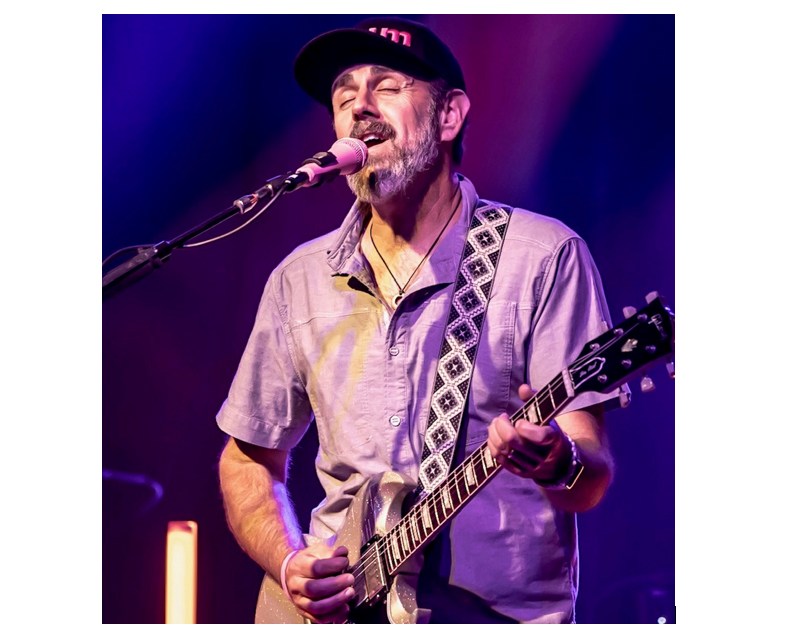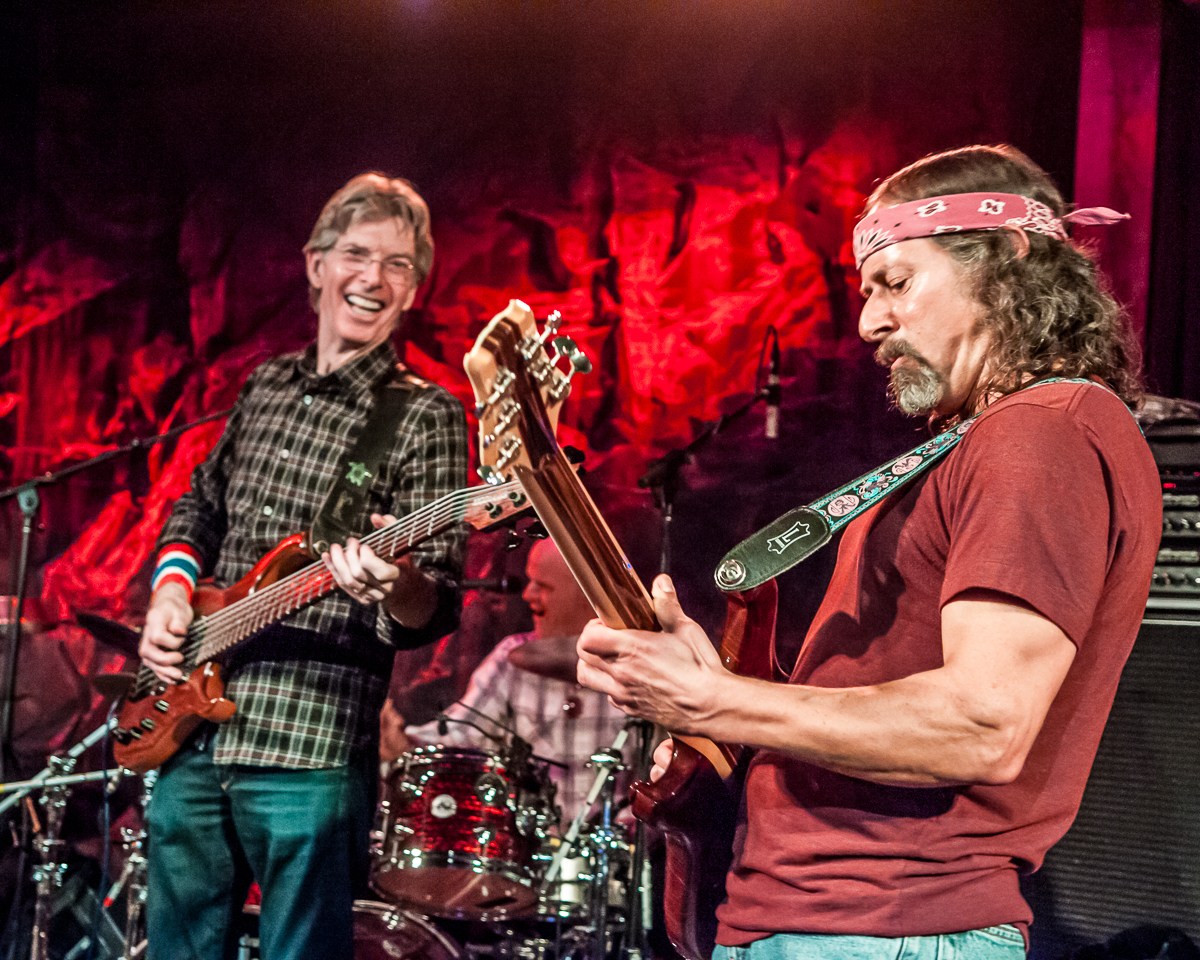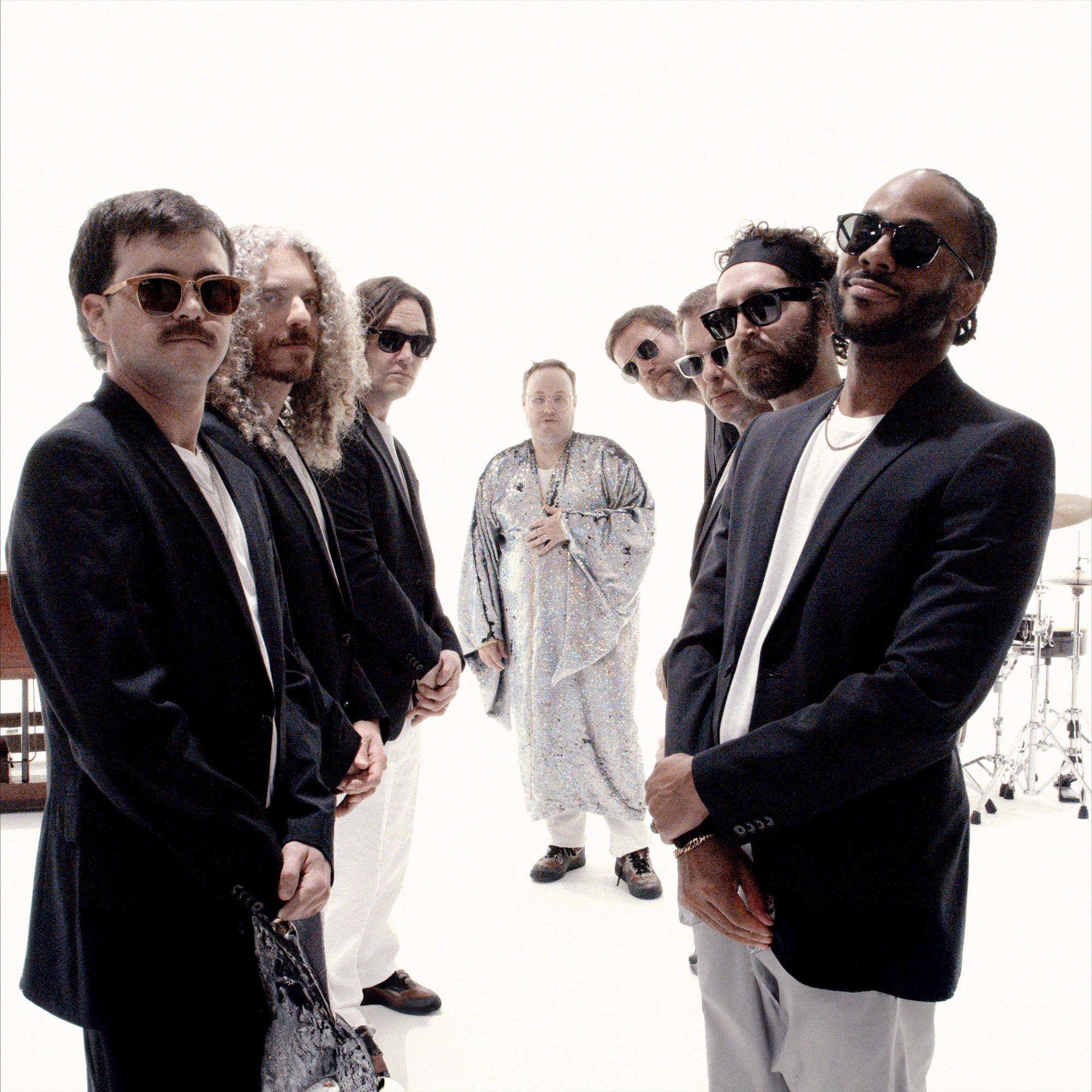
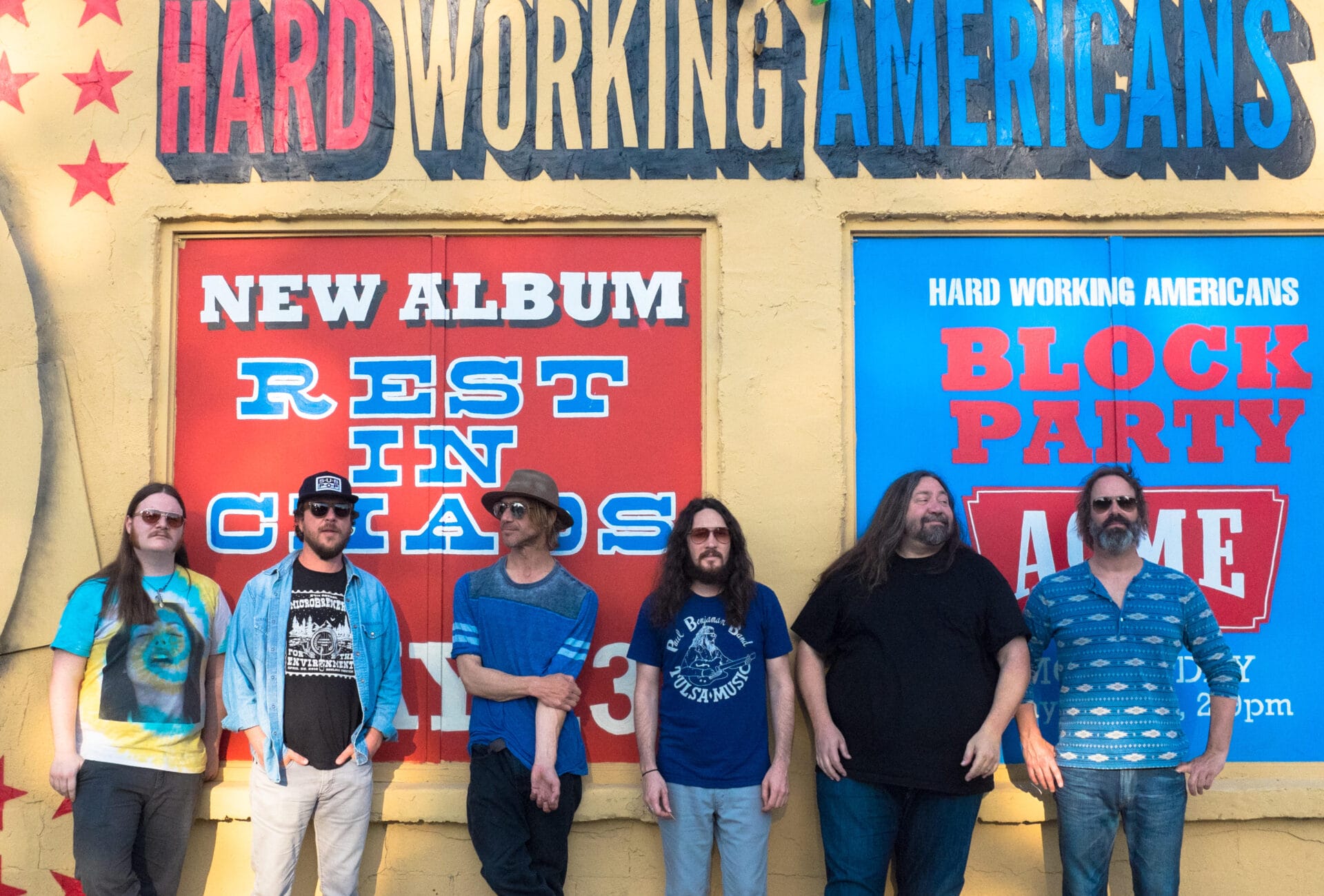
Duane Trucks, Chad Staehly, Todd Snider, Jesse Aycock, Dave Schools and Neal Casal (photo: Neal Casal)
***
In 2013, Todd Snider was at the height of his creative powers. His latest studio album, Agnostic Hymns and Stoner Fables, had appeared on multiple Best of 2012 lists. His solo acoustic performances, which drew on a deep catalog of original music going back to his 1994 debut, carried an emotional resonance that connected with audiences via his songcraft and storytelling.
Snider’s gift for conveying veracity via narrative embellishment and a dry wit had long been recognized by such mentors and collaborators as Jerry Jeff Walker, John Prine, Jimmy Buffett, Guy Clark and Kris Kristofferson. In 2013, he directed this imaginative flair into a new medium, as he delivered the manuscript for I Never Met A Story I Didn’t Like: Mostly True Tall Tales, which Da Capo Press would release to significant acclaim. As his editor Ben Schafer notes, “What was most striking about working with Todd, from a publishers point of view, is that the manuscript (co-written with the late, great Peter Cooper) arrived in perfect condition four months before deadline via an email accompanied by a three-word note: ‘That was easy.’ I’ve been in publishing for 31 years now and that is still the one and only time a book arrived four months before deadline. It’s also the only time I’ve heard an author describe writing a book as easy.”
The artist’s curiosity and commitment led him into new musical environs that same year. He entered Bob Weir’s TRI Studios with producer/bassist Dave Schools, guitarist Neal Casal, drummer Duane Trucks and keyboard player Chad Staehly to record the eponymous debut of Hard Working Americans. Lap-steel guitarist Jesse Aycock joined the collective before their initial performance in December 2013, which was recorded for the documentary film The First Waltz. A follow-up album, 2016’s Rest in Chaos, focused on Snider’s original material rather than the cover songs he honored via radical reinterpretation on Hard Working Americans. The group remained active through 2018, even recording a yet-to-be-released album with Daniel Sproul, who replaced Neal Casal after he left the group to focus on the Chris Robinson Brotherhood.
Snider passed away this past November due to pneumonia at age 59, ending any lingering hope that HWA might yet reform. The following oral history looks back on the personal impact and legacy of the group. In addition to bandmates Schools and Staehly, friends and musical cohorts Will Kimbrough, Elizabeth Cook and Aaron Lee Tasjan also share their memories of the artist who Bruce Hampton referred to as “The Last Troubadour.”

Photo: Neal Casal
Dave Schools: Let me say at the outset, if there’s anyone who might’ve been Mark Twain in a previous life, then it was Todd Snider. To me, Todd was the Mark Twain of singer-songwriting.
Something not everyone might realize was that Todd loved jambands. He especially loved Widespread. He had a band with Will Kimbrough called The Nervous Wrecks. They opened for us in the mid-90s and he played with us a time or two.
I didn’t see him again for a while after that. I think it wasn’t until 2009 when we did a tour with the Allman Brothers for their 40th anniversary that I saw him again. He showed up in the dressing room after the show and I was like, “Wow, I haven’t seen you in a long time. What’s going on?”
So we reconnected and then, in late 2012, he called me out of the blue and asked if I wanted to join him for a gig at a little theater in Napa. I was like, “Sure, can we have a drummer?” I like to have a safety net, so we got Paulo Baldi, who played with Cake and Eric McFadden. I begged Todd to rehearse and he agreed. I’d come to learn it was absolutely insane that he said yes to any of this.
Then we got up on stage, and Todd called audibles and changed all the keys of the songs. Paulo and I were like, “Well, here we are...”
The next thing I know, his guy, Chad, calls my guy Brian asking if I wanted to produce a record. I was like, “Sure.” So that’s when the Hard Working Americans idea came to be. We wound up at TRI, Bob Weir’s place, and no one had really played with each other. I knew everyone except for Chad, though I had never actually met Neal, and I’d never played with Duane.
Chad Staehly: There was a music festival up in Michigan called Dunegrass, and in 2008 Todd was on the bill along with Leftover Salmon and Great American Taxi. After Todd's set, Vince [Herman] and I cornered Todd. We were like, “Dude, we’re so in love with your last album. We want to hang out. Do you want to hang out?” The next thing you know, we’re in the back of this school bus on the festival grounds for four hours trading songs, laughing, passing joints around, just having the all-time best time ever.
Then about six months later, Great American Taxi and Todd Snider were both playing in Durango on the same night—we were at one theater and Todd was across town at another theater. We touched base with his tour manager and found out that Todd’s show was going to get done much earlier than us. So we invited him to come over at set break. He showed up and we were like, “Awesome man, you came by. Let’s play some songs together.” He asked, “What are we going to play? We’re like, “Oh, we know a bunch of your stuff. Let’s just play your songs.” He looked at us kind of like, “What are you guys talking about?” But we rolled out on stage and played for like 80, 90 minutes. It was a couple covers, but mostly it was his songs. He was blown away, and then that was it. It was on after that.
On top of us playing together and backing him up, he also produced an album of ours. He was also in flux with his day-to-day manager. He had had a longtime manager, Burt Stein, but wasn’t happy with the guy who was handling his day-to-day stuff. This was about the time Taxi was maybe going to wrap it up because Vince was getting back to Leftover Salmon full-time, and I jumped into the management game. One of the first people I approached was Todd and I started working with him in 2011.
Hard Working Americans began when Todd was going to play this theater in Napa. We knew Dave Schools lived close by and we kind of just hatched the idea of saying, “Hey, let’s call Dave and see if he’d want to come play bass with you.” That led to Dave saying, “I’ve got this great drummer, Paulo.”
So they did a trio thing and Dave and Todd just had an absolute ball, and they started talking about making a record right then and there at that show. The show was in December 2012 and, by May of 2013, we were at TRI thinking we were going to do an experimental project with Todd, putting together an all-star jam-leaning band and then seeing what happens. That’s when Todd had this idea: “There are all these great songs that my friends around East Nashville have written and I’d love to cast a bigger light on them.”
Photo: Dave Schools
Will Kimbrough: Todd reached out to me and said, “We’re probably going to record ‘Another Train,’ and ‘I Don’t Have A Gun [both Kimbrough originals]. Then he mentioned some other songs that they were thinking about recording, by Kevin Gordon and Guy Clark, and he said, “I feel like paying tribute. I want it to be a real band, and I feel like if we’re going to do original songs, then I’m going to write all of them."
I think he was concerned that he would write all the songs and it would just be another record of his own with other musicians, whereas the way they did it, there could be an equal influence of all the members.
Elizabeth Cook: Todd was very proprietary over his songwriting. That was his lane that he had carved out for himself. I think by being in a supergroup with all these other musicians and stretching into the jam world, he was looking at this as an opportunity to stretch and grow. It was also an opportunity to step outside of his writing and cut his favorite songs from some of his favorite songwriters and people that he was just fans of, like Kevin Gordon, Hayes Carll and even myself. He covered “Blackland Farmer,” which I cut on Welder, although I didn’t write it.
I thought his idea was brilliant because there are so many songwriters in our community that have great songs. Here was an opportunity for the jam world to stretch into songwriter lane, which I know Schools was really excited about. Everybody who was there was excited about what everybody else was bringing.
Aaron Lee Tasjan: He said to me around that time, “Man, with this last record, I really feel like I’ve taken the poetry thing in songwriting, the lyrics thing, as far as I can take it for right now, and I’m not really sure what I’m going to do next.” I didn’t really think much of it other than, “Well, you certainly have taken it far and done a great job with that. These lyrics are amazing.”
But when I think back about it now, it sort of makes sense to me. I think Agnostic Hymns was Todd’s 12th record. So I could see where maybe doing a record of other people’s songs might be really appealing to him at that moment where he felt maybe he had taken his lyrics to a certain level where he wasn’t sure how to move forward. Then, all of a sudden, here’s this opportunity to go into a studio and make music with some great people. That probably felt really freeing to him.
There was an amazing opportunity to do that with Dave and the fellas. I think he loved doing it because Todd was such a big supporter of so many of us. When Hayes Carll started doing well, Todd loved that, and I know he loved recording “Stomp and Holler” for the Hard Working Americans record.
Todd was one of those guys who had these funny ways of showing you that he loved you and supported you. Sometimes it would come in a book-long email that came into your inbox at 5:43 AM. Other times it would be, “Hey, man, I love your song, so I recorded it for an album.”
That album reads as a love letter from Todd to people like Kevn Kinney. When they first met, Todd was just playing locally at the Daily Planet and Drivin N Cryin was recording in Memphis. Kevin’s the kind of guy who, if he meets someone and they seem cool and they’re like, “Hey, I’m playing later on, come down and check it out,” then he would do it.
Then everybody was coming down to the Todd Snider gig all of a sudden because Kevn Kinney, the rock star for Drivin N Cryin, was there. So I think Todd being able to sing “Straight to Hell” on the Hard Working Americans album was another way of him being like, “Kevn, you’ve always had my back, and I want you to know that I have yours too. Here’s my version of one of your most famous songs.” Todd’s version of it is just staggering. The vocal take is unbelievably great. It’s hard not to listen to it without choking up a little bit, honestly.
Schools: We turned “Straight to Hell” into a mournful ballad. Todd was like, “I wonder what Kevn’s going to think about this.” I called Kevn and told him to come to John Keene’s the day we were mixing “Straight to Hell” and he sat in the corner and wept.
The idea behind the first record was to do something different to celebrate his peers and the people he admired as fellow songwriters and to get to play with some jamband guys. My intent was just to produce the record but the next thing I know I’m on the phone with Todd’s manager Burt Stein because they’re getting so much positive feedback before it was even released.
So they got me to agree to do about 12 shows to promote it [around the release date in January 2014]. Before that, we did this First Waltz show [on 12/20/13] in Boulder at eTown, which was our very first gig.
Staehly: The whole First Waltz thing was this harebrained idea of recording the first concert ever that we played and turning that into a movie and a live album. George Boedecker—the founder of Croc shoes, who had started Melvin Records, which put out the HWA albums—came up with it. We all thought he was absolutely off his rocker but in the end, it turned out to be a brilliant idea.
I feel like he kind of captured where everybody’s heads were at when we were forming the band, making our first record and were going to go play our first concert. It gave people a little glimpse into what that was. It turned out to be a unique, cool idea to show the world what that looked like. It ended up on cable services all over the country.
Schools: The movie showed how a lot of the inspiration, and the permission, to deconstruct the songs came about by giving Todd a guitar and cutting him loose in the studio. When we were trying to hone in on a feel for one of these songs, Todd would start dancing and Duane would adjust the groove he was playing because we wanted it all to come from him. So if he played a cracked version, like a Peace Queer version of the Chuck Mead song [“Run a Mile”] then we built it up from him. It all emanated from him.
When I’m producing a record, I’m going to go for the real human thing, even if it’s not necessarily perfect. He recorded “Wrecking Ball” as a duet with Neal, and Todd was literally crying at the end.
Staehly: It was all this lightning strike stuff. For that first record we all got together at TRI. Dave never met Neal Casal in person until that day. Dave was the only one that knew Duane. Dave was searching for a drummer for the session, knowing we wanted a jam guy, so he asked Jimmy Herring, “Have you got any ideas?” Jimmy was like, “I think my son-in-law Duane is probably ready for the gig.” Duane had been cutting his teeth with Colonel Bruce, who all of us had interacted with in some way.
When we made the record, it was initially a project for Todd, but as soon as we finished that session, it was like, “Well, we’re a band and now we’ve got to go play.”
Kimbrough: Todd told me, “I really like stepping up there and just singing, then letting them jam and I’m up there in it.” I think he was enjoying something new and something where he didn’t have to carry the show—not that carrying the show was necessarily a burden to him. It was just that for once, Todd allowed other people to be in control of a large chunk of the show. With an eight-minute version of “Another Train,” only four minutes of it are singing.
Todd was not necessarily a jammer musically. He was a wonderful musician, but I think he felt like the jam was the territory of the other guys. He told me how much he loved losing himself in the music, and he knew it wouldn’t last forever but he was having a blast.
Schools: He wanted to be a frontman. He loved Chris Robinson and Mick Jagger, but he didn’t necessarily want to dance around. I mean, he had some great moves, but once we started digging in and Neal was going and we were pushing each other and it was an improv section, Todd would migrate over to the back corner of the stage or even offstage to the side by Jesse. He’d be visible to the audience, but not part of what was happening musically because I think he wanted to listen and he wanted everyone to focus on what was happening.
When we got to what the Allman Brothers called “hitting the note” or Panic calls “reeling in the big fish,” I would see Todd put his hands together over his head and hold him straight up in the air. It was like he had just won an Oscar or something, it pleased him so much.
It was like he became an audience member, and we’d almost have to be like, “Yo, you’ve got to finish the song. You can’t just hang out over there and enjoy the show. You got to come over here and tie up the song. You got two more choruses.

Photo: Dean Budnick
Cook: I remember that Todd was interested in utilizing the Hard Working Americans band to develop his singing because he didn’t have to play guitar, he didn’t have to tell stories, he didn’t have to carry the show. So that’s one thing that he did in that band. Todd was so passionate with his music and creativity. He was always looking to reinvent and he was a master of doing that over and over again.
Schools: Todd had the idea of, “Hey, we could put one of Neal’s songs in here.” So we kind of worked up “Superhighway.” We never played the song, but we did work it up and sort of jam on it. Then someone else suggested, “What about ‘Train Song?’” I was right in there with “Guaranteed” and Todd was all about it because those were songs he had already released in the form that he wanted.
So we were able to utilize the lens we had used at TRI for the first record, which was absolute deconstruction and rebuilding. Very few, if any of those songs on the first record sound anything like the original versions by the original artist.
With “Train Song,” Todd put it in our hands, and we turned it into a Stones thing. We turned “Guaranteed” into a noise opera, and it’s there in the film.
I remember after the second or third show we did, Neal came up to me and said, “This band’s got gears I didn’t expect us to have.”
Staehly: I think the last date was in Chicago. I had a buddy there who had a studio. Lightning was striking and everybody was hot for this whole thing, so we were like, “Let’s go in and record.”
Schools: We booked four days in a studio, and that’s when the Rest in Chaos stuff started to come out. Todd was writing poetry. He was in the vocal booth laying down ideas. We were coming up with riffs and jams. We knew right then that it was the right time.
Staehly: Throughout the day on the bus, Todd was constantly listening to all the conversations going on around him and some of that ended up in the songs on Rest in Chaos. For instance, prior to Hard Working Americans, he had never heard the term “riding the rail.” He caught that and immediately asked about it. Sure enough, riding the rail was in a lyric.
He joked with us, “Hey, you guys mostly wrote these lyrics. This is just stuff I was grabbing from you as we were talking on the tour.” So he was constantly tuned in and constantly in that mindset of, “Is there a lyric happening right now?”
Sometimes you’d go to his house and, on a wall, there would be sticky notes and other pieces of paper or a board where he was writing stuff. He would collect lines and try to assemble those together. He was constantly processing, thinking in terms of songwriting and lyrics and how he could grab this stuff to really explain or portray the human condition.
Kimbrough: Todd was a natural songwriter, and I think that telling the truth through hyperbole came naturally to him, although he developed it. I think you could be at a writing workshop and show people, “Here’s John Prine’s ‘Bruised Orange.’ Here are these songs by Todd Snider." I think you’re born with that and you either work on it or you don’t. He worked really hard on it but he could be really hard on himself.
Schools: At one point Todd asked me what I thought about using words from one song in another song because he’d left after the third day and, on the last day there, Neal and Jesse sang a part on the song “Something Else” that was a slightly different version of a line that Todd had intended for “Roman Candles.” I started thinking about Frank Zappa and the concept of conceptual continuity where these things can sort of pop up. Then I started thinking about albums like Quadrophenia and S.F. Sorrow, sort of rock operas, because Todd was going through some heavy shit—getting divorced—and this country was going through some heavy shit. Also, everybody in there was on their spectrum of having been done with drugs or in the middle of doing drugs or staying away from certain drugs by doing something else. It was divorce, democracy, drugs and death. So I told Todd that was fine.
After Chicago, we went to Nashville and recorded some songs he had written: “Dope is Dope,” “Roman Candles” and “Opening Statement.” The song “Purple Mountain Jamboree” we wrote as a team in there at Masterfonics.
But even when we were finishing out the record, Todd was slaving away writing and changing lyrics. The whole album became this thing about what happens to people. What happens to factions? What’s up with the United States? It wound up becoming this dark monolith. It’s heavy.
The song “It Runs Together” is about Melita [Snider’s ex-wife] who he met in rehab. There was a woman there who was obsessed with Phil Hartman. Todd and Melita left early, and they got thrown off an airplane because they were drunk. They went to a hotel room, turned on the TV and the woman who was obsessed with Phil Hartman turned out to be his wife, and she shot and killed him and then herself. That is a true fucking story.
If you listen to the words of “Massacre,” it’s talking about how the rumor mill just churns out another couple every day. That’s Nashville gossip, talking about Todd and Elizabeth, who were both going through high profile divorces.
Tasjan: I remember one day Todd called me out to the house in Hendersonville. At one point we were just kind of sitting out on the porch, then Todd busted out his little nylon string guitar, and sang the song about Phil Hartman. Sitting there listening to that, it struck me as one of the most laying it all out there, deeply personal songs that I’d ever heard Todd write.
I knew the plan was for Hard Working Americans to record that song for their second record. I wouldn’t say I was concerned, but I was very interested to see what that band was going to do with a song that to me felt completely finished just with him playing and singing. I thought if you added too much to it, you might start getting away from the emotion of the song.
I was curious about the thought process behind taking some of these songs, some of these lyrics that were very intimate, and putting them in kind of a jamband setting. But that’s another instance of why I would call Todd a genius because I would never think to put those two together, but he did, and he did it in a way where not only does it work, but I think it’s actually a really engaging listen that I have returned to over the years.
I’ve also wondered if maybe with a song that was so exposed lyrically, Todd felt a little safer releasing it with the band around him.
Photo: Dean Budnick
Cook: I loved the opportunity to hear him wrapped up that way with the most sophisticated musical accompaniment that he ever had in his recording career, save maybe some of the early days when he was a major label kid, which I was too at one point. You have those bands in those studios until you reject that system. So since that era and after the solo records, to hear Todd with his songs presented that way was really beautiful. It’s a heavy record.
Staehly: If I were to think about the songs from Rest in Chaos that were quintessential Todd from that era, two come to mind. When it comes to turn of phrase—how he could take a common phrase and turn it inside out—there’s a bunch of that in “Opening Statement.” Then, for me, “Burn Out Shoes” was quintessential Hard Working Americans’ kick in the teeth rock-and-roll with this psychedelic sheen that the band was capable of.
Tasjan: I basically missed out on his time with the Nervous Wrecks. By the time I was seeing Todd live consistently, he was mostly playing solo. When he did play with a band it was mostly a trio. But I do remember very distinctively this Hard Working Americans show that I went to in North Carolina. It was a super packed club and standing out in the audience watching him, I was like, “Man, this guy is a rock star.”
I’d grown up knowing him as a folk singer troubadour person, but everything he did as a folk singer that drew me in—his sense of humor, his sincerity, his big heart, the love and respect he had for the traditions of the music that he was performing—that all came across in Hard Working Americans, just under the umbrella of a different genre.
He just found different ways to inhabit all of the characteristics of his artistry that drew his fans in. He was still authentically all of those things, just in a different way as the front person of Hard Working Americans. It was electrifying to behold. He definitely changed the molecules in the room.
Schools: The thing about Todd that really shocked me is that early on, I was sitting in a hotel room somewhere on Panic tour, and Todd called me and he said, “I just want to thank you. I’m like, “For what? For blowing out your eardrums on nightly basis? For giving you a guy to come hug on when you’re a sweaty rail of a human being on stage? You’re even sweatier than me.”
He said, “No, I want to thank you for giving me permission,” which of course is the most important word in the world. It’s something Bruce Hampton doled out. He told me, “I want to thank you for giving me permission to improvise more.” I was like, “What do you mean?” Then he goes, “The stories I tell, they’re written in stone. Or they were. Now I feel like I don’t have to memorize them for maximum effect. I can just be me and tell the story and tell it however I want to tell it.”
I was like, “Wait, are you saying that you used to present your stories word for word as a shoeless, gypsy, hobo folk singer?” He was like, “Yeah, I worked hard on those.”
That’s when I began to realize how serious he was about his art. Over the course of the band, I saw the depth to which he tore himself apart to get this stuff out the way he wanted to have it heard.
Kimbrough: From the first time I ever saw him in 1993, he had the natural ability to tell a story and make it feel like he was making it up for that particular night on the spot, when in actuality he was working super hard and spending a lot of his energy at home too, working on the stories.
Schools: I’ve never seen anyone go through self-editing and self-testing and benchmarking of material like that. A lot of us work hard on our ideas, and then in this jamband world, we have to sort of give them up. It’s like Garcia would say, “Once you’ve written a song and given it to the band, you might as well forget about how you heard it in your head because everybody’s going to have some input.” That’s what makes it transportive.
But Todd was coming from a world of songwriting rules and poetic rules, so he did what he did until he realized that he could do more. There was a kernel of truth in everything though, even if it was a story he heard someone tell him, and he decided to put himself in it as the first-person plural.

Photo: Neal Casal
Staehly: One time he said to me, “I don’t trust a lyric unless it’s been around for at least a year.” So it was never like, “OK, it’s time to make a record. I’m going to spend the next couple of months writing.” It was a continuous thing, and it would probably be a year or two of daily writing before he got to a point where he felt like he had an album’s worth of material. Then sometimes he’d get in the studio, start whacking away at a new album and be like, “Nope, this isn’t it. This isn’t good enough” Then he’d scrap the whole thing and start over.
It wasn’t like he just came up with that stuff just off the cuff. I mean, sure, sometimes it was “inspiration moved me brightly” but at Todd’s core, he was a writer’s writer, and he got to that by distilling things down religiously.
Being a musician on the road is vampire mode, but whether he was up until 11:00 PM or 3:00 AM, he was awake by 6:00 AM. Then he sat down with his coffee and a big joint and just would start going to town writing, trying to get these lines distilled down. He chipped away at it nonstop.
He’d assume his position on the bus, which was in the front lounge at one of the little dinette tables. He’d have his computer set up, he’d have his readers on and he’d be banging away. He liked to dump the lyrical stuff, the poetic stuff in the morning, then throughout the day, he’d revisit some of that.
He’d also be writing all these amazing emails in this very Todd way, which was all lower-case letters, no punctuation. He always wrote in this poetic kind of style, even in his emails. He didn’t have a cell phone, and he mostly communicated with his friends by email.
Kimbrough: He got up at the crack of dawn, and that’s when we did the most of our communicating over the last 20 years when we were not working as closely together, but we still worked on recordings or writing—or playing a live show from time to time.
Todd would either write you an email and it would be 6:00 in the morning, or he would reply to your previous message at 6:00 in the morning. He was a big emailer, not so much a talk on the phone kind of guy, and certainly not a text message guy, but he did his emailing at the crack of dawn, absolutely every time.
Cook: He and I both had AOL and still have AOL email addresses. So that became a big point of pride. It was like a badge of honor for us how we still managed to exist and communicate with the world, but we had this really OG handle in doing it. His emails read like poems—all lowercase, no punctuation—and mine to him tended to be all one long run-on sentence in a paragraph. He’d break up his in short little lines that true to any songwriter would almost dictate a phrasing, so it read like poetry.
Staehly: One of the most profound things he said to me was from artist to manager when I was working on the management team. Todd was known for canceling shows or walking out of shows, and he once said to me, “Chad, when I do the trick, some days I can’t control it”—by that, he meant when he was able to completely dissolve that wall between the audience and the artist. He said, “Once I open that doorway up and let that all out and try to connect with the audience on that very real level, I’m 100% vulnerable. Some days there’s some really dark shit in there, and it’ll throw everything out of whack. Then it turns into flight or fight, and a lot of times it’s got to be flight. I’ve got to leave because it’s too overwhelming.”
That really stuck with me, and I think anyone who listens to Todd’s music or has seen a Todd show feels that connection. I haven’t been around many artists who are able to do that in a way where, by the end of the song, you’re in tears along with them. He could be sensitive and vulnerable in front of a room full of people, which isn’t easy and it’s exhausting. But that was the only way he operated.
Schools: What he put himself through was so intense that sometimes it affected everyone. If he was jubilant, then it was, “Oh, my God!” There was one show in Wilmington, where we came out there, he had the audience in the palm of his hand, and the band was locked tight. Instantly, we were all like, “This is it! This is why we do this shit!” Then all of a sudden, five songs into the set, it was like someone turned on the refrigeration unit and everybody felt it. Todd just changed. It was like the air got let out of the tire. We finished up the show and he didn’t want to talk about it. Then the next day I asked him if he wanted to talk about it and he said no.
Later on, we found out he thought that Neal had looked at him funny and smirked, which Todd took to mean that Neal didn’t think he was a real front man. Whereas when we brought this out into the air and talked about it, Neal was like, “No, man. You’re the best front man I’ve ever worked with. I was smiling while I was watching you.”
But this is a look into Todd and how hard he was on himself. It shows his basic insecurity, which was at the heart of a lot of his creativity. It’s why there was a braggadocio to some of his songwriting, and a guy in the shadows side to some of his songwriting.
Looking back, it’s a funny story, but I know how I felt on stage when it was amazing, and then the very same night, it turned into ice.
photo: Neal Casal
Staehly: There were a couple different moments where both HWA and Chris Robinson Brotherhood would be at the same festival, and Neal was literally moving his gear from one bus over to the other and ending one tour with one and starting on another with the other band. I think it got to a point where Neal was feeling like he was hanging both things up. So Neal bowed out of HWA and we weren’t ready to give it up, although we didn’t really like the idea of continuing on without Neal because he was such a big part of the records and how that band developed its sound.
Eventually, we started having auditions for guitar players. We were holed up in Nashville going through a bunch of guitar auditions, and one of the weekends when we were together for some auditions at Cash Cabin Studios, we ended up recording some tracks. Daniel Sproul, who ended up getting the guitar gig, wasn’t there but when he eventually did get the gig, we felt like we had already carved out some cool stuff at Cash Cabin. So we went back there and recorded a full album, two songs of which were Johnny Cash lyrics through his son John Carter Cash, who owns Cash Cabin Studios and lives there on this property that Johnny’s had since the sixties in Hendersonville.
We recorded this full album, and it’s an amazing album. When we arrived at the end of it though, maybe Todd got unsure about the record, then maybe Dave got unsure about it. That kind of went back and forth for a little bit. Then things just started to fizzle out and we weren’t collectively seeing the clear path forward. So it kind of just got shelved.
Then the band played a little bit more in 2017, and I think the summer of 2018 was the last of it. There was loose talk every once in a while about getting back to it, but we never did.
Kimbrough: I think he took a lot of psychedelics and he needed to take a nap. I mean, he told me, "I was tripping at the shows,” and I think that does take a physical toll on you because you’re trying to figure out how to get to sleep. Not to mention the adrenaline of performing. I can’t imagine it with those things combined. That was also part of my deciding not to go on the road with the Hard Working Americans when the opportunity presented itself. I was concerned about whether I would be able to manage my own sobriety.
We always felt like our original Nervous Wrecks band was a great band in that we played so much we could read each other’s minds or at least follow Todd down almost any rabbit hole. I feel like with Hard Working Americans, Todd knew for a fact that he had achieved that again on another level and in a completely different framework and scene. I think he was real happy about that. I also think it reminded him that what he had as a solo performer was special.
Cook: I think he enjoyed it, but at some point, it became less of an escape for him creatively when he was the man in the songs in a really direct way, and he was carrying the load of the material in a personification lane. On some level I think he felt like, “OK, I did that. If we’re going to cut my songs, I don’t necessarily need to do that.” So he went back to the other way.
Todd was a highly intelligent man, creatively prolific, and he liked to challenge himself, meet that challenge, and then move on to another one.
Tasjan: There came a time when Burt Stein emailed me and asked if I would like to play guitar in Hard Working Americans, but I had a bit too much happening with my solo career to be able to do that. There was also a sense that while Hard Working Americans had been a really great thing for Todd, something in the air suggested he was getting ready to go back to making Todd records again.
What was cool about his next record was hearing how he’d incorporated some of what he learned in Hard Working Americans. I thought that was really fascinating.
It might seem like Hard Working Americans kind of fizzled out, but it seemed like a natural conclusion to me.
People loved it, and like so many other things with Todd, he wasn’t going to commit to doing it forever. He was going to change again. I think that’s one of the most rewarding parts of being a Todd Snider fan and listening to his entire catalog. Every record is different, and every record is really, really good. I mean, the bar of quality that exists across all the albums is incredible. So for me, the end of the Hard Working Americans thing was just kind of a natural conclusion to yet another genius incarnation of this incredible artist’s work.
photo: Neal Casal
Staehly: So many conversations about Todd have come up lately and I tell people about his sensitivity. There are two sides to that. One is to describe the sensitivity he had, which allowed him to get to the core of the human condition. The other is to point out that his sensitivity was so great that if he shared ten new songs with you and you called out one in particular that you liked, immediately his mind went to, “Well, what’s wrong with the other nine songs?” That to me is Todd in a nutshell.
Schools: Thinking back to the first album, he would literally take a wrecking ball to the original arrangements of these songs. He was a wrecking ball, which is amazing because Bruce Hampton called himself a wrecking ball too
But the game changed from day to day, with the many shifting moods of Todd Snider. Comparing the first record with Rest in Chaos and having had many conversations with Todd, especially concerning the third record that was never released, he had a really hard time letting go when it became him writing the words. He just couldn’t get out of his own way.
Todd was Todd. That’s all you can say.
Did he break my heart more than anyone I’ve ever played with? Yes.
Did he make me laugh harder than anyone I’ve ever worked with? Yes.
CODA
Here is an email that Todd Snider sent to Chad Staehly, around the release of Rest In Chaos. Staehly recalls, “Todd would incorporate versions of this into his ad lib at the end of us playing ‘Is This Thing Working’ when he’d introduce the band. This would also become the foundation for the first-ever HWA comic book.”
where are we headed boys?
to the top
which top?
the toppermost of the poppermost
beatles, 1964
rock and roll is here to stay
once upon a time
long ago
far away etc.
in a place called you name it
there was this folk singer
who couldn’t dance
but wanted to
and so he’d spend his off nights
traveling
to see widespread panic
the chris robinson brotherhood
the great american taxi
col. bruce hampton
etc.
where he could dance freely
among others
like himself
who couldn’t
but did anyway
one night he snuck backstage
at a widespread panic show
and met the bass player
slash
force of nature
that is david schools
david intuitively knew the folk singer’s problem
and said take me with you
to this place
where people don’t dance
simply because they don’t know how to
soon they were jamming together
in a hushed folk house
that they both recognized as an asylum
david pulled a washing machine
from the wall ala one flew over the cuckoo’s nest
smashed it into the window
and together they fled
toward joy
on their way they stopped to see
the great american taxi in boulder colorado
where they sat with pianist chad staehly
for an hour discussing the possibilities
of the alphabet being a hoax
when an axe split thru a door
spilling in a wave of fire men
who had been called by a neighbor
who had noticed the smoke
coming from the windows of chad’s home
and assumed it was on fire
when the firemen arrived and surveyed the scene
one of them was heard to radio back to dispatch
that it was not a fire
it was a band
and with that the idea was hatched
should we be a band? they asked each other
fuck yeah man
they all three said at the same time
so who else do we get chad asked
david and todd spoke at the same time
duane trucks
neal casal
fuck yeah man
calls where made
duane trucks was in atlanta attending a zambi college under
the tutelage of col. bruce hampton
and was considering the natural laws of absurdity
as they related to this eternal quesion
"if you could only have one thing. food, air or glue"
which would you have
so it was only natural that when david asked duane
if he would like to join a band with him
and todd and chad
he answered simply
glue
and with that he became a zambi.
and the drummer for the hard working americans
the next call came to neal casal who was on the road
with the chris robinson brotherhood which meant
that he was also hallucinating when he recieved the call
from david about joining another band
in his mind he was surfing
while playing guitar but in reality he was in a green room
never the less
he agreed that as long as we never set a goal
he would be ok to join
and so he did
with a simple
fuck yeah man
soon it became clear that another guitar player would be needed
jesse aycock
was backstage at cains ballroom in oklahoma
seconds from going on
a well wisher back stage yelled at him
to
"smoke that dope, ride that rope and eat that nay nay"
he was saying to himself
"what the fuck does that even mean?"
when the phone rang
it was neal
he said hey man i’m in a band
were a super hero group
and we need you
jesse said
dont you mean super group
and neal said
no i mean super hero group
to which jesse asked
you mean we jam and we solve crimes?
to which neal responded
that is exactly what i mean
and with that
jesses loaded his weird hippie car
and spit red dirt all the way to boulder
for the very first meeting
of the band that would become
hard working americans
at the meeting
it was the inventor of crocs
and owner of melvin records
a slightly way fucking waisted
george boedecker
who stood to make this glorious toast
to the band on the eve
of their very first performance
"you know’ he said "you guys sit in your rooms with your dopes and ideas and shit
but it aint shit til we all get together and fucking....you know...
fuck you guys...you know what i mean...shit...here’s to all kinds a shit"
the band did know what he meant
and so they toasted
to all kinds of shit
and with that
the world’s first super hero group
spun into action
they must have solved a hundred crimes that first night alone
and then
the next night
before the first gig
leader and force of nature
david schools
gathered his band and asked
where are where headed fellas ?
to which the fellas responded
to our rooms with our dopes and our ideas and shit?
which rooms he asked
to which the band responded
uh.... the roomermosts with the doppermosts ?
to which david responded
yeah...i guess...
right?
to which they all said at the same time
fuck yeah man
and then...
it was like
fucking
no way man
i mean seriously
everybody was like
these guys
fucking jam
jaaaaaaaaaaaaaaaaam
and everybody else was like
no doubt
and with that
the world was saved
or something
etc.