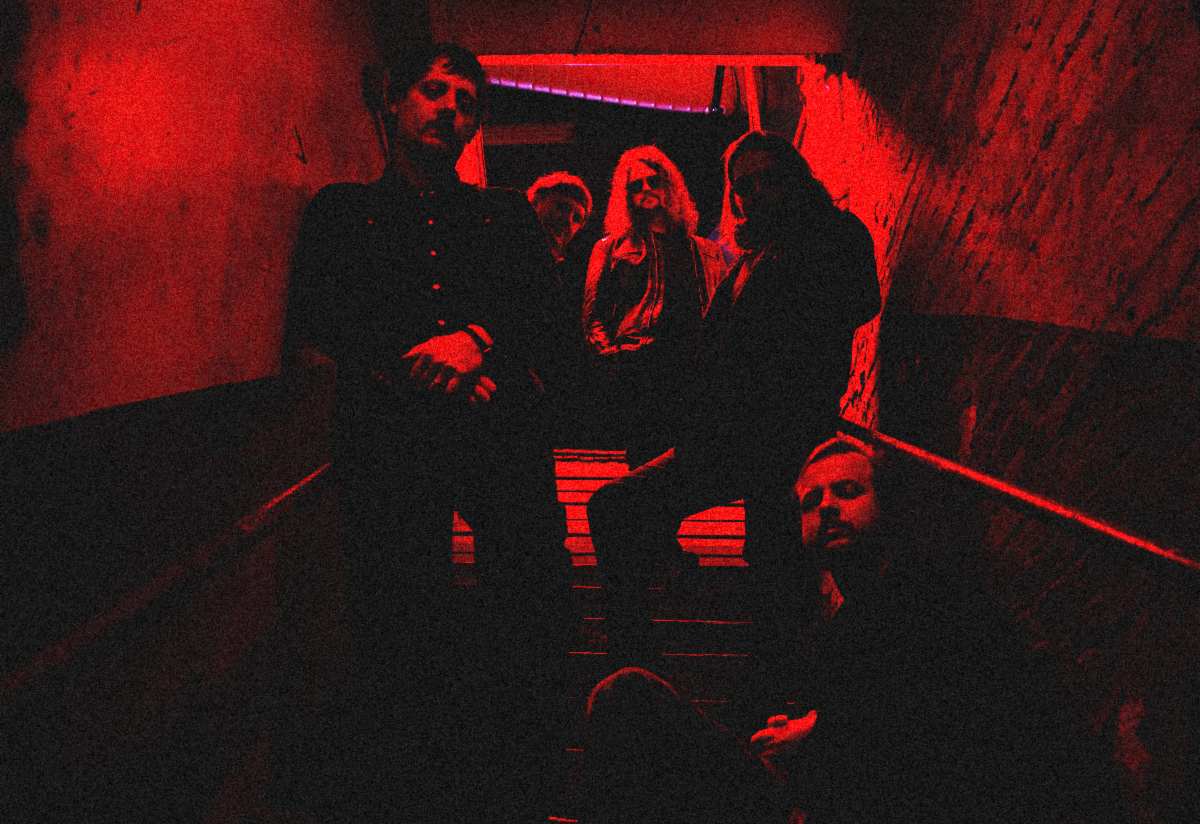
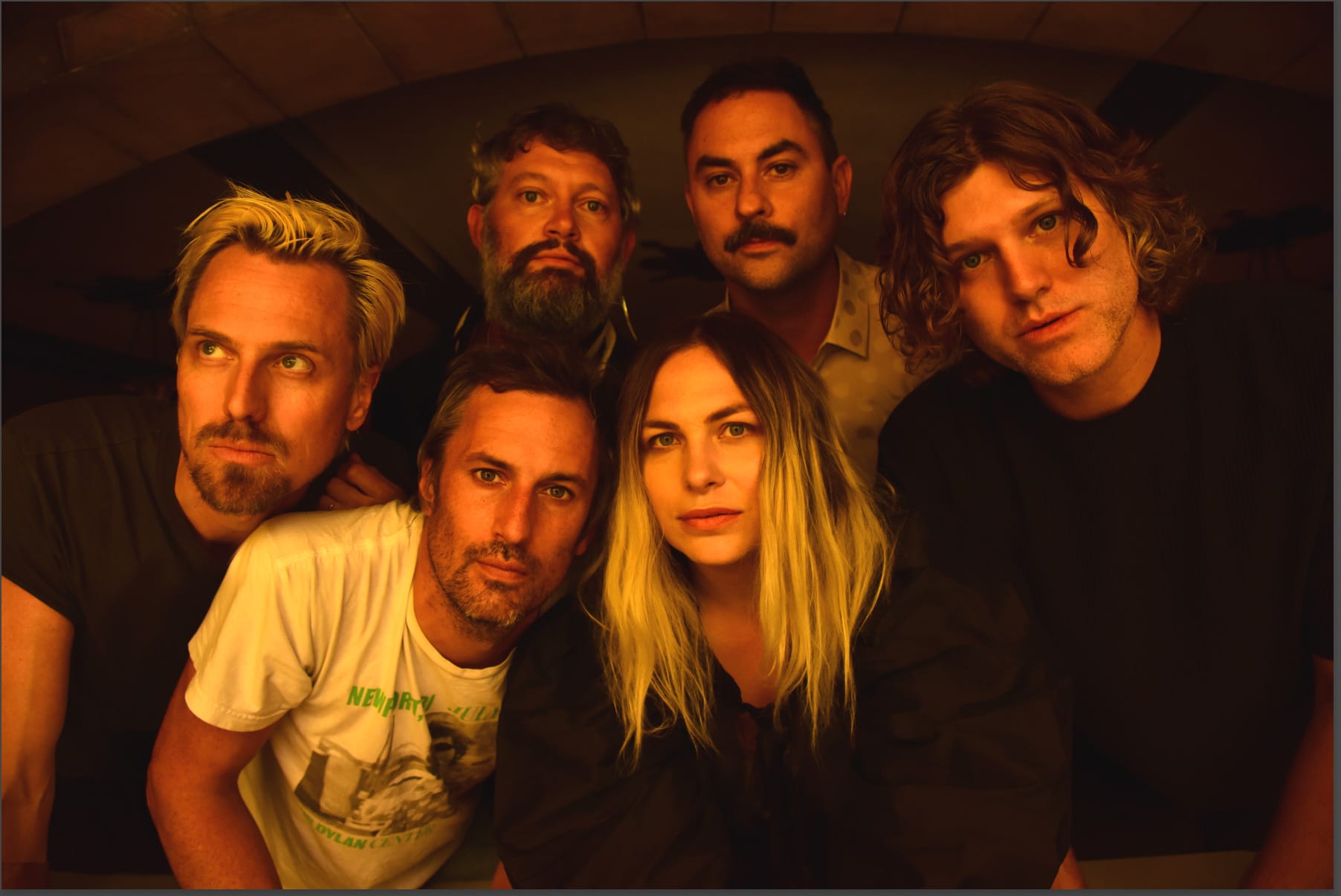
For all the public knew, as the 2010s closed up shop, everything had been going great for The Head and the Heart since their formation in Seattle a decade earlier. The buzz around the band—initially vocalists/guitarists Jonathan Russell and Josiah Johnson, violinist/ vocalist Charity Rose Thielen, bassist Chris Zasche, pianist Kenny Hensley and drummer Tyler Williams—had fast-tracked unabated since the arrival of their self-titled, independently released first album in 2011. Sub Pop, the storied local label that had boosted the profiles of Nirvana, Soundgarden, The Shins and so many others, had taken over the distribution of that debut and was now doing the same for the folk-rock sextet. One track from that album, “Rivers and Roads,” a heartening ballad of friendships and farewells, was already on its way to becoming a classic— and the band’s best known song—by the time they started work on the follow-up.
That sophomore effort, Let’s Be Still, soared into the Billboard Top 10, and the attendant flush of success prompted the major label Warner Bros. to sign The Head and the Heart, releasing Signs of Light in 2016. It outpaced the first two in popularity, landing at No. 5 nationally, and was succeeded by 2019’s Living Mirage, which also fared well. A decade in, The Head and the Heart—who’d met while the members to-be were playing open mics and house parties around Seattle—had become a top-shelf American act.
Beneath the luminous veneer though, an accumulation of bumps in the road were taking their toll. Even before they recorded Signs of Light, Johnson had announced that he would be going on hiatus to deal with substance abuse issues. He only contributed a little to that recording and skipped out on the next tour, and although he did eventually return for a short while, it was mutually decided that it would be best for all involved if he left the group permanently. Meanwhile, Hensley, dealing with problems of his own, also decided he needed some time off. He was back before long, but in his absence singer and guitarist Matty Gervais, Thielen’s husband, became the newest member of The Head and the Heart.
Since then, the band’s lineup has remained stable, but there would be other obstructions along the way. With their relationships still frayed, the six remaining members, at the insistence of Thielen, underwent group therapy in Nashville while tracking their fourth album, Living Mirage. Over time, progress was made and communications improved but, increasingly, some longtime fans groused that the band had gotten away from itself musically, allowing producers and even outside co-writers to exert too much influence. Ironically, the more mainstream The Head and the Heart became, the more they experimented with the varied sounds and concepts they had at their disposal and the less they sounded like the indie-folk darlings that had initially won over audiences in the Pacific Northwest.
With the pandemic looming, making it difficult for the musicians to even record in the same room, The Head and the Heart’s very method of creating was drastically altered. When album number five, Every Shade of Blue, was released in 2022, the future looked bleak: It failed to even chart on the Billboard 200, a precipitous crash after three consecutive triumphs. Warner Bros. dropped the group, leaving The Head and the Heart back at square one by the spring of 2023; they were once again “free agents,” as some of the band members often put it.
It may have been the best thing that ever happened to them.
***
The Merriam-Webster dictionary defines the word aperture several different ways, the most common of which are “an opening or open space (hole)” and, in photographic terms, “the diameter of the stop in an optical system that determines the diameter of the bundle of rays traversing the instrument.”
Another definition, albeit one not cited, could be “the sixth full-length studio album by The Head and the Heart.” And the more the band worked on piecing together the LP, released in May, the more they agreed that it needed to be called Aperture.
“We finally learned to open up the aperture/ Such a long time coming,” goes one line in the title song, sung in harmony, while the chorus proclaims, “Come alive, come alive, come alive/ What does it feel like?”
Turns out it feels pretty damn good. “Like a rebirth,” is how Thielen puts it.
“It’s a return to form,” says Russell on the crafting of the album. “It’s been a while since we’ve—in a big way—worked from scratch and influenced one another’s songwriting in the room immediately. And on the other side of that coin, it feels like something completely new because it’s a band doing that concept with 15 more years of life experience.”
“For the first time since the beginning of the band, we weren’t beholden to anyone,” adds Gervais. “We had the freedom to operate on our own schedule. It freed up a psychic space or mental space or spiritual space—however you want to put it—to go back in and do what we do without any preconceived notions of what was going to happen or considerations or worries or concerns that it wasn’t going to please the suits. It’s a return to a certain way of working together, a certain ideology or approach or philosophy that, because of extenuating circumstances, made it impossible for a handful of years. There wasn’t an elephant in the room anymore. We were just like, ‘OK, let’s just do this thing. This is who’s going to make the record and this is what it’s going to be.’”
“Nobody was expecting anything from us,” Russell adds. “We could literally do exactly what we wanted, which allowed us to also stretch the timeline out. We slowed the process down. We would do a week together. Then we’d go back on tour. Then we’d have a little time off. Then we’d get together to write and record and do that whole thing over again. We had fewer deadlines, fewer people involved. And now you get to hear what we actually sound like.”
“We couldn’t have made this record had we not gone through the previous ones,” Thielen says. “It’s a reaction to that, like we’re a baby band in a way. We’re building upon a foundation that we have actively created.”
***
It wasn’t easy getting to this place, and again it’s imperative to press rewind to see how they got here. Left high and dry after Every Shade of Blue—which actually does have quite a few good tunes—failed to catch on, and with two of the band members, Russell and Williams, having since moved back to their original home of Richmond, Va., The Head and the Heart took stock and pondered their options. There were crucial considerations. Most of the band, now in their 30s, had families—Russell became the latest to join the dad club earlier this year— and the slog of record-tour-break-rinse repeat was no longer as inviting a lifestyle as it had been when throwing everything in the van and heading to the next town was a cinch. Were they still up for it?
The question answered itself. They still loved making music together, and new songs were begging to be written. The group chose to brush themselves off and get back to work, but this time on their own terms. All they had to do in order to move forward, they realized, was to look backward and return to the way they’d made music when they were first starting out.
The result, again arriving three years after the last album release, is Aperture, their first for Verve Forecast Records, the label that was home to such singular artists as Richie Havens, Janis Ian and the Blues Project in the ‘60s and today hosts the likes of Tank and the Bangas, Madison Cunningham and T Bone Burnett. The Head and the Heart dialed back some of their more ambitious inclinations to make polished, bigger-sounding records that might appeal to a larger audience and trusted themselves to create an album that reflected who they are today—albeit with a nod to their humbler, rootsier beginnings.
“People got turned on to a band called The Head and the Heart because of its synergy, its chemistry and what that sounds like when we all write together,” says Russell. “Charity says that the real magic is in the process of making art, not the final product, and I think she’s right. If there’s beauty in the process-making, it’s going to get caught on the album, and then that’s what you’re going to feel when you’re listening.”
Aperture, unquestionably, should feel familiar to those who were listening during the band’s formative stages. On their first round of tour dates this year, they performed as many as 10 of its dozen songs in each show, amid tunes that stretch back all the way to their initial release. The transition on stage is seamless because, in many ways, the new songs play like their best early work. Yet these songs are not retro exercises, nor are they an attempt to recapture something bygone. Aperture sounds like a record made in 2025, not 2011, and the new tunes—among the highlights are “Fire Escape,” “Cop Car,” “After The Setting Sun,” “Arrow,” “Jubilee” and “Finally Free”—reflect the growth of the people who wrote and shaped them.
And because The Head and the Heart make a point of crediting the entire band with the composition of each song— regardless of who came up with the seed of it or who plugged in the chorus—Aperture comes off as a statement on who The Head and the Heart are collectively, instead of six random folks who ended up in the same band but lead very different lives.
Says Thielen, referring to the previous couple of albums, “There was a lot more exploration, a lot more consideration of other ideas or opinions that weren’t from the internal six [band members]. This album is getting back to quieting those external voices and just seeing what the six of us can do together in a room if we allow ourselves the time and the openness. In a six-way marriage, there will always be difficulty in trying to maintain healthy communication and harmony, and that will make its way into the art. Trusting and believing in that process allows an openness, a level of vulnerability and a connection that screams a resounding authenticity of who we are and what we do. I think that we’ve really grown.”
A large part of that growth involved allowing the music to find its own way, at its own pace. The ensemble wrote and recorded in both Seattle and Richmond as time and their creative impulses allowed—without having to watch the clock—producing themselves for the first time since their debut. And not having to answer to a record company’s desires—they signed to Verve after they’d already worked on the album for some time—gave the band the opportunity to shape the songs on Aperture to their own specifications, without concerning themselves with how they might fare in the marketplace.
That freedom, bolstered by the experience and confidence earned from a decade and a half of touring extensively and learning their way around the studio, also meant they could try things they might not have come up with in the past. “On this record, there’s a lot of different approaches,” says Gervais. He mentions Thielen’s “Finally Free,” the album’s penultimate song, as one that found its way to fruition spontaneously in the studio.
“Jon and Kenny are both playing piano on that at the same time, so there’s four hands on the piano,” he says. “That was Charity’s idea. She said, ‘Hey, you guys should both sit at the piano for this.’ Then the song just formed itself. It was really amazing to see it come together. Charity was very taken by their little piano phrase and just started coming up with these mysterious lyrics. That, to me, is really special.”
“Aperture,” the title track, was derived from the idea of “letting in more light, being more vulnerable, being more honest, being more human,” says Russell. “So much of what we strived to do on this record, which we were not always great at, was trying to leave in the humanity, leave in the mistakes.”
“In opening the aperture, we’re actually able to see the whole thing and accept it all and live with it and breathe with it and move through it,” adds Gervais. “We’re also seeing the world through our children’s eyes and everything that you take for granted is new again. So, the term aperture popped into the lyrics just naturally, and I enjoyed that line. In some ways, it referred to the band’s ability to see ourselves clearly and see the picture and confront the areas of the picture that might’ve otherwise been obscured in darkness. It felt like a nice umbrella term to sum up what we were all going through, which is opening up—this widening of experience.”
***
Having found their way back to music making the way they prefer to music-make, The Head and the Heart are in a good place today, probably in a better place than they’ve been since the first couple of years. Through hard work and persistence—by taking the negatives and turning them into positives, confronting snags rather than ignoring them—they’ve not only managed to save their band but also give it a future, one that, as long as they want to keep going forward, can provide them with the tools they need to keep evolving. Even as Aperture is still finding its place in the band’s canon and fans are getting used to the new tunes, the sextet are already looking ahead.
“My dream is that I would love to write songs and to tour on them a lot, in order to refine them, before going into the studio, and then just cut a live record in less than a week,” says Thielen. “That’s definitely something that I have a vision for this band to do, creatively.”
Gervais, too, is focused on the future. “If we can keep it going and stay strong and healthy and be kind to each other and just keep making music that people enjoy, that feels real—we can do this,” he says. “We can keep doing this forever. That’s the goal. Whatever that might mean in terms of success and all that stuff, that’s not my consideration right now. We’re just here to put the blood, sweat and tears—and the passion—into it and keep it going.”