“There was a period in my life where I got to work with all my heroes. I got to work with Bob Dylan and watch him write. I got to work with Willie Nelson, Brian Wilson, Kris Kristofferson, and Mick and Keith. When I saw what they were doing, it gave me writer’s block for about five or six years,” Don Was reveals, as he acknowledges the immediate impact of producing records for such masterful artists. “Every time I sat down at a piano, I’d think, ‘What’s the point of this when these guys are just down the street and can do it way better?’”
Eventually, a moment of epiphany arrived, while he was working on a session with Willie Nelson.


“I looked at him, and I thought, ‘Man, he’s so great. He’s such a brilliant, one-of-a kind person, and I can never be as good as this guy,” Was recalls. “But then it hit me that, on the other hand, he can’t be me. He didn’t grow up in Detroit, drop acid and go see the MC5 at Grande Ballroom. George Clinton and the Parliaments didn’t play a sock hop at Willie Nelson’s junior high school. The Stooges didn’t play at his high school. So I had all these experiences that he didn’t have.”
This backdrop ultimately informed his approach as he assembled some like-minded players for a special live event he performed at the behest of Terence Blanchard in May 2024. “I decided to find people who grew up listening to the same radio stations that I did and be as extreme Detroit as I could be,” Was explains. “I realized that just about no one else is doing that, certainly not at my age of 73. Mitch Ryder is still out there playing. Iggy’s out there playing, but there aren’t a whole lot of folks from that era. So I put together a band of people who I knew, some of whom I’ve been playing with for 45 years. We already had a common language.”
Don Was and The Pan-Detroit Ensemble share that soulful, jazz-infused vernacular on their studio debut, Groove in the Face of Adversity.
The title of the record had been a long time coming, as it originated from an experience during the bass player’s teenage years.
“My mom was making me run errands with her on a Saturday, and I hated it,” he remembers. “I wanted to be hanging out with my friends, and I was being the worst 14-year-old boy that I could be. At one point, she finally stopped taking me into stores, left me in the car with the key and told me to listen to the radio. So I was playing with the dial and I happened to land on Detroit’s jazz station, WCHB, which I didn’t know existed at that time. I hit it just as the solo was beginning on a song, which was a saxophone solo, I subsequently learned. It was a song called ‘Mode for Joe’ by Joe Henderson, which is a Blue Note release that was new at the time in 1966. At the beginning of the solo—this is right where I came in—it sort of breaks down and he’s doing these really anguished cries from the saxophone. He didn’t sound like any saxophone player that I knew, and it matched my mood perfectly. About 20 seconds later, the drummer, a guy named Joe Chambers who plays on a million great Blue Note records, starts hitting his ride cymbal and grooving. Then, eventually, Joe Henderson calms down and he starts moving with the groove.
“The message that came through to me wasn’t about notes or saxophones, it was Joe Henderson talking to me and saying, ‘Don, you’ve got to groove in the face of adversity.’ I thought about that and it changed my whole mood around in a couple of minutes. By the time my mom got back in the car, I was a nice kid again. I realized the transformational power of this music, and music in general. I not only respected it, but this affirmed my desire to make music and to try to do that in the world.”
Beyond supplying the name of an album nearly 60 years later, that moment opened a new world for the captivated listener, who would achieve success as an eminent performer and producer before being named president of Blue Note in 2012. “That experience in the car was my first introduction to jazz, to Blue Note and to nonverbal music’s power to communicate a strong verbal message,” Was indicates. “I stayed on that station, and it was a jock named Ed Love, who’s now in his 90s and is still on the radio in Detroit. He was the king of the jazz DJs and he back-announced every record with who was playing, so you could really go to school on him. He also hosted a series of jazz concerts at the Detroit Institute of Arts that he was advertising on that same show. I couldn’t get down there that night for Gene Harris and his trio, The Three Sounds, because I couldn’t drive. But two weeks later, he had the Jazz Crusaders and I went to that show with my buddies.”
Was maintained his appreciation for the medium, even as he pursued a variegated career that included his standout production credits, as well as participation in projects such as Was (Not Was) and, more recently, Bobby Weir & Wolf Bros. He has won multiple Grammys, including Producer of the Year, as well as an Emmy (The Beatles: The Night That Changed America), a BAFTA (Backbeat) and a Lifetime Achievement Award from the Americana Music Association.
Still, he remains curious and committed to most any creative challenge, which is what Blanchard presented him in 2022, when curating a jazz series for the Detroit Symphony Orchestra. Was agreed to participate, and eventually found himself with a looming deadline.
“Cool things came up and, all of a sudden, I was six months out from a gig that I’d accepted two years earlier. I didn’t have any songs or any band. What I did have was an awareness that every artist who records for Blue Note Records practices between three to six hours a day. When I thought about the kind of work that goes into doing what they’re doing, I realized, ‘Man, I can’t compete with that. If I try to be that, it’ll just be shitty. So what can I bring to the proceedings that is different from what everybody else is doing?’ For 30 years, I’d been driving around with a sound in my head that I wanted to achieve, but it always got moved to the back burner.”
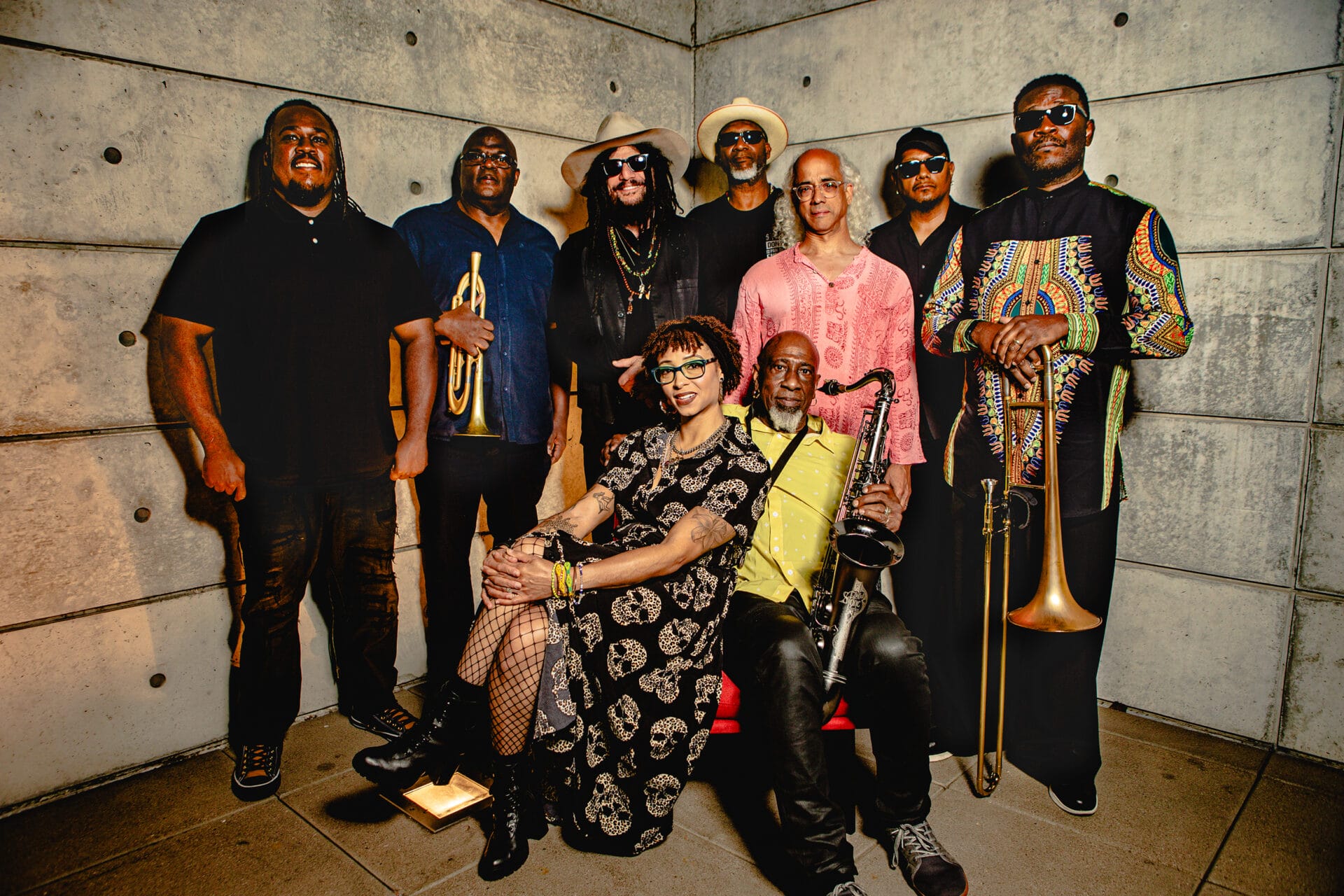
So he decided to lean into his Detroit connections, recruiting musicians he had played with at various moments over the preceding decades. Saxophonist Dave McMurray and longtime Eminem keyboardist Luis Resto were charter members of Was (Not Was). Vincent Chandler (trombone) is a professor of jazz studies at Wayne State University. Was notes, “He’s part of a tradition of guys like Barry Harris and Marcus Belgrave who were Detroiters and stuck around to mentor people.” Jeff Canady (drums) played with Michael Henderson as well as McMurray. Wayne Gerard (guitar) also performed with McMurray as well as many others, including Bob James. John Douglas (trumpet) toured with The Four Tops and The Temptations. Mahindi Masai (percussion) played with Roy Brooks and Max Roach, as well as McMurray. Finally, Was explains that vocalist Steffanie Christi’an “is a world-class, incredible singer who, just because she chose to live in Detroit, didn’t get the attention that she should have.” As the nine musicians came together for the first time, they experienced a mutual frisson of excitement. Was recollects, “We had a rehearsal about six months before the Detroit show and it just clicked. When it clicks, you can’t ignore that. When it feels like you’ve been playing together for decades and you’ve been playing together for 10 minutes, you don’t let that slip away. You only have one, maybe two opportunities if you live long enough and have a long enough musical career and develop those kinds of relationships to have that kind of familiarity and comfort and common language—so that the conversation becomes relaxed and jocular. We had that from the get-go, so I knew we shouldn’t stop with the one gig.”
Beyond additional live performances, Mack Avenue Records has just released Don Was and The Pan-Detroit Ensemble’s vibrant, shimmering studio release, Groove in the Face of Adversity. The material that the group inhabits on the album reinforces its nine members’ range, ambition and facility. These tracks include Kenny Barron’s “Nubian Lady,” Cameo’s “Insane,” Hank Williams’ “I Ain’t Got Nothing But Time” and the Was original “You Asked, I Came,” which was originally recorded for the score to The Beatles in Hamburg biopic Backbeat.
When asked to characterize how the band’s music manifests the city that birthed it, Was asserts, “I think there’s absolutely something uniquely Detroit about what we are doing and what everybody who comes from Detroit does. I think it got its roots in the uniqueness of a one industry town. After World War II, people came from all over the world to work in these factories, and everything in that city depended upon the success of the auto business. If sales were down, people got laid off and they’d move away with their families. There’s something about everyone being in the same boat that creates a kind of root honesty to the place. There’s no point in putting on any airs. It’s a very honest population, and the music that’s come from there reflects that.”
“I cite John Lee Hooker as the greatest example of Detroit music,” he continues. “It’s so raw. You don’t know if a song’s going to fall apart in the next minute, but it never does. He also swings like crazy and he’s super soulful, but it’s utterly without polish or pretension. That follows every different alleyway of Detroit music, whether it’s Mitch Ryder, MC5, Stooges, White Stripes, J Dilla, Donald Byrd, Joe Henderson or Elvin Jones. It’s not a big, slick sound and there’s a repetitive, undulating groove underneath. The Stooges were like a rock-and-roll version of James Brown’s band. That’s the tradition, and I think we embody it.”
Don Was and The Pan-Detroit Ensemble recently shared that tradition with audiences in Japan, followed by a series of album release shows in the U.S. where, in addition to performing their existing repertoire, the group also interpreted the Grateful Dead’s Blues for Allah to celebrate the album’s 50th anniversary.
The suggestion to perform the record initially came from the Golden Road Festival in Buford, Ga. “I thought, ‘Well that’s a challenging proposition,’” Was offers. “I know the album, and, there are some standards that get played every four or five nights with Wolf Bros, and there are some that I’ve never seen played. ‘King Solomon’s Marbles’ felt like free jazz to me. I never really understood that there was an actual structure and chords underneath it that repeat. It’s been fun to really go in there and dig deep on these songs and find what the structure is and think of how we can play it. We’re playing all of them and we’re playing all of them conscientiously. The challenge of the thing is you don’t want to do karaoke Dead, but there are certain touchstones that have to be included. They’re like guardrails that people can hold onto. It’s finding out what’s sacred and what’s not and what you can play with.
“That’s something I learned playing with Wolf Bros. I can’t play like Phil. Nobody played like Phil. It was such a unique approach, and that kind of haunted me for a while. I knew that I wasn’t approaching the songs the way that he did, but what I eventually realized is that the most Phil-like thing you can do is be yourself. It certainly wasn’t about the parts he played because he played them differently every night, but he was always Phil. I can’t be Phil, so I had to learn to be me and play those songs, which I felt was in the true spirit of the music, and Bobby concurred. It’s the same with this. How do these nine people from Detroit play these songs?”
Looking ahead, the collective has also confirmed a series of dates in the new year. Beyond that, Was remarks: “I’m committed to playing with the band until I drop. I’ll do other things, but I’m sticking with this, and we’re already working on songs for our next album. To me, this one was like a handshake. It’s saying, ‘Nice to meet you, here’s who we are.’ We’re going to build on this and take it to new places. Where it’s going will be as much a surprise to me as it is to anybody else. What I do know is that since we started playing, we’ve gone to a different level of musicianship. We’ve got a lot of touring coming up and it’s going to be different by the time we finish. I can’t wait to see where it goes.”