Derek Trucks: Cultivating Kindred Energy and Euphonious Festival Vibes
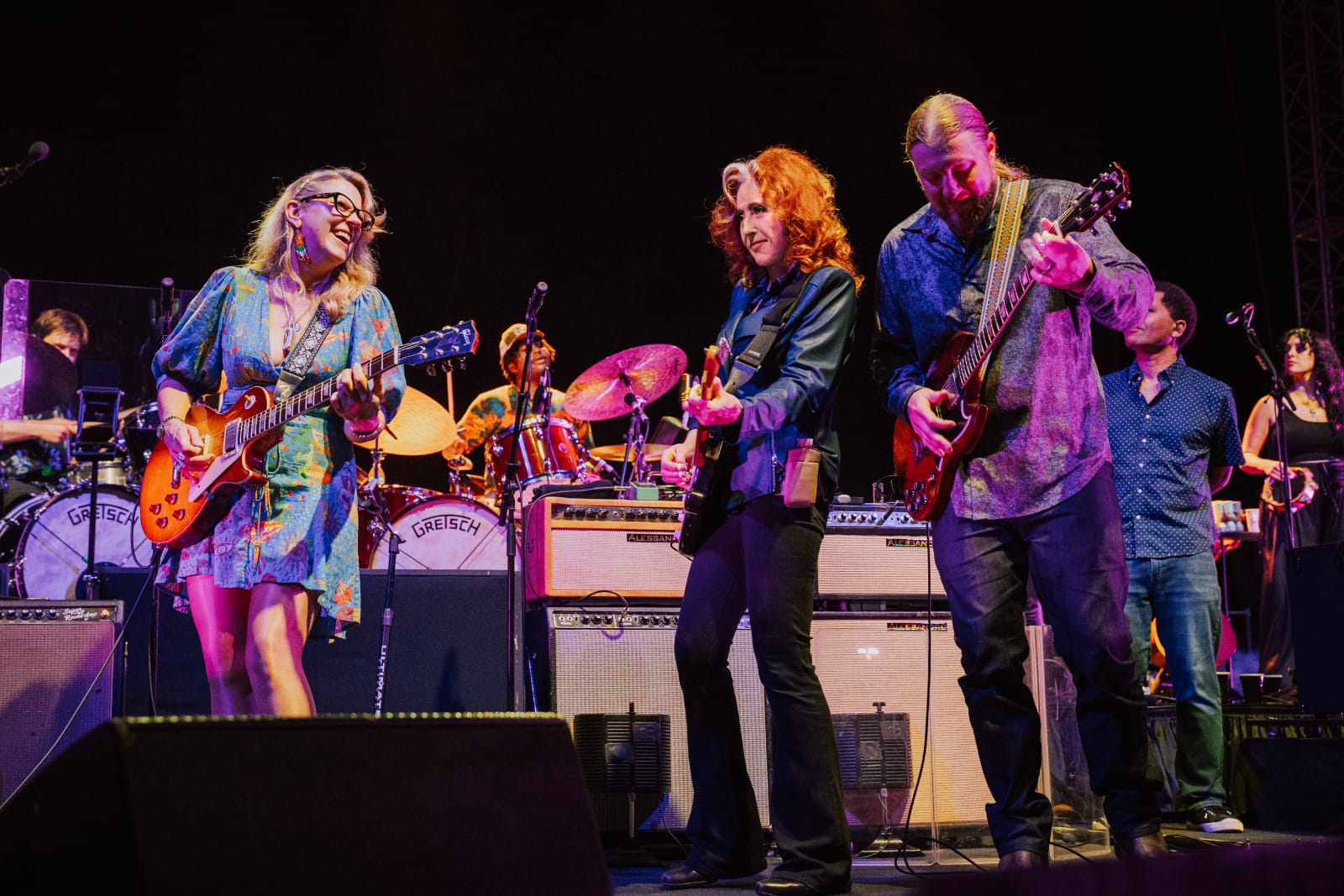
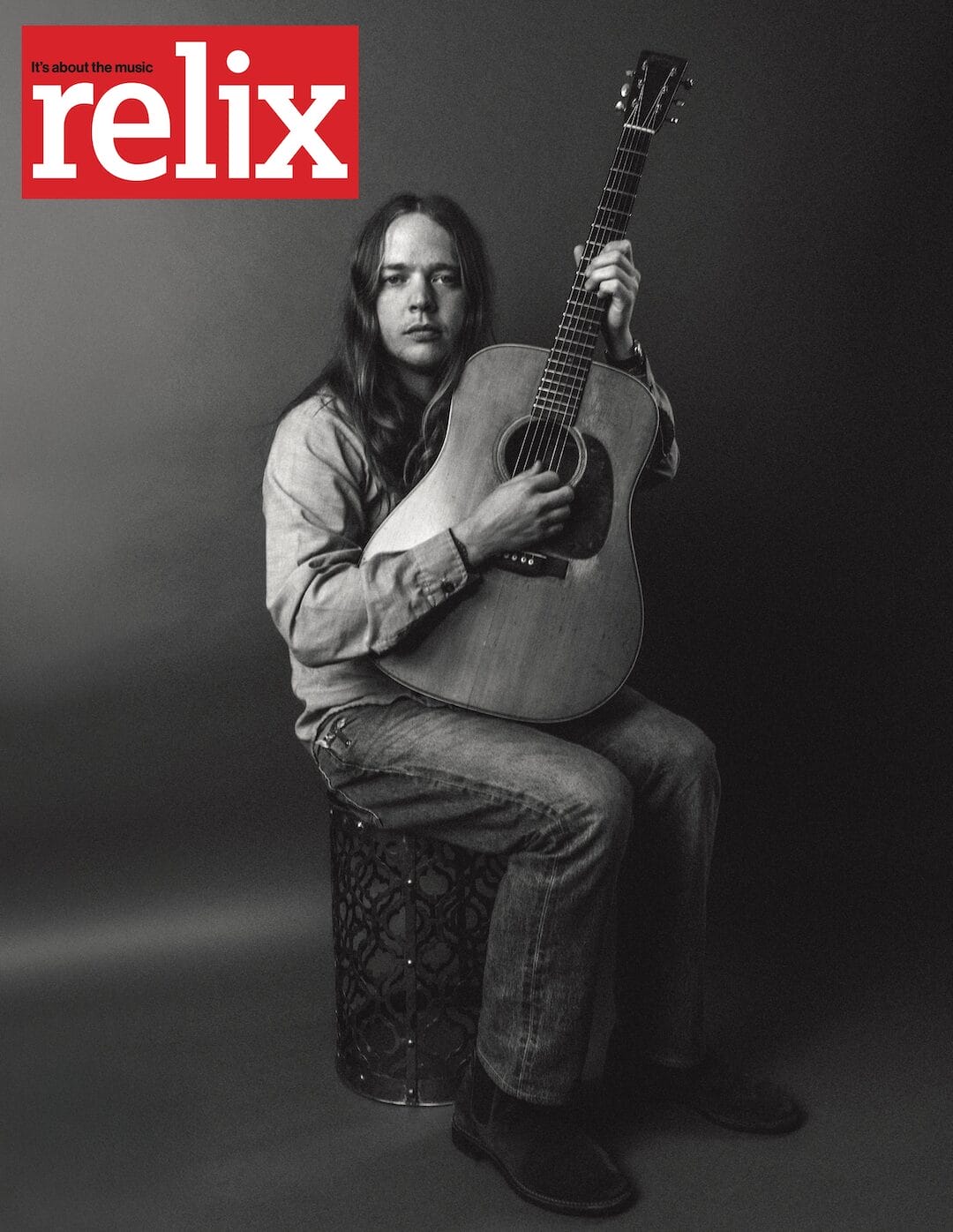
photo: Bradley Strickland
***
“This last year at Sun, Sand and Soul, the hang with Bonnie was incredible,” Derek Trucks states effusively, as he looks back on the second installment of the Tedeschi Trucks Band’s late-spring festival. Bonnie Raitt headlined the middle night, with TTB bookending the event, which took place on May 1-3, just a seastone’s throw from the water in Miramar Beach, Fla. “Bonnie came out to our show and then the next night, we came out to her show. Those are some of the highlights of the year for us, thinking back on the most joy we’ve had. It translates to the stage when people feel comfortable and want to be there. That’s when the collaborations go through the roof.”
Speaking of collaborations, this past September, Fantasy Records issued Mad Dogs & Englishmen Revisited (LIVE AT LOCKN’). This release presents the epic performance at the 2015 LOCKN’ festival in which the Tedeschi Trucks Band, Leon Russell and cohorts honored the 1970 Mad Dogs & Englishmen tour, along with like-minded guest musicians. As Trucks indicated back in September, via a conversation that ran on Relix. com: “We’ve been a part of a lot of shows and this thing kind of stands on its own. The timing could only have happened when it happened, and it could have only happened with our band and Leon and that group. It was a really unique thing and we feel very lucky that we were a part of it when we were.”
A similar spirit predominated this past summer when Tedeschi Trucks Band took to the road with such artists as Gov’t Mule, Steve Winwood, Whiskey Myers and Grace Bowers & The Hodge Podge. The TTB performed a number of new original compositions during these shows in anticipation of their forthcoming 2026 studio album. Meanwhile, Sun, Sand and Soul will return to Miramar Beach from April 23-26, with Jason Isbell and the 400 Unit, Taj Mahal & The Phantom Blues Band, Drive-By Truckers, The Mavericks and Jaime Wyatt among the participants.
“Topeka [the promoter] runs that thing so well,” Trucks remarks. “It feels incredibly comfortable and we look forward to it. People will pitch gigs to us and they’ll say, ‘It’ll be fun.’ We’re like, ‘We hear you, and it might be fun for everyone showing up, but for us, it’s work.’ Sun, Sand and Soul has turned into something that feels like both, which has been great.”
[Note: this article appeared in our final print issue of 2025. After snow blanketed much of the country over the weekend, this seemed like an apt moment to run it online in anticipation of warmer days ahead. On Friday, TTB officially announced their new studio album, Future Soul.]
In September, when I spoke with you about Leon Russell and the LOCKN’ set, you commented, “I think he needed that. I think sometimes we don’t realize how much we need to dive back into things that were a huge part of our lives. Sometimes you leave them in the rear view and you think that’s it, but they’re still there. You’ve got to tackle ‘em.” I’m curious if you think that also applies to your own relationship with the music of The Allman Brothers Band?
I think for me, that’s complicated. From the time I first started playing in public, playing “One Way Out” at a bar in Jacksonville, there was always this sense that this is what I was supposed to be doing as the nephew of a member. But when I’d break free of that, it started its own thing. There was blowback about whether I should be doing that.
Then, I joined the band and did it for 15 years and kept my own band rolling. At that point, I stepped away from the Allmans, we started this thing and it was pretty much all in the rear view for me. But when the 50th anniversary came up, it was hard being a stick-in-the-mud and not doing it. So I played the show and realized, “This is a hell of a lot of fun.” [Laughs.] I also realized how much a part of my life it is. The 55th was the same. It was an incredible thing.
But I’m kind of back in that spot now where I feel like we just did it. There was even some talk about maybe doing it some more, but family’s messy and the history of that band is messy. People have different feelings about the whole thing, and I think it’s going to be a minute for me.
We just did shows with Warren, though, and the chemistry with him is pretty undeniable. Anytime we’re up there together, we can kind of finish each other’s sentences. It’s an incredible thing to be a part of and we’ll continue to explore that.
I feel like this year was a bit about reconnecting, both with the Mad Dogs thing and the Allman Brothers. So maybe we’ll do it again, but I’m kind of excited about not doing that for a minute.
I mean, as incredible as it is, I feel like at this point, we’re far enough into the game with this band where we have our own legacy separate from that. It’s fun to dip back in, but as I’ve always known and sometimes I’m reminded, “It’s not yours, it’s theirs.” [Laughs.] I would love to occasionally play that stuff, but it also can be complicated.
Out of all the songs you performed with Warren, was there one in particular that grabbed you and embodied that connection?
It is funny because what I’m realizing more and more is that the chemistry I have with Warren kind of stands on its own. That songbook is tailor-made, which is why we have that chemistry. It’s because we played those tunes for so long.
But we had him up on “Pasaquan,” which is an instrumental we do, and I had as much fun playing that with him as I’ve had playing with him on anything recently. So it kind of hit me that things grow out of other things, and then they become their own thing. Maybe my chemistry with Warren is a little bit like that at this point. So who knows what that turns into, but it’s nice to know it’s there.
During our earlier conversation, in describing the TTB, you observed, “We’re almost crossing generations at this point. It’s weird being the old guy in the band.” Can you recall the moment when that first struck you?
I think it first dawned on me when we put together the Tedeschi Trucks Band. When we had Maurice Brown and Saunders [Sermons] in the band, I was like, “Oh, shit, these guys are younger than me. This is the first time I’ve ever been in a band with somebody younger than me.” Then that’s just continued with Isaac [Eady] and Brandon [Boone]. Now, it’s like, “Oh, you guys are well younger than me.” [Laughs.]
Then the fascinating thing is you start seeing people get turned onto records, including older records that were kind of everywhere at one time, and you can see that’s a revelation because it’s the first time they’ve heard them. That’s when you’re reminded, “There’s a lot to learn for all of us.” It’s nice to recheck in with that stuff.
I’ve really enjoyed this new role, and something else that’s happened is I’ll hear someone play or sing and I’ll go, “Oh, wow, that person’s really influenced by Susan,” or “Wow, I can hear my playing in that.” That’s a weird thing because it’s something that never happens in your early years. You’re just trying to do your shit, and when you hear other people doing it, that’s a wild feeling. Then you’re also like, “Oh, I better stay on top of this shit. I better change it up.”
It’s a satisfying experience introducing people to music you know they’ll love but has somehow eluded them. For me, it often happens with soul jazz.
I remember the feeling when Col. Bruce and my mentors were turning me on to records. It was like, “Oh, it’s fun for them to rehear it through fresh ears.” I have that feeling now when I listen to music that was really important to me, but maybe I hadn’t heard in 15-20 years. Then I’ll hear it with somebody, see the way it hits them and it reminds me about the whole point of it.
When I joined the Allman Brothers, it was incredibly exciting for me to play every tune in the songbook. That made it exciting for them again because when you do it long enough, sometimes you forget what’s unique and special about a thing. So when somebody comes in bright-eyed, it reminds you of that.
I think that’s an important thing, and it’s one of the reasons this band has evolved. There hasn’t been too much turnover, but there’s been a healthy amount of fresh ears every once in a while. I think that helps.
It’s also about trying to make sure that you’re infusing new material, whether it’s your own song or somebody else in the band brings something in or it’s a cover. I think all of that stuff really helps keep it alive and breathing.
A couple nights ago, you opened with three consecutive new songs. Can you describe your philosophy when it comes to working them into the setlist?
For the band, just kind of selfishly, it’s been fun to play new material. Then when we started playing the new stuff, it kind of fit right in the set, as if it had already been there for a minute. That’s a good feeling and it’s not usually the case. Usually the material has to come out and people have to get comfortable with it. That’s when it slowly starts feeling like it’s a part of your repertoire.
But for some reason, these songs kind of just fell into place a little more quickly and naturally. We’ve been enjoying playing them and we’ve been hitting it hard this year. There’s been a lot of touring, so new material makes you feel excited about getting up there and doing it every night.
It’s been fun for us and the response has been great. I’m excited to get to all of them. I think we’ve played about half the tunes. We’ve done seven or eight. I think we recorded 17, and about 11 will be on the record.
So we’ve played a good chunk of them. There are three or four that we play quite a bit because we enjoy playing them and we’re still learning them—discovering new things and starting to crack them open a little bit. Usually that’s the most exciting time with a tune. Then sometimes, old tunes can get that treatment after you give them a little bit of a rest and reimagine them. You get into that place again where there’s a lot of newness and discovery in the material. But it’s nice when you have a stack of tunes to dig into that everyone only half-knows, so that you all can fuck up together. [Laughs.]
In general though, when we’re writing setlists, we’re thinking about what we played the last time we were in a place and how much we’ve played a tune on a tour, but we’re also just thinking about what would be inspiring for the band. We’ll say, “Is there something that someone in the room wants to play?” Sometimes it’s as simple as that.
Last night’s show included “Midnight in Harlem,” which has been covered by bands such as Midnight North and Shadowgrass. As the song has made its way out into the world, what has that felt like for you?
I love that some of the songs we’ve written as a band are kind of out in the songbook at this point and people are playing them. A few weeks ago, me and Sue did this Wavy Gravy benefit out in San Francisco. We played with Sam Grisman and Peter Rowan and Sam’s group, which was great. It was all acoustic, and we did versions of “Midnight in Harlem” and a few other tunes of ours.
It was fun hearing a fresh perspective because we’d never played the song that way. It feels good when you realize, “We can reimagine these things in so many different ways if we choose to.”
Is there a particular composition from TTB’s early years that is particularly well-suited to this incarnation of the band?
“Let Me Get By” is one of them. We’ve been playing that a lot lately because the band kind of eats it up. “Until You Remember” is another one that has been great lately. It’s a simple tune, but sometimes you tackle a tune and it just takes on a life of its own. That one feels really grandiose the way the band plays it now, and it’s a great vehicle for Sue and the horns.
But there aren’t many songs from the songbook of the group that I think this band doesn’t play well. It kind of depends on what everyone’s getting excited about on a given night.
Eddie Vedder recently joined you at the Ohana Festival on a version of “The Seeker,” which Susan crushed. What led you to invite him out for that one?
We did “The Seeker” with Trey at our Garden show a few years back. Then our manager, Andy Mendelsohn, is good friends with Eddie and he knew that Eddie is a big fan of Pete Townshend and The Who. So he floated the idea out there. When me and Eddie were chatting about it, texting about what we were going to do, he was all in on that one.
It turns out that the guitar Eddie played that night was the one that he saw Pete Townshend playing the first time he saw The Who. So he was both feet in on that tune and he loved that music.
The night before we were there, his band played a Pete Townshend tune, so it was definitely the right spirit and Sue was great on that stuff. When it’s time to rock out, she is unafraid. There’s a tune she wrote on the new record that feels like it could be on a Who record or something by the Kinks. So she’s great in that place. She likes to be able to throw down.
Two weeks earlier, Steve Winwood joined you for a pair of Sly & The Family Stone tunes. How did you come to select those?
Sometimes you really try to think long and hard about these things, and other times, it just comes together quickly and almost feels inevitable. We were doing the show with Steve and his guy reached out and was like, “Steve doesn’t want to overstep, but if you guys want, he’d love to have a conversation about sitting in before the tour starts.” So we had a chat in the middle of the last tour.
I remember Steve Winwood was there in the audience for one of the first shows we played in London with this group. It was a pretty small club, so that was amazing—“What are you doing here, man?”
He remembered that we’d done the Sly thing and was really excited to do it. Once that popped up, he was all in on it.
He’s an incredible man and he’s got a very young spirit. I mean he’s a total master, he can play anything, but he’s fun to be around. We only did two shows with him, but that was a heck of a lot of fun. I also love that he was just gung-ho about it.
One more along these lines: Grace Bowers appeared on “With a Little Help From My Friends” at Red Rocks. Last year, she came out for Prince’s “D.M.S.R.” and “Show Me” by Joe Tex. Can you talk about identifying those songs to play with her?
I think she even plays “Soul Sacrifice,” the Santana tune that we dip into occasionally. So having heard that she’d tackled it with her previous band—she may have a different band now than the first time we saw her— you’re just trying to think about grooves, tonality and what she would be able to get up there and just blow on.
So those tunes came to mind. We’ve seen her quite a bit over the years now, and it’s fun to watch the progression because when you’re in that stage, things move quickly. The way you hear things changes quickly and your playing changes quickly. So it’s been really fun just watching that go, and she seems to be handling it well.
It’s a tough thing. I’ve been out here a long time now and was the young kid. I’ve seen a lot of people who kind of get shot out of a cannon. All of a sudden, you’re everywhere and it doesn’t always work out. It’s a dangerous thing.
But I feel like she has a good head on her shoulders and good people around her—I have faith in her. So I’ve been enjoying watching it look healthy from the outside. [Laughs.] I’m rooting for that part of it because there are a lot of things that go into it. Talent is one thing and timing is another thing, but you’ve got to be able to stay the course and stay true to what you’re in it for.
There are a lot of people who try to push you off of it along the way. They’ll tell you what you should be doing or how you should be doing it or how you should look. So many people will be pushing and pulling, trying to get their hooks in you.
I know for her, it’s even tougher being a young woman in the game. I didn’t have to deal with that part of it, and it was still a lot. I know that Sue is pulling for her, too, and it’s fun to watch her do her thing.
I spoke with her not so long ago and she did feel grounded in a way that reminded me of you back when you were 19.
I’m glad to hear that. Me and Sue talk about this too. When we meet people, it’s not like the early days. Now we’re at a point where people maybe have grown up listening to us, so we’re not always going to get the most honest representation of somebody. We’re getting their best version. But it’s nice to hear from other perspectives that it’s the same person. That’s the name of the game. You have to be the same person all the time. There can’t be multiple versions.
There can be danger with how much of the hype and the smoke they’re believing. People will tell you a lot of things along the way and you have to not take any of it in. Sometimes constructive criticism is good and sometimes so is the other stuff, but mostly you have to know who you are because it can get sideways quick.
When you were younger, did you ever briefly get caught up in something?
I remember a moment when I was probably 13 or 14. I was well into it. We were traveling all over doing the thing, and there was some mild celebrity with Entertainment Tonight and that kind of shit.
I didn’t notice anything, but I remember my dad being like, “You know what? I don’t really like the way you’re walking these days.” There was some gait I had that he was not too happy about. It really hurt my feelings, but then I was like, “Huh, I bet he’s right.” [Laughs.] I think you have to check yourself continuously, but it’s nice to have people around you that will do it for you.
You mentioned Col. Bruce earlier. I imagine he played that role for you as well.
That’s for sure. In your life, you always feel like there are certain people that when you’re in their presence, you want to act right. You want to come correct. Bruce was always one of those people— somebody I didn’t want to disappoint. He had the ability to see right through all of the bullshit. That was his superpower.
My dad has always been that way too. His threshold for bullshit is really low, musically and otherwise. So I feel like they were kindred spirits that way. But yeah, it’s always good to have mentors around that are like, “Wait a minute, I know who you are. You can’t fool me.”
You just played Ohana. How has that festival or other events influenced the way you think about Sun, Sand and Soul?
I think Ohana is a great one to look at. Everyone had their places to go hide away, but there were creature comforts and the hang backstage felt comfortable and communal.
A lot of us live on the road, and you spend all day at a festival. The crowd might be like, “Man, what a great festival.” That could be true for the hour and a half we’re on stage—it could be awesome—but then the rest of it just doesn’t feel great if you’re stuck in some nasty trailer.
I feel like Sun, Sand and Soul takes care of that with both the front-of-house stuff and the back-of-house stuff. It really has an impact. We’re out with Little Feat now, and Scott Sharrard and Kenny Gradney were both talking about how warm our audience is for the bands that play with us. That’s something I’ve heard from a lot of bands that tour with us and especially at that festival—how much they appreciate the audience that comes out to these shows. I think we’ve had a greater appreciation for that over the years.
I really have the sense that we’ve been lucky to cultivate a musical audience. They listen, but they also give it up. If something’s good and people are doing their thing, it’s a great audience to play for.
So with Sun, Sand and Soul, musicians want to be there in front of that audience, and they also get to hang with other musicians they don’t see all that often.
Sometimes people forget that when you’re on the road, you have limited opportunities to interact with other musicians.
You also have limited energy and time. You’re banging down the road from night to night and sometimes you need the downtime you do get to recharge and recuperate and get your head right. So it’s nice when there are places where the hang feels comfortable.
I remember in the early days, we’d go overseas to do these incredible international festivals, but it was just kind of chaos because there’s so much press you have to do. At no point do you feel like, “Oh, man, this is nice. We just get to chill.” [Laughs.] Sometimes we did run into our heroes and meet them, but it always felt very quick.
These days, with some of the new venues, there’s this realization that for a lot of artists, the road is their home for half of the year. It’s nice when they make it a little bit more comfortable.
Ohana did a great job. Almost everyone backstage was hanging thick. I ran into Eddie Vedder, Hozier, Leon Bridges, Margo Price and all these other people we hadn’t seen in a while. It was a really good time, and the music seemed to reflect that pretty well. Everyone was in a good mood.
At Sun, Sand and Soul, Tedeschi Trucks Band doesn’t play the middle night. What’s been the thought process relative to that?
Some of that was we just wanted to leave a headlining spot for somebody that we wanted to see. It’s also nice being there for three or four days and having a day off in between. That makes it something that the whole band and crew look forward to as well. So there’s something that feels really good about it.
Then, this year, the night with Bonnie was the total cherry on top. I don’t think it would’ve worked out the same way if we were playing before her. It’s much more hectic when you have a gig to do than when you can just show up and hang with her all day. Then, just naturally, she can think about whether she wants people to sit in on something. It didn’t feel at all pressed, so that part of it was really nice.
When I read Bonnie’s interviews from back in the day, advocating for various causes and bringing attention to people like Sippie Wallace, she’s someone else who’s has been very consistent with her principles and perspective. Much like Susan, as well.
Absolutely, and when those two hang out, there’s a lot of kindred energy there and a lot of mutual respect. It’s a beautiful thing to witness.
When Bonnie got the Kennedy Center Honors and you could hear everything she’s done over her life and career— and continues to do—it’s really humbling and impressive. It’s like, “Holy cow, this woman has been getting after it.” Then the goodwill in that room—you could tell everyone knows Bonnie, but she’s still kind of underappreciated somehow. You could feel in the Kennedy Center that a lot of people were having the same revelation and saying, “Holy shit, she’s a national treasure.” [Laughs.]
Bringing it back around to festivals, can you talk about your approach to making setlists at Ohana as well as Sun, Sand and Soul?
Well, with Sun, Sand and Soul, you know that most people are going to be there for the whole weekend. So you can be really patient with the way you think about the sets. You can save things for later in the weekend and you can dig pretty wide into the repertoire.
At Ohana, I think that was the first 45-minute set we’ve done in years. I can’t remember the last time we did that. You look out and you go, “Oh, I bet 60-70% of this crowd have definitely never seen the band. I don’t know if they’ve even heard of the band.” [Laughs.] So you’re getting out in front of an audience that you’re trying to win over in a way. So that was a much tougher thing to think about, but it was really fun.
We haven’t had to do that in a while. But we got up there and immediately realized, similar to what I was saying about our audience, that Eddie Vedder cultivates an audience of real music lovers. Looking out, I could see some Tedeschi Trucks Band and Allman Brothers shirts, so we were like, “Alright, these are our people—or at least a few of them are.” I could also pick out plenty of people who were not familiar with the band, but they were watching Sue do her thing and I could tell pretty quickly that they were on our side. So that 45 minutes was a lot of fun, but it was definitely a different way to think about a set. You go out there and you’re like, “We’ve got to hit these people early and quick. We’ve got to get to it.” [Laughs.]