My phone vibrates deep in the pocket of my pink LL Bean puffy jacket. Cold fingers loosen their grip on my dog’s leash, and I slide the loop of nylon onto my wrist, feeling for the device amid a twister of miscellaneous trash and treasures. As my fingertips make contact, the music cuts out, and the sender’s name is announced once again through my headphones.
It’s December, and I’m a couple of days out from filling the tank and driving the 170-some miles from Portland to Seattle, where Sam Grisman Project will close out the year at the Neptune Theatre. The dings continue, followed by the robotic receipt: “Video message from Rach, Sam Grisman Project.”
I quicken my pace, homeward bound and eager to take a proper look.
In anticipation of the trip north, Sam Grisman’s partner and tour manager teases clips of the band immersed in an instrumental conversation led by David “Dawg” Grisman.
The videos roll with particular sweetness: sun gleaming through cream curtains, casting an angelic light in the art-filled green sitting room, illuminating father and son, friends and family, joined in song and sentiment.
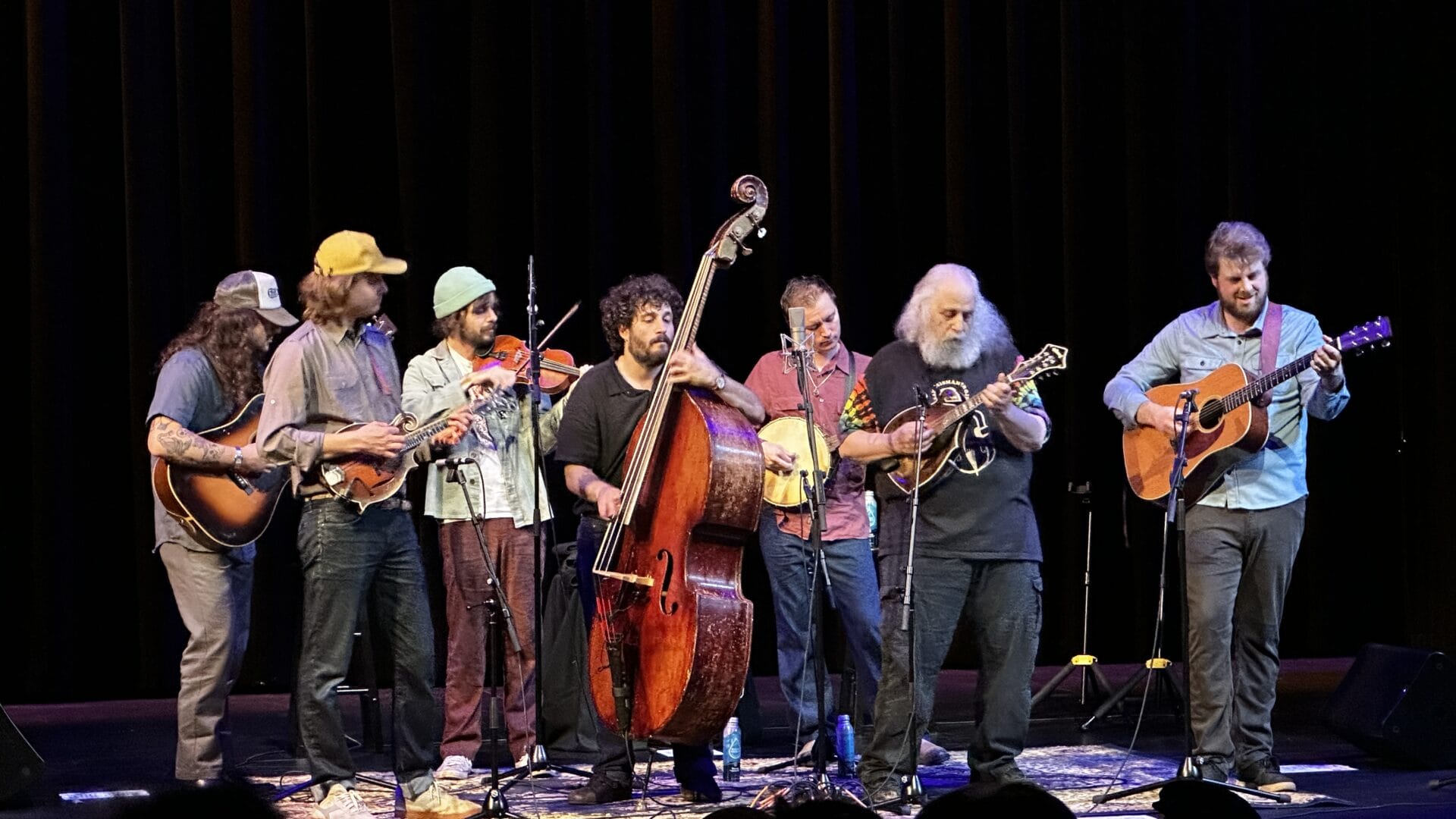
In one, Sam stands, cradling his bass, flanked by guitarists Sam Leslie and cousin Vinny. To his left, Dawg strokes the strings of his mandolin beside banjoist Victor Furtado. Across from the five-string picker, another lute player, Dominick Leslie, glances up at fiddler John Mailander in response to the bow’s caress, enacting an emotive reverb.
These are the practice sessions for the Sam Grisman Project’s Seattle concert and preliminary appearance in Port Townsend. The chosen players have convened at the home of David “Dawg” Grisman and his wife, Tracy, for what Mailander later describes as “a masterclass.”
It’s an interactive demonstration, dominated by Dawg’s body language, revealing a compulsive pursuit of perfection guided by head nods, intentional gazes, and focused attention on the soloist–a studious devotion to the next generation of acoustic trailblazers.
“It was really casual and really serious at the same time,” Mailander says. “The vibe is like we’re just pickin’ on the couch, Dawg makes direct eye contact with you while he’s playing, it’s like he’s not fucking around either… It’s a casual hang, but he’s also transmitting some really heavy knowledge to us without using words; it's all in the eye contact, playing it and meaning it in a certain way.”
***
While I can’t make the trek to Port Townsend, I watch the trickle of content arrive online, confirming Dawg’s extended sit-in.
“We played between a half dozen and a dozen Dawg tunes with the mang himself, and also had a profound musical encounter with his regular pickin’ buddy, our hero, the great Danny Barnes,” Sam Grisman tells me.
“We played some older Dawg music that we’ve been playing in SGP, as well as some Danny tunes that my pop had never heard with the man himself, and played some newer Dawg music that my dad and Danny have been working on as well.”
Rach fills in the gaps, outlining an impressive list of material: “Rinzler’s Rag,” “Two Soldiers,” “Slinky,” “Blue Samba,” and “When First Unto This Country,” among them. Barnes also shows up for the gig and adds some of his originals, personal work sparked from Saturday spent with Dawg.
Day of show has arrived, and I-5 is my route to the venue. The rain pulses against the windshield, adding a percussive accent to the string-only arrangements during a front-to-back listen of Sam Grisman Project’s debut studio album, which arrived in December.
After checking into the hotel diagonally across from the theater, Rach invites me to join in on the concert pre-happenings. I tie a scarf over my head and make the short walk to the venue’s side door and enter.
Inside, a tattooed lot of Neptune employees greet me and provide directional gestures to the staircase that leads to the green room. The descent to the top leaves me slightly winded and informs my initial greetings.
Rach moves like a hummingbird backstage, guiding me through rooms while reminding personnel with enthusiasm and precise recall of our last encounters. We end up settling into a tight sitting room furnished with a plush, muted-green couch and a slew of spare chairs.
Sam Leslie begins strumming his guitar ahead of soundcheck, and soon Victor picks up the mandolin, breaking into a meditation of his own. Mailander jokes about needing a reprieve from acoustic music, which somehow segues into a conversation about Wilco.
The group is called to the stage to test out some songs and finalize any necessary audio tweaks. I find a seat near the sound booth and listen as they tune their instruments and start up John Hartford’s “Headin’ Down into the Mystery Below.”
“He’s Gone” follows, and Sam’s natural leadership strikes me as he coaches the band through the charts. In turn, their reflected focus delineates a sort of admiration for the maestro and moment.
By the time the test wraps, dinner arrives. We grab plastic takeout boxes and use chairs as makeshift tables. Sam Leslie, Mailander, and I take over one of the smaller rooms and exchange pleasantries over our preferred Caribbean dishes.
Sam Leslie begins to paint a portrait of his entry into the fold: “I found a convenient way in. My older brother has been a good friend of Sam since they were 13 or so. I’m seven years younger, so I really got to see a cool blossoming musical friendship around roots music and bluegrass. They were playing tunes, and my brother would be like, ‘Hey, check out this thing we’re listening to. Like a Dawg tune, or a Stuart Duncan solo.’ And I was like, ‘Yeah, I want to do that.’”
“My path into music was the path of least resistance. You go where the friends are,” Leslie smiles.
Mailander picks up the conversation, “I’ve been friends with Sam for about 20 years,” before bestowing flattery on his current situation, “This band is all about celebrating the music community around bluegrass and the Grateful Dead, all this music that we have shared love for. It's been a great joy getting to do it with this crew.”
Talk moves towards their recent time spent under the guidance of David Grisman: “It’s pretty surreal. It was like a masterclass. I learned a bunch of new tunes straight from Dawg.” Mailander continues, “It’s just incredible being around his presence. Kinda get our asses kicked at some stuff, tunes we thought we knew of his, that he’d guide us through, learn the back stories of these songs straight from him. It was a really unforgettable few days.”
Sam Leslie says, “It was very dream-like. I was sitting across from him on his couch, and I was almost brought to tears several times. Like, I can’t believe I’m doing this right now.
“It was brought on casually, and that really made me feel comfortable in that space. He’s been a titan, a hero of all of ours. So I felt I could really easily get frazzled, but I worked through that pretty quickly, and it all just melted away while working on tunes and having a good connection–it's about the music. It’s a cool focus to have. Love for the music is sustaining him, and his friend Danny Barnes…”
“They're ageless,” Mailander adds.
“Ageless, yes! It’s so beautiful,” Sam Leslie agrees.
“The inner child is alive and thriving with them, and it’s like they’re sharing that spirit with us. Showing us what’s possible with living a life of music,” Mailander observes.
Furtado enters the room, and the admiration shifts to the group’s frequent collaborator Peter Rowan.
“Playing with Peter really feels like a spiritual experience a lot of the time. He feels like a guide on the stage. It’s amazing. It feels like walking into a museum and looking at a famous painting. It’s a spectacle,” the banjoist says.
“I feel really blessed and lucky—the stars sort of aligned after I moved to Nashville, which was almost three years ago. I went to a jam session, and Sam was there. Pretty soon after, he invited me to do some gigs,” Furtado continues.
“I’ve had so many insanely impactful music moments that Sam has situated. He’s able to get a lot of people together to play. It’s very fun.”
***
Like his bandmates, Sam Grisman holds similar regard for his recent time with Dawg. “It was a special privilege to get to spend a couple of days with minimal agenda, just picking my dad’s brain about his approach and certain key moments in some of his tunes. It’s always a joy to get to share stories and listen to his tone, timing, phrasing and wisdom–both musical and otherwise.
I don’t take for granted how much of an influence the Dawg has had on my musical universe, but spending time with him and my step-mom, Tracy, in their home, surrounded by a cast of some of my closest friends and musical collaborators, was a powerful reminder of how lucky I am.
It was fun to see how excited everyone was to check out instruments and ask questions about their favorite Dawg tunes. Dominick had some mandolin left-hand fingering questions, which were easier to answer in person than over FaceTime, and it was truly a special gathering.”
I ask if anything will become of the sessions, and Sam says, “Two wise engineers, Mr. Neville Pearsall and Sir Dave Sinko, set up some really nice microphones in the living room in Port Townsend and mostly just let it roll for a couple of days. I’m sure when the dust settles and I’ve got some time to do some listening, my pop and I will put our heads together, and there will be a project featuring David and Danny that is a snapshot of this wonderful little hang we all had.”
The crowd begins to enter the theater amid heightened anticipation for the ensemble’s last show of the year, Sam Grisman’s 94th as bandleader over the last 12 months.
Conversations loosen, and I partake in hallway chatter about physical ailments and the healing power of rose quartz. Some members of the band stretch before taking out their instruments and descending the stairs to the side stage. They stand in a circle, joined by Rach and band manager Matt Busch, before taking their places to growing applause.
Sam Grisman Project open with “Jackaroo” and construct a set contrived of Tony Rice’s “Rattlesnake,” Bob Dylan’s “Tonight I’ll Be Staying Here with You,” Doc Watson’s “Streamline Cannonball,” before returning to Dylan’s catalog on “It Takes a Lot to Laugh, It Takes a Train to Cry,” with Sam singing the tunes comfortably and an aptitude for the selections.
After the traditional, “Wild Bill Jones,” Mailander steps toward, tenderly delivering Tom Waits’ “Picture in a Frame.” Grisman’s pursuit of “He’s Gone” moves the audience to echo: “Ooh, nothing's gonna bring him back,” before a coupled close out of “Opus 38” and “Shady Grove.”
The designated set break lapses quickly, and “Mississippi Half-Step” breaks the pause. After delivering “Riley’s Run,” a feature of the new record, Dominick Leslie pulls out David Grisman’s 1922 Gibson F-5 mandolin, “Crusher,” a loan for the occasion. Sam speaks to the significance of the instrument in Dawg’s shared repertoire with Jerry Garcia.
He invites the crowd to share in “Happy Birthday to, Crusher,” flashing the glint of a torch passed from father to son and christened with “Dawg’s Waltz.” Hearing my favorite song from the Not For Kids Only album, “Jenny Jenkins,” is a tongue-twisting treat and preludes my entrance to the venue floor.
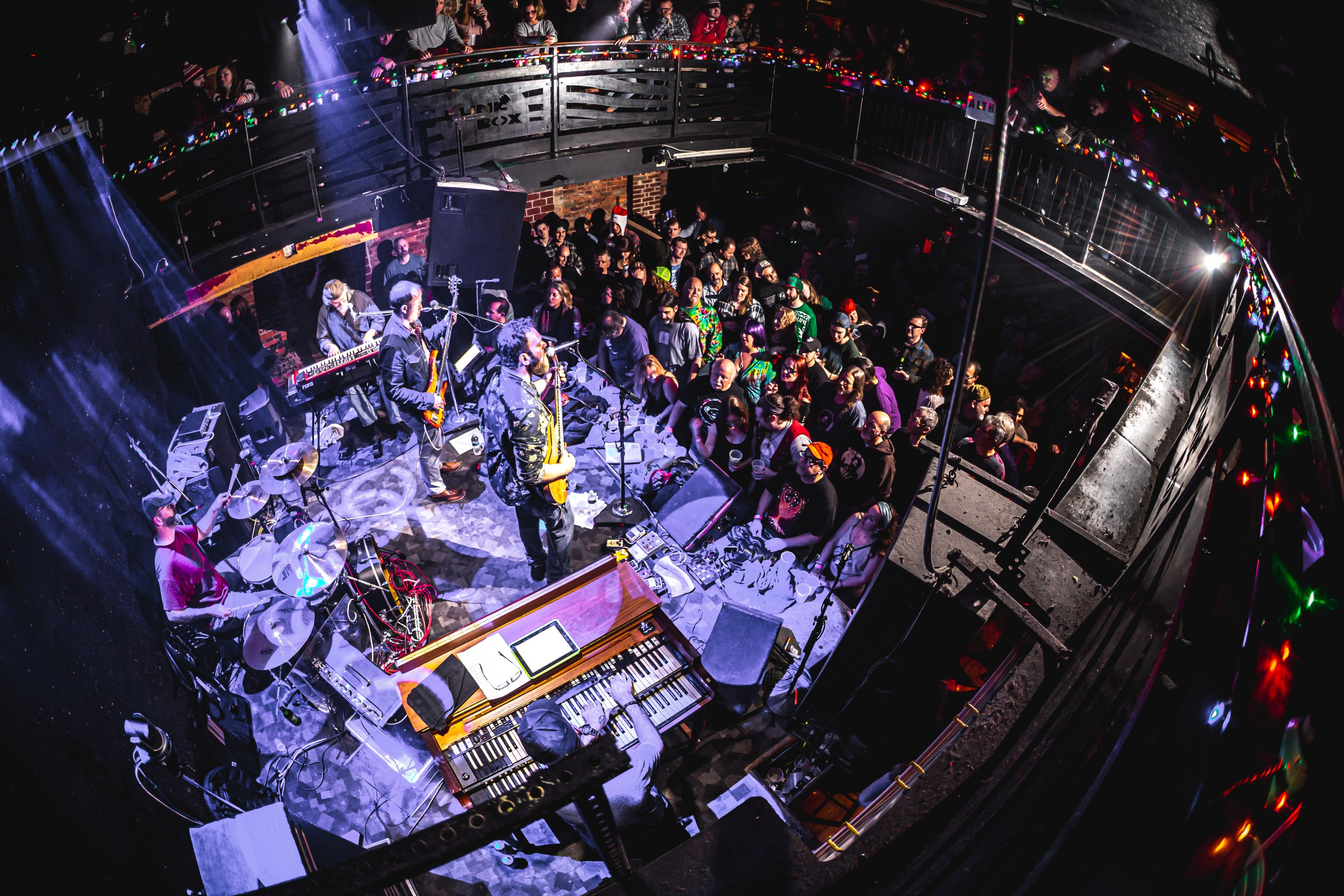
While the crowd was largely my parents’ age, my mom among them, I couldn’t help but smile when I burst into a sweaty crowd of young dancers, below the balcony–standing room only and motion-mandatory. Youthful figures responded instinctively with expressive arm and hip movements.
I stand to the side and observe the intergenerational appeal of the music, checking a flutter of appreciation. Rather than leaving the stage and returning for an encore, the band stays, preserving time for Woody Guthrie’s “All These Fascists Bound to Lose.”
The house gets loud responding to the sentiment. “Seattle is a good city for this number,” I think before the memory of Sam’s prior comment rings true, “I spend a lot of time making setlists…sometimes too much time trying to make sure we play the right thing at the right moment in the right town.”
It’s then that I notice staff retrieve their cell phones and start filming.
Even 58 years after Guthrie met his maker, the song rings true. And with bands like the Sam Grisman Project, these kinds of messages will be preserved and inspire the next crop of nonconformists on a dogmatic assent… Guthrie, Dylan, Grisman and Grisman.