***
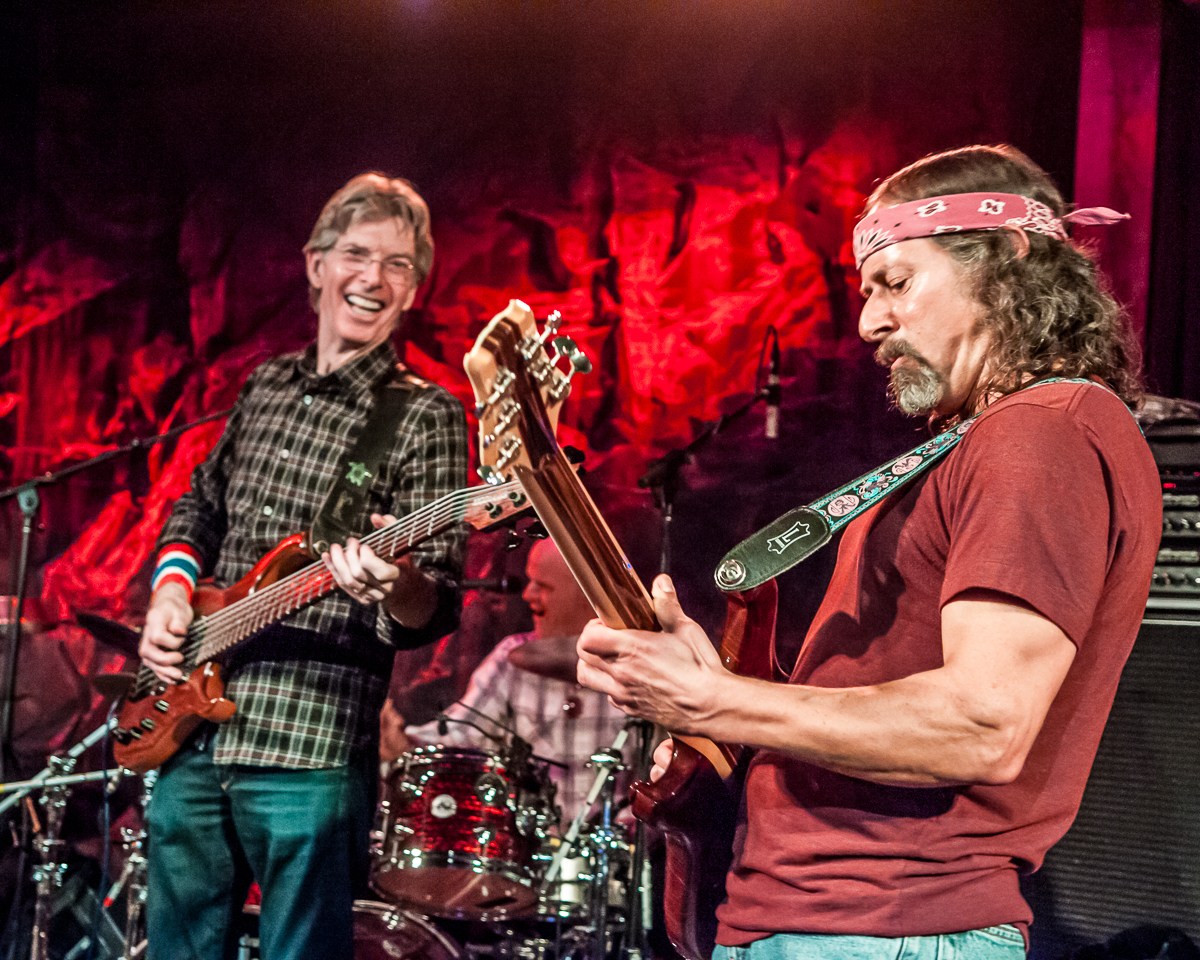
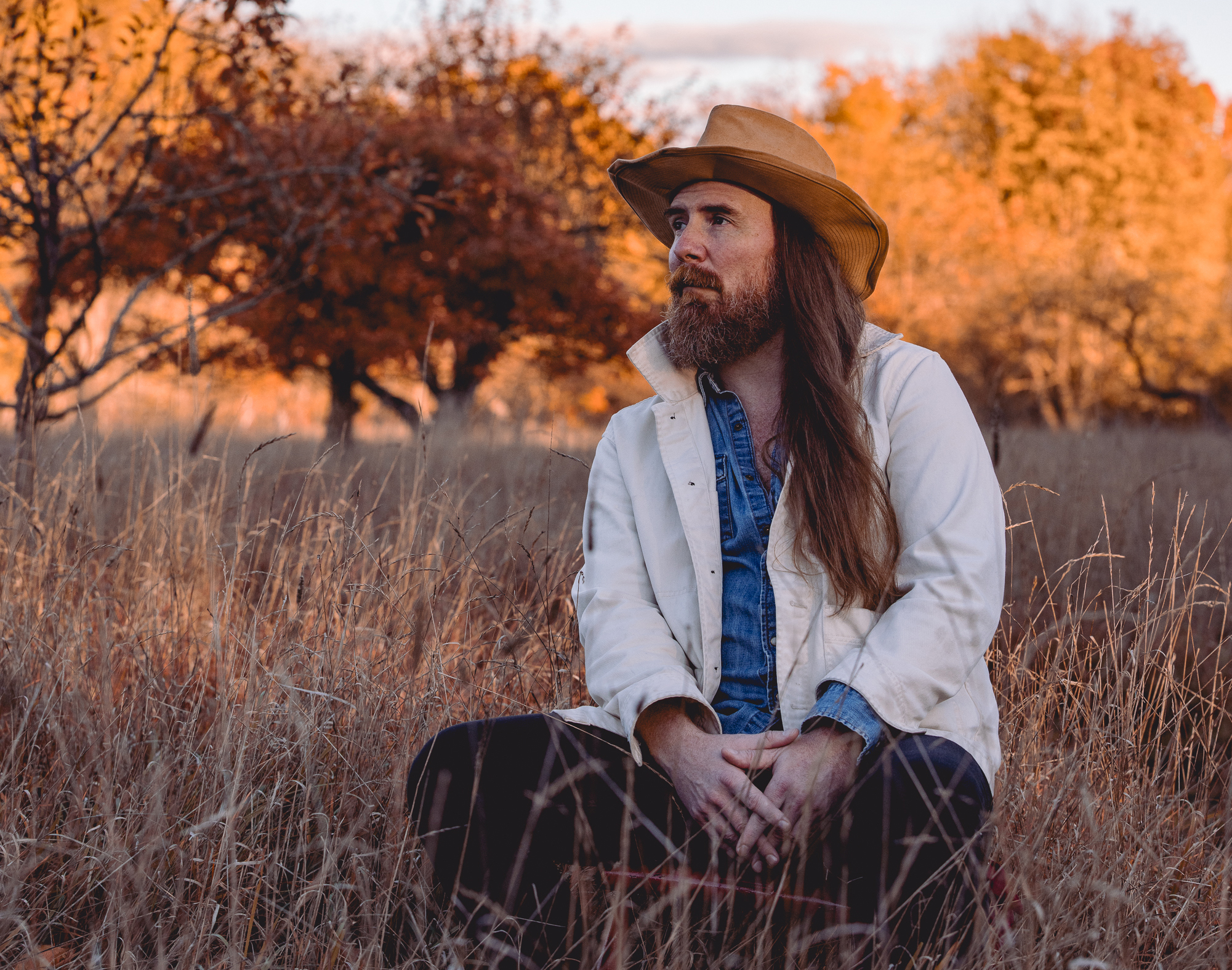
Bob Wagner has spent the better part of his career defining what it means to be the consummate musical anchor. As a trusted sideman, sharp producer, and intuitive collaborator, the Burlington-based guitarist has spent decades elevating other people's visions, most recently in his role as a driving force in Mike Gordon’s solo band. As they’ve begun touring, Gordon has actively stepped away from the microphone, handing the spotlight over to Wagner to showcase a batch of gritty, soulful originals. It’s a massive (and well-deserved) vote of confidence, serving as the perfect runway for I’ve Been Down, Wagner’s stunning debut solo LP on Royal Potato Family Records.
But to look at Wagner strictly as a newly minted solo artist is to miss half the story. For fifteen years, he also has served as the de facto musical director and chief coordinator of Hug Your Farmer, a massive, star-studded Vermont benefit concert series that has raised hundreds of thousands of dollars for local agriculture. He is a musician whose identity is tied to the soil and community of the Green Mountain State, a reality reflected in the very DNA of his new record. Splitting its recording process between Benny Yurco’s Burlington studio and the hallowed rooms of The Studio Nashville, I've Been Down pulls together an elite roster of roots-rock royalty, including Oliver Wood and Jano Rix of The Wood Brothers, Telecaster ace, Laur “Little Joe” Joamets, who rose to prominence as a member of Sturgill Simpson’s band.
Now, at 45 years old, the ultimate team player is finally stepping out from the wings. Relix caught up with Wagner on the heels of his album release to discuss the modern realities of independent touring, the pure tracking magic of Nashville, and what happens when a lifelong collaborator decides it's finally time to take center stage.
The first time I saw you perform live was with Mike Gordon. I’d like to talk about that connection, but first, you’re about to release your debut solo album. What prompted you to do so at this moment?
Honestly, it was just overdue timing-wise. The songs had built up. When I finally went in to make it, I did the classic rookie thing where I basically made two records. I insisted on recording all the music I had and figuring out the tracklist later, instead of committing early. As you can imagine, that slowed things down a lot and drained some funds along the way! But the process was great. Some of the songs are actually quite old, and others were brand new – like, finished the morning they were tracked. A window opened up on my calendar, and I just knew: this is the time to do it.
I've Been Down features some incredible backing talent. You managed to enlist Oliver Wood and Jano Rix of The Wood Brothers, as well as Laur “Little Joe” Joamets—Sturgill Simpson's Telecaster-shredding guitarist. How did you get that crew together in the studio?
Man, it felt like tracking with royalty. While some of the record was started at Little Jamaica Sounds in Burlington with Benny Yurco (Grace Potter & The Nocturnals, Ryan Adams), we recorded most of it at The Studio Nashville, which is home to The Wood Brothers and run by ace engineer Brook Sutton. The track "Richest Man on Earth” actually features Little Joe playing some absolutely gorgeous slide guitar. He also provides some killer slide work on the record.
The story of how Laur got on the record is, to me, pure Nashville magic. On my last day of tracking I was doing some overdubs, polishing up some guitar work, when Brook, the engineer, mentioned some of the folks coming in for a session the day after me. When we said Laur’s name my eyes practically fell out of my head. I let Brook know that Laur was one of maybe two or three guitarists in the world I’d hope to track on these songs. Sensing my excitement he casually said, "Well I could text him if you want..."
Literally an hour or two later, Laur is walking his gear through the door. Wonderful guy, incredible ear and sensibilities on the guitar. And SO melodic! He tracked on three songs, playing slide on "Richest Man on Earth," plus a massive, swaggering guitar solo on the album opener, "Sad and Lonesome” and some burning country licks on “Good Night And Good Luck.”
Jano and Oliver play on the title track, "I've Been Down," which actually has the longest history of any song on the record. I first wrote it more than two decades ago during a really dark period in my life. Over the years, it has transformed from a heavy, downer track into this uplifting, communal spiritual. We recorded it entirely live in a single take—no overdubs, no safety nets. Jano is on the piano and Oliver sings vocals right alongside me. I'll truly never forget getting to sit in a room with those guys, looking across the floor, and just singing that song out with them. It brought a completely different gravity to the session.
The album is fairly diverse stylistically and lyrically. How do you think about arrangements?
Oh, boy. That's the question! It really depends on the song. For instance, with one of the tracks, I was just having coffee before I got to the studio, playing around with this specific riff. Once we got inside, we were all set up—we had the drums, electric guitar, bass, and keys going, and I was actually playing this rubber bridge guitar. I looked at the band and was just like, "Well, what would this be like if we kind of just leaned in, had a little bit more fun with it, and played it a little harder?" The vibe just clicked from there.
Playing the rubber bridge guitar completely changes your approach because it forces you to play into that specific limitation. It doesn't ring out like a standard acoustic or electric, so you're leaning into the groove in a totally different way. It's those kinds of unexpected sonic textures that made tracking this record so exciting.
Did the arrangements change drastically from how you originally envisioned them?
Some did. I actually changed the key on a few tracks, which was probably the weirdest adjustment. The whole time I was recording this record, I was going through a bunch of vocal distress. It was one of those situations where it's like, "Well, we're only going to do this once. I want to make sure my voice is in a safe place to execute it." I'm playing around with the live arrangements right now to see where they fit best. I'd like to bring the vocals back up live, but my throat just might not allow me to hit that really high, lonesome key they were originally written in.
Moving to live performance, the first time I saw you perform was a few months ago in Asbury Park, playing as a part of Mike Gordon's band. Can you tell me a bit about your history with Mike and how that gig came to be?
Well, I've known Mike for a while now. I think I first sat in with his band over ten years ago, maybe around 2012 or something like that. I live in the Burlington area, so we naturally collide on the music scene up here. Obviously, I was already a huge fan of his solo band and a fan of Phish as well. We really got to know each other just from bumping into one another and having so many mutual friends in Vermont. Over the years, we've had some really fun instances playing together. I've played with his band, he’s played with mine, and along with his daughter Tessa, a wonderful vocalist and rising talent of her own, he's been a regular featured special guest at Hug Your Farmer, a music series benefiting Vermont farms and farmers where I serve as musical director, organizer etc.
How did the conversation transition to your joining his band?
When Mike was putting together the latest iteration of his solo band, he asked me if I would want to audition. I said, "Of course!" and went down to the audition, and the rest is history! It's been a really great year and a half since our first show together down in New Orleans for Jazz Fest. For this specific tour, that Stone Pony show you were at in Asbury Park was only our second night out. We were still getting our sea legs, but that was a standout for me because it's my hometown area. I grew up around there, so having a room full of friends and family made it a truly special night.
It was a great show. One thing that blew me away was how Mike stepped back and invited you and Xavier Lynn to front the band for a few of your own original tunes. How did that feel?
Man, it feels like a huge vote of confidence in the songs. My new record is called I've Been Down, and because Mike and I are pals, I was sending him tracks while I was working on them just to say, "Hey, check this out." He genuinely grew to love a lot of these songs and asked me if I would do some of them in the set. Of course, the answer was a big yes! I just love that he likes them enough to include them and make space in the show for our music. It's a beautifully generous thing to do.
Stylistically, I feel like you bring a specific grit, and Xavier touches on that really nice, fusion-y vibe without overdoing it. If you think about touring in support of your own music down the line, do you plan to be the sole guitar player, or would you bring a second guitarist?
In a perfect world, I would actually love to have another guitar player there every night. On some of the songs on my record, I handled most of the guitar work myself, but on stage, having someone like Xavier is so much fun. Every once in a while, you just want to focus on singing. It's an incredible feeling to just look across the stage, nod at another player, and be like, "Go ahead, do the thing!" A lot of these album songs can be scaled down easily, but my background is in larger bands, so I feel incredibly comfortable scaling them up if the right opportunity strikes.
As for your touring, let's sidestep the harsh economic practicalities for a second. If you won the lottery tomorrow, what is the biggest, grandest version of a Bob Wagner touring band you would put on the road?
Oh, man. I would literally have to win the lottery, but in a perfect world, I would tour this record with a 10-piece band. I'm talking a three-piece horn section, two backing vocalists, and another guitar player. It would look a lot like the Tedeschi Trucks Band lineup. What I love about that specific format is the sheer dynamic range. You can build up to these absolutely massive, seismic highs, but then everyone can walk off stage and leave just two people under a spotlight for a beautiful, soft, compelling moment. I love crafting a show that way. But back in reality, it's most likely going to be a tight four-piece band.
It really is tough out there right now. I don't know how independent musicians make a go of it anymore. Have things radically changed in that regard compared to ten or fifteen years ago?
COVID certainly served as a major reset button for everybody on all sides of the industry. In some small ways, it changed things for the better—like, in my community, venues got really strict about enforcing earlier start times so they wouldn't miss the crowd that has to get up for a day job the next morning. For years, people complained that bar gigs started too late. But overall, touring has gotten so much harder. It is incredibly tough to sell tickets in advance now, and you're seeing prominent bands cancel entire tours because of it.
Here we are in June of 2026, and I am genuinely nervous to see how summer tours fare this year solely based on the cost of gas. I bought a car from my cousin last October and he gave me a wonderful deal on it, but right as I was pulling away, I asked, "It runs on regular, right?" and he goes, "Oh, no, it's premium only." I love the car, but every time I pull up to a gas tank now, I think, “What have I done to myself?!” Now scale that up to a touring van. It's brutal.
Let's pivot to Hug Your Farmer and your fundraising work for local agriculture. How did that issue become so close to your heart?
It's something I stumbled into, but if you live in Vermont, local agriculture is just woven directly into the fabric of the culture and identity here. We have an incredibly passionate community of farmers and a local food system that blows most other parts of the country away. In Burlington, we have the Intervale, which is this amazing farm system that feeds so many people. Fresh, organic, local produce is just native to the lifestyle here. When summer hits, the local restaurants immediately put fresh asparagus on the menu, and you know exactly which neighborhood plot it was harvested from.
About fifteen years ago, a prominent local farm called Pete's Greens had a catastrophic fire. They lost their entire barn and all their cold storage for the year overnight. It was an obvious tragedy for them and a serious blow to our local food system. A bunch of local musicians got together to throw a massive benefit concert at Higher Ground to help them rebuild. Everyone showed up – we even had Jon Fishman and Page McConnell join the house band. That night, I basically Forrest Gumped my way into becoming the official bandleader. I sensed people were looking for someone to organize things before showtime, help dial in the setlist, figure out who was playing on what etc so I stepped into the role.
And it has grown into an annual institution at the Flynn Theater now, right?
Yeah! Rich Price (from the band The Sweet Remains) is our primary producer, whereas I serve as musical director or bandleader. Rich is affiliated with Select Design, a local company that underwrites the series and holds the trademark. We also have this incredible operational partnership with the Vermont Community Foundation. They are instrumental in our success as they have helped us secure a massive donor match – usually up to $100,000. So if ticket sales raise $100,000, it instantly turns into $200,000. It amps up the feel-good factor because the audience knows their single ticket purchase automatically equals two tickets in terms of real money deployed. We’ve walked away from those nights having raised $200,000 to $250,000 for local agricultural grants and disaster funds, like flood relief. It's a beautiful example of many cooks in the kitchen working together perfectly.
I've heard some people describe what you do as activism, but I know that specific label can feel like a loaded term.
Yeah, I don't know if I would use the "A" word necessarily. Not that it's a bad word at all, it just doesn't entirely feel authentic to me yet. Maybe it is activism and I just need a minute to get comfortable with the weight of that title. But the way I look at it is simply rooted in my beliefs about art. Art is an indispensable part of the human condition -- a vital and necessary part of a healthy society. To put it bluntly: I can only do so much music that is strictly about, "Hey, look at me, look at me, look at me." Music is a powerful force for good. The way I see it, when you are given the opportunity to gather a room full of people together, you have a responsibility to harness that positive energy and point it towards something that really matters.
Look, I'm putting out a solo record. Does that matter? To me, sure. But does it matter to the world at large? Arguably not so much as the fact that we have local dairy and vegetable farms living on a literal razor's edge. When gas prices double and global supply lines threaten basic resources like fertilizer, our local food security is in real jeopardy. I think THAT matters. Musicians have a platform, and using it to shine a light on our neighbors isn't optional for me.
I love that mindset. You can do good and do well at the exact same time. To close things out, I remember an old interview with Jason Isbell where he said that despite wearing a million different hats, at his core, he still just thinks of himself fundamentally as a guitar player. Given your history as a sideman, a benefit organizer, and now a solo artist, how do you define yourself?
Without a doubt, I think of myself as a collaborator. There are a lot of different musical roles that I am genuinely comfortable playing. I am completely happy operating as a supportive sideman, an onstage bandleader, a behind-the-scenes organizer, a studio producer, or a songwriter. To me, it's all the same overarching pursuit. It's just about showing up, listening closely, figuring out exactly what the room or the song needs from you in that moment. At 45 years old, I think I’m finally mature enough to try out the front man thing.