Duane Betts: Heartache and Hope
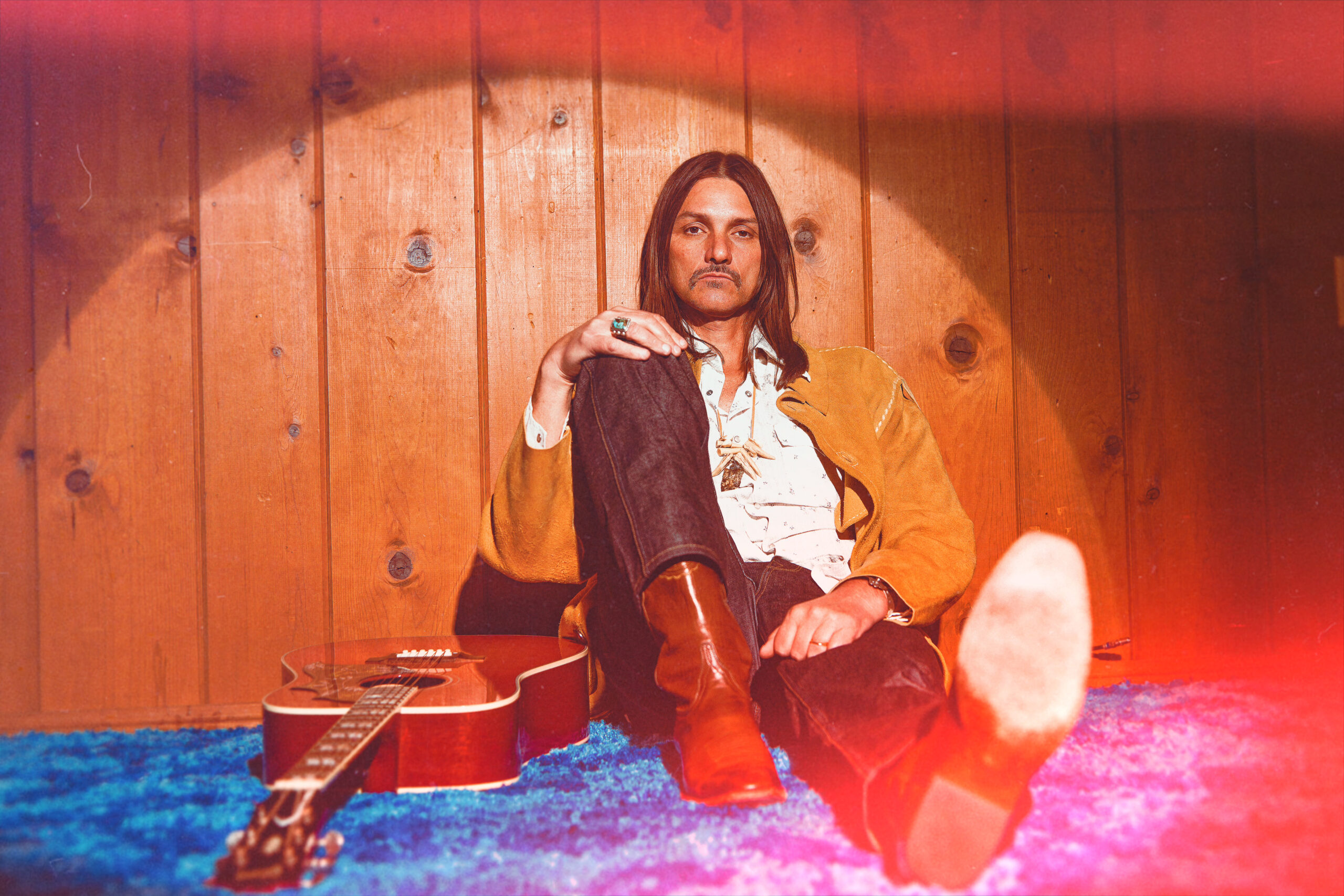
photo: Bobbi Rich
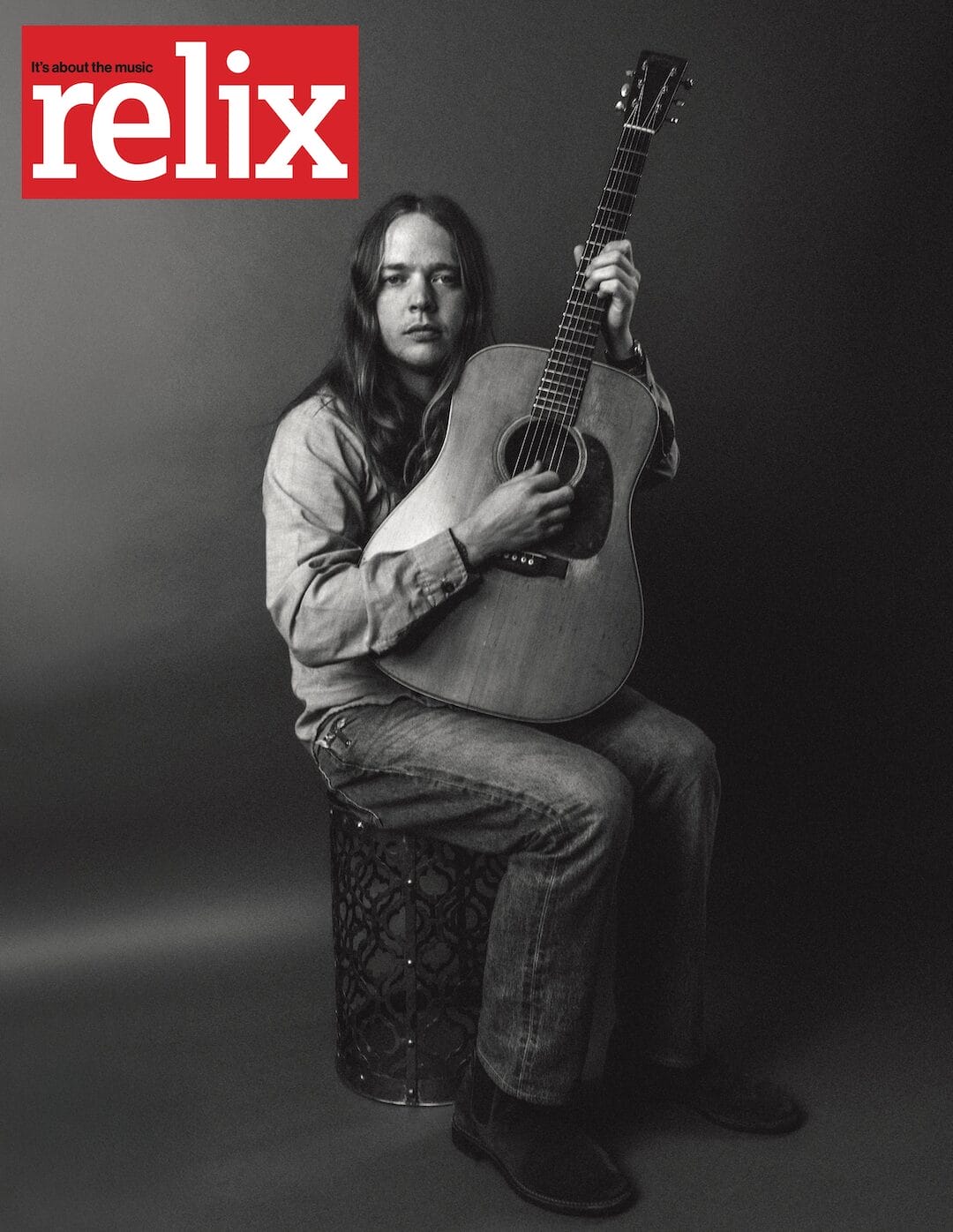
It’s a few hours before Duane Betts and Palmetto Motel will take the stage at the Odeum, a main street movie house turned vibrant music venue in East Greenwich, Rhode Island. The appearance will be the penultimate on a short run of April dates that leak into May, concentrated in the Northeast corridor. It’s an exciting time for Betts—in just over a month he will release his second LP, Isle of Hope. Yet, backstage at the Odeum, at this moment, Betts is struggling.
“Does anyone know what’s up with this iron?” asks Betts, hunched over an ironing board. “It just keeps getting the sleeve wet.” A bandmate suggests he check the fabric setting. Betts turns the dial, and seconds later steam rises from the appliance. “Okay, yeah,” says Betts, with a smile. “Now, it’s heating up.”
Betts completes his chore and hangs his freshly pressed, country & western button-down on the garment rack. He climbs the spiral staircase into the eaves of the Odeum and eases comfortably onto a small couch. He gets word that tonight’s show is another sell-out. Things are, indeed, heating up.
Ahead of the spring tour, Betts has issued two singles—and their attendant videos—previewing the upcoming album. The night before, at the Westhampton Beach Performing Arts Center in New York, he debuted “Reckless,” another from the new record, to the delight of his Long Island faithful. “This initial run has been a lot of fun,” says Betts. “I knew “Reckless” would be a monster live. I feel like the new songs are connecting well. I really believe in them, and I connect with them. Sometimes, that’s not always the case.”
Betts is optimistic, if cautiously so, about Isle of Hope. The title, alone, says as much. Within many of the collection’s ten songs are deeply personal revelations from the singer-songwriter and guitarist.
In March, Betts dropped “Down to Houston” as the first single. Built on a bedrock of blues, it’s a getaway-on-wheels burner propelled by a tailwind of free and easy guitar. Familiar ground for Betts, if not quite the harbinger of what was to follow. A month later, “Heartache” arrived as the second single, instantly changing the tone, and the temperature, of any expectations for the forthcoming album.
Exactly two years prior—April 18, 2024—Betts said goodbye to his father, as Dickey Betts passed away at the age of 80. Known best as a founding member of The Allman Brothers Band, Dickey was the author of the group’s highest-charting song, “Ramblin’ Man,” as well as the iconic instrumental, “Jessica,” among countless other contributions. Often cited as one of the finer rock guitarists ever, Dickey’s influence on the history of rock-and-roll is unquestioned.
For Betts, his father was an obvious musical mentor. He spent years as a guitarist in the second incarnation of Dickey’s solo outfit, Great Southern, for a matchless apprenticeship on stages all over the world. Still, first and foremost, Dickey was dad.
The two were very close. Betts often spent time at his father’s Florida home, staying in the ‘Palmetto Motel’ guesthouse, working on songs, sharing meals and stories. In the aftermath of Dickey’s death, Betts and his writing partner, Stoll Vaughan, started composing “Heartache.”
The lyrics bear witness to a life’s end, sitting with the inevitable, until the “eyes have lost their spark.” It’s haunting, and raw. A gut punch. Betts considered, maybe, it was too personal to share. Vaughan disagreed.
“He said, ‘No, man, we’ve got to do this.’ So, I dug in and gave my heart to it,” says Betts.
The pair holed up at Vaughan’s Airbnb in Sarasota, hashing out songs that zeroed in on Betts’ most vulnerable pulse points. From family history, and love gained and lost, to battles with addiction, and days waiting for the cops to forget his name. Betts had never been shy about referencing his past in his lyrics, but this time he probed deeper.
With enough songs to record a next album, Betts pondered producers to work with on the project. In 2023, he had executive produced his debut LP, Wild & Precious Life, recorded at Derek Trucks’ Swamp Raga studio. The double-vinyl set was a jam-filled, guest-laden affair, featuring Trucks, Marcus King, and Nicki Bluhm, and was well-received by critics and fans, alike.
It was also, says Betts, a consciously Florida-centric effort. The studio’s Jacksonville location, album cover art, lyrical subject matter, and, of course, the music- rich with twin-guitar harmonies and soaring leads- all echoed the legacy to which Betts belongs. Betts knew this time around he wanted to shake it up. The new repertoire, still partially conceived of in Florida, also had suitcase stamps from California and Wyoming, where Betts shares residential and familial ties. Too, he was eager for a different sound.
After work on a session for guitarist JD Simo in 2024, at Simo’s Nashville home studio, Betts waited for his Uber. He chatted casually with Simo about some of the new songs he’d been putting together. He played Simo a voice memo of an early demo of “Reckless.” Simo said, “You know who would love this is Dave.”
“Dave” is Dave Cobb, the Grammy-winning, first-call producer whose hand of Midas has guided a slew of mega-hit records from Chris Stapleton, Brandi Carlile, and Sturgill Simpson, to name a few. For the better part of the past decade, Cobb’s been the man in-demand, most recently helming the breakthrough of the Red Clay Strays. Betts was well aware.
“Obviously, I would love to work with Dave Cobb. I knew JD worked with Dave a lot, but I never like asking for favors,” says Betts. “I knew that it would happen organically if it was meant to be.”
Betts and Cobb traded texts, with Betts sharing demos of potential songs. They blocked out a week in early October of 2024 for a recording session at Cobb’s Georgia studio. The details were sparse and specific. Other than Betts’ Palmetto Motel mate and longtime guitar partner, Johnny Stachela, Cobb would use his own handpicked aces, including Simo, as the band for the session. They would record ten songs in five days, two songs a day.
Cobb gave simple grades to the songs, but otherwise offered Betts minimal initial feedback. Instead, at the session, Cobb shaped and reshaped each track, suggested arrangements, and often played acoustic guitar on a take. It was a fresh, if jarring approach for Betts.
“Songs are never fully formed until Dave gets them. I knew he would rearrange and almost rewrite some of the parts. And, he did. And, I welcomed that,” says Betts. “That’s healthy. That’s growth. I think that’s a good thing, being pushed out of your comfort zone.”
They recorded as an ensemble, with Betts singing live with the band. It was efficient, relaxed, and productive, as Betts trusted Cobb at every turn. As well, the two respected and centered on the emotional heft of “Heartache” as a centerpiece of the album.
Even in its unfinished state, Betts and Cobb knew they had something special. Cobb drew on Betts’ English rock influences, with flashes of Lennon-esque piano and Bowie guitarist Mick Ronson’s dramatic flourishes. Not to mention a decidedly deliberate pacing that recalls Beck’s 21st century classic, Sea Changes.
“The additions and ideas Dave brought on that song, in particular, were really mind-blowing. I was just kind of in awe of how it came together so naturally and effortlessly,” says Betts.
While the lyrics are immediately arresting and elegiac, accepting of life’s finality, it is Betts’ guitar solo on the outro that is the hammer. It was a conscious effort, Betts reveals, to capture something that encompassed the breadth of his father’s impact, as well as those many artists that have affected him. The final version is a seamless comp of the two takes Betts improvised over the basic track.
Back at the Odeum, Betts is midway through the first set when he introduces “Heartache.” As he reaches the solo, he holds rather closely to the notes and phrasing of the original. It’s a conspicuous choice for a guitarist so proficient and praised as an improviser.
“That’s a really important solo for me. I could veer away from it, and I probably will, but I just wanted to get that emotion across. I’m just so proud of it, so why not just play the solo live the way I played it on the record?” says Betts. “It changes a little bit. And there may be a time when I completely abandon it. And I probably should and will. But, for now, I love playing that solo. I just want to stick to that framework. And, that’s the only thing I’ve ever done that with, really.”
“Heartache” opens Isle of Hope as its keynote. Betts follows it with nine songs that detail a close-up on a life often lived hard. Rock-and-roll may be an art form created of, by, and for the youth. A middle-aged Betts recognizes the consequences, and benefits, of his experiences before he pulled it together in his thirties.
“You can’t change your life’s path. I went through stuff. I went through years of addiction. I wasn’t a singer. Then, when I decided I wanted to sing some songs and make a record, I was older,” says Betts. “But, I wouldn’t change any of it. Maybe if I’d gotten sober when I was 28, and not 38, that would’ve been a good idea. But, I can’t change that.”
Betts is approaching a decade of sobriety. He has spoken openly about his demons. He’s written about it in songs, but perhaps never so intently as on a new piece, “Winners of War.” Synonymous, at times, with musicians, themselves, are their struggles with substance abuse. And while Betts candidly confesses his own challenges, he’s reluctant to point to life as a musician as a catalyst.
“If you’re an addict, the temptation is there. Addicts are going to find drugs and do drugs unless they find a way to stop the insanity of addiction, seek treatment, and do a lot of work on themselves. Whether the music industry is pushing it or celebrating it has nothing to do with whether I go out and buy a bag of dope,” says Betts. “I stopped because I wanted to give my life a shot, and not end up 60 years-old wondering what happened.”
Betts stands at the merchandise table after his Odeum show. A healthy line waits to shake his hand, take a selfie, buy a T-shirt. For the most part, Betts enjoys the opportunity.
“Some of the older fans have their stories about The Allman Brothers Band, and that’s okay. That’s their history, and how they relate to the music. And, there’s a lot of value in that. Usually, people are really polite,” says Betts. “Every now and then I get somebody who wants to give a United Nations speech about their history with the Allman Brothers. It’s like, ‘Man, thank you so much, but I have a lot of other people waiting in line.’”
The next morning, the band and crew enjoy breakfast at a roadside diner. They raise glasses of orange juice to Stachela on his 50th birthday. As a guitar partner and songwriter for Betts, Stachela has been a vital and integral collaborator.
Stachela assembles the setlists for each show. He’s been a constant in the studio, as well, playing on each of the Betts’ three solo releases; an EP and two LPs. He’s also hip to the realities of a building an audience, given so many of today’s choices and distractions.
“I don’t think rock means the same for younger generations coming up as it did for our generation. But, there are kids coming to the shows. And, there are things that are inspiring about playing for people of all ages. What does it matter? People enjoying the music is the most important thing,” says Stachela.
Betts is quick to mention how much he digs Kurt Vile’s new single. And raves about Charley Crockett. His personal playlist veers from dub reggae to Waylon Jennings. And, sure, on the sly, there’s a brief shot of Keith Richards on the cover of Rolling Stone in the “Down to Houston” video- because, as Betts’ says, “he’s probably the coolest cat out there still doing it. He is rock-and-roll.”
A few weeks after the tour wraps, Betts is in Nashville, meeting with reps from his new label, Sun Records. They discuss promo ideas for Isle of Hope’s June release, and film a quick video for a future single- the album-closing “Keep My Hands Clean.” It’s an honor being on the label that owns the reputation as the birthplace of rock-and-roll, says Betts. “But, what’s most impressive is that they sincerely love my record.”
Betts likes to find a happy place in his mind, where he goes to stave off darker thoughts. Gratitude is essential. Each day during the album’s sessions, on the drive from his hotel to Cobb’s recording studio, Betts passed a sign welcoming him to the Isle of Hope.
“Music is a sanctuary. It takes you away from those daily stresses and lets you escape. It’s tough, especially now, with all the crazy shit happening. So, I thought it was an appropriate title,” says Betts. “As my dad would say, you have to keep slugging.”