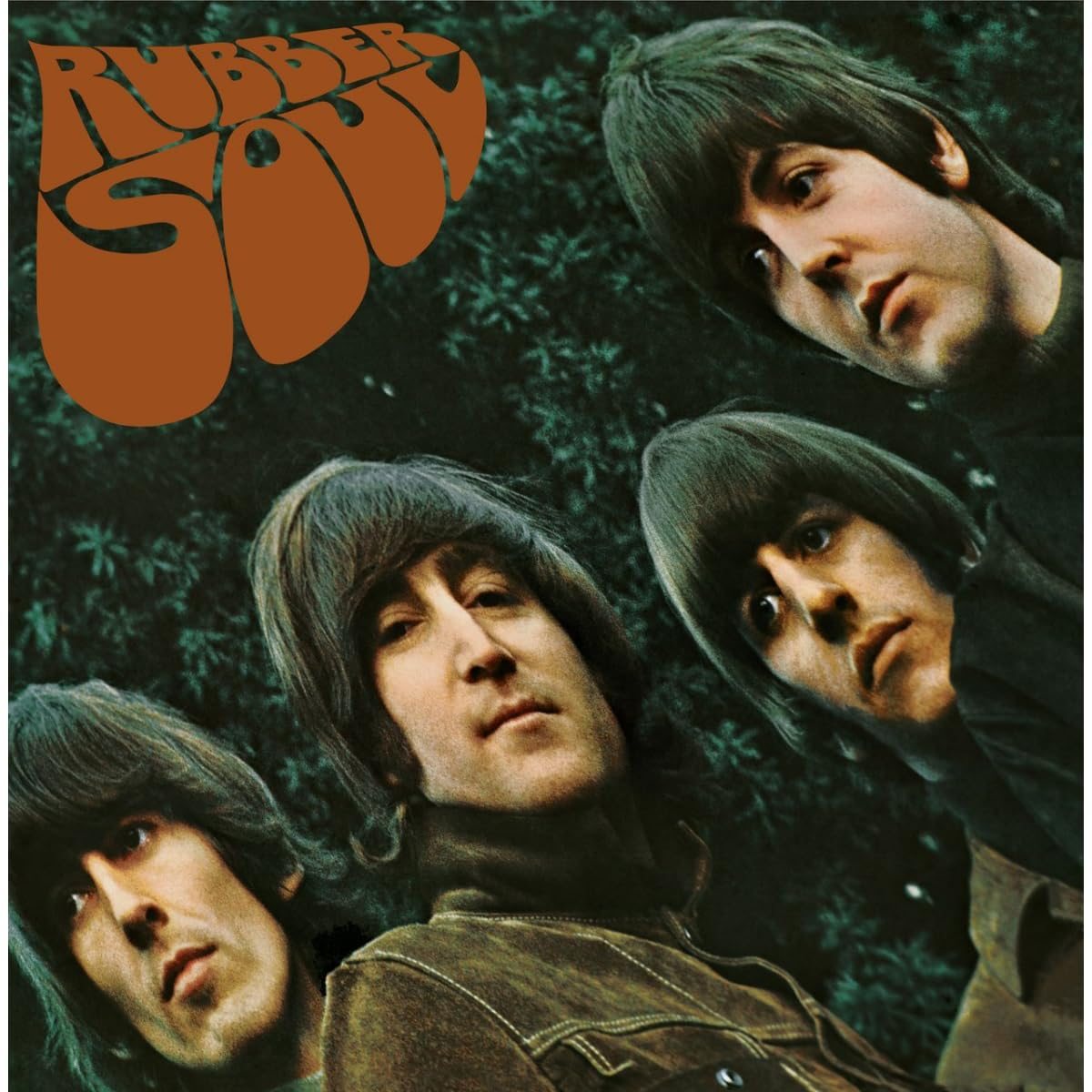
Until The Beatles made Rubber Soul, the idea of a rock-and-roll band’s music maturing basically didn’t exist. Their job was to make hit records, not to make art. A song was written with the hope that it would receive a ton of radio airplay, appeal to a great number of people and rise to the top of the charts. It was not necessary to make a statement with lyrics, nor to show off a musician’s chops. Usually working in tandem with a team of songwriters and a producer designated by the record company, the singer or band would obediently do whatever it took to fashion a recording that would catch on. If the band or singer was lucky, a slot on American Bandstand or The Ed Sullivan Show might boost a record’s chances, but that was never a given. One thing was, however: going out on a limb was not the way to get there.
By the fall of 1965, however, as the most famous band in the world entered the studio to cut their next album, there were already indications that something different was happening. Just a few months earlier, in July, the American singer-songwriter Bob Dylan had released a wordy new song he called “Like a Rolling Stone.” Although it was six-minutes long, more than twice the length of nearly every other single that had ever been released, his label, Columbia Records, took a chance and released it in the 45 RPM single format. That same week, Dylan, who had made his name as a folk singer accompanying himself on acoustic guitar and harmonica, had “gone electric,” performing with a full rock band at the Newport Folk Festival. Some purists in the audience booed him but the record-buying public embraced the new direction, sending the single to No. 2 on the national Billboard Hot 100 chart. When Dylan’s new album, Highway 61 Revisited, came out that August, it too became successful, climbing to number 3 in the U.S., and the Minnesota-born musician was elevated to rock star status.
The Beatles were not unaware of this phenomenon. They’d already been advancing their craft, albeit in increments, not with one jarring move as Dylan’ did. They were well familiar with the general trend toward what was being called folk-rock, which aligned quite comfortably with their own growth as songwriters and performers, and they were confident that their fans, progressing in their taste along with them, would accept what they were doing. In just a few years, they’d moved on from being neophyte songwriters, turning out such simple tales of innocent teenage romance as “She Lovs You” and “I Want to Hold Your Hand,” to crafting the more lyrically and melodically advanced songs, the more worldly songs, featured on their most recent LP, the soundtrack to their second film, Help! Featuring (on the U.S. version of the LP) songs such as the John Lennon-Paul McCartney-credited title track and the single “Ticket to Ride,” McCartney’s stunning ballad “Yesterday” (essentially a solo effort), the folk-ish “You’ve Got to Hide Your Love Away” and solid rockers like “Another Girl,” “You’re Gonna Lose That Girl,” “The Night Before” and George Harrison’s “I Need You,” the new Beatles material displayed sentiments that were less sophomoric and sported musicianship and arrangement skills that were more developed than on their earlier recordings.
The songs that, just over four months later, would comprise Rubber Soul, even in comparison to the songs on Help!, were a quantum leap. Officially The Beatles’ sixth studio album (although it was preceded in the U.S. with numerous collections patched together by their record label in order to catch up with the U.K.), Rubber Soul, recorded in just two weeks’ worth of sessions (spread out over a few months) and released Dec. 3, 1965, is often considered the recording that began the Beatles’ true artistic ascendancy. Taking advantage of the upgraded recording studio tools available to them, and even instruments, usually used outside of the basic rock arsenal—most notably Harrison’s introduction of the multi-stringed Indian sitar, on the track “Norwegian Wood”—The Beatles made it known that their reign as mop-topped pinup boys who churned out reliably commercial 45s was coming to an end. From here on out, their music would contain more substance.
To no great surprise, the new direction sat well with the fans. They took the album to the top of the charts not only in the band’s native U.K. and in America but in numerous countries around the world. Beatlemania had a new shape, but the four men at the center of it were as popular as ever.
What a fan heard as Rubber Soul differed significantly depending on where that fan lived. In England, and everywhere else except North America, The Beatles released a 14-track album that ran for just about 35 minutes total. In North America, Rubber Soul was a dozen songs weighing in at just under a half hour. There were differences in the track listing: Four tracks featured on the U.K. release, issued on EMI’s Parlophone imprint—“Drive My Car,” “Nowhere Man,” “What Goes On” (with Ringo Starr singing and sharing writing credit with Lennon-McCartney) and “If I Needed Someone” (written solely by George Harrison)—were slashed from the North American track listing. They would all turn up the following year on an album issued only in the U.S. and Canada, Yesterday and Today.
The North American Rubber Soul, meanwhile, on Capitol, contained two songs—the country-leaning McCartney vehicle “I’ve Just Seen a Face” and the Lennon-sung “It’s Only Love”—that weren’t included outside of North America. Most fans in the various regions had no idea at the time that the track listings were different in other parts of the world. American Beatles fans had to wait until the release of Yesterday and Today before they even heard the four songs that had been lopped off the American release. The songs that appeared on all versions of Rubber Soul were “Norwegian Wood,” “You Won’t See Me,” “Think for Yourself,” “The Word,” “Michelle,” “Girl,” “I’m Looking Through You,” “In My Life,” “Wait” and “Run for Your Life.”
Whichever version one was exposed to, there was no denying that Rubber Soul was a special kind of masterpiece, considered by many to be The Beatles’ finest work to date. In songs like the highly Dylan-influenced “Norwegian Wood,” the McCartney-sung “Michelle” (in which he inserted French lyrics so that the object of his desire would understand him), and Lennon’s reflective “In My Life” and “Girl,” the album was stacked with songwriting that displayed a new level of refinement. So, too, did the band’s playing. “Norwegian Wood,” its tale somewhat oblique, and a bit cheeky (Lennon crawling off to sleep in the bath when his girl said she had to work in the morning), benefited from Harrison’s rudimental sitar playing—it’s hard to imagine the song without it now (although one can hear just that on the new boxed set being reviewed here). Producer George Martin’s piano is essential to “In My Life” and his harmonium adds color to “The Word” and “If I Needed Someone,” but most of the heavy lifting musically belongs to the quartet—Ringo Starr even moves over to the Hammond organ for “I’m Looking Through You,” as does Lennon on the Harrison-authored “Think for Yourself,” his second songwriting contribution to the set.
When they embarked on the recording of Rubber Soul, the musicians’ roles in the studio were no longer prescribed or limited—if they had an idea, wanted to try something new, their power was such that they could just try it, and Martin was savvy enough to give them all the leeway they needed. Despite the seemingly short time they spent in the studio, it was more than they’d ever had before to make an album, and the free rein they were afforded made it their most personal album to date. For the first time, every song was written by one or more members of the group—no cover material. They were calling all the shots now.
The new Rubber Soul boxed set, as with the previous expanded versions of Revolver, Sgt. Pepper’s Lonely Hearts Club Band, The Beatles (aka The White Album), Abbey Road and Let It Be, is designed to be the final word on the landmark project. As before, there are several configurations available: In its most extensive form, Rubber Soul (Special Edition), as it’s formally titled, consists of four CDs or five vinyl LPs, each set including a new, half-speed mastered 14-track stereo mix of the U.K. configuration of the album; the original 14-track mono master; the original 12-track Capitol U.S. edition; and a collection of sessions and demo recordings: 26 tracks in all (22 of them previously unreleased). The vinyl release also includes a 45 RPM single of “Day Tripper” and “We Can Work It Out,” which was recorded during the same period, while the CD box includes those two songs as bonuses on disc 2.
As with the other albums, Rubber Soul has been overhauled sonically by producer Giles Martin (son of George Martin) and engineer Sam Okell: There are new stereo and Dolby Atmos mixes, alongside the original mono mix, all of which sound particularly striking in their clarity and presence. It’s become something of a cliché to listen to a Beatles remaster and proclaim that one can hear things they never noticed before, but once again it’s true: these mixes are a revelation, particularly in stereo. While there will always be purists who feel that only the original mixes (and the mono mixes at that) should be presented—as that was the way the Beatles released their music in their own time—it’s difficult to argue against these enhanced mixes that utilize contemporary technology to bring out more of the sound that was created at Abbey Road several decades ago. The Beatles themselves always embraced new studio tech, and both McCartney and Starr, the only two core participants who are still with us, have given these new mixes their blessing. They are a joy to listen to.
Experiencing the original Rubber Soul, whether in stereo or mono, is one thing, but as is always the case with these expanded Beatles packages, it’s all of the extras that make the set more fascinating. This time, listeners are treated to three early takes each of “Norwegian Wood” and “I’m Looking Through You,” as well as early versions of tracks like “Wait,” “If I Needed Someone,” “Girl” and “What Goes On” (the instrumental backing tracks), working versions of both sides of the “Day Tripper”/“We Can Work It Out” single (including McCartney’s demo of the latter); a “Michelle” guitar rehearsal and first take; “In My Life” with an organ solo that was later cut; five full takes of the “Run for Your Life” instrumental backing track and more. A track called “Beatle Talk” is just that, including vocal overdubs for “Think for Yourself.” That part of the collection (which occupies two vinyl albums or one CD) ends with Lennon’s demo of a song titled “Little Girl,” which never found its way to release. In this case, it’s easy to understand why; it simply wasn’t up to the quality of the band’s other new material, at least in this raw form.


Whether the additional material is enough to warrant purchasing the new Rubber Soul will, of course, be a decision each Beatles fan will have to make. For this listener, it’s always exciting to hear the Beatles at work, to gain a better understanding of how they pieced together a song in the studio, the processes they used and the ideas that popped into their heads, some incorporated, others discarded.
And, of course, there is always a beautiful book that accompanies the Super Deluxe editions, in this case 88 pages’ worth on the background and importance of Rubber Soul, with sections devoted to each song, the album cover and more. McCartney, in a foreword, gives the album perspective as only he and Ringo can.
For those who only need the essentials, there are pared-down 2-CD and 2-LP versions of the package and single-disc editions as well. Or, you can get the new stereo mix and other odds and ends on a separate Blu-ray. Regardless of how one chooses to hear it, Rubber Soul is never less than brilliant, not only a cornerstone of rock music but of popular culture itself.