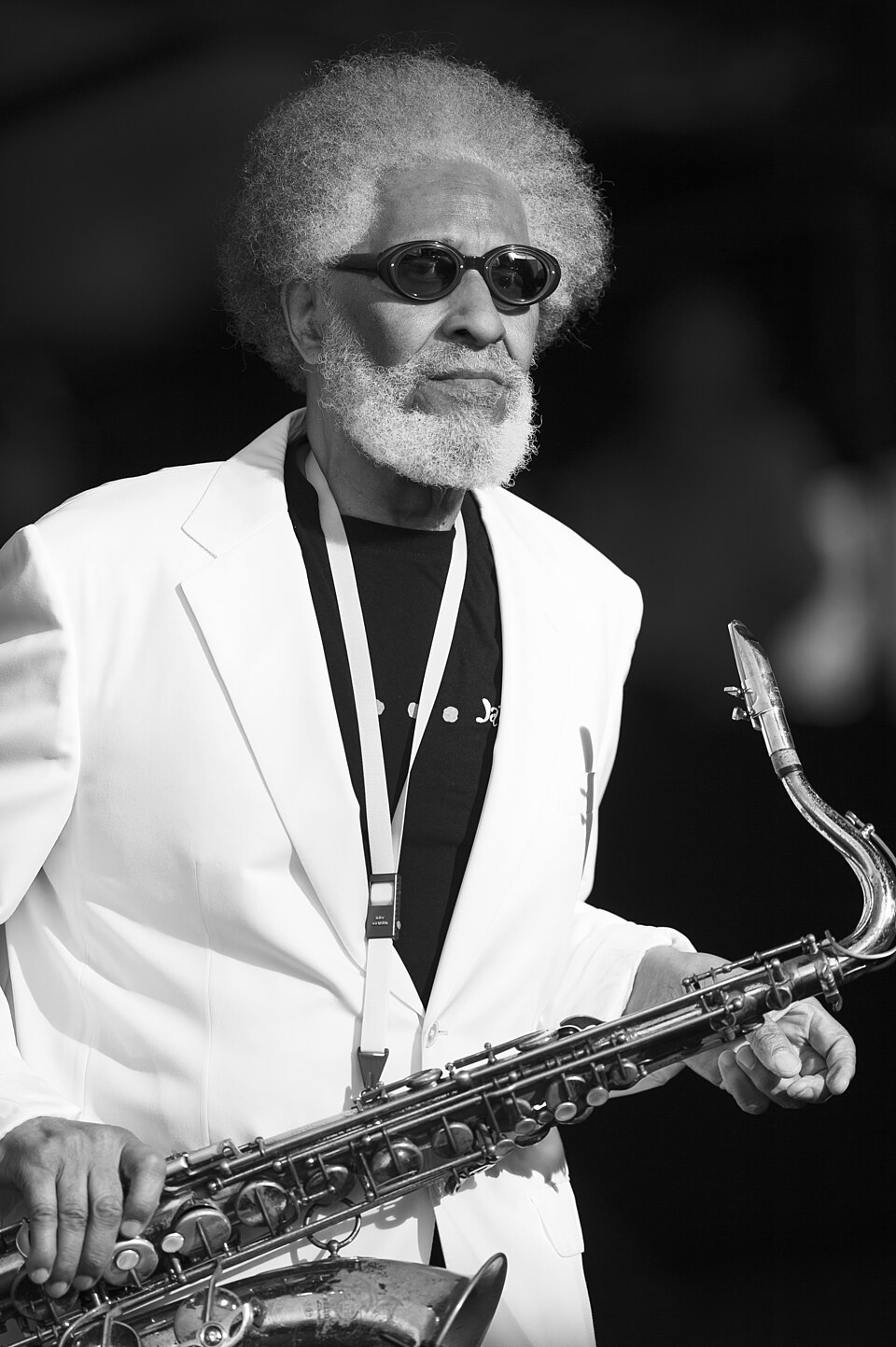
"Sonny Rollins DSC0214z" by Marek Lazarski is licensed under CC BY-SA 4.0.
Sonny Rollins has passed away. The saxophone colossus was one of the most innovative and influential performers in the history of jazz, spearheading new directions for the music as a bandleader and collaborator with other generational talents. He was 95.
A statement posted to Rollins’ website confirmed that he died at his home in Woodstock, N.Y. on Monday. The message quoted Rollins’ reflections on death: “I think when the creative person ends, he continues in the next existence. I’m a person who believes this life isn’t the be-all and end-all of everything. A spiritual person doesn’t feel like that.”
Walter Theodore Rollins was born in New York in 1930 and raised in Harlem, taking his nickname from his grandmother. Rollins took up the saxophone at age 7 and quickly found his place in the neighborhood’s musical flourishing in his adolescence, playing in his first combo in high school alongside Jackie McLean, Kenny Drew and Art Taylor. After graduating, he followed in the footsteps of his heroes, like Coleman Hawkins, and carved out a path for himself in New York’s jazz landscape, playing first for the singer Babs Gonzales and later with the likes of Bud Powell, J.J. Johnson and Miles Davis before he turned 20.
By the early ‘50s, Rollins had earned a reputation as one of the city’s most disruptive, imaginative tenors, and his sensitive but bold approach contributed to jazz’s transformation from more limited balladic and dance forms to the unrestrained expressive pursuits of the bebop generation. While anchored in notes from predecessors, like Hawkins’ full-bodied and powerful foundational sound, his fluency with nuanced melodies and unpredictable improvisation helped form the genre’s capacious expressive language. Davis testified to Rollins’ esteem in his autobiography, writing that the saxophonist “was a legend, almost a god to a lot of the younger musicians… He was an aggressive, innovative player who always had fresh musical ideas. I loved him back then as a player and he could also write his ass off…
Like several prominent peers in the vanguard, Rollins struggled with heroin dependency, and in 1950 took a 10-month bid on Riker’s Island for committing an armed robbery to support his habit. He was harangued by scattered legal troubles in the early ‘50s for violating his parole by using heroin, but in those same years recorded memorable sessions with the Modern Jazz Quartet, Charlie Parker, and Thelonious Monk; in 1954, with a quintet led by Davis and featuring Horace Silver, Percy Heath, and Kenny Clarke, he brought the originals "Oleo", "Airegin", and "Doxy,” all three of which rapidly became immortal standards. He kicked his heroin addiction in 1955 through experimental methadone treatments, and though he feared sobriety would hurt his creativity, the following years brought an unprecedented hot streak.
Rollins released his debut as a bandleader, Sonny Rollins with the Modern Jazz Quartet in 1953, which was the first of 18 full-length albums he issued through the end of the decade. Pivotal offerings included 1956’s breakthrough Saxophone Colossus, opening with “St. Thomas,” a signature song inflected by calypso from a Bahamanian nursery song his mother sang to him; 1957’s Way Out West, with the wide-open spatial imagination of its trio arrangements; and the revolutionary protest jazz of 1958’s Freedom Suite, which musically articulated the spirit of the Civil Rights movement with a 19-minute title track that deftly maneuvers from sophisticated composition to extemporization.
In 1959, Rollins took a two-year break from recording and performing. Face to face with an impassable dissatisfaction with his own musicianship, the saxophonist committed himself to honing his craft by practicing for up to 15 hours each day. To avoid disturbing his neighbors, he walked out on the Williamsburg Bridge in the dead of night and soloed for hours on end. “I was getting very famous at the time and I felt I needed to brush up on various aspects of my craft,” he reflected. “I felt I was getting too much, too soon, so I said, wait a minute, I’m going to do it my way. I wasn’t going to let people push me out there, so I could fall down. I wanted to get myself together on my own.”
Rollins returned to the public eye in 1962 and met the swirling mystique of his disappearance and reported bridge sessions with his opus, The Bridge. In the decades that followed his comeback, apart from another hiatus to study yoga and philosophy in India in ‘69, he steadily pursued cutting-edge approaches to jazz, crossing over into Latin-American music, R&B, rock and more. In 1966, he scored the Michael Caine film Alfie, and in 1981 he famously recorded uncredited saxophone overdubs for The Rolling Stones’ Tattoo You. He lived in New York until the 9/11 attack forced him to evacuate his apartment near the World Trade Center, carrying only his saxophone. Three days later, he traveled to Boston to record the Grammy-winning Without a Song: The 9/11 Concert.
Rollins retired from performing in 2014 after being diagnosed with pulmonary fibrosis. He earned a Grammy award for lifetime achievement in 2004, a Kennedy Center Honor in 2011 and the National Medal of Arts in 2010, during which President Barack Obama shared that the saxophonist had inspired him to “take risks that I might not otherwise have taken.” Rollins graciously remarked that he accepted the award “on behalf of the gods of our music.”
Rollins was the last surviving member of the 57 jazz innovators pictured in Art Kane’s famous 1958 photograph, A Great Day in Harlem.
This story will be updated with tributed to the late legend.