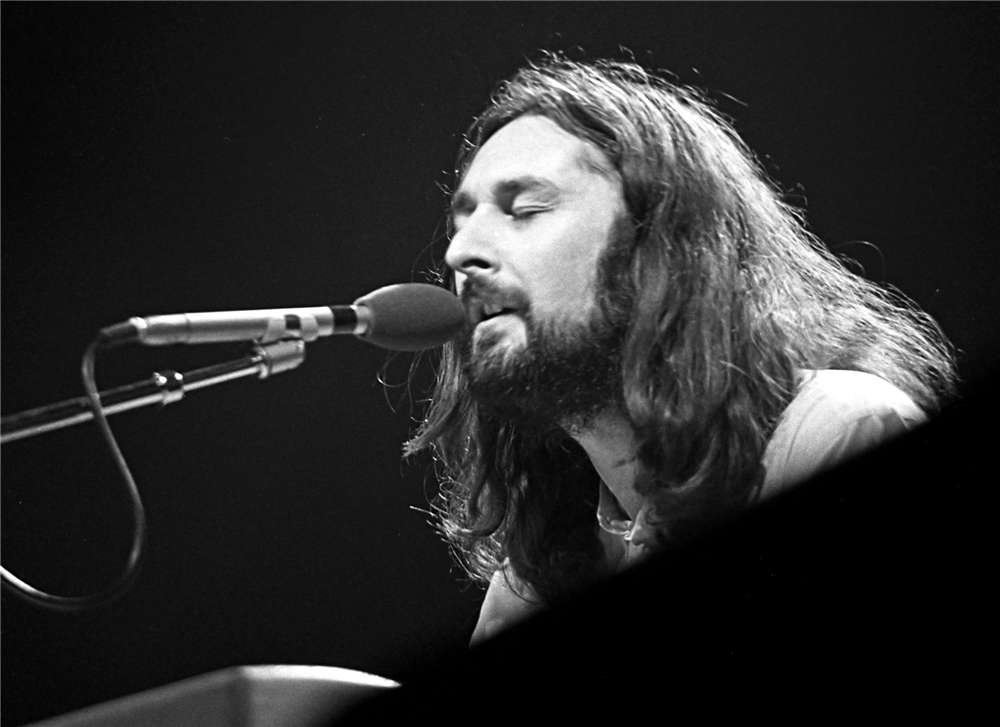
"File:Supertramp - Rick Davies (1979).png" by Ueli Frey is licensed under CC BY-SA 4.0.
Rick Davies, co-founding member and co-vocalist of Supertramp, has passed away. Davies was the band’s sole constant over its history. Supertramp began as a progressive rock group in 1970 and eventually experienced pop success through the 1979's chart-topping album Breakfast in America. This record included the hit single “Goodbye Stranger,” which Davies wrote and sang. "Goodbye Stranger" helped to cement Davies' status as a defining voice of the late ‘70s, along with Supertramp's Rodger Hodgson. Davies was 81 years old.
Supertramp shared the official statement announcing Davies’ passing on social media and their official website, in which they relayed the cause of death as a prolonged battle with cancer. The statement reads:
Rick Davies, founder, lead singer and songwriter of Supertramp, passed away on Saturday, September 6th at the age of 81 after battling Multiple Myeloma for over 10 years.
Born in Swindon, England in 1944, Rick’s love of music began in his childhood listening to Gene Krupa’s “Drummin’ Man” which grew into a lifelong passion for jazz, blues and rock’n’roll. As co-writer, along with partner Roger Hodgson, he was the voice and pianist behind Supertramp’s most iconic songs, leaving an indelible mark on rock music history. His soulful vocals and unmistakable touch on the Wurlitzer became the heartbeat of the bands’ sound.
Beyond the stage, Rick was known for his warmth, resilience, and devotion to his wife Sue, with whom he shared over five decades. After facing serious health challenges, which kept him unable to continue touring as Supertramp, he enjoyed performing with his hometown buds as Ricky and the Rockets.
Rick’s music and legacy continue to inspire many and bears testament to the fact that great songs never die, they live on.
...
Davies was born in Swindon, England, in 1944. Music was an early indicator of his passion, and by age 8, his parents recognized their son’s defining interest and purchased him a used radiogram to support his listening consumption. A few records remained from the previous owner, including Gene Krupa’s Drummin Man.
Fixed on the potential to create rhythm, Davies received a makeshift drum set by the age of 12, and soon joined the British Railways Staff Association Brass and Silver Jubilee Band on the snare. By 1959, his interests had shifted to increasingly rock-informed styles, and he joined Vince and the Vigilantes.
While studying art at Swindon College, Davies moved in his own musical direction, starting the band Rick’s Blues, and changed his focus from the kit to the Hohner electric piano. Davies stepped away from music to work as a welder when his father fell ill, but only took on the role for a brief stint.
Supertramp formed in 1970 after a newspaper ad led Davies to Hodgson. The pair began writing together and signed with the UK branch of A&M Records, releasing their self-titled debut album the same year, with Hodgson’s voice at its center. Their sophomore release marked a shift, focusing more on Davies' vocal abilities.
Davies and Hodgson remained consistent as members came and went before the band’s third studio album, Crime of the Century, which reached No. 4 on the UK Album Chart. Despite their first taste of commercial success, the pair were growing apart, largely due to a previous agreement to credit their material under both their names.
1979 was pivotal to Davies' stardom, and was the year Supertramp delivered their best-selling record, Breakfast in America, which included some of their most renowned material. Yet, tension was rising, and by ‘83, Hodgson quit the band.
Davies continued with Supertramp and delivered the group’s first album without Hodgson, 1985's Brother Where You Bound, which included the successful single “Cannonball.” The group followed this up with Free As A Bird in 1987 before the band members went their separate ways the following year.
In the late 1990s, Davies began work on what was intended to be his solo album, but the process inspired him to restart Supertramp instead. The modern adaptation of the band recorded two albums and toured before another split.
With Davies at the helm once again, the group reunited in 2010 for their 70-10 Tour, but it was scrapped after health issues surfaced. Yet, Davies' love of music never ceased, and he performed under the name Ricky and the Rockets, taking the project to Stephen Talkhouse in Amagansett, N.Y., as recent as 2022.
Davies is survived by his wife, Sue, who had been Supertramp’s manager since the mid-1980s.