Ziggy Marley: On The ‘Brightside’
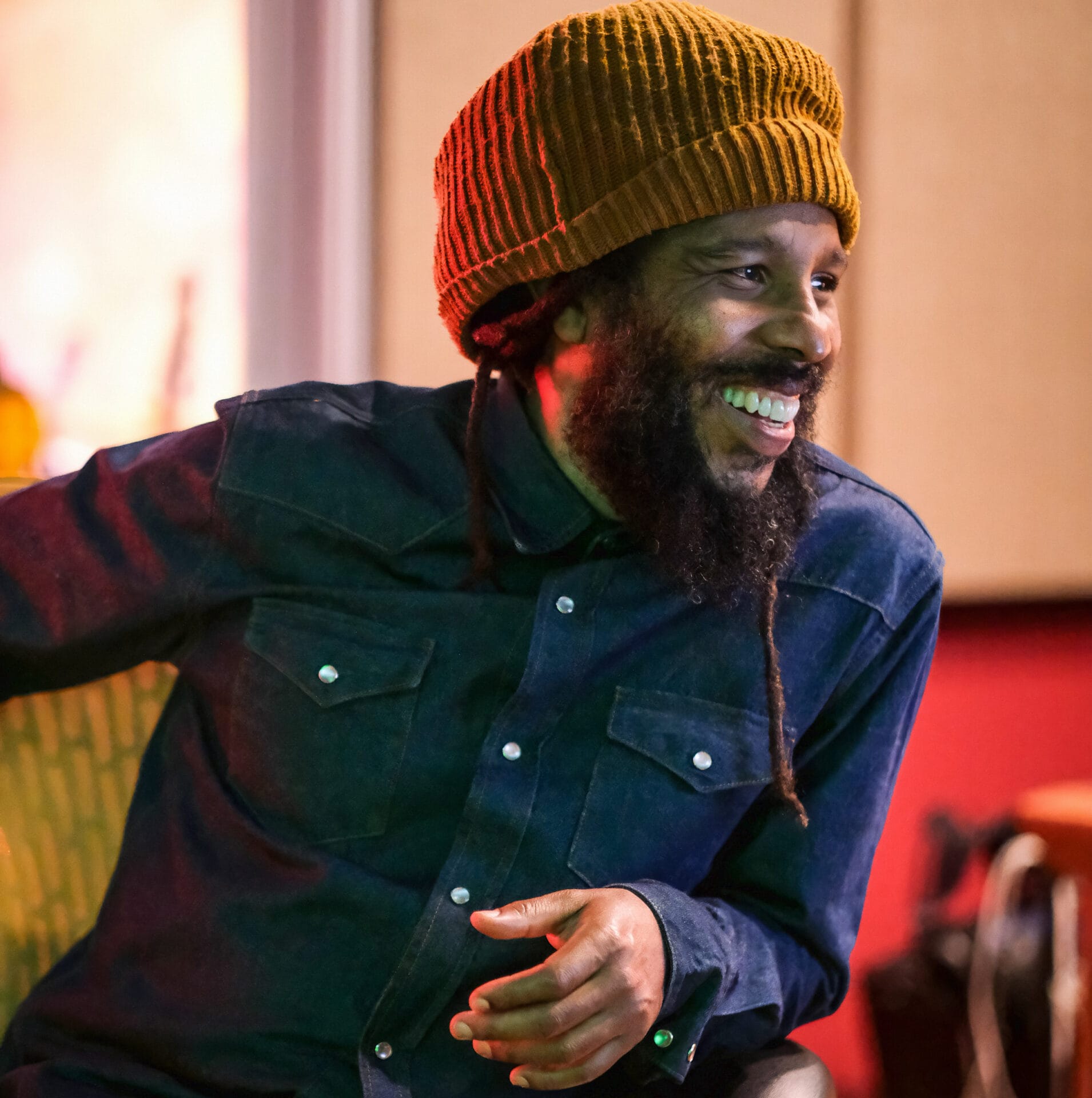
photo: Zach Weinberg (courtesy of Tuff Gong Worldwide)
***
After over four decades of making music, Ziggy Marley says this is the first album of his own he’s been listening to again and again. The nine-time Grammy Award-winning musician, Emmy winner, producer, and humanitarian has created plenty of art that has pleased millions of fans all over the globe. Yet, it’s his upcoming studio collection, Brightside, arriving as a Record Store Day vinyl exclusive on April 18th and digitally on May 1st, that has captured his own attention more than any previous effort.
Perhaps, it’s thanks to Ziggy’s choice during the sessions to tune the instruments to 432Hz, a frequency that purports to offer soothing meditation and encourage mindfulness practices. Given that Marley’s lyrics on this set are aimed more often on introspection and mental health, it seemed a fitting move. It’s one of several decisions Marley and his brother, Stephen, made as co-producers that came up a winner. Recorded in Los Angeles, at Ziggy’s newly built, Rupert Neve-designed, Rebel Lion Studio, Brightside also features an impressive slate of guests, including vocalist Nikka Costa, Trombone Shorty, Sheila E. and Jake Shimabukuro.
On a recent afternoon in March, just a few weeks ahead of the album’s release, Marley sat for a lengthy and candid interview touching on the creation of Brightside, on the state of the world, his U.R.G.E. (Unlimited Resources Giving Enlightenment) charity, and what we can all do to help each other get through these challenging times and live on the bright side of life.
You made this record at your new studio, Rebel Lion. Tell me about that.
It was always a dream of mine to have my own studio. My own space. Usually, I would have a little space in the house that I was living in at the time. But, I would always have to go to the studio if I wanted to do something bigger. So, we accomplished that dream, and we built this studio, brand new. Mike [Schuppan], the engineer who put the studio together—wired it, cabled it, everything—he was the same engineer who worked on and mixed the record. So, that was a great, wholesome way of doing it. We’ve got the space, and the vibes feel right. It gives a different feel to the music when you’re in your own space. Your own environment. A different energy.
Is the studio a dedicated space for you, or will you open it up for others to use?
We want to share it with good artists, good musicians we respect. Not just anyone, but good artists can come through.
What led you to co-produce the album with your brother Stephen?
It’s a feeling, like, “Let’s do something special. Let me call Steve. We’ll do something different. “ There are so many different aspects that happened on this album. My own studio, different. 432Hz, different. Musicians, different. We wrote the songs, different. Bring in Steve, different. The whole process, different. So, that was the reason. With Steve, we can talk, and he can give me some good advice, some good insight and direction, when needed. It was really great.
The record exudes a relaxed confidence, especially in light of the many of its lyrics which seem very personal. Where did that come from?
We were just that way. I was just that way. I was very confident in what I wanted this record to be. I was very sure. I worked really hard on the pre-production, myself, both mentally and what I envisioned for this record. So, I knew where I wanted this vision to be when I feel it. Who feels it, knows it. There’s no compromise. I’m not letting anything slide.
You mentioned tuning the instruments to 432Hz. Where did that notion come from?
I heard about it, and talked to some people about it. I spoke to Aston Barrett, Family Man’s son, and he told me, back in the days the music was played in 432. It wasn’t 440. I Googled it, and said, let me try this idea. I started doing it live, first. The last tour, with Burning Spear, actually, we tuned all the instruments to 432Hz. I like how it felt. And I tell people, this is the only album I’ve done that I listen to. I like listening to it. That frequency speaks differently to me.
Your music is often synonymous with roots reggae. Has reggae been a wide enough a genre for the music you make?
For some people, yes. For some people, no. For some listeners, yes. For some listeners, no. But, I’m wide. I’m the wide one. Whether the art is wide or not doesn’t matter. I’m wide, and I’m going wherever I want to go. Sometimes I’m reluctant. Sometimes I season to taste. [Laughs.] Maybe I don’t go so far as my crazy self would go. The only constraint I have is to be true to the foundation. That is where reggae comes in. The foundation. Peel away the layers and you will find that the foundation is still what it is. It’s still that original reggae energy where the key lies for me.
Do you ever listen to reggae to reinforce or revisit that foundation?
I’m not doing it as an intellectual experience. I’m doing it as a vibe. A feel. I don’t need to go back and listen. It’s already in me, and it has been for all those years I’ve been listening. From being around my father. From being around music. It’s all in my subconscious. It’s all in me. I still listen to music, anyway, so sometimes I’ll remember certain things. I’ll listen to a line, and I’m like, “Ooh, ahh, yeah.” But, I’m not listening for the intention.
There are a few guests on this album. Did you have personal relationships with all of them prior to the sessions?
We know everyone personally. Jake played on Love Is My Religion, on “Beach In Hawaii.” I sang on a couple of Jake’s songs, too. Sheila E., I met her before I started work on the album, celebrating the Stevie Wonder birthday. She saw on Instagram I was posting up stuff from the studio. She texted me, ‘You need a really good percussionist.’ [Laughs.] I said, ‘You know anyone?’ So, she came down and put some stuff on. We toured with Trombone Shorty. And Nikka is family. We’ve known Nikka from having the same-age kids. We did music lessons at the house. We play together. Justin [Stanley], her husband, played on the record. Nikka did background vocals. She really helped me out.
In the song, “Hey People Now,” you reference “good trouble.” Was that a nod to the late U.S. Congressman from Georgia, John Lewis?
It must be. [Laughs.] When I did it, I wasn’t thinking about it, but after I did it, I was like, “Oh, that’s what I’m talking about right there. Definitely from him.” I saw him on TV saying that, and it stuck somewhere in here. It’s so true. We need to stand up for certain things. And make the powerful know. We just want to live together and survive. We don’t want all this bullshit.
You offer a tribute to your father on “Many Mourn For Bob.” As you’ve aged, has your father’s influence on you changed in any way or has it remained the same?
I don’t know about the same. I’m not sure. I’m not remembering what it was. I’m just accepting what it is today.
It’s a more deeper relationship. I’ve always felt myself becoming his brother, in a way. Maybe I’m his big brother.
The title song, “Brightside,” reveals some rather introspective feelings. How important is it to you how you are perceived versus how you see yourself?
Not everybody wants to say good things about you. Sometimes, that’s inspirational, too. Life is not all a bed of roses. The real world exists. People have to feel positive about being positive. Even in negative times. I’m still laughing. I’m still living. You’re trying your best to oppress us. You’re trying your best to get in our head all the time. I’m saying no. I’m still me. I’m living on the bright side. You can try to bring me down, but no.
In “Racism Is A Killa,” you portray racism as a disease, at least metaphorically. Could it be seen as actual, treatable disease? And, if so, how do we treat it?
Individual responsibility. Individual awareness about how we treat each other and talk to each other. It’s each individual. I have that. I have that conscience about how I treat people. I have that awareness. If you want to be that way, it’s your choice. You have a choice.
How did you arrive at making the right choice?
Through experiences and feelings. I’ll tell you, I’m a sensitive person. Let’s put it that way. If I put out negative energy, I’m also sensitive to that negative energy. I feel negative, and I don’t like feeling negative. I have a conscience. I’ve learned to listen to that conscience and evolve. Do better. Treat people better. Learn from my mistakes and keep evolving. If I do bad, I feel bad. Some people might not have that. I don’t know.
How do you avoid sounding like your preaching?
It’s been a progression, because I have done preachy songs, that I think are preachy. But, as I said, we grow, and we learn, and we evolve. It’s a continuous process. Where I am at now, and where I’ve been, I have figured out how best to communicate with you, with people, through the music. I’m still figuring that out. This is the next stage of figuring it out, how I write songs with that perspective. I want to talk about the spiritual thing. What’s in individuals. Other times, I’m singing about politics too much. Or about the system. Or blah, blah, blah. I want to speak more about the individual system. Not the government system or the religious system. It’s been a progression of how best I feel I can communicate to the world.
How do you feel right now?
I feel like I’m in a good place now. Even a song like “Racism Is A Killa,” it’s a heavy song, but it’s not heavy. I can carry that and still feel happy and dance. I’m finding that out about myself. The music and how I do it. It’s not something that I think I am dead-set on doing, but a part of the evolution is I’m realizing this is a part of how I do music. How I relate.
Part of how you relate to the world is as a parent. Are you relating to it differently as your children grow up, as the knowledge you want to impart on them evolves?
I think in some way, yeah. It’s not in the forefront. It’s in the lessons we have to teach them. Talking to them about how I see the world. The world is not in a good place right now. We have to make sure our kids are aware of how the world is. Especially the older ones that are going out into the world. So, I think that I’m a little bit more conscious for them. I’m giving them some knowledge of the world out there, right now.
When they were toddlers, you recorded a few albums of family music, and wrote a children’s book. You were very focused on that stage of life. Do you feel like now you can pull back the curtain?
With the children’s music, there was a lot of inspiration when they were young and coming up. A lot of good vibe. I guess it’s a different vibe now.
In “Why Let The World,” you suggest taking breaks from it all. How so?
It’s mental. It’s taking a break from the world by not thinking about the world. Stop thinking about the issues. Stop thinking about the problems. It’s the mental break we need. Maybe I play some video games. Watch a movie. Play music, always. Like, when I rehearse, that is the most powerful remedy for that. The world, all this stuff they’re putting out there, take a break from all of it. The struggle is mental. We have to keep the mind free. We have to keep the power over our mental state. If it gets to us in that way, then we’re definitely not going to make the world a better place. We need to keep the mind free so that you can see love, you can see happiness, you can see joy. You can see all those things even though they’re not showing us that. It’s still out there to see and experience.
We all have times when doubt creeps in. What do you do then?
You don’t do anything. [Laughs.] You doubt. Then, after a while, you get back to yourself. It passes through. I have an optimistic point of view. “Some may say I’m foolish,” as I say in “Brightside.” That’s me. I know that the goodness will not be the exception, but the rule. Humankind can do so much better. And we will do better. It’s inevitable. I know that. I have no doubt about that. We’re all part of that movement. I’m not saying everything will be perfect. It’s not a fantasy. The re-balancing of the situation is what we need. We need a little more weight on the good side of humanity.
Philanthropy is an important aspect of your life, and certainly part of the good side of humanity. Where did that come from?
I had good examples. My father and my mother. We always saw them helping people. I grew up with that inside of me. It’s hard for me to see someone suffering and not try to help. As I got older, I started to help communities through food programs, or help individuals, as well. It’s a part of who we are. We have U.R.G.E. as a way to invite in people, the fans, if they want to get involved. I always tell people to try and do it in your community. There’s a charity need right around you. You don’t have to come to me. It’s about helping people around you. Help your community.
There are refrains of “Mersa, Mersa” on “Sweet Divine.” I’m guessing that’s a tribute to your late nephew, Jo Mersa.
You heard that? Yeah, Joseph inspired that song.
What are your thoughts on death?
I think I shouldn’t fight the emotion. We know it’s happening. We know it’s going to happen. We know people close to us. I accept it as a part of life, when it happens in a natural way. Be open to that emotion. Be open that my children can experience those emotions because it is a part of life. Deal with it, and feel what we feel as a part of being alive.
Do you ever censor yourself?
Censor? Sometimes. If I say ‘Fuck” or something, yeah. [Laughs.] Sometimes I want to curse. Sometimes I want to get rock and roll with that shit.
Speaking of rock, I remember a show in Los Angeles when you sat in with The Allman Brothers Band. Where does rock music fit into the equation?
The first time I started hearing heavy rock music was in Miami. My uncle, Richard, was into rock music. We lived in Jamaica, and when we’d go visit grandma, Bob’s mom, and spend some time there [in Miami] on vacation or whatever, they used to play on the radio, “My Sharona.” And I remember an AC/DC song, too. I was attracted to that. I like that. I like the freedom of that.
Do you ever go see a rock band, just as a fan?
Mostly festivals. That where I can check out some other bands. When I was younger, I went to a couple of unknown bands. It’s a good experience. It helped me create. I’m like a sponge. I’m always getting knowledge. Inspiration.
Do you still like the road?
I like playing for people. Sometimes the traveling, I don’t like. But I like playing for people, so I go through the travel and stuff like that. The road is a responsibility. The words I sing have meaning, even if some people don’t know every song I sing. To go out on the road is a responsibility because I want to get the message out. That is my whole purpose. To get the message out. That’s why I’m doing this. It doesn’t make sense without that.
What’s the biggest injustice we face right now?
We look to the next generation for the change we want. Because those who exist now don’t want things to change. The biggest injustice is if we don’t raise the next generation to love each other. When you raise children with hate, religious hate, racist hate, whatever hate you want to raise based upon the idea you have of people, that’s the biggest injustice. Because that’s where everything stems from. The next generation, we have to raise with love. If you love, you’re not going to be able to allow other people to be suffering. If you have love in your heart, you’ll say, “Let me do more.” We need to fix the root. The foundation. The heart of us, as human beings. People say money is not the root of all evil. It’s the love of money that is the root of all evil.